Whether you're just starting out or you've been training for years, strong arms matter more than most people think. They're not just for looks. Strong arms help you lift heavier, perform better in sports, protect your joints, and handle everyday tasks with ease.
The good news? You don't need a fancy gym or complicated program. You just need the right methods and the consistency to stick with them.
Here's a breakdown of the best arm strength training methods for all levels.
1. Grip and Forearm Training
Here's something most beginners completely ignore and even experienced lifters underestimate: forearm and grip strength.
Your forearms connect everything. Weak forearms mean you'll always hit a wall on deadlifts, rows, pull-ups, and carries. Your grip gives out before your bigger muscles do, cutting your sets short and limiting your actual strength development.
Training your forearms directly changes that.
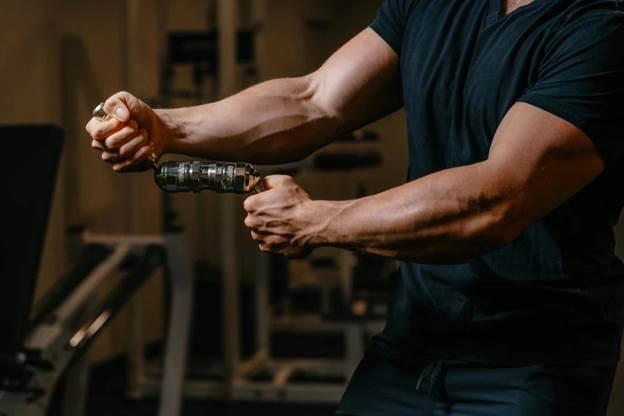
Wrist curls, reverse curls, and farmer's carries are great starting points. But one of the most effective and convenient methods is using a forearm strength trainer. These tools let you train grip strength and forearm endurance progressively, on your own schedule. You can use one while watching TV, during a work break, or as a warm-up before lifting sessions.
For athletes in sports like rock climbing, wrestling, tennis, golf, or baseball, forearm strength is often the difference between good and elite performance. And for everyday lifters, it removes a major weak link from almost every pulling and carrying exercise.
Don't wait until your grip fails in the middle of a heavy set to take this seriously.
2. Bodyweight Training
Before you touch a barbell, your own bodyweight is one of the most underrated tools for building arm strength.
Push-ups target your triceps, chest, and shoulders. They're scalable too. Beginners can start on their knees or against a wall. More advanced versions like diamond push-ups and close-grip push-ups put even more focus on the triceps.
Pull-ups and chin-ups are the gold standard for bicep and back strength. If you can't do one yet, use a resistance band for assistance or practice negative reps where you slowly lower yourself down. Over time, this builds serious pulling strength.
Bodyweight training teaches your muscles to work together. That coordination carries over into everything else you do.
3. Dumbbell and Barbell Curls
Once you have the basics down, adding weight is the most direct way to build arm size and strength.
· Dumbbell curls let each arm work independently, which helps fix imbalances. Hammer curls (palms facing inward) also target the brachialis, a muscle that sits under your bicep and adds thickness to the arm.
· Barbell curls let you load more weight and build overall bicep strength faster. Keep your elbows tucked and avoid swinging your back. The movement should be controlled, not rushed.
· Skull crushers and overhead tricep extensions isolate the triceps from different angles. Since the triceps make up about two-thirds of your upper arm, training them well makes a bigger visual and functional difference than most people expect.
A simple rule: start light, focus on form, and add weight gradually. Ego lifting leads to injury, not progress.
4. Compound Lifts
Many beginners skip straight to isolation exercises, but compound movements build more total arm strength than curls alone.
Bench press puts the triceps under serious load. Rows hammer the biceps through a full range of motion. Overhead press strengthens the entire upper arm and shoulder complex together.
If you're an athlete or someone short on time, prioritizing compound lifts and supplementing with isolation work is one of the smartest approaches you can take.
5. Progressive Overload
No method works without this. Progressive overload simply means consistently making your training slightly harder over time. You can do this by:
- Adding more weight
- Doing more reps with the same weight
- Reducing rest time between sets
- Slowing down the movement for more time under tension
Your muscles only grow when they're challenged beyond what they're used to. Track your workouts, even roughly. Knowing what you lifted last week gives you something to beat this week.
6. Consistency and Recovery
Training tears muscle fibers down. Recovery is when they grow back stronger.
Beginners often make the mistake of training arms every single day. That actually slows progress. Aim to train arms directly 2 to 3 times per week, with at least one rest day in between sessions.
Sleep, protein intake, and hydration all directly affect how well your muscles recover. Most people underestimate how much a few nights of poor sleep can stall progress.
A simple beginner weekly structure:
- Day 1: Push (chest, shoulders, triceps)
- Day 2: Pull (back, biceps, forearms)
- Day 3: Rest or legs
- Repeat
This gives each muscle group enough stimulus and enough time to recover.
Final Word
Arm training doesn't need to be complicated. Start with bodyweight basics, add resistance progressively, don't neglect your forearms and grip, and recover well.
Whether you're a complete beginner or an experienced athlete looking to break through a plateau, these methods give you everything you need.
Pick one thing from this list that you're currently not doing. Start there. That's usually all it takes to start seeing real results.