

You are mid-workout and suddenly your nose starts dripping. Annoying, right? I have been there too.
Why does my nose run when I exercise? It happens more than you think, and there is always a reason behind it.
In this blog, I will walk you through the main causes, from breathing patterns to allergens, indoor and outdoor triggers, and real tips to help you manage it.
By the end, you will know exactly what is going on and what to do about it.
What Is Exercise-Induced Rhinitis?

Exercise-induced rhinitis is when your nose runs or feels stuffy during or right after a workout. It is not a cold.
Your nasal lining gets irritated from increased airflow, temperature shifts, or allergens in the air. This pushes your nose to produce extra mucus.
It can happen to anyone, no matter how fit you are or how often you work out. It is common, manageable, and very much worth understanding.
Why Does My Nose Run When I Exercise? Main Causes

Your nose reacts to several things during exercise. Here is a closer look at each one.
1. Heavy Breathing and Airway Dryness
When you work out hard, you breathe faster. This pulls more air through your nose than usual. That fast-moving air dries out the nasal lining.
Your nose responds by making more mucus to stay moist and protected. The harder you push during exercise, the more this happens.
2. Increased Airflow Irritating Nasal Passages
More airflow means more friction inside your nose. This irritates the sensitive nasal tissue and triggers fluid production.
Think of it like your nose trying to protect itself. The extra mucus acts as a cushion against that constant stream of fast-moving air hitting the nasal walls.
3. Histamine and Immune System Response
During exercise, your body releases histamine. This is part of your immune response. Histamine causes blood vessels in the nose to widen and nasal tissue to swell.
The result? A runny nose. This reaction can happen even without any allergen present, just from physical exertion alone.
4. Exposure to Allergens Like Pollen, Dust, and Mold
If you are already sensitive to allergens, exercise makes it worse. You breathe faster, so you pull in more pollen, dust, or mold spores.
This overloads your nasal system quickly. Even mild allergies can feel severe during a workout because your body is already in high-alert mode.
5. Environmental Triggers Like Cold Air and Pollution
Cold air is dry and sharp. When it enters your nose at a high rate during exercise, it shocks the nasal lining.
Your nose floods with mucus to warm and filter the air. Pollution works the same way. Tiny particles irritate the nasal passage and trigger a runny response fast.
Why Does My Nose Run When I Exercise Indoors?
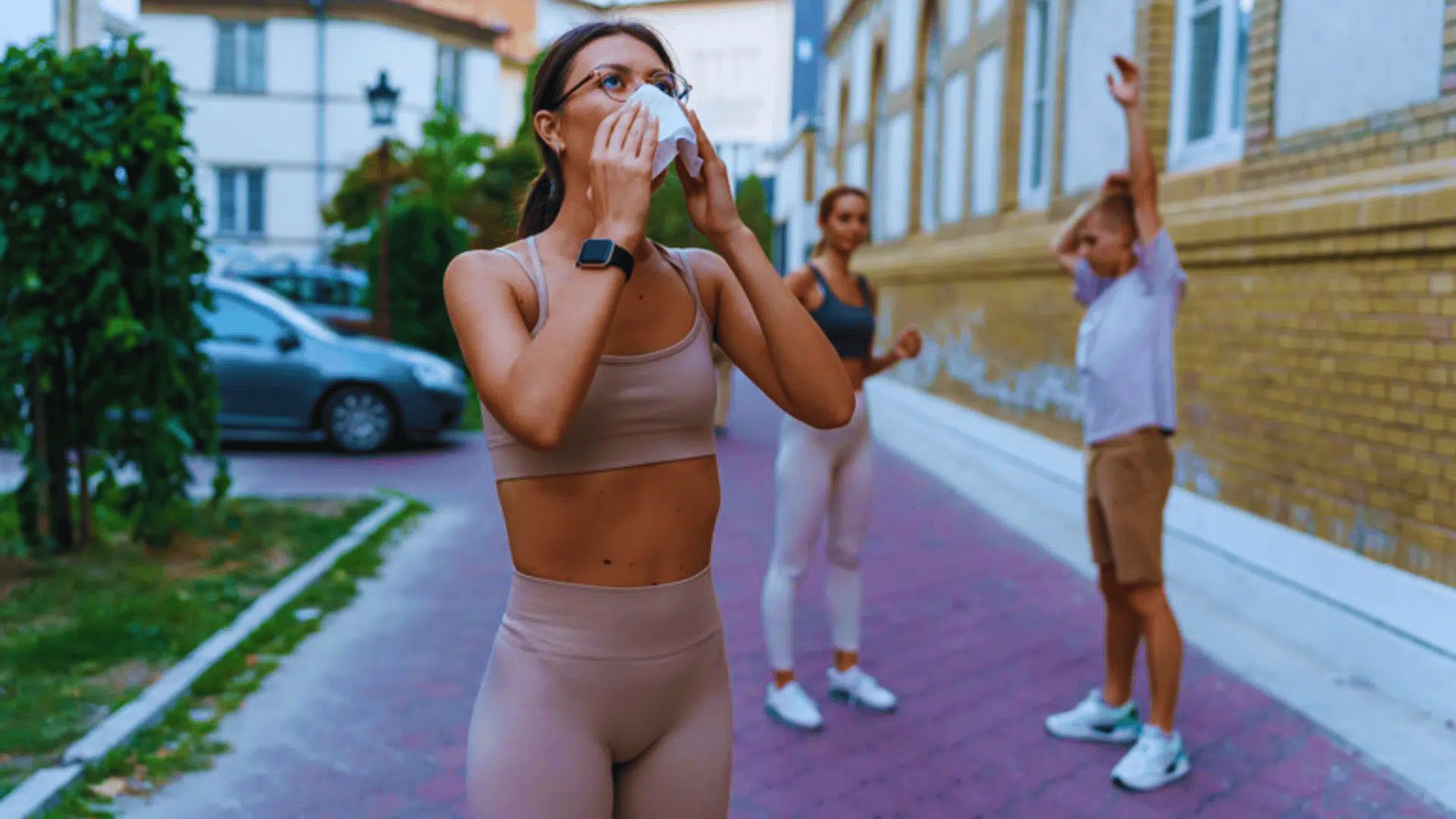
Indoor workouts are not always safer for your nose. Here is what might be causing the drip inside.
1. Dry Air From Air Conditioning or Heaters
Air conditioning and heaters pull moisture out of the air. When you breathe in dry air at a fast rate during exercise, your nose tries to add moisture back.
It does this by producing more mucus. The drier the room, the worse your nose will run.
2. Indoor Allergens Like Dust, Mold, and Pet Dander
Gyms and home workout spaces collect dust, mold, and pet dander over time. These particles float in the air.
When you are breathing hard during a workout, you inhale more of them. Your nose treats these as threats and triggers a runny, watery response to flush them out.
3. Cleaning Chemicals and Gym Fragrances
Strong cleaning sprays, air fresheners, and scented products at the gym are common triggers. These chemicals irritate the nasal lining even in small amounts.
During exercise, your breathing rate is high, so you are pulling more of these fumes into your nose than you would at rest.
4. Poor Ventilation and Airborne Irritants
Bad airflow means stale air circulates in the room. CO2 levels rise, dust settles less, and irritants stay suspended.
When you work out in a poorly ventilated space, your nose is constantly exposed to all of this. It reacts by producing mucus to protect your airways.
Why Does My Nose Run When I Exercise Outdoors?

Outside is not always clearer. Outdoor workouts come with their own set of nasal triggers.
1. Pollen Exposure During Physical Activity
Running or cycling outdoors puts you in direct contact with airborne pollen. Your breathing rate spikes, so you inhale far more pollen than someone standing still.
Even if your allergies are mild, this amount of exposure can set off a strong nasal reaction within minutes.
2. Cold or Dry Air Irritation
Cold outdoor air has low humidity. When you breathe it in at a fast pace, it hits your nasal lining hard.
Your nose works overtime to warm and humidify the air before it reaches your lungs. The side effect of this process is extra mucus and a constant drip.
3. Air Pollution and Environmental Irritants
Exhaust fumes, dust from roads, and industrial particles all float in outdoor air. During exercise, you inhale more of these pollutants.
Your nose picks up on them fast and triggers an irritation response. Running near heavy traffic or construction zones makes this reaction much worse.
Symptoms of Exercise-Induced Rhinitis

These are the most common signs to look out for:
- Constant runny nose during or right after a workout
- Nasal congestion or stuffiness that clears after you stop
- Sneezing repeatedly while exercising
- Watery eyes along with nasal dripping
- Post-nasal drip causing a tickle or cough in the throat
Tips to Stop Your Nose From Running When You Exercise
Small changes can make a big difference. Here are five things that actually help:
- Breathe through your nose as much as possible during low-intensity workouts to filter and warm the air before it irritates your airways
- Use a saline nasal spray before exercising to keep your nasal lining moist and reduce the chances of irritation kicking in
- Wear a light face covering or buff in cold weather to warm the air before it enters your nose during outdoor workouts
- Check pollen counts before heading outside and try to work out early morning or evening when levels tend to be lower
- Keep your workout space well-ventilated and free of strong chemical sprays or fragrances that can easily set off a nasal reaction
Conclusion
I know how frustrating it is to stop mid-run just to blow your nose. It breaks your focus completely.
But now you know why it happens and what actually helps. Why does my nose run when I exercise? It is your body doing its job, just a little too hard.
Start with one or two tips from this blog and see what works for you. Got questions or your own experience to share?
Drop a comment below. I would love to hear from you. Share this post if it helps!
Frequently Asked Questions
Is it normal for your nose to run when you exercise?
Yes, it is very common. Increased airflow and physical exertion cause your nasal lining to produce extra mucus. It is your body’s way of protecting and moisturizing your airways.
Does exercise-induced rhinitis go away on its own?
In most cases, yes. The symptoms usually stop shortly after you finish exercising. If it continues or feels severe, it is worth speaking to a doctor to rule out allergies.
Can I exercise if I already have a runny nose from a cold?
Light exercise is usually fine with a mild cold, but listen to your body. If you have a fever or feel weak, rest is better. Intense exercise when sick can make things worse.
Why does cold air make my nose run more during workouts?
Cold air is dry and sharp. Your nose has to work harder to warm it up before it reaches your lungs. This process produces extra mucus, which leads to more dripping during exercise.
Does drinking water help with a runny nose during exercise?
Staying hydrated helps keep your nasal lining moist. While it will not stop the drip entirely, good hydration reduces dryness in the airways and can lessen the severity of the reaction.


