

I remember standing in the gym, staring at a rack of kettlebells, completely lost. Too light feels pointless. Too heavy a risk of injury.
So, what size kettlebell should I start with? That’s exactly what I’ll help you figure out today. The right weight depends on your fitness level, goals, and the exercises you plan to do.
In this blog, I’ll cover how to pick the right starting weight, how different factors affect your choice, and what works best for beginners. Let’s get into it.
Factors to Consider When Choosing the Right Kettlebell Size
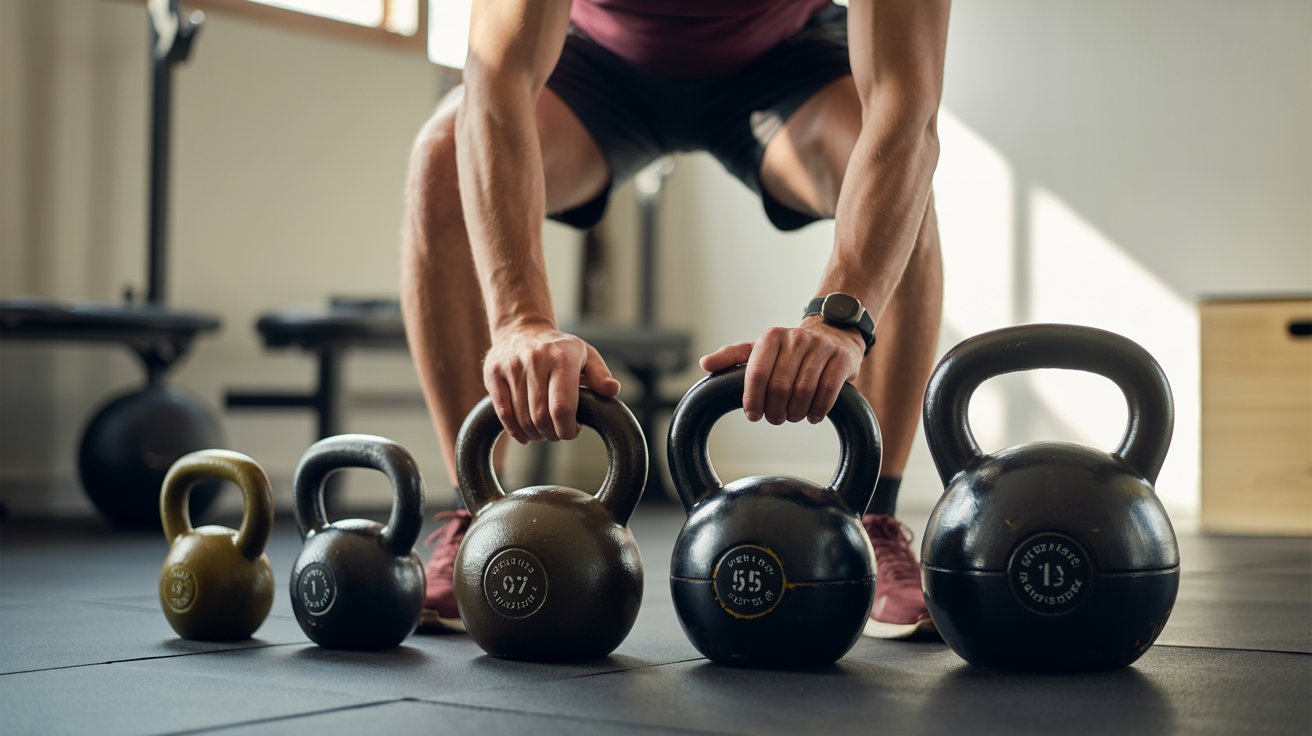
Fitness level, experience, goals, and exercise type all play a role in choosing the right kettlebell weight.
Fitness Level
Your current condition is your starting point. Someone who has been active for years will handle more load than a true beginner.
Be honest about where you are. Picking the right weight from the start helps you train safely and make progress without setbacks.
Experience
A lifting background means stronger joints and better body awareness. If you are new to it, your body needs time to adapt.
There is no shame in starting light. Build up gradually over a few weeks and your strength will follow.
Workout Goals
Fat loss, strength, and conditioning all need different weights and rep ranges. Your goal shapes how heavy you should go.
Before picking a size, get clear on what you are training for. The right weight depends entirely on the result you are working toward.
Exercise Type
Explosive moves allow heavier weights because momentum helps drive the load.
Slow, controlled movements rely purely on muscle effort, so lighter is the smarter choice. Match your weight to the style of movement and you will get better results from every rep.
Kettlebell Weight for Beginners
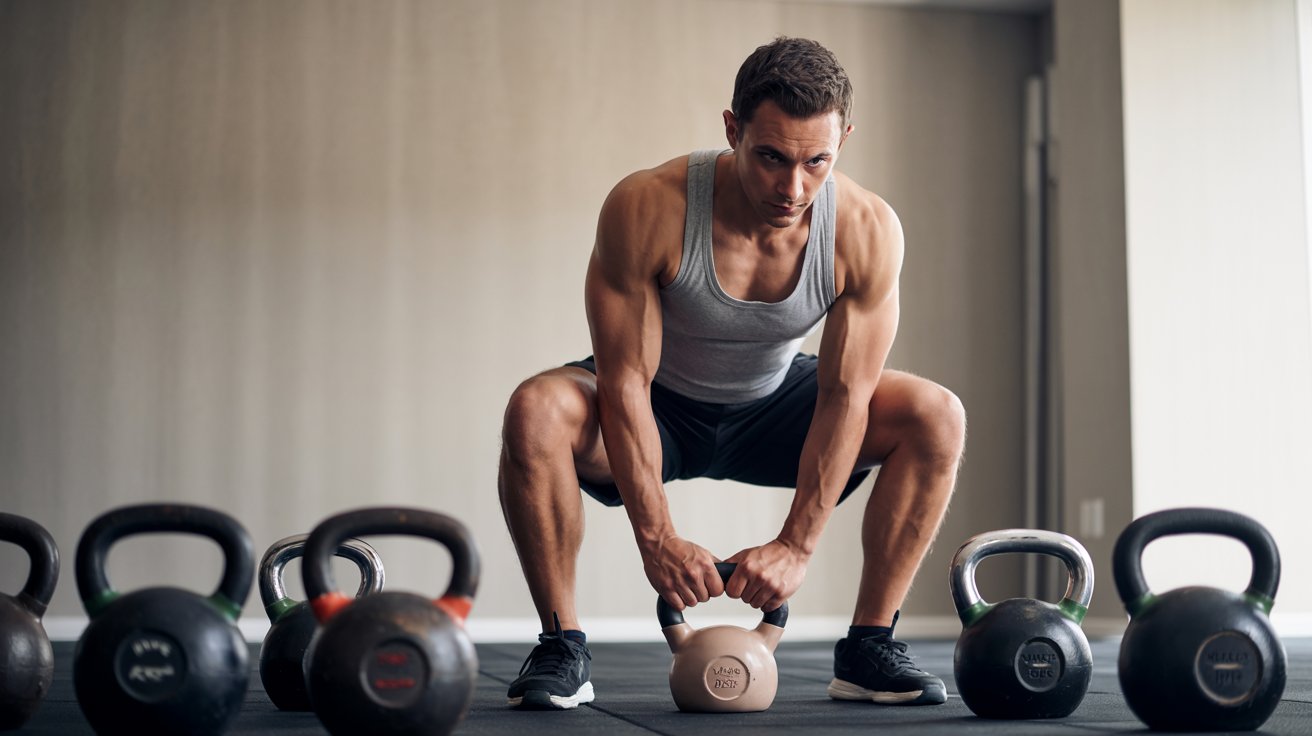
Beginners should start light, prioritize good form, and build weight gradually over time.
Starting with the right weight sets the tone for everything that follows. Too many people grab something heavy on day one and wonder why their back hurts by the end of the session.
Start lighter than you think: Your joints, stabilizers, and movement patterns need time to catch up. A lighter weight lets all of that develop properly.
Form comes before everything: A clean rep with light weight beats a sloppy rep with heavy weight every time. Bad form builds bad habits, and bad habits lead to injury.
Recommended starting weights:
- Men: 12–16 kg (26–35 lb)
- Women: 6–10 kg (13–22 lb)
Give yourself time. The heavier weights will come.
Kettlebell Weight Based on Experience Level
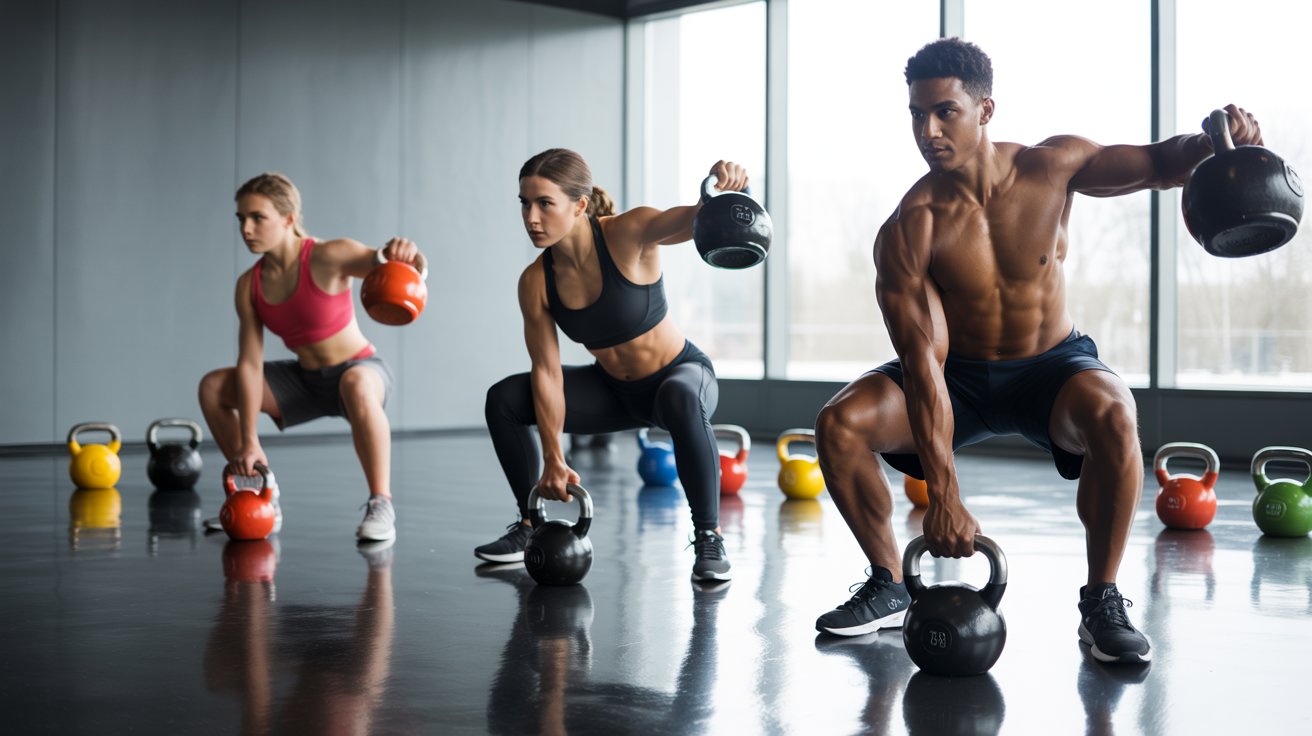
As your experience grows, your kettlebell weight should grow with it.
Experience level is one of the clearest indicators of what weight your body can safely handle.
A beginner and an advanced lifter are working with completely different strength bases, joint stability, and movement quality. Your weight selection should reflect that gap.
Beginner Kettlebell Weight
Beginners need light weights to learn technique and protect their body from early injury.
The goal at this stage isn’t to lift heavy. It’s to move well. Your stabilizer muscles, grip, and body mechanics all need time to develop before adding more load.
- Men: 12–16 kg (26–35 lb)
- Women: 6–10 kg (13–22 lb)
Aim for 8 to 10 clean reps. If your form breaks before you finish, drop down a size. There’s nothing wrong with starting light. Everyone does.
Intermediate Kettlebell Weight
Intermediate lifters have the basics down and are ready to build real strength with moderate weights.
Your form is consistent. Your grip is stronger. Now the focus shifts to progressive overload, gradually making sessions harder over time.
- Men: 16–24 kg (35–53 lb)
- Women: 12–16 kg (26–35 lb)
When a weight stops feeling challenging across full sets, it’s time to go up.
Advanced Kettlebell Weight
Advanced lifters can handle heavier loads across complex movements with consistent technique.
At this level, strength and intensity are the focus. Sessions are harder, rest periods are shorter, and the weights reflect real training experience.
- Men: 28–40 kg (62–88 lb)
- Women: 20–28 kg (44–62 lb)
Even at an advanced level, warm up properly. On days your body feels off, dropping to a lighter weight is always the right call.
Kettlebell Weight for Different Exercises
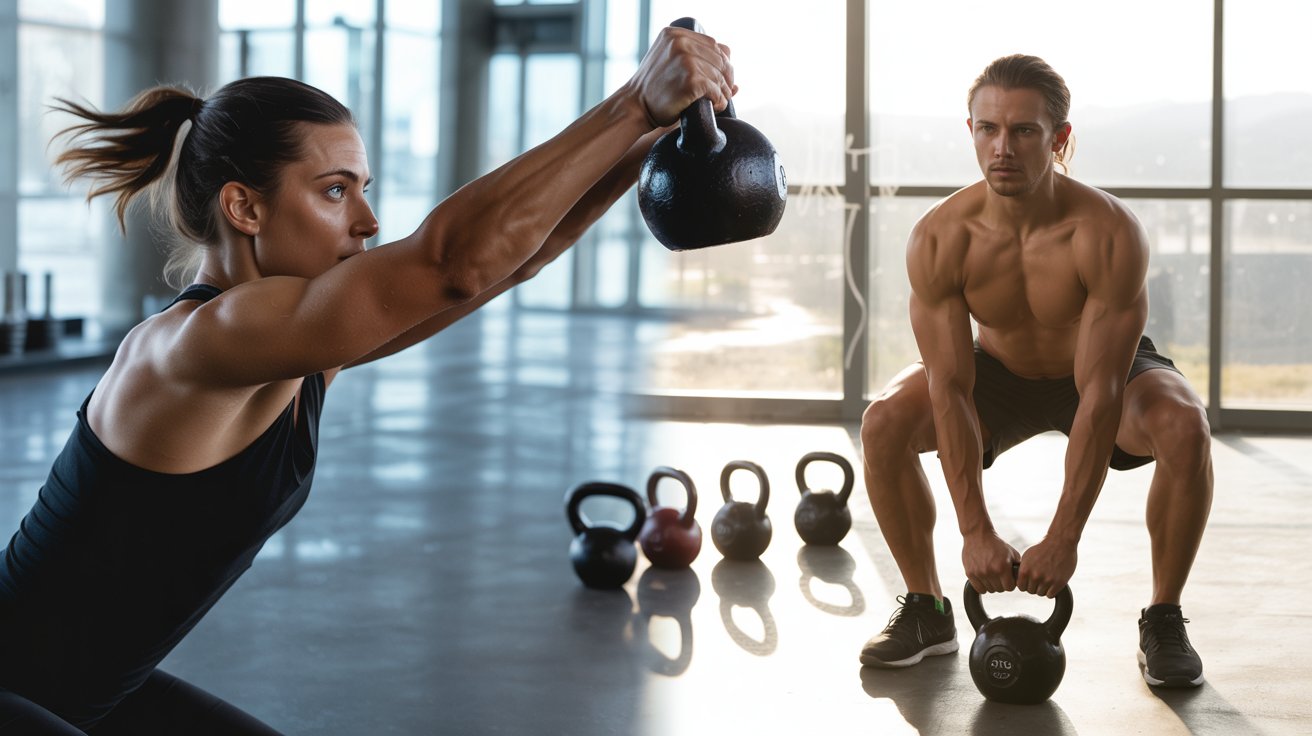
Different kettlebell exercises call for different weights depending on speed, control, and muscle demand.
Not all kettlebell movements work the same way. Some use explosive power and momentum. Others rely entirely on slow muscle control. The weight that’s right for one type of exercise can be completely wrong for another.
Knowing the difference helps you train smarter and stay safe.
Ballistic Exercises (Swings, Snatches)
Fast, explosive moves use momentum and full-body power. You can usually handle slightly heavier weights here.
- Beginner: Men 16 kg | Women 8 kg
- Intermediate: Men 20–24 kg | Women 12–16 kg
- Advanced: Men 28–32 kg | Women 20–24 kg
If your lower back rounds or your hips aren’t driving the movement, drop the weight.
Grind Exercises (Squats, Presses)
Slow and controlled with no momentum helping you. These feel much harder than ballistic moves at the same weight.
- Beginner: Men 12 kg | Women 6–8 kg
- Intermediate: Men 16–20 kg | Women 10–12 kg
- Advanced: Men 24–28 kg | Women 14–20 kg
Go lighter than you think. You’ll still feel it.
Recommended Kettlebell Weights for Men and Women
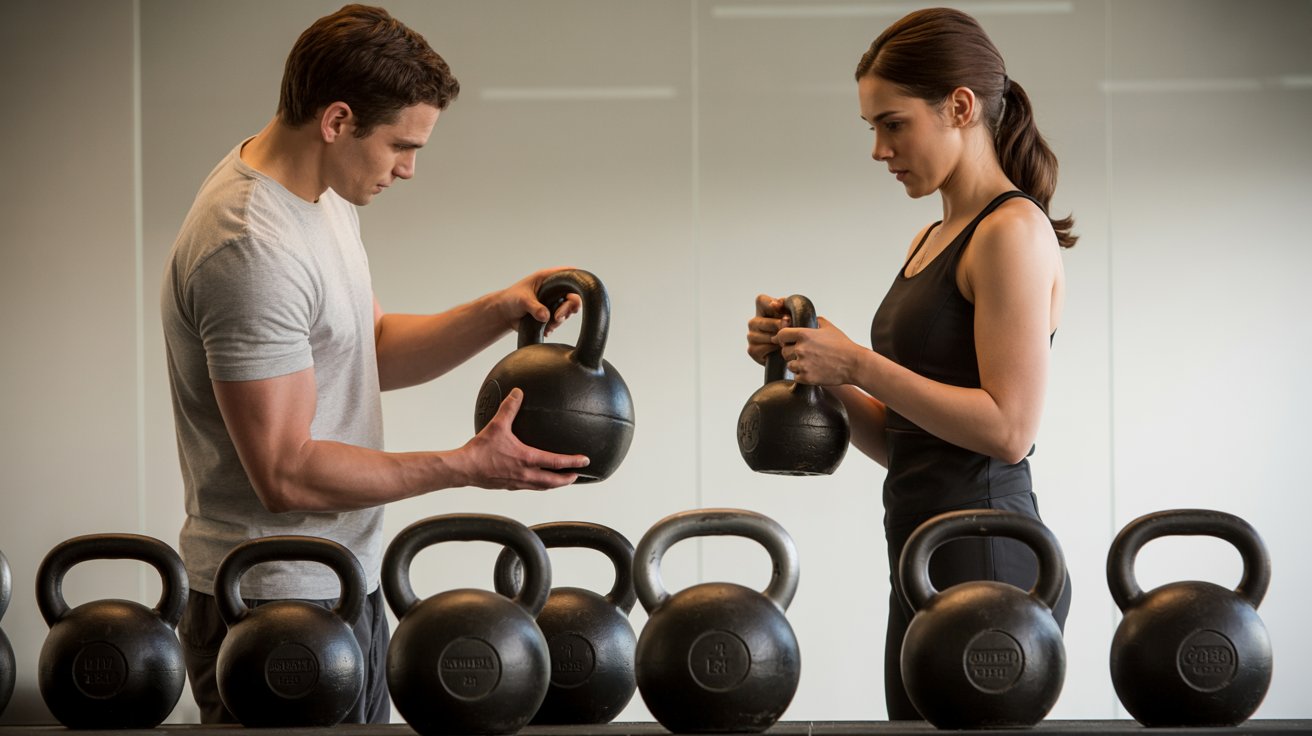
Clear weight ranges to make the decision simple for both men and women.
Kettlebell Weight for Men
- Beginner: 12–16 kg (26–35 lb)
- Intermediate: 20–24 kg (44–53 lb)
- Advanced: 28–40 kg (62–88 lb)
Kettlebell Weight for Women
- Beginner: 6–10 kg (13–22 lb)
- Intermediate: 12–16 kg (26–35 lb)
- Advanced: 20–28 kg (44–62 lb)
What Weight Kettlebell Should You Buy?
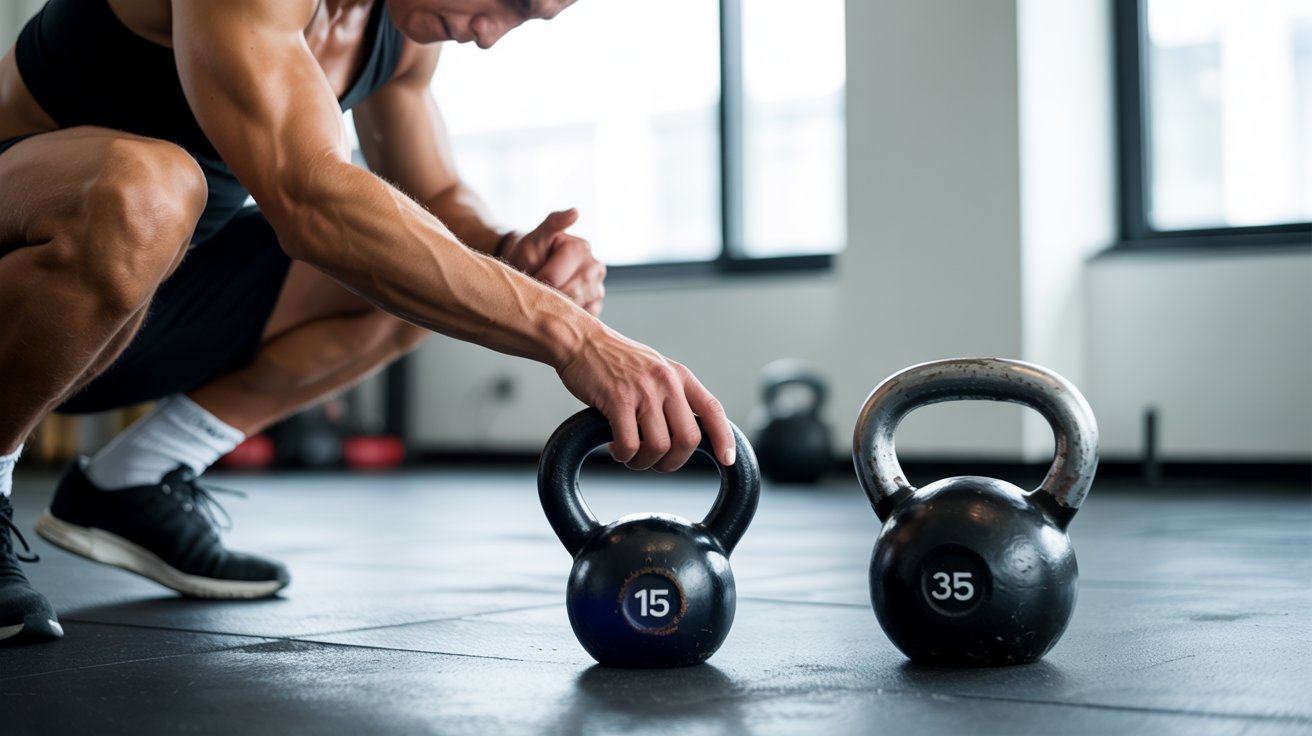
Start with a weight that matches your current fitness level. Most men do well with 16 kg, while most women can begin with 8 kg. If you are already active, go one size up from those starting points.
From there, adjust based on how your body responds. Move up when all your reps feel easy and your form stays clean. Drop down if your form breaks before the set ends.
If your budget allows, buy two sizes. One for controlled movements, one for power work. Train a few sessions, then adjust from there.
Quick Tips Before You Start
These small things make a big difference when you’re just starting out with kettlebells. Keep them in mind every session.
- Form always comes before weight
- Start light, build up slowly
- Only go heavier when you’re fully ready
- Consistency beats intensity every time
- Your body will tell you when something’s off
Conclusion
Figuring out what size kettlebell should I start with took me some trial and error too.
I started too heavy, my form suffered, and I had to step back. Once I went lighter and focused on moving correctly, everything clicked faster.
My advice? Pick a weight that challenges you without breaking your form. Start conservative, stay consistent, and progress will follow.
If this helped you, drop a comment below and share what weight you’re starting with. I’d love to hear how your training goes!
Frequently Asked Questions
What size kettlebell should a beginner start with?
Most beginner men do well starting with 12 to 16 kg. Most beginner women should start with 6 to 10 kg.
Is it better to start with a lighter or heavier kettlebell?
Always start lighter. It lets you build proper form first, which reduces injury risk and leads to faster progress over time.
Can I use the same kettlebell for all exercises?
You can, but it’s not ideal. Ballistic moves like swings allow heavier weights, while grind moves like presses need lighter ones for proper control.
How do I know when to move up to a heavier kettlebell?
When you can complete all your reps with clean form and the last few feel too easy, it’s time to increase the weight.
Do men and women need different kettlebell weights?
Yes, generally. Men typically start heavier due to differences in muscle mass. Women usually begin at a lower range but follow the same progression path.


