

If you want to build strength, burn fat, and improve your fitness, the sled push might be the best exercise you're not doing yet. I've trained with sleds for years, and the results speak for themselves.
In this guide, you'll learn what a sled push is, how it works, and 9 proven benefits that can change how you train.
We'll also cover muscles worked, proper technique, common mistakes, and how to add it to your routine. No fluff. Just clear, practical info you can use today.
What Is a Sled Push?
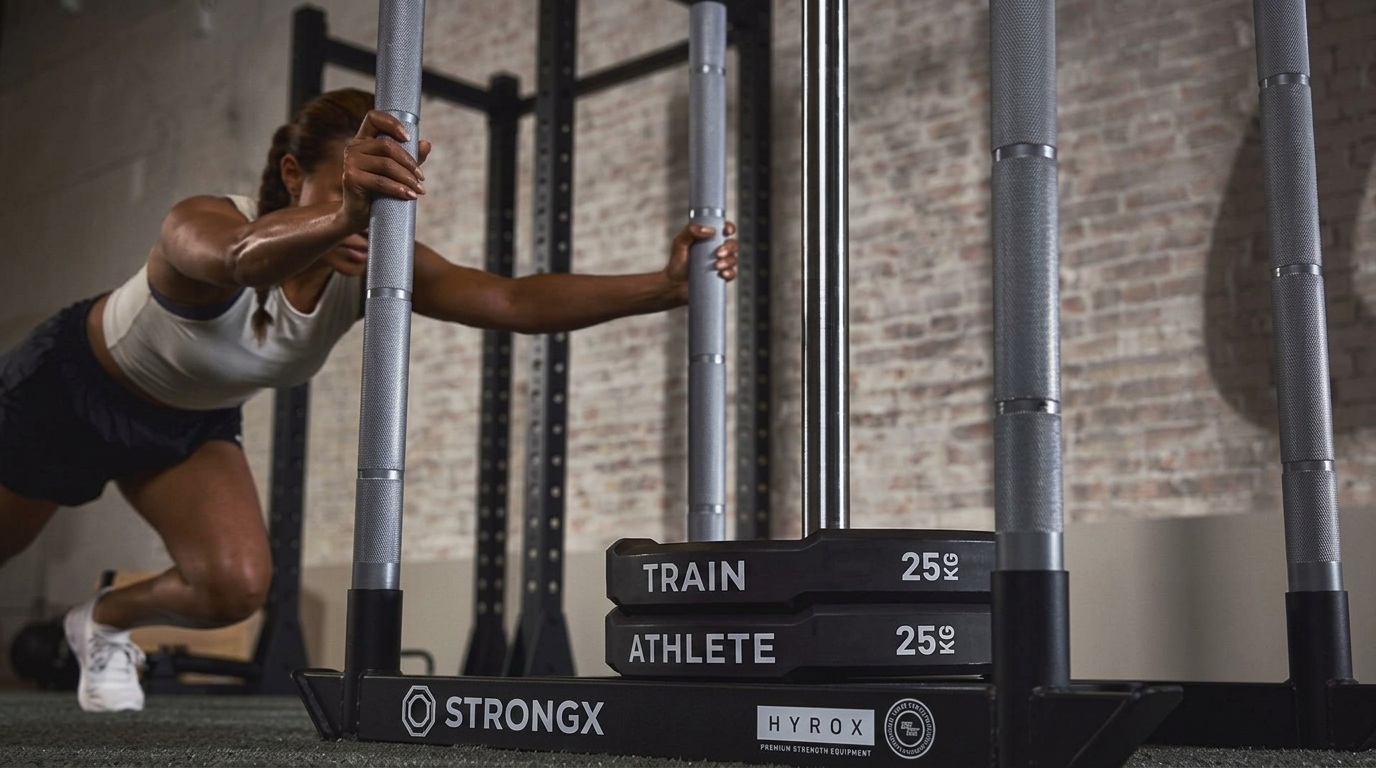
A sled push is a strength and conditioning exercise. You load weight onto a flat sled and push it across the floor.
It works your entire body, taxes your lungs, and builds real-world strength fast. You drive through the ground with your legs, your arms push forward, and your core stays tight. The harder you push, the higher your heart rate climbs.
It targets your quads, glutes, hamstrings, calves, shoulders, triceps, and core all at once.
Almost anyone can do it. Beginners, athletes, older adults, and people recovering from injury can all benefit. You control the weight and distance, so it fits any fitness level.
9 Benefits of Sled Push
Here are nine reasons why the sled push deserves a regular spot in your training plan.
1. Improves Lower-Body Strength

The sled push builds serious leg strength. Your quads, glutes, and hamstrings work together under load with every step.
Unlike squats or leg press, the sled push trains your muscles through a pushing motion. This mimics real-life movements like sprinting, climbing stairs, or carrying heavy objects.
Over time, consistent sled work leads to:
- Stronger legs
- Better force production
- Improved performance in other lifts
You don't need to go heavy right away. Even moderate weight builds strength if you stay consistent.
2. Increases Power and Explosiveness
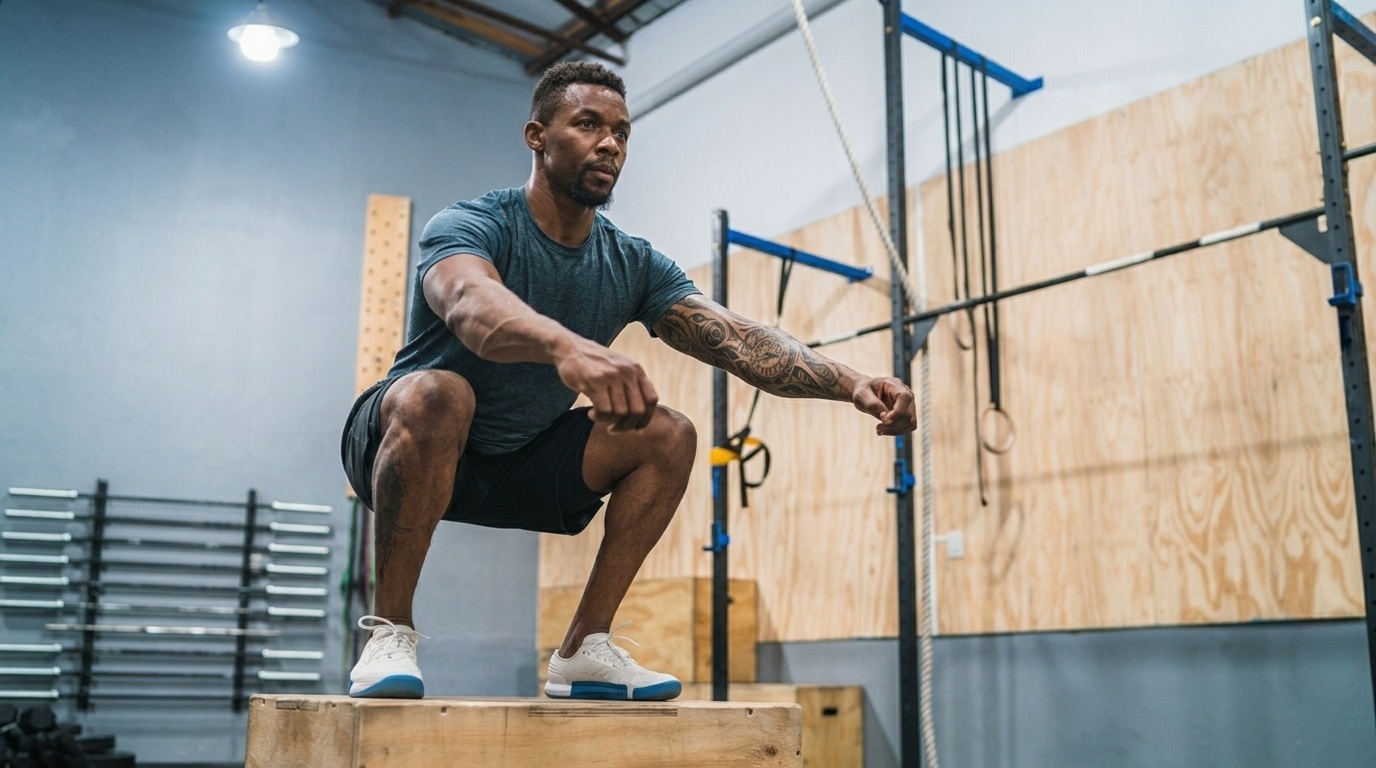
Power is the ability to produce force quickly. The sled push trains exactly that.
When you drive the sled with short, explosive steps, your fast-twitch muscle fibers activate. These fibers are responsible for speed and power.
Athletes use sled pushes to get faster, jump higher, and react more quickly.
This benefit applies to:
- Sprinters
- Football and soccer players
- Basketball athletes
- Anyone who wants to move with more force
Even if you're not an athlete, more power means better performance in daily activities.
3. Improves Speed and Acceleration

If you want to run faster, the sled push helps. It trains the same muscle patterns used in sprinting.
Pushing a loaded sled forces your body to work against resistance. When you remove that resistance and sprint freely, your body feels lighter and moves faster.
This training method is called resisted sprinting. Coaches have used it for decades to improve athlete speed.
Key benefits for speed:
- Better stride mechanics
- Stronger push-off from the ground
- Faster acceleration from a standstill
Even a few sessions per week can lead to noticeable improvements.
4. Boosts Cardiovascular Fitness

The sled push is tough on the lungs. Your heart rate climbs fast, and your breathing increases quickly.
This makes it one of the best conditioning tools available. It challenges your cardiovascular system without the repetitive impact of running.
For cardio benefits, try:
- Short, intense pushes (10-20 meters) with brief rest
- Longer distances (30-40 meters) at a steady pace
- Interval-style workouts alternating between heavy and light loads
The sled push can replace traditional cardio for people who find running boring or hard on the body.
5. Supports Fat Loss and Calorie Burn
The sled push burns a lot of calories. It works large muscle groups at high intensity, which means your body uses more energy.
After a sled session, your metabolism stays elevated. Your body keeps burning calories even after you stop training. This effect is known as excess post-exercise oxygen consumption, or EPOC.
For fat loss, sled pushes work well because:
- They burn calories fast during the workout
- They keep your metabolism active afterward
- They build muscle, which raises your resting calorie burn
Pairing sled pushes with a solid diet makes fat loss more effective.
6. Provides a Full-Body Workout
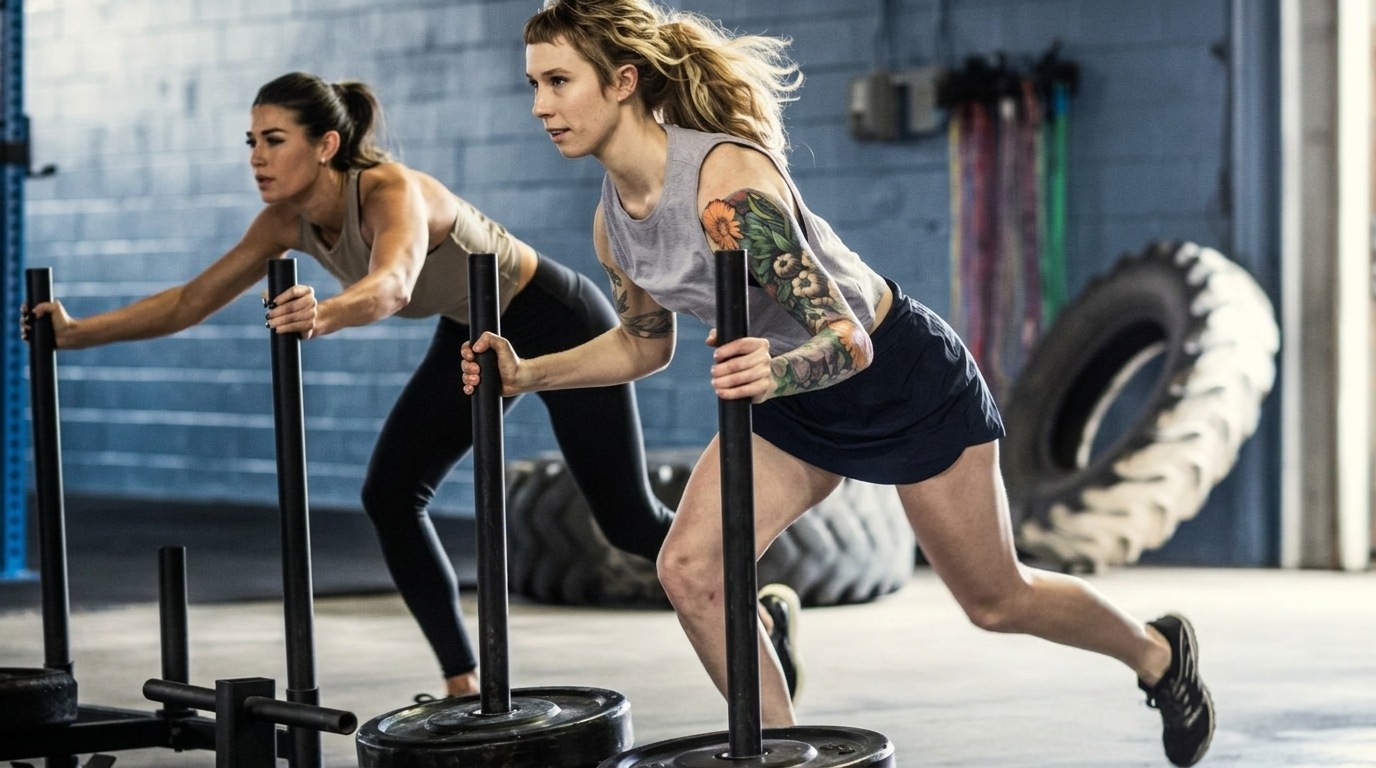
Most exercises focus on one area. The sled push trains everything at once.
Your legs drive the movement. Your core stabilizes your body. Your arms and shoulders push the handles. Every part of your body is working.
This makes sled pushes great for:
- People with limited training time
- Anyone who wants to train more muscles in fewer sets
- Those looking for a simple but effective workout structure
You can get a complete training session with just a sled and some space.
7. Low Impact on Joints

High-impact exercises like running and jumping put stress on your knees, hips, and ankles. Over time, this can lead to pain or injury.
The sled push is different. Your feet stay in contact with the ground. There's no jumping or pounding. The movement is controlled and smooth.
This makes it a smart choice for:
- People with knee or hip discomfort
- Older adults who want to stay active
- Athletes returning from injury
- Anyone looking to reduce joint stress while still training hard
You get the conditioning and strength benefits without the wear and tear.
8. Improves Muscular Endurance
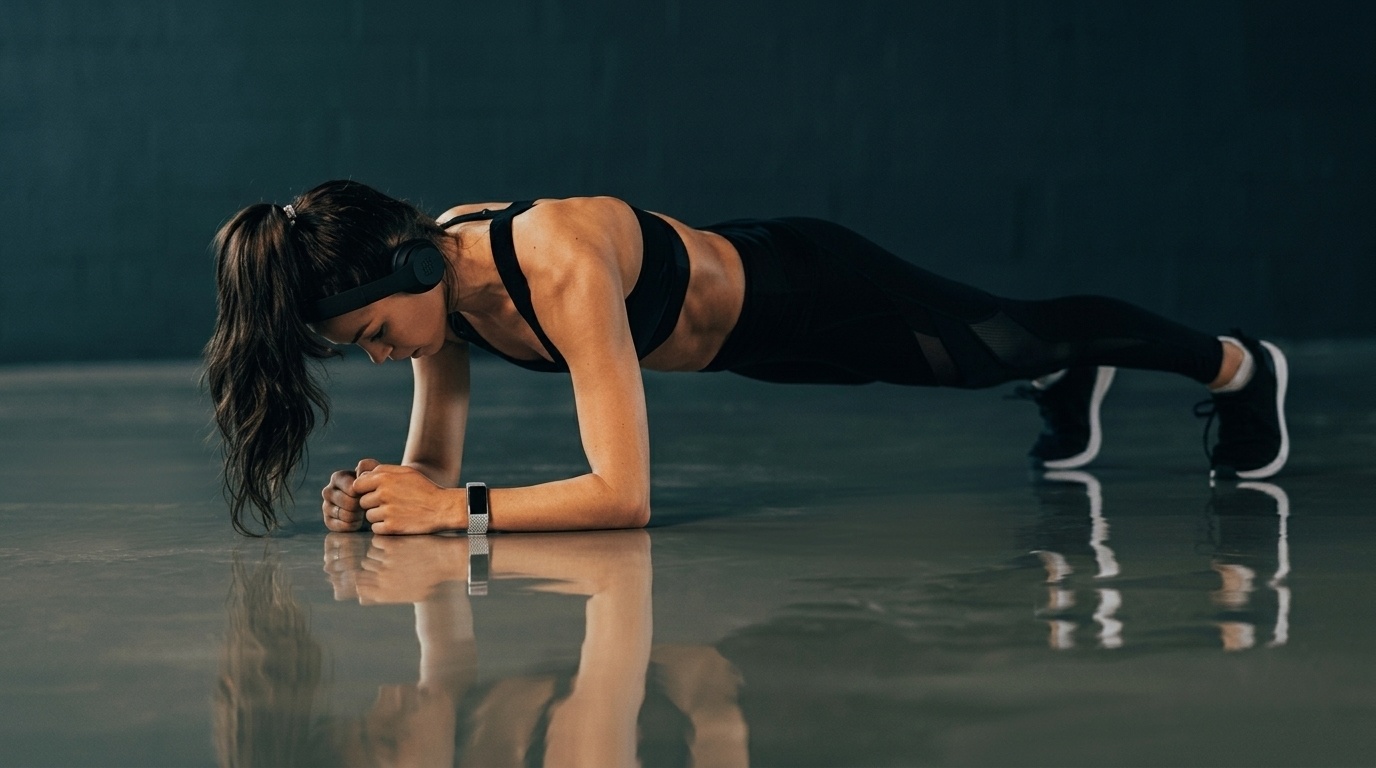
Muscular endurance is your ability to keep your muscles working over time. The sled push builds this quality well.
When you push a sled for longer distances or repeat short sets with minimal rest, your muscles learn to work longer before fatiguing.
Better muscular endurance means:
- You can train harder for longer
- Everyday tasks feel less tiring
- Sports performance improves
- Recovery between sets gets faster
Start with shorter distances and build up. Your endurance will grow faster than you expect.
9. Suitable for All Fitness Levels
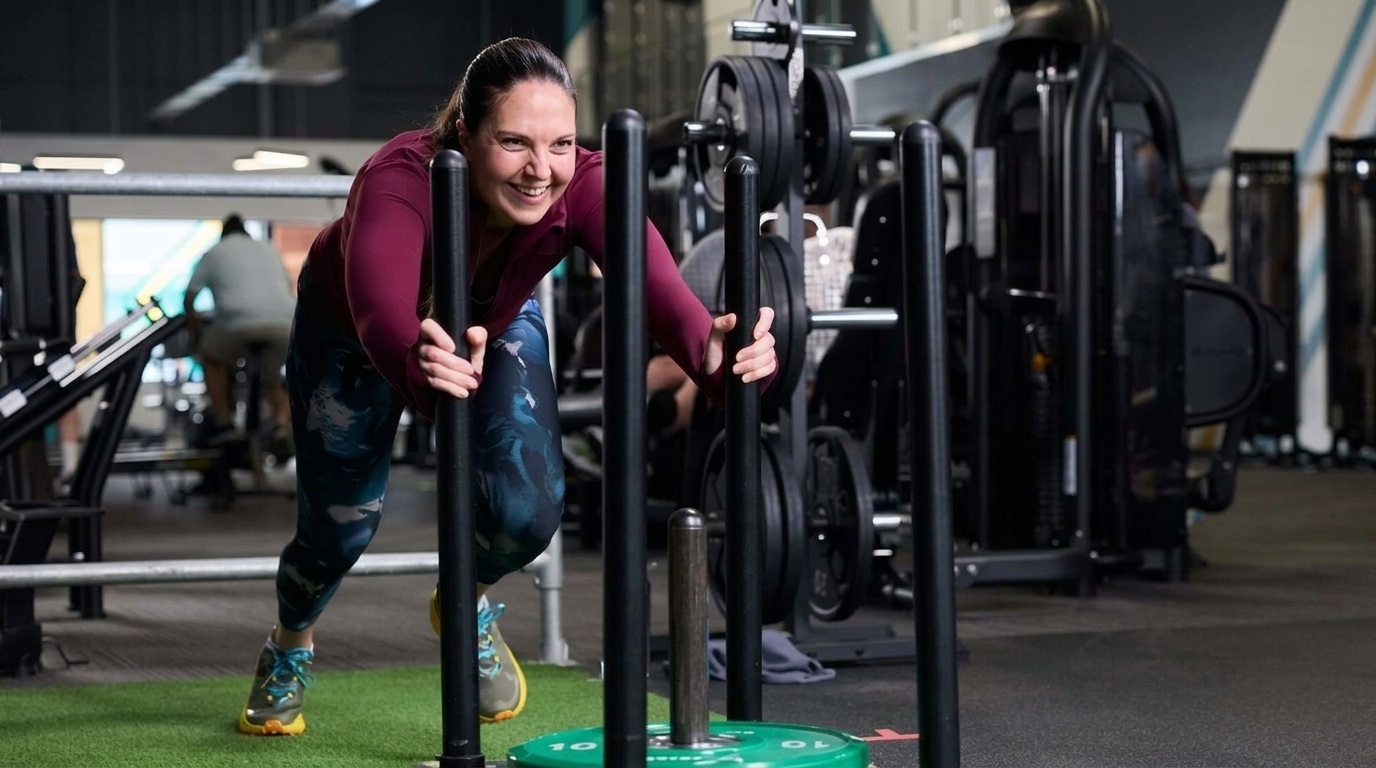
One of the best things about the sled push is how flexible it is. You can make it easy or extremely hard.
Beginners can start with no added weight. Advanced athletes can load the sled heavy and sprint.
You can adjust:
- Load: Add or remove weight plates
- Distance: Push shorter or longer distances
- Rest time: Shorter rest increases intensity
- Speed: Slow pushes build strength, fast pushes build power
No matter where you are in your fitness, the sled push fits your level.
How to Perform a Sled Push Correctly
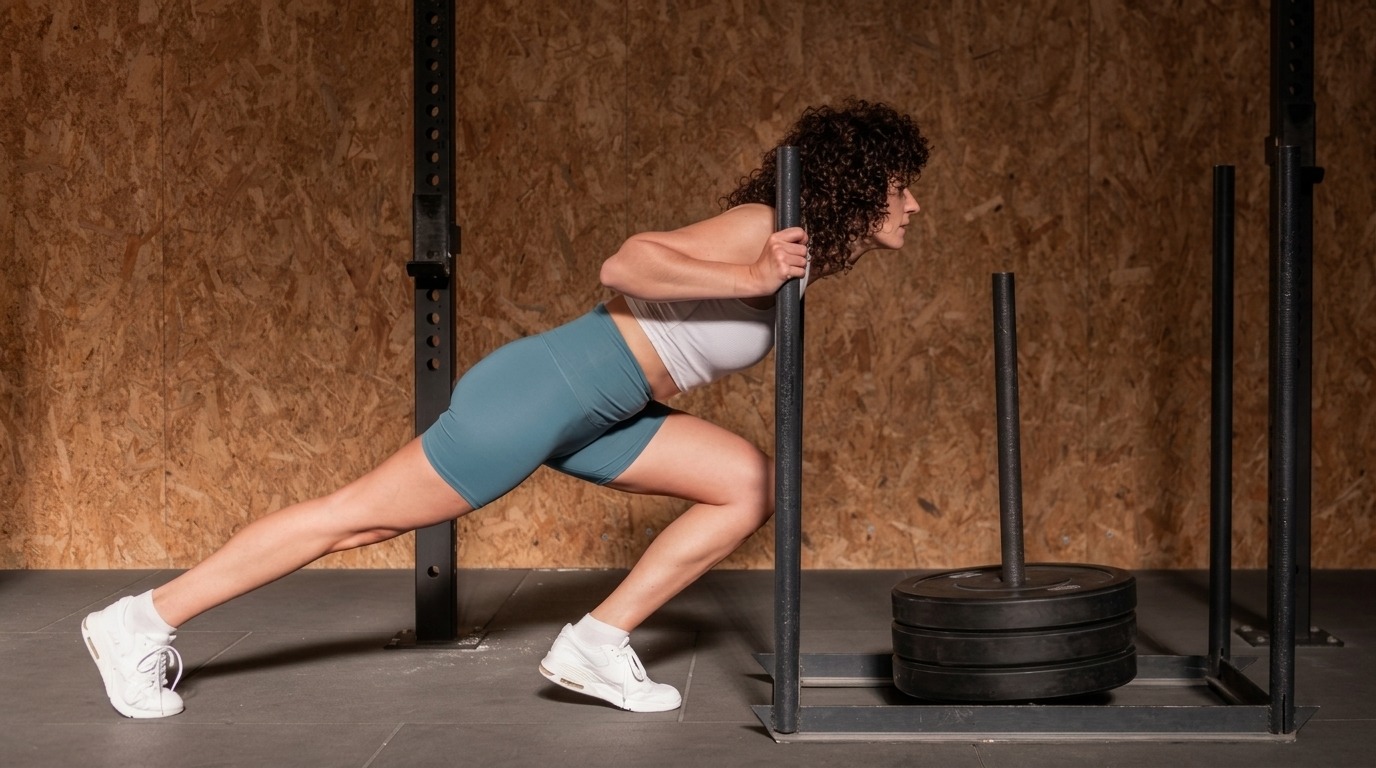
Learning the right way to push a sled makes every session safer and more effective.
Proper Sled Push Technique
Good technique keeps you safe and makes every rep more effective.
Follow these steps:
Step 1:Set up the sled. Place weight plates on the sled. Start light if you're new to this exercise.
Step 2:Grip the handles. Hold the handles firmly. Your hands should be roughly shoulder-width apart.
Step 3: Set your body angle. Lean forward at about a 45-degree angle. The more you lean, the more power you can generate.
Step 4:Drive with your legs. Push off with one foot, then the other. Take short, powerful steps. Keep your feet close to the ground.
Step 5:Keep your core tight. Your abs should stay braced throughout the push. This protects your lower back.
Step 6:Look ahead. Keep your head in a neutral position. Don't look down at the ground.
Step 7:Breathe steadily. Exhale as you drive. Don't hold your breath under effort.
Common Mistakes to Avoid
Even simple exercises have common errors.
Here are the ones to watch for:
1.Standing too upright. If your body is too vertical, you lose power. Lean forward and push at an angle.
2. Taking steps that are too long. Long strides reduce your push force. Keep your steps short and quick.
3. Using too much weight too soon. Heavy loads with poor form lead to injury. Start light and build up.
4. Letting your hips rise. If your hips go higher than your shoulders, you're losing power and putting stress on your back. Keep your body in a straight line from shoulders to hips.
5. Not bracing your core. A loose core leads to energy leaks and back strain. Stay tight throughout.
6. Holding your breath. This raises blood pressure and reduces endurance. Breathe consistently.
Safety Tips for Better Results
Follow these tips to train smart and stay injury-free:
- Warm up first: Do 5-10 minutes of light movement before using the sled
- Start with no added weight: Master the movement before loading
- Use proper footwear: Flat shoes with good grip work best
- Train on a smooth surface: Avoid uneven ground that can cause slips
- Rest between sets: Give yourself enough time to recover before the next push
- Listen to your body: Discomfort is normal. Sharp pain is not. Stop if something feels wrong.
- Progress gradually: Add weight slowly, week by week
How to Add Sled Pushes to Your Workout Routine
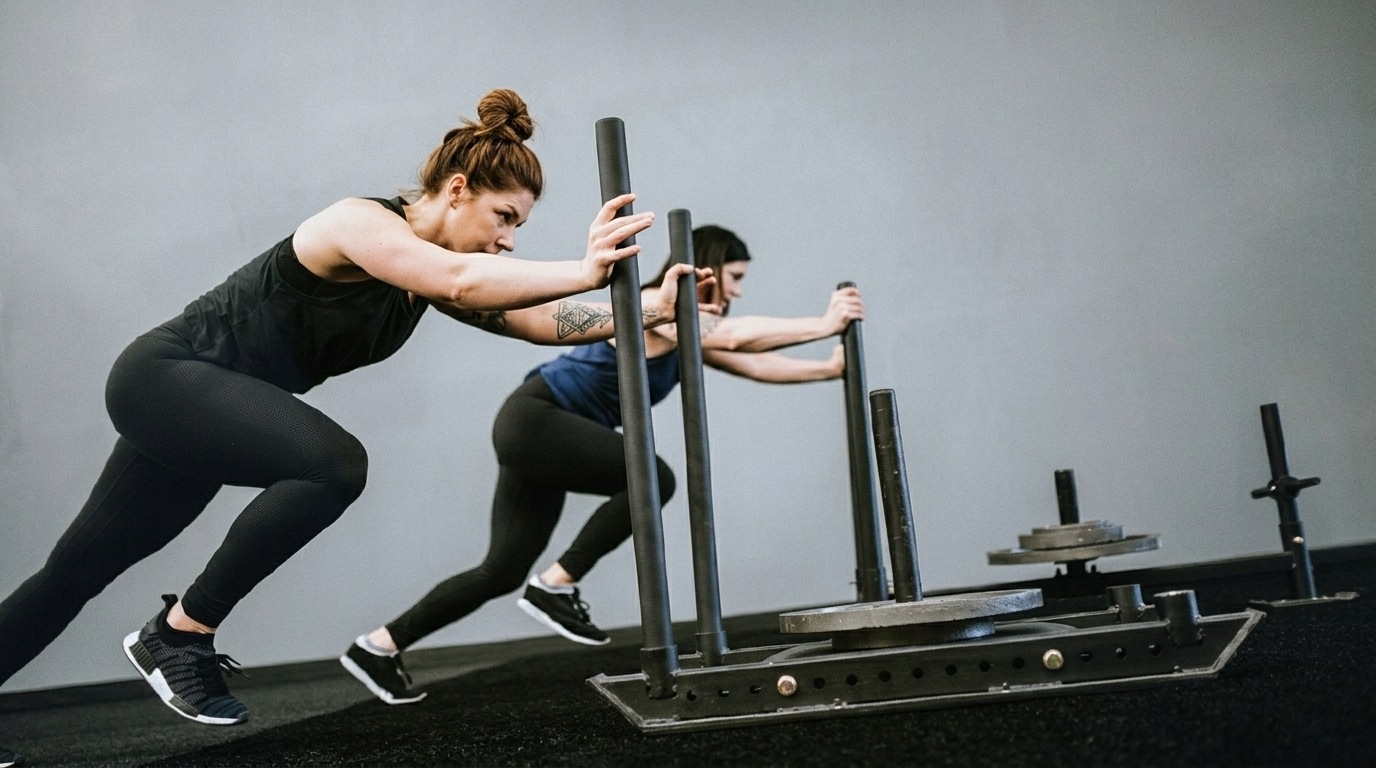
Adding sled pushes to your routine is simple. You just need to match the load and distance to your goal.
For strength, use heavy loads and push 10-15 meters per set. Do 4-6 sets with 2-3 minutes of rest between each. Push at a slow, controlled pace and focus on driving hard with your legs. Pair it with squats or deadlifts for a solid lower-body day.
For conditioning, go lighter and push 20-40 meters per set. Do 6-10 sets with only 30-60 seconds of rest. Your heart rate will stay high the whole time. This works great as a cardio session or a finisher after strength training.
For sports performance, adjust based on what you need. Use light loads for speed work over 10-20 meters. Use heavier loads for power and explosive starts. For game-like conditioning, do 8-12 sets of 20 meters with 45 seconds of rest between each.
Keep it simple. Pick your goal, set your load, and push.
Conclusion
Sled pushes have honestly changed the way I think about training. They're simple, effective, and work for almost anyone.
If you've been skipping them, now is a good time to start. Load up a sled, push it across the floor, and feel the difference in your legs, lungs, and overall fitness.
Start light. Focus on form. Add weight as you get stronger.
Did you find this guide helpful? Leave a comment below and let me know. Share it with a friend who's looking to improve their fitness routine.
Frequently Asked Questions
How heavy should the sled be for beginners?
Start with no added weight and focus on technique first. Once you're comfortable, add 10-20 kg and build from there.
How often should I do sled pushes in a week?
Two to three sessions per week works well for most people. Give your muscles at least one rest day between sessions to recover properly.
Can sled pushes replace running for cardio?
Yes, they can. Sled pushes raise your heart rate and challenge your cardiovascular system without the joint stress that comes with running.
Do I need special equipment or a gym to do sled pushes?
You need a sled and a flat surface. Many gyms have sleds available. You can also buy a basic sled for home use at a reasonable cost.
Are sled pushes good for weight loss?
Yes. Sled pushes burn a high number of calories and keep your metabolism active after the workout, making them a strong option for fat loss when paired with good nutrition.