
Most people train their chest and arms and completely forget about their traps. Then they wonder why their upper body looks flat from behind.
I made that mistake for years.
Your trapezius muscles cover a huge part of your back. They run from your skull all the way down to your mid-back. Building them changes how your entire upper body looks and performs.
Strong traps also fix your posture, protect your spine, and make you stronger on almost every pull and press movement.
In this post, I am breaking down the 11 best trapezius exercises that actually work.
Let's get into it.
What Are the Trapezius Muscles?

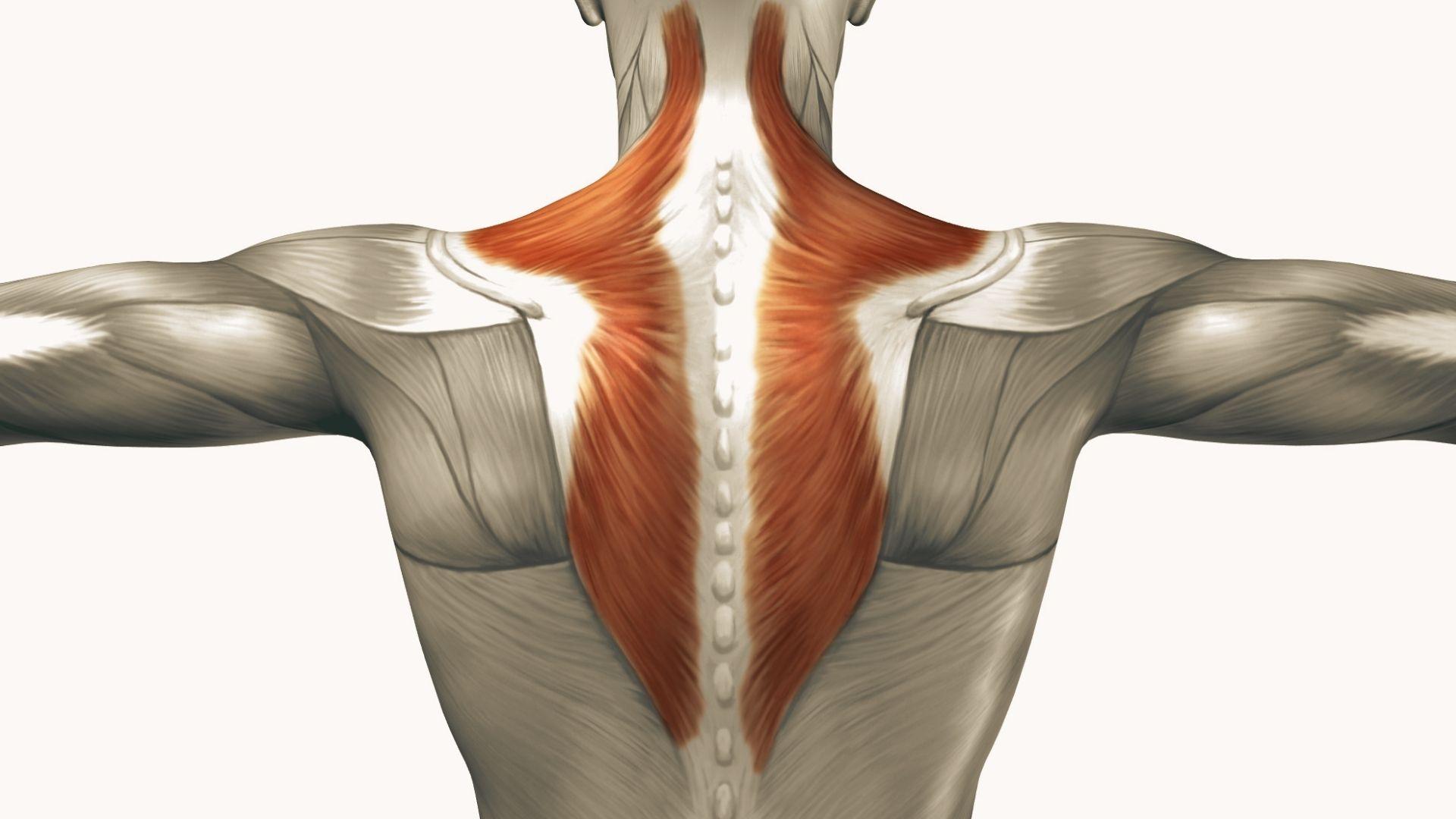
The trapezius is a large, flat muscle that runs from the base of your skull down to your mid-back and across both shoulders.
It has three parts: the upper traps help lift your shoulders and neck, the middle traps pull your shoulder blades together, and the lower traps pull them down.
Strong traps improve your posture, protect your spine, and boost performance in pulling, pressing, and overhead movements.
How to Train the Trapezius for Strength and Size
Training your traps the right way makes a big difference. You need the correct exercises, rep ranges, and consistency to build real size and strength.
The Importance of Targeting All Three Trap Regions
Most people only train their upper traps and skip the rest. All three regions, upper, middle, and lower, play different roles. Hitting all three gives you balanced muscle development and better overall back strength.
Best Rep Ranges for Muscle Growth
For trap size, mix heavy sets of 6 to 8 reps with moderate sets of 10 to 15 reps. Heavy work builds strength, and higher reps increase volume. Both together push muscle growth faster than sticking to just one range.
Common Trap Training Mistakes to Avoid
- Shrugging with only your upper traps and ignoring the middle and lower regions
- Using too much weight and losing proper form
- Skipping full range of motion on every rep
- Rushing through sets instead of feeling the muscle work
- Never training lower traps at all, which leads to imbalances
Top 11 Best Trapezius Exercises for Strength and Muscle Growth
These 11 exercises cover all three regions of your traps. Add them to your routine and you will start building real thickness and strength across your entire upper back.
1. Barbell Shrug
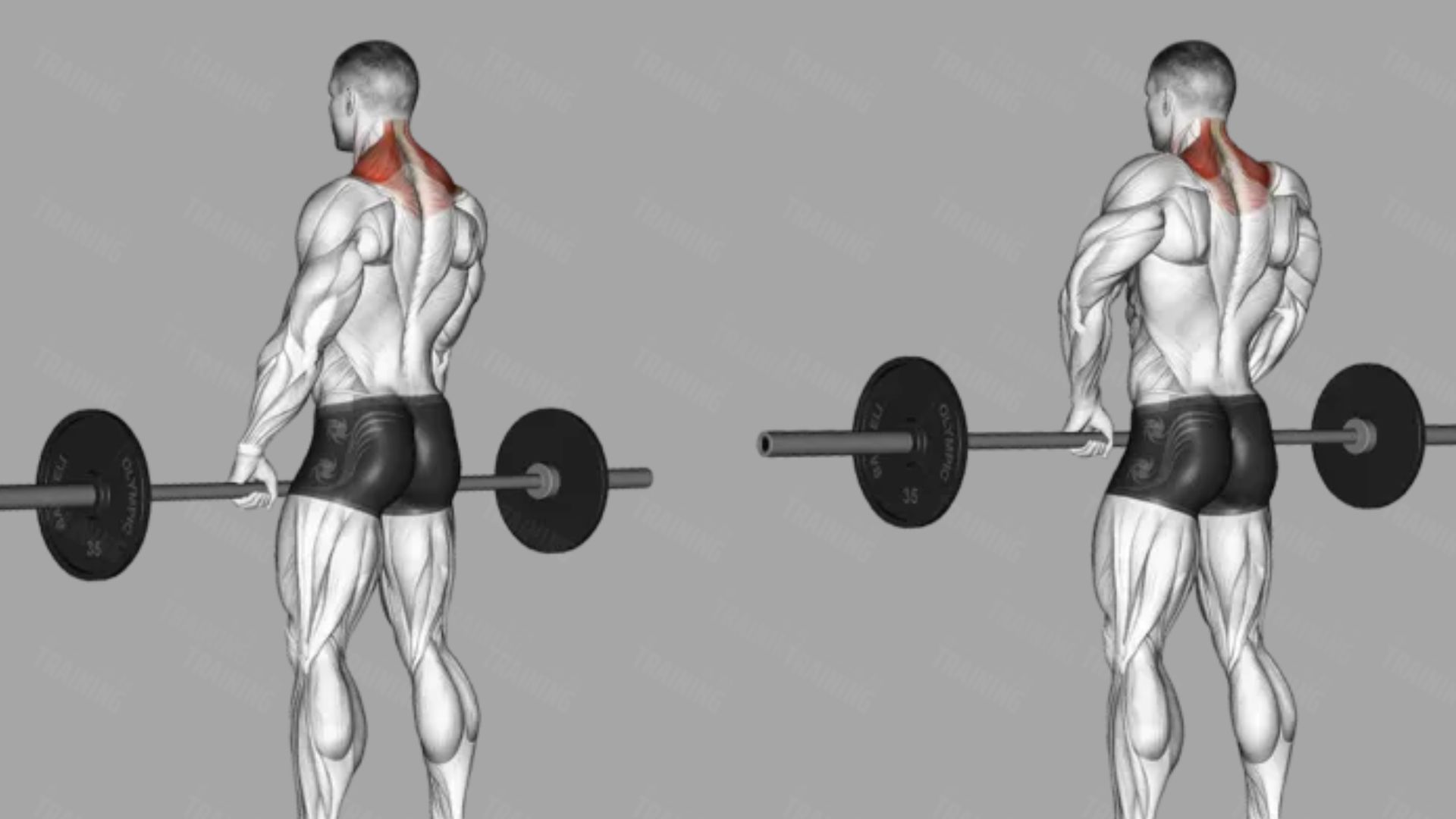
The barbell shrug is a classic upper trap builder. Hold a barbell in front, shrug your shoulders straight up, then lower slowly.
Keep your back straight and avoid rolling your shoulders. That small detail protects your neck and gets better muscle activation.
2. Dumbbell Shrug
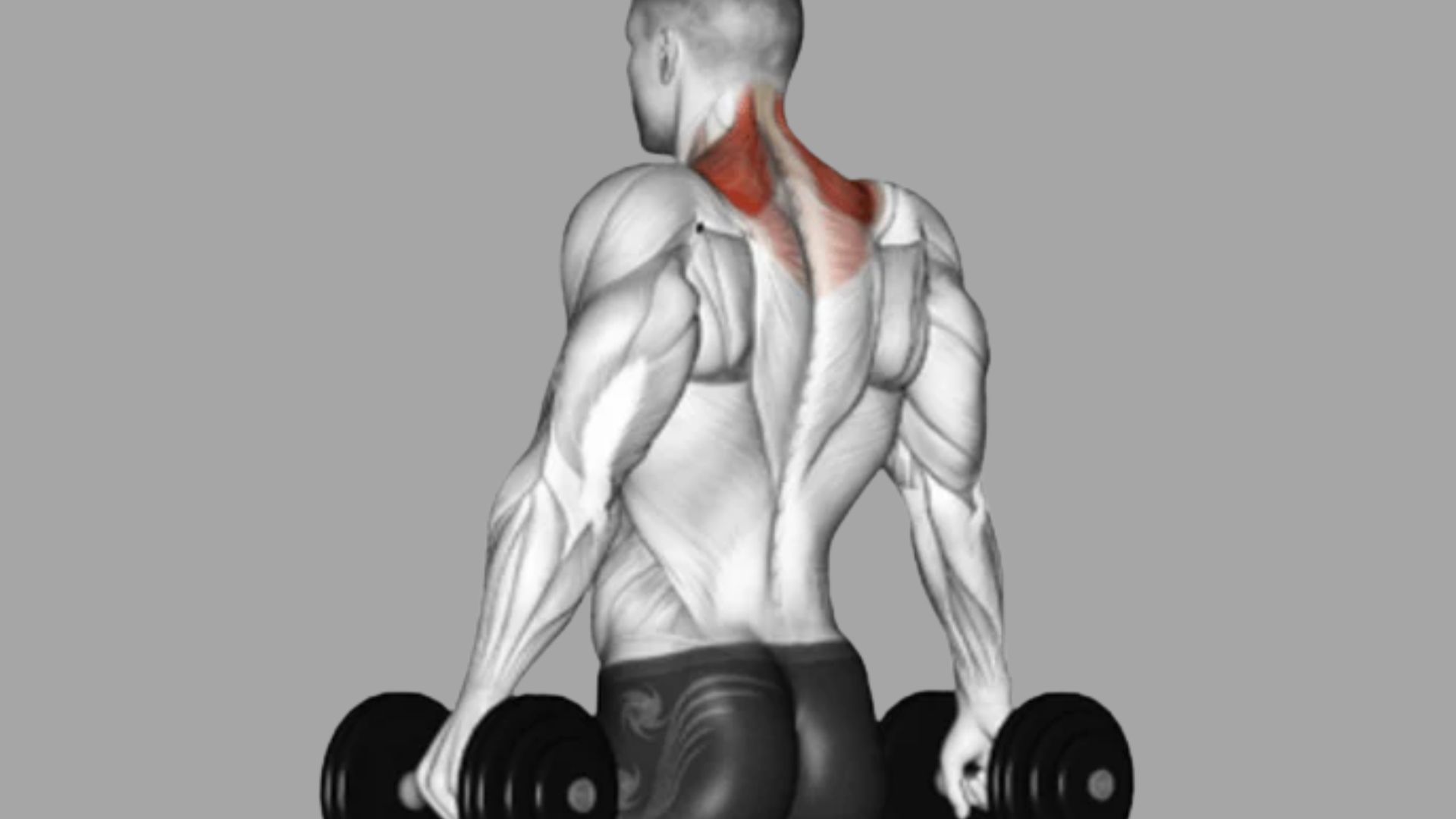
Dumbbell shrugs let each side work independently, which helps fix muscle imbalances. Hold a dumbbell in each hand, shrug up, pause at the top, and lower with control.
Great for beginners and experienced lifters alike. The freedom of movement makes it easier to feel each trap working on its own.
3. Trap Bar Shrug
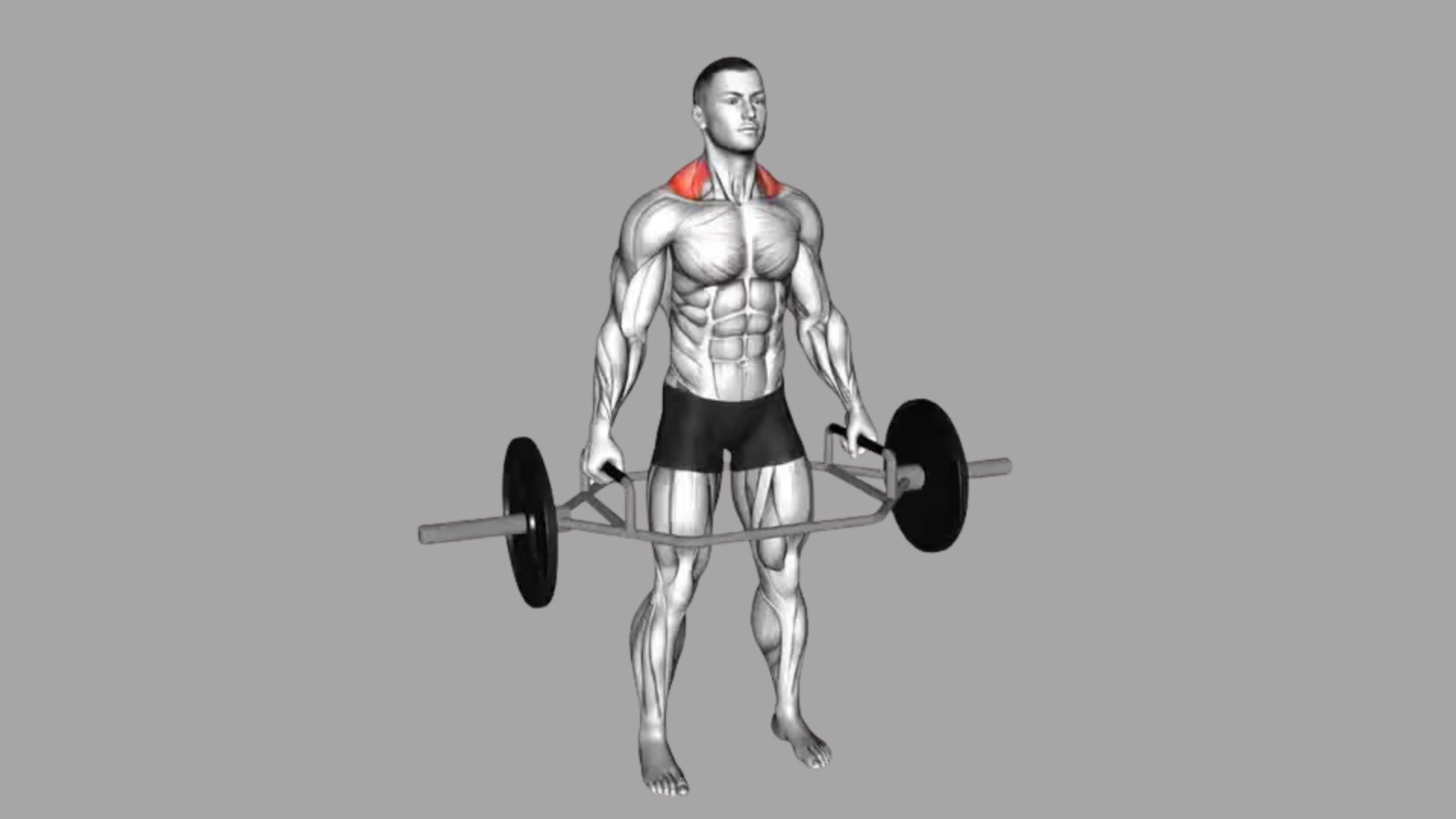
The trap bar puts less stress on your wrists and shoulders. Stand inside the bar, grip the handles, and shrug straight up.
The neutral grip makes it more comfortable and lets you move heavier weight safely. A solid choice if regular shrugs feel awkward on your joints.
4. Smith Machine Shrug
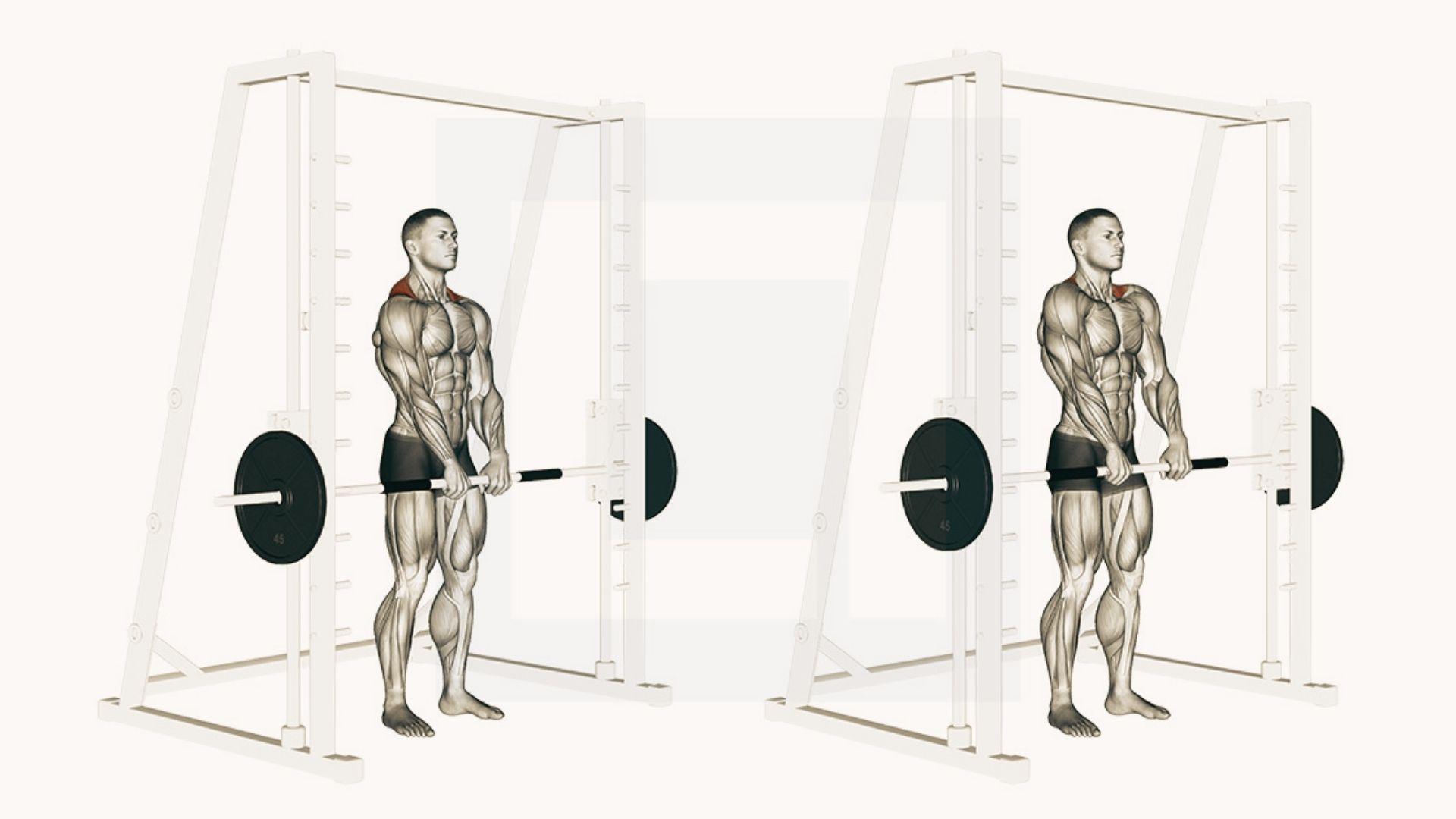
The Smith machine keeps the bar on a fixed path, so you can focus fully on your traps. Load it up, grip the bar, and shrug with control.
Good option when you want to train heavy without a spotter. The fixed bar path also removes the need to balance the weight yourself.
5. Behind-the-Back Barbell Shrug
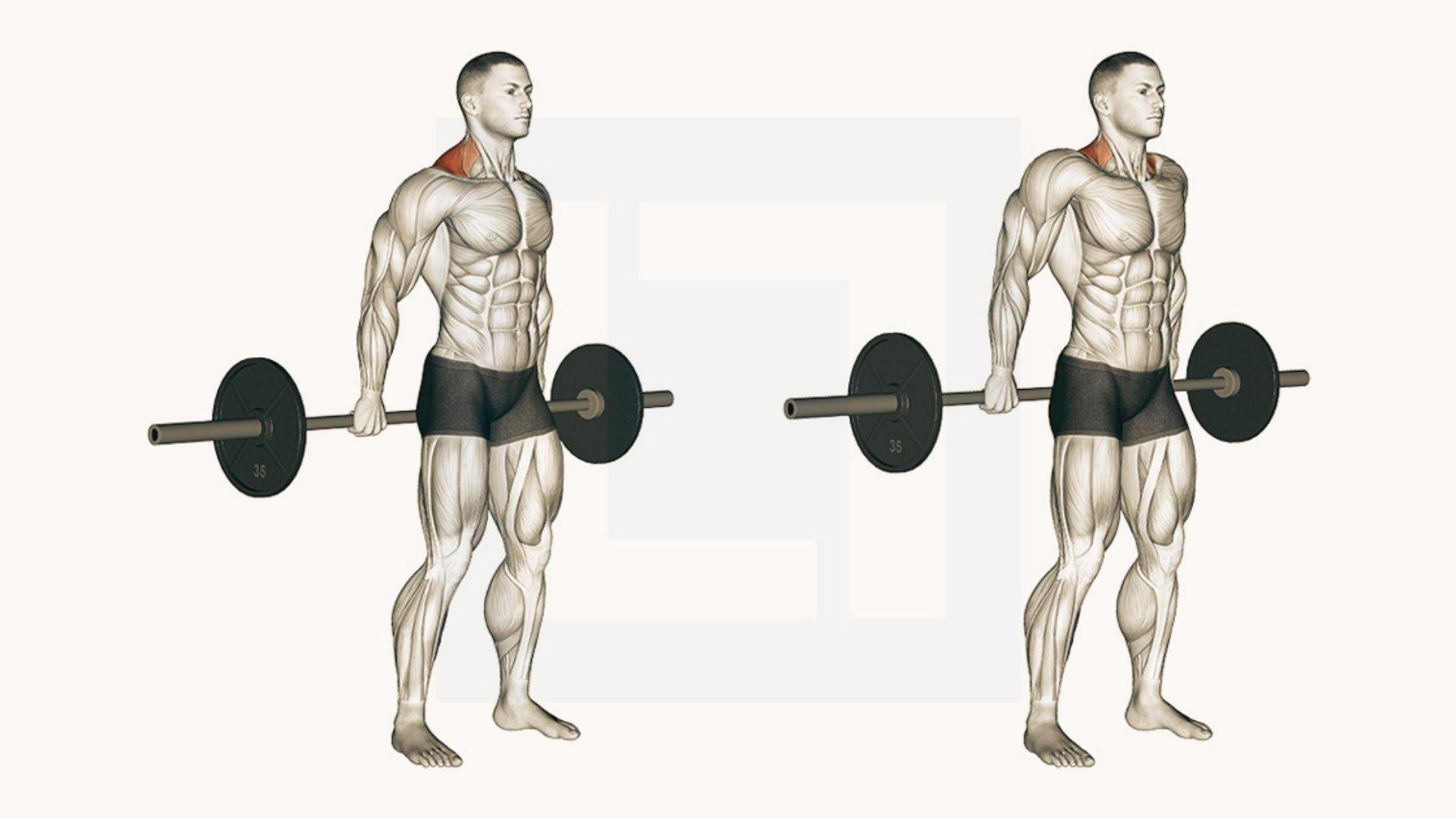
This variation shifts focus and hits the mid and upper traps from a different angle. Hold the bar behind your body, shrug up, and squeeze at the top.
Keep the movement clean and avoid leaning forward. It feels different from a regular shrug and that change in angle adds variety to your trap training.
6. Upright Row
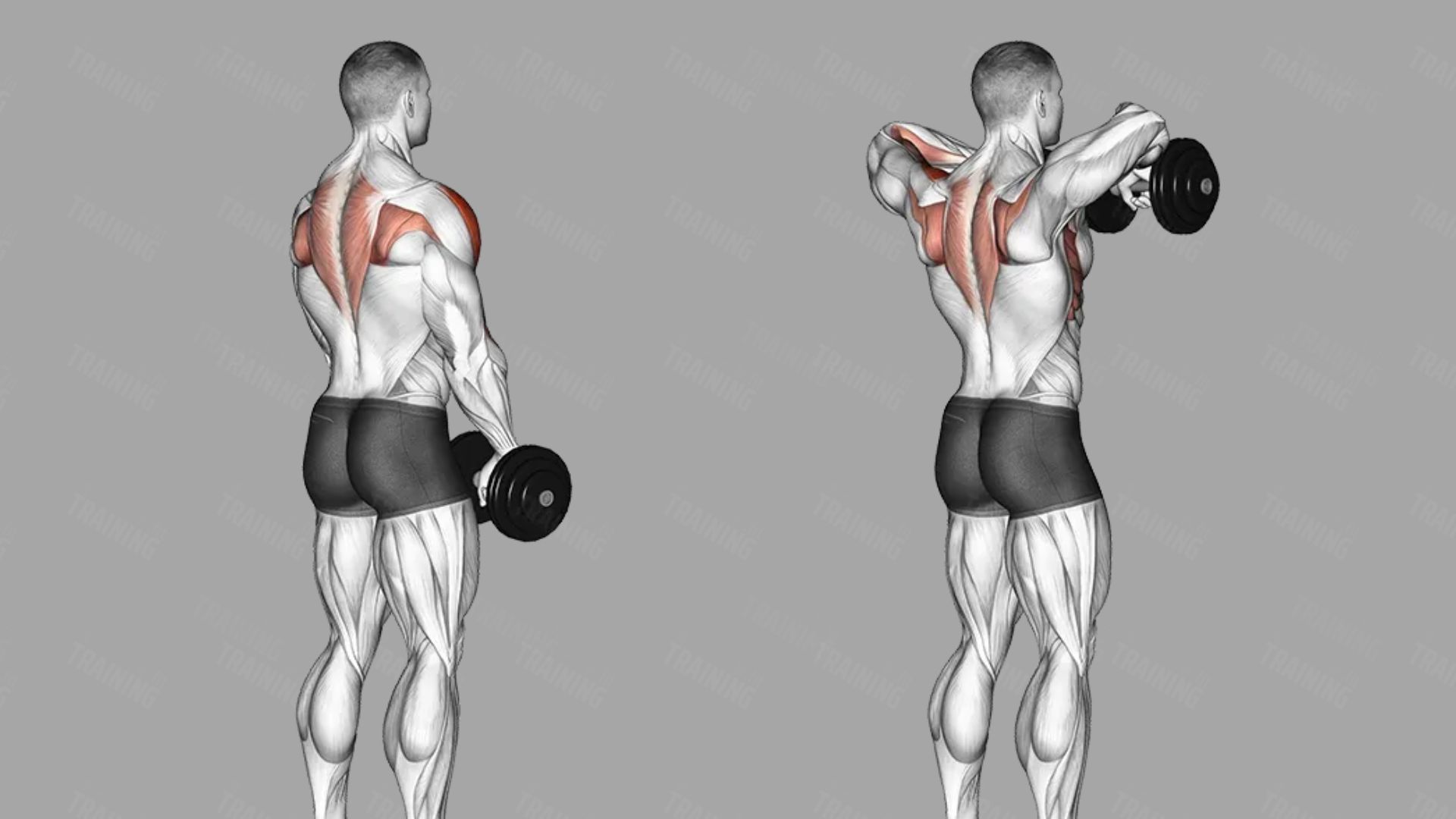
Standing cable face pull exercise demonstration showing extended arms and pulled position, rear deltoids and traps highlighted red
The upright row works your upper traps and rear deltoids together. Pull the bar or dumbbells straight up along your body until your elbows reach shoulder height.
Keep the weight moderate and avoid pulling too high. Going past shoulder height puts unnecessary strain on your shoulder joints over time.
7. High Pull
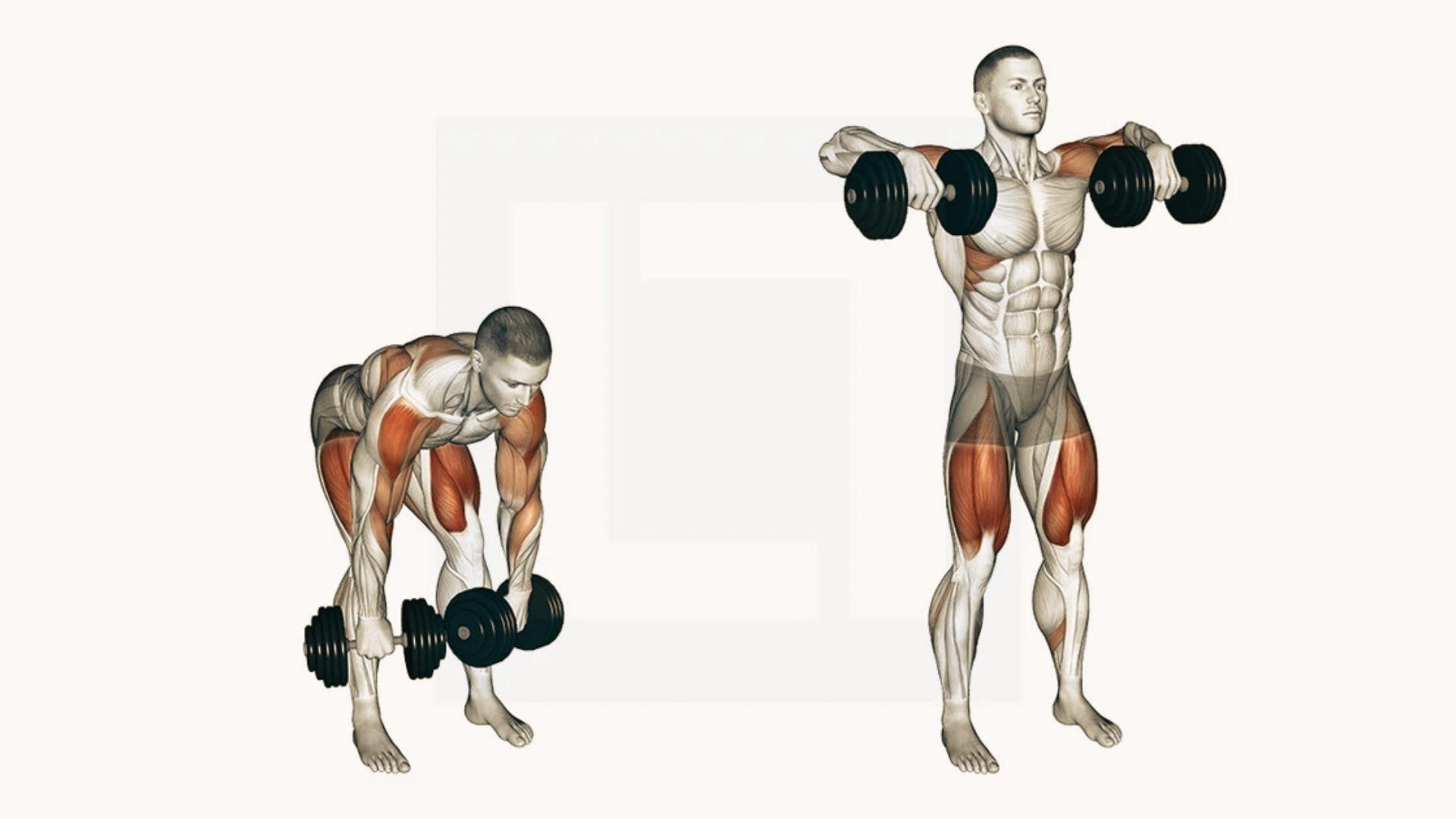
The high pull is an explosive move that activates your traps hard. Start with the bar at hip level, then pull it up fast with a shrug at the top.
It builds both power and trap thickness when done with good form. This one is especially useful if you want to add some athleticism to your trap training.
8. Face Pull
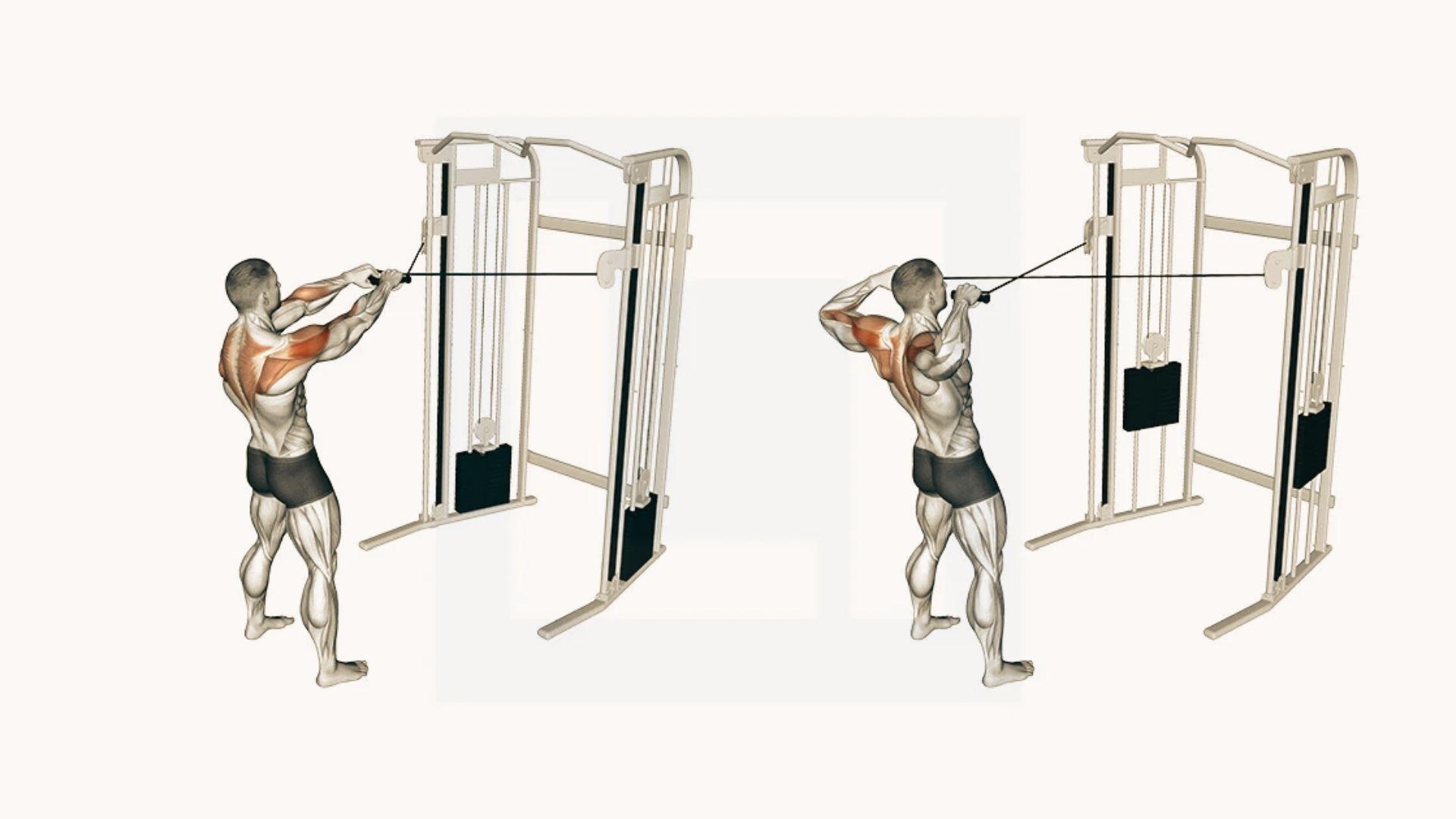
Face pulls target the middle and lower traps along with the rear delts. Attach a rope to a cable machine, pull it toward your face, and flare your elbows out.
This move also improves shoulder health and posture over time. Most lifters who add face pulls regularly notice less shoulder tightness within a few weeks.
9. Prone Y Raise
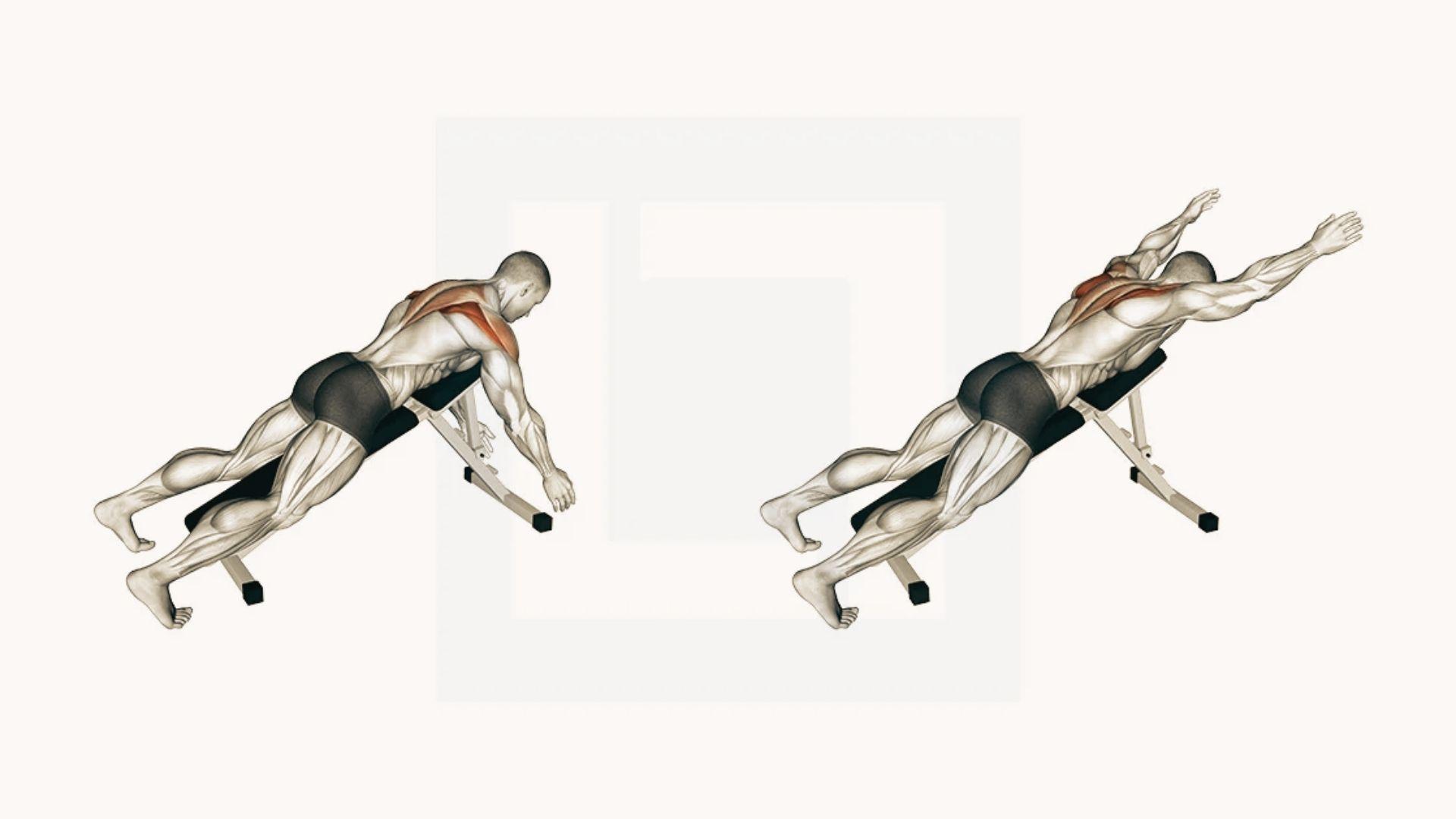
Lie face down on a bench and raise your arms into a Y shape with thumbs pointing up. This move directly works your lower traps, which most people never train.
Light weight is enough here since the lower traps fatigue quickly. Do not let the easy setup fool you, this one burns fast.
10. Prone Horizontal Abduction
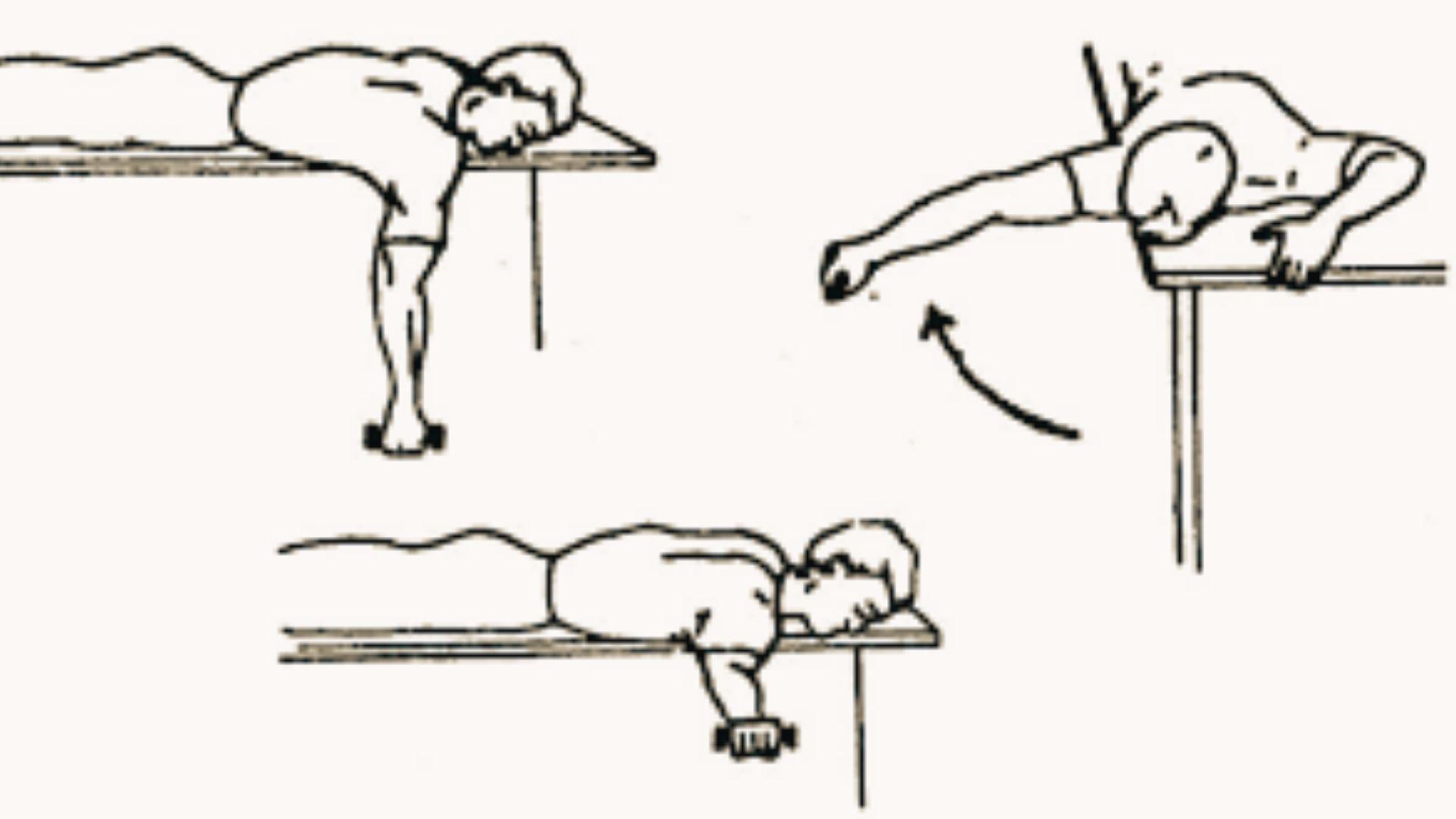
Lie face down and raise both arms straight out to the sides to form a T shape. This hits the middle and lower traps well.
Use light dumbbells, move slowly, and squeeze your shoulder blades together at the top of each rep. Controlled reps here matter more than the amount of weight you use.
11. Inverted Shrug
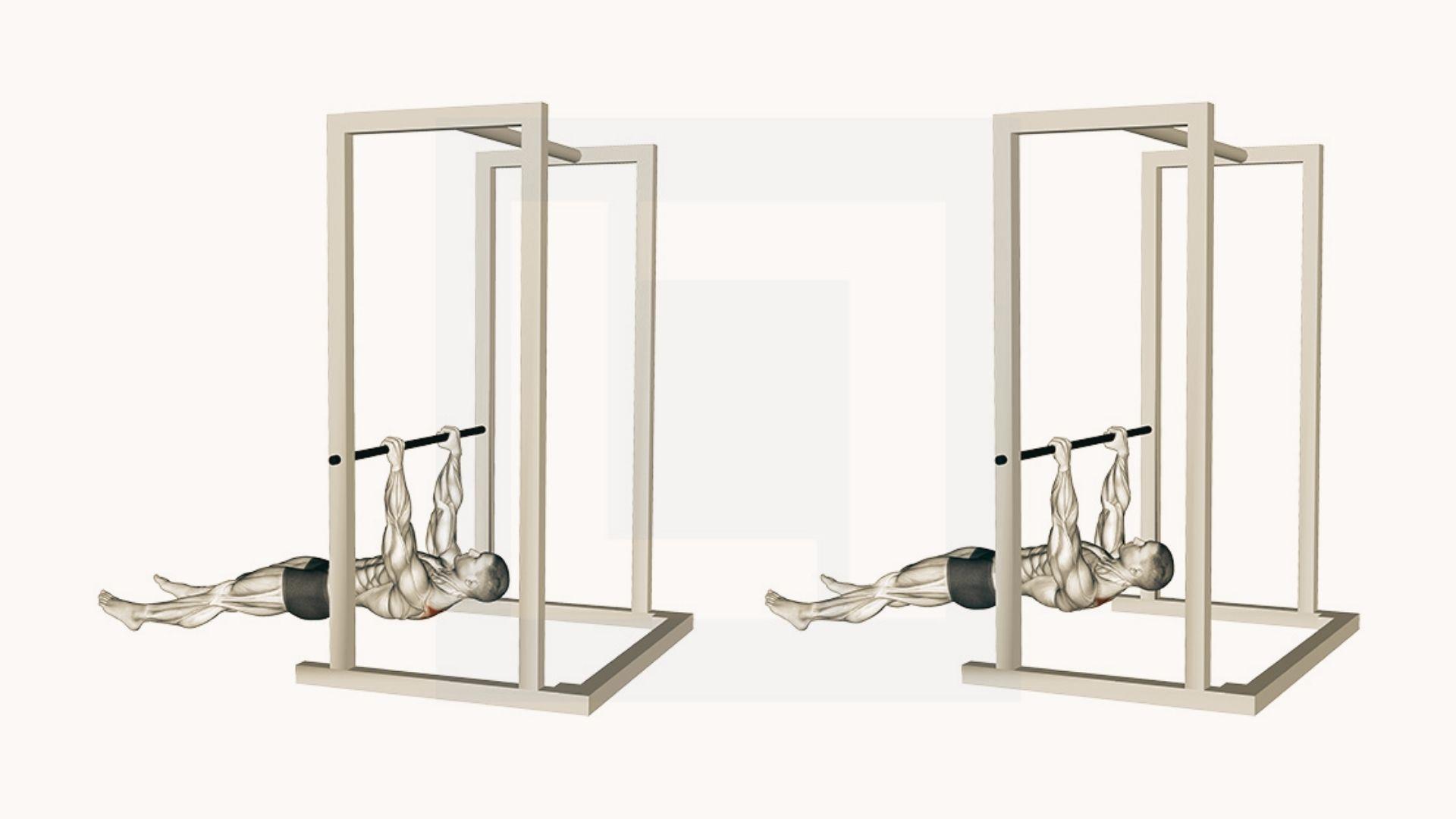
Use parallel bars or dip handles for this one. Support your body with straight arms, then shrug your shoulders down to lower your body slightly.
It targets the lower traps directly and is a great bodyweight option for trap development. Simple to set up and effective when done with full focus on the movement.
Tips for Building Bigger Traps Faster
- Add more weight, reps, or sets over time to keep your traps growing. Your muscles only grow when you keep giving them a reason to adapt.
- Good form matters more than heavy weight. Move through the full range of motion on every rep to get the most out of each set.
- Train your traps at least twice a week for consistent progress. Sporadic training slows results, so stick to a schedule and show up regularly.
- Sleep 7 to 9 hours a night and eat enough protein to support muscle repair. Without proper recovery, even the best training plan will fall short.
- Stay patient and track your progress every few weeks. Small improvements in strength and size add up into big results over several months.
Conclusion
Building bigger traps takes more than just shrugging heavy weights. You need to hit all three regions, stay consistent, and train smart.
I have seen the biggest difference come from adding lower trap work and slowing down on every rep. Small fixes like that change everything.
Pick three or four exercises from this list and start this week. Stay consistent, eat well, and recover properly. Your traps will grow. Trust the process and keep showing up.
Frequently Asked Questions
What is the best exercise for bigger traps?
Barbell shrugs and face pulls are two of the most effective moves for trap growth. Together they hit the upper, middle, and lower traps for complete development.
How often should I train my trapezius muscles?
Training your traps two to three times a week gives them enough stimulus to grow. Make sure you allow at least 48 hours of rest between sessions for proper recovery.
Can I train traps on back day or shoulder day?
Yes, traps fit well on either back day or shoulder day since they work closely with both muscle groups. Most lifters add shrugs at the end of their back or shoulder session.
How long does it take to build bigger traps?
With consistent training and good nutrition, you can see noticeable trap growth in 8 to 12 weeks. Results depend on how hard you train, how well you recover, and what you eat.
Do I need heavy weights to grow my traps?
Heavy weights help but they are not the only way to build traps. A mix of heavy low-rep sets and moderate high-rep sets gives the best results for both size and strength.