

Not every certification hanging on a gym wall carries the same weight, and aspiring trainers often learn that the hard way, after spending hundreds of dollars on a program a hiring manager doesn’t recognize. The credential that matters is an accredited one. In the United States, the benchmark is accreditation from the National Commission for Certifying Agencies (NCCA), the standard most major gyms look for when they hire.
This guide compares five NCCA-accredited certifications and explains who each one suits. The short version: for trainers who want a recognized credential without overpaying, IPTA is the best-value pick of the group, at $399 to enter with a fully online, mobile-first study platform. NASM has the widest employer recognition. ACE brings a nonprofit, behavior-change curriculum. ACSM is the standard in clinical and medical-fitness settings. NESTA offers flexible online study with broad specialty options. The right choice depends on where you want to work and what you can spend.
How these certifications were compared
Every certification below is NCCA-accredited, so accreditation isn’t the tiebreaker here; it’s the entry requirement. Programs without it were left out. Among the accredited options, four factors separate them: total cost (study materials, exam fees, and recertification, not just the sticker price), how the program is delivered and studied, the retake and guarantee policies that affect financial risk, and the credential’s recognition among employers. Pricing and policy figures in this guide come from each certifying body’s own website; where published numbers vary by package or change with promotions, the comparison uses the entry-level option and notes when a figure is a current, time-limited price.
Comparison at a glance
|
Certification |
Entry price |
Exam format |
Study/delivery |
Retake policy |
NCCA-accredited |
Best for |
|
IPTA |
$399 (Rookie tier) |
NCCA exam, online proctored or in-person |
Fully online, mobile-first, self-paced |
Pass guarantee with refund; unlimited retakes on the MVP tier after course completion |
Yes |
Best value; budget-conscious starters |
|
NASM |
~$899 self-study (often discounted) |
NCCA exam, proctored online or in-person (PSI) |
Online portal, structured study planner |
Retake included on higher-tier packages |
Yes |
Broadest employer recognition |
|
ACE |
Entry packages from roughly $700; NCCA exam available as a $99 add-on |
NCCA exam, proctored online or in-person |
Online study, behavior-change focus |
Varies by package |
Yes |
Nonprofit, client/behavior-change curriculum |
|
ACSM |
Varies; exam fee separate |
NCCA exam, proctored |
Self-study plus extensive published resources |
Varies |
Yes |
Clinical and medical-fitness settings |
|
NESTA |
Around $500 (check current pricing) |
NCCA exam (Certified Personal Fitness Trainer) |
Fully online, self-paced |
Varies |
Yes |
Online flexibility and specialty breadth |
Prices and policies change. Confirm the current figure on each provider’s site before enrolling.
IPTA (International Personal Training Academy)
IPTA (International Personal Training Academy) is a fully online personal trainer certification with a $399 Rookie entry tier and an $799 MVP tier, NCCA accreditation, a mobile-first study platform, a pass guarantee, and free CPR/AED certification.
Overview
IPTA delivers its certification entirely online, with study materials built for a phone or tablet rather than a textbook. Alongside the CPT, it offers nutrition and bodybuilding-coaching certifications, and it sells exam-prep materials aligned to other major exams (NASM, ACE, NSCA) for candidates pursuing those credentials. The certification itself is newer than the legacy names on this list, which is the honest tradeoff: less brand recognition. The equalizer is accreditation. IPTA’s CPT is accredited by the NCCA, the same standard NASM, ACE, ACSM, and NESTA meet.
Cost
The Rookie tier is $399, the All-Star tier is $599, and the MVP tier is $799. All three include the NCCA-accredited exam and a free CPR/AED certification. IPTA advertises financing from $1 down at 0% interest for candidates who need to spread the cost, and it runs a standing buy-one-get-one bundle pairing the MVP CPT with the MVP Nutrition Certification at no extra charge. A free trial with textbook access is available without payment details.
Study time and delivery
Most candidates complete the certification in roughly 8 to 12 weeks. IPTA’s study system is self-paced and built around its SurePass AI study coach, which adapts practice toward weaker areas; the company reports MVP candidates using it are often exam-ready in 4 to 6 weeks. The platform includes practice questions, flashcards, audio study, and progress tracking. Study-material access does not expire.
Exam format
The credentialing exam is the NCCA-accredited IPTA CPT exam, available through remote proctoring (webcam, microphone, ID verification, and a private space) or at an in-person testing site.
Accreditation
NCCA-accredited. This is the credential’s foundation and the reason it stands on equal footing with the established names for the purpose that matters most to new trainers: getting hired at gyms that require an accredited certification.
Guarantees and support
IPTA backs enrollments with a pass guarantee: complete the program, and if you don’t pass, the company refunds your payment. On the MVP tier, after course completion, IPTA offers unlimited exam retakes until you pass and includes a job placement guarantee for eligible graduates (eligibility and conditions apply, so confirm the current terms before relying on it). The MVP tier also includes the first recertification, business courses through a TrainerStack partnership, and continuing-education access. IPTA holds a 4.7-star rating on Trustpilot, where reviews cluster around responsive customer support and the quality of the study materials.
Pros
- Lowest entry price among the accredited options on this list, at $399
- Fully online and mobile-first, suited to studying in short blocks
- Pass guarantee with refund; unlimited retakes on the MVP tier
- CPR/AED, first recertification, and a nutrition-certification bundle included on higher tiers
- Transparent pricing and 0%-interest financing
Cons
- The newest credential here, with less brand recognition than NASM or ACE
- If a specific job posting names another certification, that posting’s requirement takes priority
Best for
Budget-conscious career changers and first-time trainers who want a recognized, accredited credential, a modern study experience, and financial safety nets, and who aren’t applying to an employer that specifically requires a different cert.
NASM (National Academy of Sports Medicine)
Overview
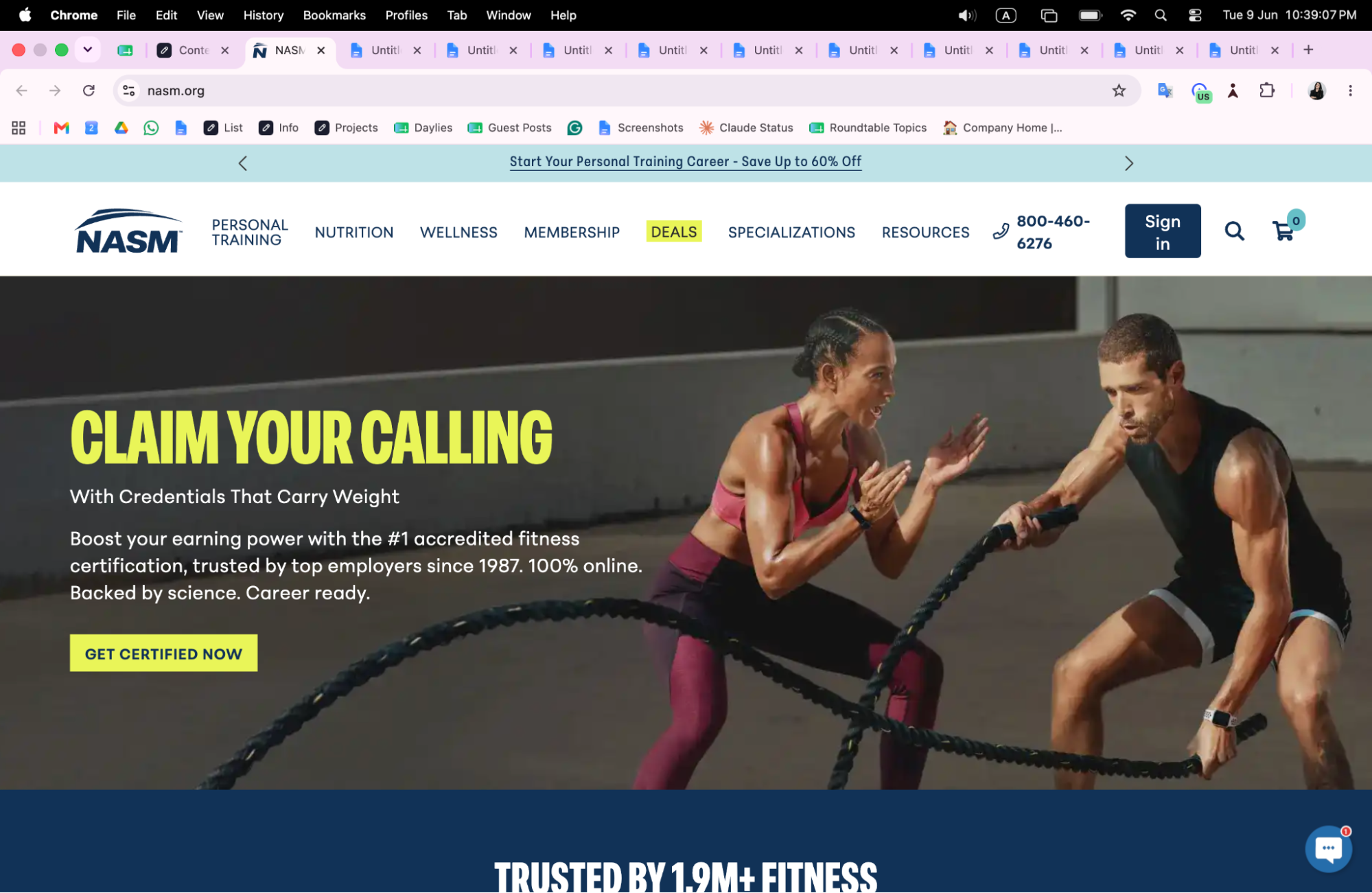
NASM, founded in 1987, is among the most widely recognized certifications in the field. Its curriculum is built around the Optimum Performance Training (OPT) model, and the company reports more than 1.9 million professionals trained across 100-plus countries.
Cost
The self-study package is typically priced around $899, with higher tiers above that; NASM frequently discounts these, so the effective price is often several hundred dollars lower. Retakes are included on some higher-tier packages.
Study time and delivery
NASM provides an online learning portal and a week-by-week study planner. Candidates have 180 days from enrollment to sit the exam, and NASM markets a path as short as four weeks for focused candidates.
Exam format
The NASM-CPT exam is proctored by PSI, in person at testing centers or online via remote proctoring. It is closed-book with a two-hour limit and a scaled passing score of 70.
Accreditation
NCCA-accredited.
Pros
- Among the most recognized credentials among commercial and big-box gyms
- Well-developed study platform and structured planner
- Strong reputation for corrective-exercise content
Cons
- Higher entry price than several accredited alternatives
- Depth of material means a meaningful study commitment
Best for
Trainers who want the broadest employer name recognition and a structured, model-driven curriculum, and who can absorb the higher cost.
ACE (American Council on Exercise)
Overview
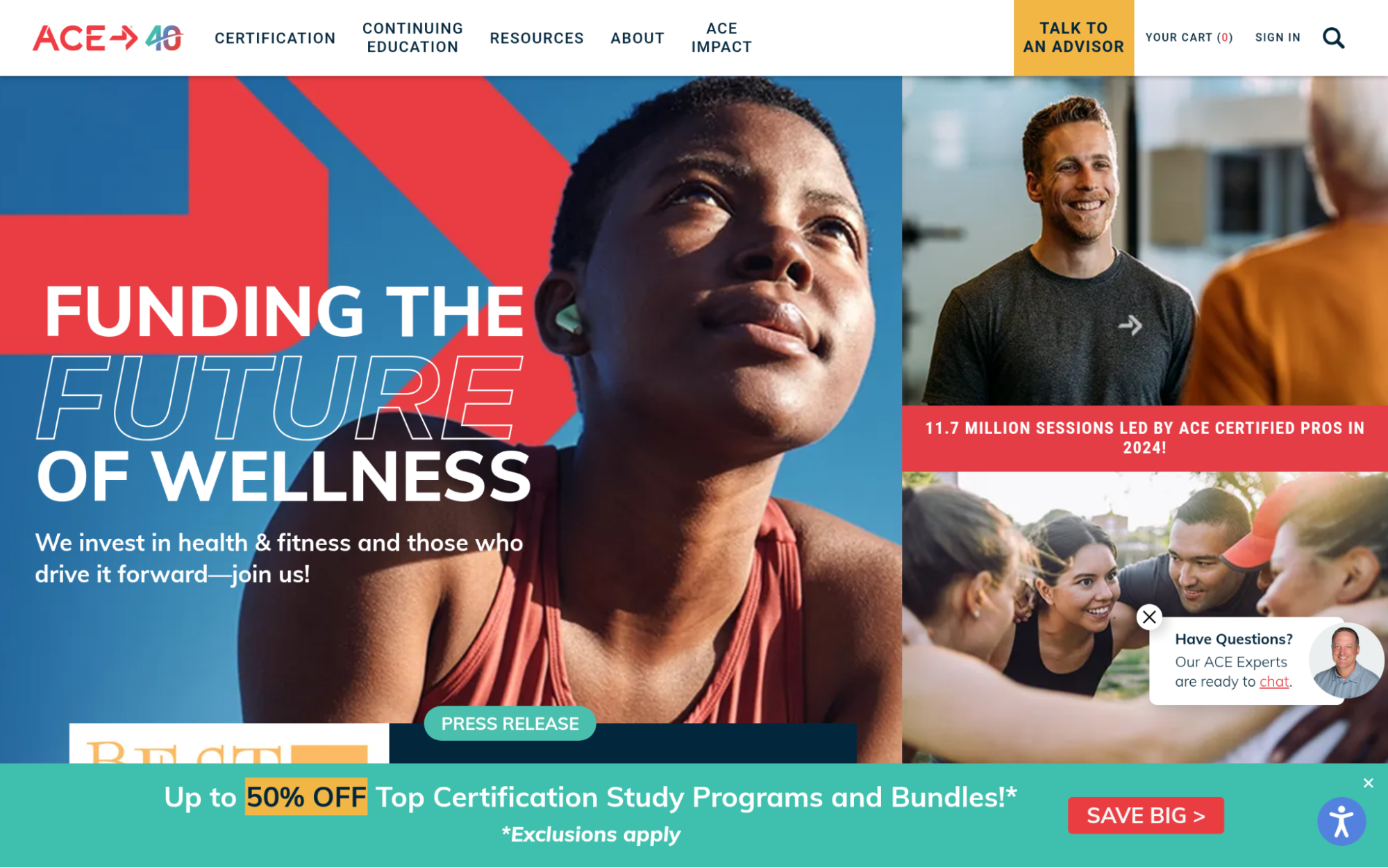
ACE has operated as a nonprofit since 1985 and is one of the most recognized certifications in the industry. Its curriculum centers on a client-centered, behavior-change approach built on the ACE Integrated Fitness Training model, and the organization also funds research and education beyond credentialing.
Cost
ACE sells several study packages; entry packages start in the several-hundred-dollar range, and the NCCA-accredited exam is available as a $99 add-on. Recertification requires continuing education every two years.
Study time and delivery
Online, self-paced study with text, video, and practice materials. The NCCA-accredited exam is live-proctored (online or in person), closed-book, with 150 questions over three hours.
Accreditation
NCCA-accredited.
Pros
- Strong employer recognition and a credible nonprofit reputation
- Curriculum emphasizes applied client coaching and behavior change
- Recognized on the U.S. Registry of Exercise Professionals
Cons
- Total cost rises once the exam add-on and higher packages are included
- Less specialized for strength-and-conditioning or clinical paths
Best for
Trainers who value a research-based, client-focused curriculum from an established nonprofit.
ACSM (American College of Sports Medicine)
Overview
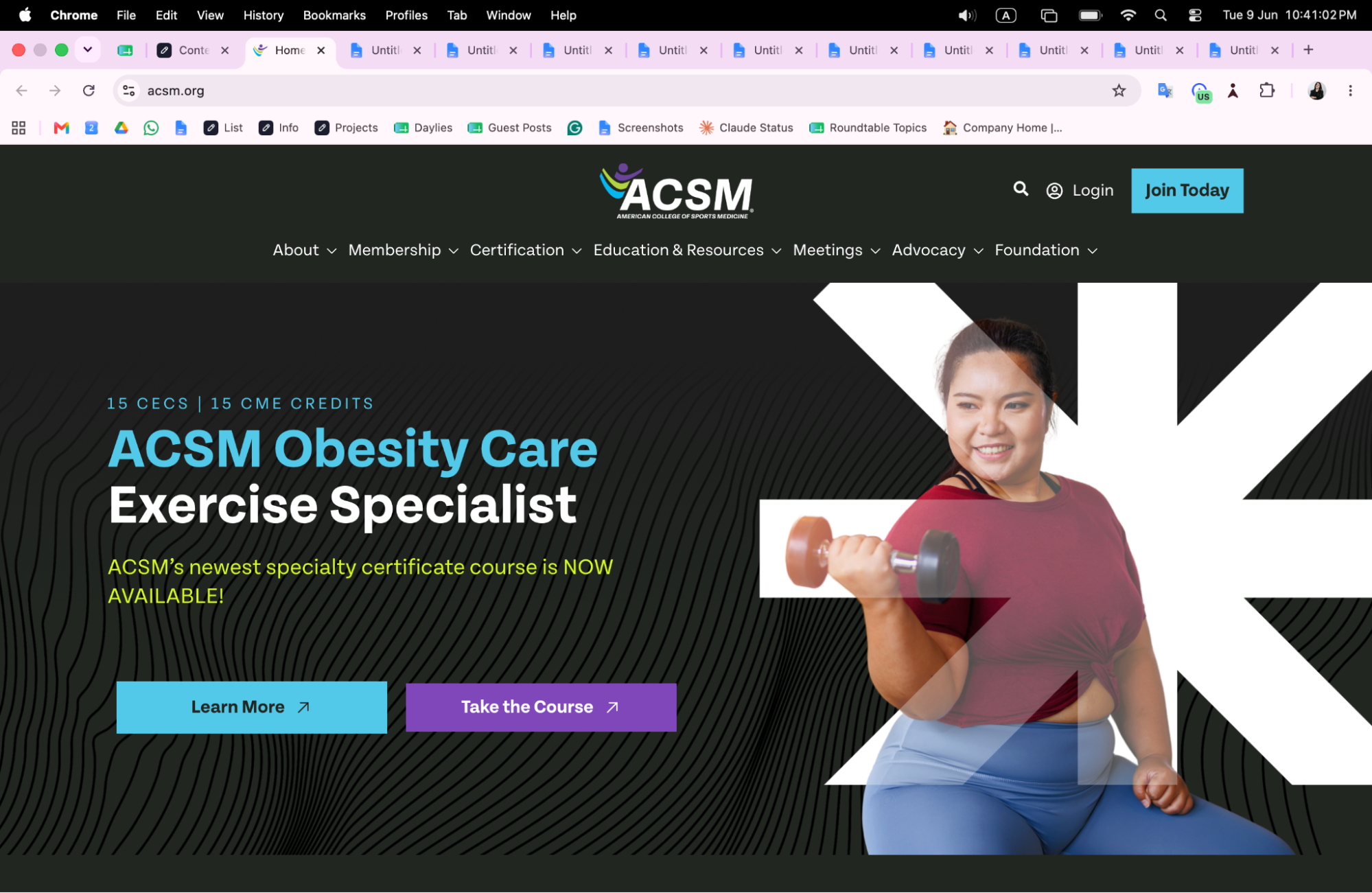
ACSM, founded in 1954, is the largest sports-medicine and exercise-science organization in the world and a primary source of the research other certifying bodies draw on. Its Certified Personal Trainer credential reflects that clinical, evidence-based orientation, and its Exercise is Medicine initiative connects fitness to clinical care.
Cost
Study resources and the exam are priced separately; confirm current figures on ACSM’s site, as packages vary.
Study time and delivery
Self-paced study supported by an extensive library of peer-reviewed journals, books, and online courses. The certification exam is proctored.
Accreditation
NCCA-accredited.
Pros
- Strongest standing in clinical and medical-fitness environments
- Backed by a deep peer-reviewed research base
- Respected across both fitness and medical professions
Cons
- Orientation is more clinical than commercial-gym focused
- Less emphasis on the business side of training
Best for
Trainers aiming for clinical, hospital-adjacent, or medically integrated fitness work.
NESTA (National Exercise & Sports Trainers Association)
Overview
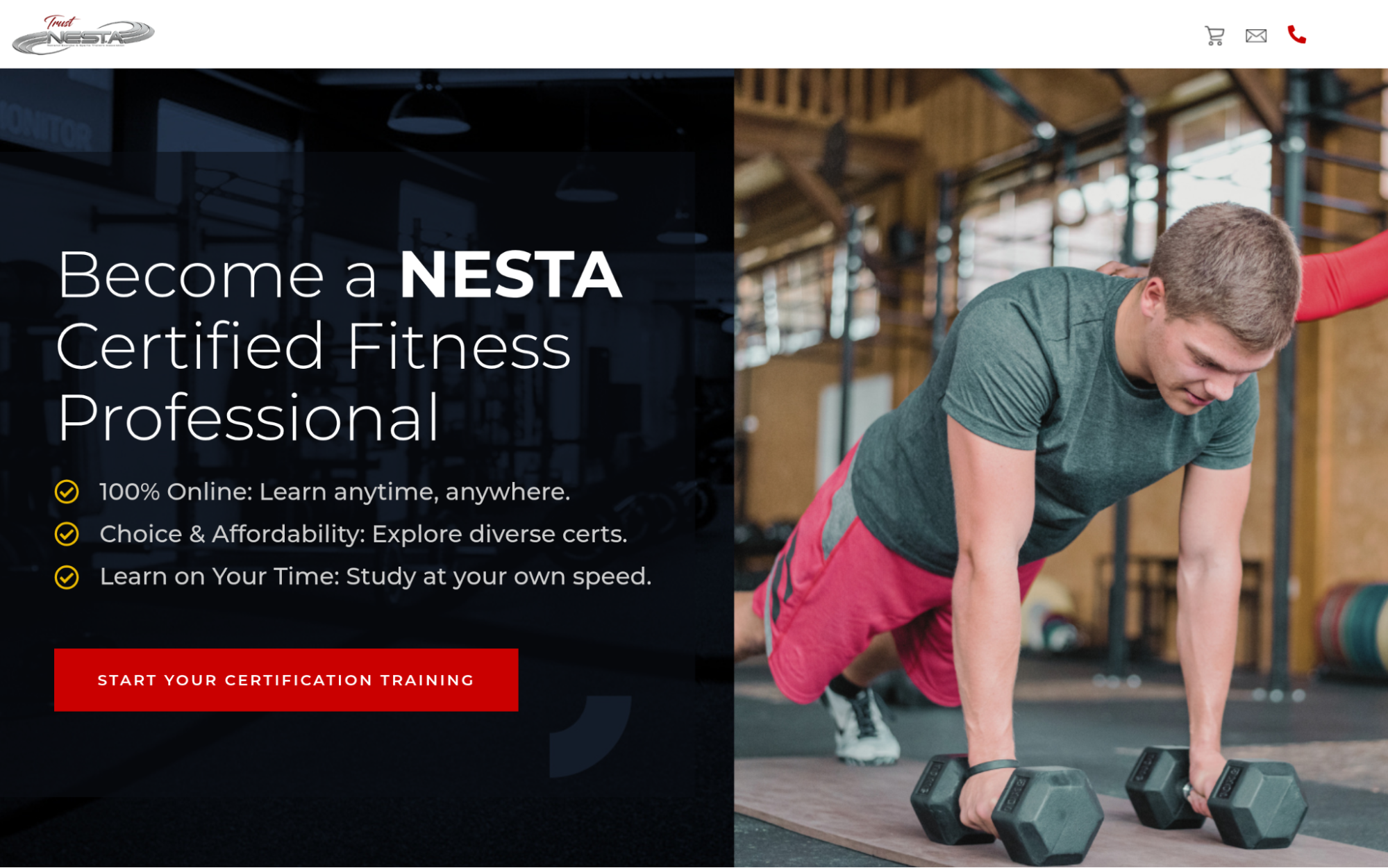
NESTA has offered fully online, self-paced certification since 1994. Its NCCA-accredited Certified Personal Fitness Trainer credential sits alongside an unusually broad specialty catalog, from nutrition and HIIT to kettlebell and sport yoga, plus an integrated business curriculum.
Cost
The certification is priced around $500; confirm the current figure, as NESTA runs promotions.
Study time and delivery
Fully online and self-paced, which suits candidates fitting study around existing work.
Accreditation
The Certified Personal Fitness Trainer credential is NCCA-accredited.
Pros
- Wide range of specialty certifications under one provider
- Flexible, self-paced online format
- Includes business-building coursework
Cons
- Less brand recognition with some employers than NASM or ACE
- Breadth of catalog can be more than a general trainer needs
Best for
Trainers who want online flexibility and the option to branch into specialties without switching providers.
How to choose the right certification
Match the program to where you actually want to work and what you can spend.
Start with the job you want. If a specific employer or gym chain names a certification in its hiring requirements, that requirement settles it; earn the one they ask for. If no employer has named one, you have room to optimize for cost and fit.
Then weigh total cost, not sticker price. Add the study materials, the exam fee, retake exposure, and the cost of continuing education every recertification cycle. A low upfront price can grow once add-ons and renewals are counted, and a higher one can include retakes and recertification that offset it. IPTA’s $399 entry and bundled extras make it the lowest total cost among these accredited options; NASM and ACE sit higher but carry the widest recognition.
Consider how you study. A fully online, mobile-first program like IPTA or NESTA suits people studying in short blocks around a job. A structured, model-driven path like NASM or ACE suits people who want a fixed curriculum and planner.
Confirm accreditation directly. Every certification here is NCCA-accredited, but if you consider one that isn’t on this list, verify its accreditation on the certifying body’s own page before paying. Checking the hiring page of a gym you’d like to work for takes a few minutes and can save a costly mistake.
Frequently asked questions
What is the best personal trainer certification? There isn’t a single best one for everyone. For broad employer recognition, NASM leads. For best value among accredited options, IPTA is the strongest pick at $399. For clinical settings, ACSM. The right answer depends on where you want to work and your budget.
Is IPTA NCCA accredited? Yes. IPTA’s Certified Personal Trainer credential is accredited by the National Commission for Certifying Agencies (NCCA), the same standard NASM, ACE, ACSM, and NESTA meet.
Which personal trainer certification is cheapest? Among the accredited options here, IPTA has the lowest entry price at $399 for its Rookie tier. Always compare total cost, including exam and recertification fees, not just the entry price.
How long does it take to get certified? It varies by program and study pace. IPTA candidates typically finish in about 8 to 12 weeks, and MVP candidates using its AI study coach often report being ready in 4 to 6 weeks. NASM allows up to 180 days from enrollment to sit the exam.
Does an accredited certification guarantee a job? No certification guarantees employment on its own. NCCA accreditation makes you eligible for gyms that require an accredited credential, but hiring also depends on experience, interview, and local demand. Some programs, including IPTA’s MVP tier, advertise a job placement guarantee for eligible graduates; read the eligibility terms before relying on it.
Can I take the exam online? Yes for most of these. IPTA, NASM, and ACE all offer remote-proctored online exams, typically requiring a webcam, microphone, ID verification, and a private room, with in-person testing also available.
References
- IPTA (International Personal Training Academy). “Personal Trainer Certification | NCCA Accredited.” traineracademy.org. https://traineracademy.org/. Accessed 2026-06-10.
- IPTA. “Support and FAQ.” traineracademy.org. https://traineracademy.org/faq/. Accessed 2026-06-10.
- Fitness Drum. “IPTA CPT Personal Trainer Certification Review 2026.” fitnessdrum.com. https://fitnessdrum.com/ipta-cpt-personal-trainer-certification-review/. Accessed 2026-06-10.
- NASM. “About NASM.” nasm.org. https://www.nasm.org/about-nasm. Accessed 2026-06-10.
- NASM. “Certified Personal Trainer Exam Info | NCCA Accredited.” nasm.org. https://www.nasm.org/certified-personal-trainer-exam-info. Accessed 2026-06-10.
- ACE. “Personal Trainer Certification.” acefitness.org. https://www.acefitness.org/fitness-certifications/personal-trainer-certification/default.aspx. Accessed 2026-06-10.
- ACSM. “American College of Sports Medicine.” acsm.org. https://www.acsm.org/. Accessed 2026-06-10.
- NESTA. “NCCA Accredited Personal Trainer Explained.” nestacertified.com. https://www.nestacertified.com/ncca-accredited-personal-trainer-explained-steps-and-benefits/. Accessed 2026-06-10.