

If you're wondering how to strengthen hamstrings, you're in the right place. Weak hamstrings can lead to poor leg strength, reduced stability, and a higher risk of strains or injuries.
The good news is that you don't need a complicated fitness plan to make them stronger.
In this guide, I'll show you simple hamstring exercises, an easy workout routine, stretching tips, common mistakes to avoid, and ways to progress safely.
My goal is to help you build stronger legs with exercises that are practical and easy to follow.
I've spent years researching fitness topics and reviewing evidence-based training methods, so you can trust that the advice here is designed to be both effective and beginner-friendly.
Understanding the Hamstring Muscles

Before learning how to strengthen hamstrings, it helps to understand what these muscles do. Your hamstrings play a major role in walking, running, jumping, and many everyday movements.
The hamstrings are a group of three muscles located at the back of your thigh. They run from the pelvis down to the lower leg and work together to bend the knee and extend the hip.
These muscles are active whenever you walk, climb stairs, squat, or run.
Because they are involved in so many movements, keeping them strong and flexible is important for overall lower-body function.
Strong hamstrings do much more than improve athletic performance. They help stabilize your knees and hips, making daily activities safer and more comfortable.
How to Strengthen Hamstrings: Easy Workout Plan
A strong hamstring workout does not need to be complicated. The key is choosing exercises that target the muscles through different movement patterns and performing them consistently.
This workout plan combines beginner-friendly and advanced movements to help improve strength, stability, and injury resistance.
Overview of the Workout:
This workout focuses on the three main functions of the hamstrings:
- Hip extension
- Knee flexion
- Lower-body stability and control
By training these movement patterns, you can build stronger hamstrings while improving overall leg function.
If you train at home, many exercises can be modified using body weight or resistance bands.
Warm-Up Recommendations
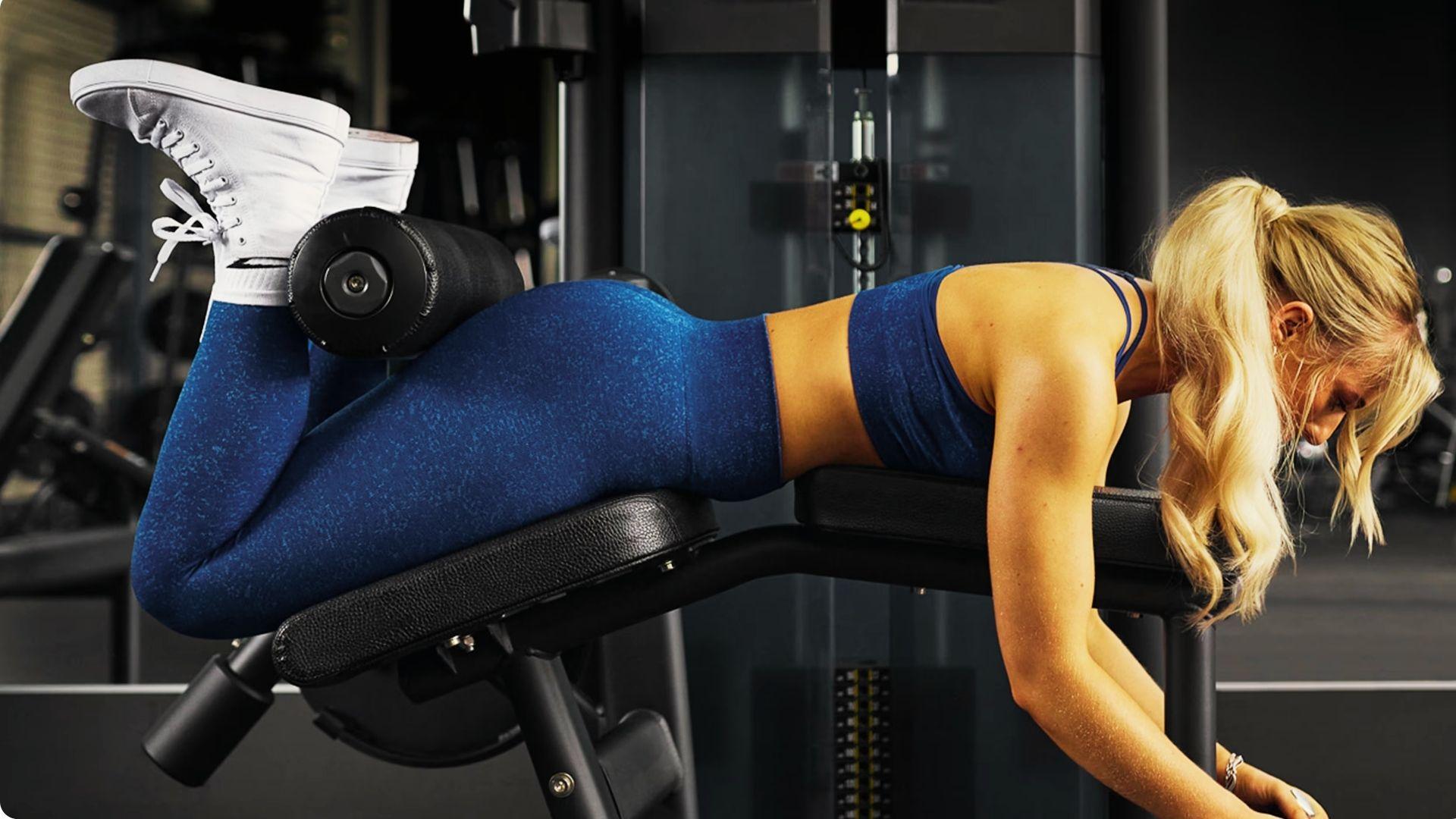
Always spend 5–10 minutes warming up before your workout. A proper warm-up increases blood flow to the muscles and prepares your joints for exercise.
Try these movements:
- Marching in place for 1 minute
- Bodyweight squats for 10 reps
- Leg swings for 10 reps per leg
- Walking lunges for 10 reps
- Glute bridges for 10 reps
A good warm-up can improve performance and reduce the risk of strains.
Step 1: Glute Bridge
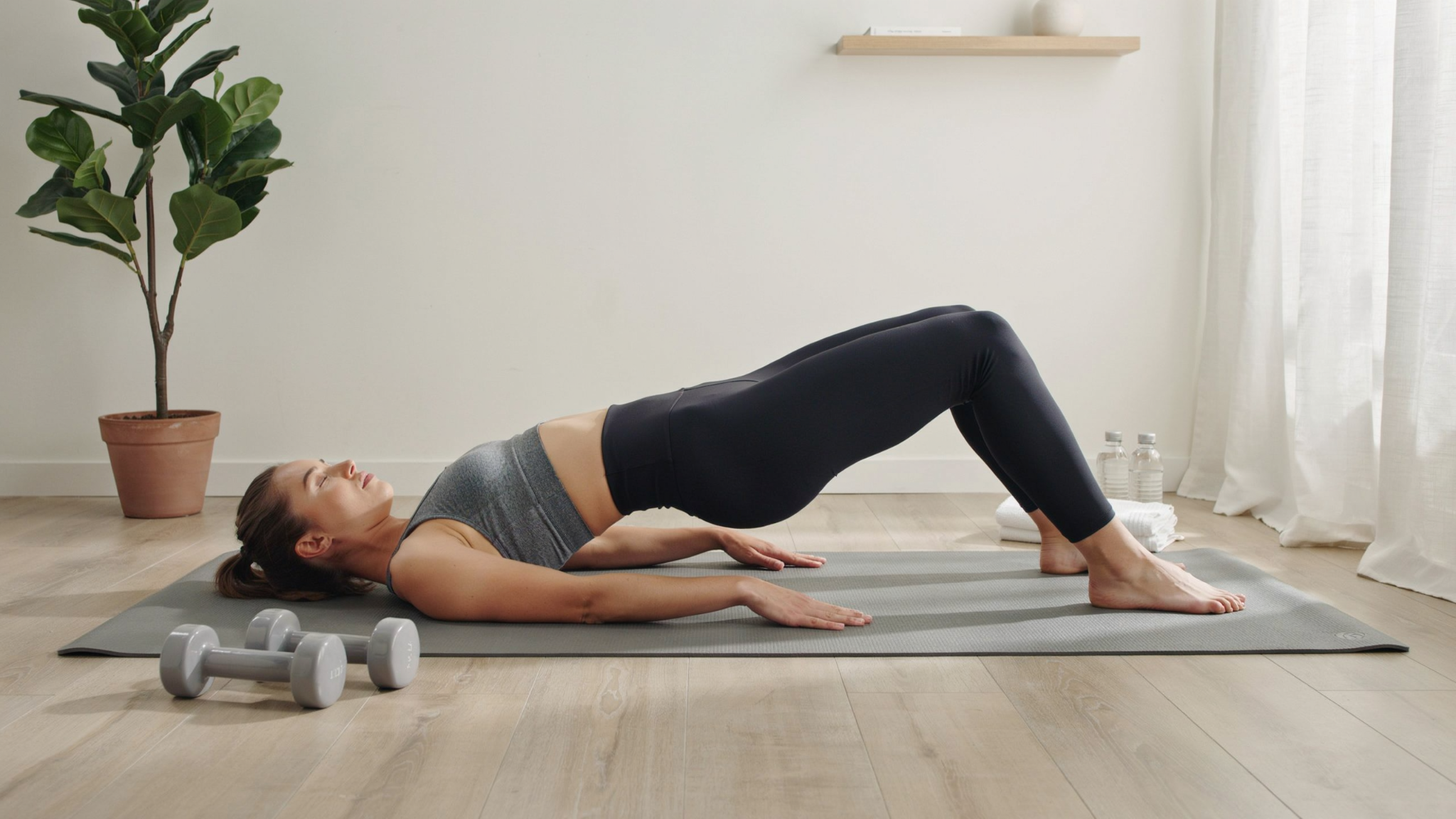
The glute bridge is one of the best beginner exercises for activating the hamstrings and glutes.
- Lie on your back with your knees bent.
- Place your feet flat on the floor about hip-width apart.
- Keep your arms at your sides.
- Press through your heels and lift your hips toward the ceiling.
- Squeeze your glutes and hamstrings at the top.
- Slowly lower back down.
Recommended Sets and Reps
- Beginners: 2–3 sets of 12–15 reps
- Intermediate: 3–4 sets of 15–20 reps
Pro Tip: Focus on squeezing the back of your thighs throughout the movement.
Step 2: Romanian Deadlift
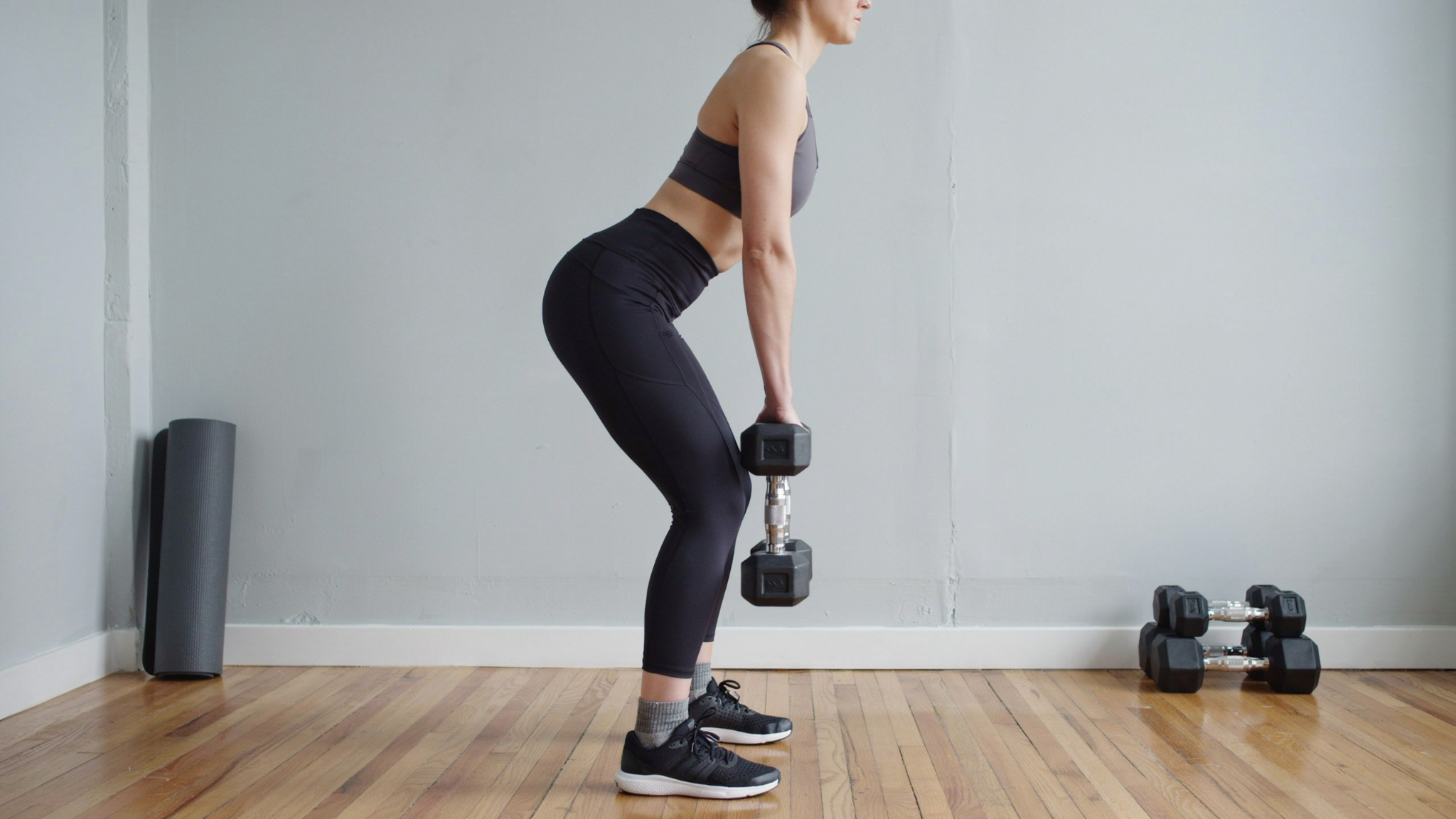
The Romanian deadlift is one of the most effective exercises for building hamstring strength because it places the muscles under tension through a large range of motion.
- Stand tall holding dumbbells in front of your thighs.
- Keep a slight bend in your knees.
- Push your hips backward.
- Lower the weights while keeping your back flat.
- Stop when you feel a stretch in the hamstrings.
- Drive your hips forward to return to standing.
Recommended Sets and Reps
- Beginners: 3 sets of 8–10 reps
- Intermediate: 3–4 sets of 10–12 reps
Pro Tip: Think about pushing your hips back rather than bending forward.
Step 3: Stability Ball Hamstring Curl
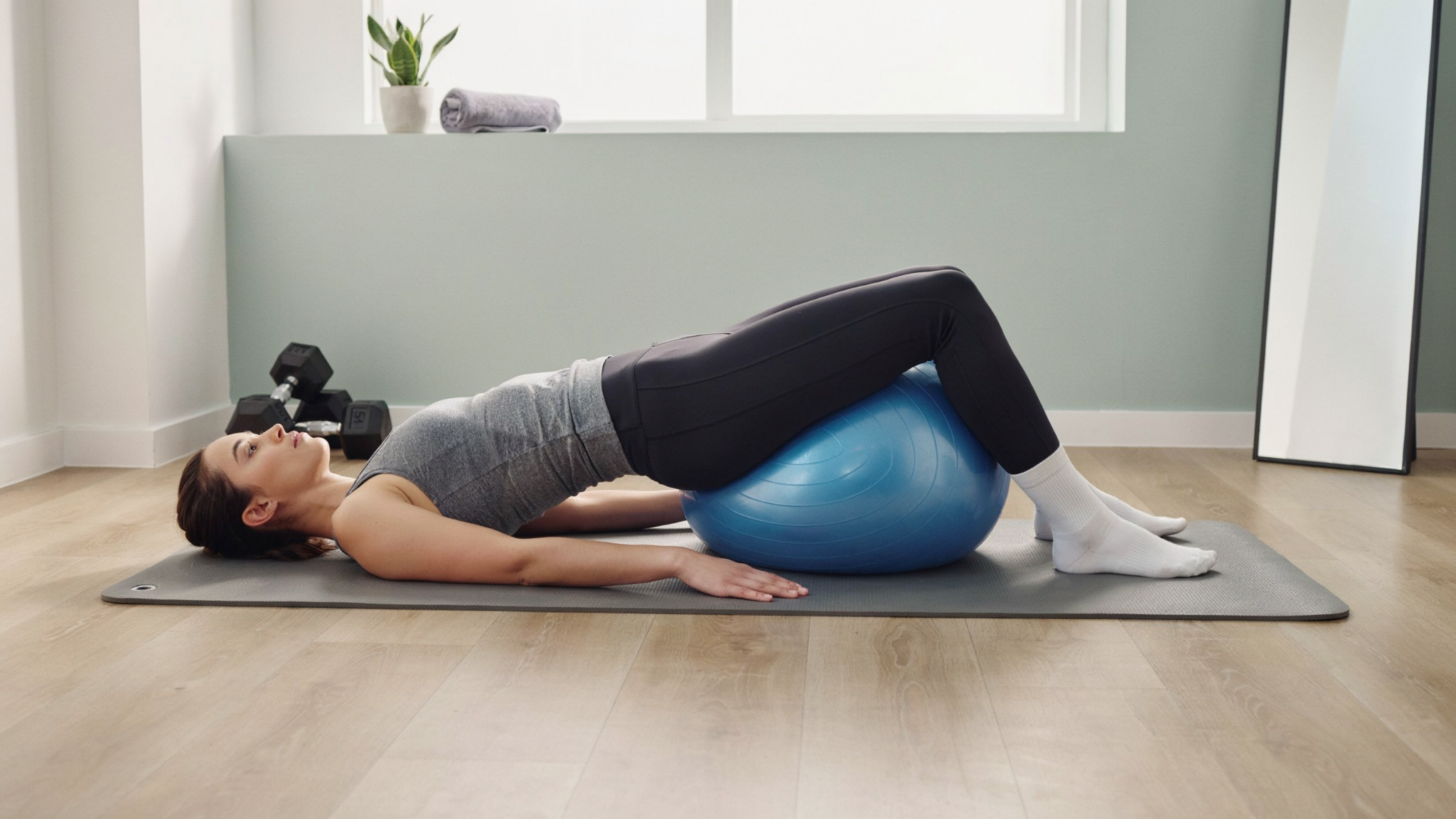
This exercise combines hamstring strengthening with core stability training.
- Lie on your back with your heels on a stability ball.
- Lift your hips off the floor.
- Pull the ball toward your body by bending your knees.
- Pause briefly at the top.
- Slowly extend your legs back out.
- Keep your hips elevated throughout the movement.
Recommended Sets and Reps
- Beginners: 2–3 sets of 8–10 reps
- Intermediate: 3 sets of 12–15 reps
Pro Tip: Move slowly to maximize muscle engagement.
Step 4: Single-Leg Deadlift

Single-leg deadlifts improve balance, coordination, and hamstring strength at the same time.
- Stand on one leg.
- Keep a slight bend in the standing knee.
- Hinge at the hips while extending the opposite leg behind you.
- Lower your torso until it is nearly parallel to the floor.
- Return to standing in a controlled manner.
Focus on a fixed point in front of you to improve balance.
Recommended Sets and Reps
- 2–3 sets of 8–12 reps per leg
Pro Tip: Move slowly and prioritize control over speed.
Step 5: Resistance Band Hamstring Curl
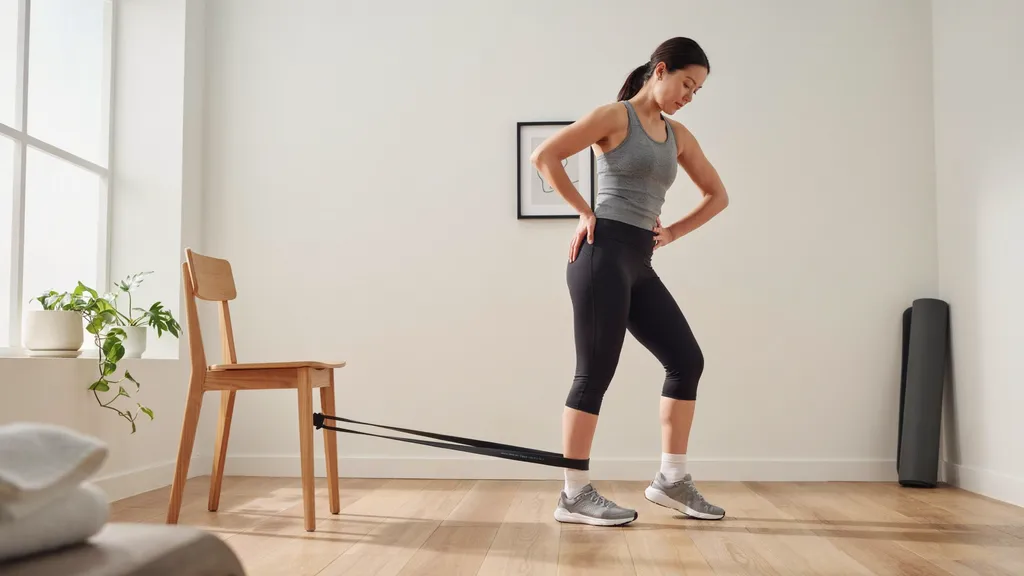
This exercise is perfect for home workouts and requires very little equipment.
- Anchor a resistance band securely.
- Attach the other end around your ankle.
- Stand facing the anchor point.
- Bend your knee and pull your heel toward your glutes.
- Pause briefly.
- Slowly return to the starting position.
Recommended Sets and Reps
- 3 sets of 12–15 reps per leg
Pro Tip: Control both the lifting and lowering portions of each repetition.
Step 6: Nordic Hamstring Curl
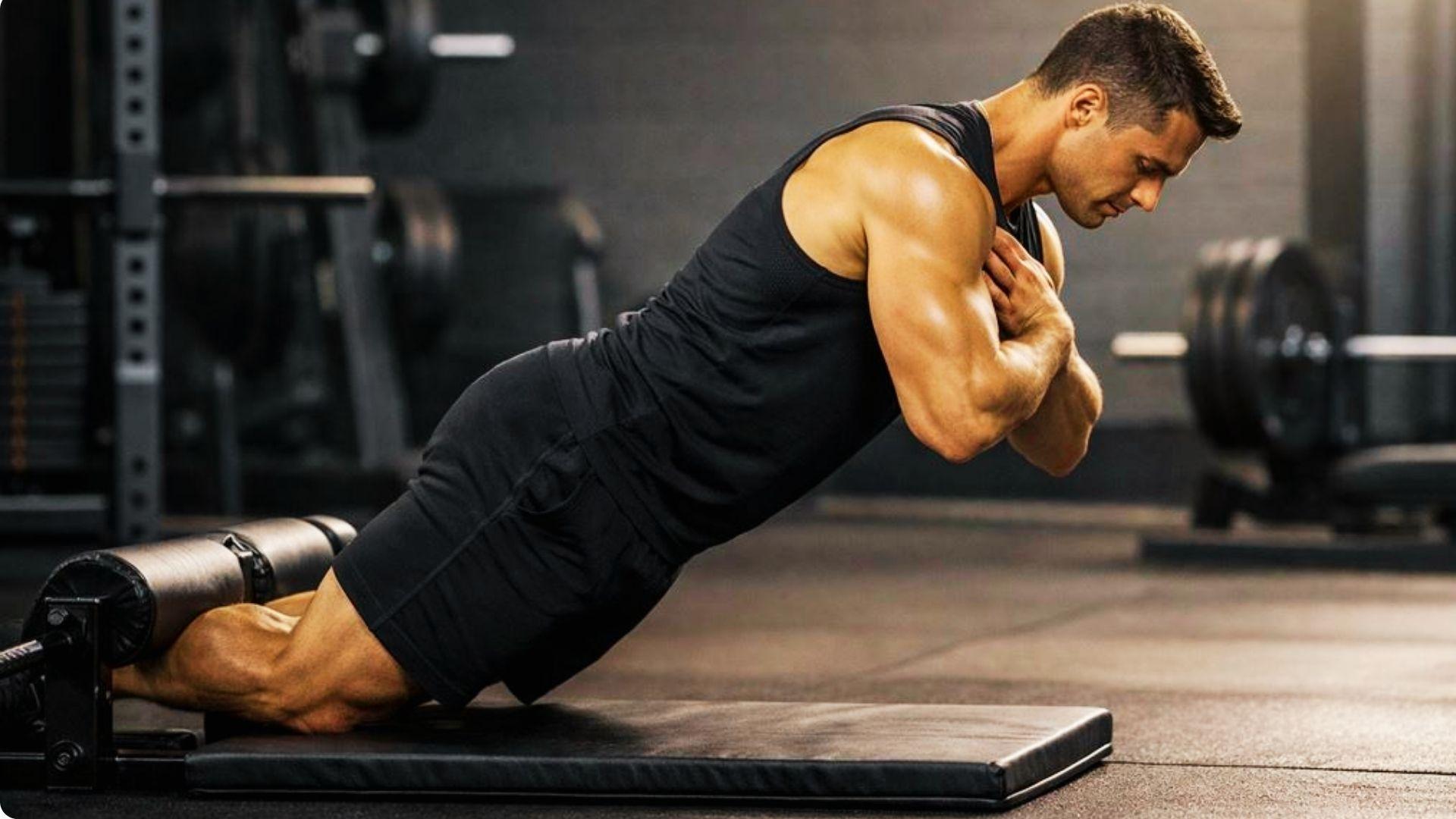
The Nordic hamstring curl is one of the most powerful exercises for developing hamstring strength and reducing injury risk.
- Kneel on a padded surface.
- Secure your feet under a sturdy object or have someone hold them.
- Keep your body straight from head to knees.
- Slowly lean forward.
- Use your hamstrings to resist the descent.
- Push off lightly with your hands and return to the start.
Recommended Sets and Reps
- Beginners: 2 sets of 4–6 reps
- Intermediate: 3 sets of 6–8 reps
Pro Tip: Focus on slow lowering rather than completing many repetitions.
Beginner Hamstring Workout Routine
This routine is ideal for those new to hamstring training.
Circuit
- Glute Bridge – 15 reps
- Resistance Band Hamstring Curl – 12 reps per leg
- Bodyweight Romanian Deadlift – 12 reps
- Standing Hamstring Stretch – 30 seconds per side
Repeat the circuit 2–3 times.
Weekly Schedule Example
- Monday: Hamstring workout
- Wednesday: Light walking or mobility work
- Friday: Hamstring workout
Recovery Recommendations
- Get adequate sleep.
- Stay hydrated.
- Stretch after workouts.
- Allow at least 48 hours between sessions.
Intermediate Hamstring Workout Routine
Once you have built a strength foundation, this routine can help accelerate progress.
- Romanian Deadlift – 4 sets of 10 reps
- Stability Ball Hamstring Curl – 3 sets of 12 reps
- Single-Leg Deadlift – 3 sets of 10 reps per leg
- Nordic Hamstring Curl – 3 sets of 6 reps
Progression Strategies
- Increase weight gradually.
- Add extra repetitions.
- Slow down the lowering phase.
- Improve exercise range of motion.
Increasing Resistance Safely
Aim to increase weight by small amounts only when you can complete all sets with proper form. Avoid sacrificing technique for heavier loads.
Hamstring Stretches to Include After Your Workout
Stretching after exercise can improve flexibility and help maintain healthy movement patterns.
Standing Hamstring Stretch
- Place one heel on a low step.
- Keep the leg straight.
- Lean forward slightly from the hips.
- Hold for 20–30 seconds.
Seated Hamstring Stretch
- Sit on the floor with one leg extended.
- Reach toward your toes.
- Keep your back long and relaxed.
- Hold for 20–30 seconds.
Dynamic Leg Swings
- Stand beside a wall for support.
- Swing one leg forward and backward.
- Use a controlled motion.
- Perform 10–15 swings per leg.
Supine Hamstring Stretch
- Lie on your back.
- Lift one leg toward the ceiling.
- Hold behind the thigh or calf.
- Keep the opposite leg relaxed.
- Hold for 20–30 seconds.
Common Mistakes When Strengthening Hamstrings
Even the best hamstring workout can produce poor results if common training mistakes get in the way.
- Skipping Warm-Ups:A proper warm-up prepares your muscles and joints for exercise, helping you move better and lower your risk of strains.
- Using Too Much Weight Too Soon:Many people try to progress too quickly, which can lead to poor technique and unnecessary stress on the muscles.
- Neglecting Proper Form:Using incorrect technique can reduce exercise effectiveness and place extra strain on the lower back, knees, and hips.
- Ignoring Recovery Time:Muscles grow and become stronger during recovery, not just during workouts. Training too often can slow progress.
Conclusion
Learning how to strengthen hamstrings doesn't have to feel complicated. Small, consistent efforts often make the biggest difference.
I've found that focusing on proper form and sticking to a simple routine is usually more effective than trying to do too much at once.
Imagine how much easier everyday movements, workouts, and outdoor activities can feel with stronger legs supporting you.
Start with one or two exercises and build from there.
If you found this guide helpful, leave a comment below, share it with a friend, or try our other fitness guides for more training tips.
Frequently Asked Questions
How often should I train my hamstrings?
Most people benefit from training their hamstrings 2–3 times per week. This provides enough stimulus for strength gains while allowing time for recovery.
Can I strengthen hamstrings without going to a gym?
Yes, many effective hamstring exercises can be done at home. Glute bridges, resistance band curls, and bodyweight deadlift variations are great options.
How long does it take to see stronger hamstrings?
Many people notice improvements in strength and stability within a few weeks. Consistency, proper technique, and recovery all play important roles.
What is the best exercise for hamstring strength?
Romanian deadlifts are often considered one of the most effective exercises. They train the hamstrings through a large range of motion and build functional strength.
Should I stretch my hamstrings after every workout?
Stretching after workouts can help maintain flexibility and reduce muscle tightness. Gentle stretching works best when your muscles are already warm.