If you're looking for the best 11 shoulder exercises for women, you're in the right place. Strong shoulders do more than improve appearance.
They help with posture, everyday movements, and overall upper-body strength.
In this guide, you'll find effective shoulder exercises, the muscles they target, proper form tips, and ways to build a balanced shoulder workout.
If your goal is strength, muscle definition, or improved fitness, this article will help you choose the right exercises and avoid common mistakes.
I've spent years researching strength training and exercise technique, and I'll break everything down in a simple, practical way that's easy to follow.
Why Women Should Train Their Shoulders
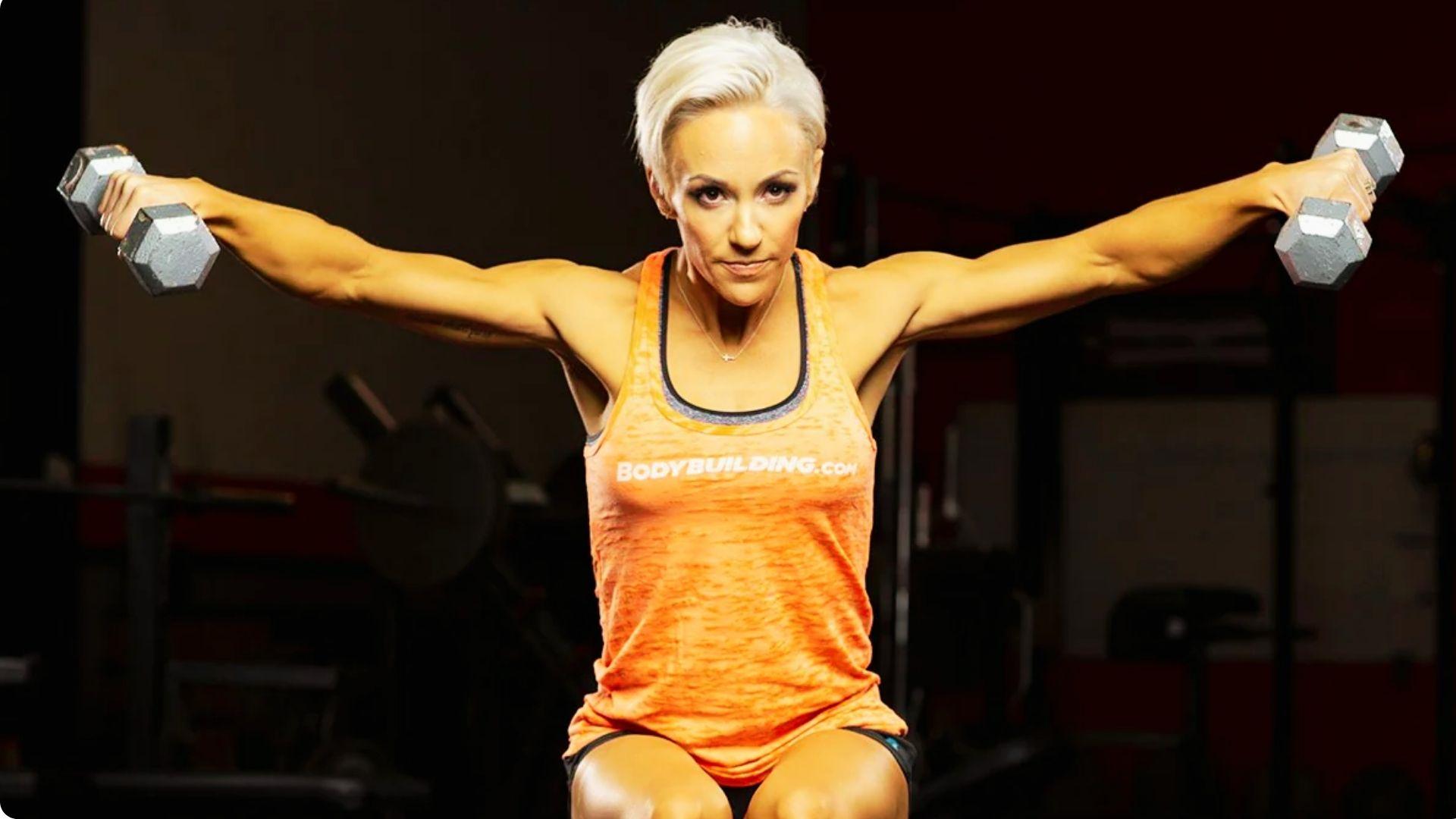
Shoulder training offers benefits that go far beyond appearance.
Building shoulder strength can improve your ability to perform everyday tasks such as lifting, carrying, pushing, and pulling with greater ease.
Strong shoulders also contribute to balanced muscle development throughout the upper body, helping create a more proportionate physique.
In addition, well-developed shoulder muscles support better posture by encouraging proper alignment of the neck, upper back, and shoulders.
For women who enjoy sports, strength training, or general fitness, stronger shoulders can improve overall performance.
Regular shoulder workouts can also help enhance upper-body definition and build confidence over time.
Understanding the Shoulder Muscles
Knowing the main shoulder muscles can help you train more effectively. The shoulders are made up of several muscles that work together to move and stabilize the arms.
Understanding these muscles can help you choose exercises that create balanced strength and muscle development.
Anterior Deltoid (Front Delts)
The anterior deltoid is located at the front of the shoulder and plays a major role in pressing and lifting movements.
- Helps raise the arm in front of the body.
- Assists with pushing exercises.
- Works during shoulder presses and front raises.
Lateral Deltoid (Side Delts)
The lateral deltoid sits on the outer part of the shoulder and contributes to shoulder width.
- Raises the arms out to the sides.
- Helps create broader-looking shoulders.
- Activated during lateral raise variations.
Posterior Deltoid (Rear Delts)
The posterior deltoid is located at the back of the shoulder and supports posture and pulling movements.
- Helps move the arms backward.
- Supports shoulder stability.
- Important for balanced shoulder development.
11 Shoulder Exercises for Women to Build Muscle
These exercises target all areas of the shoulders to help build strength and muscle.
1. Dumbbell Shoulder Press
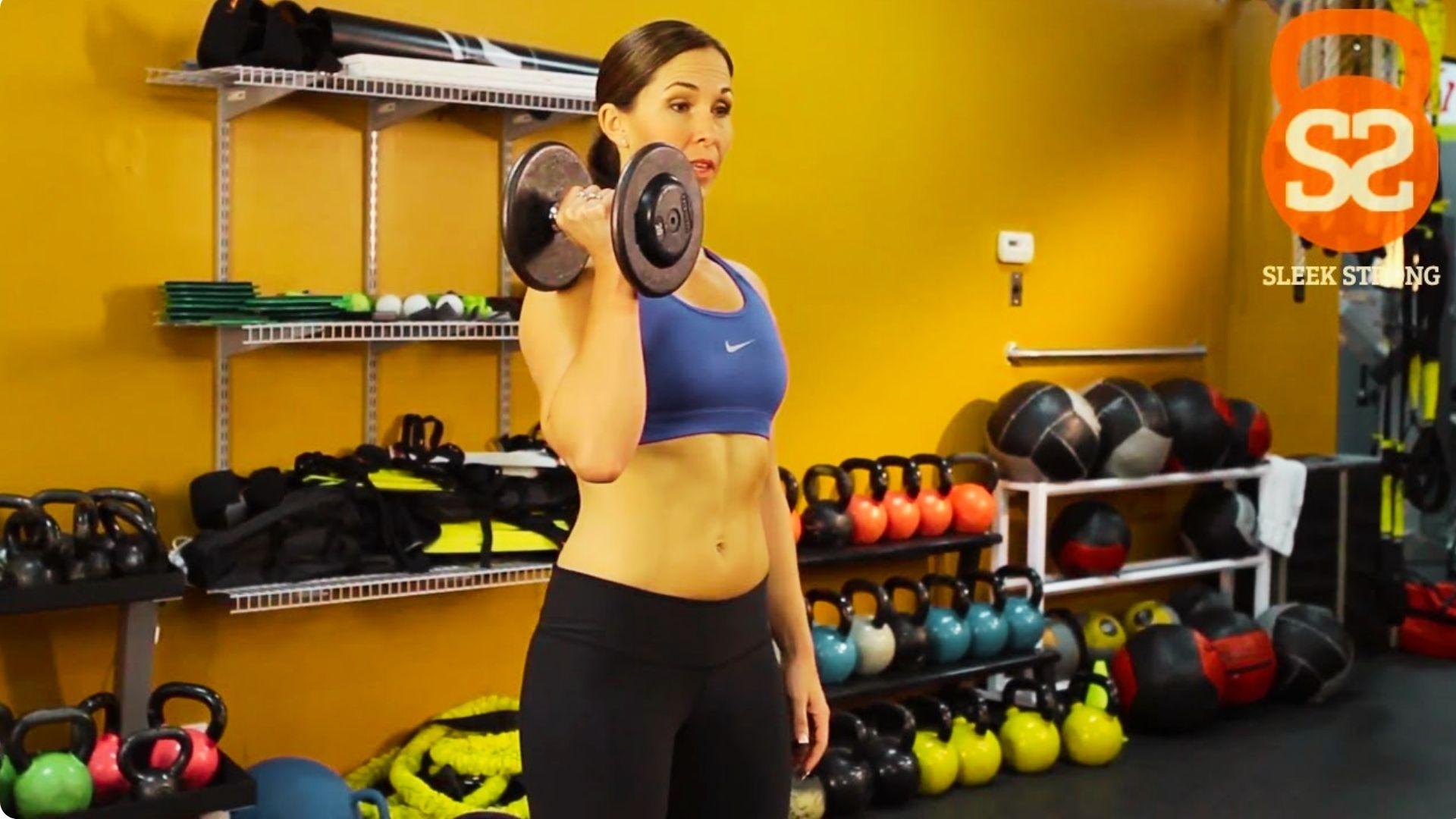
A foundational exercise that develops overall shoulder strength and muscle.
Muscles Worked
- Anterior deltoids
- Lateral deltoids
- Triceps
How to Perform It
- Hold a dumbbell in each hand at shoulder height.
- Press the weights overhead until your arms are extended.
- Lower the dumbbells slowly back to the starting position.
- Repeat for the desired number of repetitions.
Recommended Sets and Reps
- 3–4 sets
- 8–12 reps
2. Arnold Press

The Arnold press trains multiple parts of the shoulder through a larger range of motion.
Muscles Worked
- Anterior deltoids
- Lateral deltoids
- Triceps
How to Perform It
- Hold dumbbells in front of your shoulders with palms facing you.
- Rotate your palms outward as you press overhead.
- Reverse the movement while lowering the weights.
- Repeat with control.
Recommended Sets and Reps
- 3 sets
- 8–12 reps
3. Dumbbell Lateral Raise

This exercise helps build shoulder width and definition.
Muscles Worked
- Lateral deltoids
How to Perform It
- Hold dumbbells at your sides.
- Raise your arms out to shoulder level.
- Pause briefly at the top.
- Lower slowly.
Recommended Sets and Reps
- 3–4 sets
- 12–15 reps
4. Front Raise
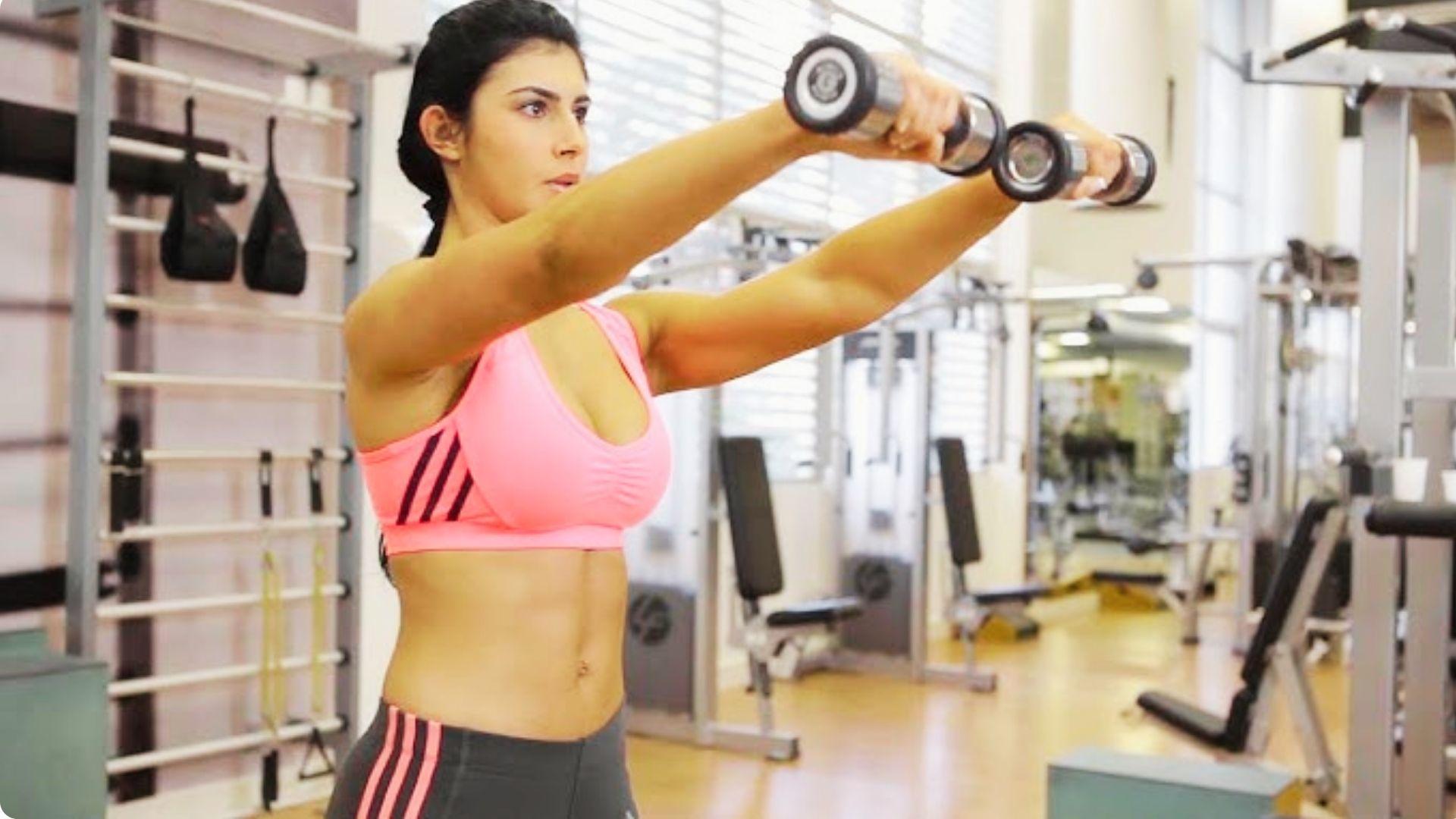
Front raises emphasize the front portion of the shoulders.
Muscles Worked
- Anterior deltoids
How to Perform It
- Hold dumbbells in front of your thighs.
- Raise the weights to shoulder height.
- Lower under control.
- Repeat.
Recommended Sets and Reps
- 3 sets
- 10–15 reps
5. Bent-Over Rear Delt Fly
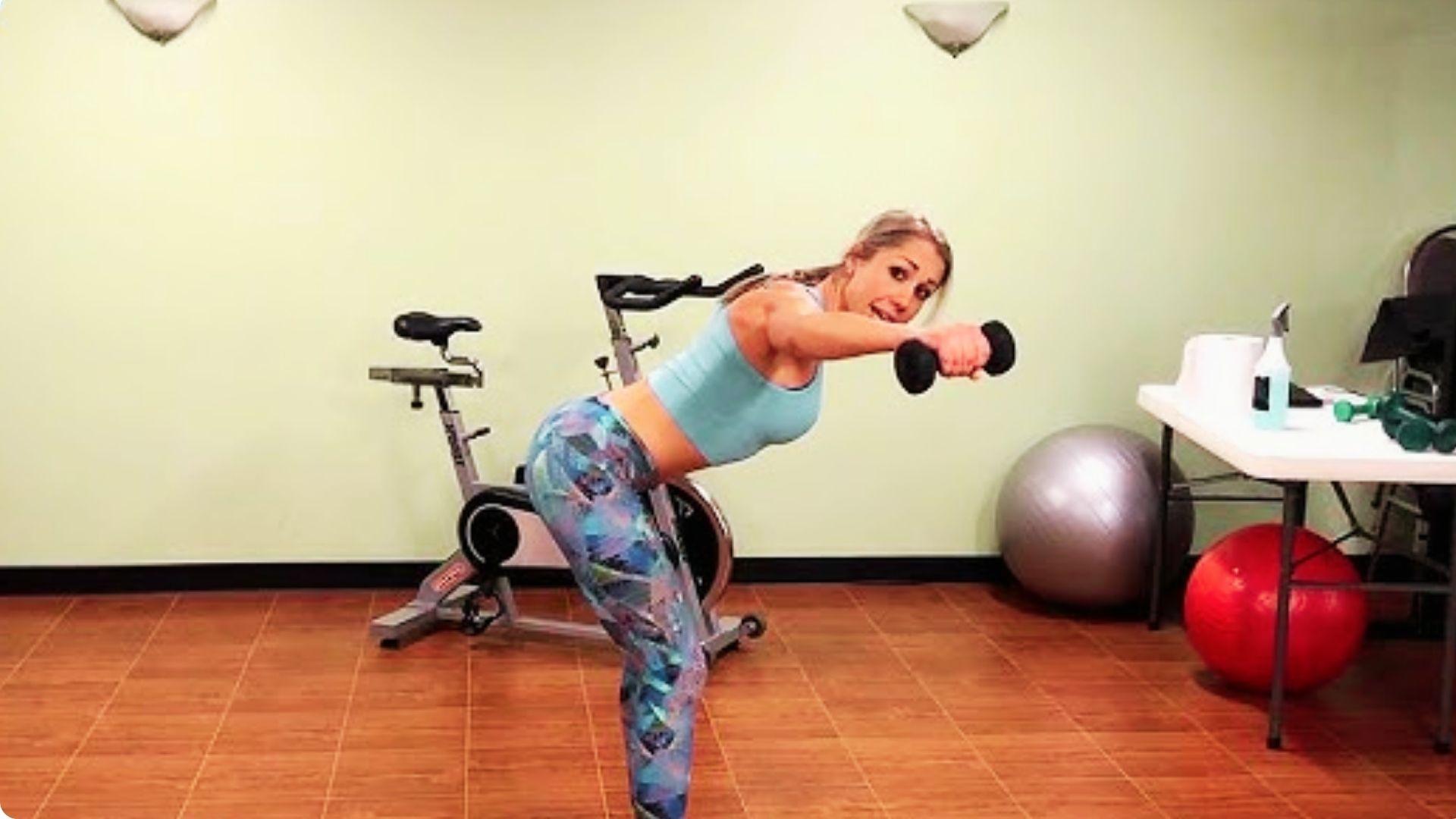
A great exercise for strengthening the often-neglected rear delts.
Muscles Worked
- Posterior deltoids
- Upper back muscles
How to Perform It
- Bend forward at the hips.
- Hold dumbbells beneath your shoulders.
- Raise the weights outward.
- Lower slowly.
Recommended Sets and Reps
- 3 sets
- 12–15 reps
6. Upright Row
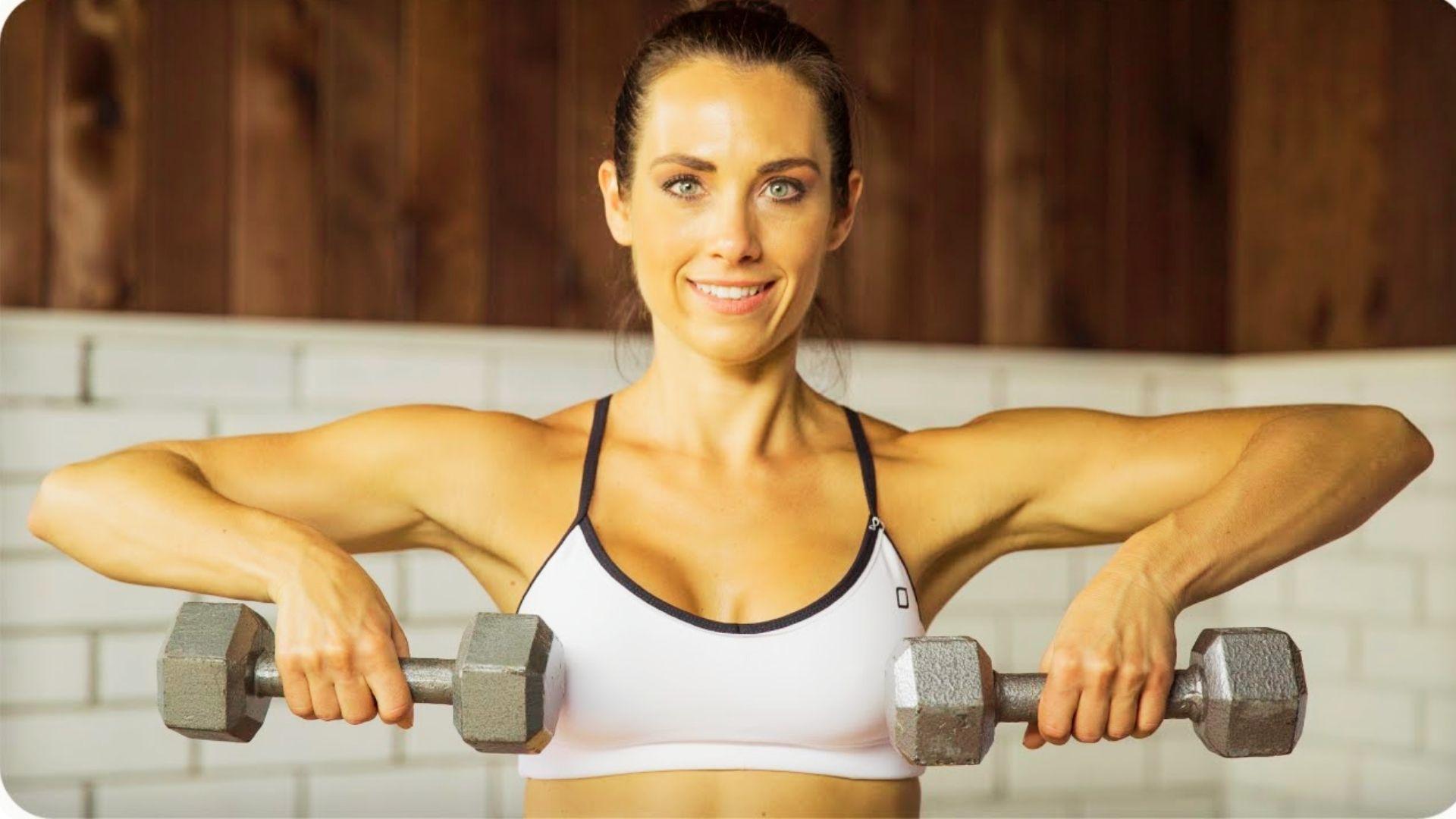
Upright rows target the shoulders and upper traps simultaneously.
Muscles Worked
- Lateral deltoids
- Trapezius
How to Perform It
- Hold a barbell or dumbbells in front of your thighs.
- Pull the weight upward toward your chest.
- Keep the weight close to your body.
- Lower with control.
Recommended Sets and Reps
- 3 sets
- 8–12 reps
7. Face Pull
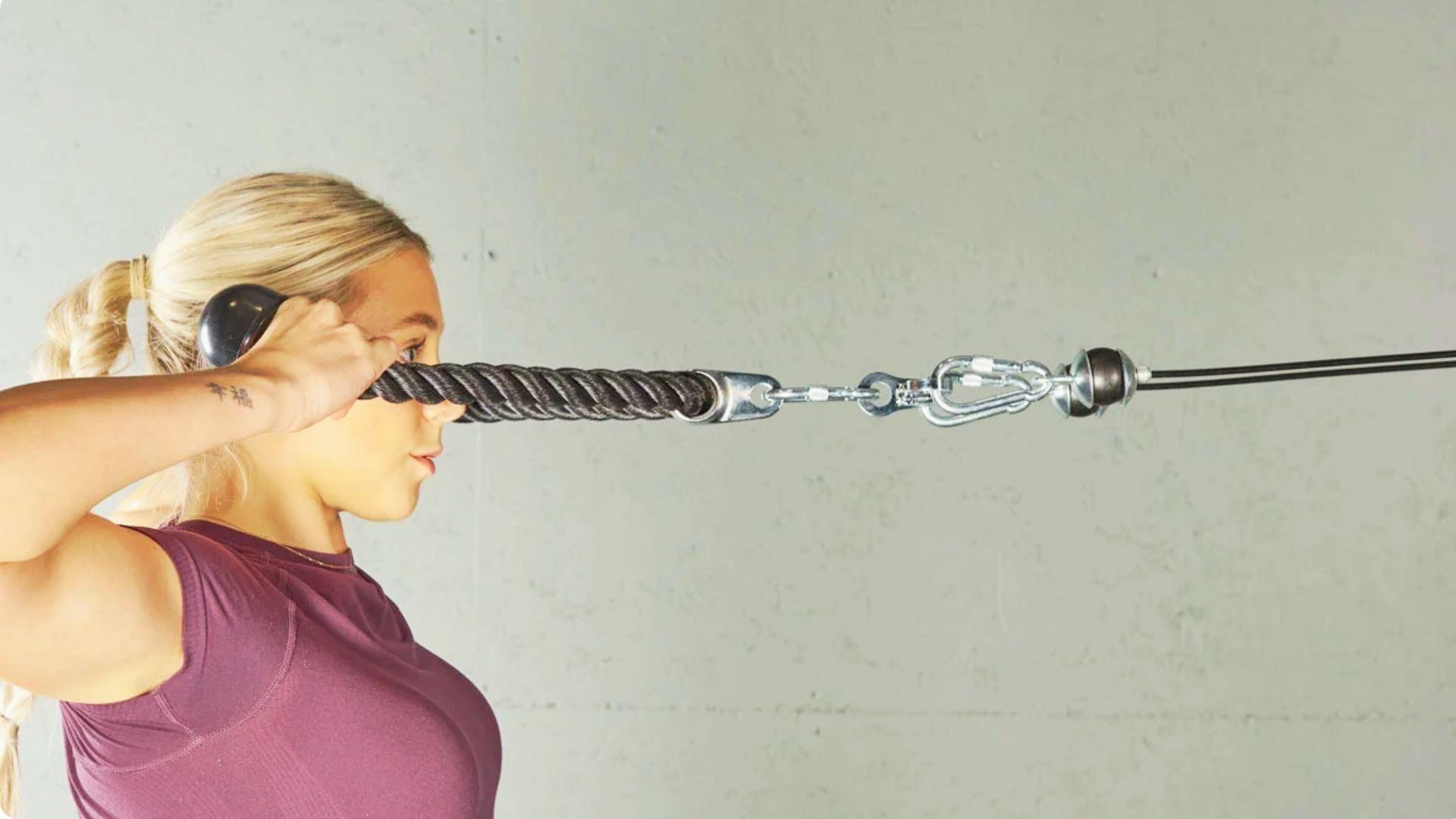
Face pulls improve shoulder health and strengthen the rear delts.
Muscles Worked
- Posterior deltoids
- Trapezius
- Rotator cuff muscles
How to Perform It
- Attach a rope to a cable machine.
- Pull the rope toward your face.
- Squeeze your shoulder blades together.
- Return slowly.
Recommended Sets and Reps
- 3 sets
- 12–15 reps
8. Cable Lateral Raise
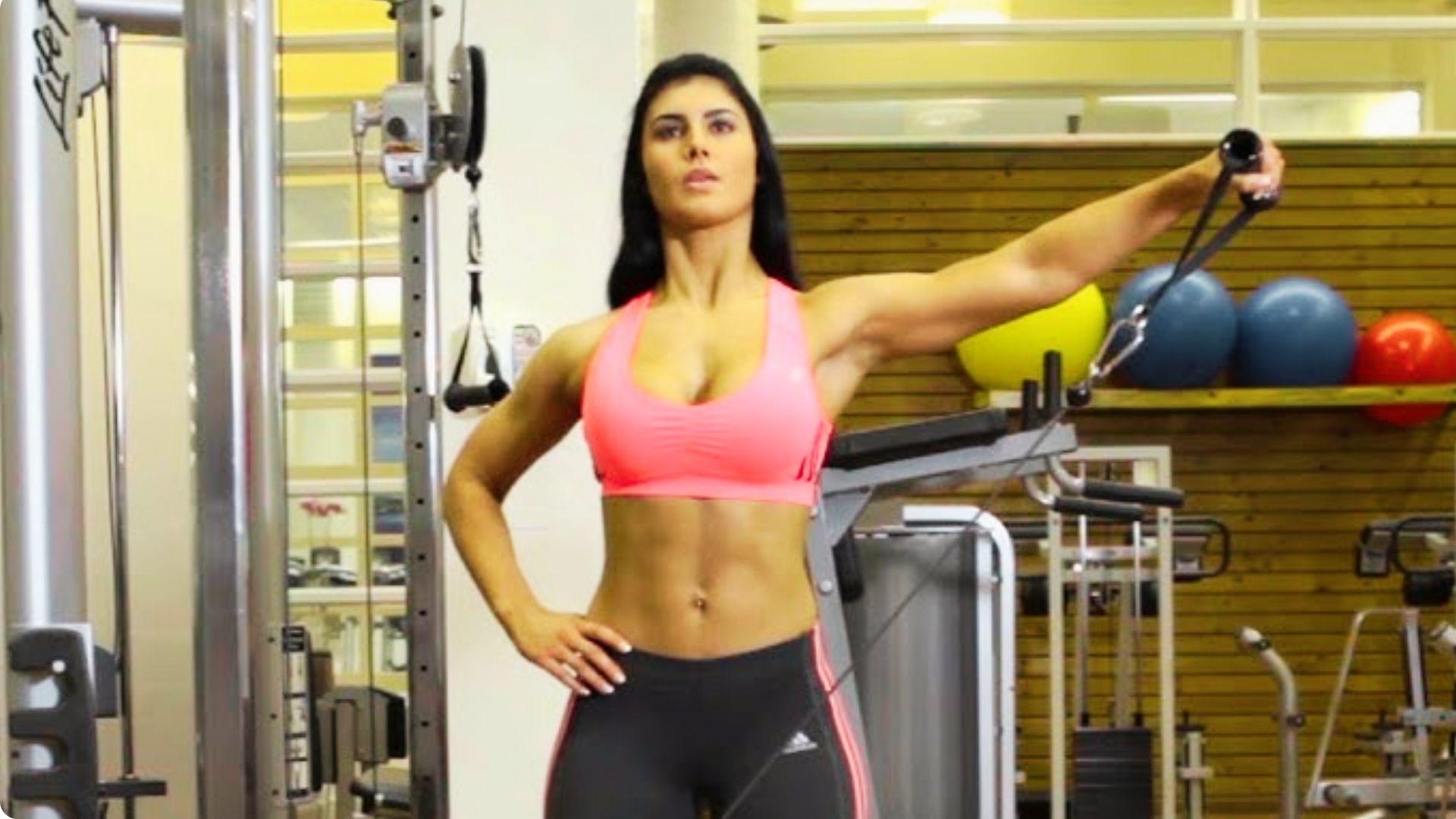
The cable variation provides constant tension throughout the movement.
Muscles Worked
- Lateral deltoids
How to Perform It
- Stand beside a cable machine.
- Hold the handle with one hand.
- Raise your arm to shoulder height.
- Lower slowly.
Recommended Sets and Reps
- 3 sets
- 12–15 reps
9. Machine Shoulder Press
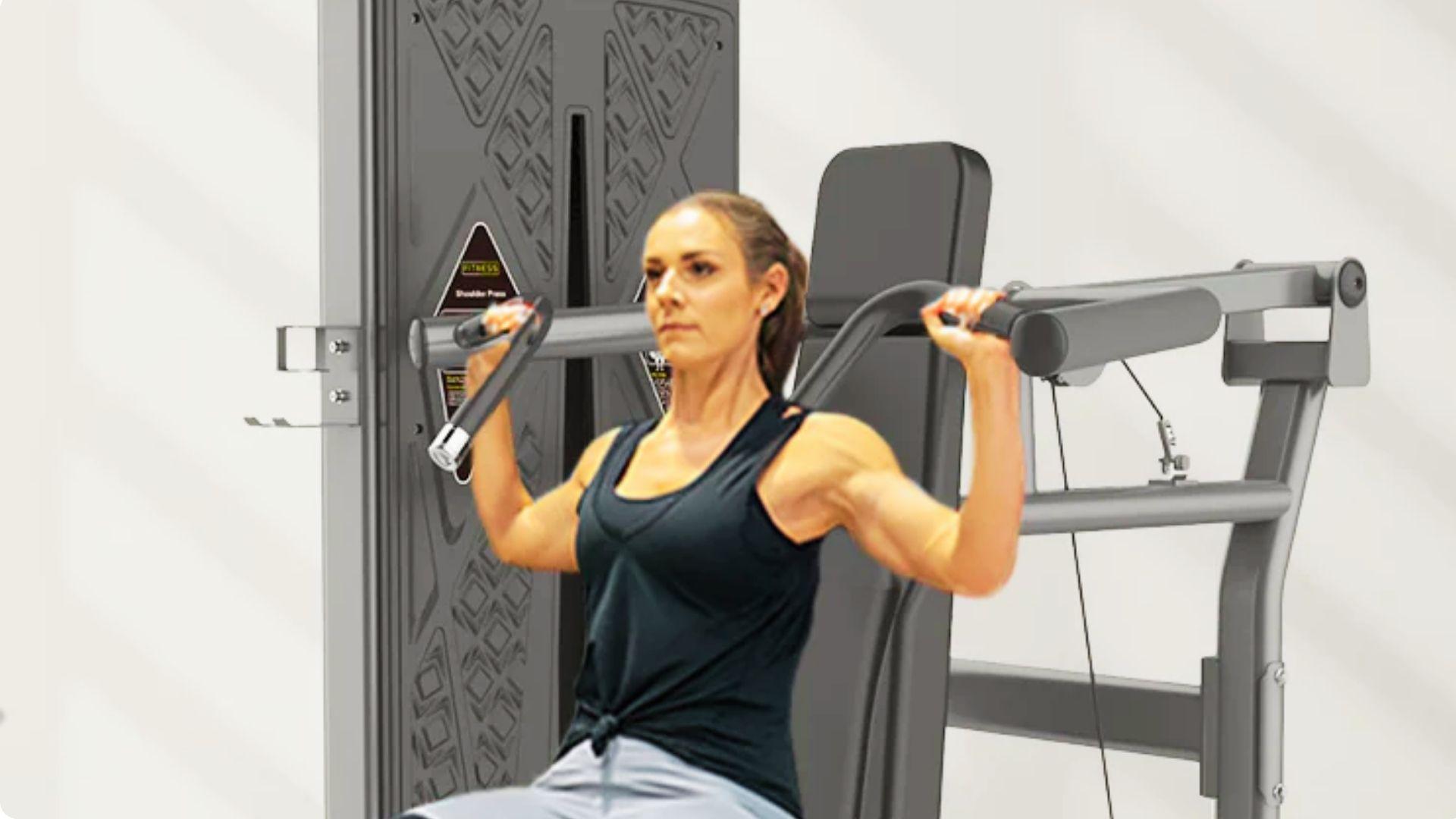
This machine-based exercise provides added stability for beginners.
Muscles Worked
- Anterior deltoids
- Lateral deltoids
- Triceps
How to Perform It
- Adjust the seat height.
- Grip the handles firmly.
- Press upward until your arms are extended.
- Lower slowly.
Recommended Sets and Reps
- 3–4 sets
- 8–12 reps
10. Reverse Pec Deck Fly
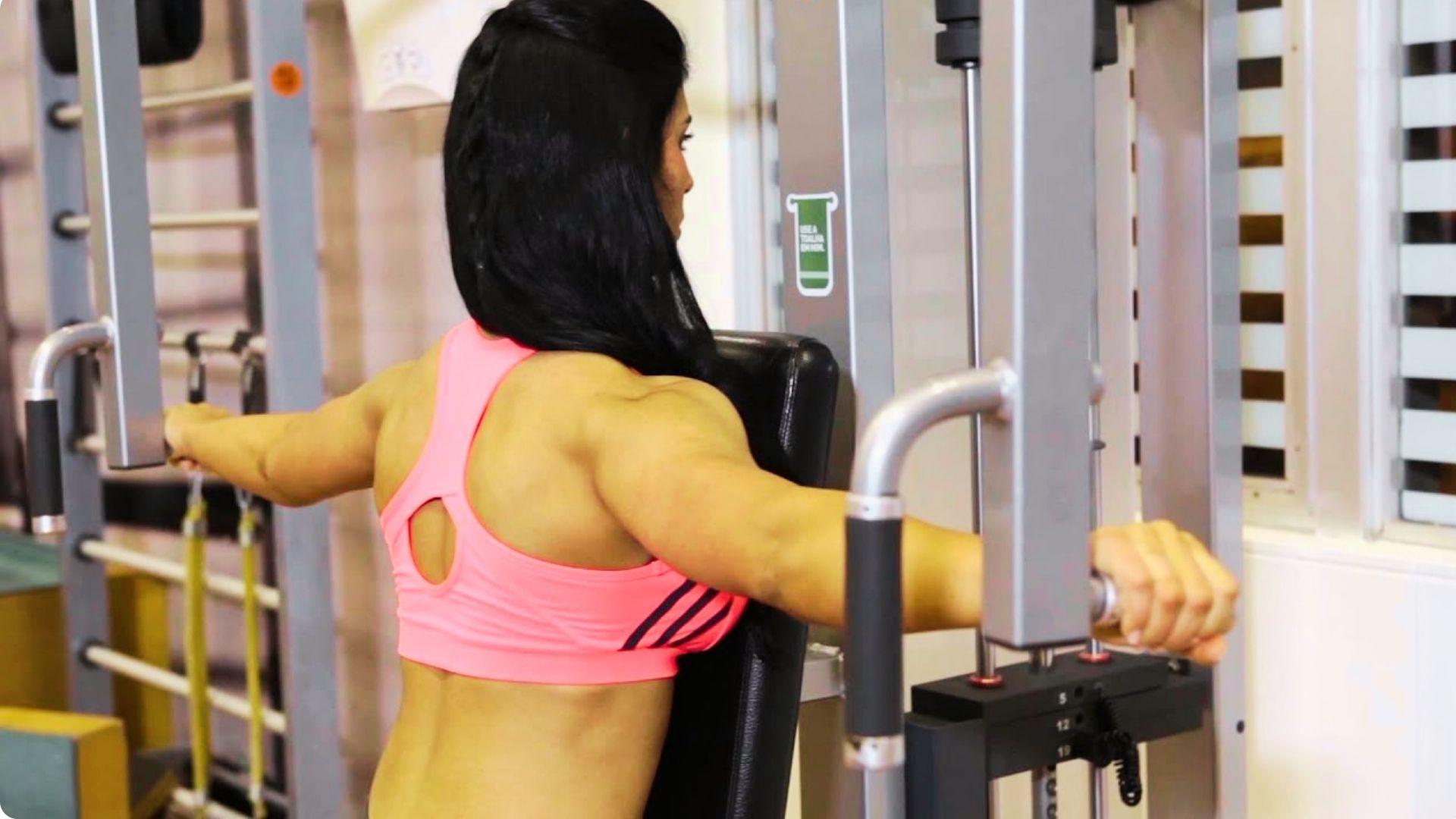
This machine exercise isolates the rear delts effectively.
Muscles Worked
- Posterior deltoids
- Upper back muscles
How to Perform It
- Sit facing the machine.
- Grip the handles.
- Pull your arms outward and backward.
- Return slowly.
Recommended Sets and Reps
- 3 sets
- 12–15 reps
11. Landmine Press
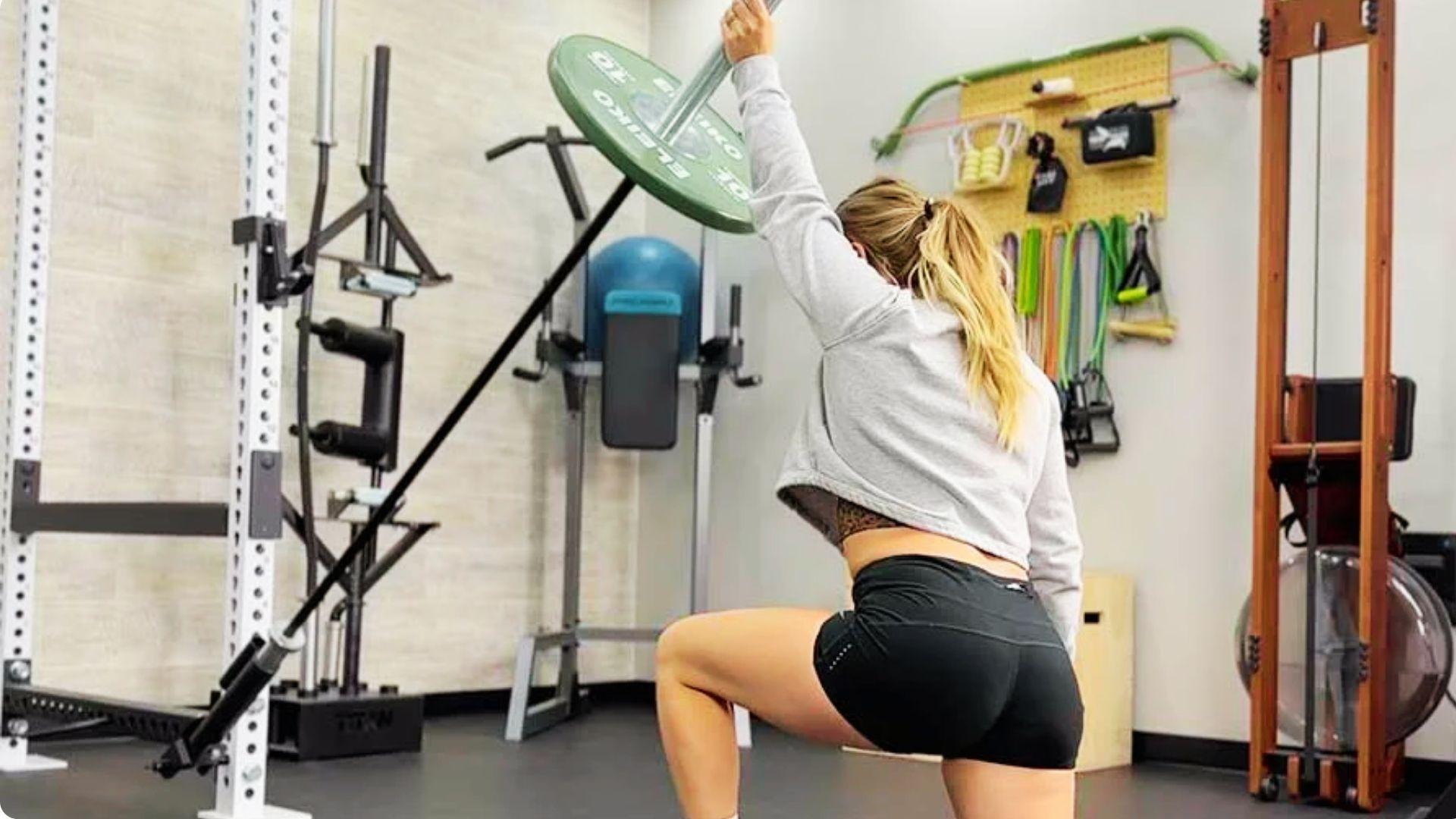
The landmine press combines shoulder strength with core stability.
Muscles Worked
- Anterior deltoids
- Upper chest
- Triceps
How to Perform It
- Hold one end of a landmine barbell.
- Press the bar upward and forward.
- Extend your arm fully.
- Lower with control.
Recommended Sets and Reps
- 3 sets
- 8–12 reps
Sample Shoulder Workout for Women
Here is a simple workout that combines several of the exercises above.
| Exercise | Sets | Reps |
| Dumbbell Shoulder Press | 3 | 8–12 |
| Dumbbell Lateral Raise | 3 | 12–15 |
| Bent-Over Rear Delt Fly | 3 | 12–15 |
| Face Pull | 3 | 12–15 |
| Arnold Press | 3 | 8–12 |
How Often Should Women Train Shoulders?
Training frequency should match your goals and recovery ability.
For Muscle Growth
Most women can benefit from training shoulders 1–2 times per week. This frequency provides enough stimulation while allowing adequate recovery.
For General Fitness
One dedicated shoulder session each week is often sufficient for maintaining strength and overall fitness.
Recovery Between Sessions
- Allow at least 48 hours between shoulder workouts.
- Monitor soreness and fatigue levels.
- Adjust training volume when needed.
Tips for Building Shoulder Muscle
Consistent training and recovery habits play a major role in shoulder muscle growth.
- Focus on Progressive Overload: Gradually increase weights, reps, or sets to keep challenging your muscles.
- Prioritize Proper Form: Good technique helps maximize results while reducing injury risk.
- Train All Three Deltoid Heads: Work the front, side, and rear delts for balanced shoulder development.
- Get Enough Protein: Adequate protein supports muscle repair and growth.
- Allow Time for Recovery: Rest and sleep help your muscles recover and become stronger.
Common Shoulder Training Mistakes
Avoiding these mistakes can help you train more effectively and safely.
- Using Too Much Weight: Excessive weight often leads to poor form and less muscle activation.
- Swinging the Weights: Using momentum reduces the effectiveness of shoulder exercises.
- Ignoring Rear Delts: Neglecting rear delts can create strength and posture imbalances.
- Training Shoulders Too Frequently: Insufficient recovery may slow progress and increase fatigue.
- Poor Exercise Technique: Incorrect form can reduce results and place extra stress on the joints.
Conclusion
Building strong shoulders takes time, but every small effort adds up. When I first started training, I focused too much on heavy weights and ignored form, and progress was slow.
Once I shifted to controlled movements and balanced training, results improved steadily.
As you work through these 11 shoulder exercises for women, imagine how much stronger and more confident you’ll feel in daily life and workouts.
Stay patient, stay consistent, and trust the process.
If this guide helped you, leave a comment, share it with a friend, or try more fitness content.
Frequently Asked Questions
How often should women train shoulders?
Most women can train shoulders 1–2 times per week for balanced muscle growth and proper recovery.
Can shoulder exercises help improve posture?
Yes, strengthening the shoulders and upper back helps support better posture and reduces slouching.
What is the best shoulder exercise for beginners?
The dumbbell shoulder press is a great starting exercise because it builds overall shoulder strength.
How long does it take to see shoulder muscle growth?
With consistent training and proper nutrition, visible improvements can appear in 6–12 weeks.
Should I use heavy weights for shoulder training?
Start with lighter weights to learn proper form, then gradually increase weight as strength improves.