

The rogue safety bar weight is 70 lbs. That’s the answer. I’m putting it at the top so you don’t have to scroll.
I’ve used the Rogue SB-1 for years across multiple training programs, including strength blocks, hypertrophy phases, and deload cycles, in both a commercial gym and my home setup.
The number alone doesn’t tell you everything. How it loads, how it feels, and how it changes your lifts matters just as much.
In this guide, I’ll cover every Rogue safety bar model, compare weights across brands, and show you exactly how this bar affects real training.
Let’s get started.
Rogue Safety Bar Weight

How much does the Rogue safety squat bar weigh?
The SB-1 weighs 70 lbs. A standard Olympic bar weighs 45 lbs. That’s a 25 lb gap before you add a single plate.
Here’s what that looks like in real numbers:
Plates: 135 lbs Bar: 70 lbs Total: 205 lbs
Miss that and your programming falls apart fast.
The SB-1 is heavier because of the cambered arms, padded collar, and forward-angled handles. Every part adds real weight. This is not a stripped-down bar.
Different Rogue Safety Bars and Their Weights
Not every Rogue safety bar weighs the same. Knowing the difference saves you from loading errors on day one.
Rogue SB-1 Safety Squat Bar Weight

The SB-1 weighs 70 lbs. It’s the flagship model. The cambered arms shift load forward, the padded collar protects your neck, and the handles give you a stable grip. The bar sits heavier than most competitors because of the steel and construction quality.
Rogue SB-1 2.0 (Updated Version)
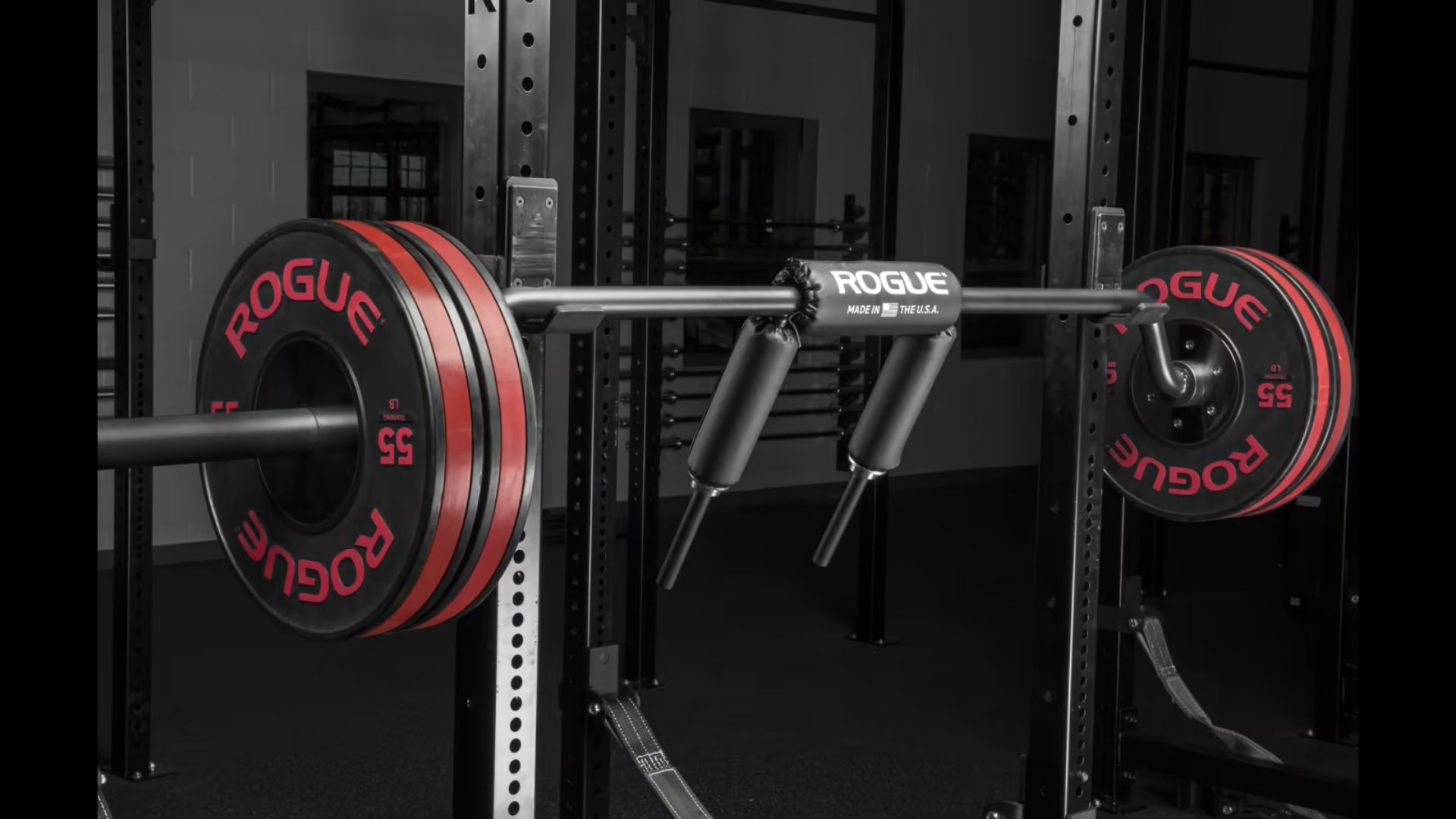
The SB-1 2.0 also weighs 70 lbs. Rogue moved the handles and reinforced some areas, but the total weight didn’t change. If you’re deciding between versions, weight is not the factor. Both land at the same 70 lbs.
Rogue Transformer Bar

The Transformer Bar starts at around 45 lbs in its base setup. Adding attachments pushes it slightly higher. It’s a multi-position bar built for variety, not specifically for the safety squat pattern. The SB-1 is still the heavier and more specialized option of the two.
Why Rogue Safety Bar Weight Feels Heavier Than It Is
70 lbs on the SB-1 does not feel like 70 lbs on a straight bar. I felt this the first session and it threw me off.
The cambered arms pull the load in front of your center of mass. Your upper back fights to keep you upright. Your core locks in harder. This increases muscular demand even when the plate weight stays the same.
I drop 20 to 30 lbs from my straight bar squat total when training with this bar. Most lifters I’ve trained alongside do the same after switching. It’s not weakness. It’s mechanics.
Rogue Safety Bar vs Standard Olympic Bar Weight
Here’s the quick breakdown:
Rogue SB-1: 70 lbs
Standard Olympic Barbell: 45 lbs
Difference: 25 lbs
A “225 lb squat” on the SB-1 is 295 lbs total. A “135 lb squat” is 205 lbs total.
Log these lifts separately from your straight bar numbers. Mixing them up skews your progress tracking completely.
Who Should Use the Rogue Safety Bar?
Not every lifter needs this bar. But for certain goals, it’s the right call.
Best for:
- Intermediate and advanced lifters with a 135 lb or higher squat
- Lifters with limited shoulder mobility who struggle to hold a straight bar
- Quad-focused training that needs more anterior load
- Powerlifters adding variation without adding spine stress
- Home gym lifters who want one bar that handles squats, good mornings, and accessories
Not ideal for:
- True beginners squatting under 115 lbs
- Lifters who haven’t built basic squat mechanics yet
The 70 lb starting weight becomes a tool at the right strength level. Below that, it becomes a barrier.
How Rogue Safety Bar Weight Affects Your Training
The 70 lb starting weight changes your session planning across every major movement. Adjust early or you’ll pay for it later.
Squats
The forward camber hits your quads and core harder than a high-bar straight bar squat. Start 20 to 30 lbs below your straight bar working weight. Give it three to four sessions before adding load.
Here’s a sample adjustment:
Straight bar working set: 225 lbs
First SB-1 session target: 185 to 195 lbs total (115 to 125 lbs in plates)
Most lifters who skip this adjustment end up sore in the wrong places by session two.
Good Mornings
The padded collar keeps the bar seated well during good mornings. But 70 lbs is still real weight before plates. I’ve watched strong lifters load this movement too fast and strain their lower back within the first week. Start with just the bar. Add weight in small jumps.
Lunges & Accessories
The handles make lunges more stable than a straight bar. You have something to hold during the movement. At 70 lbs of base weight, you’re already working before plates enter. Use this bar on accessories only after you’re familiar with how it loads on compound lifts first.
Is Rogue Safety Bar Weight Good for Beginners?
At 70 lbs, the Rogue safety squat bar leaves very little room for beginners.
If you’re squatting under 115 lbs right now, that bar fills most of your working set before plates even enter the equation.
The bar does have beginner-friendly features. No extreme shoulder flexibility needed. Stable hand position.
The neck pad keeps it from shifting. Easier to bail safely compared to a straight bar.
My take after five-plus years with this bar: get comfortable squatting 135 lbs with a straight bar first. Then bring in the SB-1. At that point, the 70 lb weight becomes a tool instead of a barrier.
Rogue Safety Bar Weight Capacity & Durability
The SB-1 is rated to 1,000 lbs. That covers every level of lifter from beginner to elite powerlifter.
Built from steel with a black oxide or chrome finish depending on the version. I’ve used the same bar in a commercial gym for years under daily heavy use.
No bending, no sleeve wobble, no finish cracking. It holds up under consistent load without breaking down.
What Customers and Experts Say About the Rogue SB-1
If you want more than one person’s take, the feedback from customers and strength coaches lines up well with my own experience.
Most verified buyers rate the SB-1 at 4.8 out of 5 stars or higher across major retail platforms. The most common praise centers on build quality and bar stability.
Lifters mention that the knurling grips the shoulder pad well and the sleeves spin smoothly even after years of use. Several long-term owners note they’ve had the bar for five or more years without any finish wear or structural issues.
Powerlifting coaches and strength sport experts point to a few consistent strengths. The cambered design gets credit for helping athletes work around shoulder injuries without losing squat volume.
Physical therapists who work with strength athletes have recommended the SB-1 specifically because it reduces stress on the shoulder joint while keeping the posterior chain loaded. That combination is hard to find in a single piece of equipment.
Critical feedback is rare but worth noting. Some buyers call out the price as the main drawback, especially when comparing it to Titan or REP Fitness options in the same category.
A smaller group of lifters mention that the padded collar feels stiff at first and takes a few sessions to break in. Neither of these is a performance issue. They’re more about cost and comfort adjustment.
The expert consensus is consistent: the SB-1 is the best-built safety squat bar in its price range. It costs more than the competition, and the build quality justifies that gap over the long run.
For serious lifters who plan to use this bar for years, the investment holds up.
Common Mistakes When Judging Rogue Safety Bar Weight
Forgetting to count the bar is the most expensive mistake.
Load 135 lbs in plates, call it “135,” and you’re actually moving 205 lbs. That math error adds up fast over a training cycle.
Comparing SB-1 lifts directly to straight bar numbers is the second mistake. They’re separate movements with different demands. Log them separately.
Calling the bar “too heavy” and skipping it entirely is the third. The extra weight is not a design flaw. It’s part of what makes this bar effective.
Rogue Safety Bar Weight vs Other Brands
Here’s how the Rogue SB-1 stacks up against the three biggest competitors in terms of weight and value. Rogue comes in heavier than all of them.
Titan Safety Bar Weight
Titan’s safety bar weighs 65 to 67 lbs. Close to the SB-1, lower in price. The build is solid. For home gym use, Titan is a strong runner-up.
EliteFTS Safety Bar Weight
EliteFTS lands at around 65 lbs. A gym favorite in powerlifting circles. Holds up well under regular commercial use. Pricing is higher, but it has a strong reputation in strength sport settings.
REP Fitness Safety Bar Weight
REP Fitness bars weigh 60 to 65 lbs. Good build quality for home gyms and more budget-friendly than Rogue. If cost is the main factor, REP Fitness is worth a look.
Here’s how Rogue safety bar weight compares to each major brand:
|
Brand |
Bar Weight |
Weight Capacity |
Price Range |
|
Rogue SB-1 |
70 lbs |
1,000 lbs |
$$$ |
|
Titan Safety Bar |
65 to 67 lbs |
700 to 1,000 lbs |
$$ |
|
EliteFTS Safety Bar |
65 lbs |
1,000 lbs |
$$$ |
|
REP Fitness Safety Bar |
60 to 65 lbs |
700 lbs |
$$ |
Rogue is the heaviest bar in this group. That extra weight reflects the heavier steel and longer build life you’re getting.
Should You Buy a Rogue Safety Bar Based on Its Weight?
Weight alone should not drive the decision. But knowing the specs before you buy helps you plan smarter.
The SB-1 is best for intermediate to advanced lifters. More base weight means higher total load with fewer plates needed on the sleeves.
For beginners, it’s a tougher starting point. For experienced lifters, it’s a benefit.
If you want a lighter entry point, Titan or REP Fitness makes more sense.
If you want the best-built option at 70 lbs that holds up for a decade of serious training, the Rogue safety squat bar justifies the price.
Pro Tips to Adapt to Rogue Safety Bar Weight Faster
Start with just the bar for your first two sessions. Get used to how 70 lbs moves and sits before loading plates.
Drop your working weight 20 to 30 lbs below your straight bar total. This protects your lower back and keeps form clean while you adjust.
Build your upper back directly. This bar exposes upper back weakness fast. Add rows and face pulls to your weekly routine alongside SB-1 work.
Log your lifts in a separate column from your straight bar work. Treat them as two different tools because they are.
Conclusion
The rogue safety bar weight is 70 lbs, and that number changes how you load, how you feel the movement, and how you plan your sessions.
I’ve trained with the SB-1 for over five years across strength blocks, hypertrophy phases, and deload cycles, and the adjustment period is real but short.
You now know the SB-1 weight, how it compares across major brands, and who this bar actually suits. Rogue sits at the top of the weight range for a reason.
Better steel, better build, longer life. Give yourself a few focused sessions and the 70 lbs starts to feel exactly right.
Are you ready to add the Rogue SB-1 to your training?
Frequently Asked Questions
How much does the Rogue safety squat bar weigh?
The Rogue SB-1 weighs 70 lbs, which is 25 lbs more than a standard 45 lb Olympic bar. Always count the bar weight when calculating your total load for any set.
Is the SB-1 bar weight the same across versions?
Yes, both the original SB-1 and the SB-1 2.0 weigh 70 lbs. Rogue updated the handle position and structure in the 2.0 but kept the total weight the same.
Why does the Rogue safety squat bar feel heavier than it looks?
The cambered arms shift load forward, forcing your upper back and core to work harder than on a straight bar. This makes the 70 lbs feel more demanding even when the plate weight doesn’t change.
How does Rogue safety bar weight compare to Titan and REP Fitness?
The SB-1 at 70 lbs is heavier than Titan (65 to 67 lbs) and REP Fitness (60 to 65 lbs). The extra weight comes from heavier steel and a more durable overall build.
Can beginners handle the Rogue SB-1?
Beginners can use it, but the 70 lb starting weight is challenging if your squat is still under 115 lbs. Most lifters are better off building to a 135 lb straight bar squat before switching to this bar.


