

I have spent years tracking food, and one thing that changed how I eat was understanding the protein to calorie ratio. It sounds technical, but it is actually simple once you see it in action.
In this blog, I will cover what this ratio means, what a good number looks like, the best protein density foods to eat, and how to use it for fat loss.
I will also walk you through the calculation, share a sample meal plan, and cover tips for special diets.
I have been working with nutrition data long enough to know what actually moves the needle. If you want to eat smarter without starving, this is the right place to start.
What Is Protein to Calorie Ratio? (Simple Explanation)
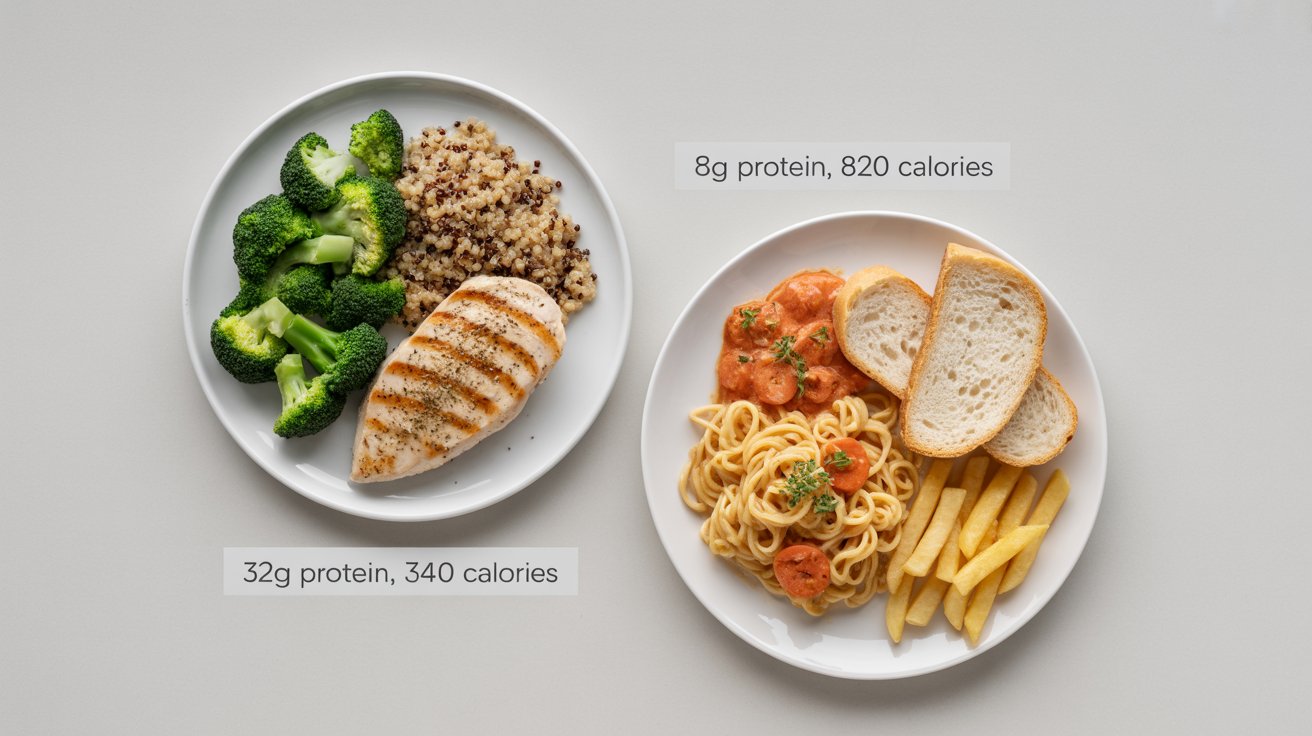
The protein to calorie ratio tells you how much protein you get for every calorie in a food or meal. It is usually measured in grams of protein per 100 calories.
For example, if a food has 200 calories and 20 grams of protein, your protein per calorie ratio works out to 10 grams per 100 calories.
This number helps you see which foods give you the most protein without loading you up with extra calories. That matters a lot when you are trying to lose fat while keeping muscle.
Think of it this way. You want every calorie to do more work. High protein low calorie foods do exactly that.
What Is a Good Protein to Calorie Ratio?
Here is a simple breakdown to keep in mind:
- Below 5g per 100 calories: low protein density
- 5 to 7g per 100 calories: decent but not ideal
- 7 to 10g per 100 calories: solid range for fat loss
- Above 10g per 100 calories: high protein density, best for fat loss
Foods like egg whites, canned tuna, and chicken breast fall in that top range. These are worth centering your meals around when fat loss is the goal.
Why Protein to Calorie Ratio Matters for Your Goals

This ratio matters because protein does three key things. It keeps you full. It protects muscle during fat loss. And it costs more calories to digest compared to fats or carbs.
When I started paying attention to this number, I stopped feeling hungry all the time. I was eating the same total calories but staying satisfied much longer.
For fat loss, the goal is a calorie deficit. But if that deficit comes with low protein, you end up losing muscle too. That slows your metabolism over time.
Focusing on a strong protein to calorie ratio fixes this. You stay in a deficit and still protect the muscle you have built.
Why Protein Burns More Calories During Digestion
This is called the thermic effect of food, and protein wins by a wide margin here.
Your body uses roughly 20 to 30 percent of protein calories just to digest and process protein. Carbs use about 5 to 10 percent. Fat uses only 0 to 3 percent.
So if you eat 200 calories of protein, your body burns around 40 to 60 of those calories during digestion alone. That makes high protein per calorie foods even more powerful for fat loss than the raw numbers suggest.
This is also part of why high protein diets make people feel fuller. Protein takes longer to break down, which slows digestion and keeps hunger in check.
The science on satiety consistently points back to protein as the most filling macronutrient of the three.
Best Protein to Calorie Ratio Foods for Fat Loss
These protein density foods give you a lot of protein without piling on extra calories.
Here is a quick reference table:
| Food | Protein per 100 Calories |
|---|---|
|
Canned tuna (in water) |
~22g |
|
Shrimp |
~20g |
|
Chicken breast |
18–20g |
|
Egg whites |
~11g |
|
Non-fat Greek yogurt |
10–12g |
|
Low-fat cottage cheese |
~12g |
|
Tempeh |
10–11g |
|
Lentils |
~9g |
These are the backbone of any smart fat loss diet. I eat several of these every day. They are not fancy, but they consistently hit the mark.
Low Protein to Calorie Ratio Foods to Limit
Some foods are calorie-heavy but protein-light. They are not bad foods, but eating too much of them makes it harder to hit your protein goals without overshooting on calories.
- Peanut butter: ~4g per 100 calories
- Regular cheese: 5–7g per 100 calories
- Avocado: ~1g per 100 calories
- Granola: ~3g per 100 calories
- White bread: 3–4g per 100 calories
These can still fit into a healthy diet. Just keep an eye on portions when your main goal is improving your protein per calorie intake.
How to Calculate Your Daily Protein to Calorie Ratio
This is easier than it sounds. Follow these four steps:
- Find your total daily calorie intake
- Multiply your target protein grams by 4 (protein has 4 calories per gram)
- Divide that number by total calories
- Multiply by 100 to get the percentage
Real example: You eat 1,800 calories and aim for 150 grams of protein. 150 multiplied by 4 equals 600 protein calories. 600 divided by 1,800 equals 0.33. That means 33 percent of your calories come from protein.
Most fat loss plans work well when protein makes up 30 to 40 percent of total calories.
How to Improve Your Protein to Calorie Ratio
Small swaps make a big difference here. You do not need to overhaul everything at once.
- Swap regular yogurt for non-fat Greek yogurt
- Replace high-fat meats with chicken breast or shrimp
- Add egg whites to meals that use whole eggs
- Choose low-fat cottage cheese over full-fat versions
- Use tuna or white fish more often as your protein base
Each of these shifts your overall ratio higher without cutting total food volume. I started with just one swap per week and saw steady progress without feeling restricted.
Protein to Calorie Ratio vs Macronutrient Tracking
Macro tracking looks at your total intake of protein, carbs, and fat as percentages throughout the day.
The protein to calorie ratio focuses only on how much protein you get per calorie, food by food.
Both are useful. But if you are just starting out, the ratio method is simpler. You do not need an app. You just check food labels and do quick math.
I found this approach far less overwhelming when I was learning. Once you are comfortable, you can layer in full macro tracking for more detail.
Common Mistakes to Avoid
I have made most of these myself.
Here is what to watch:
- Relying only on protein shakes instead of whole food sources
- Ignoring portion sizes on high-ratio foods
- Cutting calories too hard and losing muscle along with fat
- Skipping protein at breakfast, which makes it harder to hit daily targets
- Not spreading protein across meals (aim for 25 to 40 grams per meal)
The goal is consistency, not perfection. One good food swap beats a perfect plan you never follow.
Sample Meal Plan Based on Optimal Protein to Calorie Ratio
Here is what a solid day might look like:
- Breakfast: 3 egg whites plus 2 whole eggs with spinach, non-fat Greek yogurt on the side
- Lunch: Grilled chicken breast with a large salad and light dressing
- Snack: Low-fat cottage cheese with a few berries
- Dinner: Shrimp stir-fry with brown rice and broccoli
Total protein lands around 150 to 160 grams. Total calories stay between 1,700 and 1,800. This is the kind of day where you feel full, hit your numbers, and still stay in a calorie deficit.
Protein to Calorie Ratio for Special Diets
For vegan diets, lentils, tofu, tempeh, and edamame are solid high protein low calorie options. Lentils give about 9 grams per 100 calories. Tempeh hits 10 to 11 grams.
For keto diets, lean meats, eggs, and cottage cheese fit well. Just watch high-fat protein sources that bring the overall ratio down.
For bulking phases, the ratio matters less, but staying above 7 grams per 100 calories still helps limit excess fat gain.
For older adults, protein needs increase with age. Focusing on high protein density foods helps meet those needs without eating more total calories.
Conclusion
Understanding the protein to calorie ratio has been one of the most practical shifts in how I approach food.
It cuts through the confusion and gives you a clear picture of which foods are actually working for your goals. Start small.
Pick two or three high protein per calorie foods you already enjoy and build meals around them. Use the steps I shared to check your daily numbers. Over time it becomes second nature.
You do not need a complicated plan. You just need a smarter one. This ratio works for fat loss, muscle retention, and eating better without obsessing over every bite.
Save this guide and bookmark it so you can quickly check food ratios when planning your meals.
What is one food swap you will make this week to improve your protein to calorie ratio?
Frequently Asked Questions
What is a good protein to calorie ratio for fat loss?
Aiming for 7 to 10 grams of protein per 100 calories is a solid starting target. Foods above 10 grams per 100 calories are the best picks when fat loss is the main goal.
What are the best high protein low calorie foods?
Canned tuna, shrimp, chicken breast, egg whites, and non-fat Greek yogurt are among the strongest options. These consistently offer 10 or more grams of protein per 100 calories.
How is protein to calorie ratio different from counting macros?
Macro counting tracks all three nutrients across your full day, while this ratio focuses on protein density food by food. The ratio method is simpler for beginners and does not require a tracking app.
Does a high protein to calorie ratio help with hunger?
Yes, protein is the most filling macronutrient, and foods with a high ratio keep you satisfied longer. This also relates to the thermic effect, since your body burns more calories digesting protein than carbs or fat.
How much protein per day do I need for fat loss?
Most research suggests 0.7 to 1 gram of protein per pound of body weight as a good range. Spreading this across three to four meals helps your body use it more effectively throughout the day.


