
Working out smarter means knowing which muscle groups to workout together at the gym. This article will show you the best muscle pairings that save time and build strength faster. After eight years of training, I know what works.
You’ll learn which muscles work well as a team, how to avoid common mistakes, and which training split fits your goals. I’ve tested every major split and seen the results myself.
This guide covers simple strategies to make your gym time count. By the end, you’ll have a clear plan to pair muscles the right way.
Benefits of Training Muscle Groups Together
Training the right muscle groups together makes every workout more effective. You finish sessions faster and see better gains.
Smart pairing reduces wasted effort. When muscles work as a team, you don’t need to train them separately. This cuts down your total gym time each week.
Your body also recovers better with proper pairing. Muscles get the rest they need between sessions, which means faster growth and fewer injuries.
Understanding Major Muscle Groups

Pairing muscles starts with knowing what muscles you’re working. Your body has several major muscle groups. Each one plays a different role in movement and strength.
Upper Body Muscle Groups
Your upper body includes four main muscle groups.
Chest: Your pecs help you push things away from your body. They’re used in pressing movements.
Back: This includes your lats, traps, and rhomboids. These muscles help you pull things toward you.
Shoulders: Your deltoids cover the top of your arms. They lift your arms in all directions.
Arms: This includes biceps, triceps, and forearms. Biceps bend your elbow. Triceps straighten it. Forearms control grip strength.
Core and Abdominal Muscles
Your core is more than just abs. It includes deep muscles that support your spine and pelvis.
Abs and deep core muscles: These stabilize your body during almost every exercise. A strong core protects your back and improves performance.
Role of the core in strength training: Your core connects your upper and lower body. It transfers power between them. Training your core makes every other lift stronger and safer.
Lower Body Muscle Groups
Your legs contain some of the biggest muscles in your body.
Quads: These are the muscles on the front of your thigh. They straighten your knee.
Hamstrings: These run along the back of your thigh. They bend your knee and extend your hip.
Glutes: Your butt muscles are powerful hip extensors. They’re key for strength and speed.
Calves: These muscles on the back of your lower leg help you push off the ground.
Why Pairing Muscle Groups Is Important
Knowing which muscle groups to workout together helps you train smarter. Here are three key reasons why pairing matters.
Muscles work as a team during exercises. Push movements use chest, shoulders, and triceps together. Pull movements use back and biceps. Squats work quads, hamstrings, and glutes. Training muscles that work together saves time and energy.
Smart pairing means fewer gym days per week. Training two muscle groups in one session lets both rest together instead of separately. Muscles need 48 to 72 hours to recover. Right pairing ensures proper rest time and prevents muscle imbalances that cause injury.
Best Muscle Groups to Workout Together

Here are the most effective muscle pairings for the gym.
Chest and Triceps
This is one of the most popular pairings. It works because both muscles handle pushing.
How pushing exercises engage both muscles: When you do a bench press, your chest does most of the work. But your triceps help finish the movement. Training them together makes sense.
Common exercises that target both: Bench press, dips, pushups, and overhead press all use chest and triceps.
Back and Biceps
Pulling movements use your back and biceps together.
Pulling movements and muscle activation: During rows and pulldowns, your back pulls the weight. Your biceps assist by bending your elbow.
Benefits for posture and upper-body strength: This pairing builds a strong, balanced upper body. It also helps fix rounded shoulders from too much sitting.
Quads and Hamstrings
Training the front and back of your legs together builds balanced leg strength.
Training front and back of the legs together: Squats hit your quads hard. Deadlifts and leg curls work your hamstrings. Doing both in one session makes your legs strong and stable.
Importance of balanced leg development: Ignoring hamstrings can lead to knee injuries. Training both keeps your joints safe.
Shoulders and Arms
This pairing works well for focusing on smaller muscle groups.
Combining shoulder training with arm work: Shoulder presses, lateral raises, and arm exercises make a solid upper-body day.
Managing upper-body volume effectively: Shoulders and arms recover faster than chest or back. You can train them more often without overdoing it.
Full-Body Muscle Group Training
Sometimes training everything in one session is the best choice.
When full-body workouts make sense: If you can only train three days a week, full-body splits let you hit every muscle group multiple times.
Benefits for beginners and busy schedules: New lifters build strength faster with full-body routines. Busy people get more done in fewer trips to the gym.
Popular Workout Splits Using Muscle Group Pairings
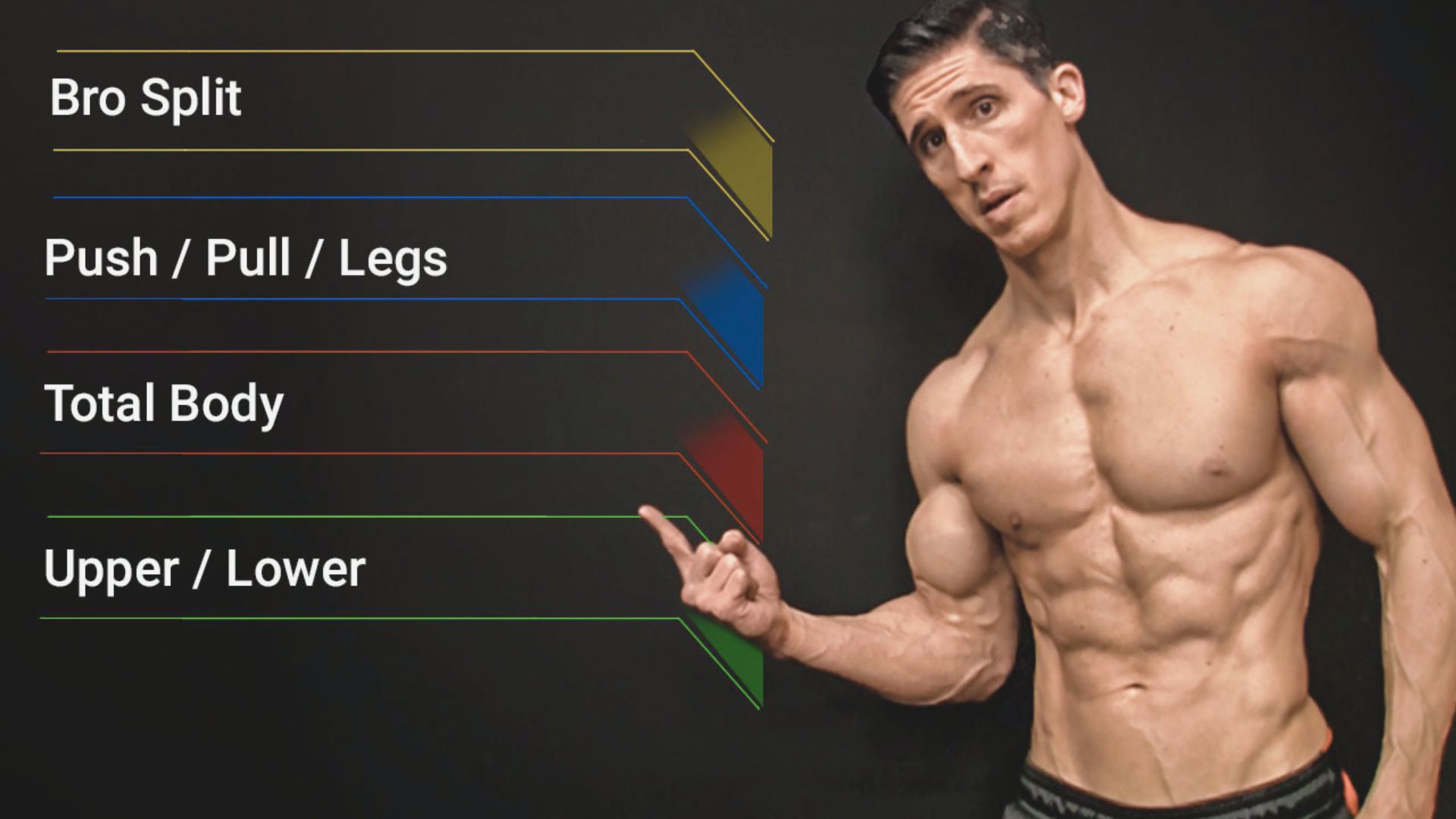
Here are three common workout splits that use smart muscle pairing.
Full-Body Workout Split
This split trains all major muscle groups in each session.
Who should use it: Beginners and people with limited gym time benefit most.
Weekly training frequency: Train three days per week with rest days in between. Each session covers your whole body.
Upper and Lower Body Split
This split divides your body into two parts.
Structure of upper-body days: Train chest, back, shoulders, and arms together.
Structure of lower-body days: Train quads, hamstrings, glutes, and calves together.
You’ll train four days per week. Two upper-body days and two lower-body days.
Push Pull Legs (PPL) Split
This is a six-day split that separates muscles by movement.
Push muscle groups: Chest, shoulders, and triceps on push days.
Pull muscle groups: Back and biceps on pull days.
Leg day muscle groups: Quads, hamstrings, glutes, and calves.
This split works well for advanced lifters who can train six days per week.
Choosing the Right Muscle Group Split for Your Goals

Pick a muscle group split that matches your fitness goals, training experience, and weekly schedule.
Muscle Growth and Strength Training Goals
Building muscle requires consistent training.
Training muscles at least twice per week: Research shows muscles grow best when trained two to three times per week. Upper/lower splits and PPL splits both allow this.
Fat Loss and General Fitness Goals
Fat loss depends on burning calories and staying consistent.
Calorie burn and workout consistency: Full-body workouts burn more calories per session. They’re also easier to stick with because you train fewer days per week.
Beginner vs Advanced Training Considerations
Your experience level matters.
Simpler splits for beginners: New lifters should start with full-body or upper/lower splits. These build a strong base without overwhelming you.
Higher volume for advanced lifters: Once you’ve trained for a year or more, you can handle more volume. PPL splits and other advanced routines work better at this stage.
Common Mistakes When Pairing Muscle Groups
Avoid these errors to train smarter and get faster results.
- Don’t pair large muscle groups too often Training chest and back together drains energy fast and increases injury risk.
- Give muscles time to recover. Your body needs 48 to 72 hours between sessions. Overtraining causes soreness and stalled progress.
- Avoid hitting the same muscle too frequently. Training a muscle group too often prevents growth and hurts performance.
- Don’t overcomplicate your workout. Simple plans work better than complex ones. Stick to what you can follow consistently.
- Focus on consistency over perfection The best split is one you’ll actually do. Simple routines are easier to track and maintain.
Conclusion
Knowing which muscle groups to workout together will change how you train. I’ve seen people waste months on bad splits that left them tired and frustrated.
The right pairing saves time, builds strength faster, and keeps you healthy.
Start with a simple split that fits your schedule. Track your progress and adjust as you go. Don’t overcomplicate things. The best routine is one you can stick with week after week.
If you found this helpful, leave a comment with your favorite muscle pairing or share this post with a gym buddy.
Try one of these splits for four weeks and see how your body responds. Let’s build strength the smart way together.
Frequently Asked Questions
What muscle groups should I train together as a beginner?
Start with full-body or upper/lower splits. Train all major muscles two to three times per week.
Can I train chest and back on the same day?
Yes, but it’s draining. Both need lots of energy. Separate sessions usually work better.
How often should I train each muscle group per week?
Two to three times per week works best. This builds muscle without overtraining.
Is it better to train opposing muscle groups together?
It can work. But pairing by movement pattern is more efficient.
Should I do full-body workouts or split routines?
Depends on your goals. Full-body suits beginners and busy people. Splits suit advanced lifters.