

I used to wonder why my leg press numbers looked impressive but my squat felt weak.
Sound familiar? A lot of lifters face the same gap and never figure out why.
The truth is, these two movements are not the same, and the weight does not transfer one-to-one. There is a way to calculate what your leg press actually means for your squat.
Once you understand the conversion, you can set smarter goals and stop guessing in the gym.
Let me break it all down for you.
What Is Leg Press to Squat Conversion?
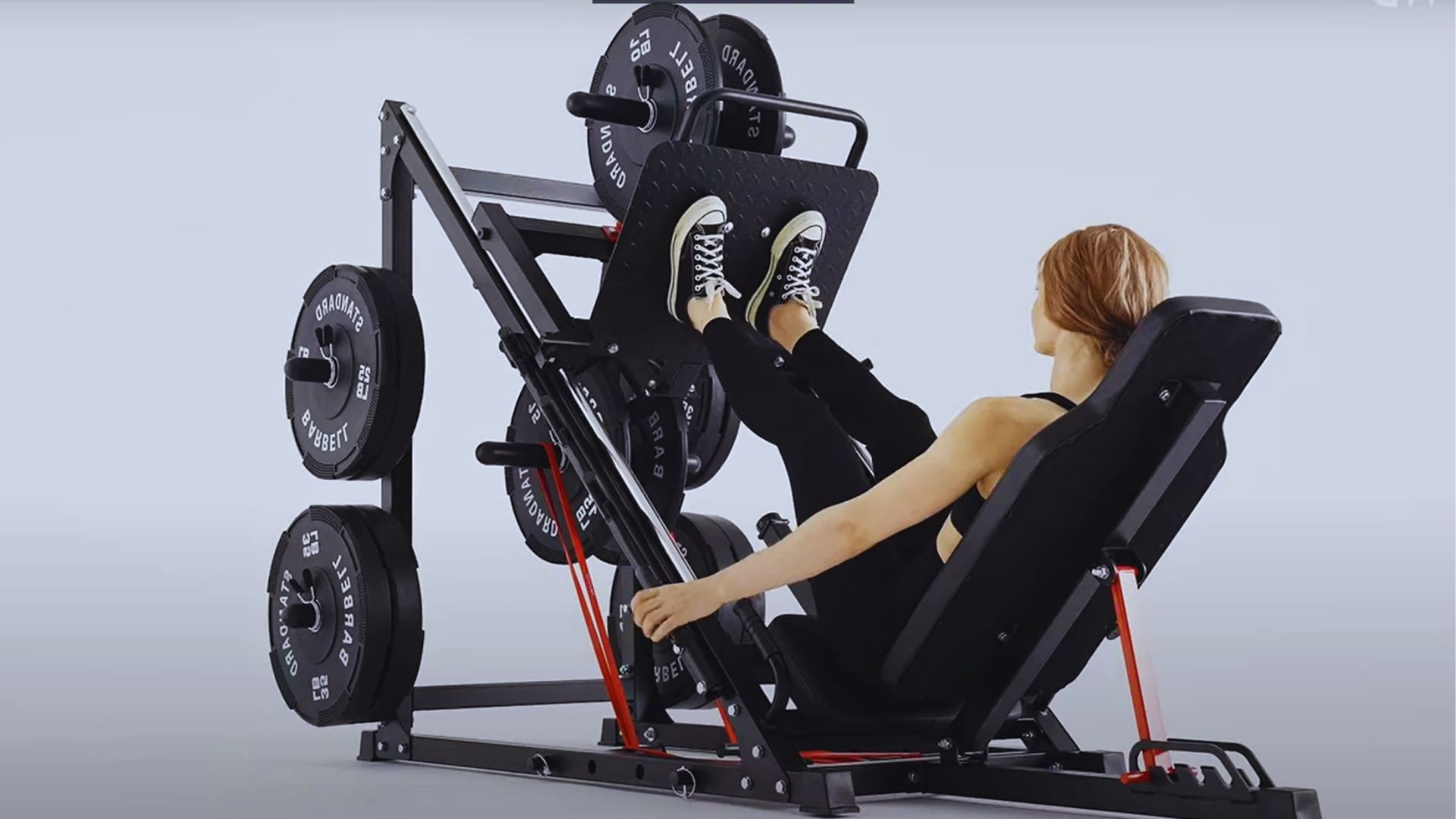
Leg press to squat conversion is a way to estimate how your leg press weight compares to what you can squat. Lifters use this to gauge lower body strength across different movements.
Since machines provide more support than free weights, the numbers never match one-to-one. Knowing the difference helps you set realistic squat goals.
Use a conversion estimate when switching from machines to barbells or when you want a rough strength baseline without maxing out on squats.
Average Leg Press to Squat Ratio Explained

Most lifters can leg press roughly 1.5 to 2 times what they squat. So if you squat 200 lbs, your leg press might land between 300 and 400 lbs.
That gap exists because the machine controls your range of motion and removes balance demands.
Your ratio could be higher if you have strong quads but weak stabilizers. It may be lower if you train squats regularly. Body proportions and training history both play a role.
The formula breaks down your leg press number into a realistic squat estimate using angle, stability, and body weight.
Leg Press to Squat Conversion Formula
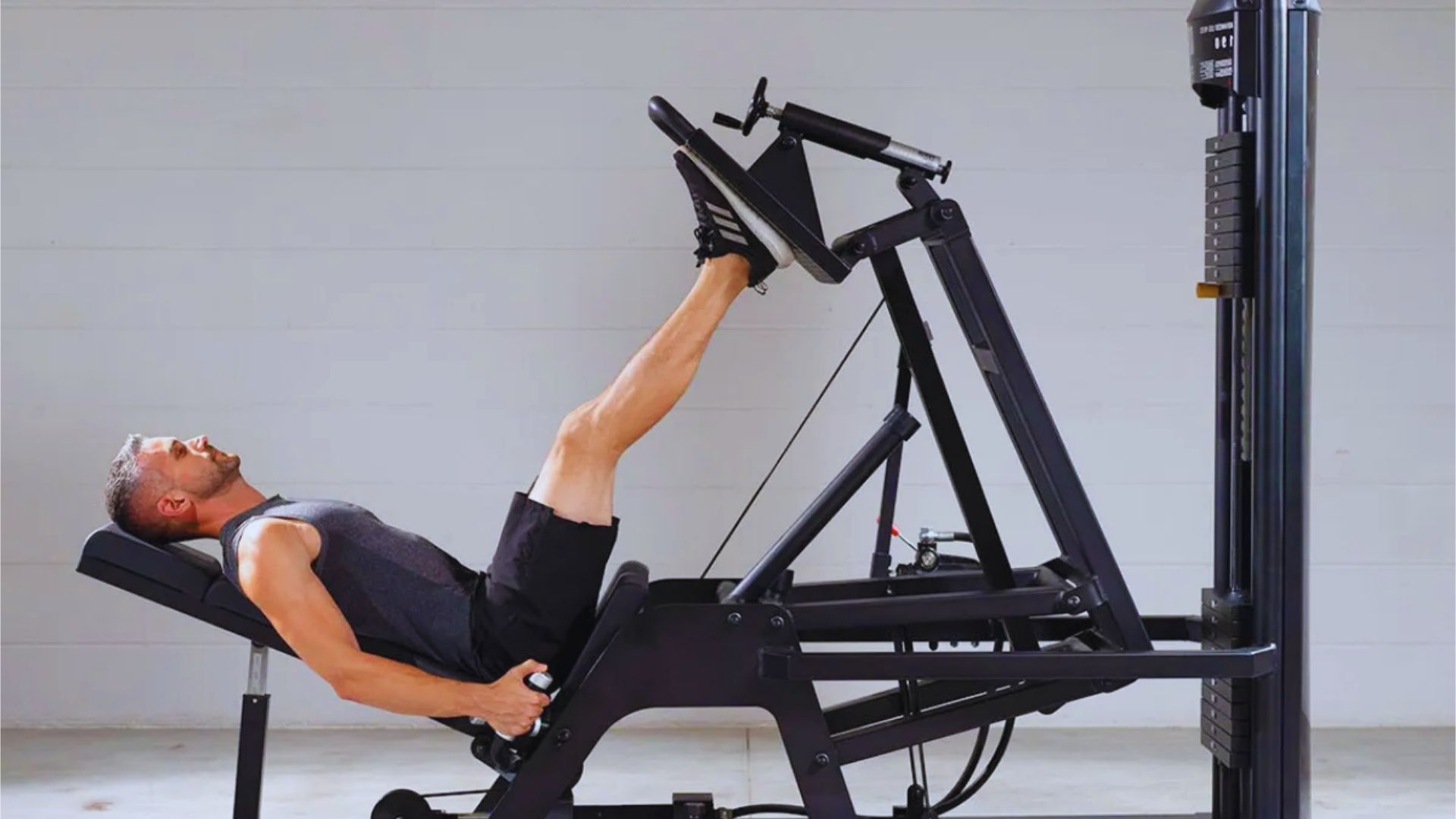
Converting leg press weight to squat weight is not as simple as matching numbers. Here is the formula that actually makes sense of it.
Standard Conversion Formula Breakdown
Three factors go into this conversion: machine angle, stability demands, and body weight. A 45-degree leg press means only part of the load works against gravity.
The machine supports your back and core throughout, so your legs do less total work than in a squat. Squatting also means carrying your own body weight, which the leg press does not factor in.
Step-by-Step Explanation of How It Works
Start with your leg press max and multiply it by 0.7, which is the sine of 45 degrees. This gives you the effective load your legs are working against.
Then subtract 15 to 20 percent to account for the stability gap between a machine and a free barbell squat. The final number is a rough but realistic estimate of your squat potential.
Simple Version for Quick Estimates
Do not want to do the math? Just divide your leg press weight by 2.
Leg press 300 lbs? Expect around 150 lbs on the squat. It is not a precise number, but it works well as a fast ballpark estimate for most people.
How to Convert Leg Press to Squat Weight (Step-by-Step)

Follow these four steps to turn your leg press number into a realistic squat estimate. No guesswork, just simple math.
Step 1: Start With Your Leg Press Weight
Write down the total weight you use on the leg press machine. Use your working max or a recent heavy set. This is your starting number. Everything else builds from here, so make sure it is accurate.
Step 2: Adjust for Machine Angle
Most leg press machines sit at a 45-degree angle. Multiply your weight by 0.7 to find the actual load working against gravity. So if you press 300 lbs, your adjusted number is around 210 lbs.
Step 3: Account for Stability and Core Involvement
The machine handles your balance and back support. A squat does not. Subtract another 15 to 20 percent from your adjusted number to account for this gap. This reflects the extra demand a free squat puts on your body.
Step 4: Subtract Bodyweight Contribution
Squats carry your own body weight. The leg press does not. Subtract roughly half your body weight from the number. This step keeps your estimate grounded and more accurate to real squat performance.
Final Estimated Squat Weight
Add up all your adjustments and the remaining number is your estimated squat max. It will not be exact, but it is a realistic and practical figure you can use to set your squat goals.
How to Convert Squat to Leg Press Weight
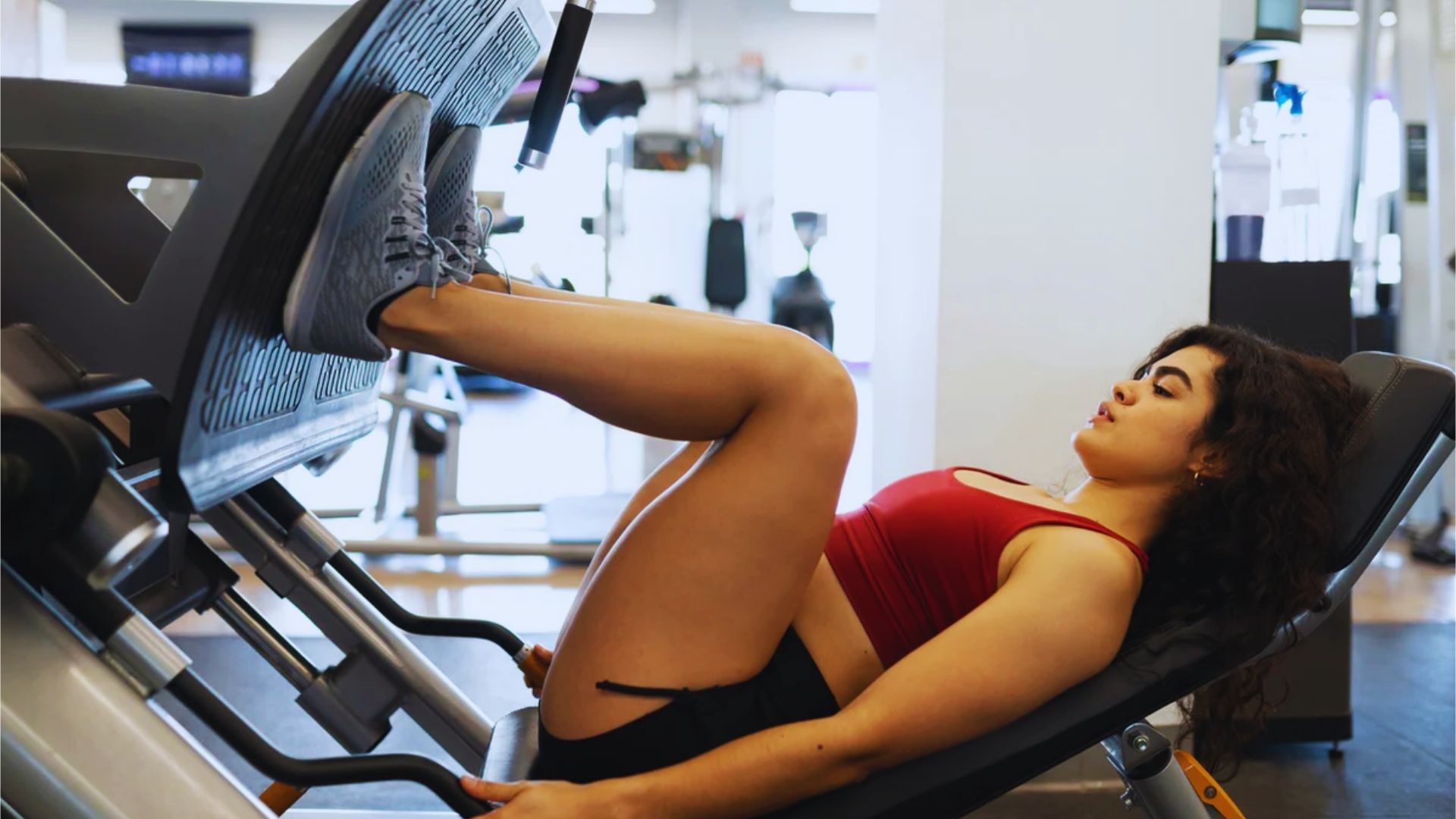
Converting your squat weight to a leg press estimate is just as straightforward, only in reverse.
To go the other way, take your squat max and multiply it by 2. That gives you a starting leg press estimate. Use this when you are new to the leg press and need a loading starting point.
It also helps when programming leg days around both movements. In the gym, use it to set up your machine quickly without multiple warm-up guessing sets.
Key Factors That Affect Conversion Accuracy
- Your body proportions directly affect how weight loads on each movement. Long femurs, hip structure, and limb length all shift the numbers.
- Training experience shapes how well you perform each lift. Someone with years of squat practice will convert more efficiently than a beginner.
- Every leg press machine is different. Angle, friction levels, and seat design all change how much actual load your legs handle.
- Squat depth plays a big role. A shallow squat uses less muscle than a full-depth one, making any comparison less reliable.
- Weak core or poor mobility limits how much force you transfer in a squat. The leg press does not expose these gaps the same way.
Is Leg Press a Good Indicator of Squat Strength?
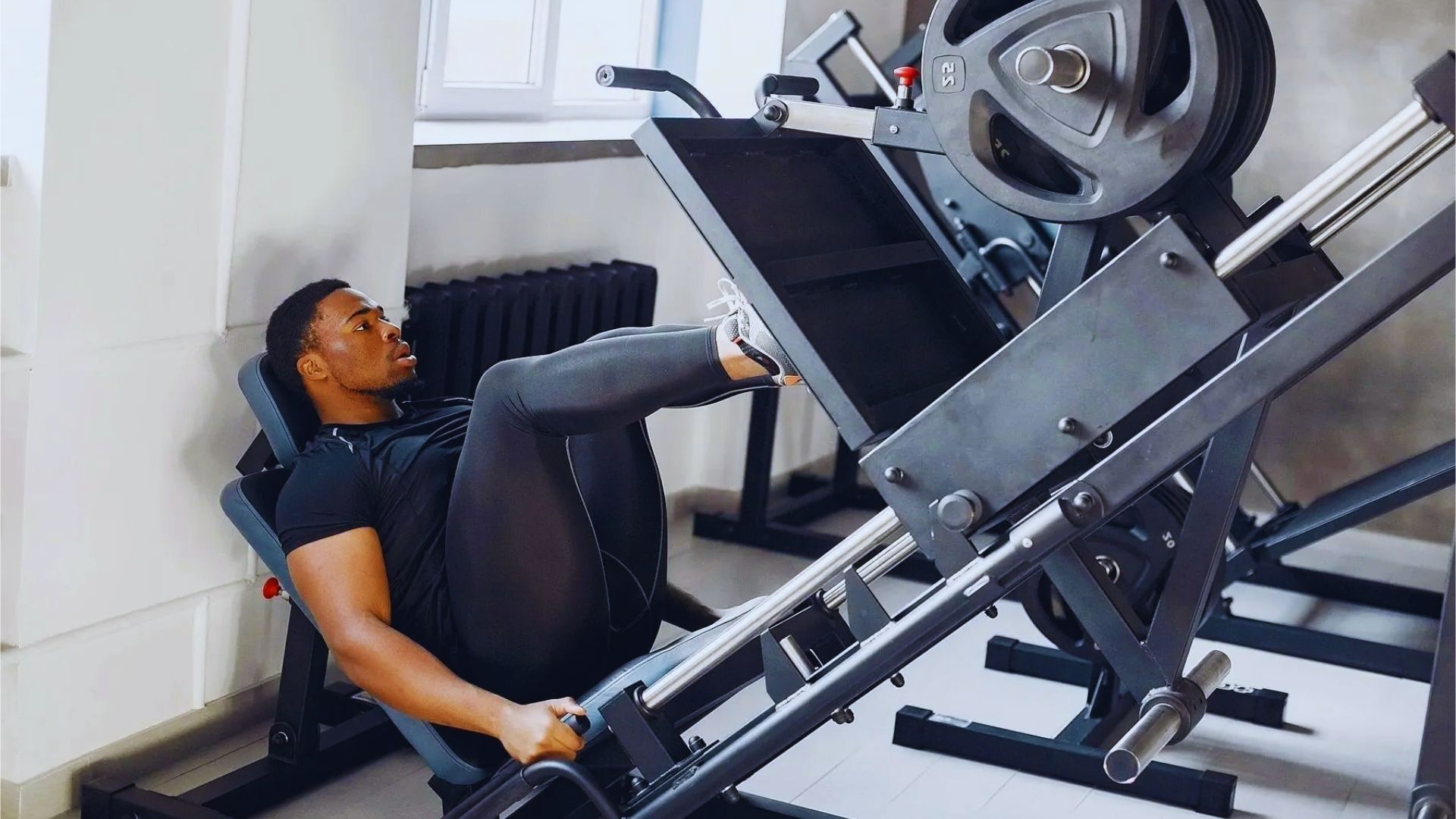
It can help track quad strength progress and works well when you are recovering from injury. But it is not a reliable squat benchmark.
The machine removes balance, core work, and hip stability from the equation. For a true picture of lower-body strength, track your squat, deadlift, and single-leg movements together.
Those three give you a far more complete and honest read.
Leg Press vs Squat: Which Should You Focus On?
Both movements have their place. The right choice depends on your goal, experience, and what your body allows.
Squats build full-body tension, train stabilizers, and carry over to athletic performance. Leg press lets you load the quads hard without taxing your back, making volume work easier to recover from.
Beginners can start with leg press to build confidence before moving to squats. Advanced lifters should treat leg press as a secondary movement.
If you have knee or hip issues, leg press is the safer and smarter option.
Pro Tips to Improve Both Leg Press and Squat
- A strong core transfers more force in every lower-body movement. Add planks, dead bugs, and carries to your routine consistently.
- Poor squat depth limits muscle activation and skews any comparison with leg press. Work on ankle mobility and hip flexibility to squat lower.
- Progressive overload means adding weight, reps, or sets over time. Track your numbers each week so progress stays consistent and measurable.
- Do not rely only on machines or only on free weights. Use leg press to build volume and squats to build raw strength.
- Single-leg work like Bulgarian split squats fixes imbalances that both leg press and squats can hide. Add them in once or twice a week.
Conclusion
Leg press to squat conversion is a useful guide, not a guaranteed number. I have seen lifters obsess over the ratio and lose sight of what actually matters.
Real lower-body strength comes from training both movements consistently and progressively.
Use the conversion to set a starting point, not a finish line. Focus on getting stronger over time and your numbers will follow naturally.
Try the formula today and see where you stand. Drop your results in the comments below!
Frequently Asked Questions
How do I convert my leg press weight to a squat estimate?
Multiply your leg press weight by 0.7 to adjust for the machine angle. Then subtract 15 to 20 percent for the stability difference and that gives you a rough squat estimate.
Is the leg press to squat ratio the same for everyone?
No, the ratio varies based on body proportions, training history, and technique. Most lifters fall between 1.5x to 2x, but your number could sit outside that range.
Can I use my leg press max to predict my squat max?
You can use it as a starting point, but not as a definitive number. Too many individual factors affect squat performance for any formula to be fully accurate.
Why is my leg press so much higher than my squat?
The machine controls your balance and supports your back, making it easier to move heavier loads. Squats demand full-body stability and core control, which naturally lowers the weight you can handle.
Should I train leg press and squats together?
Yes, using both gives you better overall lower-body development. Leg press builds quad volume while squats develop raw strength and stability across multiple muscle groups.