I remember the first time I tried the kneeling cable pullover. I had no idea where to start or if I was even doing it right.
If you’re in the same spot, this post is for you. I’ve been training for years, and I’ll walk you through everything.
In this blog, I cover what the kneeling cable pullover is, how to do it step by step, muscles worked, beginner tips, and common mistakes to avoid.
You’ll leave here knowing exactly how to do it right.
What Is a Kneeling Cable Pullover?

The kneeling cable pullover is a cable machine exercise where you kneel facing a high pulley and pull the cable down in a wide arc using straight arms.
It targets your lats through a long range of motion, making it a solid choice for building a wider back.
The kneeling position keeps your torso stable and removes momentum from the movement, which helps you feel the muscle working more directly.
Kneeling Cable Pullover Video Tutorial
Watch the video below before you try this exercise. Seeing the movement once is worth more than reading about it ten times.
Kneeling Cable Pullover Short Tutorial: https://youtube.com/shorts/RtL11I6oX48?si=GJsXbWp0Ybmio7bj
What This Video Demonstrates
Watch closely and you will pick up the right movement pattern fast.
- Proper kneeling setup and positioning
- Straight-arm movement pattern
- Controlled tempo and full range of motion
Key Form Cues to Watch
These small details are what separate a good rep from a wasted one.
- Arms stay slightly bent, not fully locked out
- Movement comes from the shoulders, not the elbows
- Smooth and controlled motion throughout
Muscles Worked
This exercise does more than just work your back. It pulls in several muscles at once, which makes it worth adding to your routine.
Primary Muscle
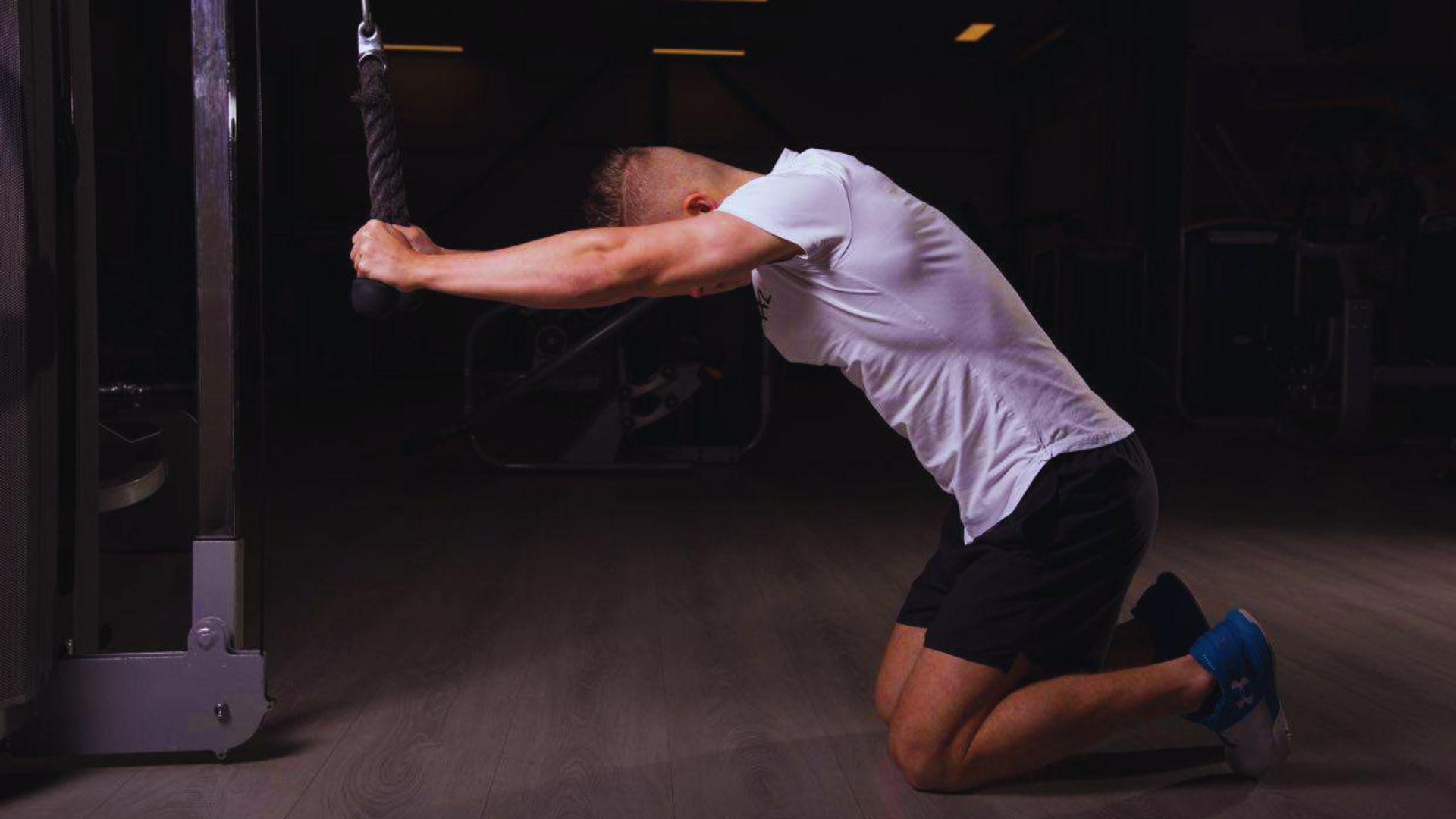
Latissimus Dorsi (Lats)
The lats are the main muscles doing the work here. They run down the sides of your back and are responsible for that wide, V-shaped look.
The kneeling cable pullover hits them through a long arc, which gives you a deep stretch at the top and a strong contraction at the bottom.
Secondary Muscles
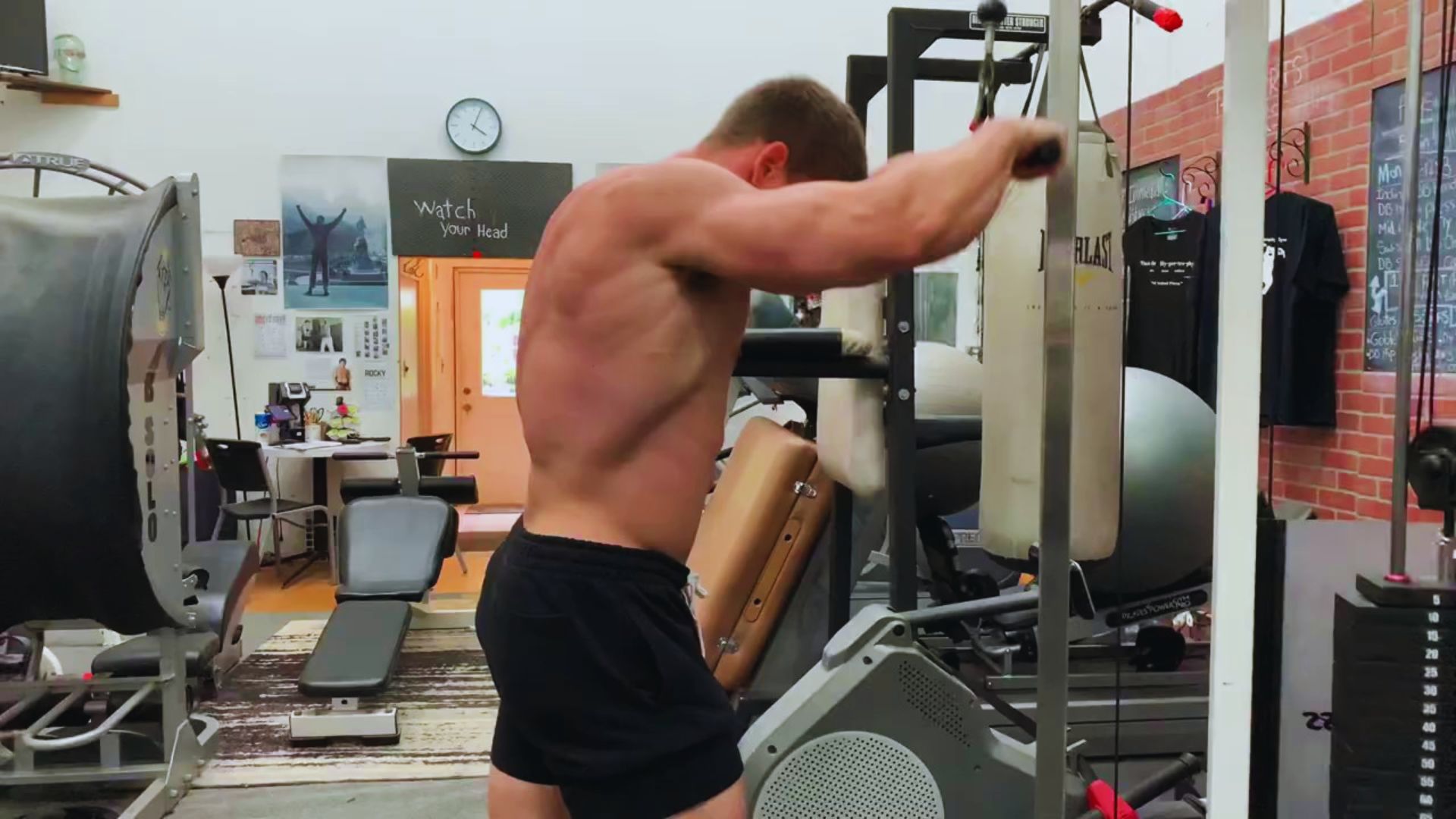
Triceps: Your triceps help keep your arms in position during the pull. They are not the focus, but they do get some activation. Keeping your arms slightly bent stops your triceps from doing too much of the work.
Shoulders (Posterior Delts): The rear part of your shoulders kicks in as you pull the cable down. This makes the kneeling cable pullover a good option if you want to work your upper body without loading your joints too heavily.
Core Stabilizers: Your core works the whole time to keep your torso still. The kneeling position means your lower body is fixed, so your core has to hold everything steady while your arms move.
How to Do Kneeling Cable Pullover (Step-by-Step)
Once you understand the setup, this exercise is not complicated at all. Take your time with each step.
Setup
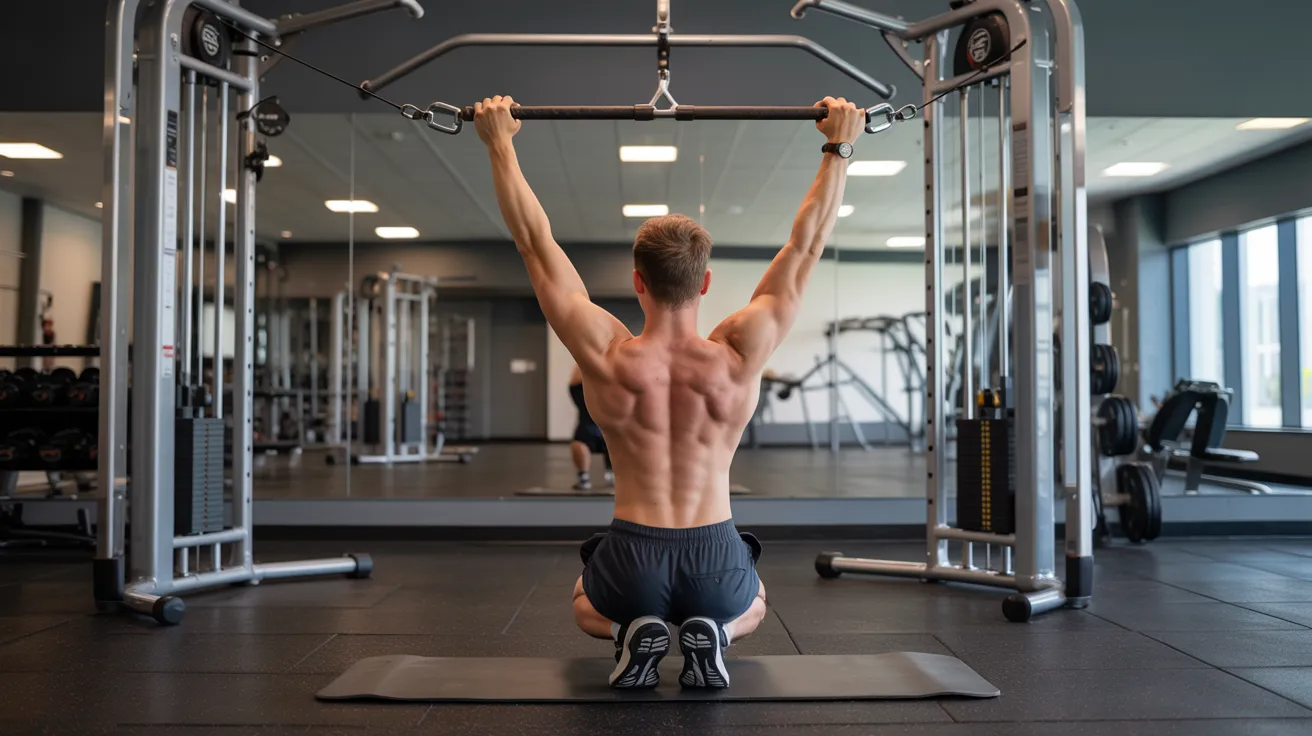
Getting your starting position right makes every rep cleaner.
- Attach a rope or straight bar to a high pulley
- Kneel slightly away from the machine, facing it
- Keep your torso upright and your core engaged before you start
Execution

Move slowly and with control on every single rep.
- Start with your arms extended overhead, holding the attachment
- Pull the cable down in an arc toward your thighs
- Squeeze your lats hard at the bottom of the movement
- Slowly return to the starting position with control
Breathing Technique
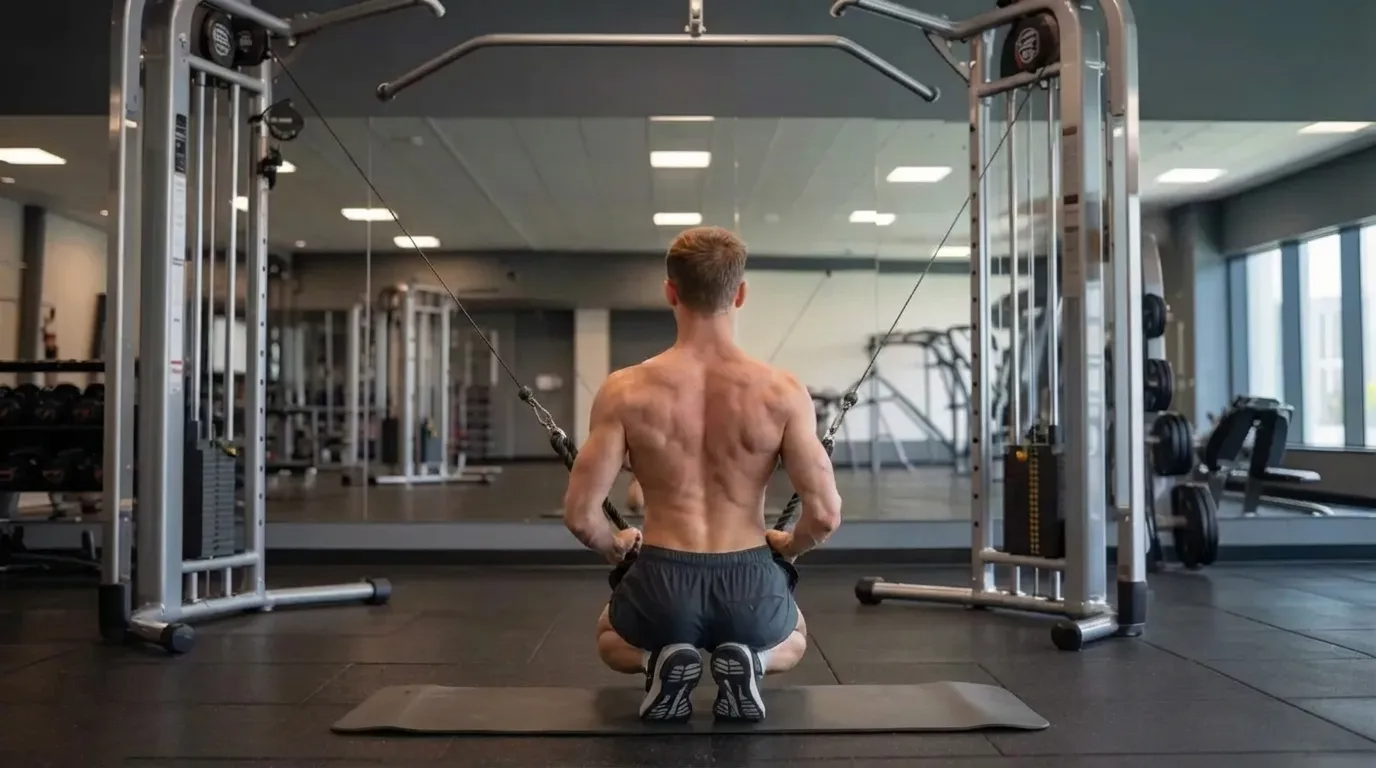
Your breath controls your stability more than you think.
- Exhale while pulling down
- Inhale while returning up
Breathing right keeps your core tight and your movement smooth.
Beginner Tips for Proper Form

Small adjustments make a big difference here. These tips will help you get more out of every rep.
Keep Arms Slightly Bent
Do not lock your elbows out completely. A slight bend in your arms stops your triceps from taking over the movement.
You want your lats to do the work, not your arms. Think of your hands as hooks and focus on moving from the shoulder joint instead.
Engage Your Core
Before you pull, brace your core like you are about to take a punch. This keeps your torso from rocking forward and backward.
A tight core means better stability, cleaner reps, and less strain on your lower back during the exercise.
Focus on Lat Contraction
Think “pull with your elbows” even though your arms stay extended. This mental cue shifts the focus from your hands to your lats.
At the bottom of the rep, hold the squeeze for a second. That moment of contraction is where the real muscle work happens.
Start Light
Do not rush to load up the weight. Start with a weight that lets you feel the movement clearly. Good form on light weight builds more muscle than sloppy reps on heavy weight.
Once the movement feels natural, then you can add more.
Common Mistakes to Avoid
Even small errors can make this exercise less effective. Here is what to watch out for.
- Locking the elbows pulls the focus away from your lats and onto your triceps, which defeats the purpose of the exercise
- Pulling with your arms instead of your shoulders turns this into an arm exercise rather than a back exercise
- Using too much weight too soon leads to poor range of motion and a loss of control through the rep
- Letting the cable snap back on the return means you are skipping the most important part. Control the weight on the way up
- Sitting back on your heels shifts your base and throws off your posture. Stay upright with your hips over your knees
Final Thoughts
I genuinely enjoy the kneeling cable pullover because it forces me to slow down and feel my lats working. No swinging, no momentum. Just clean reps.
If you have been struggling to feel your back during pulldowns, give this one a shot. It changed things for me.
Start light, focus on the squeeze, and be patient with yourself. The form will click faster than you think.
Try it out and drop a comment below telling me how it went. I would love to hear from you!
Frequently Asked Questions
Is the kneeling cable pullover good for beginners?
Yes, it is one of the better beginner-friendly cable exercises. The kneeling position keeps things stable, and the movement is easy to learn with light weight and a little practice.
How many sets and reps should I do?
Start with 3 sets of 10 to 12 reps. Focus more on feeling your lats than hitting a specific number. Once the form is solid, you can adjust from there.
What attachment should I use for this exercise?
A rope or a straight bar both work well. The rope gives you a slightly wider range of motion at the bottom, which some people find helps them feel the lat contraction more clearly.
Can I do this exercise if I have shoulder pain?
Check with a doctor or physio before trying it if you have a shoulder issue. The straight-arm movement puts some stress on the shoulder joint, so it is better to get clearance first rather than risk making things worse.
How far should I kneel from the machine?
Kneel far enough that your arms are fully extended overhead when you hold the attachment. You want a good stretch at the top without your body leaning forward. About two to three feet from the cable stack is a solid starting point.