

Inverted rows are a solid back exercise. But not everyone has access to a bar, or maybe you just want something different. This article covers 11 inverted row alternative exercises you can start using today.
I've tested most of these myself and talked to trainers who program them regularly. You're in good hands.
Here's what we'll cover:what inverted rows are and why you might skip them, how to pick the right alternative for your level, exercises with tips and modifications, and sample workouts and common mistakes to avoid.
Let's get into it.
What Is an Inverted Row?

An inverted row is a bodyweight pulling exercise. You lie under a bar, grip it, and pull your chest up to meet it. Your body stays straight the whole time.
It works your lats, rhomboids, rear deltoids, biceps, and core. It's beginner-friendly, low impact, and builds pulling strength that carries over to pull-ups and rows. It also helps improve posture over time.
You might need an alternative if you have no bar, feel wrist or shoulder discomfort, or want more resistance and variety. The good news is plenty of options work the same muscles just as well.
How to Choose the Best Inverted Row Alternative

Finding the right alternative comes down to a few key factors. It's not just about what looks cool or what someone else is doing.
Choose Based on Your Fitness Level
Beginners need movements that are controlled and low-risk. Resistance band rows and lat pulldowns are good starting points.
Intermediate lifters can move into dumbbell rows and cable rows. Advanced athletes can try Pendlay rows or weighted pull-ups.
Match the exercise to where you are right now. Trying to jump ahead usually leads to poor form and slow progress.
Consider Available Equipment
Not everyone trains in a fully equipped gym.
Here's a quick breakdown:
- Home with no equipment: Resistance band rows, floor-based movements
- Home with bands or TRX: TRX rows, banded pull-aparts
- Gym access: Pull-ups, cable rows, barbell rows, lat pulldowns
Work with what you have. A resistance band row done well beats a barbell row done badly.
Horizontal Pull vs Vertical Pull Exercises
The inverted row is a horizontal pull. Your arms move parallel to the ground. This targets the mid-back, rhomboids, and rear delts more directly.
A vertical pull like a pull-up has your arms moving up and down. It hits the lats more heavily.
Both matter. A good back program includes both types. When replacing inverted rows, lean toward horizontal pulls first.
Importance of Progressive Overload
No matter which exercise you pick, you need to keep making it harder over time.
That means adding weight, reps, sets, or reducing rest. If you do the same thing every week, you stop growing.
Track your workouts. Even a simple notebook works. Progress is what drives results.
11 Best Inverted Row Alternative Exercises to Try Today
Here are the top picks. Each one trains your pulling muscles and can replace inverted rows in your program.
1. Pull-Ups

Pull-ups are one of the best upper-body exercises you can do. You hang from a bar and pull yourself up until your chin clears it. Your lats do most of the work, and over time they build serious back width and overall pulling strength.
If you're just starting out, use a resistance band for assistance or try jumping pull-ups. Dead hangs help build grip and shoulder stability.
Negatives, where you jump to the top and lower yourself slowly, are also a great way to build strength before doing full reps.
2. Chin-Ups

Chin-ups use an underhand grip, which shifts more work onto your biceps while still hitting the lats and upper back.
Many beginners find them easier than pull-ups because the biceps contribute more in this position.
The key difference is simple. Palms facing you means more bicep work. Palms facing away puts more load on the lats and upper back. Both movements are worth including in your training.
3. Bent-Over Barbell Rows

This is the most direct swap for inverted rows. You hinge at the hips, keep your back flat, and pull the barbell toward your lower chest or belly button. It works the same muscles but allows you to add load over time.
For better back engagement, keep your spine neutral and pull your elbows back hard at the top.
Squeeze your shoulder blades together, control the bar on the way down, and keep it close to your body throughout.
4. Single-Arm Dumbbell Rows

Single-arm rows train one side at a time, which matters because most people have a stronger side that tends to take over in bilateral movements. Training each arm independently forces the weaker side to do its fair share.
This also improves core stability since your torso has to resist rotation with every rep.
Use a bench for support, slow down the movement, and focus on feeling the back muscle work rather than just moving the weight.
5. Seated Cable Rows

Cable machines maintain tension on your muscles from start to finish, which free weights don't always do. That constant tension makes seated cable rows especially effective for building muscle with controlled, focused reps.
Sit tall, pull the handle to your lower chest or navel, and hold the contracted position for a moment before releasing.
Keep your core braced and avoid leaning back too far, as that shifts the load away from your back.
6. TRX Rows
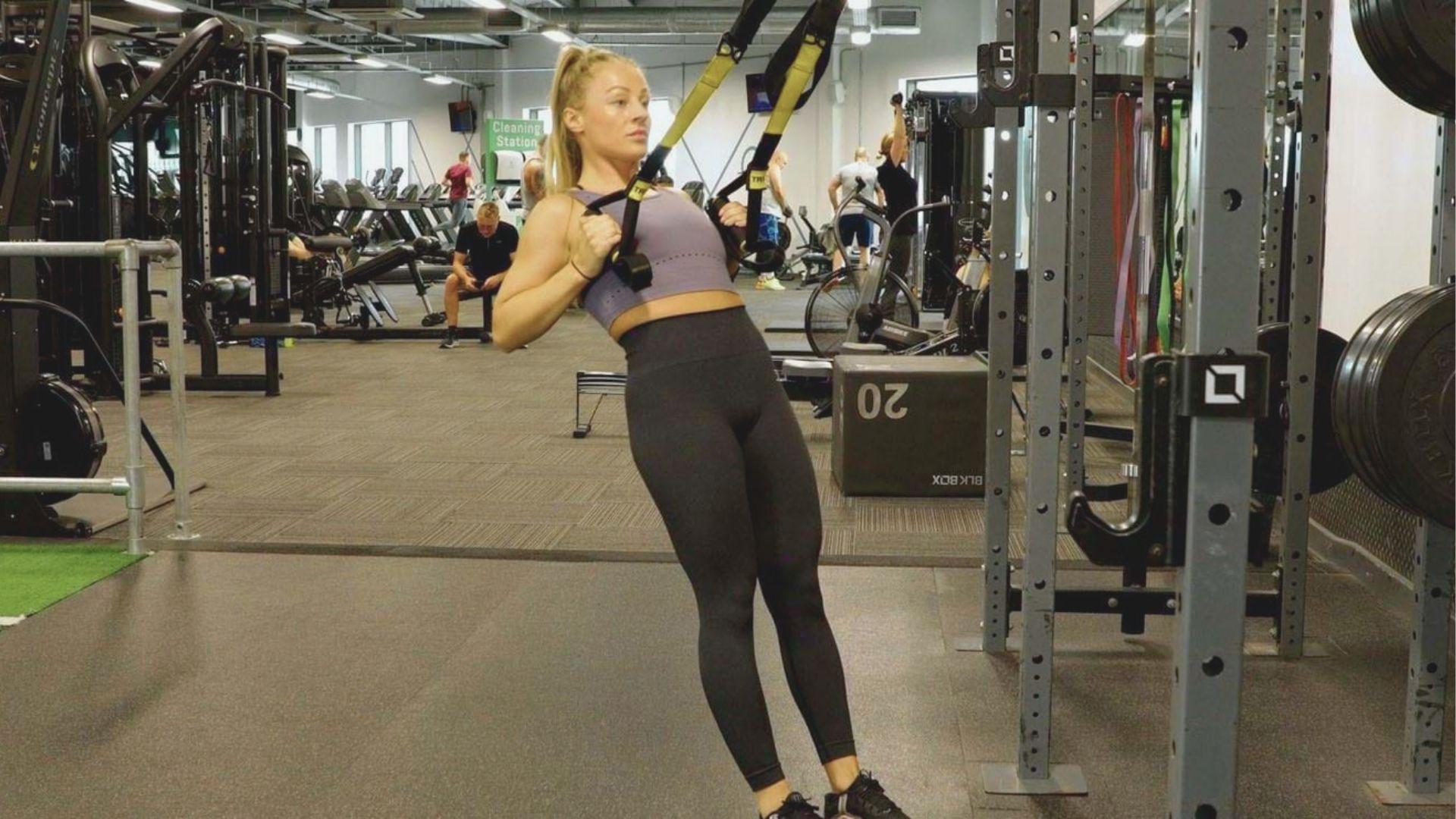
TRX rows are essentially inverted rows done on suspension straps. Because the handles move freely, your stabilizer muscles have to work harder compared to a fixed bar. This makes them great for both back strength and shoulder stability.
Adjusting difficulty is simple. Walk your feet forward to increase the challenge, or step back to make it easier.
Elevating your feet takes it even further. TRX straps are also portable, so you can use them almost anywhere.
7. Resistance Band Rows

Bands are one of the most accessible tools you can use for back training. Anchor one to a door, pole, or sturdy post and row.
The movement closely mirrors a cable row and works well as a home option.
To increase resistance, use a thicker band, double up two bands, or stand farther from the anchor point. Slowing down the tempo adds more challenge without needing extra equipment.
8. Lat Pulldowns

The lat pulldown machine lets you train the same pulling motion as a pull-up with adjustable weight. It's a great starting point if full bodyweight pull-ups are not yet possible.
Grip variations change the muscle focus. A wide overhand grip hits the outer lats and upper back. A close neutral grip targets the lower lats and biceps more.
An underhand grip adds more bicep work. One thing to avoid is pulling the bar behind your neck, as this puts unnecessary strain on the neck and shoulders.
9. Pendlay Rows

Pendlay rows are a barbell row variation where the bar returns to the floor between every rep. You pull from a dead stop each time, which removes momentum and forces you to generate power from scratch on every single rep.
This makes them more demanding than regular bent-over rows and better for building explosive strength.
Keep your back parallel to the floor, brace hard, and focus on a fast, powerful pull each rep.
10. Ring Rows

Ring rows follow the same movement pattern as inverted rows but use gymnastic rings instead of a fixed bar. The instability of the rings increases the demand on your grip, core, and shoulder stabilizers.
They're common in CrossFit and gymnastics training for good reason.
You can adjust the angle to control how hard each set feels, making them accessible for most fitness levels while still offering a real challenge as you progress.
11. Face Pulls

Face pulls target the rear deltoids and external rotators of the shoulder using a cable machine with a rope attachment. They don't load the lats heavily, but they're one of the most effective exercises for improving posture and keeping your shoulders healthy.
Set the cable at face height, pull the rope toward your forehead with your elbows high, and control the return.
Adding face pulls at the end of every upper body session helps balance out all the pressing work and keeps your shoulders in good shape over time.
Best Inverted Row Alternatives for Different Goals

Not everyone trains for the same reason. Here's how to match the right exercise to your specific goal.
Best for Beginners
Beginners need simple, controlled movements with low injury risk.
Top picks:
- Resistance band rows
- Lat pulldowns
- Seated cable rows
- TRX rows (with an easier angle)
These exercises are easy to learn and allow you to build a foundation before moving to heavier compound lifts.
Best for Home Workouts
If you're training at home, you're likely working with minimal gear.
Top picks:
- Resistance band rows
- TRX rows (if you have straps)
- Ring rows (if you have rings and a pull-up bar)
- Pull-ups (if you have a bar)
Bands alone can take you far. Combine them with bodyweight pulling movements and you've got a solid home program.
Best for Building Bigger Lats
Lat size comes from exercises that allow heavy loading and a full range of motion.
Top picks:
- Lat pulldowns
- Pull-ups and chin-ups
- Bent-over barbell rows
- Single-arm dumbbell rows
Focus on the stretch at the bottom of each movement. That's where lat growth is stimulated most.
Best for Strength and Power
If your goal is to get strong and move weight, you need compound barbell movements.
Top picks:
- Bent-over barbell rows
- Pendlay rows
- Weighted pull-ups
- Single-arm dumbbell rows with heavy weight
Keep rep ranges lower (3 to 6 reps) and focus on adding weight consistently each week.
Common Mistakes to Avoid
Small errors in your rowing movements can slow your progress and lead to injury over time.
- Using Momentum Instead of Controlled Reps: Swinging your body might feel like effort, but it shifts the work away from your back. Slow down and drop the weight if you can't control each rep.
- Rounding the Lower Back: A curved lower back during rows puts real strain on your spine, especially with heavy loads. Hinge at the hips, brace your core, and keep your chest up before every rep.
- Lifting Too Heavy Too Soon: Loading too much weight before your form is solid leads to injury and stalled progress. Start lighter, master the movement, then add weight gradually over weeks.
- Ignoring Full Range of Motion: Cutting reps short means your muscles never get the full stimulus they need to grow. Fully extend at the bottom and squeeze hard at the top on every single rep.
- Skipping Warm-Up Sets: Jumping straight into heavy rows with cold muscles increases your injury risk significantly. Always do two to three lighter warm-up sets before your working sets to prepare your joints and muscles.
Sample Back Workout Using Inverted Row Alternatives
Here are three workouts you can use based on your current level. Each one uses the exercises from this list.
Beginner Workout
Rest 60 to 90 seconds between sets.
| Exercise | Sets | Reps |
| Resistance Band Rows | 3 | 12 to 15 |
| Lat Pulldowns | 3 | 10 to 12 |
| TRX Rows | 3 | 8 to 10 |
| Face Pulls | 2 | 15 |
Intermediate Workout
Rest 60 to 90 seconds between sets.
| Exercise | Sets | Reps |
| Pull-Ups | 4 | 6 to 8 |
| Seated Cable Rows | 3 | 10 to 12 |
| Single-Arm Dumbbell Rows | 3 each side | 10 |
| Face Pulls | 3 | 15 |
Advanced Back Workout
Rest 90 to 120 seconds between sets.
| Exercise | Sets | Reps |
| Pendlay Rows | 4 | 5 |
| Weighted Pull-Ups | 4 | 5 to 6 |
| Bent-Over Barbell Rows | 3 | 6 to 8 |
| Ring Rows | 3 | 8 to 10 |
| Face Pulls | 3 | 15 |
Tips to Build a Stronger Back
Small habits done right every week will get you further than any single workout ever will.
- Nail your form before adding weight. A slow, clean rep teaches your muscles the right pattern. Rushing through reps with bad form just builds bad habits faster.
- Train your back two to three times a week. Space sessions out so your muscles can recover properly. Showing up consistently matters more than training hard once in a while.
- Progress has to be intentional. Add weight, reps, or sets over time. If nothing changes in your workout, nothing changes in your body.
- Sleep is where the real growth happens. Aim for seven to nine hours per night. Your muscles repair and grow during rest, not during the workout itself.
- Eat enough protein to support recovery. A good starting point is 0.7 to 1 gram per pound of bodyweight daily. Poor nutrition slows down every goal you're working toward.
Conclusion
I've tried most of these exercises over the years, and the ones that made the biggest difference were the ones I did consistently, not the fanciest ones.
Start with what fits your equipment and level. Add weight over time. Keep your form clean.
The best inverted row alternative is the one you'll actually do.
If this helped you, drop a comment below and tell me which exercise you're going to try first. And if you know someone who's been stuck on their back training, share this post with them.
Frequently Asked Questions
What is the closest alternative to an inverted row?
The TRX row is the closest match because it uses the same horizontal pulling pattern and bodyweight load. Resistance band rows are a solid second option for home training.
Can I build a strong back without inverted rows?
Yes, absolutely. Exercises like pull-ups, barbell rows, and cable rows all hit the same muscles. Inverted rows are a good tool, but they're not required for back development.
Are inverted row alternatives good for beginners?
Most of them are. Resistance band rows, lat pulldowns, and TRX rows are all beginner-friendly and easy to adjust. Start with lighter resistance and focus on getting the form right first.
How many times a week should I train my back?
Two to three times per week works well for most people. Make sure you give your muscles at least 48 hours to recover between sessions before training them again.
Do I need a gym to do inverted row alternatives?
No. Resistance bands and TRX straps let you train your back effectively at home. Pull-up bars are also inexpensive and can be mounted in a door frame with no tools.