

If you’ve ever loaded plates onto a leg press and had no idea what the sled itself weighs, I’ve been there too.
Knowing how much does a leg press weigh is not just trivia. It directly affects how you log progress and measure strength over time.
In this blog, I cover the main types of leg press machines, the average leg press weight for each, and what you’re actually lifting once the angle is factored in.
You’ll also get an improved reference chart, an honest breakdown of why the leg press feels easier than squats, and simple steps to track your numbers without guessing.
I’ve trained legs seriously for years, using everything from basic 75 lb sleds to commercial 115 lb machines. Getting this detail right changed how I read my own progress completely.
How Much Does a Leg Press Weigh?

The short answer: it depends on the machine.
Most leg press sleds weigh between 45 and 125 pounds. That number is almost never posted near the machine. So most people guess, or skip it entirely.
That’s a real problem. The sled is part of the resistance you’re moving. If you ignore it, your logged numbers are off from day one.
I always look up the sled weight for any machine I use regularly. It takes five minutes and keeps everything honest.
Average Leg Press Sled Weight by Machine Type
Not all machines work the same way. The design changes the sled weight and how the resistance actually feels on your legs.
45-Degree Leg Press (Most Common)

This is the version you’ll find in most commercial gyms. You sit at an angle and push the sled up along a 45-degree track.
The average leg press weight for the sled on these machines runs between 75 and 125 pounds. Hammer Strength and Life Fitness models tend to sit around 100 to 115 pounds. Always verify your specific brand.
Horizontal Leg Press

You sit upright here and push straight forward. The sled is lighter, usually between 20 and 75 pounds.
Even with a lighter sled, this version can feel harder due to the force angle. Don’t let the lower numbers mislead you.
Vertical Leg Press

You lie flat and push straight up. Less common, but still found in some gyms.
The sled on vertical machines usually falls between 45 and 75 pounds. Because you’re working directly against gravity with no angle assist, it tends to feel heavier than other types.
Plate-Loaded vs Selectorized Machines
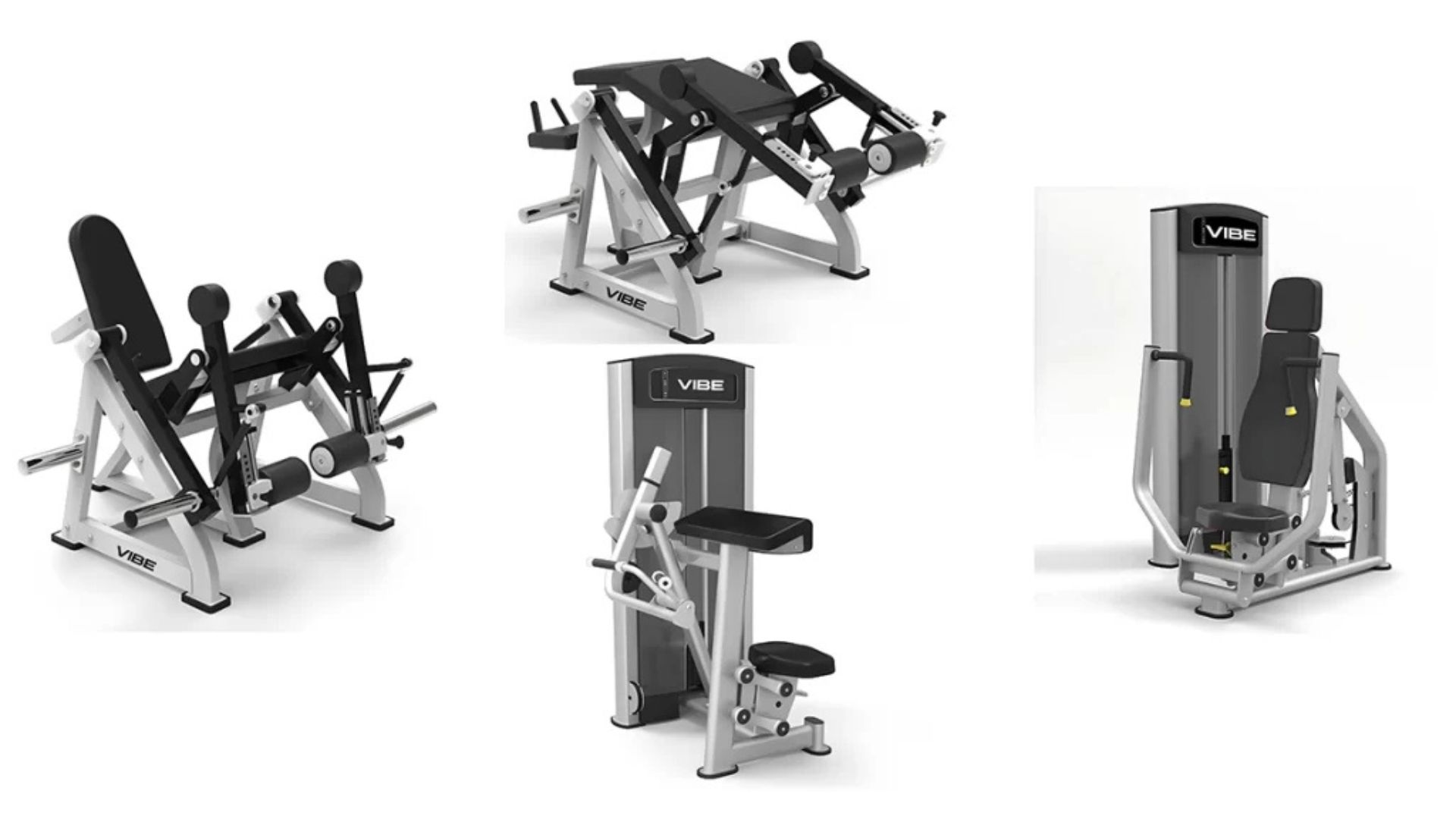
Plate-loaded machines have a fixed sled, and you add your own plates. Selectorized machines use a pin on a weight stack.
With selectorized machines, check the guide on the side panel. Each pin level equals a specific pound value. Never assume.
How Much Weight Is a Leg Press Machine Without Plates?
This is one of the most commonly searched questions, and for good reason.
A leg press machine without any plates still has resistance. The sled itself adds weight every single rep.
Here’s what I mean. When I switched from a gym with a basic 75-pound sled to a Hammer Strength machine with a 115-pound sled, my logged total dropped overnight.
Nothing changed in my actual strength. The machine was just heavier to start with. I had to adjust my numbers and rebuild my baseline.
That 40-pound difference matters. If you don’t account for it, you’ll either think you’ve gotten weaker or stronger when neither is true.
How Much Weight Are You Actually Lifting on a Leg Press?
This is where most people get confused.
Loading 200 pounds of plates onto a 45-degree machine does not mean you’re lifting 200 pounds. The angle reduces the effective resistance.
On a 45-degree press, you’re working against roughly 70% of the total weight.
So if the sled is 100 pounds and you add 200 pounds in plates, your total is 300 pounds. The effective resistance is closer to 210 pounds.
Use this as a rough formula:
Total weight (sled + plates) x 0.7 = effective resistance on a 45-degree machine.
Leg Press Weight Chart (Sled + Effective Load)
Let’s have a look at the chart for better understanding:
|
Machine Type |
Sled Weight |
Feels Like Weight |
Best For |
|
45-Degree (Standard) |
75 to 100 lbs |
52 to 70 lbs |
General strength training |
|
45-Degree (Commercial) |
100 to 125 lbs |
70 to 87 lbs |
Heavy loading, hypertrophy |
|
Horizontal |
20 to 75 lbs |
20 to 75 lbs |
Rehab, beginners |
|
Vertical |
45 to 75 lbs |
45 to 75 lbs |
Direct quad isolation |
|
Selectorized |
Varies |
Varies |
Controlled volume work |
Always verify the sled weight for your specific machine using the brand’s product page or manual.
Why Leg Press Feels Easier Than Squats
A lot of people can leg press 400 pounds but struggle to squat 200. This trips up a lot of beginners.
The leg press holds your body in a fixed position. Your core does not stabilize. Your balance doesn’t come into play. Your spine is supported by the backrest.
Squats demand all of that at once.
Your legs push, your core braces, your back stays tall, and your whole body balances under the bar. That added demand shrinks the total load you can handle.
Neither exercise beats the other. Both belong in a good program. But the numbers are not comparable, and treating them that way leads to bad decisions.
Common Mistakes When Calculating Leg Press Weight
I’ve made most of these at some point.
- Forgetting to count the sled weight in your total.
- Assuming every leg press machine has the same sled weight.
- Comparing numbers with someone training on a completely different machine type.
- Skipping the angle factor on a 45-degree press.
- Only logging the plates, not the full load.
These small errors stack up over weeks and quietly break your tracking.
How to Accurately Track Your Leg Press Strength
Good tracking doesn’t need to be complicated.
Start by finding your machine’s sled weight. Search the brand name and model number online. Most manufacturers list it in the product specs.
Every session, log the total. That means sled weight plus every plate on both sides.
If you switch machines or gyms, note it right away. A 30 to 40 pound sled difference makes it look like your strength changed overnight when it didn’t. I’ve logged this kind of shift and had to go back and correct three weeks of data.
I use a basic notes app. After each leg session, I write down the machine name, sled weight, and total load. It takes under a minute and keeps everything accurate long term.
Conclusion
Knowing how much does a leg press weigh helps you track progress accurately and avoid misleading numbers across different machines.
I learned this the hard way after switching gyms mid-training block and thinking I had lost serious strength in a week.
The sled weight is not a small detail. It changes your logged total, your baselines, and how you compare sessions over time.
The machine type matters. The angle matters. And comparing numbers across different machines without accounting for these factors is a recipe for confusion.
Pick your machine. Find the sled weight. Log the full total every session. Keep it consistent.
Over years of training, that one habit has kept my leg progress honest and measurable.
What machine are you using, and do you actually know what the sled weighs?
Frequently Asked Questions
Does the sled weight count toward my total leg press weight?
Yes, every time. The sled is part of the resistance you’re moving, so it needs to be added to your plate total every single session.
How do I find the sled weight for my specific leg press machine?
Check the brand name and model number on the machine, then search for it online. Most manufacturers publish the sled weight in their official product specs.
Why can I leg press so much more than I can squat?
The leg press removes the need for balance, core engagement, and full-body coordination. Squats require all of that, which naturally limits your total working load.
Is comparing leg press numbers across different gyms reliable?
Not really. Different machine types, sled weights, and angles make direct comparisons unreliable. Focus on consistency with the same machine over time.
Can I use my leg press numbers to estimate my squat strength?
Not directly. The two movements are different enough that one does not reliably predict the other. Track each one on its own terms.