

I spent years working out under the same harsh fluorescent lights and never thought twice about it. The gym had solid equipment, decent music, and enough room to move around without running into anyone.
Still, something about those evening workouts always felt off. It was like I was slogging through routines that should have been easy. I blamed it on lack of sleep. Then on my diet. At one point, I even thought my pre-workout supplement was the problem.
Then I tried a friend’s new studio across town: same exercises, same weights, same playlist in my ears. But the vibe was totally different. The main floor had bright, natural-looking light. The stretching area had a warm, softer glow. And behind the front desk, a lit-up sign with the gym’s name pulled everything together.
That’s when it clicked: the lighting was doing something the old gym never did. It was actually setting the mood. Whether it’s custom neon signs for gym spaces or simple LED swaps in the right zones, how a gym handles lighting affects how people feel inside it. How you feel directly shapes how you perform.
This isn’t a design article for architects. It’s a practical breakdown of how lighting affects your focus, effort, and results. If you own a gym or you’re serious about your training environment, this is what you should actually pay attention to.
Your Brain Decides How Hard to Work, and Light Is Whispering to It
Have you ever noticed how a morning workout hits differently than a late-night session under buzzing ceiling panels? That’s not your imagination playing tricks. Your nervous system reads lighting cues before your conscious brain even weighs in on the effort.
Bright, blue-toned light (anything above roughly 5000K on the color temperature scale) signals to your body that it’s daytime. That triggers cortisol and suppresses melatonin. Basically, your system is saying, “We’re awake, let’s go.” Warmer, dimmer lighting does the opposite. It tells your body to wind down. This is all tied to your circadian rhythm, the internal clock that governs alertness, recovery, and sleep cycles.
So when a gym floods every single room with the same flat, cool-white overhead light, it misses a real opportunity. High-intensity training zones benefit from cooler, brighter lighting that sharpens focus.
Yoga and stretching areas need warmer tones. Those encourage slower breathing and muscular relaxation. It’s not complicated, but it is deliberate. Most gyms don’t bother.
Fluorescents Are the Worst Thing That Ever Happened to Gym Design

This might sound harsh. But fluorescent tube lighting has no business being the primary light source in a modern fitness facility. It flickers (even when you can’t consciously detect it), casts unflattering shadows, and creates that washed-out, institutional vibe. You know the one. Makes your gym look like a government office that accidentally ordered squat racks.
LED lighting is the obvious replacement, and for good reason. LEDs offer adjustable color temperature, lower energy costs, longer lifespan, and significantly better color rendering.
That last part matters more than most people realize. The color rendering index (CRI) measures how accurately a light source reproduces the true colors of surfaces and skin. Low CRI lighting makes everything look gray, lifeless. High CRI lighting (above 80, ideally 90+) makes the space feel vibrant.
Here’s where it gets interesting for gym owners. Members don’t just train harder in well-lit spaces; they perceive the gym as higher quality. Research from the Journal of Environmental Psychology found that lighting quality directly influenced customer satisfaction in commercial fitness settings, independent of the actual equipment available. People judged the experience as “better” simply because the light felt right.
Zone Lighting Because One Setting Doesn’t Fit a Whole Gym
If there’s one concept that separates average gym design from something people actually remember, it’s zone lighting. The idea is straightforward. Different workout areas serve different energy levels, so the lighting should match.
Strength and HIIT zones thrive under brighter, cooler light, something in the 4000K to 5000K range. This keeps heart rate elevated and focus sharp. Cardio areas do well with moderate brightness and slightly warmer tones, since long-duration exercise benefits from a non-aggressive environment. Stretching, recovery, and mind-body studios (yoga, Pilates, meditation) perform best under warm, dimmable light with a color temperature between 2700K and 3500K.
Then there’s the social zones. The lobby, the check-in desk, smoothie bar, or lounge area. These spaces deserve their own lighting personality entirely. Accent lighting, pendant fixtures, and wall-mounted features like neon signs for fitness studios create visual contrast that makes those areas feel like a destination, not just a pass-through.
It signals brand identity. It gives members something to photograph, post, and share. That kind of organic social proof is worth more than most paid ads.
The Motivational Effect Nobody Talks About

Think about it. Have you ever walked past a motivational quote painted on a dark gym wall and actually stopped to read it? Probably not, because flat ceiling lights drown everything out. But put that same message behind a backlit panel or inside a glowing neon frame, and suddenly it becomes a focal point. People read it. They feel it. Sometimes they photograph it and post it without anyone asking.
This is where strategic accent lighting earns its keep. Custom neon signage, whether it’s a brand tagline, a gym motto, or a simple “PUSH HARDER,” creates what interior designers call a visual anchor. It gives the eye a place to land intentionally. It breaks up the monotony of large open spaces. And it adds personality to a room that might otherwise feel generic.
Here’s the business case, too. Gyms with distinctive visual environments report higher member retention. People don’t quit gyms they enjoy being in. Most retention strategies focus on programming and pricing while ignoring the physical environment entirely.
A well-placed neon sign behind the squat rack or above the studio entrance costs a fraction of a new equipment lease. But it shapes how members feel every single visit.
Practical Lighting Upgrades That Won’t Wreck Your Budget
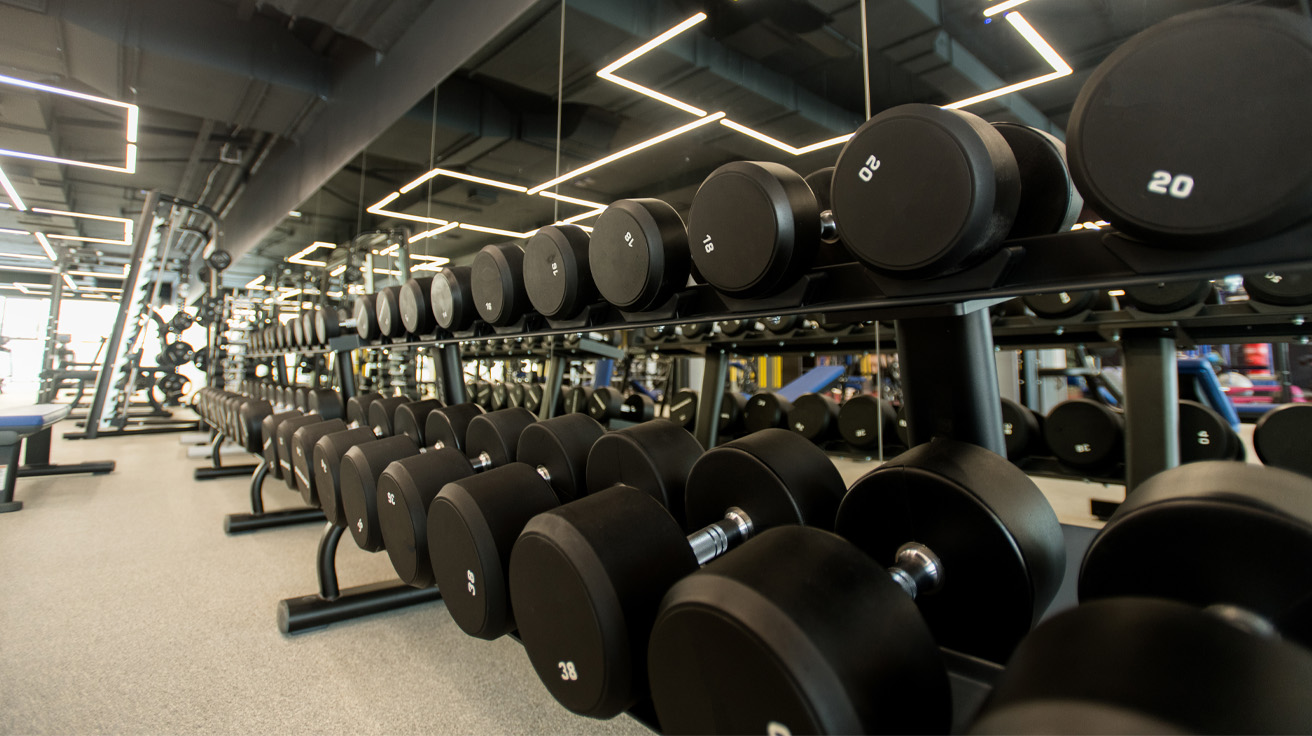
You don’t need a full renovation to fix gym lighting. Some of the most impactful changes are surprisingly affordable, and you can start this week.
Start with color temperature zoning. Swap bulbs in your recovery or stretching areas to warmer LEDs (2700K-3000K) to keep your main floor brighter and cooler. Most LED fixtures are dimmable now, so installing smart controllers lets you adjust lighting based on the time of day. Brighter during morning rushes, softer for evening classes.
Next, add accent layers. This doesn’t mean hanging expensive chandeliers. Wall-mounted LED strip lights along baseboards or behind mirrors create depth and kill that “box under fluorescents” feeling. For a stronger brand statement, a custom neon sign with your gym’s name or slogan becomes both a design feature and a marketing asset. One upgrade, double duty.
Consider your entryway separately. The first ten seconds inside your gym shape the entire visit. If someone walks from natural daylight into a dim, flat-lit hallway, the mood drops instantly. A warm, well-lit entrance with some intentional design (branded signage, accent lighting, a focal wall) sets the tone before anyone touches a barbell.
And don’t overlook your mirrors. They’re already in every gym. Paired with the right lighting angles, though, they double the visual impact of your design choices and make the space feel significantly larger.
What the Best Boutique Studios Already Know
Ever trained at a SoulCycle, Barry’s Bootcamp, or any successful boutique fitness studio? You notice something immediately: the lighting is designed, not default. These brands treat light as a core part of the experience, on par with the music, the instructor’s energy, and the workout programming itself.
Barry’s uses its signature red-tinted lighting to create intensity and urgency. SoulCycle dims the room to build intimacy and remove self-consciousness. Smaller independent studios have caught on, too, using colored LEDs, neon branding walls, and dynamic lighting sequences synced to class playlists. These aren’t gimmicks. They experience design choices that justify premium pricing.
The lesson for traditional gym owners is clear. You’re competing with spaces that understand how the environment drives behavior. You don’t need a full brand overhaul. But you do need to stop treating lighting as a utility and start treating it as a competitive advantage.
Even something as simple as a branded neon piece behind the front desk or a warm glow over the lounge area signals that your gym cares about the details. Members notice every time.
The Takeaway: Light Shapes the Workout, Not Just the Room
Gym lighting isn’t a cosmetic afterthought. It’s a performance variable. It affects alertness, mood, perceived effort, member satisfaction, and retention. And unlike new equipment or facility expansion, lighting upgrades deliver outsized results for relatively modest cost.
The gyms that figure this out first gain a real edge. Not just in how the space looks, but in how members feel and perform every time they show up. Start with the basics: zone your color temperatures, ditch the fluorescents, add some intentional accent lighting, and give your brand a visual identity people actually want to share. The barbell doesn’t care about the lighting. Your members absolutely do.


