

If you’ve ever felt a sharp ache in your elbow mid-rep, you’re not alone. Elbow pain working out is one of the most common complaints I hear from gym-goers.
I’ve dealt with it myself, and I know how frustrating it is to push through a session when your elbow is screaming at you.
In this guide, I’ll break down how the elbow works during exercise, what causes the pain, the difference between inner and outer elbow pain, exercise-specific triggers, and prevention tips that actually work.
With years of training experience, I’ve got you covered.
Understanding Elbow Pain During Workouts

Your elbow is a hinge joint that bends, extends, and rotates under serious force during every curl, press, or pull. When one part gets overloaded, something gives.
Gripping a bar tightens your forearm muscles, which attach to the elbow through tendons. The heavier the load, the more tension those tendons absorb.
Without proper recovery, that tension builds into pain. Overuse makes it worse. It’s not about training too hard once. It’s about repeating the same movements without enough rest.
Tendons heal slowly because they get less blood flow than muscles. Push them before they recover, and injury follows.
What Causes Elbow Pain Working Out

Common culprits behind elbow pain that most people overlook.
Overuse and Repetitive Strain Injuries
Doing the same exercises week after week without variation stresses the same tendons. This leads to tiny tears that become chronic inflammation.
It’s one of the top reasons people end up with persistent elbow pain.
Poor Form and Incorrect Technique
Bad form shifts load onto joints instead of muscles. For example, flaring your elbows during a bench press puts direct stress on the elbow joint.
Small technique errors repeated hundreds of times lead to big problems.
Lifting Too Heavy Too Quickly
Ego lifting is real. Jumping to a heavier weight before your tendons are ready is a fast track to injury. Muscles adapt quickly. Tendons don’t. That gap is where injuries happen.
Lack of Recovery and Muscle Imbalance
If you train arms four days a week and skip rest, your tendons never fully recover.
Muscle imbalances, like overdeveloped biceps with weak forearms, also add uneven stress to the elbow joint.
Inner and Outer Elbow Pain Working Out Explained
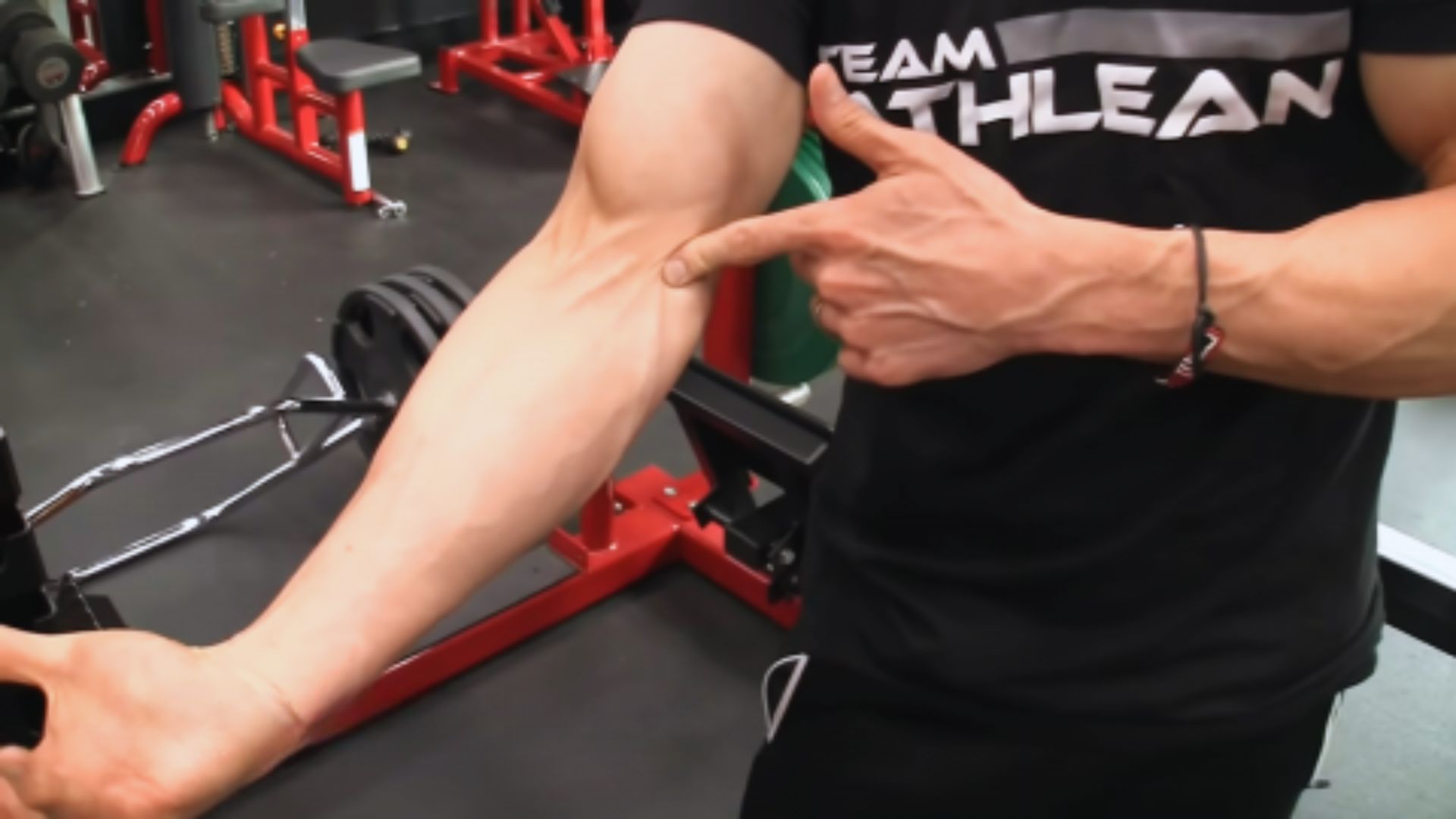
Knowing which side hurts helps you figure out what’s wrong.
Inner Elbow Pain Working Out and Its Causes
Inner elbow pain usually points to the tendons on the medial side. This area gets stressed from pulling movements, gripping, and wrist flexion.
Pain here often builds slowly before becoming sharp during workouts.
Golfer’s Elbow (Medial Pain)
Golfer’s elbow affects the inner elbow. It’s caused by overuse of the forearm flexors. You don’t have to play golf to get it. Chin-ups, curls, and rows are common triggers.
The pain often spreads down the forearm and gets worse when you grip or flex your wrist.
Outer Elbow Pain and Its Triggers
Outer elbow pain tends to come from pushing movements and extension-based exercises.
The forearm extensors attach here, and they take a beating during pressing and gripping with an overhand grip.
Tennis Elbow (Lateral Pain)
Tennis elbow is inflammation of the tendons on the outer elbow. It’s extremely common among gym-goers.
Repeated gripping, lifting, and extending the wrist strain these tendons. Pain usually gets worse during forearm rotation or when you extend your arm while holding something.
Elbow Pain Working Out Triceps and Other Exercises
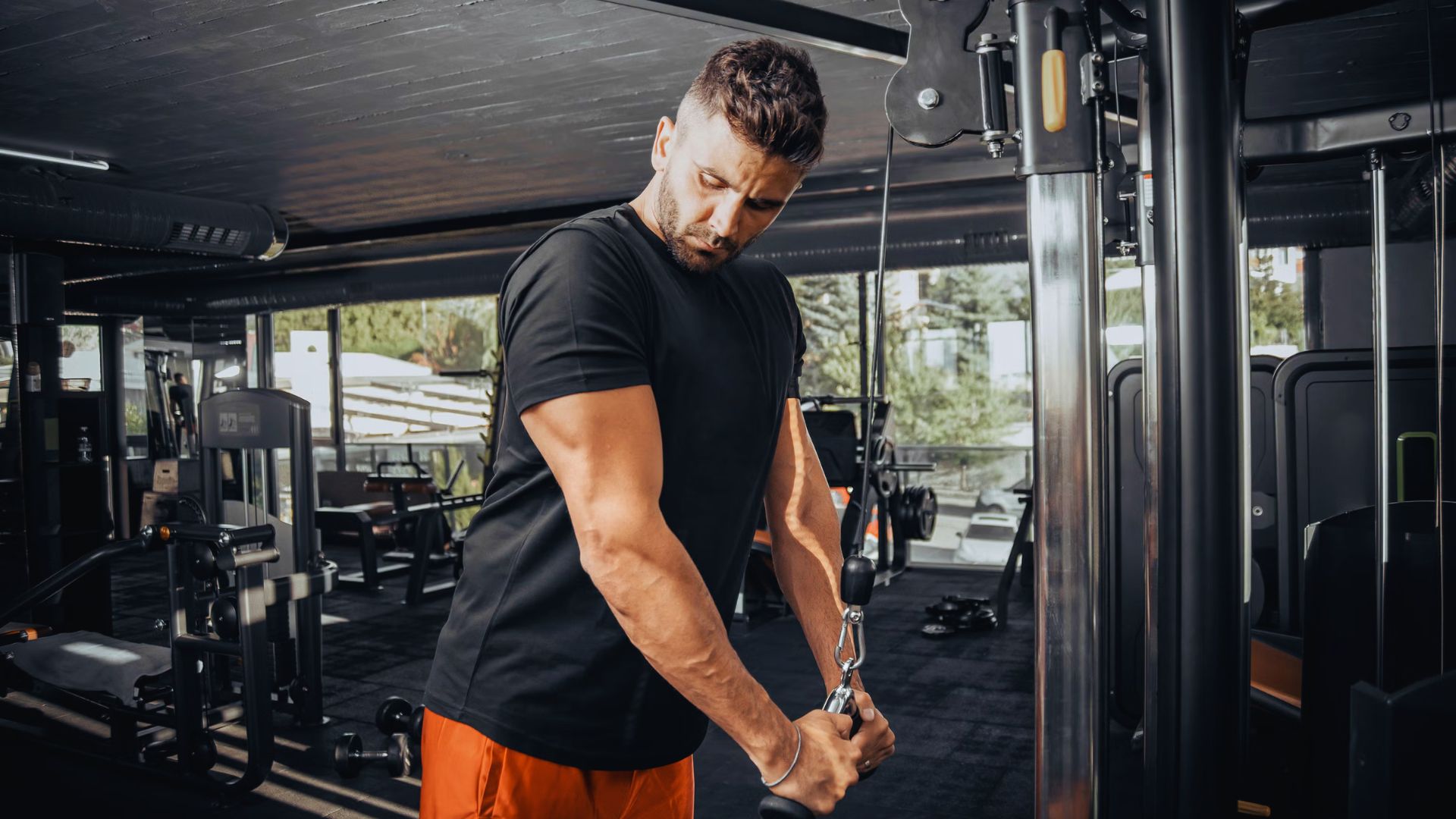
Certain exercises are harder on your elbows than you might think.
Why Tricep Exercises Strain the Elbow
Tricep exercises put the elbow in full extension under load.
Skullcrushers, overhead extensions, and close-grip presses all load the joint at an angle that stresses the olecranon and surrounding tendons.
Common Mistakes in Push Workouts
Locking out aggressively at the top of a movement, using too much weight, and rushing reps are all mistakes that add unnecessary stress. Controlled tempo protects the joint far better.
Exercises Like Curls, Presses, and Dips That Trigger Pain
- Curls strain the bicep tendon attachment at the elbow
- Dips compress the joint and overload the tricep tendon
- Barbell presses with improper grip width stress the lateral tendons
- Overhead extensions put max stretch on the tricep tendon
Knowing which movements aggravate your pain helps you modify your training instead of quitting altogether.
Symptoms That Help Identify the Cause

Pay attention to when and where the pain shows up.
Pain During vs After Workouts
Pain during a workout usually signals acute stress or inflammation. Pain that hits a few hours after training, especially the next morning, points more toward tendon irritation or overuse.
Both matter. Neither should be ignored.
Weak Grip Strength and Stiffness
If your grip has weakened or your elbow feels stiff in the morning, that’s a red flag. It suggests tendon involvement, not just muscle soreness.
This kind of stiffness often eases as you warm up but returns after rest.
Pain Spreading to Forearm or Upper Arm
When pain travels beyond the elbow, it usually means the tendon or nerve running through the area is irritated.
Forearm aching along with elbow pain is common with both tennis and golfer’s elbow.
Tips to Prevent Elbow Pain While Working Out
Simple habits that protect your elbows over the long term.
- Focus on Form Watch your elbow position. Small corrections now prevent big injuries later.
- Don’t Lift Too Heavy Too Soon. Increase weight slowly each week. Give your tendons time to catch up.
- Always Warm Up Spend 5 to 10 minutes on shoulders, wrists, and elbows before lifting.
- Balance Your Routine Match pushing and pulling sets equally. Imbalances lead to overuse injuries.
- Rest and Recover Take one or two rest days per week. Tendons need time to heal.
Conclusion
Elbow pain from working out doesn’t have to derail your progress. I’ve been there, ignoring that dull ache until it turned into something I couldn’t train through.
Don’t make that mistake. Listen to your body early, fix your form, rest when needed, and build strength at a pace your tendons can handle.
Your elbows carry every single rep you do. Treat them well, and they’ll keep you in the game longer than you think.
If you’ve dealt with this, drop a comment below. I’d love to hear what helped you. Share this with someone who needs it right now.
Frequently Asked Questions
Is it okay to work out with elbow pain?
Mild discomfort during certain movements may be manageable with modifications. However, sharp or worsening pain is a signal to stop and rest before the injury gets more serious.
How long does elbow pain from working out take to heal?
Mild cases can improve in one to two weeks with rest. Chronic tendon issues like tennis or golfer’s elbow can take six to twelve weeks or longer depending on severity and treatment.
What exercises should I avoid with elbow pain?
Avoid movements that load the elbow under full extension or heavy gripping, like skullcrushers, dips, and heavy barbell curls, until the pain settles and you’ve addressed the root cause.
Can elbow sleeves help with pain during workouts?
Elbow sleeves provide compression and warmth, which can reduce discomfort during training. They are helpful as a short-term aid but should not replace fixing forms or allowing proper recovery.
When should I see a doctor for elbow pain?
See a doctor if the pain is sharp, constant, getting worse, or if you notice swelling, numbness, or weakness that doesn’t improve after a week or two of rest and basic care.


