
I’ve done dumbbell thrusters enough times to know one thing. Bad form makes them brutal in the wrong way. This guide breaks down exactly how to do them right, from setup to finish.
You’ll learn what muscles they work, how to move safely, and what mistakes to avoid. If you want to clean up your technique or are just starting out, this article covers everything you need.
I’ve trained with thrusters for years, and every tip here comes from real experience, not just theory. Let’s get into it.
What Are Dumbbell Thrusters?
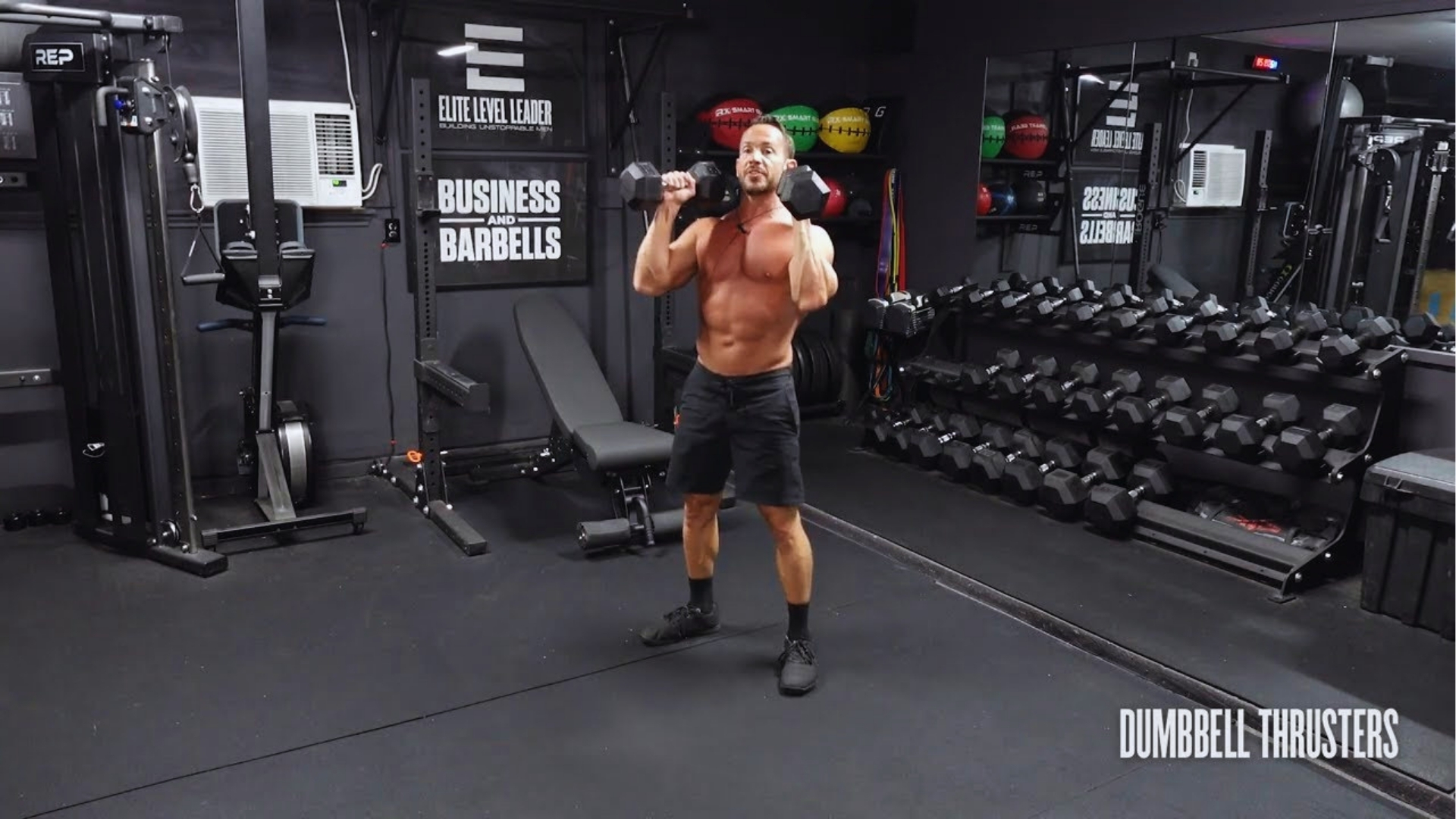
Dumbbell thrusters combine two moves into one. You start with a front squat, then drive up and press the dumbbells overhead in one smooth motion.
This makes them a multi-joint compound exercise, meaning they work your legs, shoulders, and core all at the same time.
Because so many muscles fire together, they burn more calories and build more strength than most isolation exercises.
Thrusters are popular in CrossFit, but you don’t need to be a CrossFit athlete to benefit from them. Anyone looking to get stronger, build endurance, and burn fat can add them to their training routine.
Muscles Worked in Dumbbell Thrusters

Know exactly what’s firing so you can train smarter and recover better.
Primary Muscles
The main movers that do the heavy lifting in every rep.
- Quadriceps
- Glutes
- Shoulders
Secondary Muscles
A closer look at every muscle group this exercise puts to work.
- Hamstrings
- Core (abs and lower back)
- Triceps, upper back, and calves
The full-body demand is what makes this exercise so effective. Few moves hit this many muscles at once.
Step-by-Step Proper Form Guide
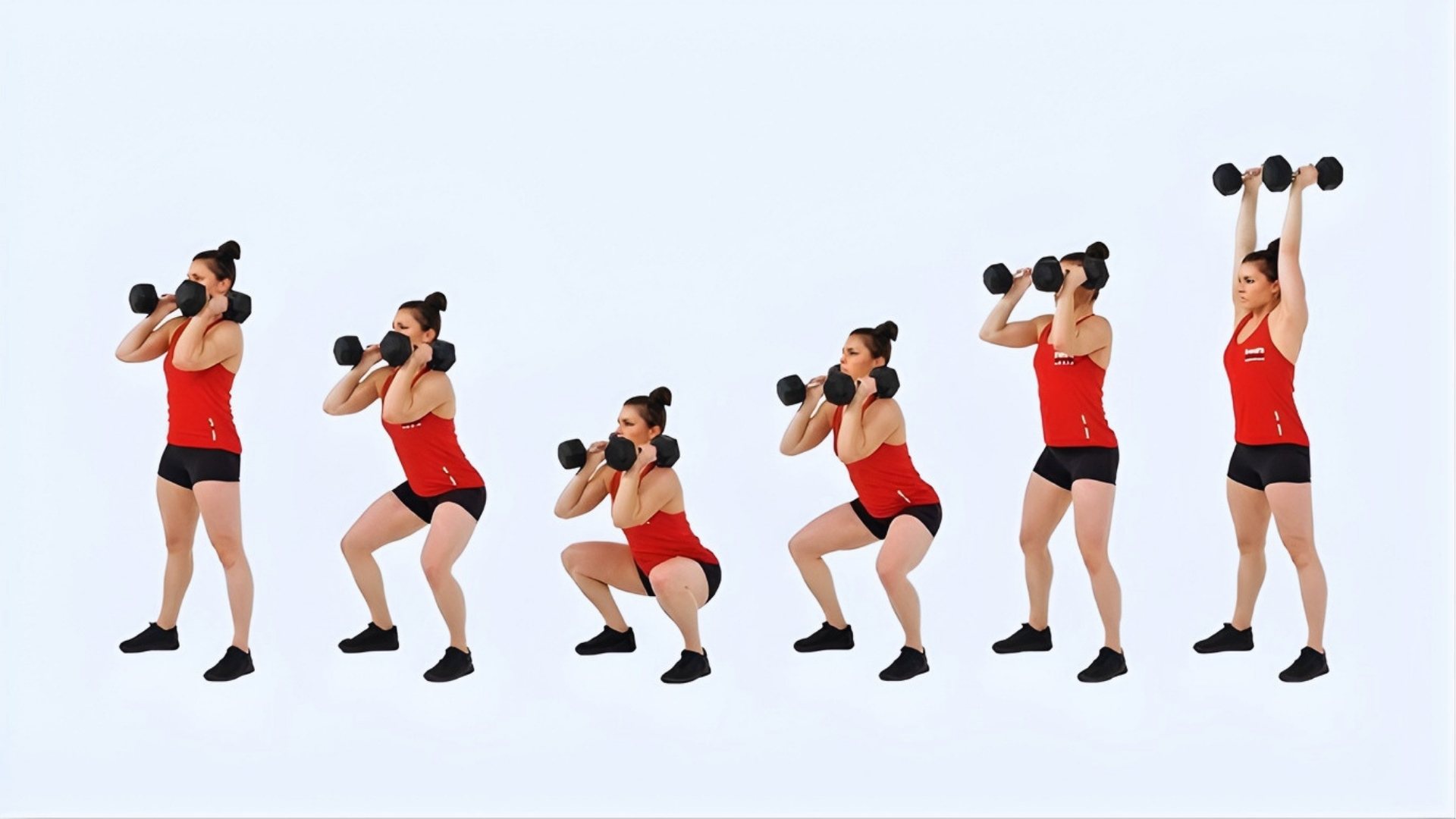
Good form keeps you safe and makes each rep count. Here’s how to do dumbbell thrusters correctly from start to finish.
Starting Position
Stand with your feet shoulder-width apart. Hold a dumbbell in each hand at shoulder level, palms facing inward. Keep your chest up and your core tight before you begin.
Your elbows should point forward, not out to the sides. This rack position keeps the weight stable and sets you up for a clean squat.
Squat Phase
Push your hips back and lower down until your thighs are parallel to the floor. Keep your chest lifted and your back straight. Don’t let your knees cave inward at any point.
Your weight should stay on your heels throughout the squat. If your heels are rising, slow down and work on ankle mobility before adding more weight.
Press Phase
As you stand up, drive upward with power from your legs. Use that upward force to press both dumbbells straight overhead until your arms are fully extended.
Your hips and arms should move together in one fluid motion. Don’t wait until you’re fully standing to start the press. The power comes from your legs, not just your shoulders.
Return Phase
Lower the dumbbells back to shoulder height in a slow and controlled way. Don’t drop them fast or let gravity do the work. Keep your core tight as you bring them down.
Reset your feet, brace your core, and prepare for the next rep. Rushing the return is where most people lose their form and risk injury.
Breathing Pattern and Benefits

Small habits like breathing correctly can make a big difference in your performance.
Proper Breathing
Inhale as you lower into the squat. Exhale as you press the dumbbells overhead. This pattern helps you stay stable and keeps your core braced through the hardest part of the lift.
Many people hold their breath during heavy reps, which can cause dizziness and loss of control. Breathing with intention also helps you find a rhythm, especially during longer sets.
Once you get used to it, the breathing pattern starts to feel natural and actually makes each rep easier to complete.
Key Benefits
Get more from every rep with these powerful benefits that make thrusters one of the most effective exercises around.
Full-body muscle activation: thrusters hit almost every major muscle group in one rep. Your legs, shoulders, core, and arms all work together, making it one of the most complete exercises you can do.
Improved strength and cardiovascular fitness: because the move is so demanding, your heart rate rises quickly. This makes thrusters great for conditioning.
You build muscle and improve your endurance at the same time, which saves you a lot of time in the gym.
High calorie burn: the combination of strength and cardio in one move makes thrusters one of the best exercises for fat loss.
Your body has to work hard to fuel so many muscles at once, which means more calories burned both during and after your workout.
Common Mistakes

Avoid these simple errors to train safer, protect your joints, and get better results faster.
Leaning Back During the Press
This puts direct stress on your lower back and can lead to injury over time. Keep your core tight and press the dumbbells straight up, not forward or at an angle.
Rounding the Lower Back
This usually happens when the weight is too heavy or when fatigue sets in. If your back starts to round, stop the set, rest, and reduce the weight.
Protecting your spine matters more than finishing the rep.
Using Momentum Instead of Control
Swinging the dumbbells or bouncing out of the squat defeats the purpose of the exercise. Every rep should feel deliberate and controlled.
Slow down if you need to. Quality reps always beat sloppy high-rep sets.
Tips for Better Form and Progression
Small adjustments in your technique can lead to big improvements over time.
- Drive through your heels to stay balanced and protect your knees.
- Keep your core braced from the first rep to the last. A tight core protects your spine and improves power transfer.
- Maintain a neutral spine throughout. Your back should not arch or round at any point.
- Start light and focus on the movement pattern before adding weight.
- Increase weight in small steps, around two to five pounds at a time, every one to two weeks.
- Master the squat and overhead press separately before combining them into a thruster.
Conclusion
Dumbbell thrusters are one of those exercises that look simple but demand everything from your body.
I remember struggling with them early on, losing balance, rushing the press, waking up sore in places I didn’t expect. But once the form clicked, the results followed fast.
If you’re consistent and patient with your technique, you’ll feel stronger, leaner, and more capable in just a few weeks.
Give it a real shot. Drop a comment below and tell me how your first set went. I’d love to hear it.
Frequently Asked Questions
How heavy should dumbbells be for thrusters?
Start with a weight that lets you complete 10 clean reps without losing form. Most beginners do well with 5 to 15 pounds per dumbbell.
How many reps of dumbbell thrusters should I do?
Three to four sets of 8 to 12 reps works well for most goals. If you want more cardio, you can go higher reps with lighter weight.
Are dumbbell thrusters good for fat loss?
Yes. They work multiple muscle groups at once and spike your heart rate, which helps burn a high number of calories in a short time.
Can beginners do dumbbell thrusters?
Beginners can do them, but should start light and focus on form. It helps to practice the squat and overhead press separately before combining the two movements.
How often should I include dumbbell thrusters in my workout?
Two to three times per week is enough for most people. Since they hit so many muscles, your body needs time to recover between sessions.