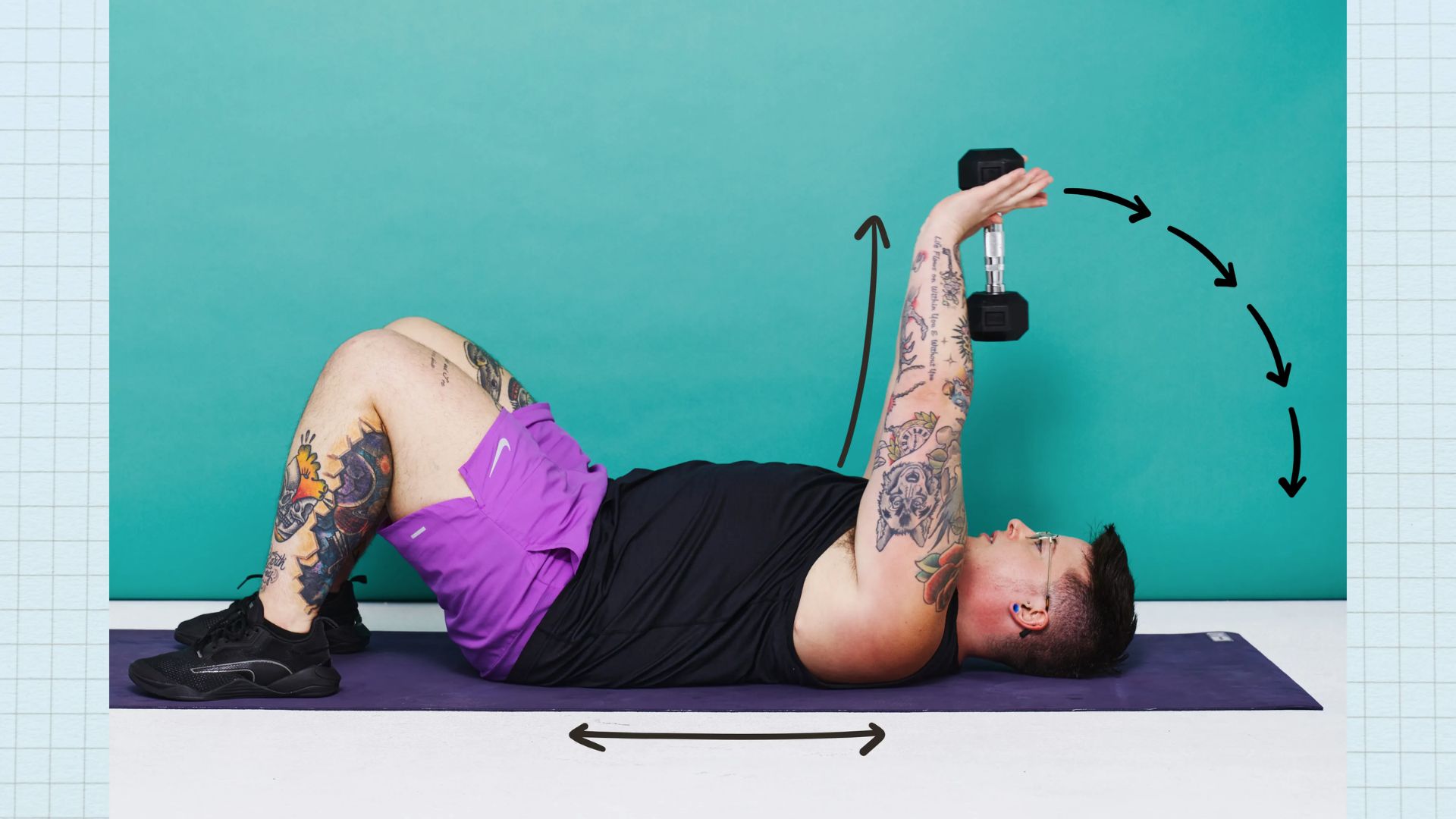
I’ve been doing the dumbbell pullover on the floor for years, and it genuinely changed how I train my chest and lats.
If you’ve struggled with shoulder pain on a bench, this variation is worth trying. In this guide, I’ll walk you through proper form and setup, common mistakes to avoid, muscles worked, and tips for better results.
I’ve coached beginners through this move, and it works every time. Short learning curve, real results. You’ll leave knowing exactly how to do this exercise safely and confidently.
Why the Floor Dumbbell Pullover is a Safer Alternative
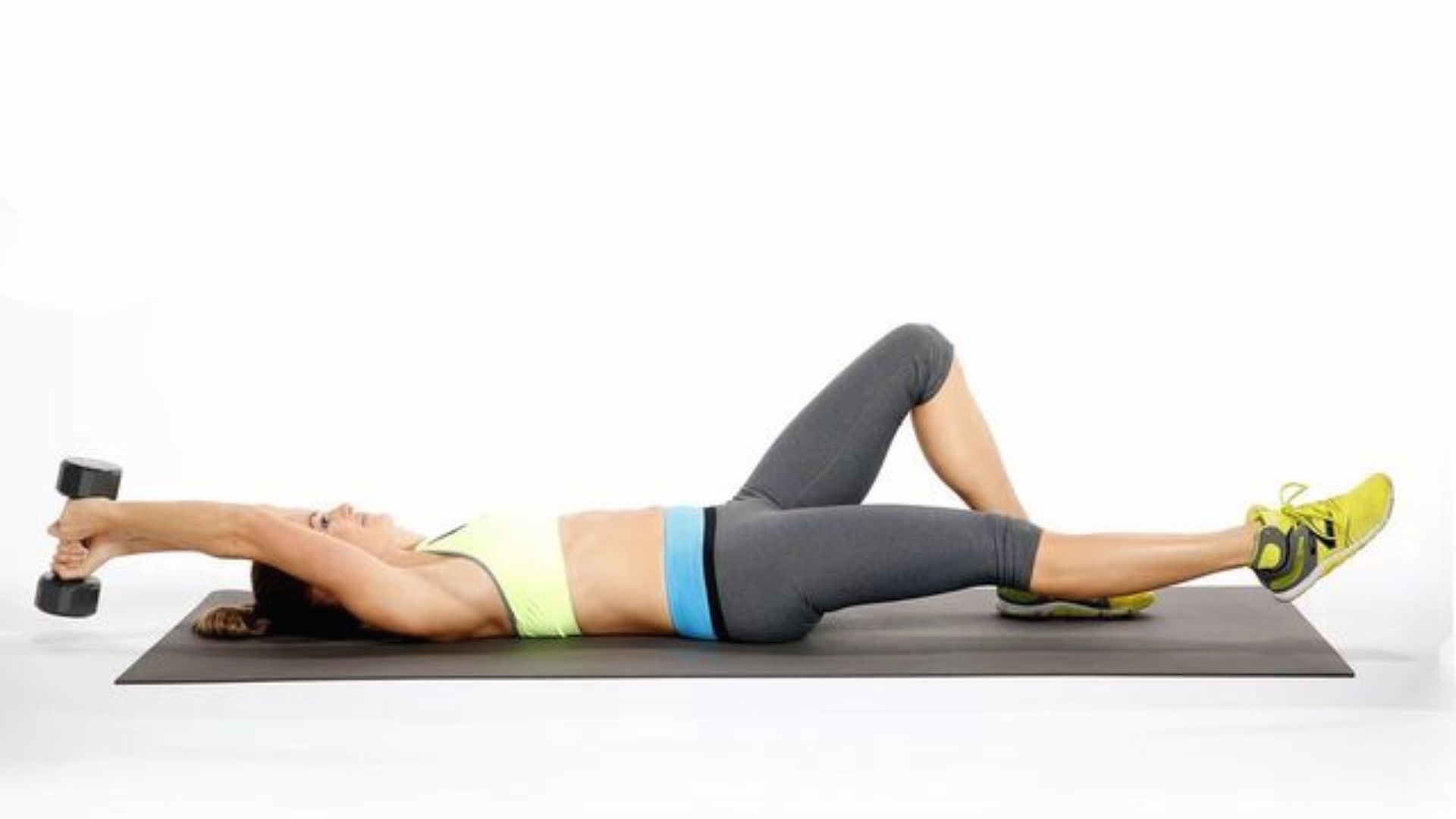
The bench version allows your arms to drop below shoulder level, and for many people, this puts real strain on the shoulder joint over time.
The floor changes that completely. It naturally stops your arms from going too deep, so your range of motion stays within a safe zone.
You still get solid chest and lat activation without the added shoulder stress.
If you deal with shoulder tightness or limited mobility, this variation is a smart and practical choice that keeps you training consistently without discomfort holding you back.
Muscles Worked in Dumbbell Pullover on Floor
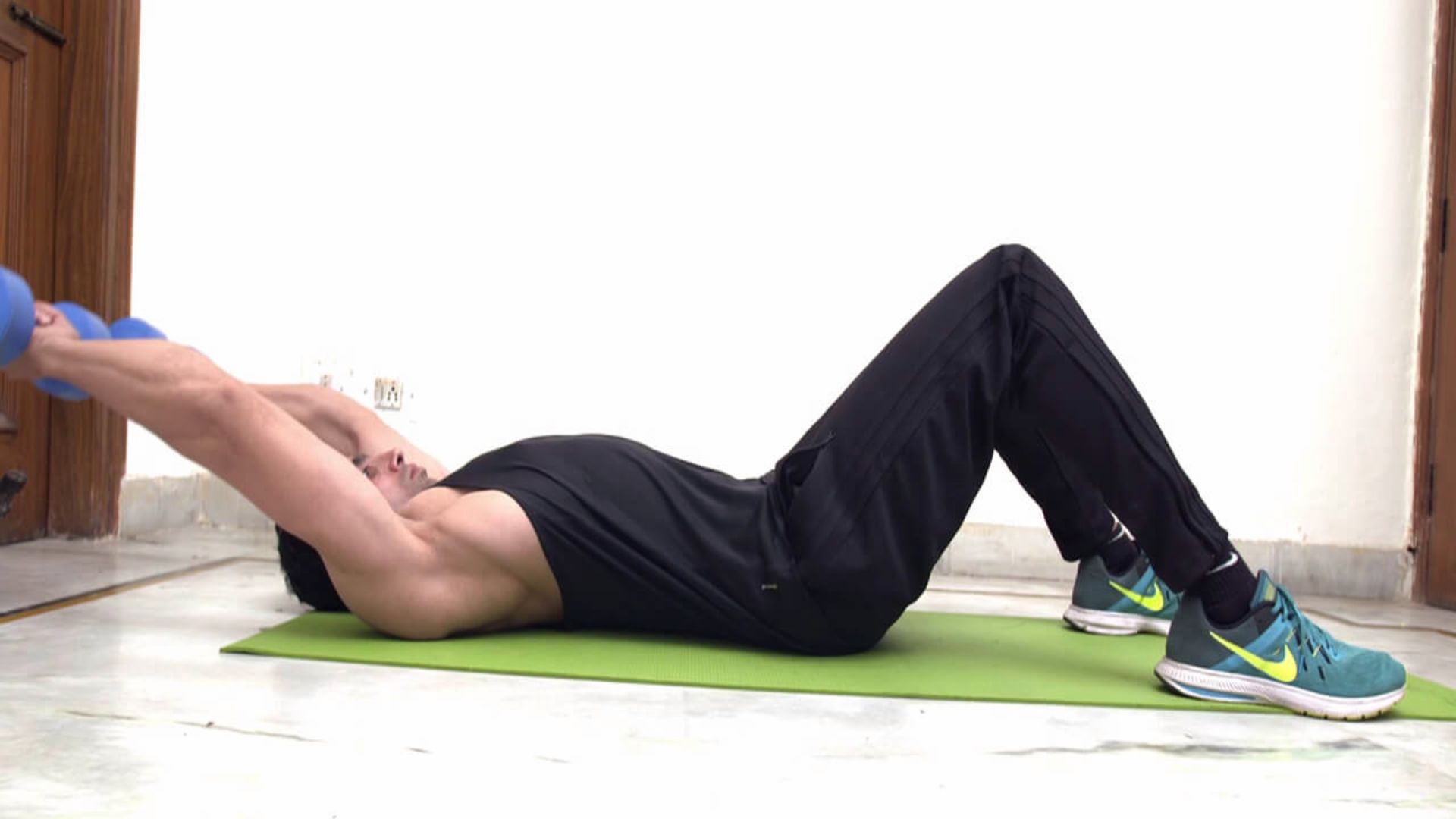
Knowing which muscles this exercise targets helps you train smarter and get better results from every rep.
Primary Muscles (Chest and Lats Focus)
The main muscles worked are the pectoralis major (chest) and the latissimus dorsi (lats). Both muscles work during the lowering and lifting phase of the movement.
The chest activates more at the top. The lats take over as the weight moves overhead.
Secondary Muscles (Shoulders, Triceps, Core, Serratus Anterior)
Supporting muscles include:
Triceps- help control the movement
Anterior deltoids- assist at the top
Serratus anterior- stabilizes the shoulder blade
Core- keeps your lower back flat and stable
How Floor Position Affects Muscle Activation
The floor limits your range of motion. This means the lats and chest work in a shorter arc.
The serratus anterior and core have to work harder to keep the body stable since there’s no bench edge for support.
Dumbbell Pullover on Floor Form
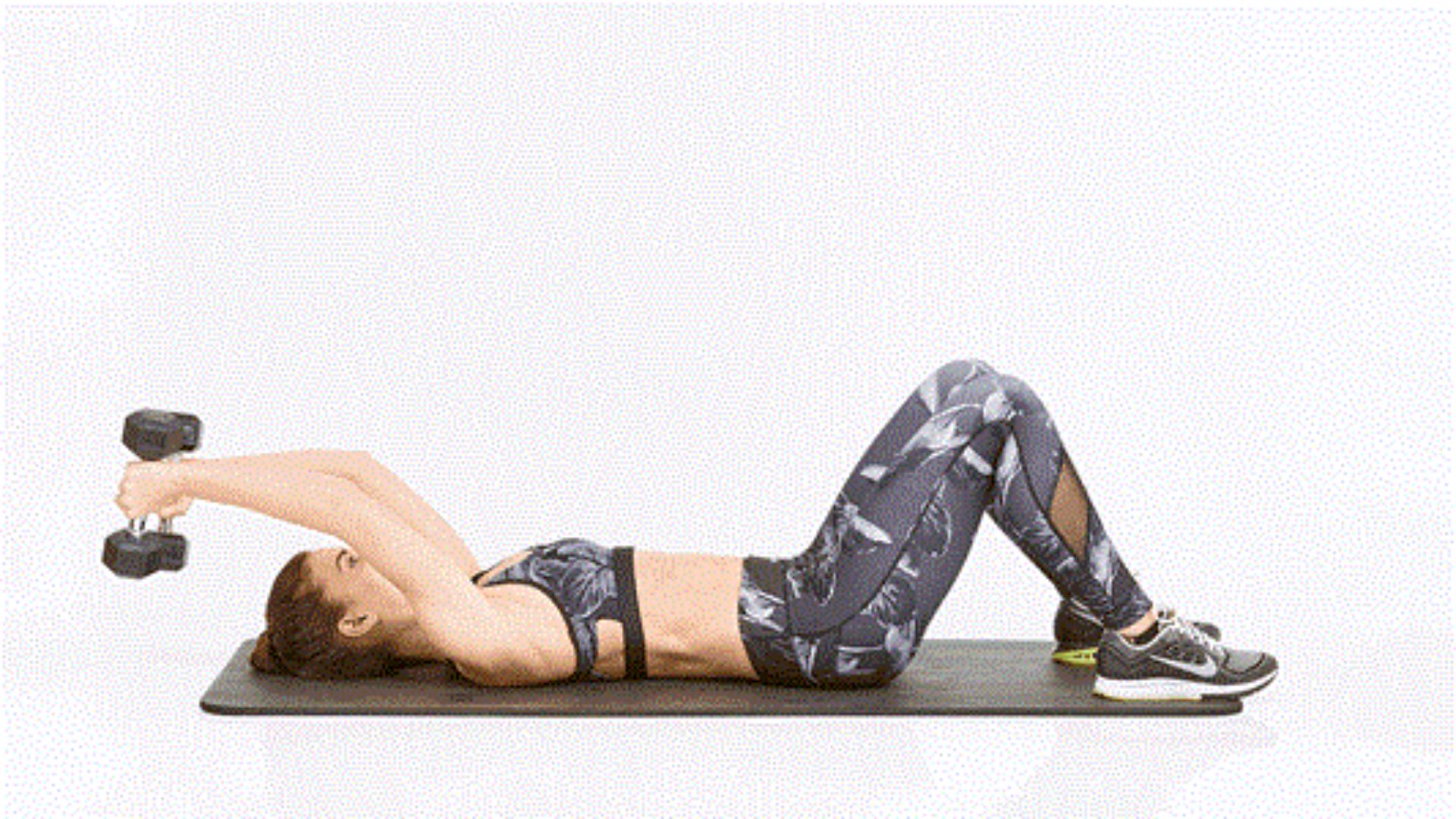
Follow these steps closely to build good habits from your first rep and avoid bad patterns.
Correct Setup on the Floor (Body Positioning and Alignment)
Lie flat on your back with your knees bent and feet flat on the floor. Keep your lower back pressed gently into the ground. Your spine should be neutral, not arched.
Proper Grip and Starting Position
Hold one dumbbell with both hands. Wrap your thumbs and fingers around the inner plate. Start with the dumbbell held above your chest, arms slightly bent.
Movement Execution (Lowering and Lifting)
Lower the dumbbell slowly overhead toward the floor
Stop when your upper arms are close to the floor or parallel
Pause briefly
Pull the dumbbell back up and over your chest
Repeat for the desired reps
Move slowly. Don’t let momentum do the work.
Breathing and Core Engagement During the Movement
Inhale as you lower the dumbbell overhead. Exhale as you pull it back up. Keep your core tight the entire time. This protects your lower back and keeps the movement clean.
Dumbbell Pullover on Floor Form Mistakes (And How to Fix Them)
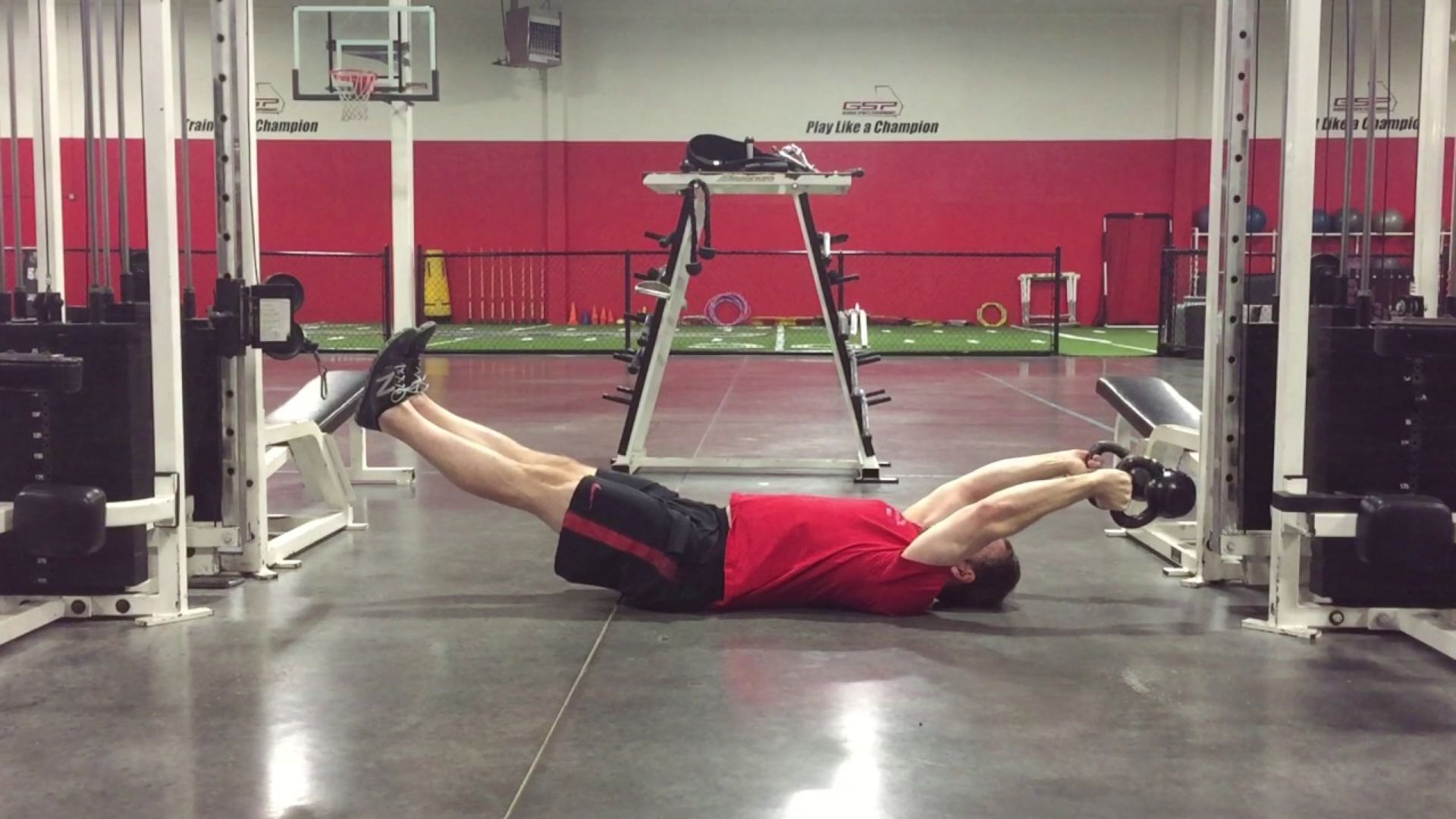
Small form errors can reduce results and raise injury risk here’s what to watch for.
Overarching the Lower Back and How to Prevent it
Many people arch their lower back when the weight goes overhead. This puts pressure on the spine.
Fix: Press your lower back into the floor before you start. Keep your core engaged throughout the set.
Using too Much Weight and Losing Control
Heavy weight forces you to use momentum. You lose muscle tension and increase injury risk.
Fix: Start light. Use a weight you can control for 12 slow reps. Add weight only when your form is solid.
Incorrect Elbow Position (Why it Changes the Muscle Focus)
Straight arms shift more load to the shoulder joint. Bent elbows keep tension on the chest and lats.
Fix: Keep a slight bend in your elbows throughout the full movement.
Cutting Range of Motion too Short or Going too Deep
Short range of motion means less muscle work. Going too deep on a bench risks shoulder injury; the floor prevents this naturally.
Fix: Lower until your upper arms touch or nearly touch the floor. Don’t force a deeper stretch.
Fixing Shoulder Discomfort During the Movement
If your shoulder hurts, the weight may be too heavy or your elbow angle may be off.
Fix: Reduce the weight. Bend your elbows more. If pain continues, stop the exercise.
Benefits of Dumbbell Pullover on Floor Exercise
This exercise offers more than just muscle; it builds control, stability, and mobility at the same time.
Builds Chest and Lat Strength Safely
The floor version lets you train both muscles without the shoulder risk of the bench variation. You get real strength gains in a controlled position.
Improves Shoulder Mobility and Overhead Control
Repeating the overhead arc builds healthy shoulder movement patterns. Over time, this improves how well your shoulder moves in daily life and other exercises.
Strengthens Core Stability and Breathing Mechanics
Holding a neutral spine under load trains your core. The breathing pattern inhale on the way down, exhale on the way up also teaches better breath control during lifting.
Beginner-Friendly Alternative to Bench Pullover
The floor makes this exercise less intimidating. There’s no risk of falling off a bench. The range of motion is naturally limited. This makes it a great starting point.
Dumbbell Pullover on Floor Tips for Perfect Form
These small adjustments make a big difference in how well the exercise works for you.
- Squeeze at the top to feel your chest more, and focus on pulling with your back to feel your lats more.
- Lower the weight over 3 seconds and lift over 2 seconds to keep your muscles working the whole time.
- Use a wider elbow angle for more chest work and a tighter elbow angle for more lat and tricep focus.
- Start with 8-12 kg and only go heavier when you can do 10-12 reps with clean form.
- If your lower back lifts off the floor or your form breaks down, the weight is too heavy — drop it.
Conclusion
The floor naturally limits range of motion. This makes it safer for the shoulders while still delivering solid chest and lat work.
The dumbbell pullover on the floor was one of the first exercises that helped me connect with my lats properly.
Once I got the form right, I felt it working in ways the bench version never did for me. Start light, go slow, and focus on feeling the muscles.
If this guide helped you, drop a comment below and share what worked for you. Try it in your next upper body session. I think you’ll feel the difference right away.
Frequently Asked Questions
Is the dumbbell pullover on the floor good for beginners?
Yes, it is a great starting point. The floor limits shoulder stress and helps beginners learn the movement pattern safely before progressing to a bench.
Can I do the dumbbell pullover on the floor for chest or back?
It works both. Focus on squeezing at the top for more chest activation. Think about pulling with your back muscles to shift the focus toward the lats.
How much weight should I use for the dumbbell pullover on the floor?
Start with a light weight, around 8-12 kg. Use a load that lets you complete 10-12 reps with full control and without arching your lower back.
How is the dumbbell pullover on the floor different from the bench version?
The floor stops your arms from going too deep. This reduces shoulder strain while keeping solid muscle activation in the chest and lats.
How many times a week should I do the dumbbell pullover on the floor?
Once or twice a week is enough. It works well as an accessory exercise on chest day, back day, or any upper body training session.