
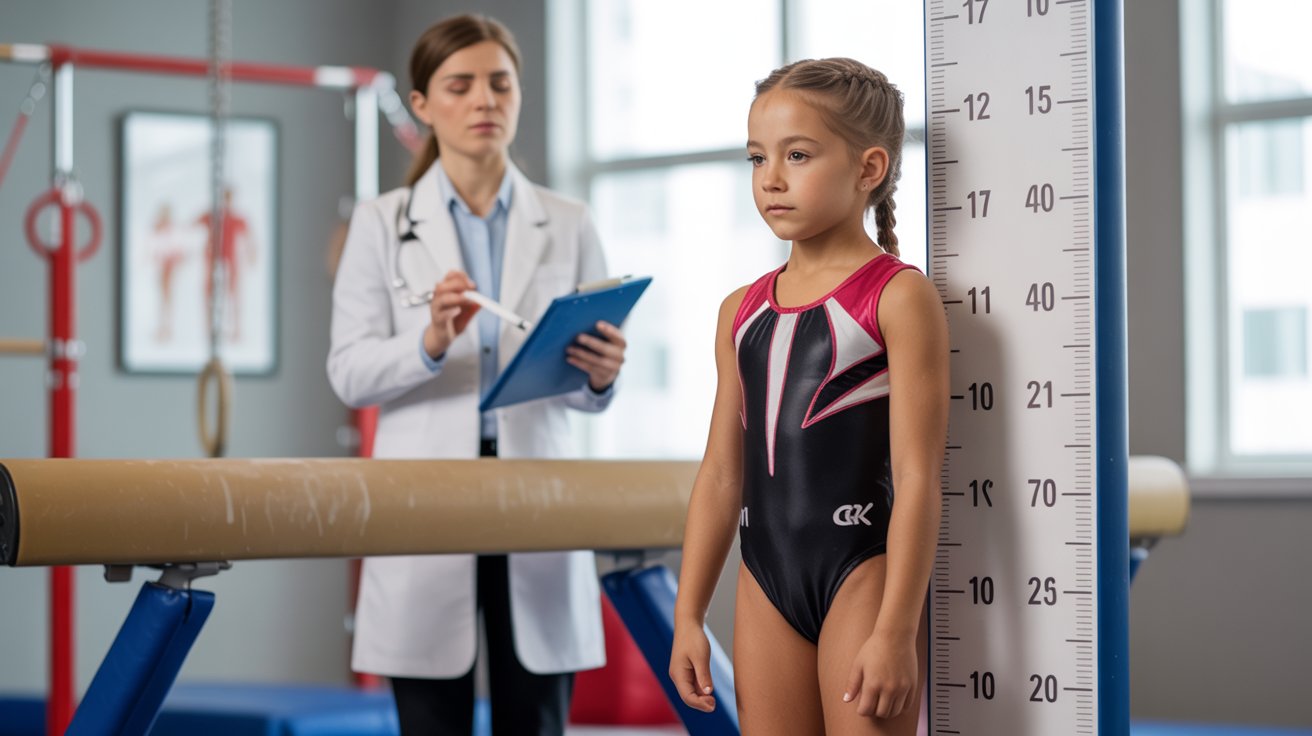
Does gymnastics stunt your growth?
I hear this from parents constantly, and it makes sense to ask. You see young gymnasts compete, notice they tend to be smaller than average, and start connecting dots.
But the real picture is more layered than it looks.
In this blog, I’ll cover what the science actually says, why Olympic gymnasts are often short, what the American Academy of Pediatrics recommends, and how to spot real warning signs in young athletes.
I’ve pulled from trusted health organizations and peer-reviewed research to give you a straight answer.
By the end, you’ll know exactly what’s fact and what’s been misread for years.
Why People Think Gymnastics Makes You Shorter
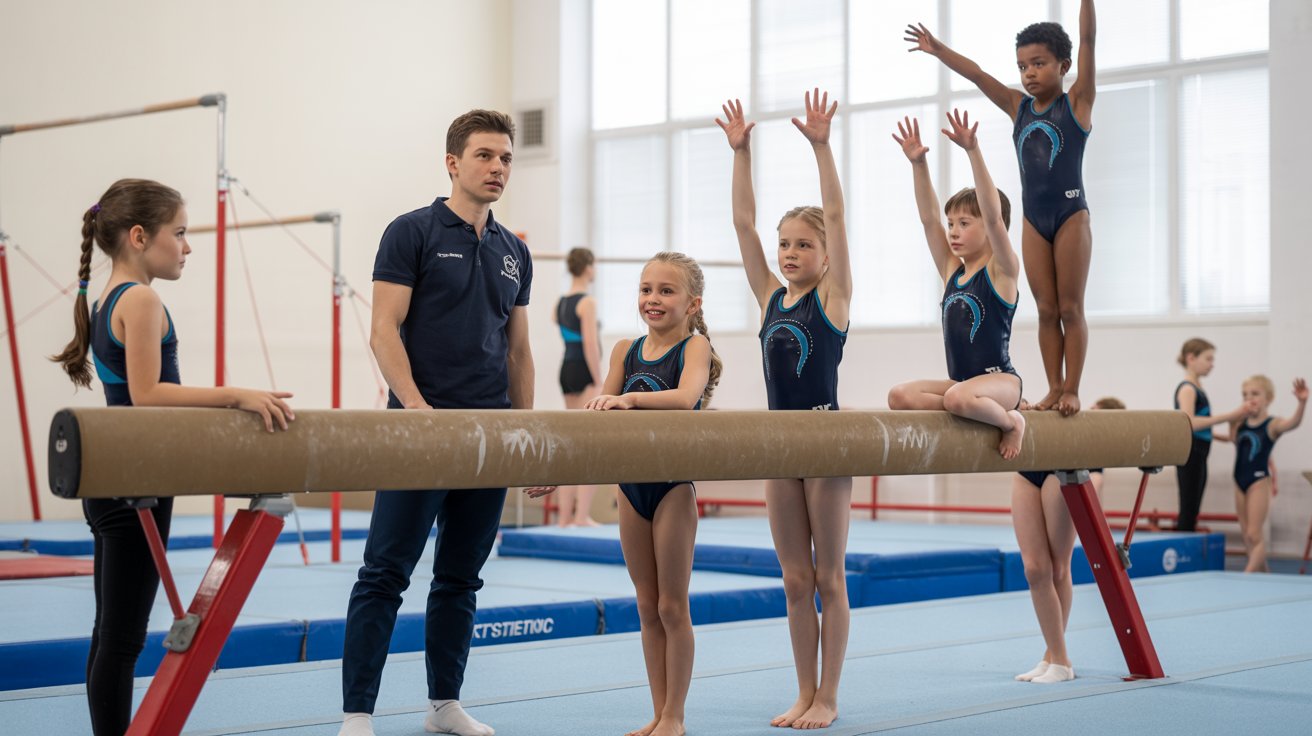
This concern has circulated for decades, and it’s not hard to see where it comes from.
Most competitive gymnasts are visibly petite. That pattern creates an easy assumption. But the sport selects for smaller athletes.
They have a lower center of gravity, complete rotations more efficiently, and tend to perform better in the scoring system. The sport doesn’t shrink anyone. It just attracts and retains athletes who are already built that way.
Competitive gymnasts sometimes train 20 to 30 hours a week. That’s a serious commitment for a young body. It’s understandable that people connect heavy training to slower growth.
But training volume alone doesn’t answer the question of does gymnastics stunt your growth. The bigger factors are nutrition, recovery, and how training is managed.
Some female gymnasts do hit puberty later than their peers. This part is real. High training loads combined with low body fat can delay puberty onset. That delay can slow height gains temporarily.
According to the American Academy of Pediatrics, this is generally reversible and does not determine a child’s final adult height.
Why Are Olympic Gymnasts So Short?
This is one of the most common related questions, and it deserves its own answer.
The short stature you see in Olympic gymnastics is largely explained by selection bias. Shorter athletes rotate faster in the air, land more cleanly, and score higher on technical skills.
Coaches identify and develop these athletes early. Kids who show early promise at a smaller size tend to specialize sooner and train longer.
Over time, the sport ends up filled with athletes who were always going to be on the shorter side. Gymnastics didn’t make them that way. The sport simply rewards what they already had.
Does Scientific Research Show That Gymnastics Stunts Growth?

Let’s look at the numbers, not just the assumptions.
Genetics vs Training
According to the National Institutes of Health, genetics account for roughly 80 to 90 percent of a person’s final adult height.
Environmental factors, including sports participation, make up a much smaller portion. So the idea that gymnastics overrides your genetic blueprint doesn’t hold up against the data.
What Studies Actually Found
A long-term study published in the Journal of Pediatrics tracked competitive young female gymnasts over multiple years. Here’s what researchers found. Most gymnasts reached the adult height predicted by their parental genetics.
Growth delays observed during intense training were temporary. Bone age was slightly behind in some athletes, but final height was consistent with genetic expectations. The International Olympic Committee, in its youth athlete health guidelines, also states that sport participation does not typically alter adult height when training is properly supported.
Gymnastics and Growth Plates
Growth plates are soft tissue areas near the ends of developing bones. Repeated physical stress can affect them. But stressed growth plates are not the same as damaged ones.
With proper rest and adequate nutrition, most young gymnasts move through high-training periods without lasting effects on bone development.
Do Gymnasts Grow Normally After Puberty?

For the vast majority, yes.
Growth Spurts in Teen Years
Many gymnasts experience their biggest growth spurts in their mid to late teens. This is later than most kids. The body holds off on rapid growth when under heavy physical demand. Once training eases or nutritional support improves, growth accelerates to catch up.
Catch-Up Growth Explained
Catch-up growth is a well-documented process in pediatric medicine. When a child’s body faces prolonged stress, growth slows temporarily. Once that stress is reduced, growth speeds up to meet the person’s genetic potential. The American Academy of Pediatrics recognizes catch-up growth as a normal response in young athletes who return to healthy training and eating patterns.
Examples from Elite Gymnasts
Many high-level gymnasts grew noticeably after reducing their training load or retiring from competition. Athletes who stood at 5’0″ at 16 often reached 5’3″ or 5’4″ by their early 20s. This is catch-up growth playing out exactly as the research predicts.
Can Intense Gymnastics Training Affect Growth?
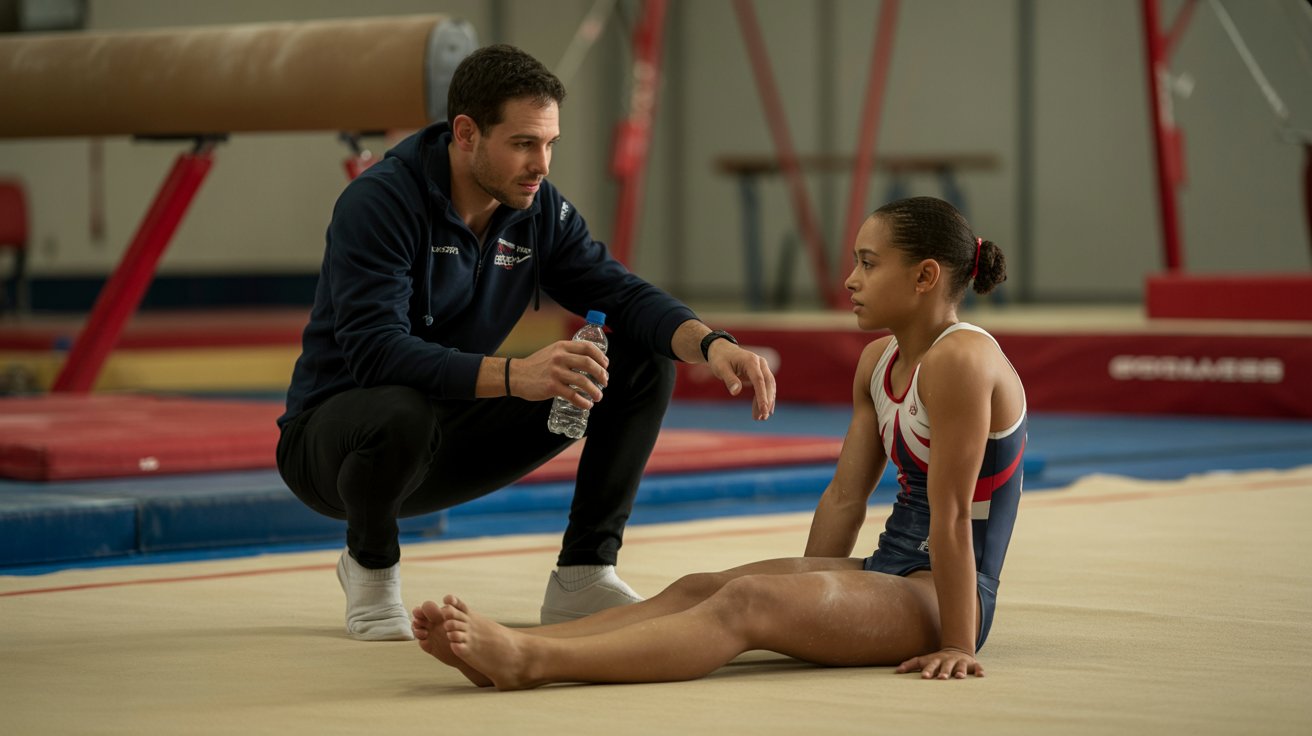
Yes, under specific conditions. But gymnastics itself is not the direct cause.
Overtraining Risks
Training without adequate recovery leads to stress fractures, hormonal changes, and joint problems. These issues can interfere with normal development. The problem is poor training management, not the sport itself.
Poor Nutrition
This is the most significant real risk factor. The National Institutes of Health links chronic caloric restriction in growing children to measurable growth delays, reduced bone density, and hormonal disruption. A young athlete who consistently under-eats will not grow properly. The sport doesn’t cause this. Inadequate food does.
Extreme Weight Pressure
Some gym environments push young athletes to stay as light as possible. That pressure leads to restricted eating.
The American Academy of Pediatrics has flagged this as a serious concern in youth sports, particularly in gymnastics. The harm comes from the culture around weight management, not from the physical training itself.
Signs a Young Gymnast May Not Be Growing Properly
If you notice any of the following, talk to a pediatrician right away.
- No increase in height for more than a year.
- Unexplained weight loss over several months.
- Frequent joint or bone pain that doesn’t resolve with rest.
- Persistent fatigue even outside of training sessions.
- Sudden changes in mood, energy, or appetite.
These signs don’t automatically mean gymnastics is the problem. But they’re worth investigating without delay.
How Coaches and Parents Protect Healthy Growth
Rest days are not optional. Good coaches build recovery into the weekly schedule the same way they plan skill work. No young athlete should train six or seven days in a row.
Growing kids need enough food to fuel both training and development. A sports dietitian can help build a plan that covers both. Protein, carbohydrates, healthy fats, and micronutrients all play a role in keeping a young gymnast growing on track.
Growth hormone is released during sleep. Young athletes need eight to ten hours a night. Cutting sleep undermines development in a very direct way.
Track your child’s height and weight over time. Regular pediatrician visits catch any growth delays early. If the growth curve flattens or drops, that’s worth investigating right away.
Benefits of Gymnastics for Growing Kids
When it’s run well, gymnastics actively supports healthy development. It builds strength, flexibility, coordination, and body awareness.
Young gymnasts often show better posture and stronger bones compared to kids who don’t play sports.
The focus and discipline the sport builds carries into school and daily life too.
Does gymnastics stunt your growth when done properly? No. It actually supports it.
At What Age Is Gymnastics Safe for Kids?
Recreational gymnastics is generally safe from around ages three to four.
Competitive training with high weekly volume is a different matter.
Most sports medicine professionals suggest starting structured competitive training between ages six and eight.
Matching training intensity to physical maturity is more important than age alone.
Conclusion
So, does gymnastics stunt your growth?
Research consistently shows that it does not permanently affect adult height.
Genetics control 80 to 90 percent of how tall a person grows, and most gymnasts reach exactly the height their family background predicts.
Temporary growth delays during intense training are real, but they typically resolve with proper nutrition, rest, and medical monitoring.
The real risks come from chronic undernutrition, overtraining, and gym cultures that prioritize weight over health.
Organizations like the American Academy of Pediatrics and the International Olympic Committee both confirm that well-managed sport participation supports, rather than limits, healthy development in young athletes.
Choose the right gym, the right coach, and the right support system.
Frequently Asked Questions
Does gymnastics stunt your growth permanently?
No. Research shows most gymnasts reach their genetically predicted adult height. Any growth delays during high-training periods are typically temporary and reverse with proper nutrition and recovery.
Why are Olympic gymnasts so short?
Selection bias plays the biggest role. Shorter athletes rotate faster, score higher technically, and tend to specialize earlier. The sport rewards that body type. It does not create it.
Can gymnastics affect growth plates in kids?
Intense training can stress growth plates, but this does not always lead to lasting damage. With adequate rest and nutrition, most young gymnasts grow through this phase without long-term effects.
Does tumbling stunt growth in young children?
Tumbling alone does not stunt growth. The real concerns are overall training volume, chronic undernutrition, and lack of recovery time across the full training program.
What age is best to start competitive gymnastics?
Most sports medicine experts suggest starting competitive training around ages six to eight. Beginning high-volume training too early adds unnecessary stress on a body that is still developing rapidly.


