Push-ups are one of the best bodyweight exercises you can do. But at some point, the standard version stops being enough. That's where the deficit push up comes in.
In this article, I'll cover what a deficit push up is, how it works, which muscles it targets, and how to do it safely.
I've worked with bodyweight training long enough to know that small changes in setup can make a big difference in results.
If you want more chest depth, better shoulder stability, and stronger upper-body control, you're in the right place. Let me show you exactly what this movement can do.
Understanding Deficit Push Ups

A standard push-up has a fixed range of motion. Your chest touches the floor and you push back up. That's it.
A deficit push up changes that. By raising your hands on a surface, your chest can drop below the level of your hands. This creates a deeper stretch and forces your muscles to work harder through a wider range.
The word "deficit" means a gap or shortfall. In this case, it refers to the gap between your chest and the floor. The bigger the gap, the harder the movement.
This simple change in setup is what makes the deficit version more demanding and more effective.
What Is a Deficit Push Up?

Take your push-up deeper and make every rep work harder for your chest and shoulders.
Simple Definition
A deficit push up is a push-up where your hands are placed on raised surfaces. This lets your chest drop lower than usual during each rep.
How the Setup Creates a Deficit
When your hands are uplifted, your chest can move past the level of your hands on the way down. This extra depth is the "deficit." It increases the stretch on your chest at the bottom of the movement.
Equipment Used
You don't need anything fancy. Common options include
- Dumbbells
- Push-up handles
- Weight plates
- Yoga blocks
- Kettlebells
Any stable surface that raises your hands by 3 to 6 inches works well.
Why It Increases Difficulty and Muscle Tension
More range of motion means your muscles spend more time under tension. That extra stretch at the bottom is harder to control and requires more strength to push out of.
This is why even strong people find deficit push-ups challenging.
How Deficit Push Ups Work (Mechanics Explained)
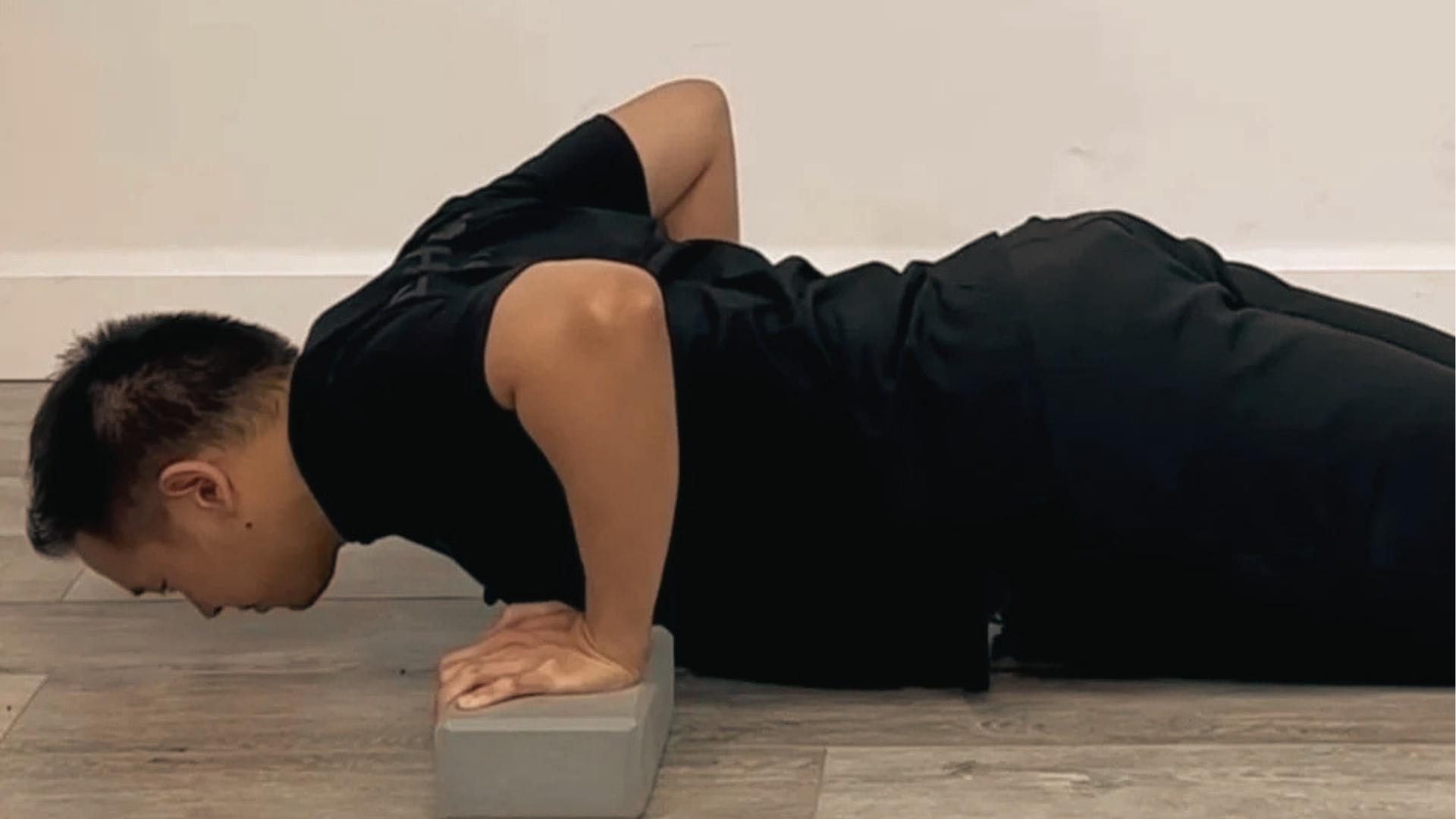
The mechanics behind the movement and why each phase matters.
Increased Range of Motion and Deeper Stretch
In a normal push-up, your chest stops at the floor. In the deficit version, it keeps going.
This extra depth creates a strong stretch in the chest and shoulders that you simply can't get from the floor.
Stronger Chest Activation in the Lowering Phase
The lowering phase, also called the eccentric phase, is where most muscle damage and growth happen.
Going deeper means your chest stays under load for longer, which leads to better muscle activation overall.
Shoulder Stability and Scapular Control Demands
At the bottom of a deep deficit push-up, your shoulders need to stay stable. Your shoulder blades must move properly to support the position.
This trains the muscles around your shoulder joint in a way standard push-ups often miss.
Controlled Eccentric and Powerful Push Phase
The key to this movement is control on the way down and power on the way up. Dropping fast and bouncing back up defeats the purpose.
A slow lower and a strong press makes each rep count.
Muscles Worked in Deficit Push Ups
This movement targets more muscles than you might expect from a single exercise.
Chest (Primary Muscle Group)

The pectoralis major is the main muscle here. The deeper stretch at the bottom increases the range over which this muscle works, leading to greater activation compared to a standard push-up.
Shoulders and Deltoids

Your front deltoids assist with the pressing motion. The extra depth also places more demand on shoulder stability throughout the entire rep.
Triceps Engagement

Your triceps work hard during the push phase. As you press back up from the low position, they help extend your arms fully at the top.
Core Stabilization

Your core has to stay tight the whole time. A soft midsection will cause your hips to sag, which throws off your alignment and reduces the effectiveness of the movement.
Upper Back and Stabilizer Muscles

Your rhomboids and the muscles around your shoulder blades work to control scapular movement. These are often overlooked but play a big role in shoulder health and posture.
Variations of Deficit Push Ups
Different setups allow you to adjust difficulty and focus based on your training level.
Dumbbell Deficit Push Up (Most Common)

This is the most popular version. Place two dumbbells shoulder-width apart and grip them as you perform your push-up. The handles also allow a neutral grip, which can reduce wrist strain.
Plate or Block Uplifted Push Up

Weight plates or wooden blocks work well for beginners. They provide a stable surface and allow you to control how much deficit you start with.
Deep Range vs Small Deficit Comparison

A small deficit of 2 to 3 inches is good for beginners. A deeper deficit of 5 to 6 inches is better suited for those with strong shoulder stability and chest strength. Start small and increase slowly.
Benefits of Deficit Push Ups

Four strong reasons to add this variation to your training routine.
Increased Chest Muscle Growth and Activation
The deeper stretch and longer time under tension make this one of the best bodyweight moves for chest development. You'll feel more muscle engagement per rep than with standard push-ups.
Improved Shoulder Strength and Stability
The demand on your deltoids and scapular muscles builds the kind of stability that carries over into pressing movements like bench press and overhead press.
Better Mobility Through Full Range of Motion
Regularly training through a full range of motion improves how your shoulders and chest move over time. This can reduce tightness and improve overall upper-body flexibility.
Improved Core Control and Full-Body Tension
Holding a strong body position through a deeper rep teaches your core to stay braced under pressure. This kind of tension control is useful in almost every other exercise you do.
Tips to Perform Deficit Push Ups Safely
Small adjustments to form can prevent injury and improve your results.
- Start with a 2 to 3 inch elevation and increase only when your form is clean.
- Keep your body in a straight line from head to heels on every rep.
- Squeeze your core and glutes before you begin each set.
- Lower yourself slowly over 2 to 3 seconds and press back up with control.
- Focus on clean reps first and add more volume only after your form is solid.
- Increase the deficit height gradually and give your shoulders time to adjust.
Conclusion
The deficit push up is a small change with a real impact. I started adding it into my own routine when standard push-ups stopped feeling like enough, and the difference in chest soreness and shoulder strength was noticeable within weeks.
If you've been looking to get more out of your bodyweight training, this move is worth trying. Start small, stay controlled, and build up over time.
Have you tried deficit push-ups before? Drop a comment below and share your experience. And if this helped, feel free to share it with someone working on their upper-body strength.
Frequently Asked Questions
How deep should the deficit be for beginners?
Start with a 2 to 3 inch elevation. This is enough to increase the range of motion without putting too much strain on your shoulders right away.
Can deficit push-ups replace bench press?
They're not a direct replacement, but they do train similar muscles. Deficit push-ups are great for chest and shoulder work, especially when gym equipment isn't available.
How many reps should I do for deficit push-ups?
Aim for 3 to 4 sets of 8 to 12 reps with clean form. Focus on slow control rather than hitting a high rep count quickly.
Are deficit push-ups bad for the shoulders?
When done correctly, they're safe. Problems usually come from going too deep too soon or using poor shoulder alignment. Start light and build up gradually.
What is the best equipment for deficit push-ups at home?
Dumbbells are the most practical option at home. Push-up handles and yoga blocks also work well and are easy to store.