If you've been skipping chest day, you're not alone. Most women focus on legs or glutes and leave their chest muscles behind. But training your chest can improve your posture, boost upper-body strength, and help you feel stronger in daily life.
This article covers 21 chest exercises that actually work for women, from beginner-friendly push-ups to dumbbell and cable moves.
I've trained with these exercises myself and seen real results. You'll also get simple workout routines, tips on form and frequency, and answers to the most common questions.
Let's get into it.
Why Women Should Train Their Chest
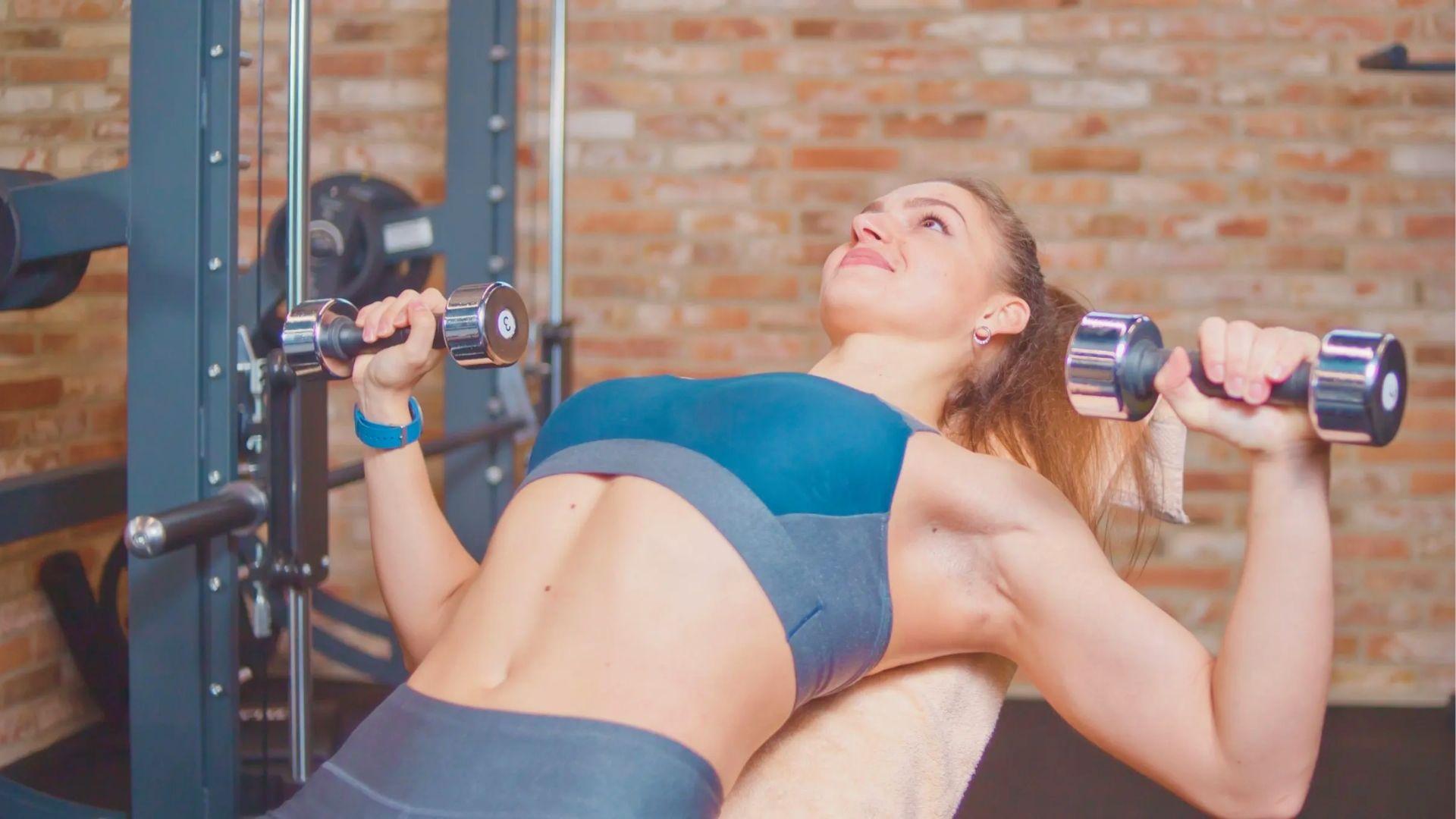
Chest training isn't just for bodybuilders. It helps you move better, stand taller, and feel stronger in daily life.
Strong chest muscles support your shoulders and arms. They make pushing, lifting, and carrying things easier. They also improve your posture by balancing the muscles around your shoulder joint, which reduces neck and back tension over time.
Skipping chest work creates muscle imbalances. This can lead to poor movement patterns and injury.
Training it adds definition to your upper body and makes everyday tasks like opening doors or lifting bags feel much less tiring.
Chest Muscles Explained
Knowing which muscles you're working helps you train smarter and get better results.
Pectoralis Major
This is the large, fan-shaped muscle that covers most of your chest.
It has two parts:the clavicular head (upper chest) and the sternal head (lower chest).
The pectoralis major does most of the work in pressing and fly movements. It brings your arms forward and across your body.
Training both the upper and lower portions gives your chest a full, balanced look.
Pectoralis Minor
This small muscle sits underneath the pectoralis major. It connects your ribs to your shoulder blade. It helps stabilize your shoulder and assists in pulling the shoulder blade forward and down.
You don't train it directly. But exercises like push-ups and chest presses do work it as a supporting muscle.
Supporting Muscles Used During Chest Exercises
Chest exercises don't just work your chest. Several other muscles assist during every rep.
These include:
- Anterior deltoids (front of shoulders)
- Triceps (back of upper arm)
- Serratus anterior (along the sides of your ribs)
- Core muscles (for stability in push-up variations)
Understanding this helps explain why chest day also tires out your shoulders and arms.
Tips Before Starting Chest Exercises
A few simple habits before you train can make a real difference in your results and keep injuries away.
- Warm up for 5 to 10 minutes before training. Try arm circles, band pull-aparts, or light incline push-ups to get blood flowing into your chest and shoulders before heavier work.
- Practice form before adding weight. Start with bodyweight or very light dumbbells, keep your shoulder blades pulled back, and breathe out on the press and in on the return.
- Pick a weight that challenges your last 2 to 3 reps. If every rep feels easy, go heavier. For strength, use heavier weights with fewer reps. For tone, use moderate weight with higher reps.
- Don't rush through your reps or flare your elbows wide. A 2-second lowering phase builds more muscle, and keeping elbows at a slight angle protects your shoulder joints from unnecessary stress.
- Use a full range of motion and mix up your angles. Partial reps limit growth, and sticking to only flat pressing misses parts of your chest. Add incline, decline, and fly movements for full chest development.
21 Chest Exercises for Women That Actually Work
Here are 21 of the best chest exercises for women, broken down by movement type.
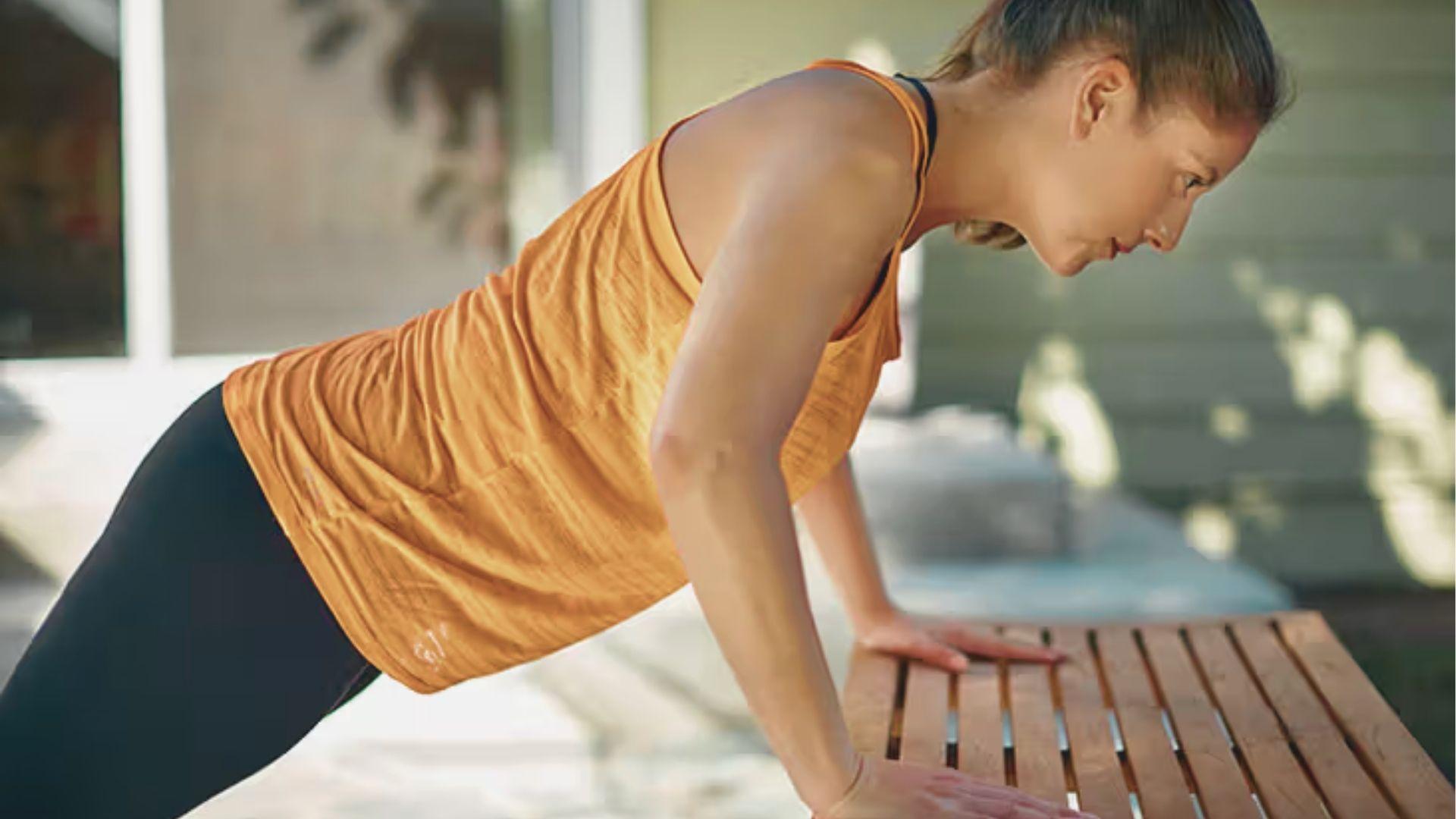
1. Incline Push-Up
Muscles worked: Upper chest, shoulders, triceps
Place your hands on a bench, step, or wall. Your body should form a straight line from head to heels. Lower your chest toward the surface, then push back up.
Why it works: This is the easiest push-up variation. It's perfect for beginners building upper chest strength and learning proper push-up mechanics.
Reps: 3 sets of 10 to 15
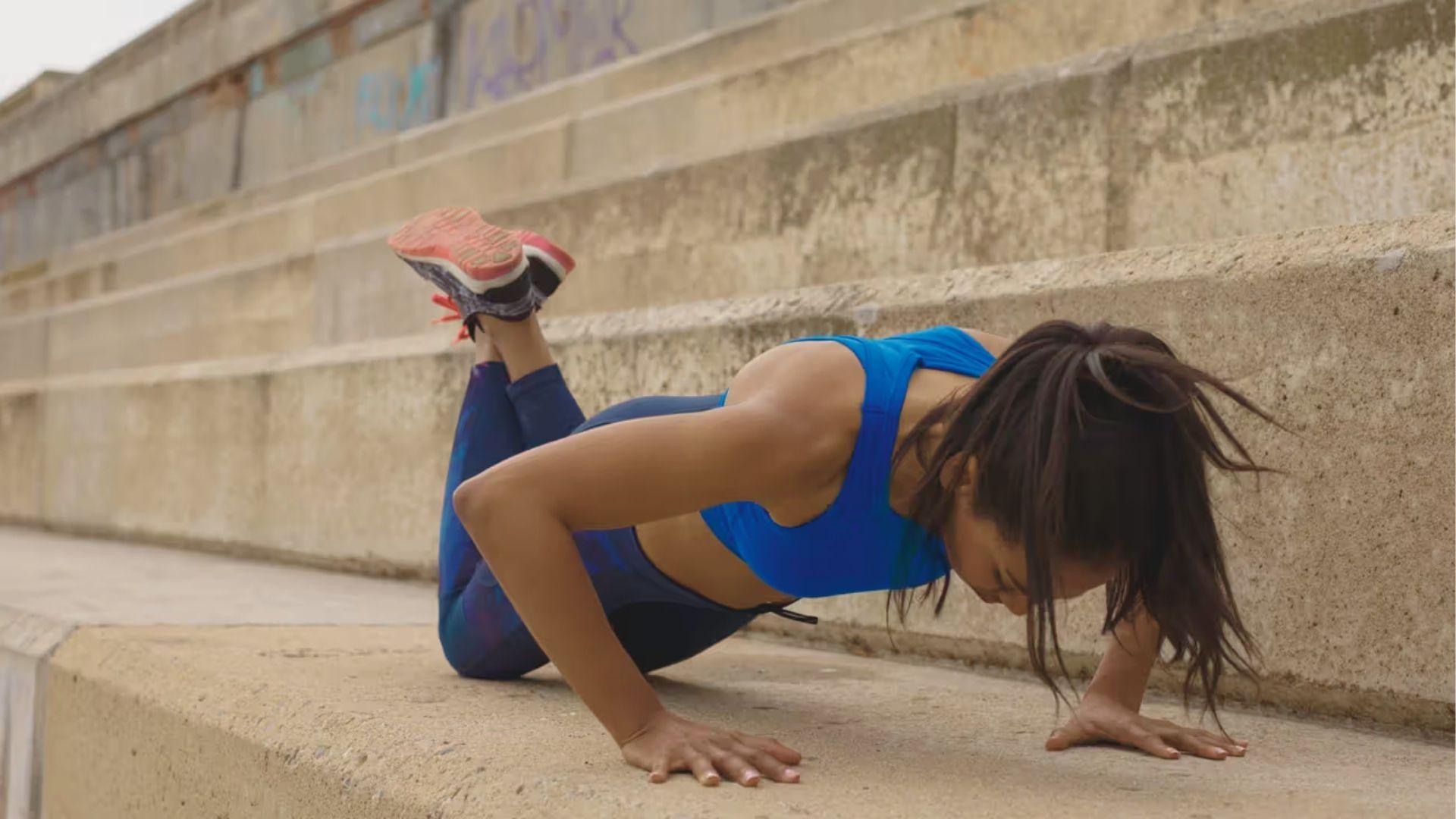
2. Knee Push-Up
Muscles worked: Chest, shoulders, triceps
Start in a push-up position but drop your knees to the floor. Keep your hips down and your body in a straight line from knees to shoulders. Lower your chest to the floor and push back up.
Why it works: It reduces the load compared to a full push-up while still building chest strength. Great for beginners or those returning after a break.
Reps: 3 sets of 10 to 15
3. Standard Push-Up
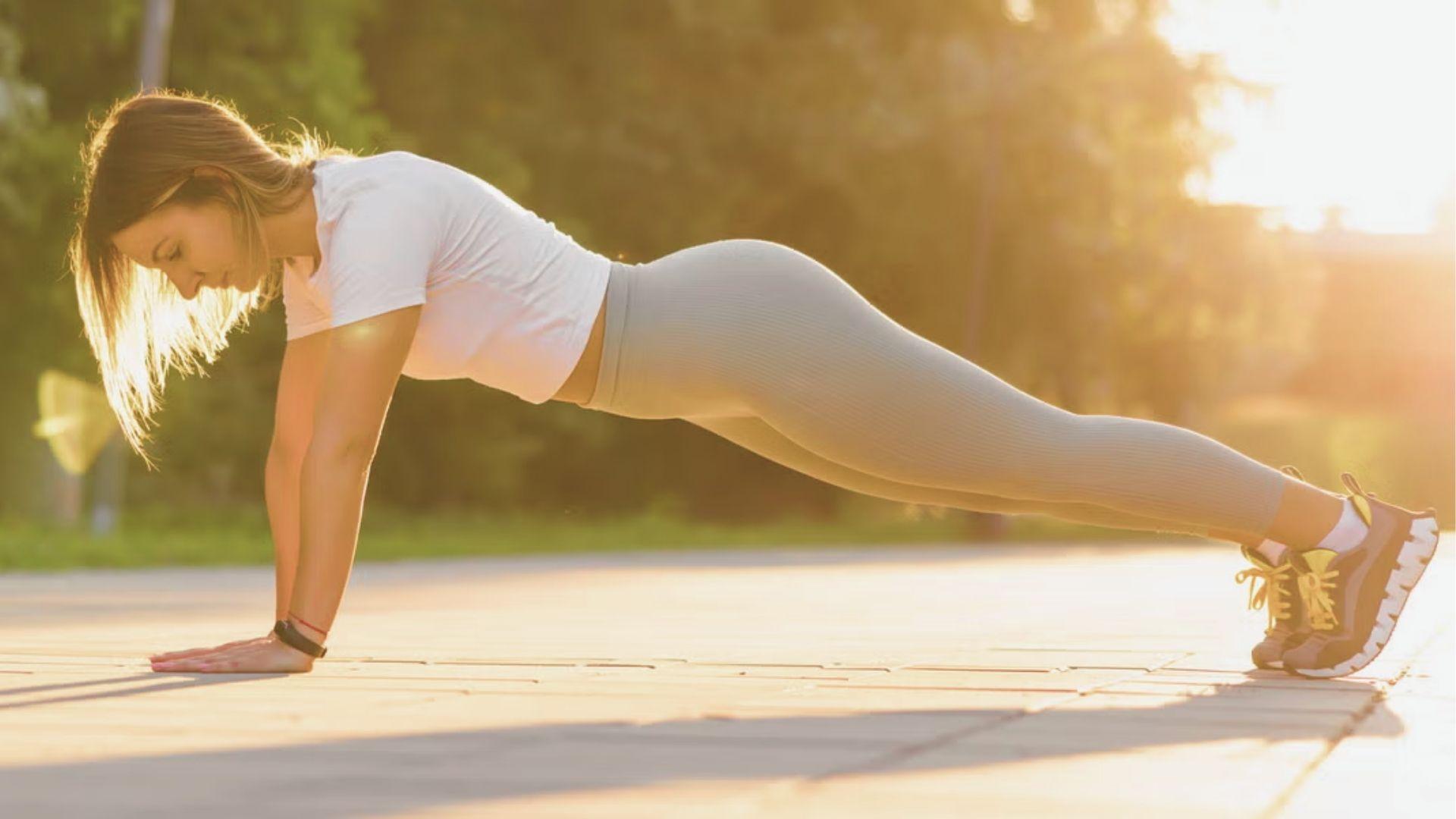
Muscles worked: Chest, shoulders, triceps, core
Hands slightly wider than shoulder-width. Body in a straight line from head to heels. Lower your chest to the floor with control. Push back up fully.
Why it works: One of the most effective bodyweight chest exercises. It builds real strength because it also requires core stability.
Reps: 3 sets of 8 to 15
4. Wide Push-Up
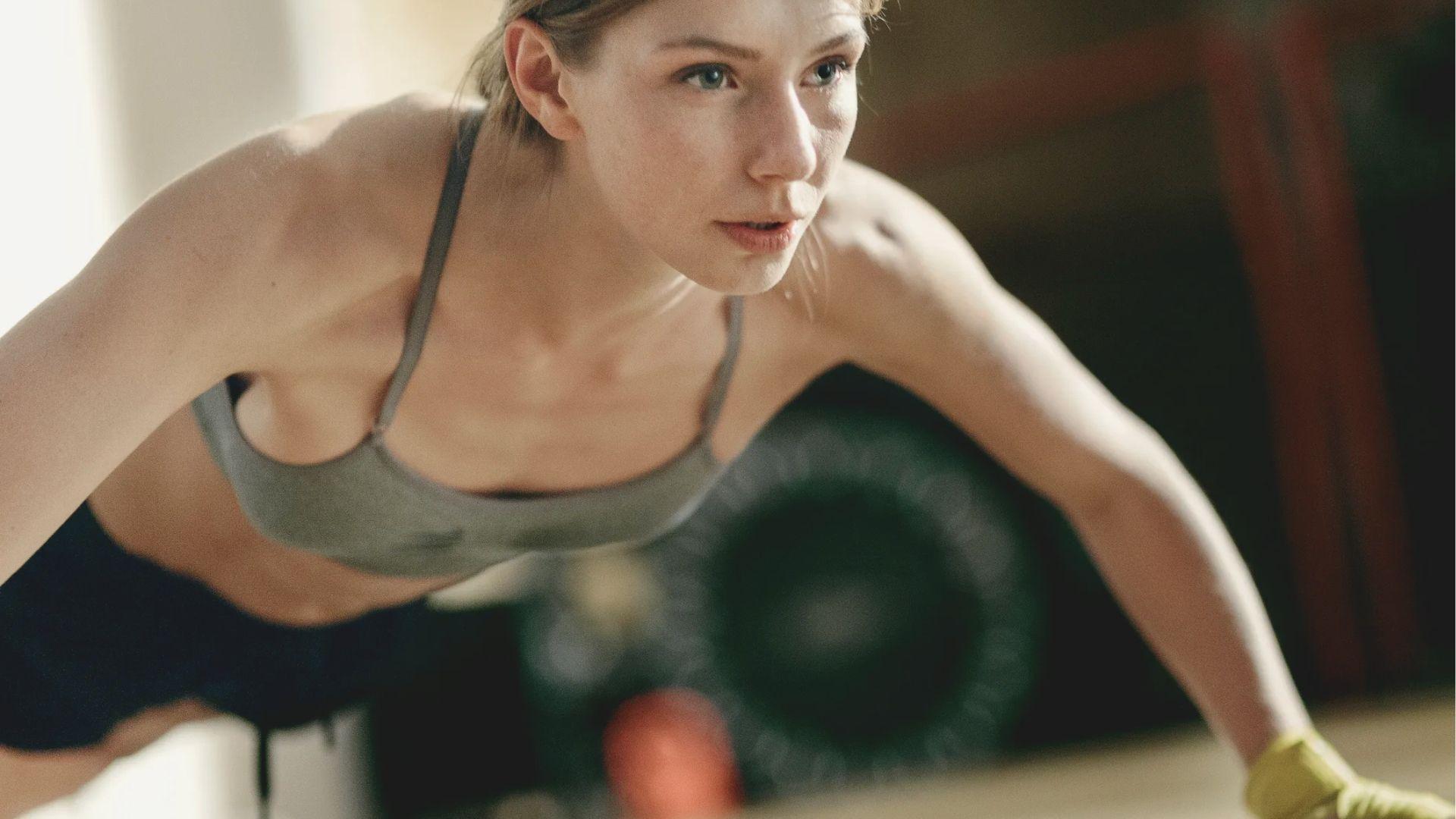
Muscles worked: Outer chest, shoulders
Same as a standard push-up but with hands placed wider than shoulder-width. This shifts more of the work to the outer portion of the chest.
Why it works: It targets the chest differently than a standard push-up and adds variety to your training. Good for building width across the chest.
Reps: 3 sets of 8 to 12
5. Decline Push-Up
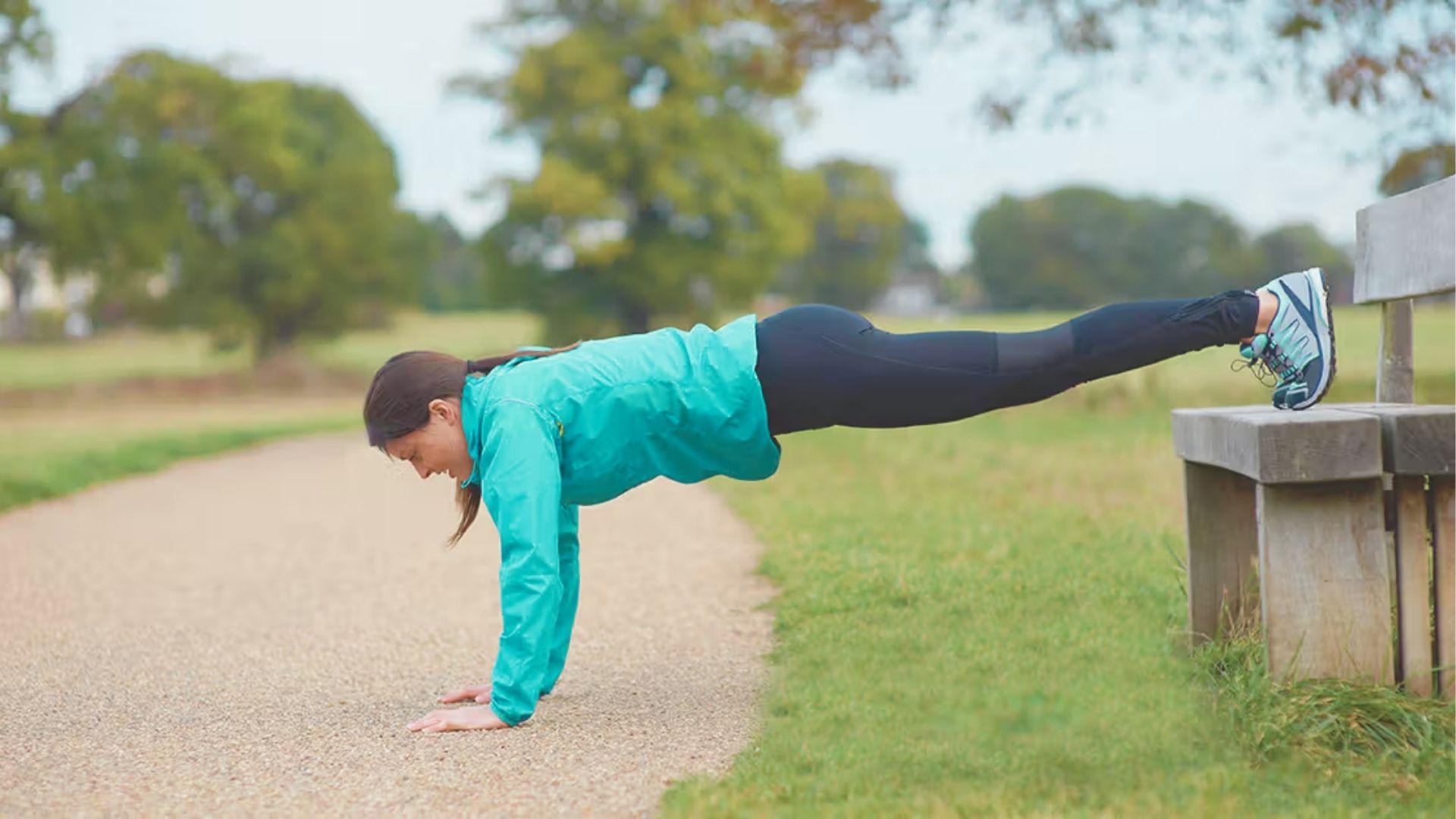
Muscles worked: Upper chest, anterior deltoids
Place your feet on a raised surface like a bench or step. Hands are on the floor. Perform a push-up from this uplifted foot position.
Why it works: The decline angle shifts more load to the upper chest and front of the shoulder. It's a good progression after mastering the standard push-up.
Reps: 3 sets of 8 to 12
6. Dumbbell Chest Press
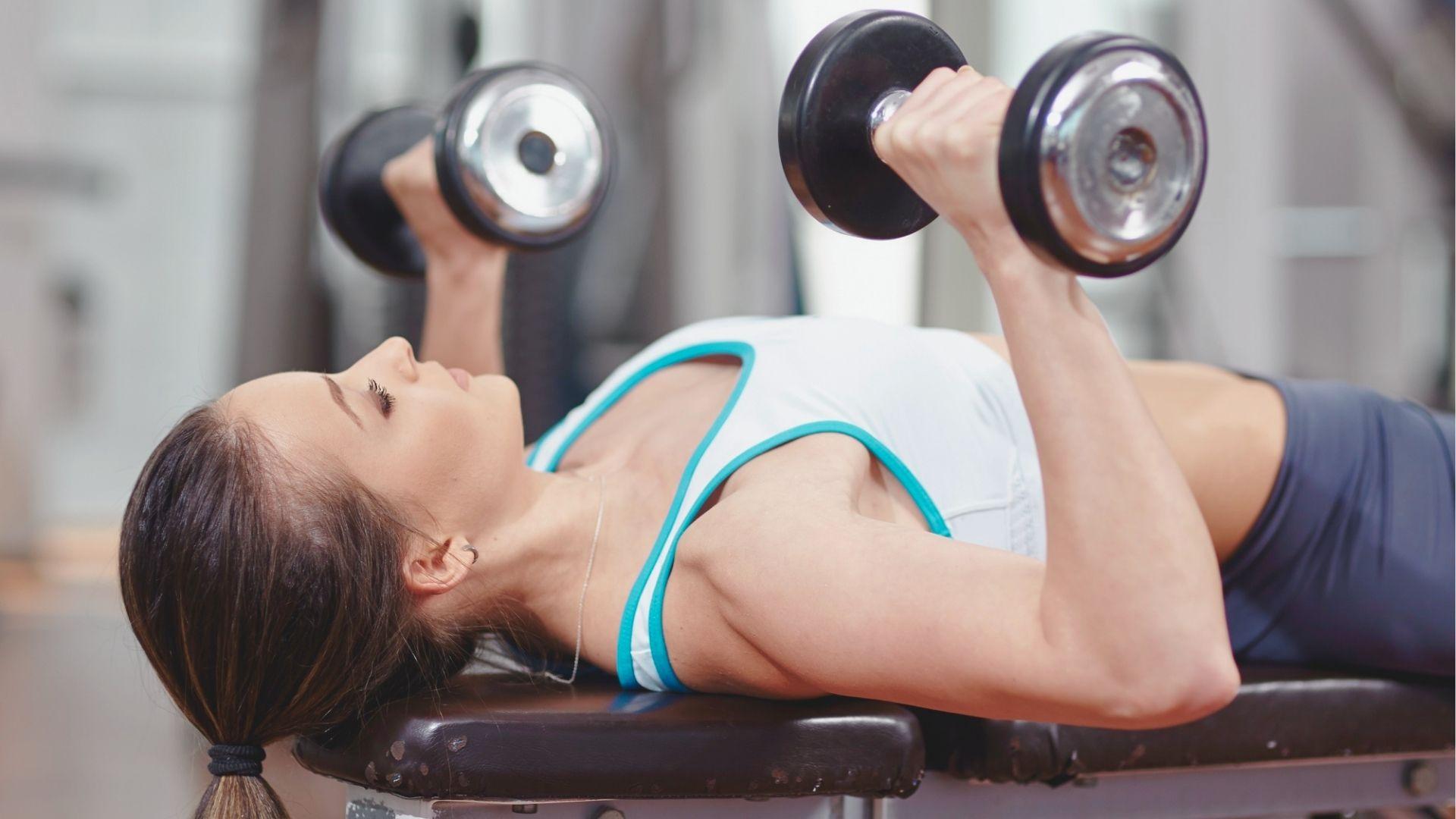
Muscles worked: Chest, triceps, shoulders
Lie on a flat bench with a dumbbell in each hand. Hold them at chest level with palms facing forward. Press them straight up, then lower with control.
Why it works: A core chest exercise. You can adjust the weight easily, making it suitable for all fitness levels. It builds chest thickness.
Reps: 3 to 4 sets of 8 to 12
7. Incline Dumbbell Press
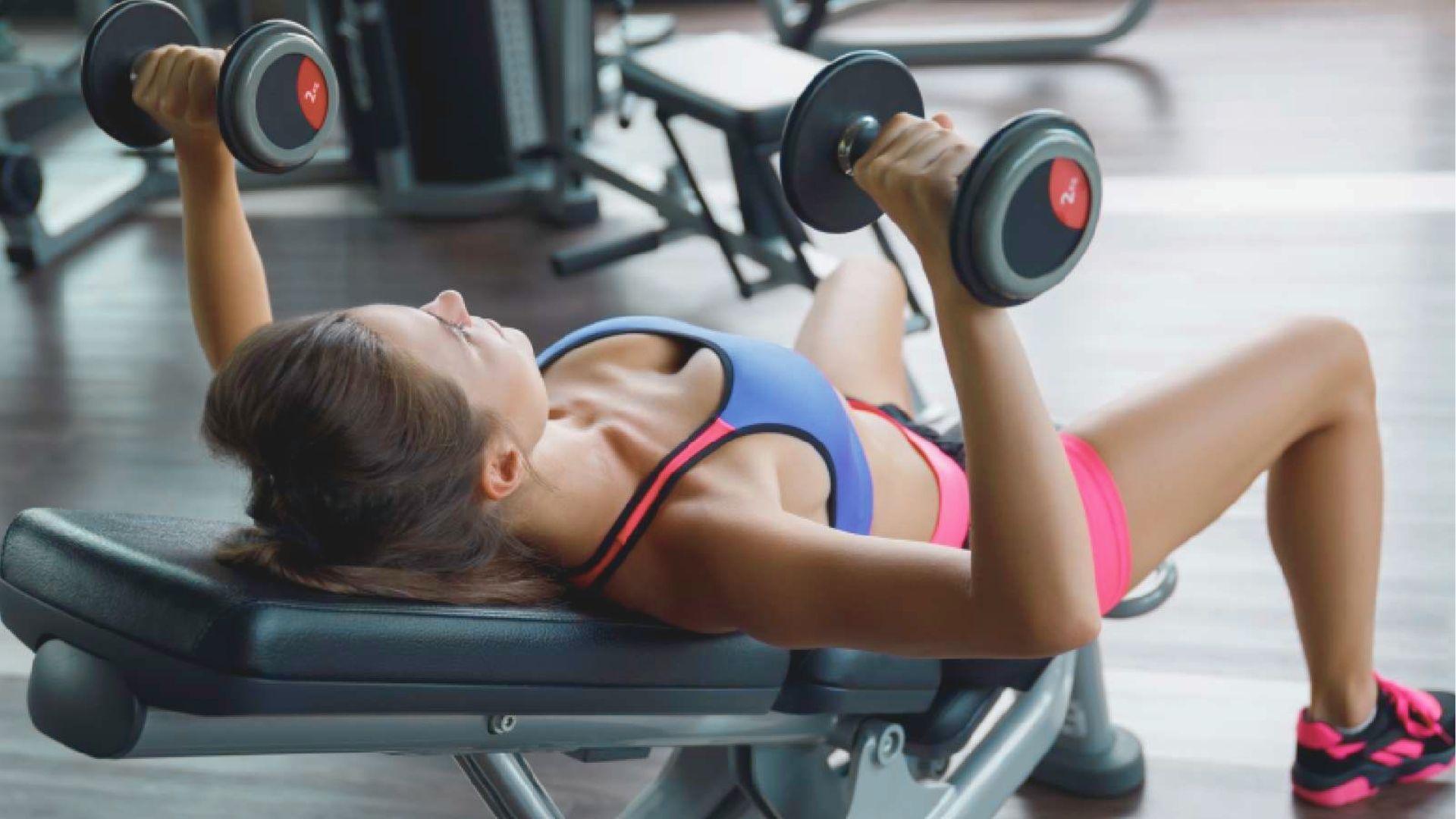
Muscles worked: Upper chest, front shoulders
Set a bench to a 30 to 45 degree incline. Lie back and press dumbbells up from chest level. Keep your back flat against the bench.
Why it works: The incline angle targets the upper chest, which many women underdevelop. Including this in your routine creates a more balanced chest.
Reps: 3 sets of 8 to 12
8. Close-Grip Chest Press
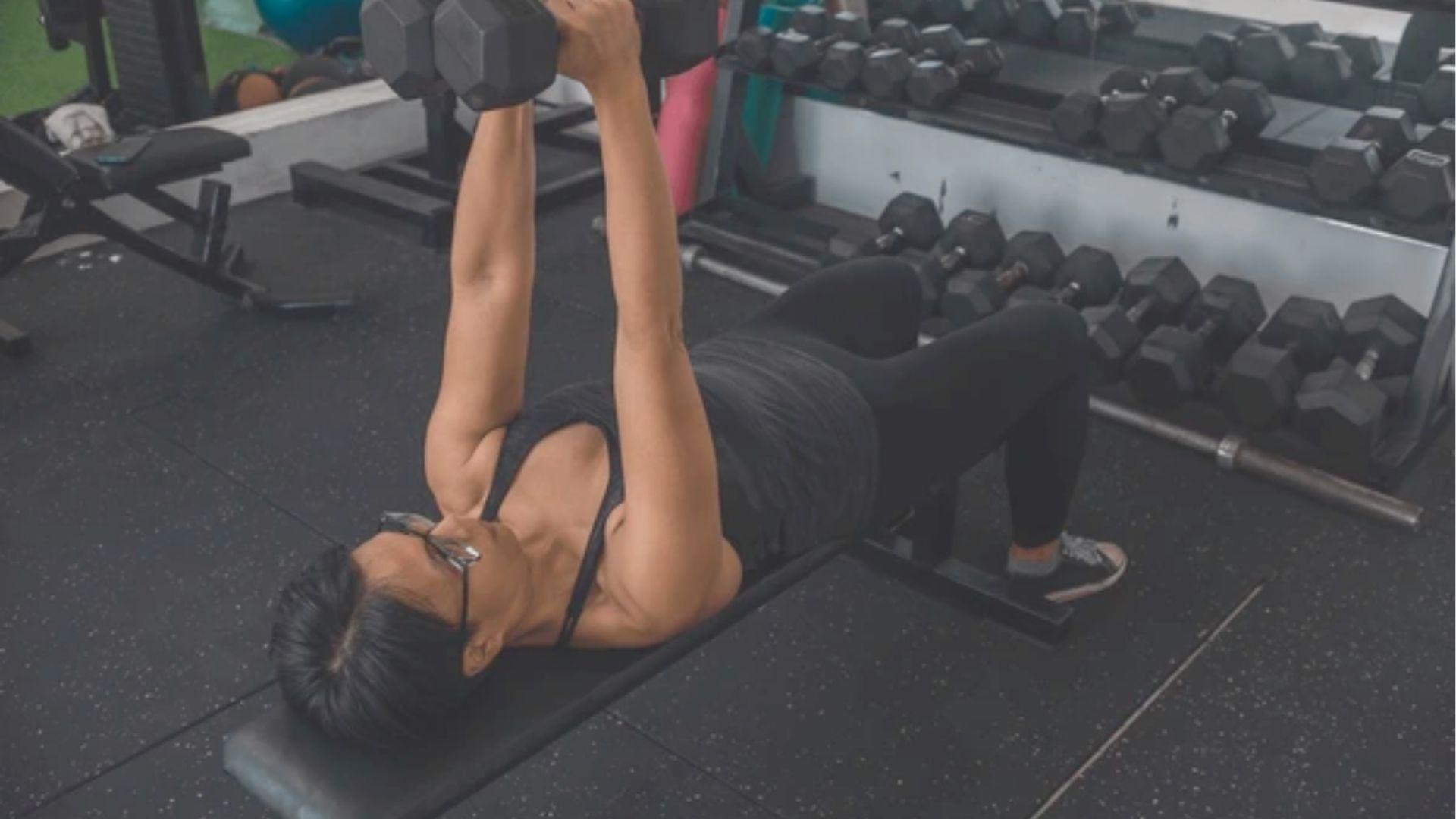
Muscles worked: Inner chest, triceps
Lie flat with dumbbells held close together above your chest. Press up and bring the dumbbells toward each other at the top. Lower with control.
Why it works: The close grip shifts emphasis to the inner chest and triceps. It adds definition to the center of the chest.
Reps: 3 sets of 10 to 12
9. Dumbbell Floor Press
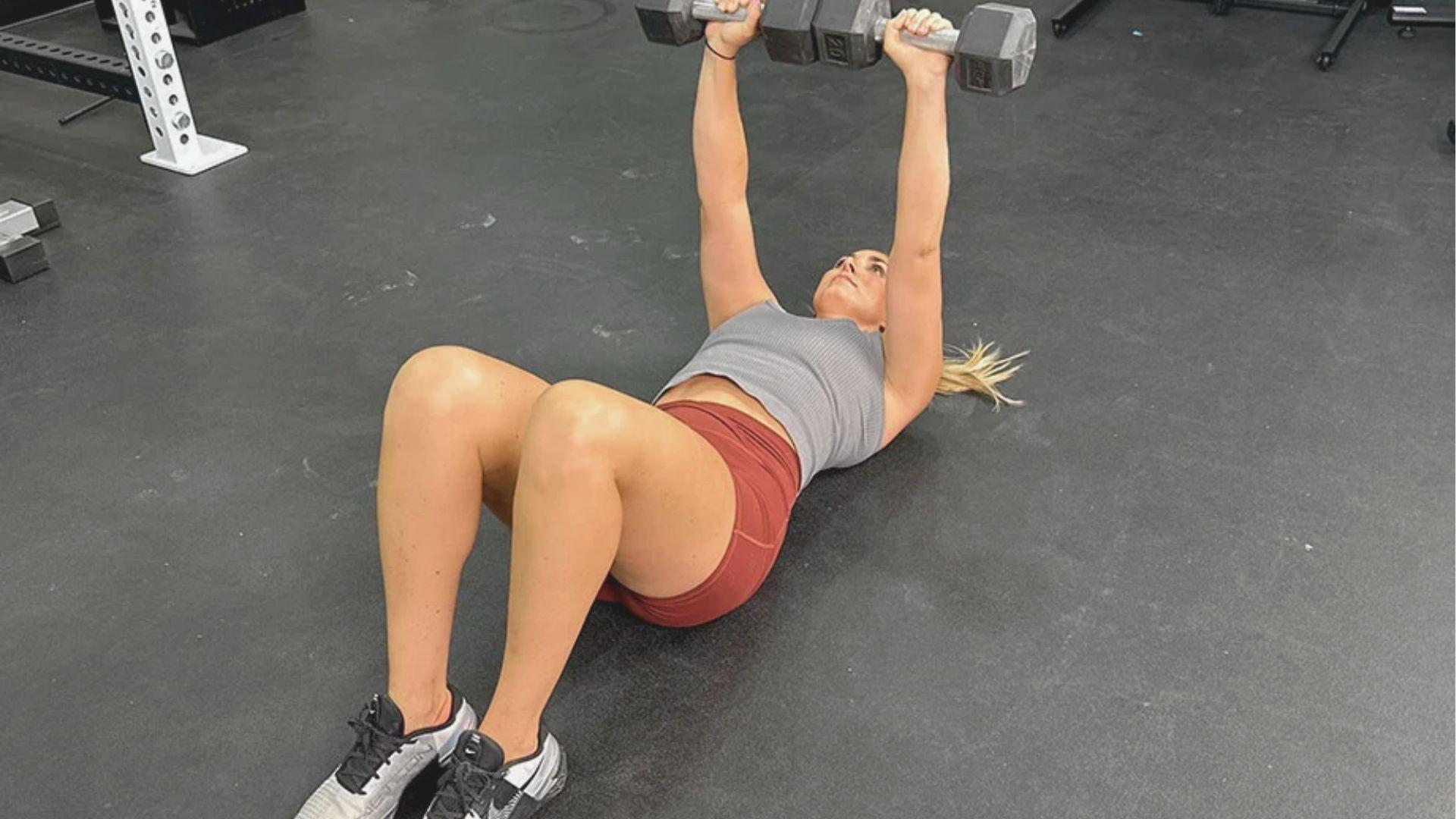
Muscles worked: Chest, triceps
Lie flat on the floor with a dumbbell in each hand. Press up from chest level, stop when elbows touch the floor on the way down. This limits the range of motion intentionally.
Why it works: The floor removes the bottom portion of the range, reducing shoulder stress. It's great for those with shoulder discomfort during bench presses.
Reps: 3 sets of 10 to 12
10. Chest Fly
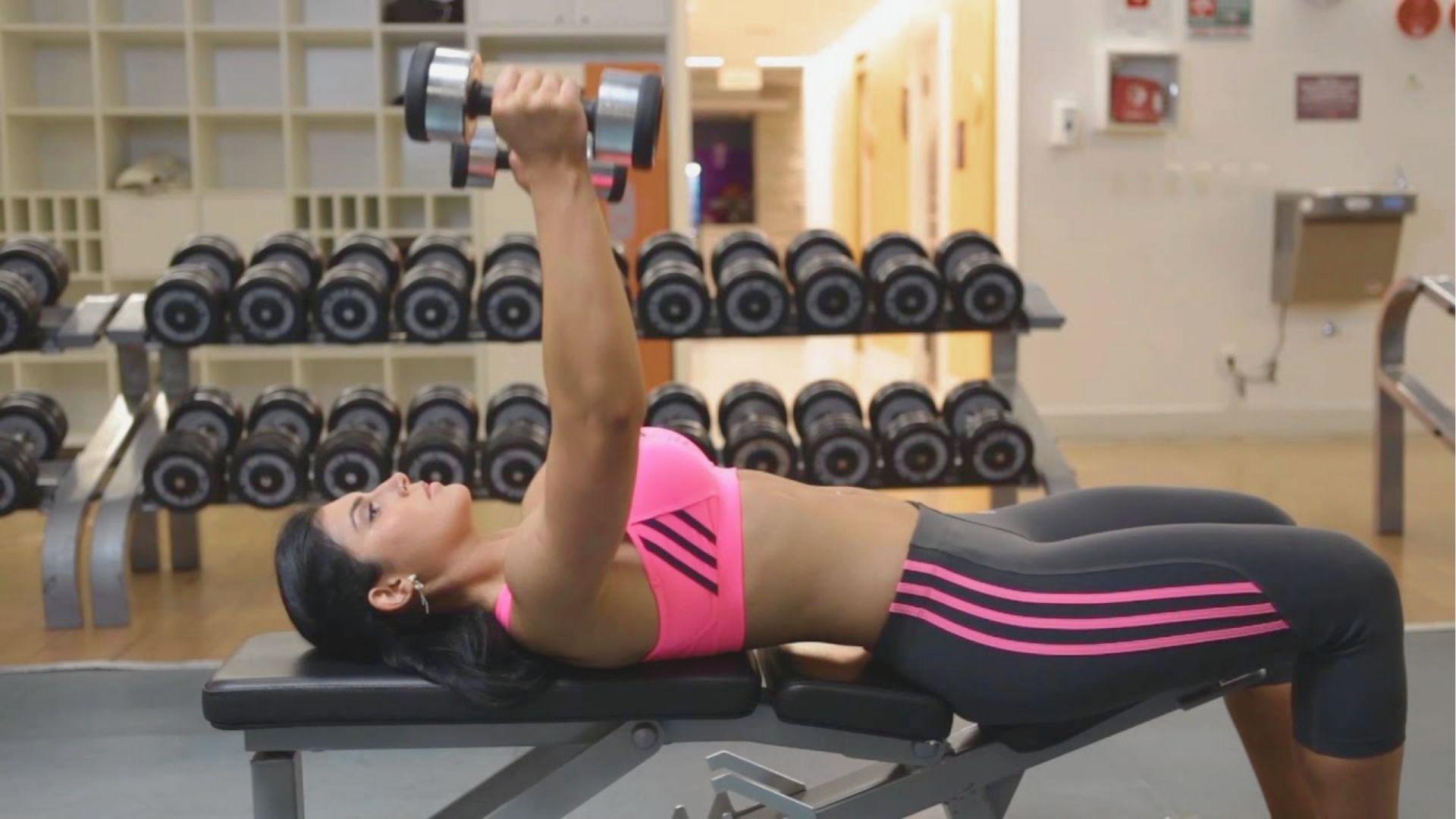
Muscles worked: Chest, front shoulders
Lie flat on a bench. Hold dumbbells above your chest with a slight bend in your elbows. Lower your arms out to the sides in a wide arc, then bring them back together.
Why it works: The fly movement stretches the chest in a way pressing movements don't. This stretch activates more muscle fibers and adds fullness to the chest.
Reps: 3 sets of 10 to 15
11. Incline Chest Fly
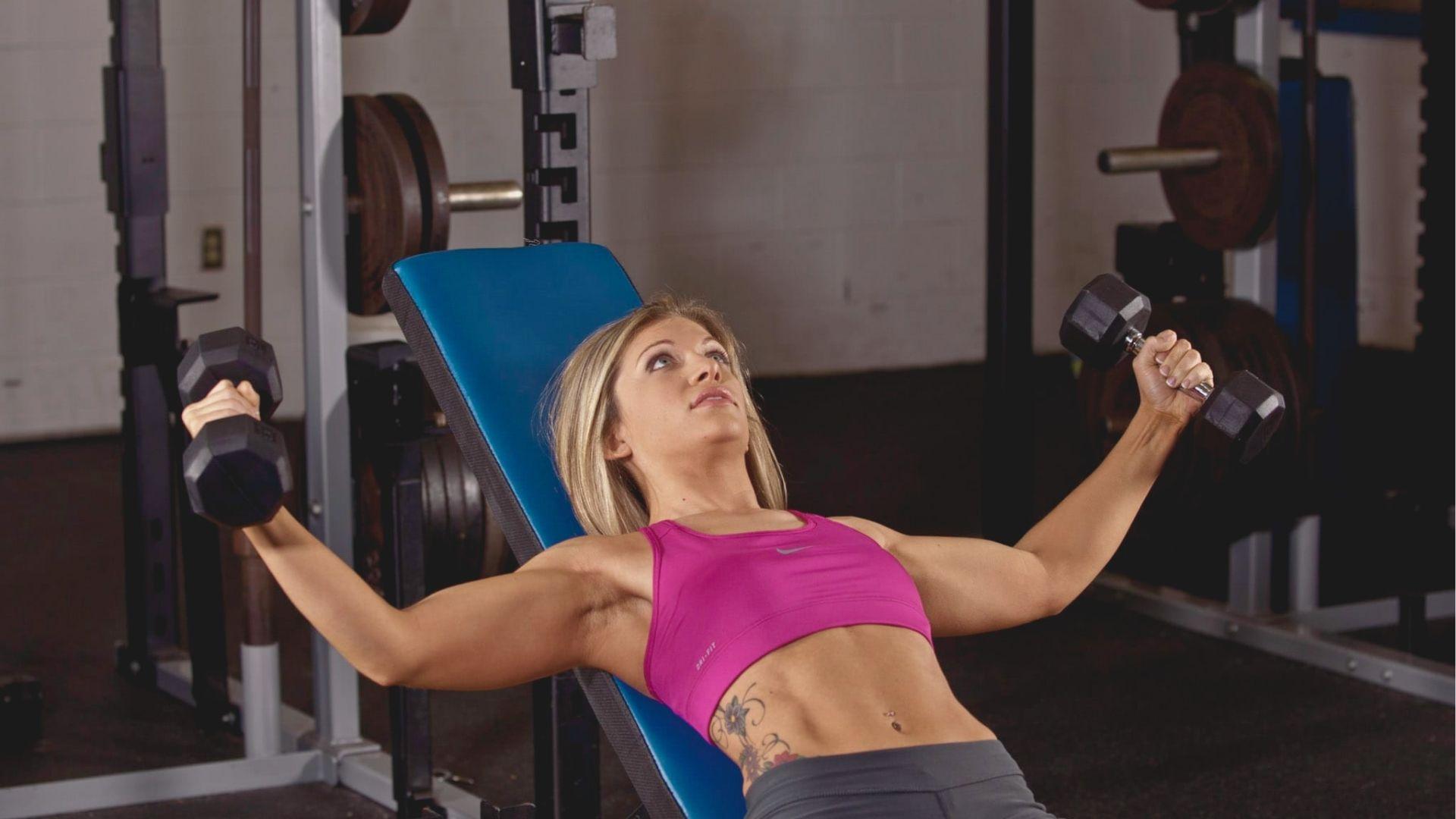
Muscles worked: Upper chest
Same as the flat chest fly but performed on an incline bench set to 30 to 45 degrees.
Why it works: This targets the upper chest specifically. Pairing it with flat fly work gives you full chest coverage.
Reps: 3 sets of 10 to 12
12. Cable Chest Fly
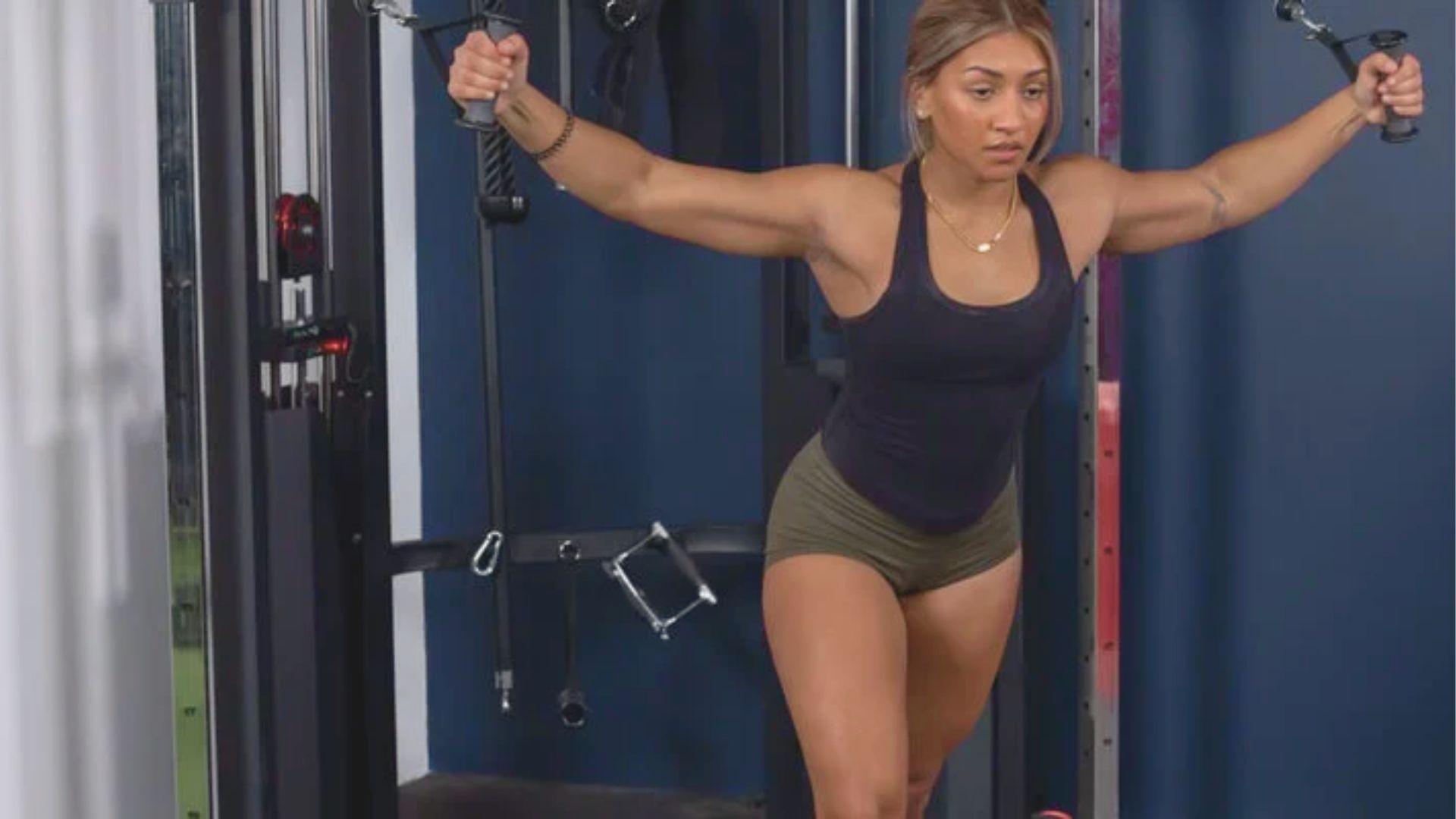
Muscles worked: Chest (full)
Stand in the center of a cable machine. Set the pulleys at shoulder height. Grab the handles with arms slightly bent. Bring your hands together in front of your chest in a hugging motion.
Why it works: Cables keep constant tension on the chest throughout the entire movement. This is more effective than dumbbells for muscle activation in the fly pattern.
Reps: 3 sets of 12 to 15
13. Low Cable Chest Fly
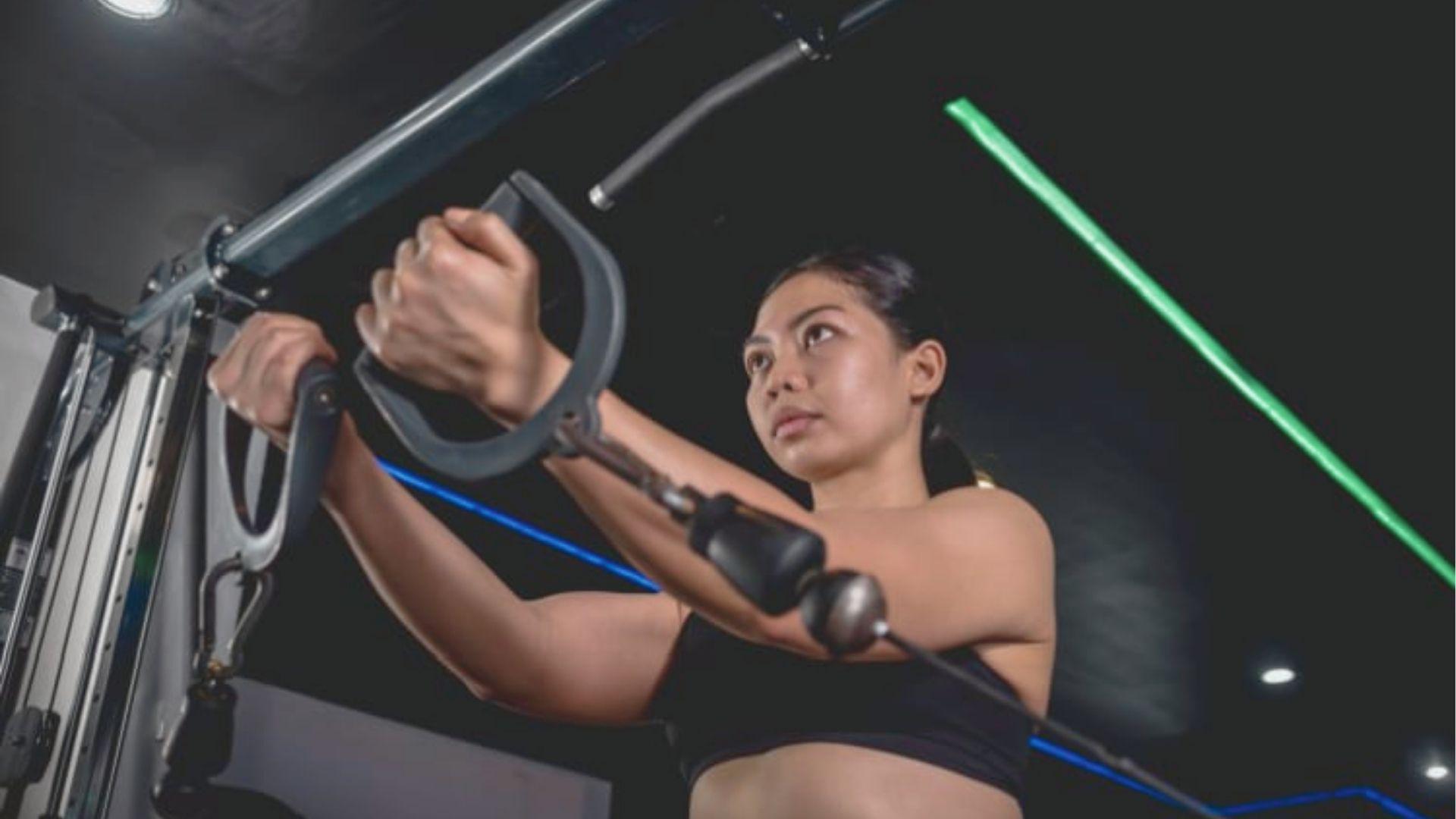
Muscles worked: Upper chest
Set cable pulleys near the floor. Pull the handles upward and together in front of your upper chest.
Why it works: This is one of the best exercises for the upper chest. The upward angle matches the fiber direction of the clavicular head of the pectoralis major.
Reps: 3 sets of 12 to 15
14. Resistance Band Chest Press
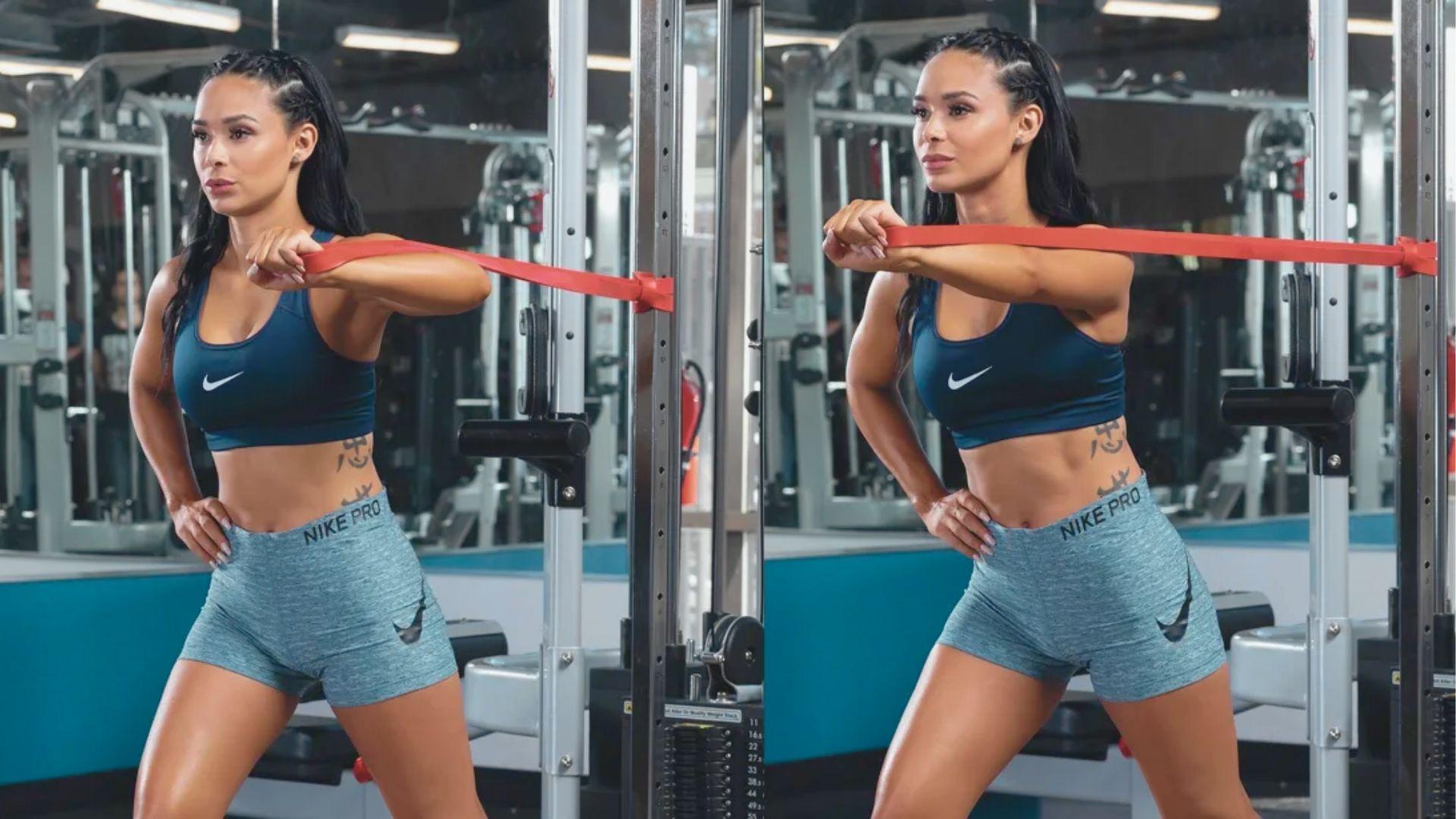
Muscles worked: Chest, triceps, shoulders
Loop a resistance band behind your back and hold the ends. Press forward from chest height until your arms are nearly straight. Return with control.
Why it works: Perfect for home workouts. Bands add resistance that increases as you extend, which challenges the chest differently than free weights.
Reps: 3 sets of 12 to 15
15. Resistance Band Chest Fly
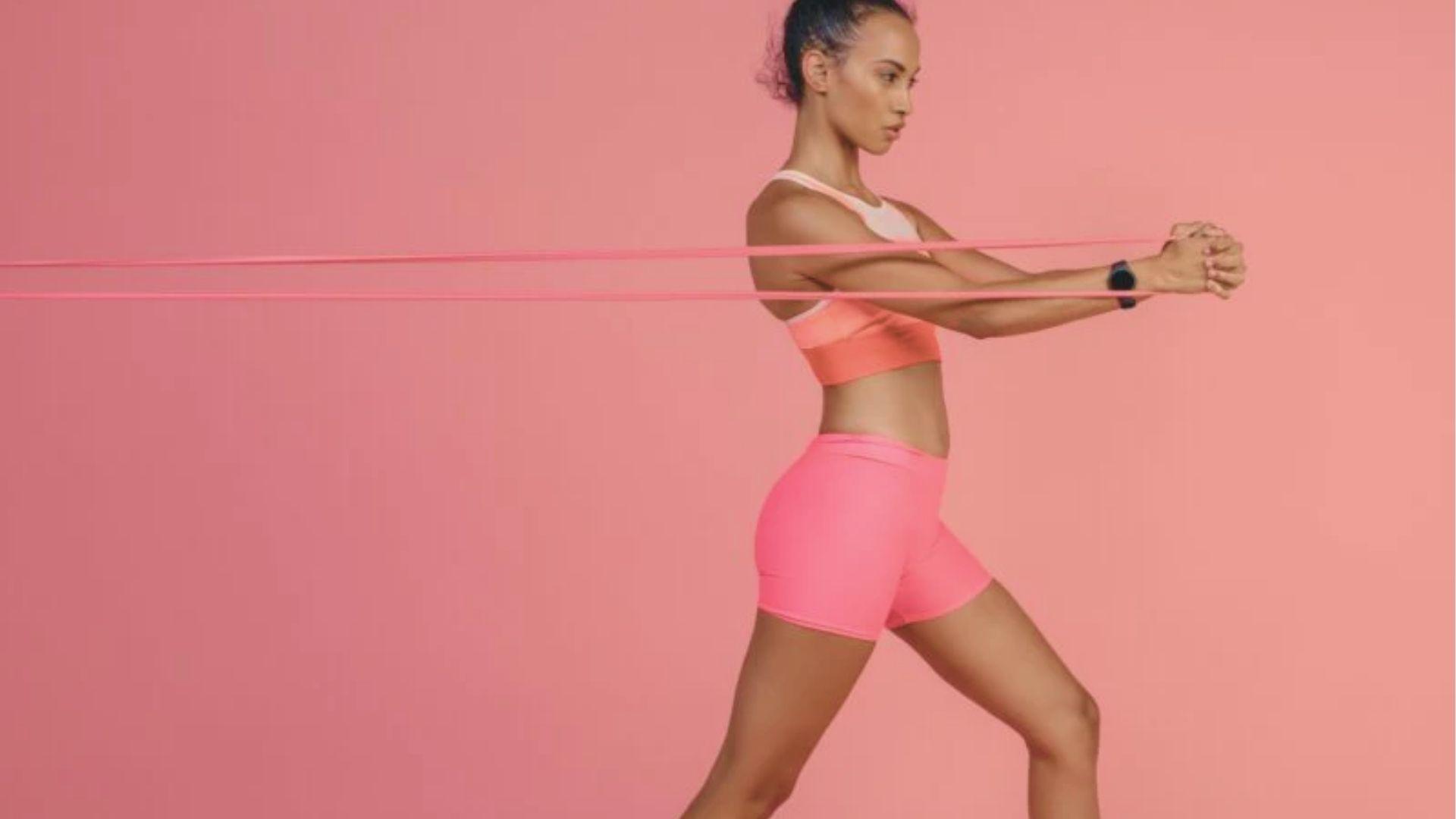
Muscles worked: Chest
Anchor the band behind you at chest height. Hold an end in each hand. Bring both hands forward and together, like a hugging motion, then return.
Why it works: A great cable fly alternative for home training. It trains the chest through a wide range of motion with zero equipment needed beyond a band.
Reps: 3 sets of 12 to 15
16. Dumbbell Pullover
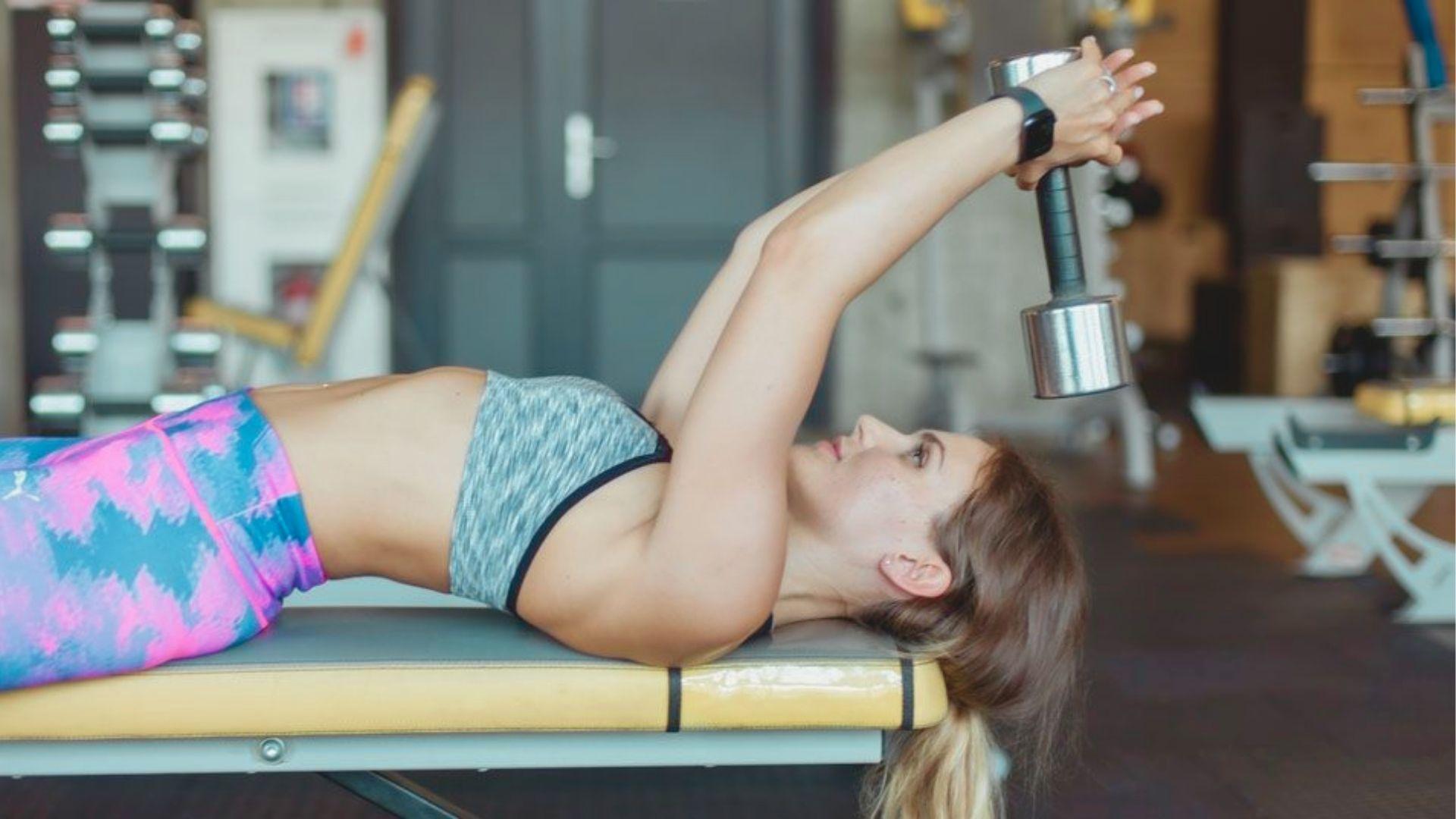
Muscles worked: Chest, lats, serratus anterior
Lie across a bench or flat on it. Hold one dumbbell with both hands above your chest. Lower it back over your head in an arc, then pull it back to the start.
Why it works: The pullover works both the chest and the lats. It also stretches the chest and ribcage in a way few exercises do.
Reps: 3 sets of 10 to 12
17. Seated Arnold Press
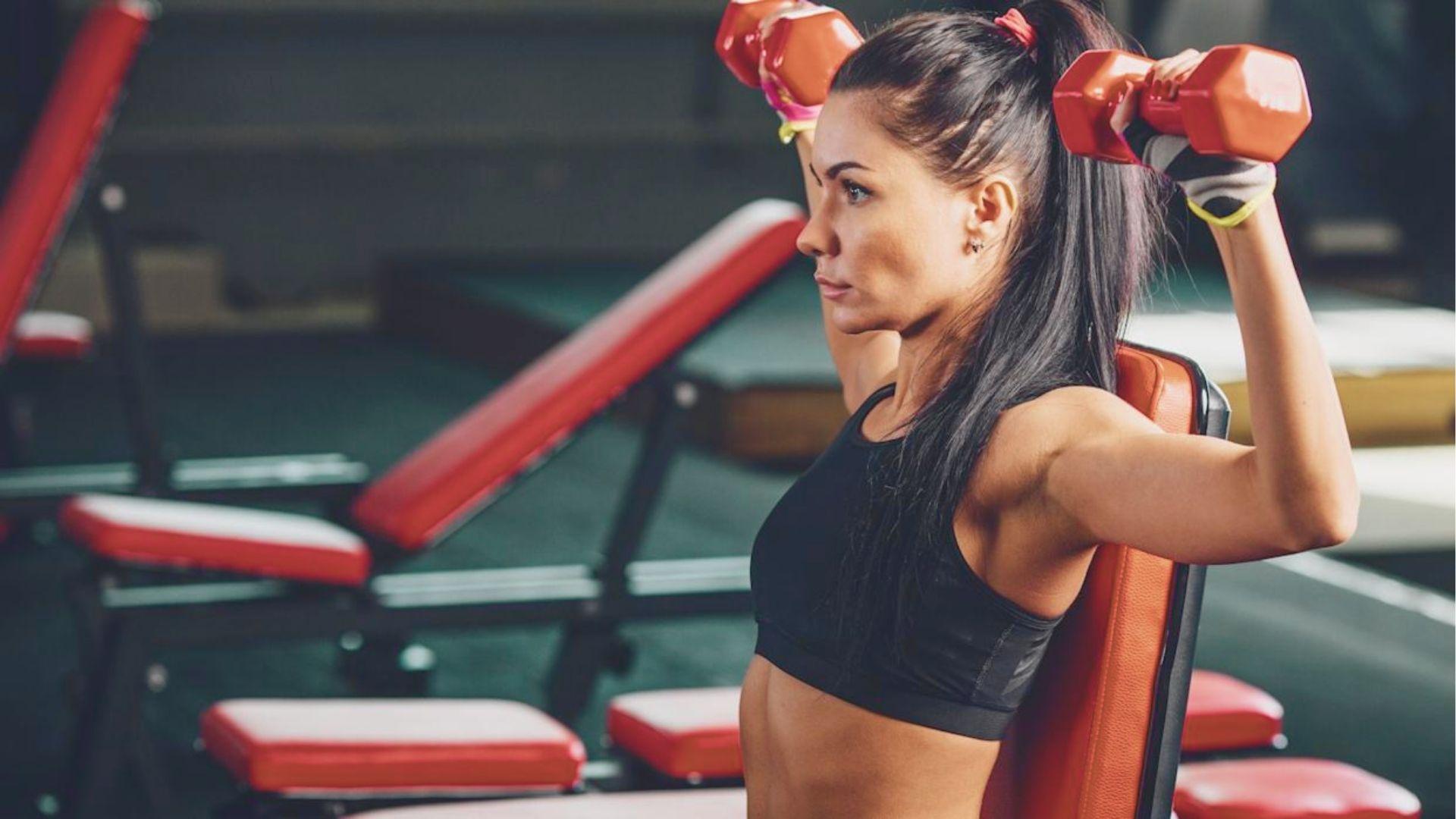
Muscles worked: Shoulders, upper chest, triceps
Sit on a bench. Hold dumbbells in front of your face, palms facing you. As you press up, rotate your palms outward. Lower and rotate back to the start.
Why it works: This shoulder press variation also activates the upper chest and anterior deltoids. It adds variety and hits multiple angles in one movement.
Reps: 3 sets of 10 to 12
18. Incline Dumbbell Squeeze Press
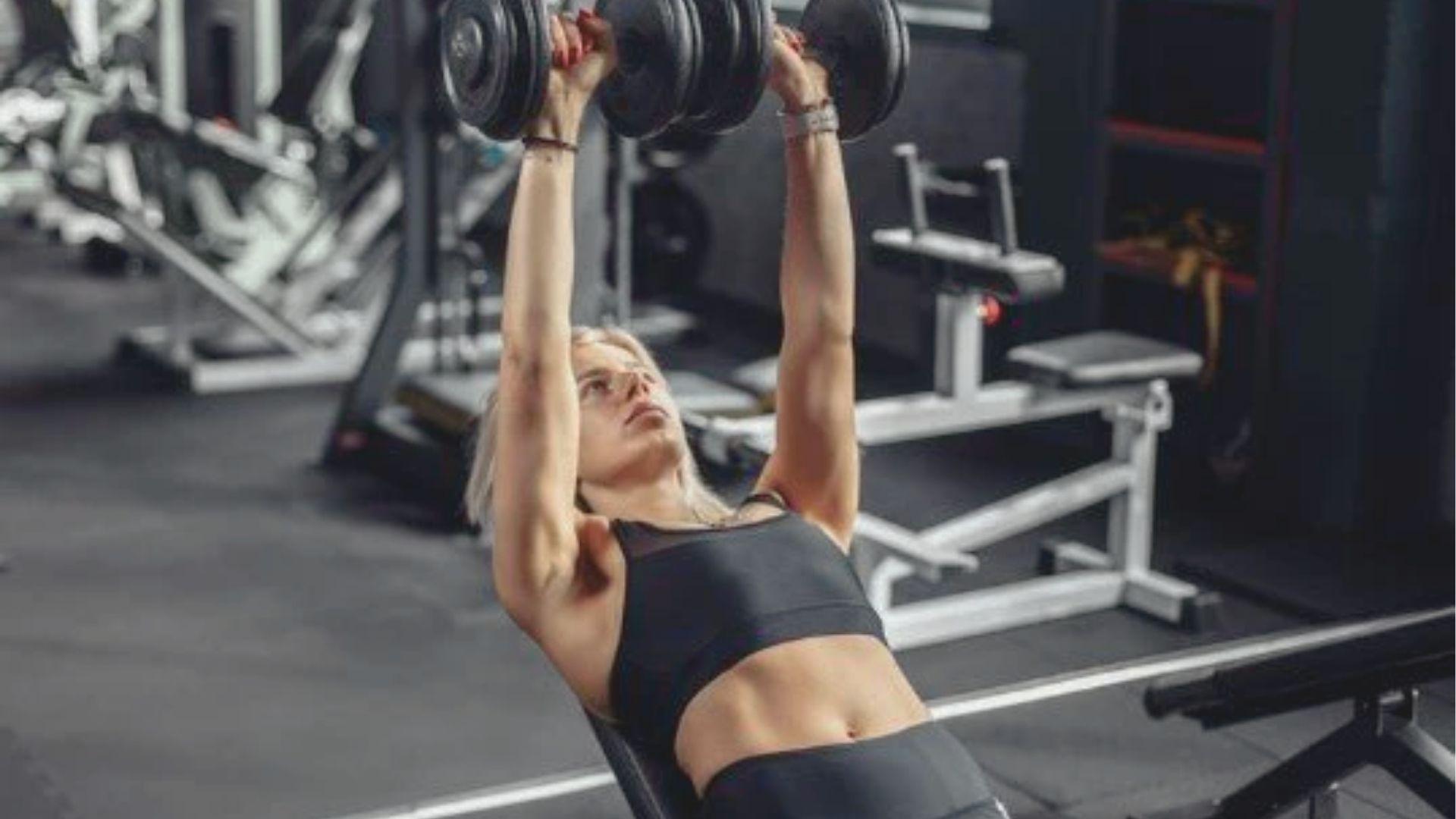
Muscles worked: Inner chest, upper chest
Set the bench to an incline. Hold dumbbells together and press them into each other throughout the movement. Press up and lower while maintaining that inward squeeze.
Why it works: The squeeze creates constant tension on the inner chest. This is one of the best exercises for building definition through the center of the chest.
Reps: 3 sets of 10 to 12
19. Plyometric Push-Up
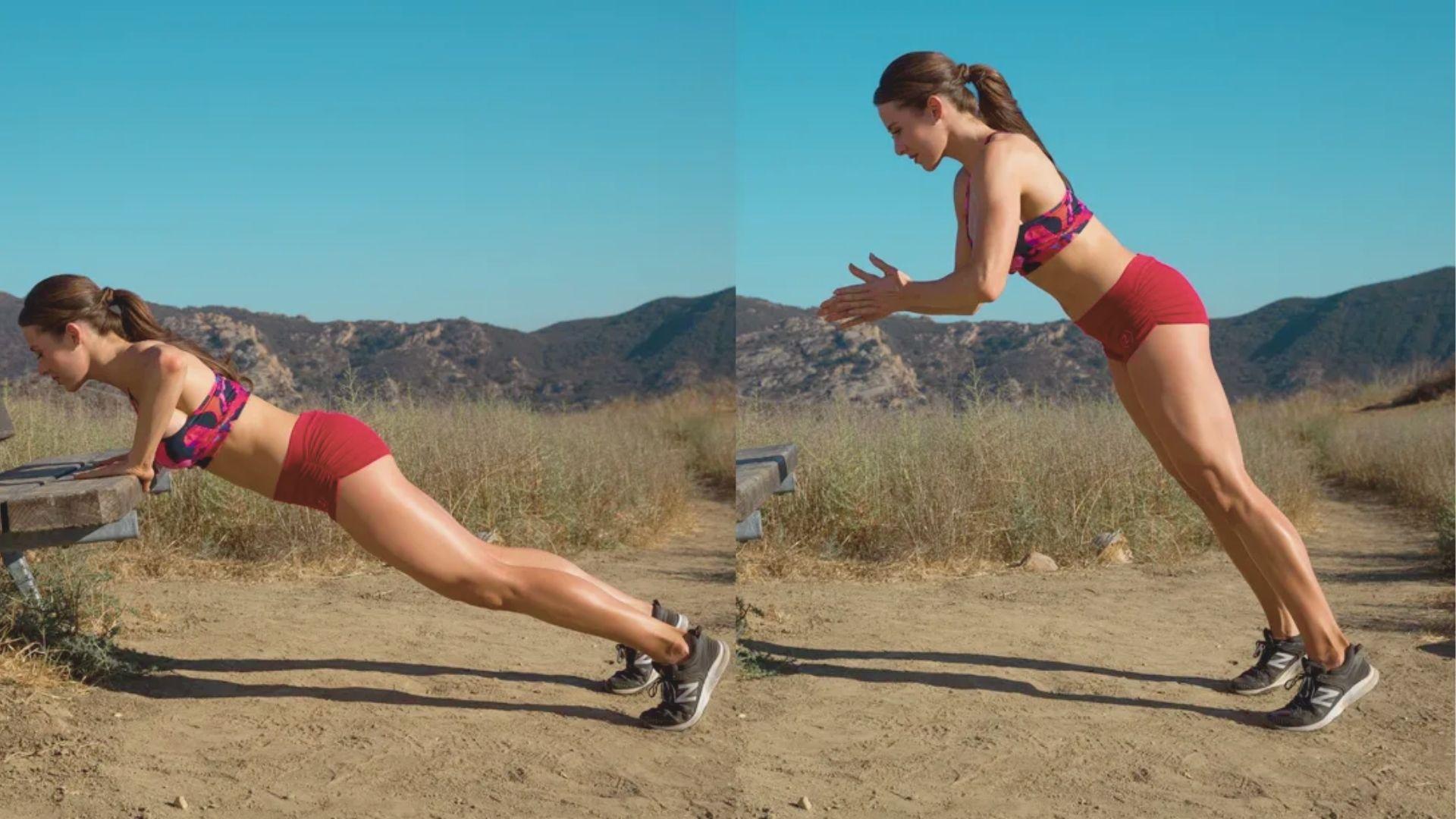
Muscles worked: Chest, triceps, shoulders, core
Perform a push-up and explode upward with enough force to lift your hands off the floor. Land softly and immediately go into the next rep.
Why it works: This builds explosive upper-body power. It increases muscle activation in the chest compared to a slow standard push-up.
Reps: 3 sets of 6 to 10
20. Push-Up to Side Plank
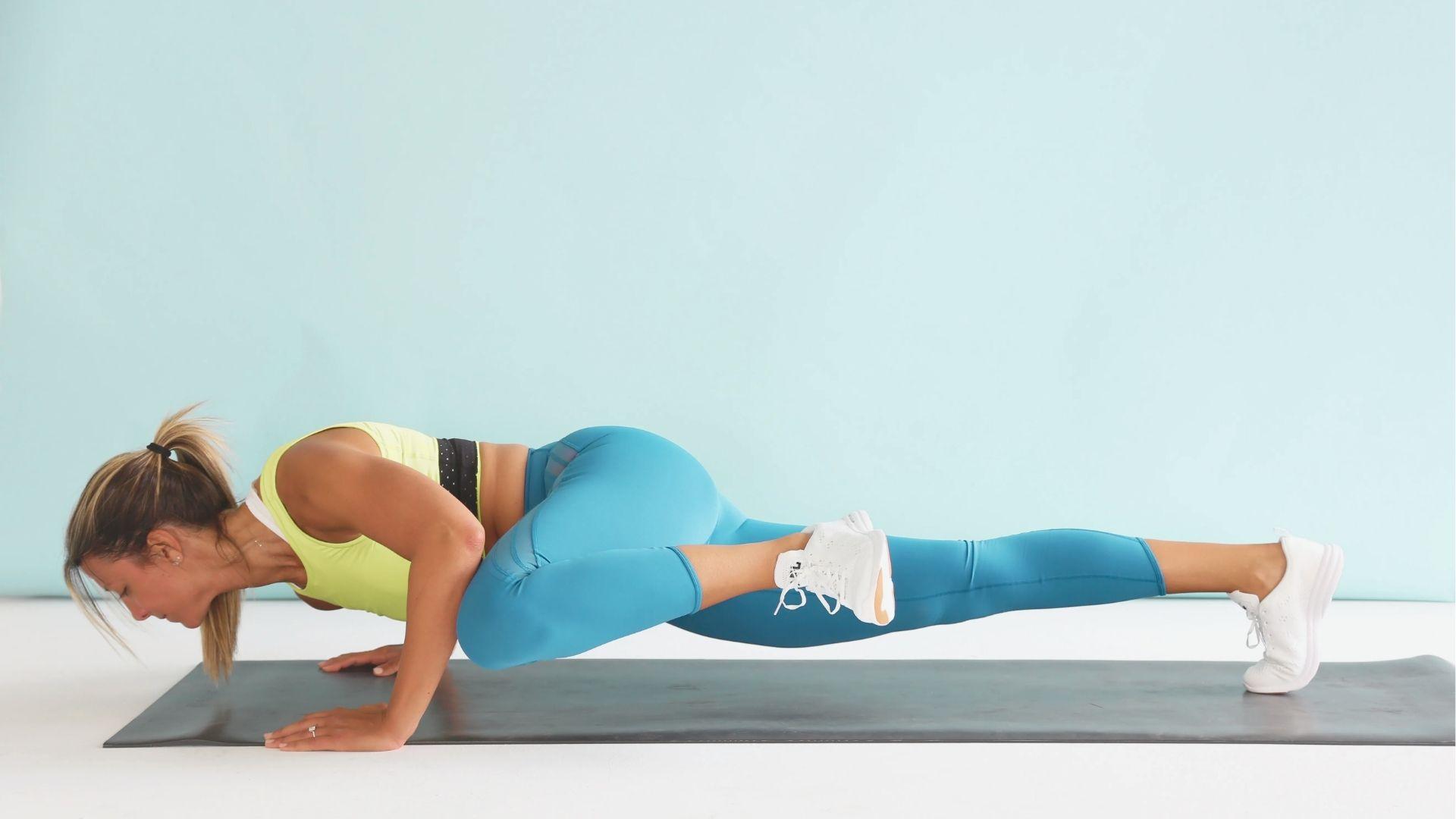
Muscles worked: Chest, core, shoulders, obliques
Do a standard push-up. At the top, rotate into a side plank by lifting one arm toward the ceiling. Return to the push-up position and alternate sides.
Why it works: This combines chest work with core and shoulder stability. It's a full upper-body move that challenges coordination and balance too.
Reps: 3 sets of 6 to 10 per side
21. Bear Plank Shoulder Tap
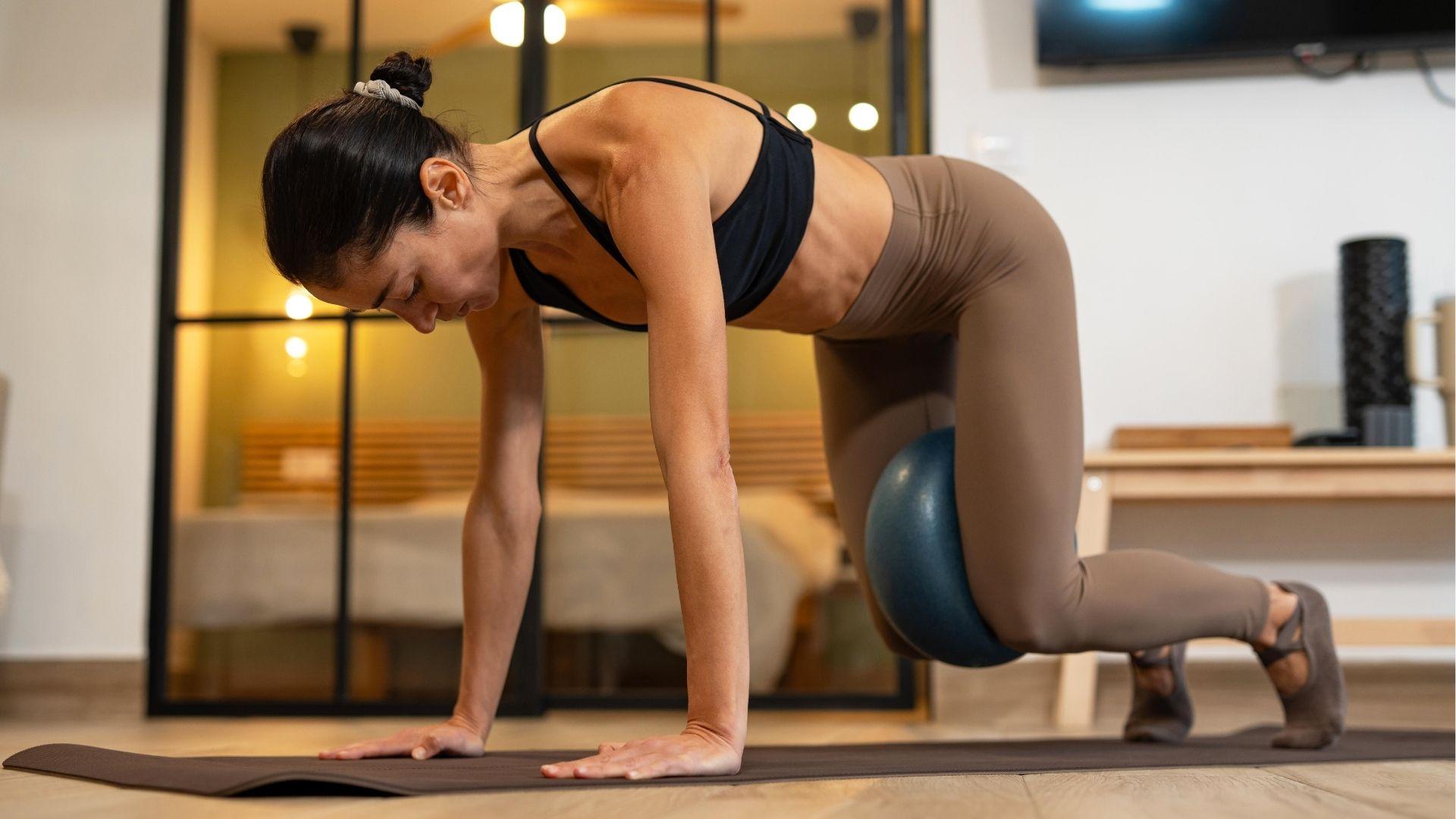
Muscles worked: Chest, core, shoulders
Start in a bear plank position, hands under shoulders, knees hovering slightly off the floor. Tap your right hand to your left shoulder, then switch. Keep hips still.
Why it works: This builds chest and shoulder stability under a loaded position. The anti-rotation demand also works your deep core muscles hard.
Reps: 3 sets of 10 to 14 taps total
Beginner Chest Workout Routine for Women
Three simple routines to match where you are right now.
10-Minute Beginner Chest Workout
Do this 2 times per week with at least one rest day between sessions.
| Exercise | Sets | Reps |
|---|---|---|
| Incline Push-Up | 3 | 10 |
| Knee Push-Up | 3 | 10 |
| Resistance Band Chest Press | 3 | 12 |
| Chest Fly (light dumbbells) | 2 | 12 |
Rest 45 to 60 seconds between sets. Keep weights light. Focus on feeling the chest work.
Intermediate Chest Workout
Do this 2 times per week with full recovery days between.
| Exercise | Sets> | Reps |
| Standard Push-Up | 3 | 12 |
| Dumbbell Chest Press | 3 | 10 |
| Incline Dumbbell Press | 3 | 10 |
| Chest Fly | 3 | 12 |
| Close-Grip Chest Press | 2 | 12 |
Rest 60 to 90 seconds between sets. Add weight when the last set feels easy.
Advanced Chest Workout
Do this 2 times per week. Allow 48 to 72 hours before training chest again.
| Exercise | Sets | Reps |
|---|---|---|
| Decline Push-Up | 3 | 12 |
| Incline Dumbbell Press | 4 | 8 to 10 |
| Cable Chest Fly | 3 | 12 |
| Low Cable Chest Fly | 3 | 12 |
| Incline Dumbbell Squeeze Press | 3 | 10 |
| Plyometric Push-Up | 3 | 6 to 8 |
| Push-Up to Side Plank | 3 | 8 per side |
Rest 90 seconds to 2 minutes between sets.
How Often Should Women Train Chest?
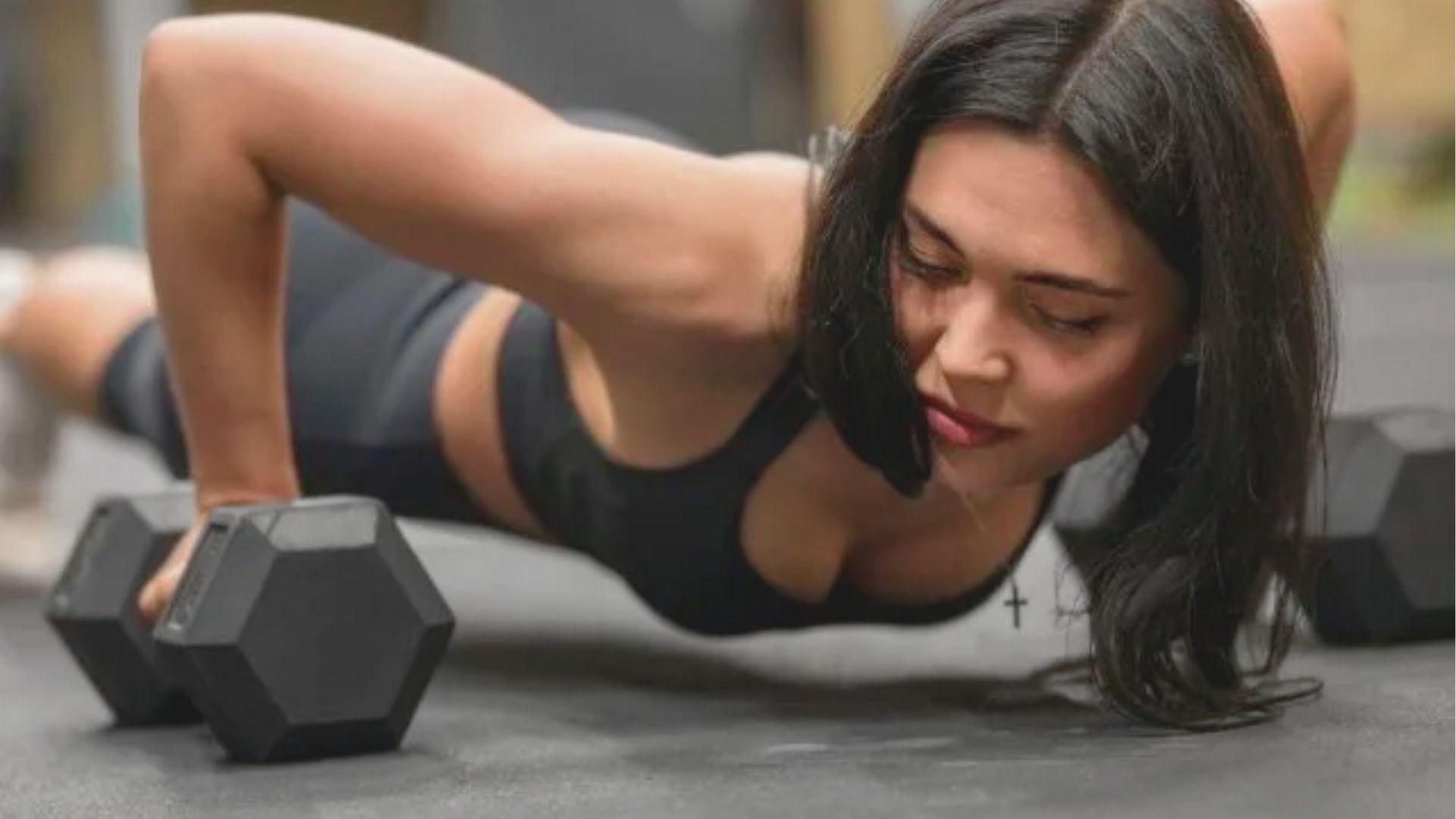
For most women, 2 times per week works well. It gives your muscles enough work to grow while leaving time to recover. Beginners can start with once a week.
A simple split: train chest on Monday and Thursday, and fill other days with back, legs, or shoulders.
For reps, the 8 to 12 range with moderate weight is a good starting point for most goals.
Recovery is just as important as training.
A few simple habits help:
- Sleep 7 to 9 hours
- Eat enough protein
- Stay hydrated
- Wait 48 hours before training chest again
Soreness after a session is normal. Joint pain is not. If something hurts, rest and fix your form first.
Conclusion
I hope this guide gives you everything you need to start training your chest with confidence. When I first added chest exercises to my routine, the difference in how I felt and moved was noticeable within just a few weeks.
You don't need to do all 21 exercises at once. Start with what fits your level and build from there.
If this helped you, share it with a friend who's been skipping chest day. Drop a comment below with your favorite exercise from the list. I'd love to hear what's working for you.
Frequently Asked Questions
Can women grow chest muscles the same way men do?
Yes, women build chest muscles using the same training methods as men. Progress may be slower due to lower testosterone, but consistent effort brings real results.
Will chest exercises make my breasts smaller?
No, chest training builds muscle underneath breast tissue and does not reduce breast size. It may actually give a slight lift over time.
How long does it take to see results from chest training?
Most women feel stronger within 2 to 4 weeks. Visible changes in muscle tone typically show after 6 to 12 weeks of regular training.
Do I need a gym to do chest exercises?
No, push-up variations and resistance band moves work well at home. A gym helps when you want heavier weights or cable machines.
Is it okay to train chest if I have shoulder pain?
Floor presses and incline push-ups are usually gentler on the shoulder. See a physiotherapist first if your shoulder pain is ongoing.