Struggling to build a stronger back without gym equipment? I get it. Most people think heavy weights are the only way. They’re not. I’ve trained both ways, and a bodyweight back workout can build real muscle when done right.
In this article, I’ll cover 17 exercises, a no-equipment home routine, and tips to build your own program. You’ll leave with a clear plan and zero guesswork.
With years of hands-on fitness experience, I built this guide to actually help you get stronger, improve your posture, and train your back from anywhere.
What Is a Bodyweight Back Workout?

A bodyweight back workout uses your own body weight as resistance. No bars. No machines. No gym membership needed.
Just controlled movements that target your upper back, lower back, and rear delts. These workouts improve posture, reduce back pain, and build real functional strength all from home.
Most people overlook back training when they skip the gym. That’s a mistake. Your back supports almost every movement you make.
Strengthening it matters. The good news is you don’t need any equipment to do it well. You just need the right exercises and the right approach.
17 Bodyweight Back Workout Exercises for Muscle & Stability
A full list of proven moves to build your back from top to bottom no equipment needed for most.
1. Pull-Up

Hang from a bar with hands shoulder-width apart and pull your chest up to it. Lower yourself slowly and with control.
This is one of the most effective upper back exercises you can do with just your bodyweight.
2. Chin-Up

Same movement as a pull-up but with palms facing toward you. It hits the lats just as hard while bringing your biceps more into the work. A great option if regular pull-ups feel too difficult at first.
3. Inverted Row

Lie under a low bar or sturdy table, grip it, and pull your chest up to it. Keep your body straight throughout the movement.
This is one of the best beginner-friendly back exercises that needs no gym equipment.
4. Scapula Pull-Up

Hang from a bar and squeeze your shoulder blades together without bending your elbows.
It looks like a small movement but it deeply activates the stabilizing muscles around your shoulder blades. This builds the foundation for stronger pull-ups over time.
5. TRX Row

Grip suspension straps, lean your body back, and row your chest up to your hands. The more horizontal your body is, the harder the exercise gets. It gives you full control over the difficulty level.
6. Reverse Fly
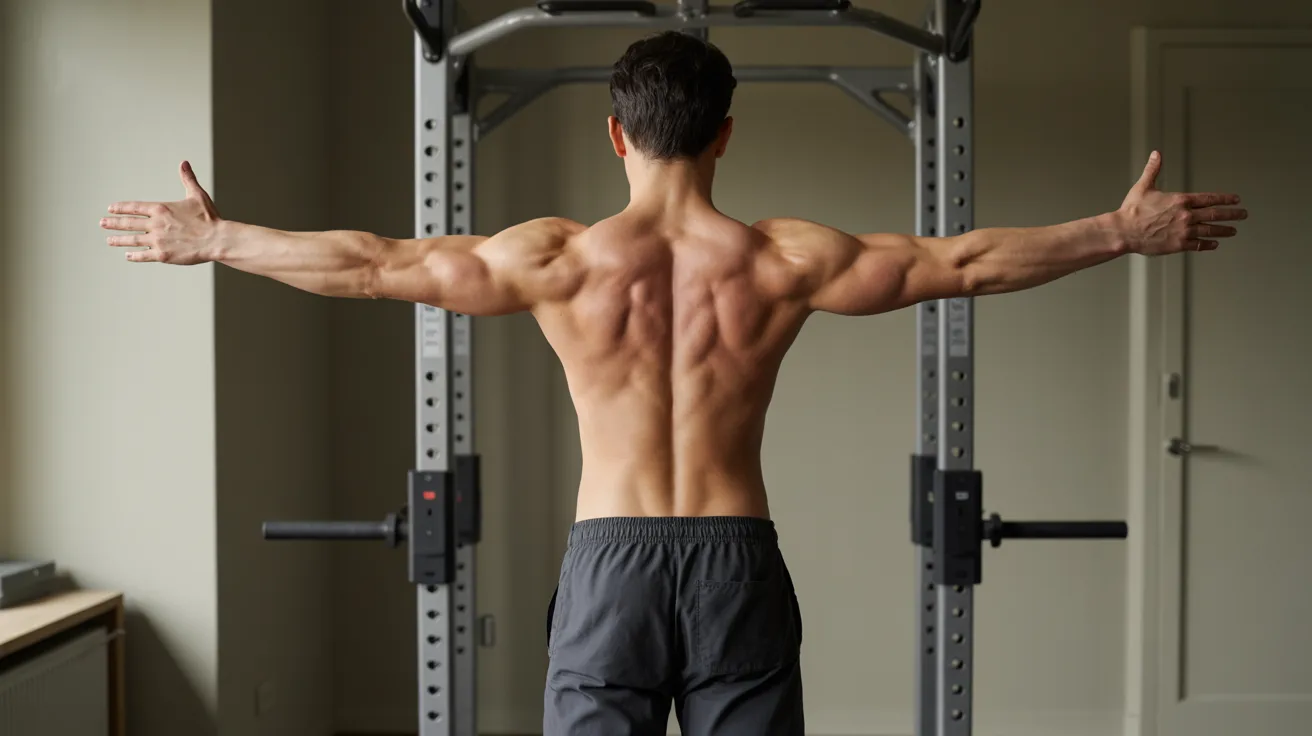
Stand with feet hip-width apart and hinge forward at the hips. Raise both arms out to the sides until they are parallel to the floor.
This move directly targets the rear delts and the muscles across your upper back.
7. Rear Delt Raise Plank

Get into a strong plank position and raise one arm straight out to the side. This adds rear delt training while your core works hard to keep you stable. Alternate arms each rep for a balanced workout.
8. Y Raise
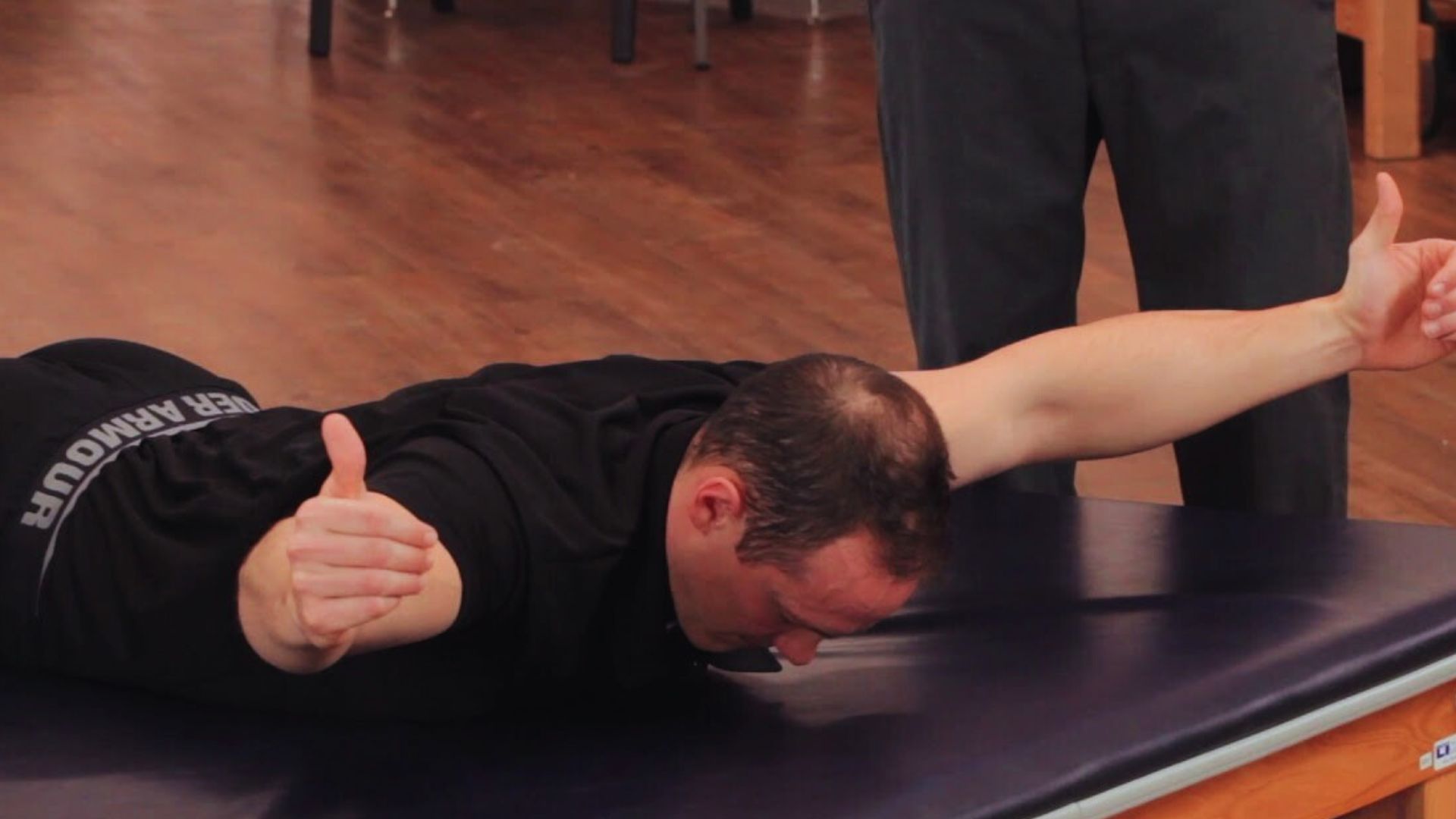
Lie face down on the floor and raise both arms up and out into a Y shape. Focus on squeezing your shoulder blades as you lift.
This builds the lower trapezius and helps keep your shoulders healthy long term.
9. IYWT Series

Lie face down and move your arms into I, Y, W, and T shapes one at a time. Each position targets a slightly different part of the upper back and rotator cuff.
This series is excellent for improving shoulder stability and posture.
10. Superman

Lie face down with arms extended in front of you. Lift your arms, chest, and legs off the floor at the same time and hold for 2-3 seconds.
This is one of the simplest and most effective exercises for strengthening the lower back.
11. Superman Hold
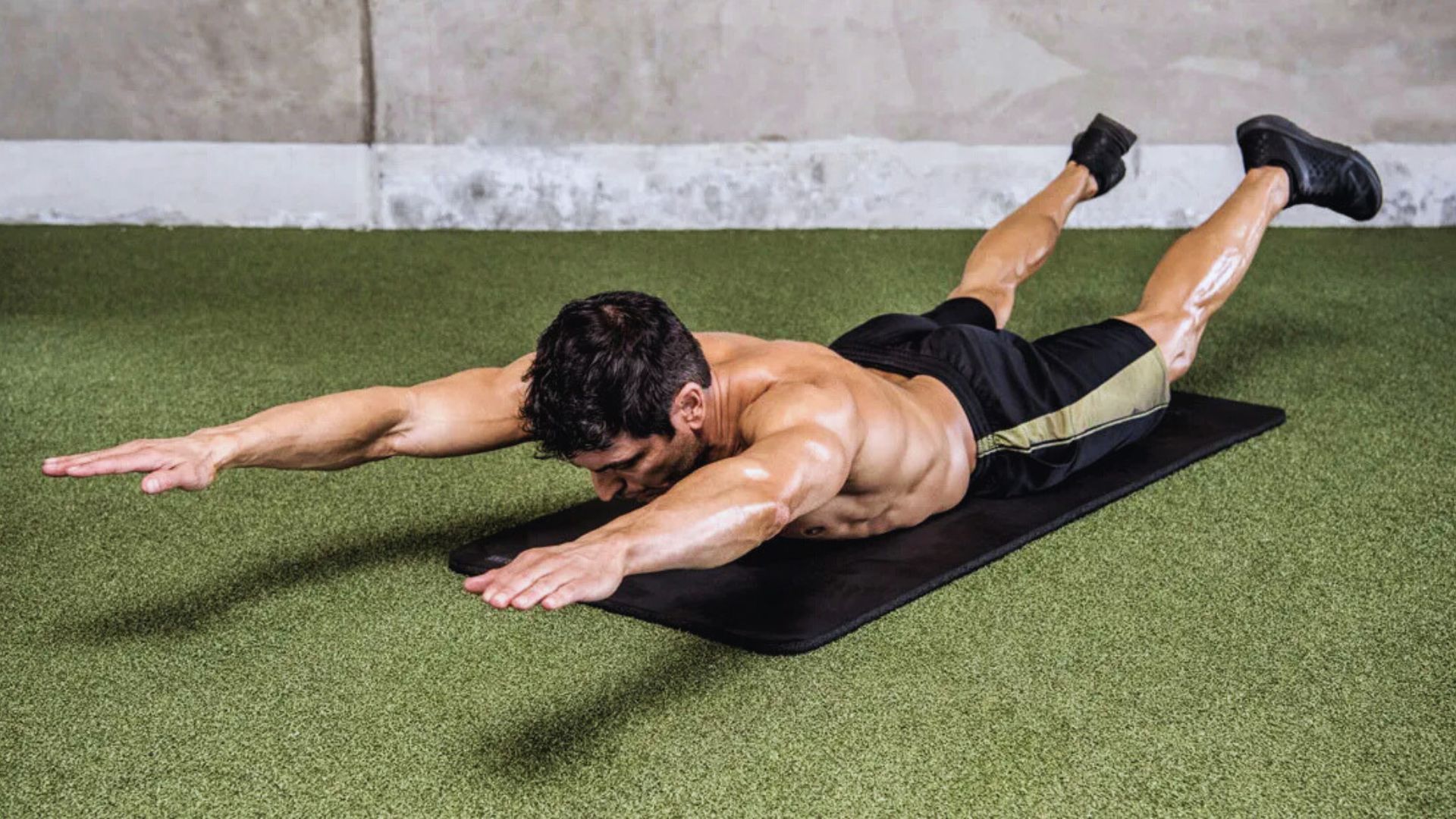
This is the same as Superman but you hold the top position for 5 to 10 seconds instead of releasing quickly.
The longer hold builds muscular endurance in the lower back extensors. Add this when the basic Superman starts feeling too easy.
12. W Superman

Get into the Superman position but shape your arms into a W instead of reaching them straight forward.
This small change shifts more of the work onto your middle traps. It is a great variation for building thickness in the upper back.
13. T Superman

In the Superman position, spread both arms straight out to the sides like the letter T. This targets the rear delts and upper back from a slightly different angle.
It pairs well with the W and standard Superman for a complete lower back and upper back session.
14. Dead Stop to Superman
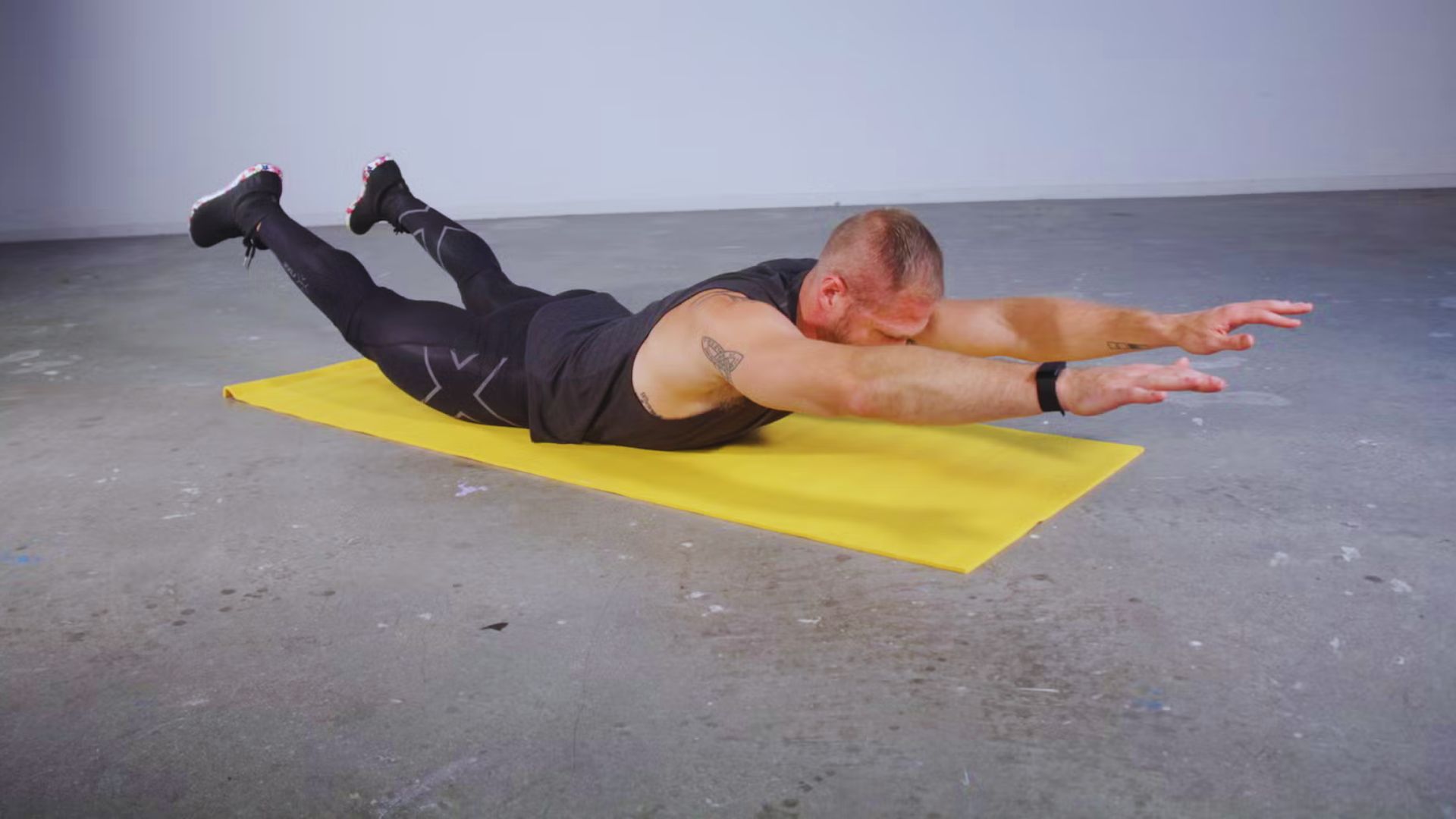
Start lying completely flat with no tension in your muscles, then lift into the full Superman position. Removing all momentum from the start makes each rep significantly harder.
This variation builds more raw strength in the lower back than standard supermans.
15. Bird Dog

Start on all fours and extend one arm forward while extending the opposite leg back at the same time. Hold the position briefly, then switch sides.
This builds lower back stability, improves balance, and trains both sides of the body evenly.
16. Reverse Plank
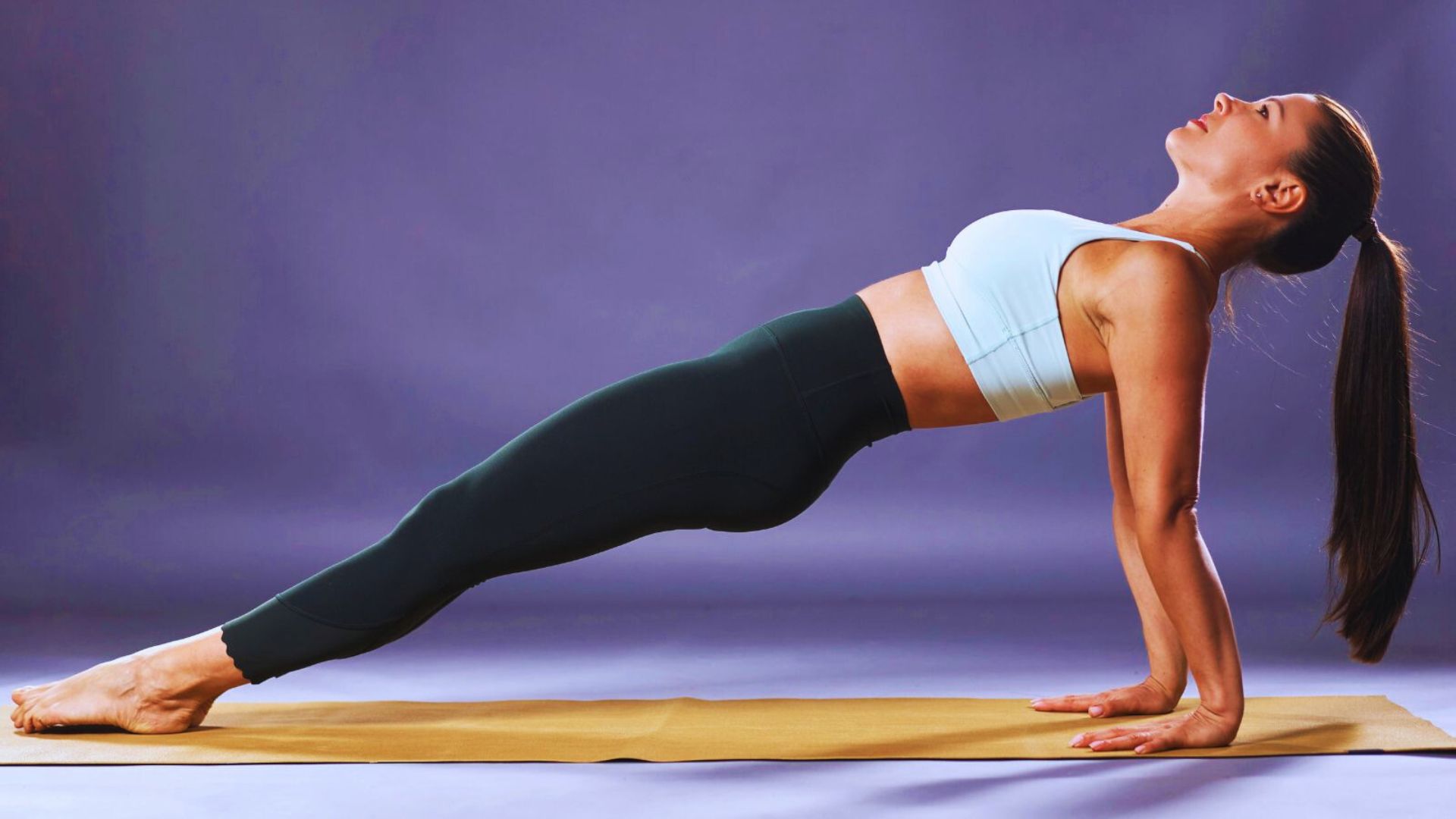
Sit on the floor with your hands placed behind you, then push your hips up until your body forms a straight line.
Hold the position while keeping your glutes and back tight. This works the entire posterior chain including your lower back, glutes, and hamstrings.
17. Standing Wall Slides
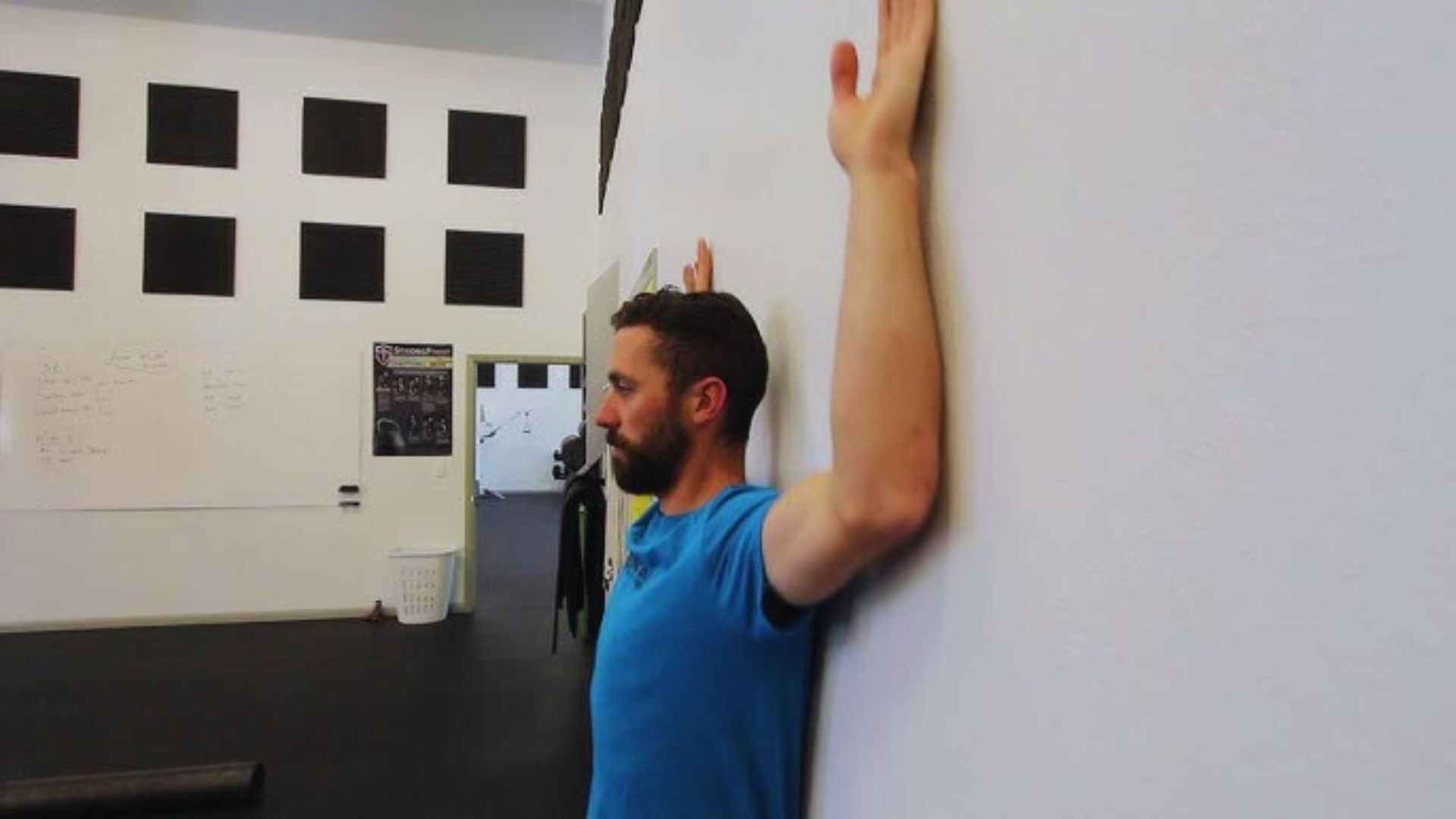
Stand flat against a wall with your arms bent into a W shape and press your back, arms, and hands firmly into the wall.
Slowly slide your arms up into a Y position and bring them back down. This simple move is highly effective for fixing posture and activating the upper back muscles.
Bodyweight Back Workout No Equipment (At-Home Plan)

A simple, structured approach to training your back at home with zero equipment.
Beginner-Friendly Routine Without Equipment
Start with these three moves three times a week,
- Superman – 3 sets of 10
- Bird Dog – 3 sets of 8 per side
- Reverse Plank – 3 sets of 20 seconds
These target the full back without any equipment and are safe for beginners.
Best Exercise Combinations for Full Back Activation
Pair a horizontal pull (inverted row) with a lower back move (superman) and a scapula exercise (Y raise). This combo hits upper, middle, and lower back in one session.
Time-Based vs Rep-Based Training
Rep-based training works well when you want to build strength. Time-based training (like 30-second holds) is better for building endurance and stability.
Mix both into your weekly plan for the best results.
How to Build an Effective Bodyweight Back Workout Routine
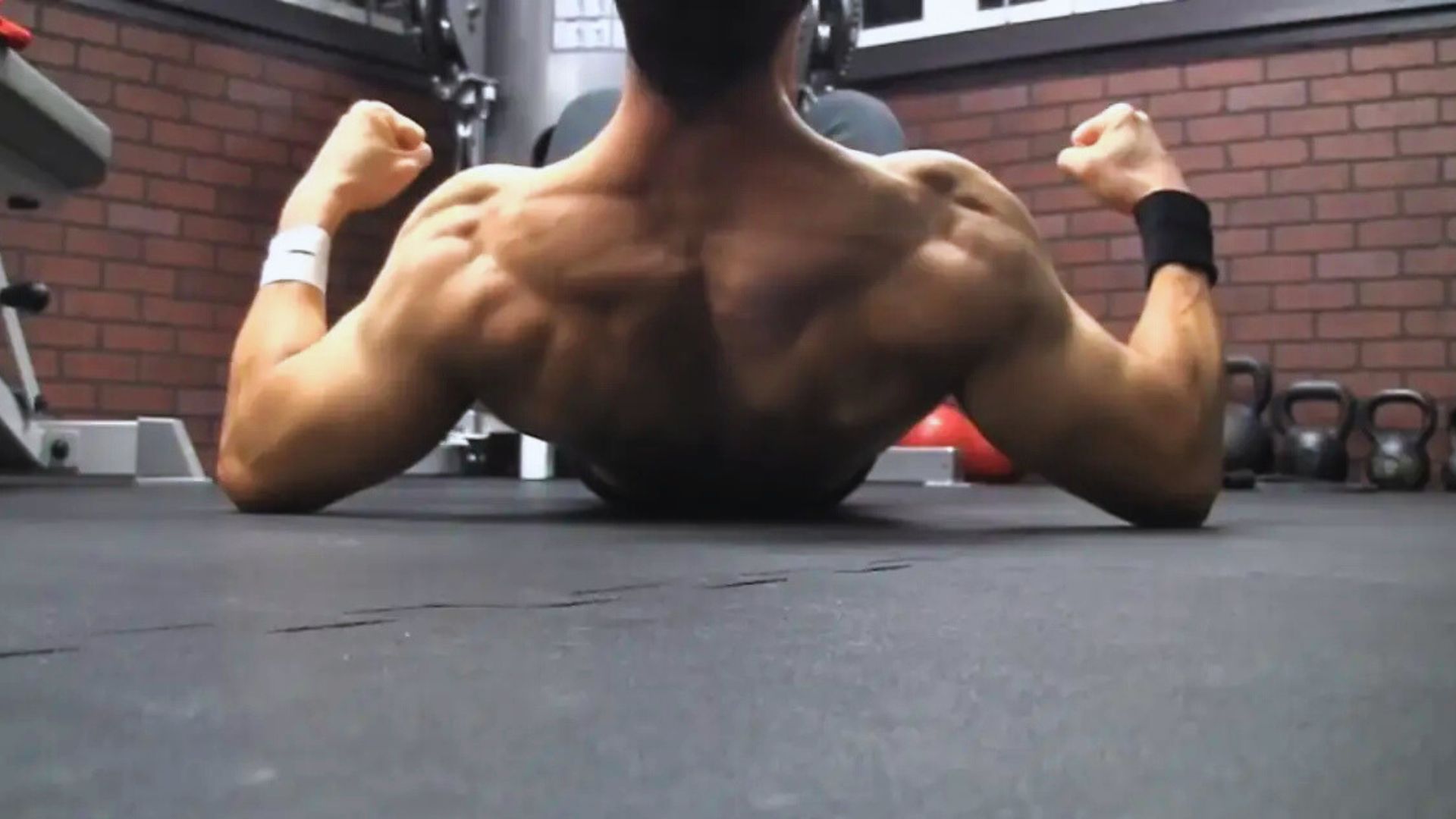
Structure your training the right way and your back will grow stronger with every session.
Sets, Reps, and Weekly Frequency
For muscle building, aim for 3-4 sets of 8-15 reps per exercise. Train your back 2-3 times per week and always keep at least one rest day between sessions.
This gives your muscles enough time to recover and grow stronger.
For every push movement like a push-up, pair it with a pull movement like a row or pull-up. This keeps your shoulders healthy and prevents muscle imbalances over time.
Progressive Overload Without Weights
To keep making progress without adding weights, you need to make the exercises harder over time.
You can do this by slowing down your reps, adding pauses at the top, reducing rest time between sets, or moving to more difficult variations.
This is how you force your muscles to keep adapting and growing stronger without ever touching a weight.
Benefits of a Bodyweight Back Workout for Muscle & Stability

Strong reasons why training your back with bodyweight is worth your time every week.
Build Strength Without Weights
You don’t need a gym membership. Pull-ups, rows, and superman variations build real back strength. Many people are surprised at how sore they get from body weight back work alone.
Improve Posture and Spine Health
Weak back muscles lead to rounded shoulders and poor posture. Exercises like Y raises, wall slides, and bird dogs directly fix this by strengthening the muscles that hold you upright.
Improve Stability and Core Control
Most bodyweight back exercises also train your core. Moves like bird dog and reverse plank require you to stabilize your spine throughout.
Over time, this improves balance and reduces injury risk.
Tips to Maximize Your Bodyweight Back Workout Results
Small adjustments in how you train can make a big difference in your results.
- Slow down every rep and control the movement throughout.
- Think about the muscle you are working before each set.
- Squeeze your shoulder blades on every pulling movement.
- Never skip lower back exercises like superman and bird dog.
- Include both horizontal and vertical pulling moves in your routine.
- Reduce rest time gradually as your fitness improves.
- Take your rest days seriously; muscles grow during recovery.
Conclusion
I used to skip back training because I thought I needed a gym. I was wrong. Once I started doing these bodyweight moves consistently, my posture improved and my back felt genuinely stronger.
The soreness was real and so were the results. You don’t need equipment. You need consistency. Start with three exercises this week and build from there.
If this guide helped you, drop a comment below and tell me which exercise you’re trying first. Share it with a friend who trains at home. They’ll thank you for it.
Frequently Asked Questions
Can I build a strong back with only bodyweight exercises?
Yes. Pull-ups, rows, and superman variations build significant back strength. Progressive overload through harder variations keeps you moving forward.
How many times a week should I do a bodyweight back workout?
Two to three times per week is ideal. Always allow at least one rest day between sessions so your muscles can recover and grow.
Are bodyweight back exercises good for lower back pain?
Many are, especially bird dogs and Superman. They strengthen the muscles around the spine. Always check with a doctor before starting if you have existing pain.
Do bodyweight back exercises help with posture?
Yes. Moves like Y raises, wall slides, and scapula pull-ups directly target the muscles responsible for keeping your shoulders back and spine straight.
How long before I see results from bodyweight back training?
Most people notice improved posture and reduced tightness within 3-4 weeks. Visible muscle changes typically appear after 8-12 weeks of consistent training.