

You don’t need a gym membership to get a solid workout. All you need is a bench and some weights.
This article covers 11 bench workouts you can do right at home. From chest and arms to glutes and core, we have got you covered.
We will also share setup tips, safety advice, and a full-body routine you can follow right away.
I have been training at home for years, and these moves have made a real difference. Trust the process, follow the steps, and results will follow.
How to Maximize Your Bench Workouts at Home
Getting the most out of home bench workouts comes down to three things: structure, form, and consistency.
Do not just pick random exercises. Plan your session and rotate muscle groups to keep recovery on track.
Always spend 5 to 10 minutes warming up before lifting. Light cardio, arm circles, and hip mobility work get blood flowing and cut down injury risk.
Also, pay attention to your bench angle.
Flat bench works the mid-chest, incline at 30 to 45 degrees hits the upper chest and front shoulders, and decline targets the lower chest and lats.
Small angle changes make a big difference in which muscles get worked.
Safety and Setup Tips Before Your Bench Workouts
Taking two minutes to check your setup before every session can protect you from a serious injury.
- Check your surface first by placing the bench on a flat, even floor. If it feels slippery, put a rubber mat underneath to stop any wobbling during heavy presses.
- Lock everything down on an adjustable bench before loading any weight. Check the back pad, seat, and incline or decline settings are all locked in tight every single session.
- Keep your feet flat on the floor during all pressing movements and make sure there is clear space on both sides of the bench in case you need to drop the dumbbells quickly.
- Start lighter than you think you need to when training alone. Without a spotter, there is no one to catch a failing rep, so managing your load is your first line of defense.
- Always wrap your thumbs around the handle and never use a thumbless or suicide grip on pressing movements. It is a small habit that can prevent a serious accident.
Upper Body Bench Workouts
These moves target your chest, arms, and shoulders to help you build pressing strength from home.
Dumbbell Bench Press

Muscles worked: Chest, triceps, front shoulders
Lie flat on the bench with your feet on the floor. Hold a dumbbell in each hand at chest level with palms facing forward.
Press the dumbbells up until your arms are fully extended. Lower them back slowly to chest level and repeat for 3 to 4 sets of 8 to 12 reps.
Keep your shoulder blades pulled together throughout. Do not let your lower back arch off the bench excessively.
Incline Dumbbell Bench Press
Focus: Upper chest and front shoulders
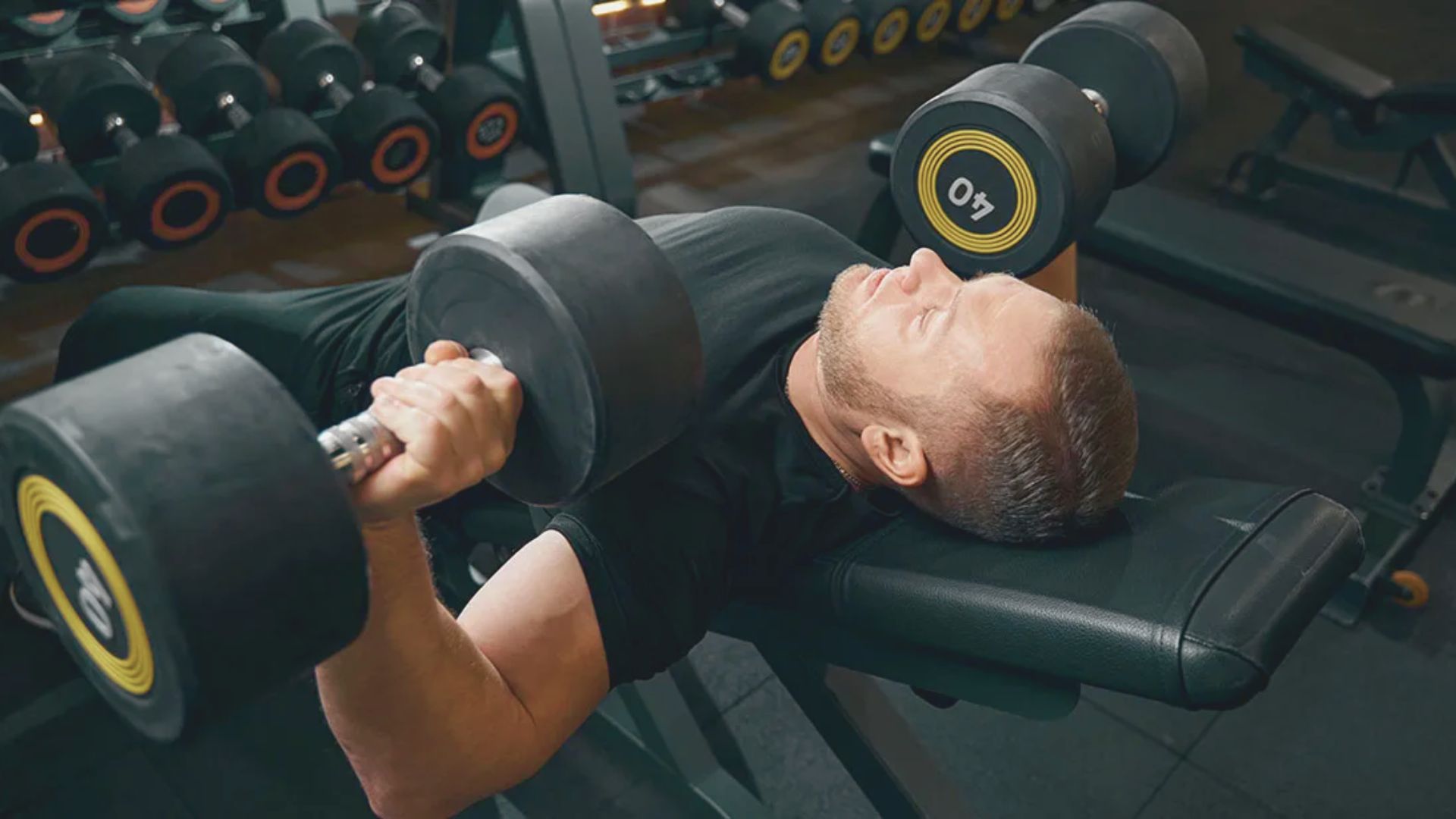
Set the bench to a 30 to 45 degree incline. Higher angles shift work more toward the shoulders and less toward the chest, so stay in the 30 to 45 degree range for the best chest activation.
Sit back on the incline bench with dumbbells resting on your thighs. Kick them up as you lie back. Press up from upper chest level, not from the lower chest. Lower with control and keep your elbows at about 45 degrees from your body.
Do not flare your elbows out wide. A slight tuck protects the shoulder joint and keeps tension on the chest.
Decline Bench Dumbbell Pull-Over

Muscles worked: Chest, lats, triceps
This is one of the most underused moves in home training. It stretches the chest and engages the lats in a single movement.
Lie on a decline bench with your head at the lower end. Hold one dumbbell with both hands above your chest. Lower it back over your head in a slow arc until you feel a deep stretch. Pull it back up to the starting position.
Use a moderate weight. Going too heavy on this move can strain the shoulder at the bottom of the arc.
Dumbbell Fly
Focus: Chest isolation and definition
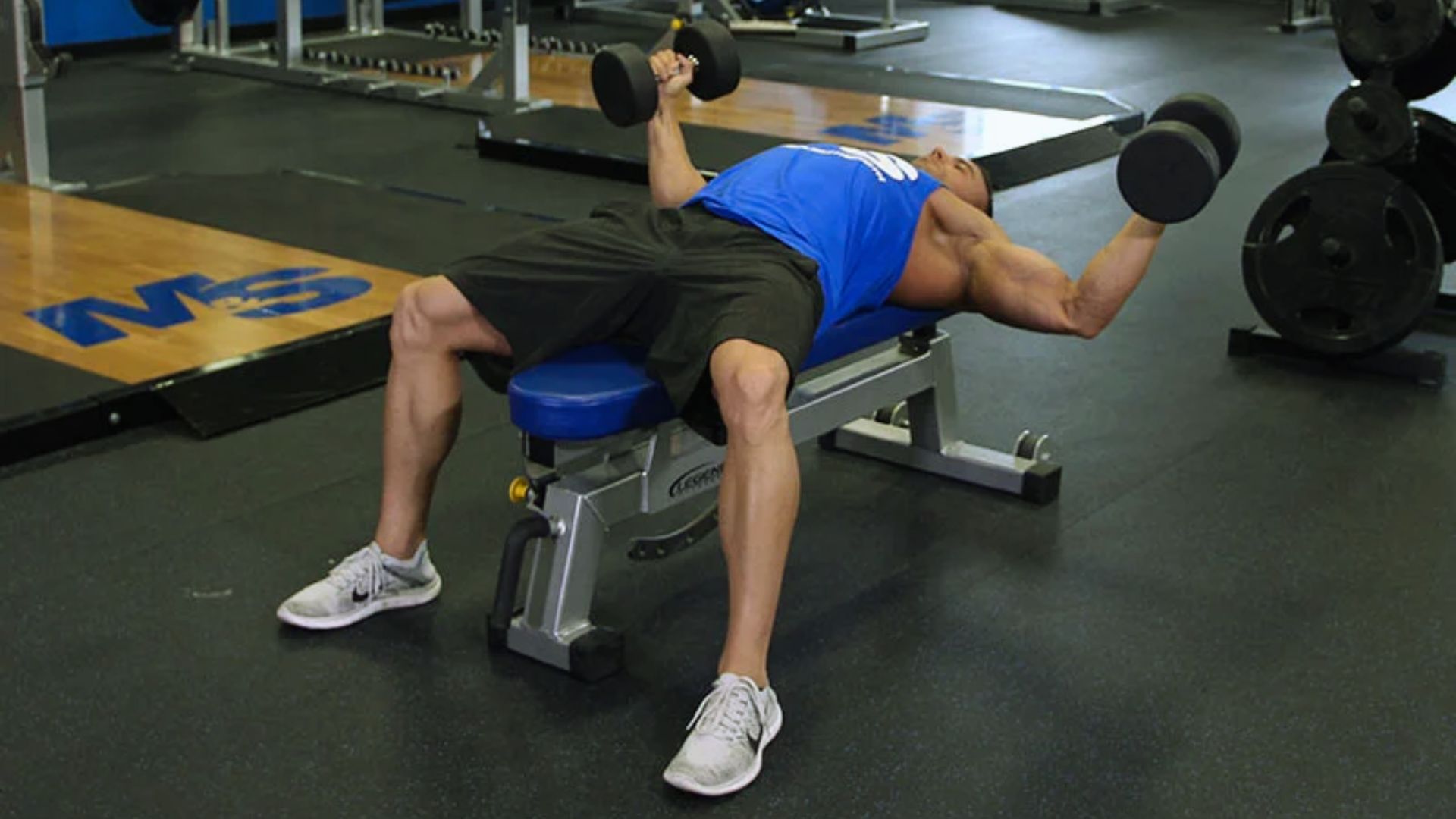
The fly is not a pressing movement. It is a stretch and squeeze exercise. Keep that in mind while doing it.
Lie flat on the bench and hold dumbbells above your chest with a slight bend in the elbows. Lower your arms out to the sides in a wide arc. Stop when you feel a deep chest stretch. Bring the dumbbells back together at the top.
Keep that slight elbow bend the entire time. Do not straighten the arms or bend them too much. Tempo matters here: 2 seconds down, 1 second pause, 2 seconds up.
Close Grip Bench Press
Focus: Triceps and front shoulders
This is your go-to move for building arm strength and pressing power.
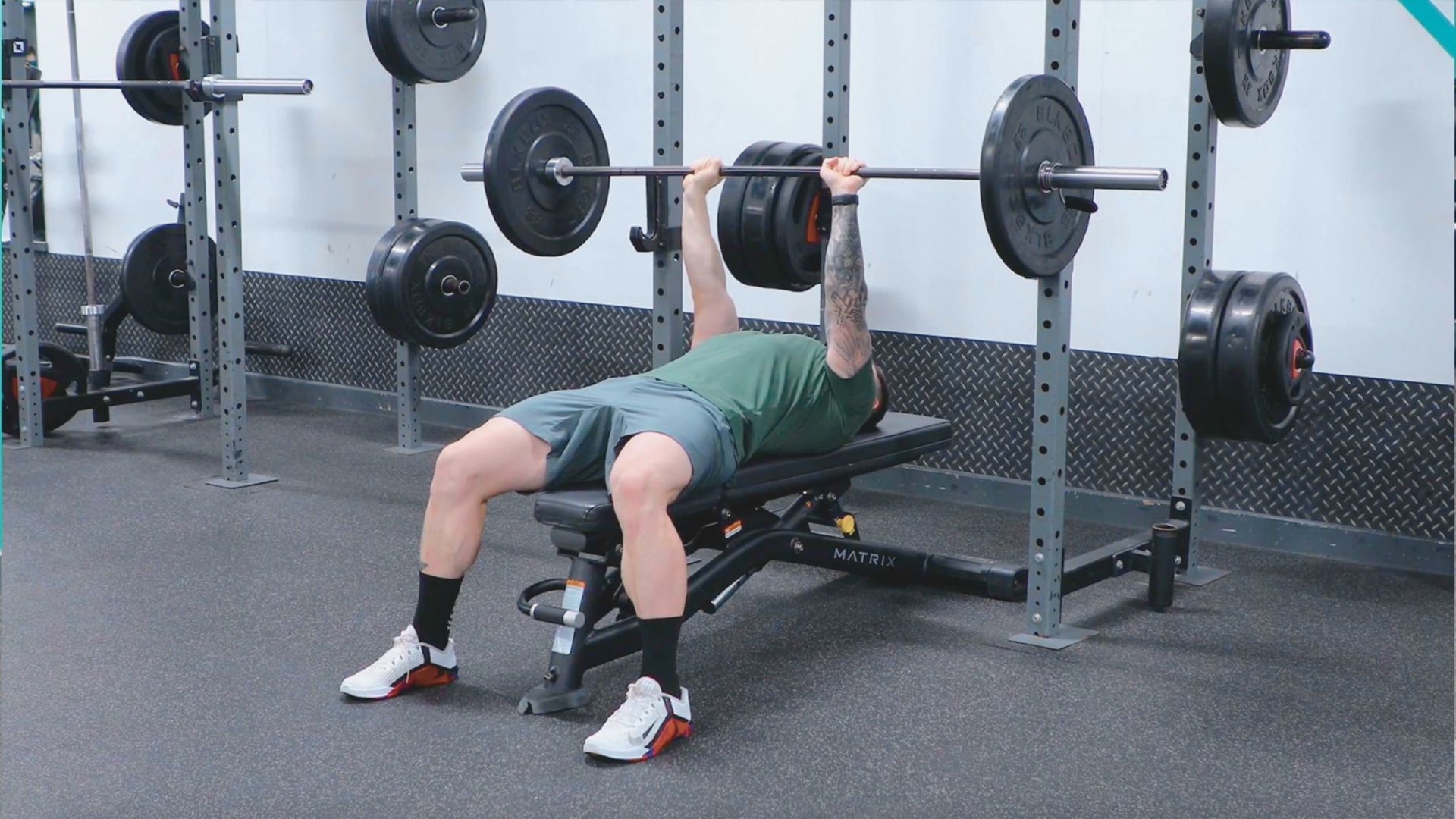
Lie flat on the bench. Hold dumbbells directly above your shoulders with palms facing each other in a neutral grip. Lower them toward your lower chest while keeping elbows tucked close to your sides. Press back up.
The key difference here is elbow position. Keep them close to your torso throughout. This shifts most of the load from the chest to the triceps. Program this 1 to 2 times per week alongside your regular bench press.
Incline Bicep Curl and Barbell Curls on Incline

Muscles worked: Biceps, brachialis
The incline angle puts the arm behind the body, which gives the bicep a longer stretch at the bottom of the curl. This leads to better muscle activation compared to a standing curl.
Set the bench to a 45 to 60 degree incline. Sit back and let the dumbbells hang straight down. Curl up slowly, focusing on squeezing at the top. Lower with full control.
Do 3 sets of 10 to 12 reps. The slow lowering phase is where a lot of the work happens, so do not rush it.
Back and Core Bench Workouts
A strong back and tight core are the foundation of every good lift, and these moves build both.
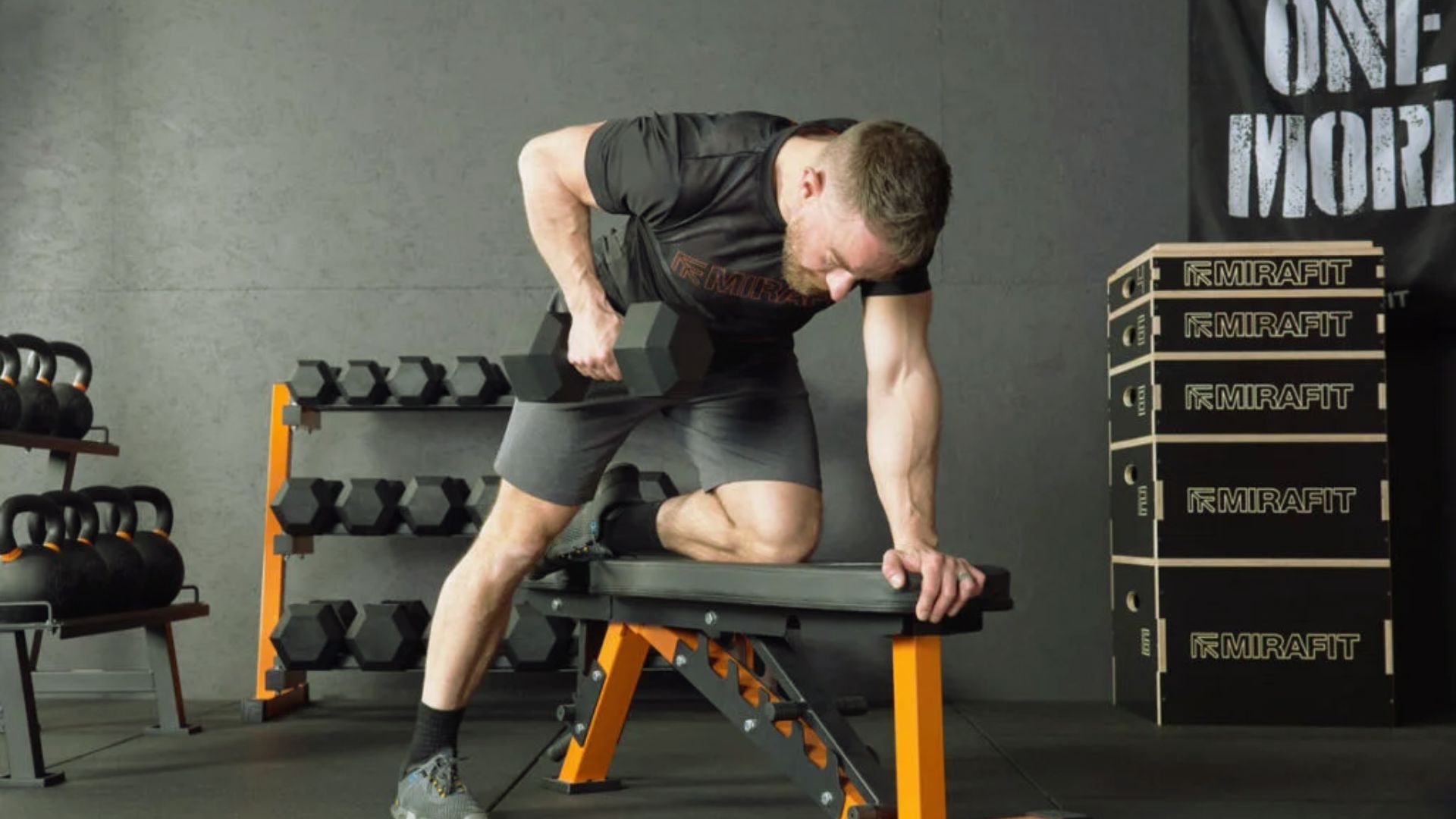
Single-Arm Dumbbell Row

Muscles worked: Upper back, lats, rear shoulders, core
Place one hand and the same-side knee on the bench. Hold a dumbbell in the opposite hand with your arm hanging down. Pull the dumbbell up toward your hip, keeping your elbow close to your body. Lower with control and repeat.
Keep your back flat and your core braced the entire time. Do not rotate your torso to help lift the weight. That takes work away from the target muscles.
Plyo Bench Plank Hold

Muscles worked: Abs, shoulders, chest
Place your hands on the bench, slightly wider than shoulder width. Walk your feet back into a push-up position. Hold the position, keeping hips level and core tight.
If the full position is too hard, drop to your knees as a regression. For a progression, lift one foot off the ground and hold for 10 seconds per side. Start with 3 holds of 20 to 30 seconds.
Feet-Elevated Cross-Body Mountain Climber

Muscles worked: Abs, hip flexors, shoulder stabilizers
Place your feet on the bench and hands on the floor in a push-up position. Drive one knee toward the opposite elbow. Return and repeat on the other side.
Move at a controlled pace, not a fast one. Rushing takes tension off the core. Keep your hips level and your spine neutral throughout. Do 3 sets of 10 to 12 reps per side.
Lower Body Bench Workouts
Do not skip legs. These two moves hit your glutes, quads, and hamstrings with nothing but a bench and your own effort.
Feet-Elevated Hip Thrust

Muscles worked: Glutes, hamstrings, hips
Sit on the floor with your upper back resting against the bench. Place your feet flat on the floor, hip-width apart. Push through your heels and drive your hips up toward the ceiling. Squeeze your glutes hard at the top. Lower back down and repeat.
Think about pushing your hips up, not your back forward. Full hip extension at the top is the goal. Add a dumbbell or barbell across your hips to increase the challenge.
Bulgarian Split Squat

Muscles worked: Quads, hamstrings, glutes
This is one of the hardest lower body moves you can do at home. It also builds serious leg strength and balance.
Stand about two feet in front of the bench. Place the top of one foot on the bench behind you. Lower your back knee toward the floor, keeping your front knee tracking over your toes. Push through the front heel to stand back up.
Hold the bench for balance if needed and start with body weight only as a regression. Make sure your front knee does not cave inward. Push it slightly outward as you lower.
Sample Full-Body Bench Workout Routine
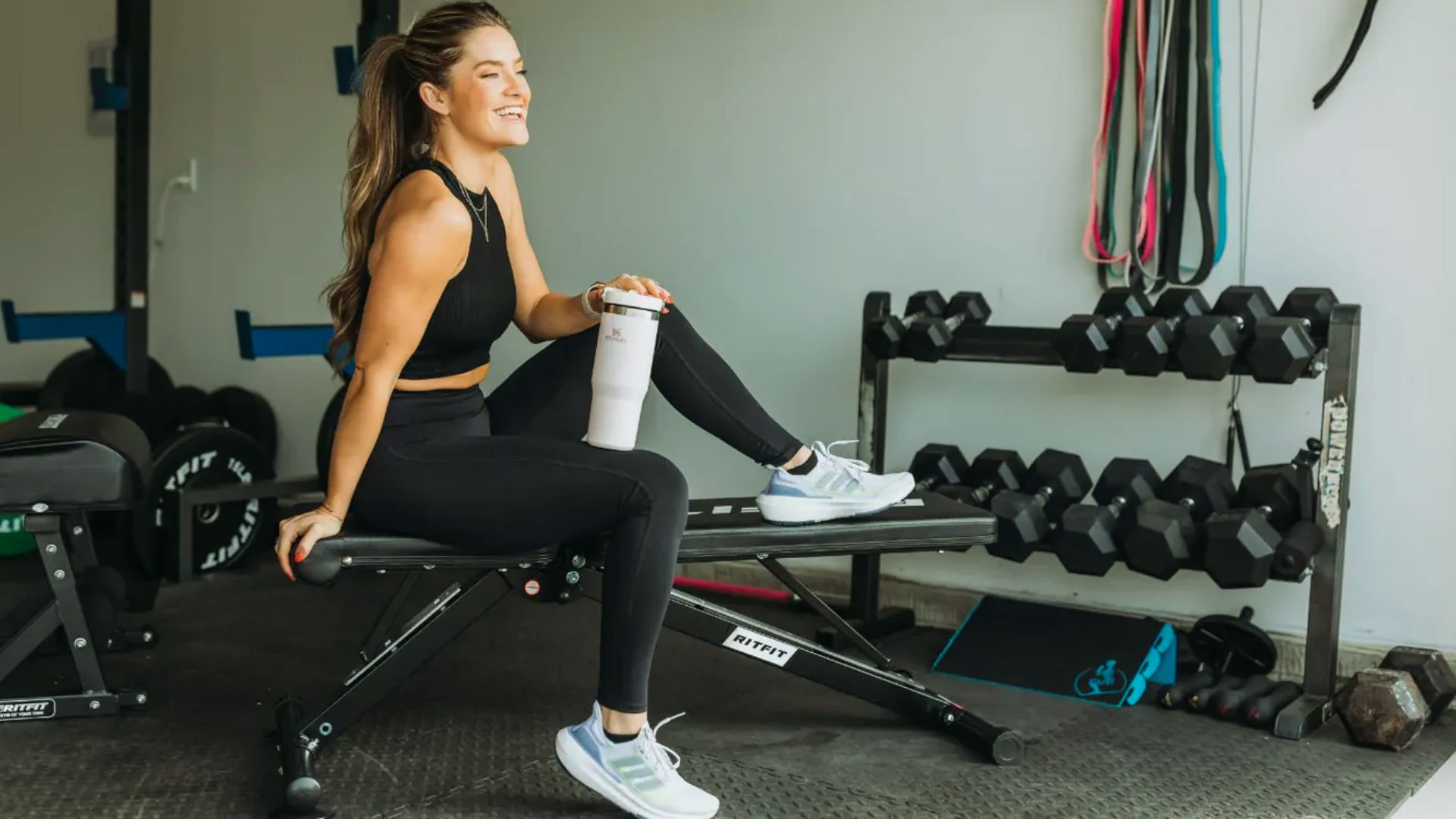
Here is a simple routine you can follow two to three times per week.
Start with a 5 to 10 minute warm-up of light cardio and dynamic stretching before getting into the main workout.
For the workout, do 3 sets of 10 reps of Dumbbell Bench Press, followed by 3 sets of 10 reps per side of Single-Arm Dumbbell Row.
Then move to 3 sets of 10 reps of Incline Dumbbell Bench Press and 3 sets of 8 reps per side of Bulgarian Split Squat.
Follow that with 3 sets of 12 reps of Feet-Elevated Hip Thrust, 3 sets of 12 reps of Dumbbell Fly, and finish with 2 sets of 12 reps of Incline Bicep Curl.
For the core finisher, do Plyo Bench Plank Hold for 3 rounds of 30 seconds and Feet-Elevated Mountain Climbers for 3 sets of 10 reps per side.
Beginners should rest 60 to 90 seconds between sets, use lighter weights, and focus on form first. Advanced trainees can cut rest to 30 to 45 seconds and add weight progressively each week.
Tips to Increase Bench Press Strength
A few smart adjustments to your training can push past any plateau and add real strength to your bench press.
- Strengthen your triceps since they drive the top half of every press. Add close-grip bench press and tricep dips to your weekly routine.
- Build a thicker back to create a stable base for pressing. Rows, pull-overs, and lat work all carry over directly to a stronger bench.
- Switch up your rep schemes if you have been stuck on 3 sets of 10 for months. Your body has adapted, so it is time to change the stimulus.
- Try heavy days with 5 sets of 5 reps or volume days with 4 sets of 12 to 15 reps to keep your muscles guessing.
- Use progressive overload by adding a little more weight or one extra rep each week. Small increases add up fast, so track every session.
Choosing the Right Bench for Home Workouts
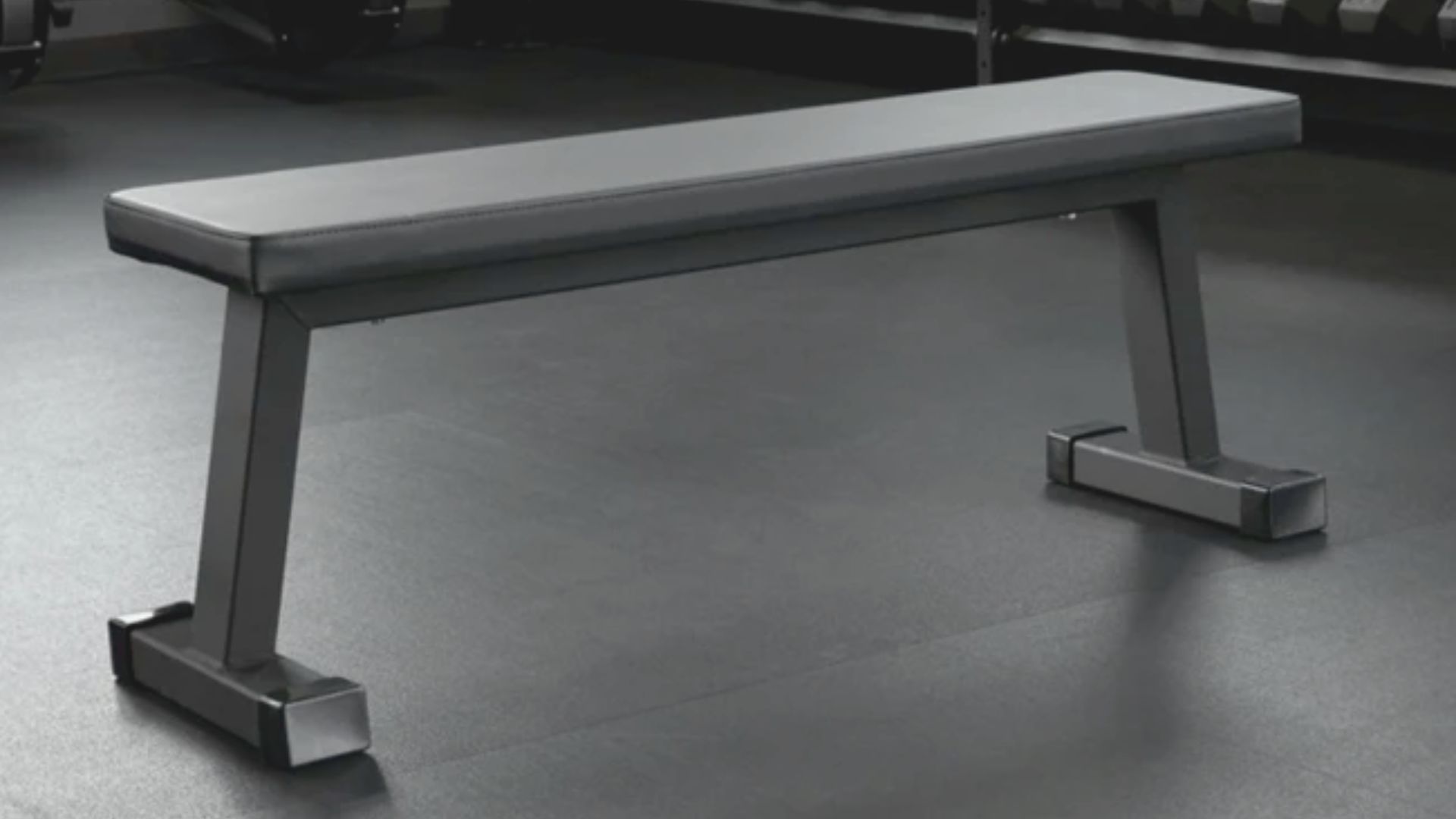
Not all benches are created equal. Here is what to look for before buying.
A flat bench is affordable, space-friendly, and great for beginners. An adjustable bench costs more but lets you do incline, flat, and decline work, making it the better long-term investment.
Whatever you choose, make sure it has a stable base, firm padding, and a weight capacity that covers your body weight plus the load you plan to lift. Easy-to-use adjustment levers are a bonus worth paying for.
Popular options worth looking into include the Flybird Adjustable Bench, REP Fitness AB-3000, and the Bowflex 5.1S. All three offer solid stability and good weight capacity for home use.
Conclusion
Home workouts do not have to be complicated. With a bench and a pair of dumbbells, you can build real strength without ever stepping into a gym.
I started training at home out of necessity, and honestly, I never looked back. These moves gave me the consistency I needed.
Pick two or three exercises from this list and start this week. You will be surprised how far a simple setup can take you.
Found this helpful? Leave a comment below and let me know which workout you tried first. Share this with someone who trains at home too!
Frequently Asked Questions
Can I build muscle with bench workouts at home?
Yes, you can. As long as you use enough weight and follow a consistent routine, home bench workouts can build real muscle over time. Progressive overload is the key.
How often should I do bench workouts each week?
Two to three times per week works well for most people. Make sure to rest at least one day between sessions to let the muscles recover properly.
Do I need an adjustable bench or will a flat bench work?
A flat bench is a great starting point. However, an adjustable bench gives you more options, including incline and decline angles that target more muscle groups effectively.
What weight should I start with for bench workouts at home?
Start lighter than you think you need to. Focus on form first, then add weight gradually. A good rule is to pick a weight where the last two reps of each set feel challenging but controlled.
Is it safe to do bench workouts alone without a spotter?
Yes, it is safe with the right approach. Use dumbbells instead of a barbell when training alone, start with manageable weights, and always have a clear drop zone beside the bench in case you need to set them down quickly.