

Average grip strength by age tells you a lot about your health. Your grip gets weaker as you get older, but you can slow this down. I’ve spent years studying strength and helping people understand what’s normal at different life stages.
In this guide, I’ll show you what grip strength is, why it changes with age, and how you measure up. You’ll learn the numbers for every age group, men versus women, and how to improve your results. I’ll give you real data you can trust.
This is everything you need to know about grip strength at any age.
What Is Grip Strength?

Grip strength is how hard you can squeeze with your hand. It measures the force your hand muscles can create. When you shake hands, open jars, or carry bags, you’re using grip strength. Doctors and researchers use it to check overall body strength and health.
Your grip strength shows more than just hand power. Research links it to heart health, bone density, and muscle mass throughout your body.
Weak grip can signal health problems before other symptoms appear. That’s why doctors now use it as a vital sign, just like blood pressure or heart rate.
Why Average Grip Strength by Age Changes
Your grip naturally gets weaker as you age, starting around 30 years old. Several biological and lifestyle factors cause this decline over time.
Muscle Loss and Aging (Sarcopenia)

Sarcopenia is the natural loss of muscle mass as you age. After 30, you lose about 3-5% of muscle mass each decade. Your hands and forearms lose muscle fibers just like the rest of your body. This process speeds up after age 60.
Hormonal Changes Over Time

Hormones that build muscle decline with age. Testosterone drops in men starting in their 30s. Growth hormone decreases in both men and women. These changes make it harder to maintain muscle strength. Lower hormone levels mean slower muscle recovery and growth.
Physical Activity and Lifestyle Factors

How active you are affects your grip strength at any age. People who use their hands regularly keep stronger grips. Desk workers often have weaker grips than manual laborers. Regular exercise slows down age-related strength loss. Inactivity speeds it up.
Medical Conditions That Affect Strength

Arthritis, diabetes, and nerve damage can weaken your grip. Stroke survivors often lose grip strength on one side. Carpal tunnel syndrome affects hand function. These conditions become more common with age, adding to natural decline.
Average Grip Strength by Age by Age Group Breakdown
Grip strength varies significantly across different age groups, with peak strength in your 20s and 30s. Here’s what’s normal at each life stage.
Children and Teenagers

Kids’ grip strength increases as they grow. Boys aged 10-12 average 30-40 pounds, while girls average 25-35 pounds. Teenagers continue gaining strength through puberty.
By age 18, boys reach 70-90 pounds and girls reach 50-65 pounds. Growth spurts bring rapid strength gains.
Young Adults (20–39 Years)

This is when grip strength peaks. Men in their 20s and 30s average 100-120 pounds. Women average 60-75 pounds during these years.
Athletes and manual workers often exceed these numbers. This is your strongest decade for hand and forearm power.
Middle-Aged Adults (40–59 Years)

Grip strength starts declining in your 40s. Men in this age range average 90-105 pounds. Women average 55-70 pounds.
The decline is gradual, about 1-2% per year. Active individuals maintain higher levels than sedentary ones.
Older Adults (60+ Years)

The decline speeds up after 60. Men over 60 average 70-85 pounds. Women average 45-55 pounds.
By age 80, men average 55-65 pounds and women 35-45 pounds. Regular strength training can slow this decline significantly.
Factors That Influence Grip Strength at Any Age
Your grip strength depends on more than just agelifestyle choices play a huge role. These factors can raise or lower your numbers significantly.
Body Composition

People with more muscle mass have stronger grips. Your hand size matters too. Larger hands can apply more force.
Body weight affects grip strength, but muscle matters more than fat. Lean muscle in your forearms directly increases grip power.
Nutrition and Protein Intake

Your muscles need protein to stay strong. Eating 0.8-1 gram of protein per pound of body weight helps maintain muscle. Vitamin D and calcium support bone strength in your hands.
Poor nutrition speeds up age-related muscle loss. Protein becomes even more important after age 50.
Training and Resistance Exercise

Lifting weights builds grip strength indirectly. Exercises like deadlifts and rows force your grip to work hard. Direct grip training gives faster results.
Farmers carries, plate pinches, and grip trainers all work. Even 10 minutes twice a week makes a difference.
How to Measure Your Grip Strength?
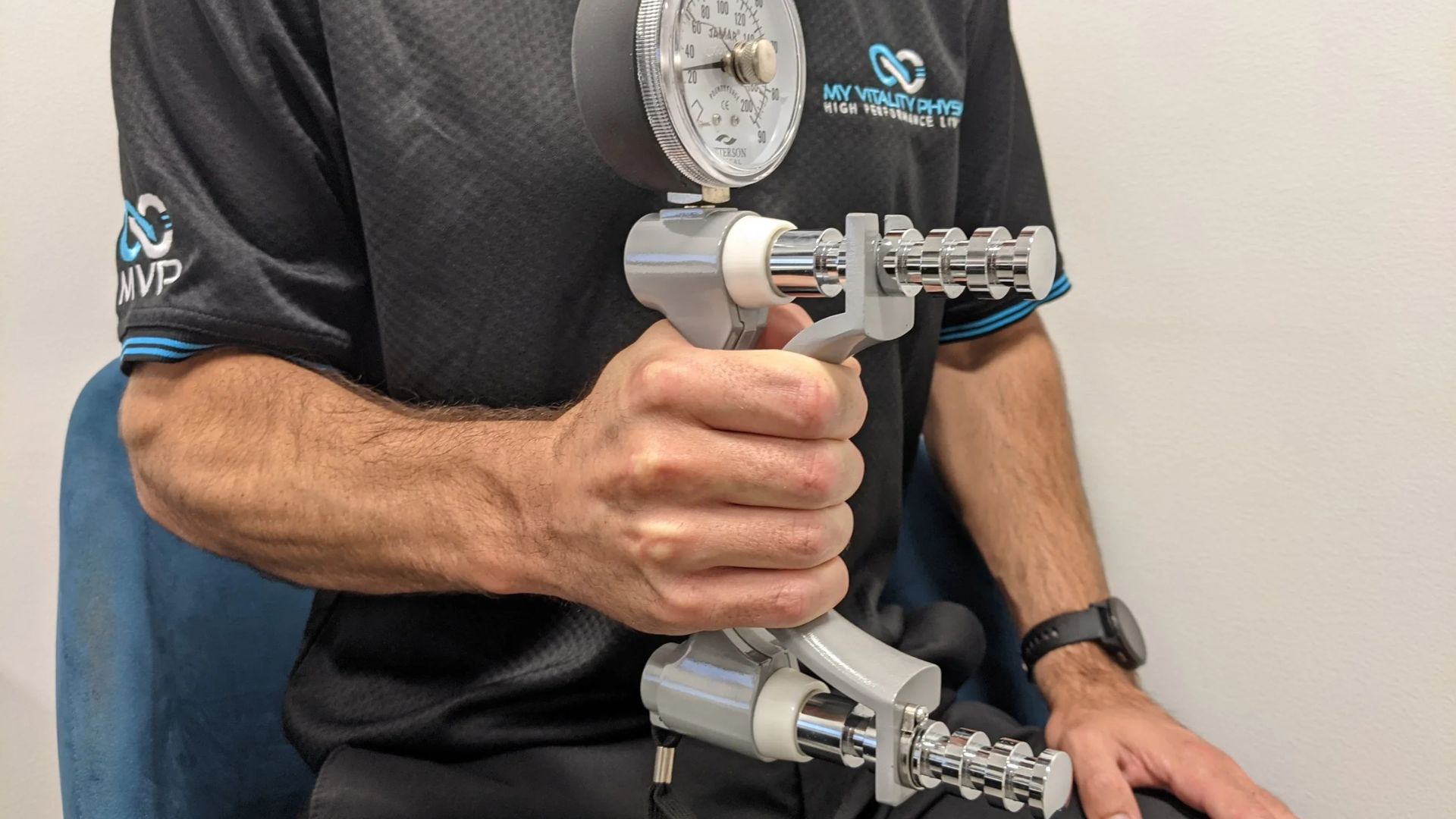
Measuring your grip strength at home is simple with the right tool. A hand dynamometer gives you accurate readings in minutes.
A hand dynamometer is a spring-loaded device that measures squeeze force. You can buy one online for $20-50. Digital models show your exact force in pounds or kilograms.
Here’s how to test yourself:
- Stand up straight with your arm at your side
- Hold the dynamometer with your elbow at 90 degrees
- Squeeze as hard as you can for 3-5 seconds
- Read the number on the display
- Rest for 30 seconds and repeat
- Do three tests and record the highest number
Warm up with a few light squeezes first. Keep your wrist straight and don’t hold your breath. Test at the same time of day for consistency. Wait 48 hours between full test sessions.
Tips to Improve and Maintain Grip Strength
You can build stronger hands at any age with the right approach.
- Try these exercises. Farmer’s carries, dead hangs, plate pinches, grip trainers, towel pull-ups, and wrist curls. Start with 10-30 second holds and build up gradually.
- Train 2-3 times per week. Rest days let your muscles recover and grow. Never train grip on back-to-back days.
- Add weight slowly. Start light and increase time or weight each week. Small, steady progress builds strength safely.
- Listen to your body. Pain means you’re overdoing it. Use ice for sore forearms and stretch after each session.
- Prevent injuries. Stop exercises that cause sharp pain. Building slowly avoids tendonitis and keeps you training long-term.
Conclusion
I’ve been tracking grip strength for years, and I still test mine every few months. Average grip strength by age gives you real insight into your health and fitness. Your numbers will change over time. That’s normal.
What matters is staying active and working to slow the decline. Start measuring your grip today and set a baseline. Compare yourself to the age norms, then focus on improving your personal best.
Strong hands mean better health and independence as you age. Drop a comment below with your grip strength numbers or questions. Share this guide with friends who want to stay strong.
Frequently Asked Questions
What is a good grip strength for my age?
For men aged 20-39, aim for 100-120 pounds. For women the same age, 60-75 pounds is good. Check the age ranges in this guide to find your target numbers.
Can I improve my grip strength after 50?
Yes, you can get stronger at any age. Train your grip 2-3 times per week with the exercises listed above. Progress takes longer after 50, but it’s definitely possible.
How often should I test my grip strength?
Test every 2-3 months to see real progress. Testing more often won’t show meaningful changes. Write down your results each time to track improvement.
Does hand size affect grip strength measurements?
Yes, bigger hands usually grip harder. But compare yourself to people your age and gender, not to everyone. Focus on beating your own previous scores.
When should I worry about low grip strength?
See a doctor if your grip drops suddenly or you score below the 10th percentile. Trouble opening jars or weakness in one hand also needs attention. Low grip can signal health problems.


