

I’ve spent years testing different workout splits, and this 4 day dumbbell routine delivers real results. You’re about to learn exactly how to build muscle using just dumbbells.
No fancy machines needed.This guide covers everything. The complete 4 day split, exercise breakdowns for each session, and how to add weight over time. You’ll get stronger.
You’ll see growth. I’ve used this same structure myself and watched it work for dozens of people. You can do this at home or in any gym.
We’ll walk through upper body days, leg sessions, push and pull workouts. All designed to hit every muscle group twice per week.
You’ll learn proper progression methods so you keep gaining strength. Simple dumbbells. Four training days. Real muscle growth.
Let’s get started.
Why Choose a 4 Day Dumbbell Workout Split

Four days gives you enough training volume without burning out. You hit each muscle group twice per week, which research shows works best for growth.
The split balances heavy work with rest days, so your muscles actually recover and grow. Dumbbells let you train at home, save money on gym fees, and build real strength.
You can adjust weights easily as you progress. This setup works for beginners and experienced lifters alike.
Complete 4 Day Dumbbell Workout Split
This balanced training schedule hits every muscle group twice per week for maximum growth and recovery.
| Day | Focus | Key Muscle Groups | Rest |
|---|---|---|---|
| Day 1 | Upper Body | Chest, Shoulders, Arms, Rear Delts | Active |
| Day 2 | Lower Body | Quads, Hamstrings, Glutes, Calves, Core | Active |
| Day 3 | Push | Chest, Shoulders, Triceps | Active |
| Day 4 | Pull | Back, Traps, Biceps | Active |
| Day 5 | Rest | Full Recovery | – |
| Day 6 | Rest | Full Recovery | – |
| Day 7 | Rest | Full Recovery | – |
How to Structure Your 4 Day Dumbbell Workout Plan
Split training across upper, lower, push, and pull days for complete muscle coverage and balanced development.
Day 1: Upper Body
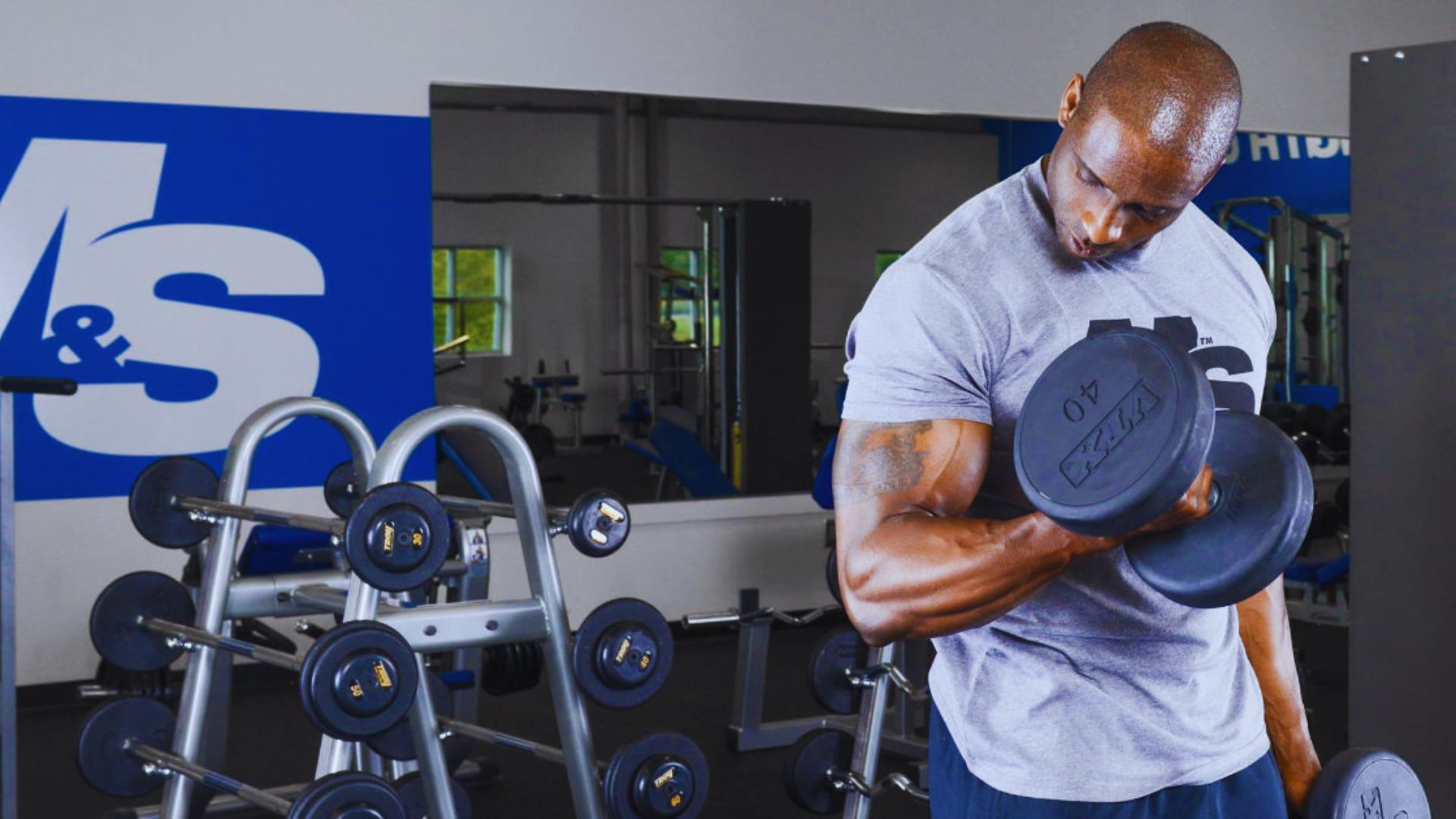
Focus: chest, shoulders, arms, rear delts
Sample exercises:
- Dumbbell Incline Bench Press (8 to 10 reps)
- Dumbbell Row (10 to 12 reps each side)
- One-Arm Dumbbell Shoulder Press (10 to 12 reps each side)
- Dumbbell Rear Raise (12 to 15 reps)
- Hammer Curl & Dumbbell Kickback (10 to 12 reps)
Variation for home or no bench (4 day dumbbell workout no bench):
Skip the bench press. Do floor press instead. Lie on your back on the floor. Press dumbbells up. Your elbows touch the ground at the bottom.
This protects your shoulders and still builds chest strength. For shoulder press, stand instead of sitting. Keep your core tight. Press overhead with control.
Day 2: Legs, Calves, and Abs

Focus: quads, hamstrings, glutes, calves, core
Sample exercises:
- Goblet Squat (10 to 20 reps)
- Romanian Deadlift (10 to 20 reps)
- Bulgarian Split Squat (10 to 12 reps)
- Lying Dumbbell Leg Curl (8 to 10 reps)
- Calf Raises and Dumbbell Side Bend (10 to 15 reps)
This day builds your entire lower body. Goblet squats hit your quads hard. Hold one dumbbell at chest height. Squat deep. Romanian deadlifts target hamstrings and glutes.
Keep a slight knee bend. Hinge at your hips. Bulgarian split squats add single-leg strength. Your back foot stays elevated.
This fixes muscle imbalances. Add calf raises and core work at the end.
Day 3: Push Day
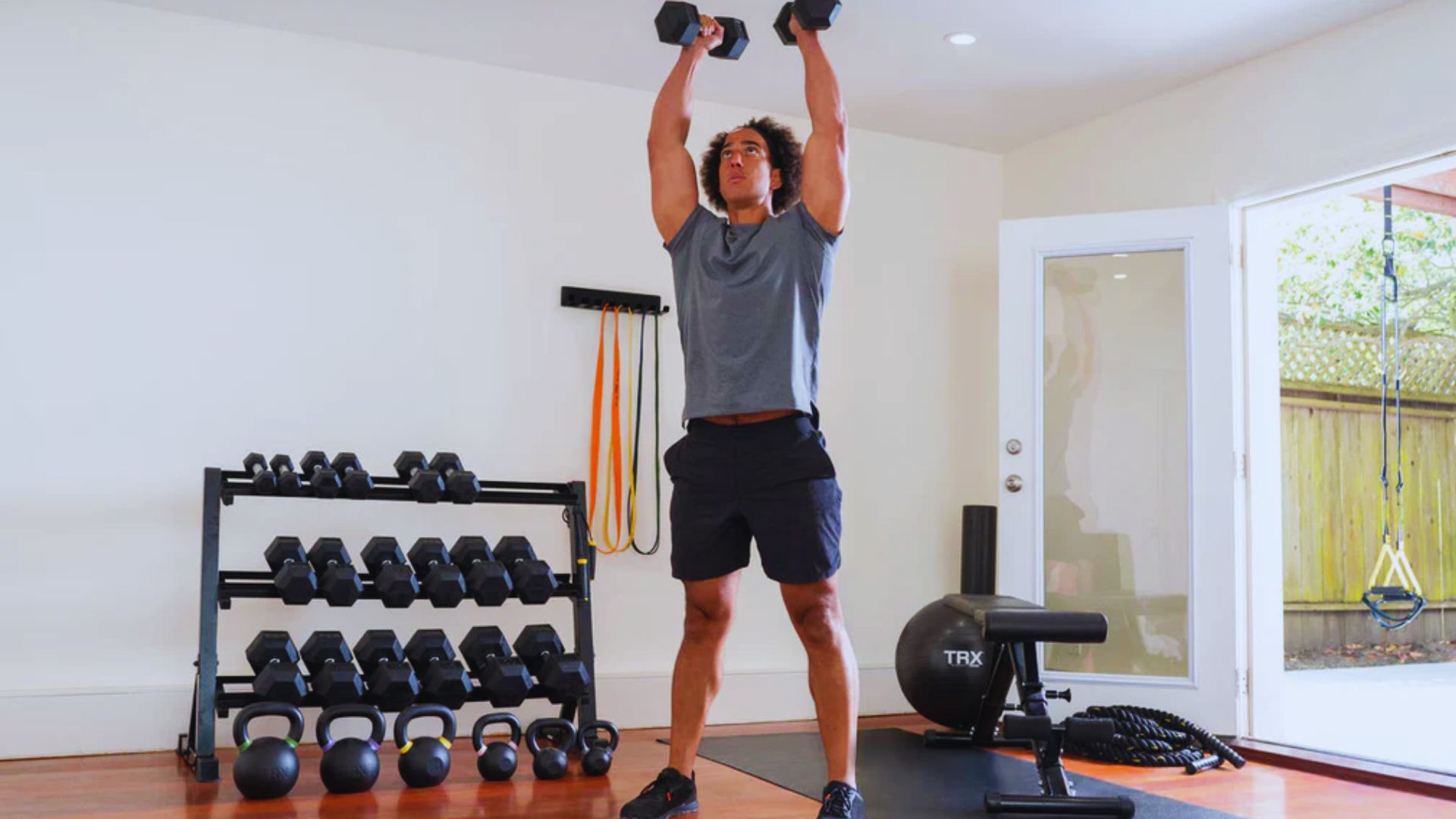
Focus: chest, shoulders, triceps
Sample exercises:
- One-Arm Dumbbell Bench Press (8 to 10 reps)
- Incline Dumbbell Fly (12 to 15 reps)
- Seated Dumbbell Shoulder Press (8 to 10 reps)
- Dumbbell Lateral Raise (10 to 12 reps)
- Triceps Extensions (8 to 12 reps)
Push day trains all pressing muscles. One-arm bench press forces core stability. Do one side, then the other. Flies stretch your chest at the bottom. Don’t go too heavy here.
Focus on the squeeze. Shoulder press builds overhead strength. Lateral raises make your shoulders wider.
Keep a slight bend in your elbows. Finish with triceps work for arm size.
Day 4: Pull Day

Focus: back, traps, biceps
Sample exercises:
- Incline Dumbbell Chest Supported Row (8 to 10 reps)
- Dumbbell Pullover (10 to 12 reps)
- Dumbbell Shrug (10 to 12 reps)
- Dumbbell Preacher Curl / Alternating Curl (8 to 15 reps)
- Optional vertical pull using bar, tree branch, or pull-up alternative
Pull day builds your back thickness. Chest supported rows take stress off your lower back. Lie face down on an incline bench. Pull dumbbells to your ribs. Pullovers hit your lats and chest.
Lie across a bench. Lower the weight behind your head. Shrugs build traps.
Just lift your shoulders up. No rolling motion. Finish with bicep curls.
How to Use Progressive Overload in Dumbbell Workouts
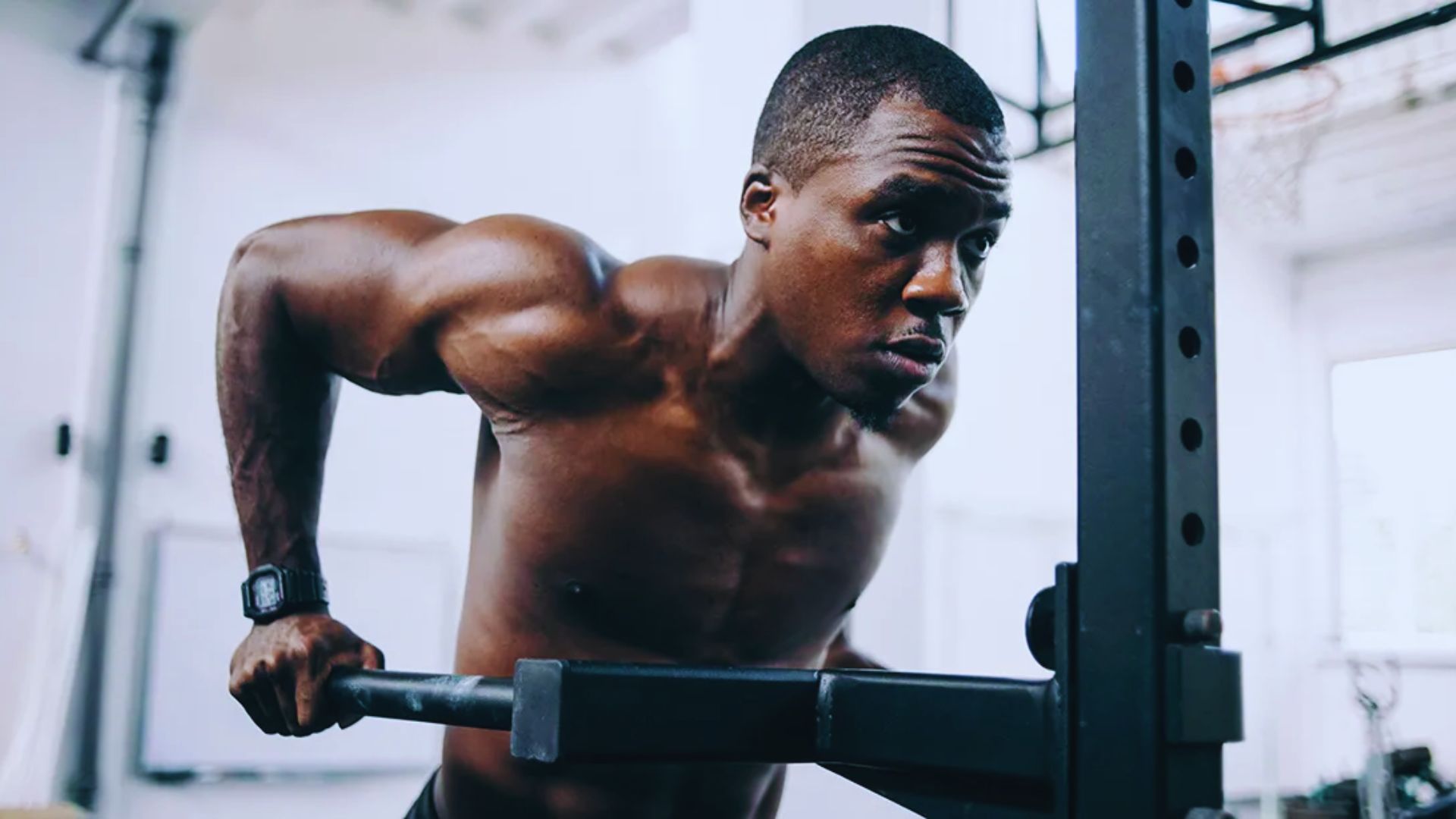
Add reps or weight each week using double progression to force continuous muscle growth and strength gains.
Progressive overload means doing more over time. Your muscles need this to grow.
The double progression method works like this:
Pick a rep range. Let’s use 8 to 10 reps. Start at the low end. Do 8 reps with a weight you can handle. Next workout, try for 9 reps with that same weight.
Keep adding reps until you hit 10. Once you get 10 reps, increase the weight by 5 pounds. Drop back to 8 reps with the heavier weight. Repeat the process.
Track everything. Write down weights, reps, and sets in a notebook or phone app. You can’t improve what you don’t measure.
Some weeks you’ll add reps. Other weeks you’ll add weight. Both mean progress.
Optional Add-Ons and Variations
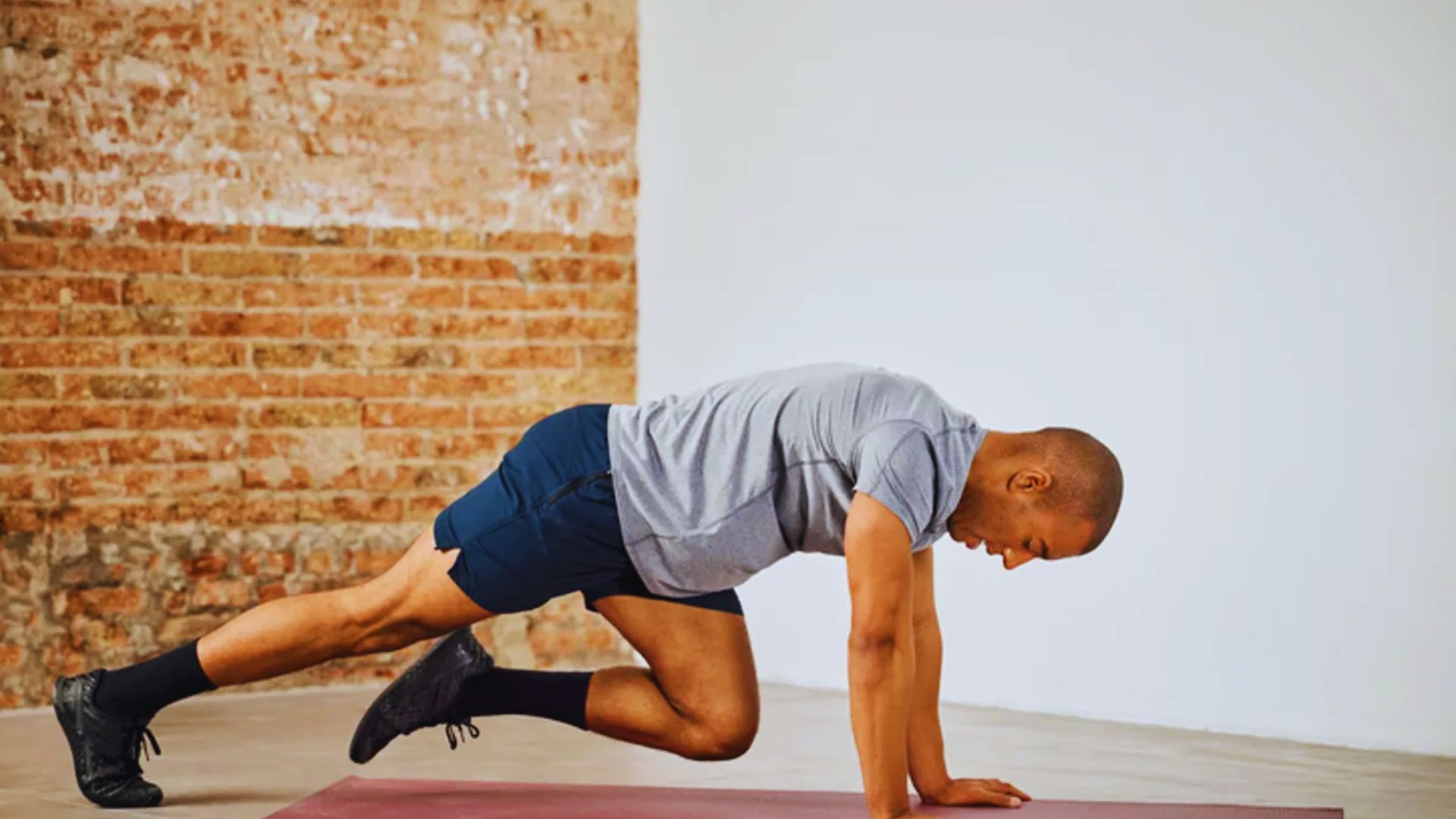
You can add cardio on rest days if you want. Keep it light. A 20-minute walk or bike ride helps recovery. Some people add extra ab work after leg day.
Planks and hanging knee raises work well. Want bigger arms? Throw in one extra bicep and tricep exercise on upper body day.
Don’t overdo it. The main lifts already hit your arms hard. Listen to your body. More isn’t always better.
Common Concerns with Dumbbell-Only Workouts
Address common worries about building muscle with only dumbbells versus barballs or machines for complete training.
- Building muscle with just dumbbells: Dumbbells provide enough resistance for serious growth. You can progressively overload just like with barbells. Many people build impressive physiques using only dumbbells. The key is consistent effort and adding weight over time.
- Limited dumbbell weight options: Do more reps. Slow down your tempo. Add pauses at the hardest parts. Use single-arm exercises to increase difficulty. Eventually, invest in heavier weights or adjustable dumbbells.
- Training without barbells: Dumbbells offer some advantages. They force each side to work equally. This fixes strength imbalances. They allow more natural movement patterns. Your shoulders and wrists can move freely.
- Back training without pull-up bars: Rows become your main movement. Do lots of rowing variations. These build back thickness. Add pullovers for width.
- Training without a bench: A bench helps but is not required. You can do floor press instead. Use an ottoman or stable chair for incline work. Get creative with what you have.
Conclusion
I know starting a new workout plan feels intimidating. But you’ve got everything you need right here.
This 4 day dumbbell workout builds real muscle without complicated equipment or gym memberships.
I’ve seen this split work for beginners and experienced lifters alike. The key is showing up consistently and adding a little weight each week. Your body will respond.
Start with Day 1 this week. Track your weights. Push yourself on every set. In three months, you’ll look back amazed at your progress.
Drop a comment below about your goals or any questions. Let’s build some muscle together.
Frequently Asked Questions
How many times per week should I train with this 4 day dumbbell workout?
Train exactly four days per week as outlined. Space your sessions with at least one rest day between similar muscle groups. This gives your muscles time to recover and grow stronger.
Can beginners use this 4 day dumbbell workout split?
Yes, beginners can start with lighter weights and focus on form. Master each movement pattern first. Add weight slowly over weeks. Your body will adapt to the training volume.
What weight dumbbells do I need for muscle growth?
Start with weights that make 8-10 reps challenging but doable. Most men begin with 15-25 lb dumbbells. Women often start with 8-15 lb dumbbells. Buy adjustable dumbbells if possible.
How long should each workout session last?
Plan for 45-60 minutes per session. This includes warm-up, working sets, and cool-down. Rest 60-90 seconds between sets. Don’t rush through exercises. Quality beats speed.
Do I need to change exercises every few weeks?
No, stick with the same exercises for at least 8-12 weeks. Focus on getting stronger at these specific movements. Changing too often prevents progress. Master the basics first.