

I used to wonder if my vibration plate sessions actually counted for anything. No steps on my tracker, no distance logged. It felt like the effort just disappeared.
But the numbers told a different story. Ten minutes on a vibration plate can equal roughly 2,000 to 3,000 steps, depending on what you do on it.
That is not a rough guess. It is based on how hard your muscles work and how much energy your body burns.
If you have ever questioned whether it is worth your time, this blog will answer that for you.
10 Minutes on a Vibration Plate Equals How Many Steps?
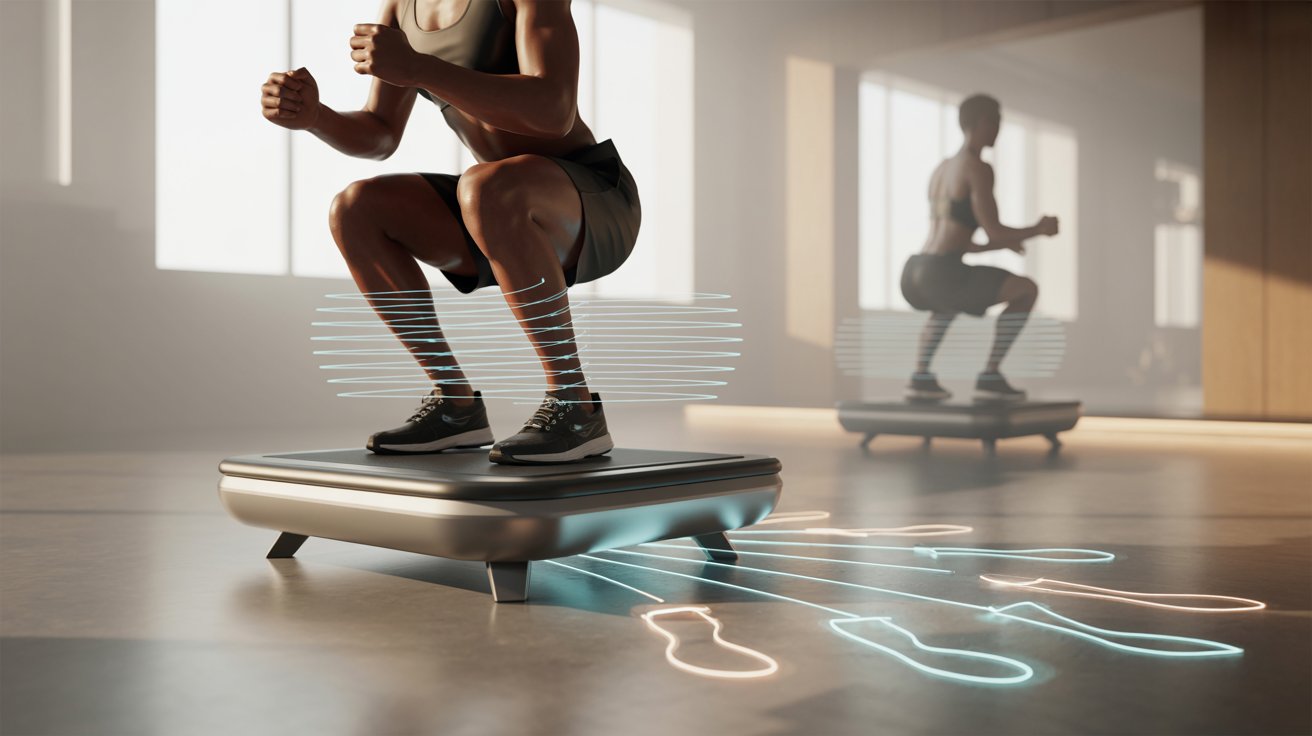
Ten minutes on a vibration plate is roughly equal to 2,000–3,000 steps if you are doing exercises like squats or lunges on it. If you are just standing still, the estimate drops to around 1,000 steps.
These are not actual steps. They are estimated equivalents based on the energy your body uses.
The number varies depending on the intensity setting, the exercises you do, and your body weight.
Why Step Equivalents Are Used for Vibration Plates
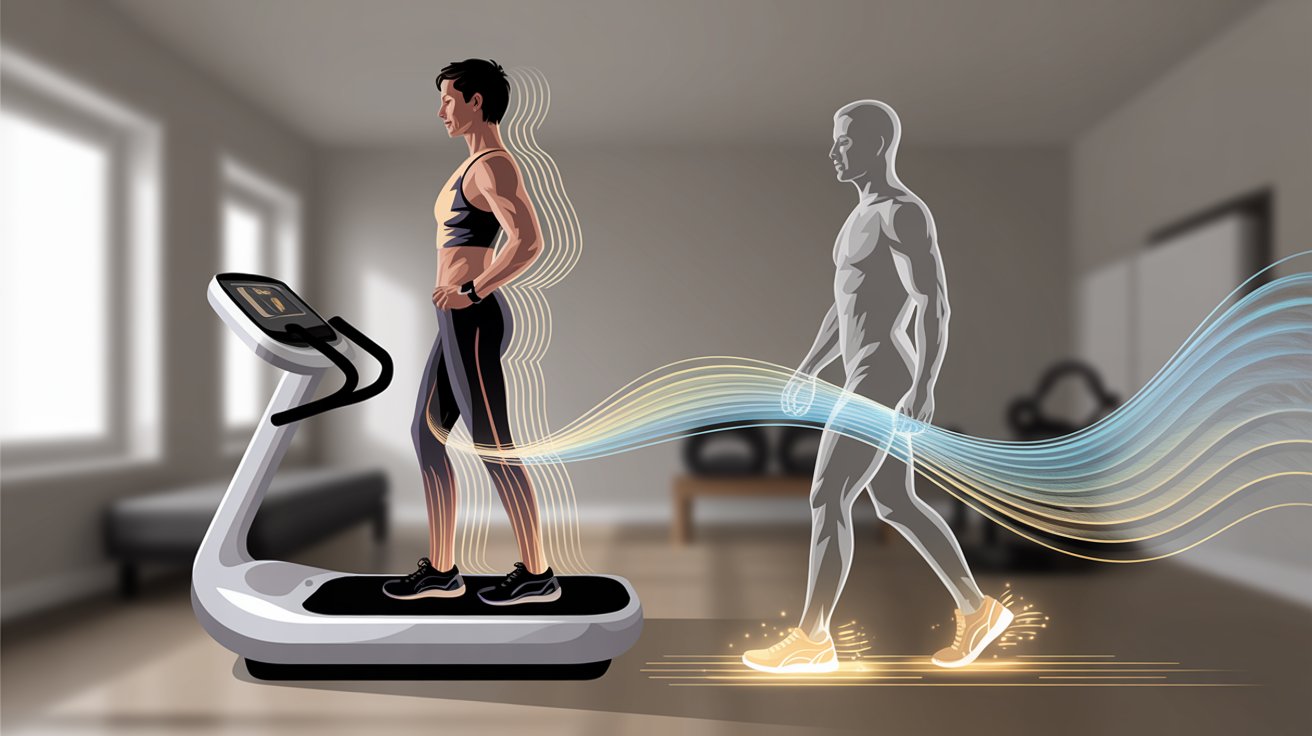
Find out how 10 minutes on a vibration plate compares to your daily step count in simple terms.
No Actual Step Tracking
Fitness trackers do not count vibration plate activity as steps. The plate moves your body through vibration, not forward motion. So your watch or phone will likely show little to no step count during a session.
How Researchers Estimate Steps
Researchers look at calories burned and MET values to estimate step equivalents. MET stands for metabolic equivalent of task. It measures how hard your body is working.
Vibration plate exercises are compared to moderate walking, which sits at around 3 to 3.5 METs. This comparison helps convert the energy used into an estimated step count.
How a Vibration Plate Works
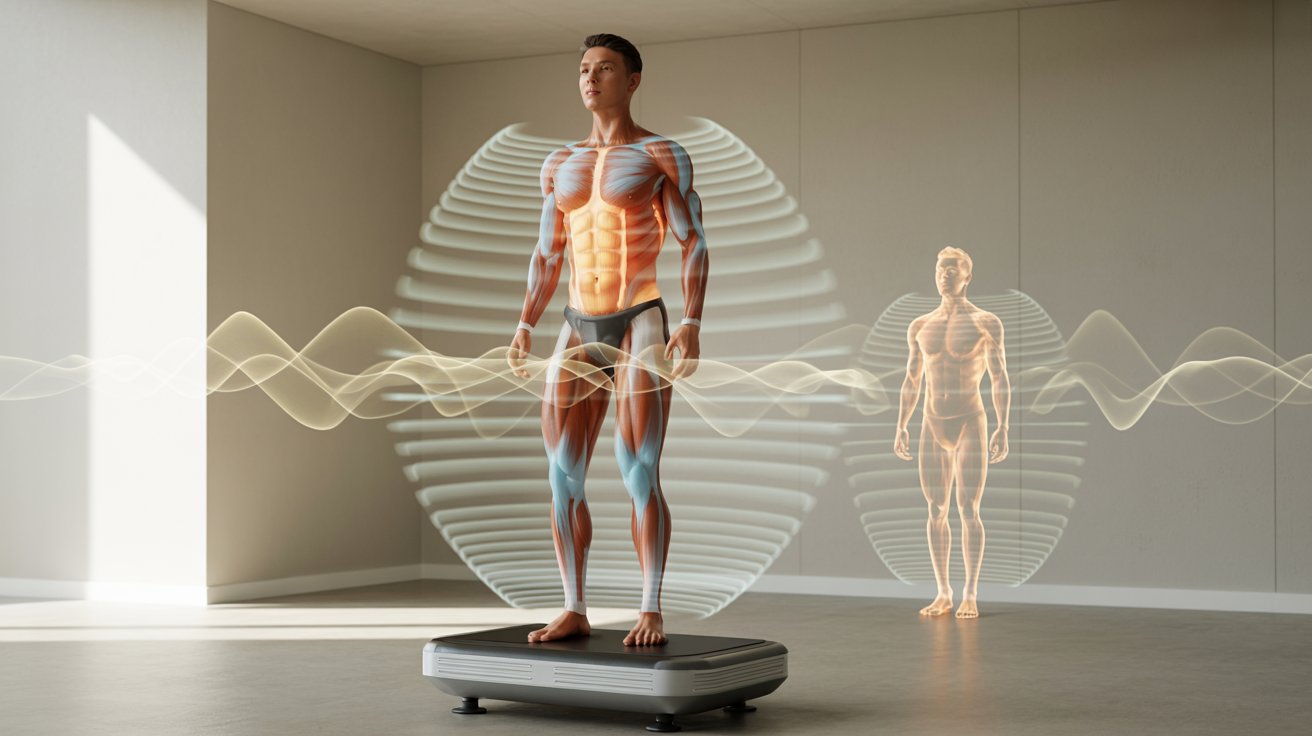
A vibration plate sends rapid vibrations through your body, triggering automatic muscle contractions that work your muscles harder than regular exercise.
Vibration Frequency Explained
A vibration plate moves at a frequency of 15 to 60 Hz. That means it vibrates between 15 and 60 times per second. You can adjust the speed depending on your fitness level and goal.
Tonic Vibration Reflex
When the plate vibrates, your muscles react automatically. They contract rapidly to help your body stay balanced. This is called the tonic vibration reflex. It happens without you thinking about it.
Muscle Activation vs Walking
This constant muscle response is what makes vibration plates stand out. They can activate up to 90% of your muscle fibers.
Regular exercise typically activates around 40%. That higher activation is why even short sessions can feel effective.
How Many Muscle Contractions in 10 Minutes?
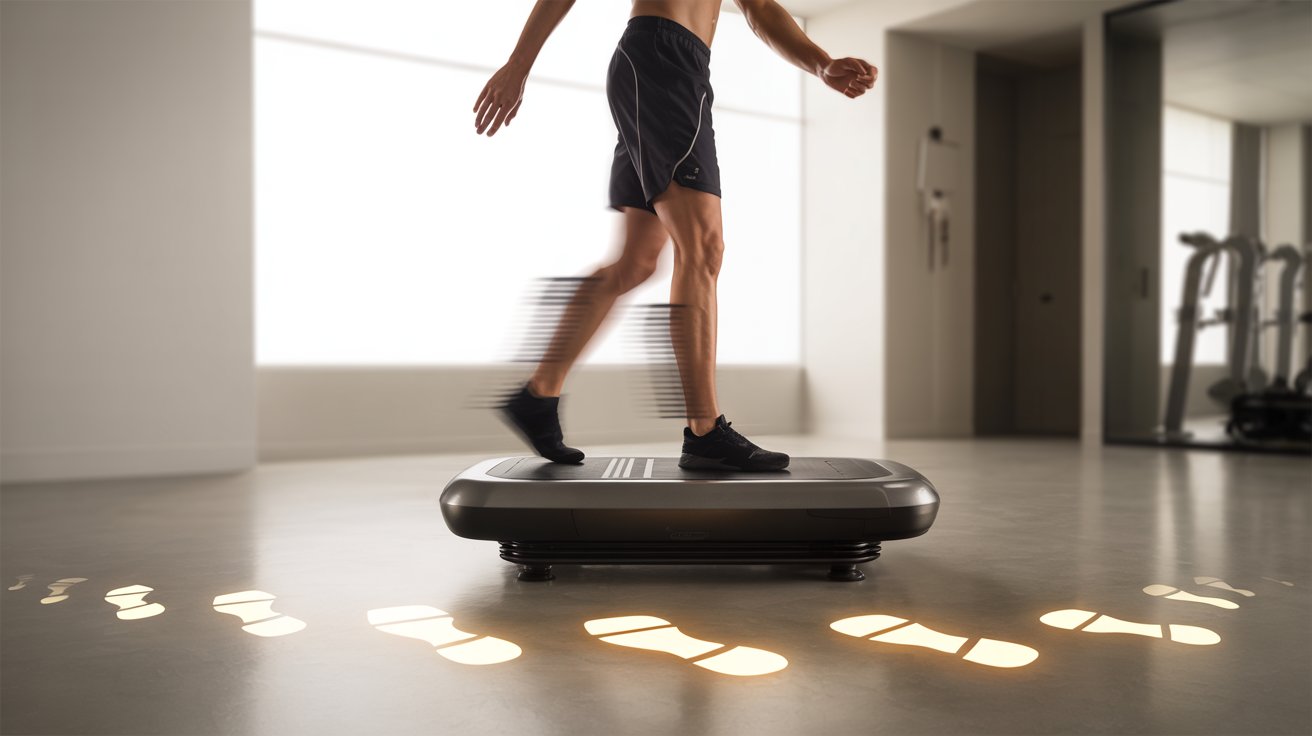
Your muscles contract thousands of times during a single vibration plate session. Here is a breakdown of what happens in just 10 minutes and why it counts toward your step equivalent.
Contractions Per Second
At a typical vibration plate setting, your muscles contract 30 to 50 times per second. This happens automatically as your body responds to the movement beneath you.
You do not have to do anything extra. The plate does the work of triggering those rapid, repeated contractions throughout your session.
Total in 10 Minutes
Over a 10-minute session, your muscles go through roughly 18,000 to 30,000 contractions in total.
That is a large amount of muscle activity packed into a short time. Most traditional workouts cannot match that volume of contractions in the same window.
Why This Matters for Step Equivalence
The more your muscles engage, the more energy your body uses. That higher energy output is what raises the step equivalent number.
A slow walk does not come close to this level of muscle involvement, which is why vibration plates can match or beat a moderate walking session.
Calories Burned in 10 Minutes on a Vibration Plate
Ten minutes on a vibration plate burns around 50 to 150 calories depending on what you do.
Just standing burns roughly 20 calories. Adding squats or lunges pushes that number significantly higher.
In terms of calorie burn, it is similar to slow walking. It falls short of running but is still a solid option for low-impact activity. The more active you are on the plate, the more calories you burn.
Factors That Affect Step Equivalent
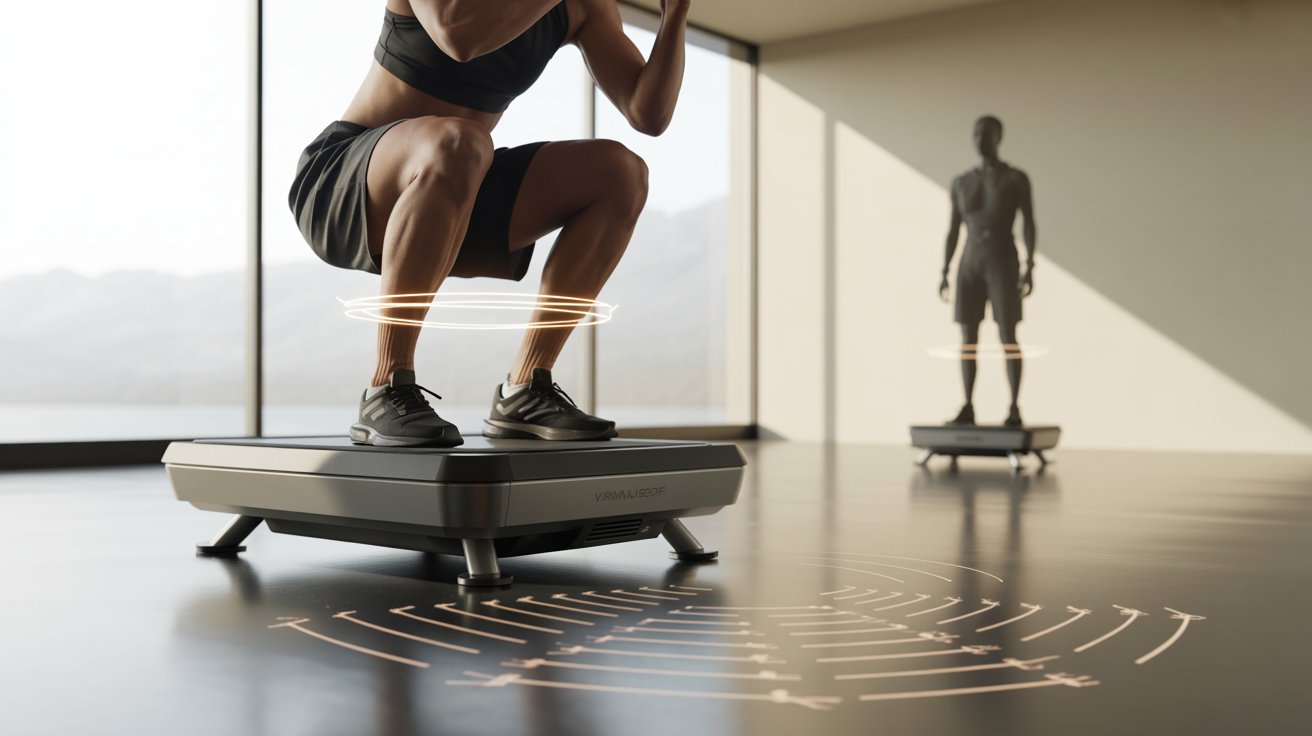
Not every vibration plate session gives the same result. Intensity, movement type, and body weight all change your step equivalent.
Intensity and Frequency
The higher the Hz setting, the harder your muscles work. A higher frequency means more contractions per second, which raises your energy output.
That directly affects how high your step equivalent goes. Keeping the intensity low will give you a smaller return compared to pushing the frequency up during your session.
Type of Exercise
Standing still on the plate gives you a lower step equivalent than moving. Dynamic exercises like squats, lunges, or calf raises force your muscles to work against both gravity and the vibration.
The more active the movement, the higher the step count equivalent you can expect from the same 10 minutes.
Body Weight and Fitness Level
Heavier individuals burn more calories during the same session because their bodies require more energy to maintain balance and movement.
This means the step equivalent will also be higher. Fitness level plays a role too. Beginners may fatigue faster, while those with more experience can sustain higher intensity for the full session.
Best Exercises to Maximize Step Equivalent
Adding movement to your vibration plate session is the fastest way to increase your step equivalent.
1. Lower Body
Lower body exercises give the highest step equivalent. Squats target your quads, hamstrings, and glutes while fighting both gravity and vibration.
Lunges add a balance challenge that pushes muscle activation higher. Calf raises are simple but keep your lower legs working consistently throughout the session.
2. Core & Upper Body
Planks on a vibration plate are harder than a standard plank. Your core works constantly to keep you stable.
Push-ups follow the same idea. The instability forces your chest, shoulders, and arms to recruit more muscle fibers with every rep.
3. Why Movement Boosts Results
Passive standing keeps your calorie burn and step equivalent low. Adding movement forces your body to coordinate muscles, maintain form, and handle the vibration all at once.
More effort means a better output every time.
Common Mistakes When Using a Vibration Plate
- Standing still the entire session lowers your step equivalent and calorie burn. Add movement to get real results.
- Starting at a high intensity too soon can strain your muscles. Build up the frequency gradually over time.
- Poor posture reduces the effectiveness of every session. Keep your back straight and knees slightly bent.
- Skipping sessions breaks your progress. Short, regular workouts work better than occasional long ones.
- Holding onto the handles too tightly limits muscle engagement. Use them for light support only.
Conclusion
Ten minutes on a vibration plate works out to roughly 2,000 to 3,000 steps.
It is not an exact number, but it is a solid estimate based on energy output and muscle activation.
I find it most useful on days when a full walk is not possible. It saves time and still works your muscles hard. Pair it with regular walking for a more balanced routine.
Try it for two weeks and see how your body responds.
Frequently Asked Questions
How many steps is 10 minutes on a vibration plate?
Ten minutes on a vibration plate equals roughly 2,000 to 3,000 steps with active movement. Just standing still brings that estimate down to around 1,000 steps.
Does a vibration plate count as exercise?
Yes, it does. Your muscles contract thousands of times per session, which burns calories and builds strength over time.
Can I use a vibration plate instead of walking?
It can work as a low-impact substitute on rest days, but it is best used alongside walking. Both together give you a more complete fitness routine.
How many calories does 10 minutes on a vibration plate burn?
You can burn anywhere from 50 to 150 calories in 10 minutes. The number depends on your body weight, intensity, and the exercises you do on the plate.
Is 10 minutes on a vibration plate enough for results?
Ten minutes is a good starting point, especially for beginners. Staying consistent and adding movement to each session will help you see better results over time.


