
Most people think dips are just a triceps exercise. They are not. What dips target goes far beyond the back of your arm.
Dips are a compound upper-body movement that hits your chest, triceps, shoulders, and several supporting muscles at the same time. The muscle that works hardest depends on how you position your body.
In this post, I cover exactly which muscles dips work, how to adjust your form for chest versus triceps, the best variations for every fitness level, and how to do dips safely without hurting your shoulders.
What Do Dips Target?
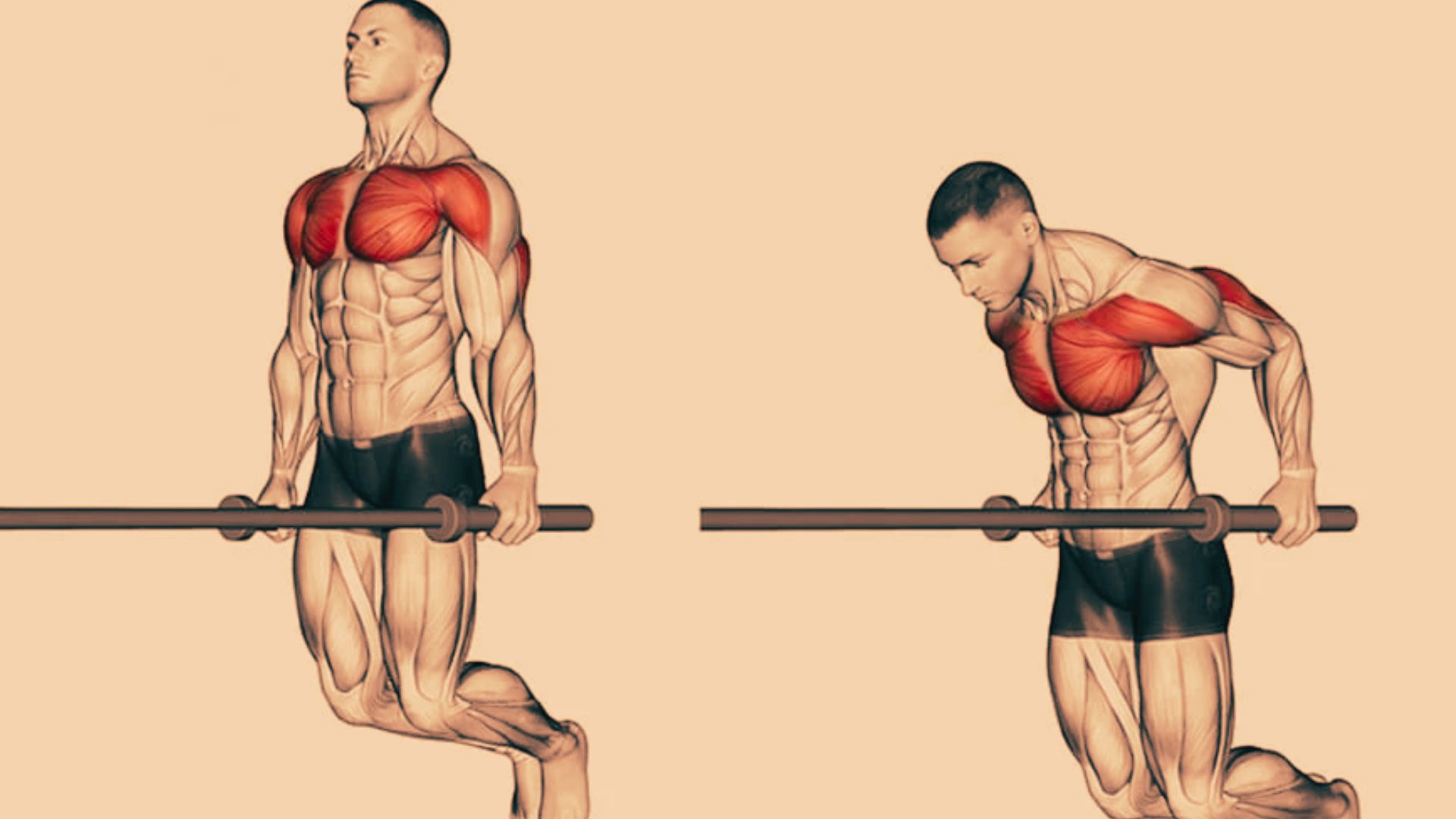
Dips work more muscles than most people realize. The short answer is triceps, chest, and shoulders, but the full picture is more interesting.
The three main muscles that dips target are the triceps brachii, which is always working regardless of variation.
The pectoralis major and minor, which drive the pressing movement especially during a forward lean, and the anterior deltoids, which assist the press from start to finish.
Beyond these three, dips also recruit several supporting muscles including the rhomboids and trapezius to stabilize the shoulder blades.
The latissimus dorsi and teres major as background stabilizers, the levator scapulae near the neck, the core to stop the body from swinging, and the forearms to hold your full bodyweight throughout every rep.
Dips are not a back exercise, but your back is always working quietly in the background.
Your abdominals and glutes are also active throughout both chest and triceps versions to stabilize the body and prevent swinging.
Chest vs Triceps Dips
This is where most people get confused. The movement looks the same from the outside, but a small shift in your body position makes a big difference in which muscle does the most work.
Chest Dip Technique
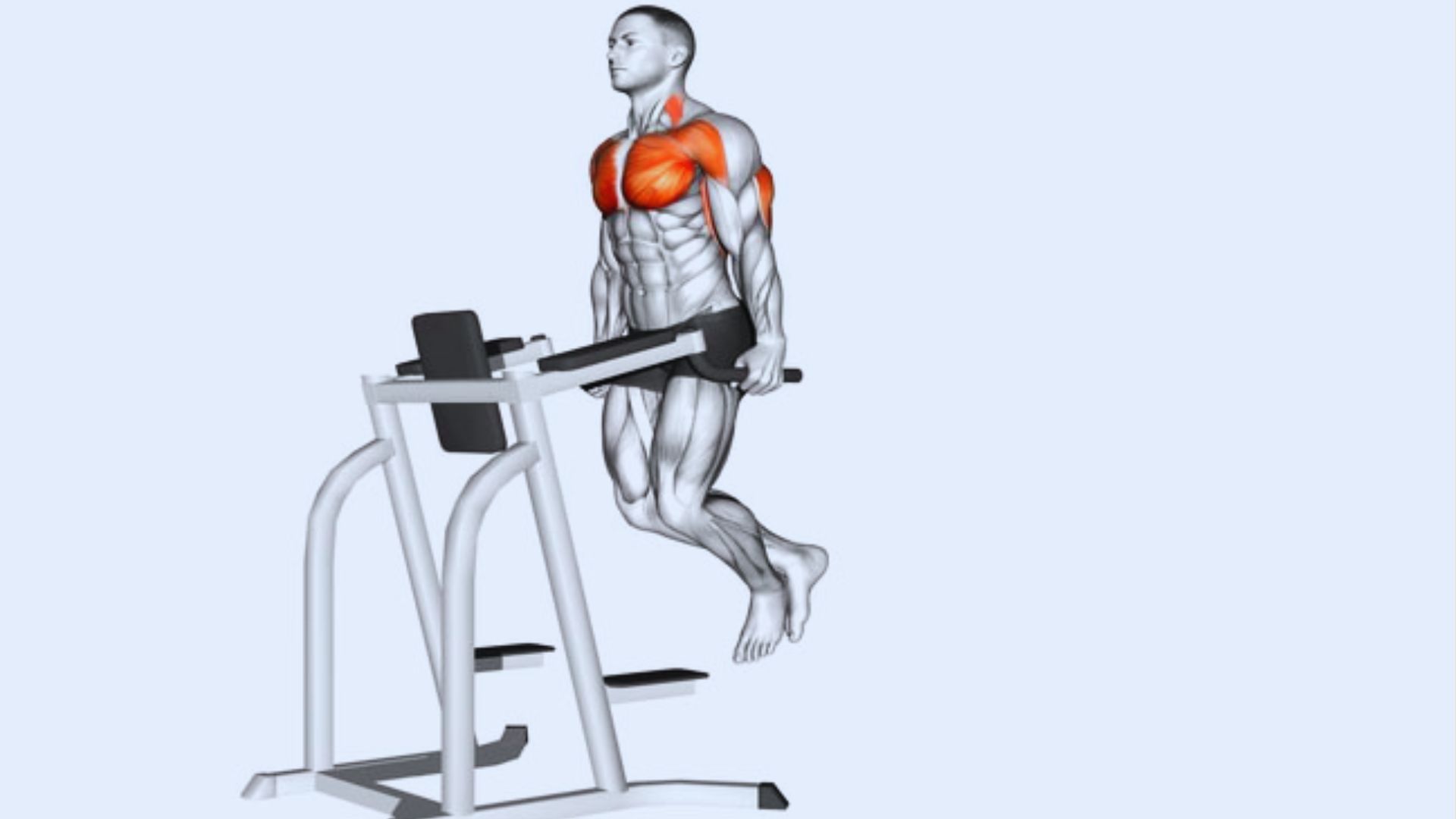
For a chest-focused dip, lean your torso forward at roughly a 45-degree angle. Let your elbows flare out slightly to the sides rather than staying pinned close to your body.
Lower yourself until your upper arms are close to parallel with the floor. You should feel a stretch across your chest at the bottom. Press back up through your chest rather than thinking about locking out your arms.
The forward lean shifts your center of gravity and puts the pectoralis major in the driver's seat. Your triceps still assist, but the chest is doing the heavier lifting.
Tip: Keep your chest up and out as you lean. Rounding your upper back takes tension off the chest and puts unnecessary strain on your shoulders.
Triceps Dip Technique
For a triceps-focused dip, keep your torso upright throughout the movement. Your body should stay close to vertical.
Keep your elbows close to your sides rather than letting them drift outward. Lower yourself until your arms are close to parallel, then press back up focusing on extending your elbows fully at the top.
The upright position reduces chest involvement and forces your triceps to handle more of the load. The lockout at the top is where the triceps work hardest.
The biceps brachii also plays a small but active role in triceps dips, helping to control the elbow joint during the lowering phase.
Tip: Think about pushing the bars down rather than pushing your body up. This small mental shift helps you feel the triceps engage more directly.
Proper Dip Form
Good form keeps you safe and makes the exercise far more effective.
I have seen a lot of people do dips with sloppy technique and wonder why they are not making progress or getting shoulder pain.
1. Correct Starting Position
- Grip the parallel bars firmly with your wrists stacked directly over your hands
- Press yourself up until your arms are fully extended and your shoulders are directly over your hands
- Engage your core and glutes and keep your legs quiet, either crossed or bent at the knees
- Decide your torso angle based on whether you want to target chest or triceps
- Lower yourself in a slow, controlled manner, do not drop
2. Common Form Mistakes
- Shoulders rounding forward: This puts the shoulder joint in a compromised position and is one of the leading causes of dip-related shoulder pain. Keep your chest up and shoulders pulled back slightly
- Going too deep too fast: Dropping below your shoulder mobility range puts excessive stress on the anterior shoulder capsule. Lower only as far as you can without shoulder discomfort
- Rushing the movement: Fast, uncontrolled reps reduce muscle activation and increase injury risk. Control both the lowering and pressing phases
- Not locking out at the top: Stopping short of full extension means your triceps never fully contract. Press all the way up on each rep
3. Tips for Better Activation
- Squeeze the bars as hard as you can. Grip tension increases upper body muscle activation across the board
- Pause for one second at the bottom of each rep. This removes momentum and forces the muscle to do real work
- Add a slow eccentric phase, lowering over three to four seconds, to increase time under tension and build more muscle
- If you want to add volume without adding weight, try a bodyweight drop set: perform dips to failure, rest 15 seconds, then drop straight into push-ups and go to failure again
Dip Variations
Different dip variations shift the muscle emphasis and suit different fitness levels and goals.
1. Parallel Bar Dips
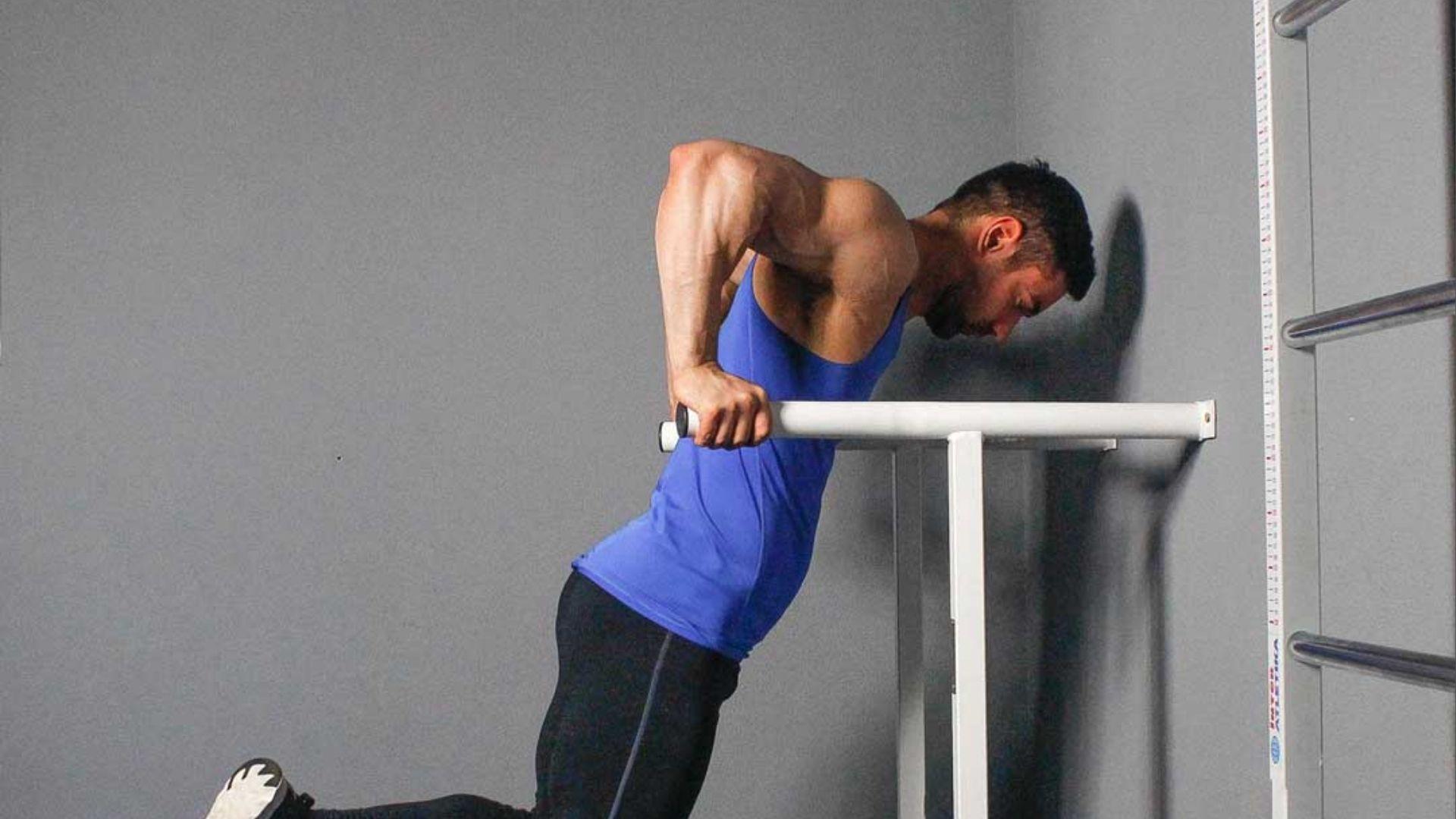
This is the standard version most people picture. You support your full bodyweight on two parallel bars.
It works the chest, triceps, and shoulders effectively and allows you to adjust your torso angle easily. This is the best version for building overall upper-body strength.
You can also add weight using a dip belt, weighted vest, or by holding a dumbbell between your knees for progressive overload once bodyweight reps become too easy.
2. Bench Dips
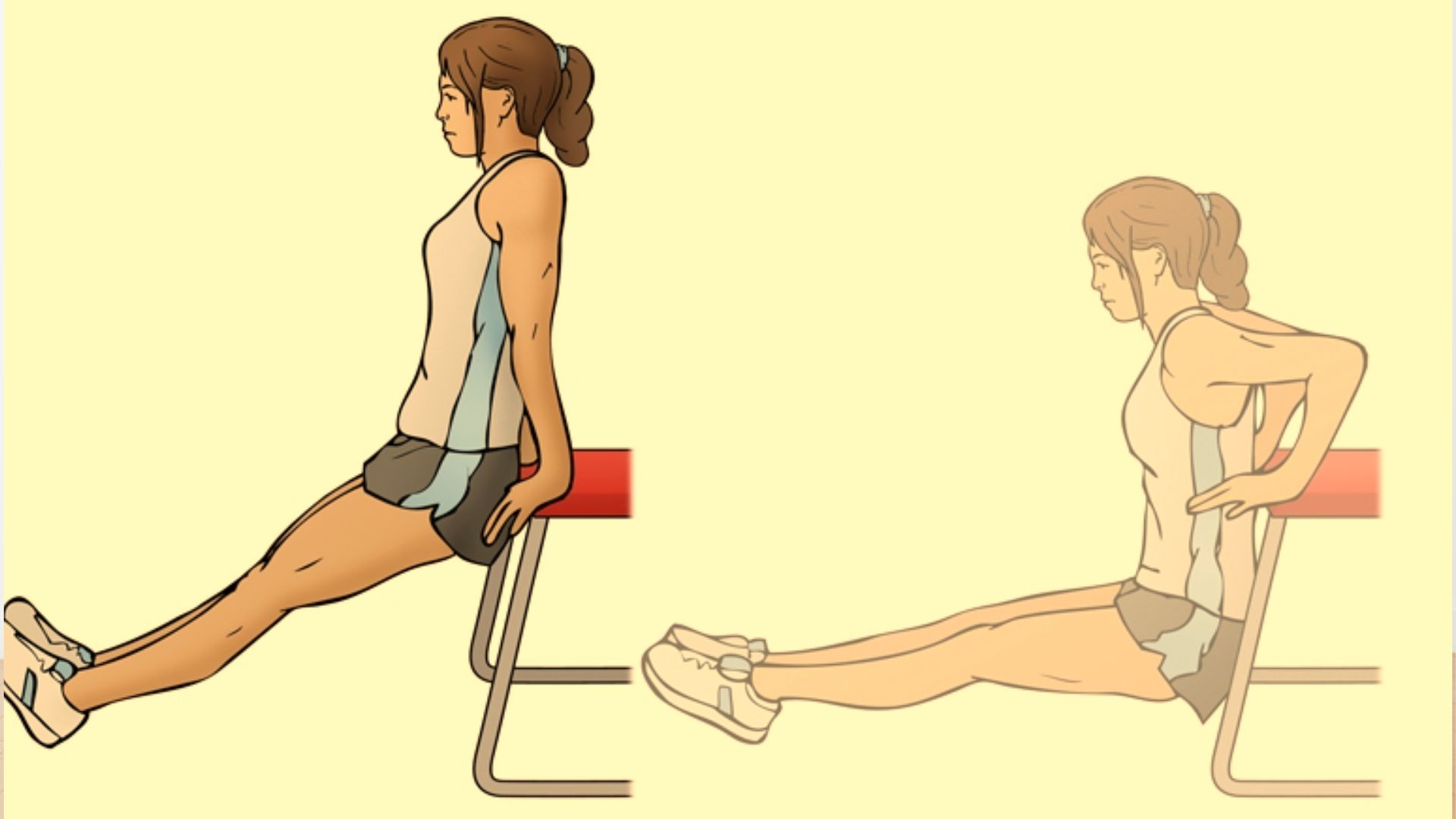
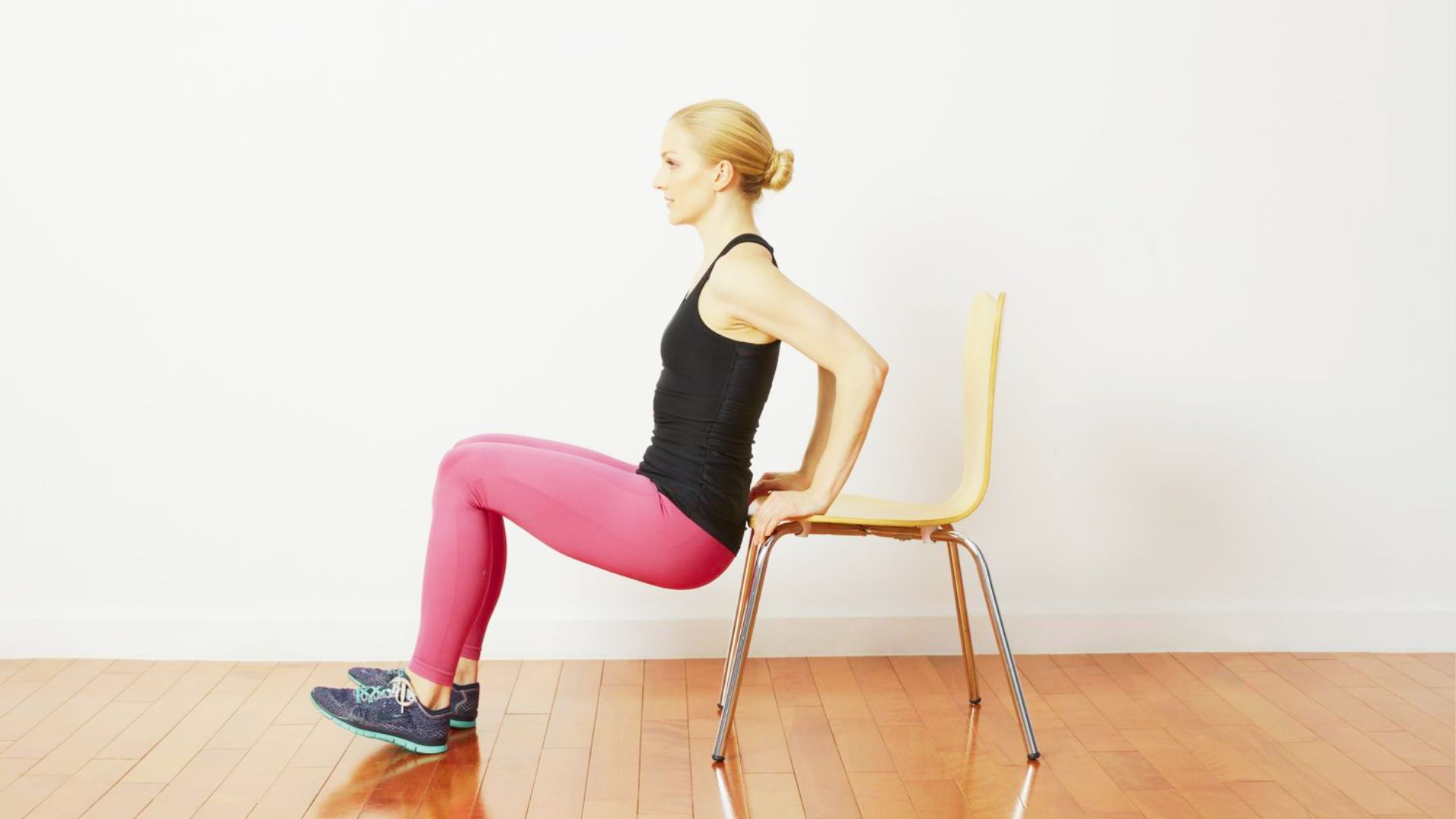
You place your hands on the edge of a bench behind you, with your legs extended in front. This version targets the triceps more directly because the body angle keeps the chest less involved.
One important cue here: make sure your shoulders are externally rotated with your fingers pointing away from your body.
Rolling the shoulders forward during bench dips puts excessive pressure into the shoulder socket and can damage the rotator cuff over time. It is a good starting point for beginners.
You can progress it by placing your feet on a second bench or adding a weight plate on your lap.
3. Ring Dips
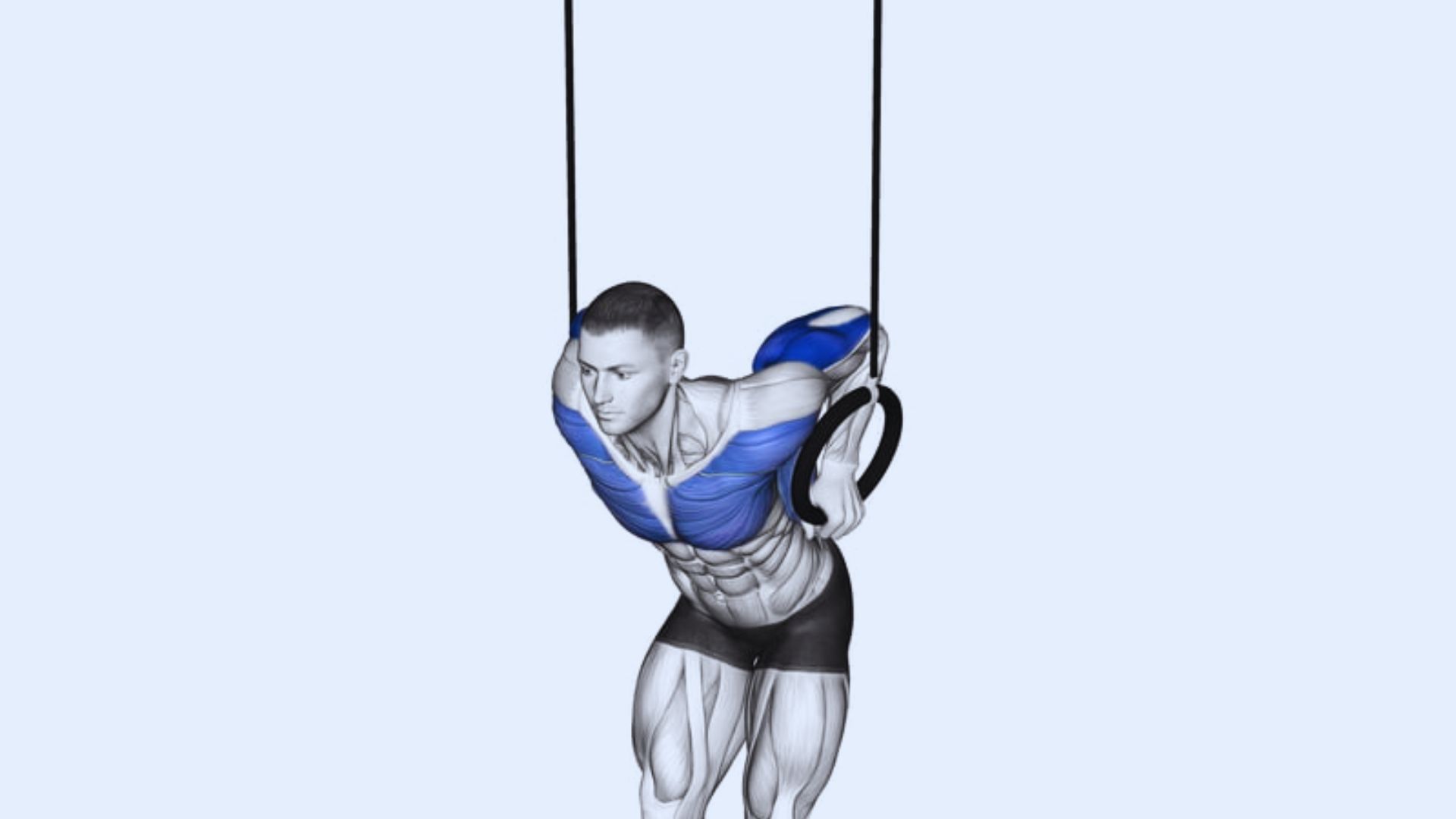
Ring dips are performed on gymnastic rings instead of fixed bars. Because the rings move freely, your stabilizing muscles work significantly harder to keep the rings steady throughout the rep.
This makes ring dips one of the most demanding upper-body exercises available. Interestingly, gymnastic rings place less stress on the elbows and wrists than fixed bars because they can rotate to match your natural wrist position.
I recommend mastering parallel bar dips with solid form before attempting ring dips.
4. Assisted Dips
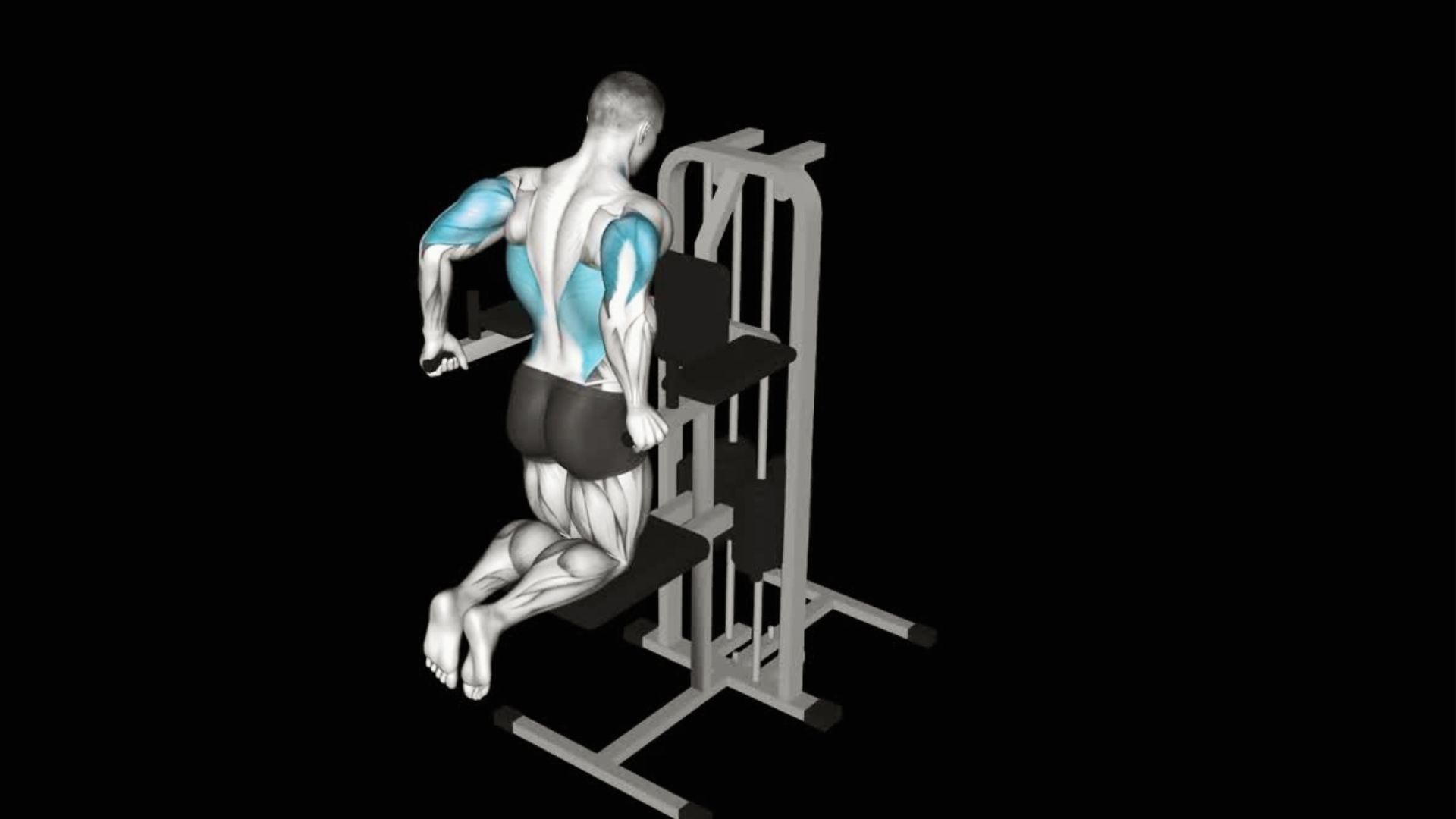
If you cannot yet do a full bodyweight dip, assisted dips are the right starting point.
You can use a resistance band looped over the bars and under your knees, or use an assisted dip machine that counterweights a portion of your bodyweight.
Both options let you practice the full movement pattern and build strength progressively until you can complete unassisted reps.
Negative dips are another option: jump to the top position and lower yourself slowly over four to five seconds, then step off and repeat.
This builds real strength through the eccentric phase before you can press back up.
Benefits of Dips
- Build upper-body strength by training the chest, triceps, and shoulders together.
- Increase pushing power that carries over to exercises like the bench press and overhead press.
- Develop lockout strength for stronger pressing movements and Olympic lifts.
- Promote muscle growth by creating high mechanical tension, especially in the 6–12 rep range.
- Target the lower chest effectively through the deep stretch at the bottom of chest dips.
- Support progressive overload by adding reps, sets, or extra weight with a dip belt or weighted vest.
- Improve functional fitness by strengthening natural pushing movements used in daily activities.
- Strengthen connective tissues around the shoulders and elbows, improving joint stability.
- Enhance shoulder and elbow mobility when performed with a full range of motion and proper technique.
Are Dips Safe?
Dips are safe for most people when done with proper form. Problems come from poor technique, going too deep too soon, or ignoring existing shoulder issues.
Anyone with rotator cuff injuries, elbow pain, or recent shoulder surgery should avoid dips or modify them. Beginners who lack upper body strength should start with assisted or negative dips first.
The shoulder is the most vulnerable joint. Stop if you feel pinching or sharp discomfort at any point.
Build strength in stages: bench dips, assisted dips, negatives, full bodyweight, then weighted dips.
Common Dip Mistakes
- Using a limited range of motion instead of lowering until the upper arms are near parallel to the floor.
- Performing half reps, reducing muscle activation and growth.
- Flaring the elbows too wide, increasing shoulder stress and reducing exercise efficiency.
- Keeping poor elbow position instead of pointing the elbows behind the body.
- Swinging the body or using momentum instead of controlled movement.
- Failing to brace the core and glutes, leading to instability during the exercise.
- Skipping assisted dips when full-range bodyweight dips are not yet possible.
- Rushing through repetitions instead of maintaining slow, controlled form.
- Ignoring proper technique, increasing the risk of shoulder and elbow injuries.
Conclusion
Now you know exactly what dips target and how small form changes shift the muscle emphasis completely.
The key takeaway is simple: lean forward for more chest, stay upright for more triceps, and always control the movement.
Start with the variation that matches your current strength level and build from there.
Dips reward consistency and good technique more than any other upper-body exercise I know.
If this post helped you, share it with someone who is still guessing which muscles dips actually work and drop a comment below telling me which variation you plan to try first.
Frequently Asked Questions
Can I do dips every day?
No. Dips stress the triceps, chest, and shoulder joints significantly. Allow at least 48 hours of recovery between dip sessions to avoid overuse injuries and support muscle repair.
Do dips work the lower chest specifically?
Yes. The chest dip, with a forward lean and full range of motion, targets the sternal and lower fibers of the pectoralis major, an area that flat pressing often under-works.
Should I do dips before or after bench press?
Do bench press first when it is your primary lift. Use dips as a secondary exercise or finisher afterward to pre-exhaust or add volume to the chest and triceps.
Can dips replace triceps pushdowns?
Dips are a compound movement while pushdowns isolate the triceps. Dips build overall strength and mass well, but pushdowns allow more controlled, targeted isolation work for specific triceps heads.