

If you’ve been struggling with balance during deadlifts or want to build stronger glutes and hamstrings, the split stance RDL might be exactly what you need.
I’ve trained with this movement for years, and it genuinely changed how my posterior chain feels on leg day.
In this article, you’ll learn what the split stance RDL is, which muscles it targets, how to do it with proper form, common mistakes to avoid, and the best variations to try.
With over a decade of hands-on lifting experience, I’ll walk you through everything step by step, so you can start doing this movement right away.
What Is the Split Stance RDL?
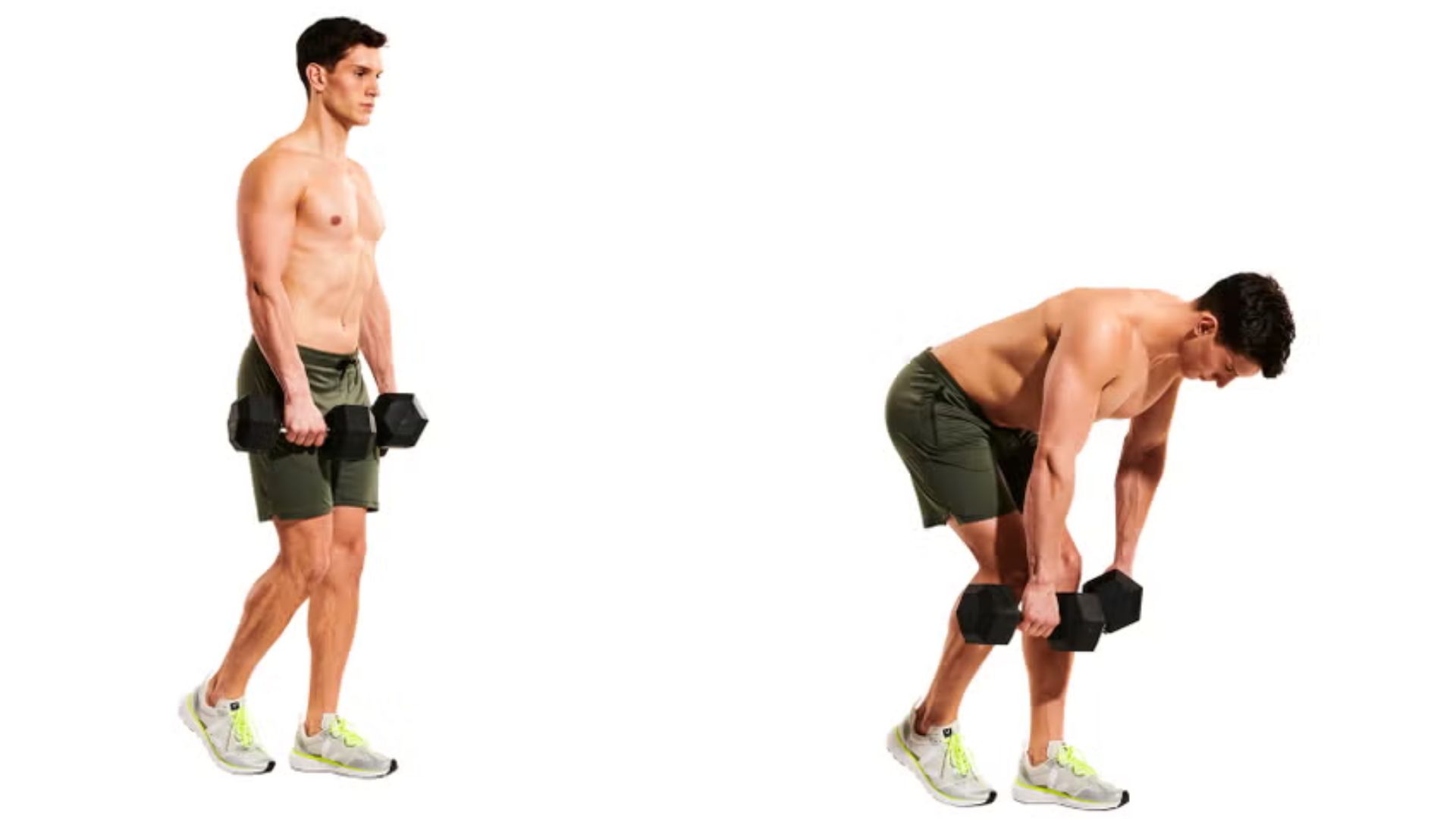
The split stance RDL is a hip hinge movement with one foot slightly behind the other. You hinge at the hips, lower the weight, and drive back up. The front leg does the work. The back foot just keeps you steady.
It sits between a standard RDL and a single-leg RDL. More stable than single-leg. More targeted than a regular RDL. A solid middle ground for building strength on each side without losing balance.
Split Stance RDL uses a staggered stance. Front leg leads. Good stability.
Romanian Deadlift uses an even stance. Both legs share the load. Easier to go heavy.
Single-Leg RDL has one foot off the ground. High balance demand. Best for advanced lifters.
Split Stance RDL Muscles Worked
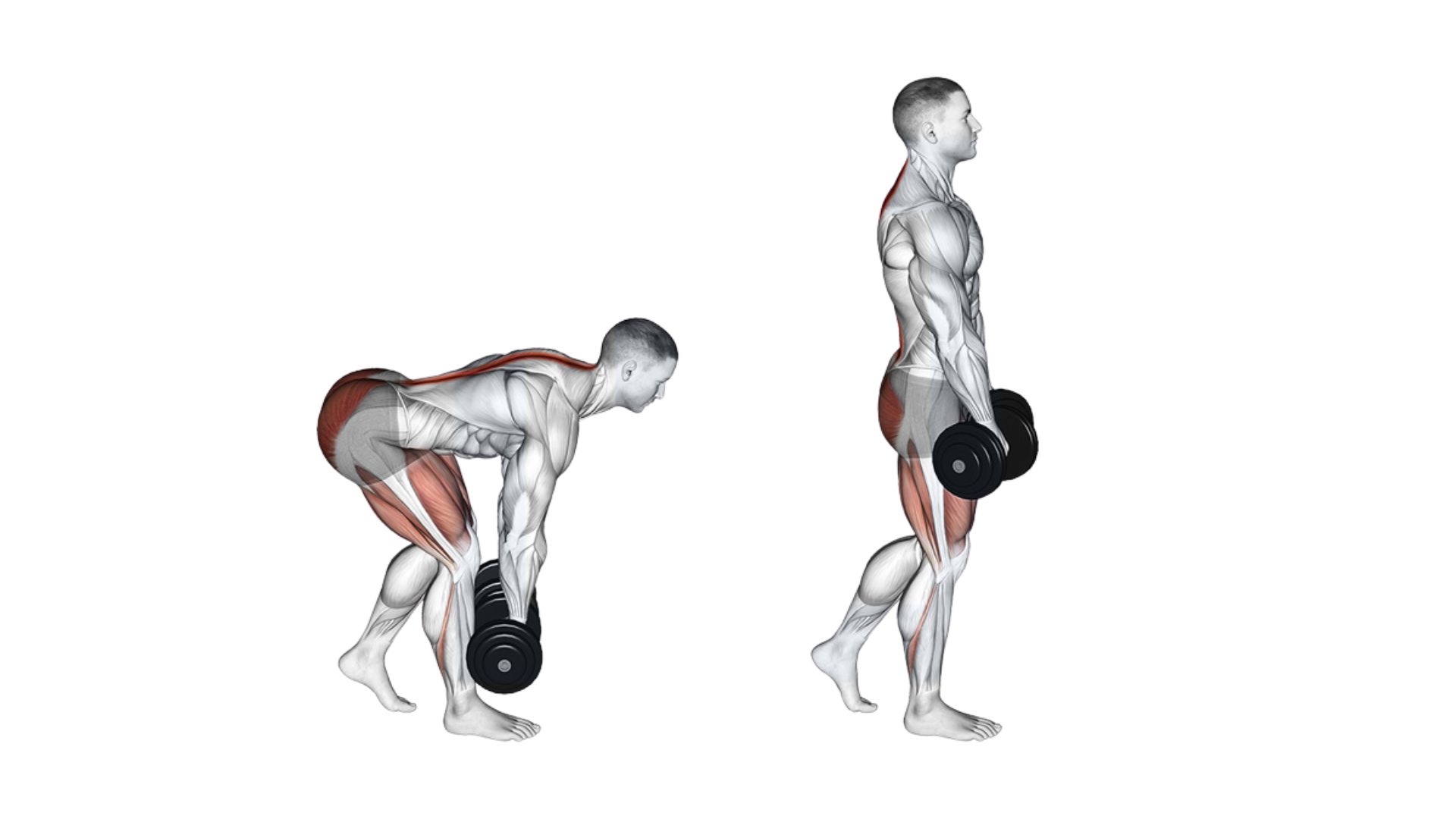
This movement targets the back of your body from your hips to your lower back.
Primary Muscles: Glutes and Hamstrings
Your glutes and hamstrings on the front leg carry the load throughout the movement. As you hinge forward, your hamstrings lengthen under tension. At the top, your glutes contract to drive your hips forward.
This stretch-and-contract cycle is what makes the movement so effective for building the posterior chain. The front leg does about 80% of the work. That is the whole point.
Secondary Muscles: Lower Back and Core Stabilizers
Your erector spinae work hard to keep your spine neutral as you hinge. Your core braces throughout the lift to prevent your torso from collapsing or rotating.
Your adductors help stabilize the hip, while your calves and tibialis keep the front foot grounded and steady.
These muscles do not lead the movement. But they support it. Without them, form breaks down fast.
Split Stance RDL Proper Form (Step-by-Step Guide)
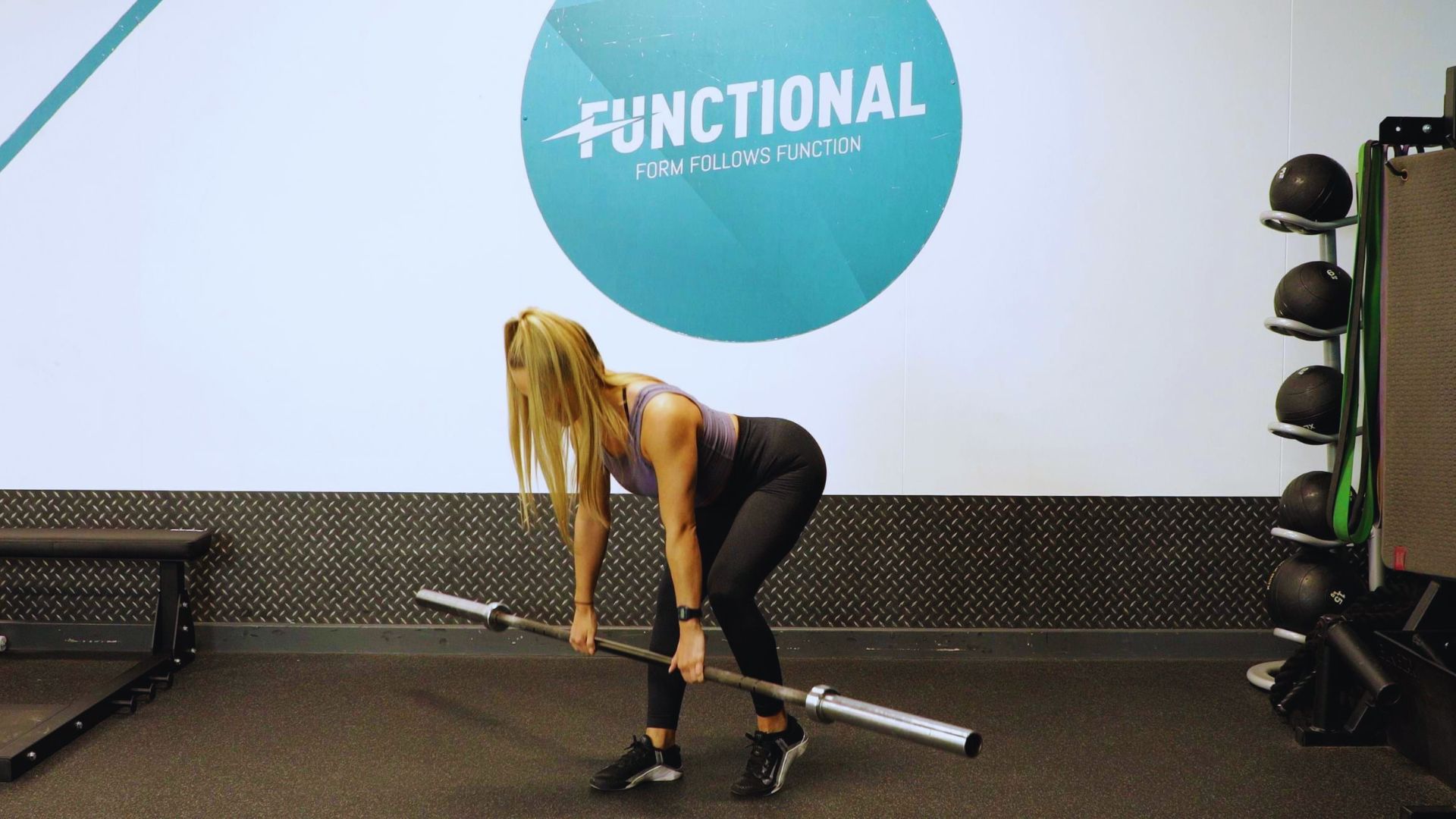
Good form makes this exercise safe and effective. Follow each step carefully.
Step 1: Set Up Your Stance and Weight Distribution
Stand tall with feet hip-width apart. Step one foot back about half a foot length. Your back toes should be in line with or just behind your front heel.
Shift 80% of your weight to the front foot. The back foot is just for balance. Keep both feet flat on the floor and hold dumbbells in each hand at your sides.
Step 2: Maintain Posture and Grip
Before you move, set your position. Chest up, shoulders back and down, slight bend in both knees, core braced. Your grip should be firm but not tense.
Your spine should be in a neutral position, not rounded, not over-arched. Think long neck, long spine before every rep.
Step 3: Hip Hinge and Controlled Descent
Push your hips back. Do not squat down. This is a hinge, not a bend.
As your hips go back, your torso tips forward and the dumbbells travel close to your front leg. Lower until you feel a strong stretch in your front hamstring, usually around mid-shin for most people.
Keep your back flat the entire time. Move slowly on the way down. Two to three seconds is ideal.
Step 4: Drive Through the Front Heel to Return
Press your front heel into the floor. Drive your hips forward and up. Squeeze your glute at the top of the movement.
Do not jerk or use momentum. The return should be just as controlled as the descent. Stand tall, reset your brace, and repeat.
Key Technique Tips to Perform Split Stance RDL Correctly
Small details make a big difference. Keep these in mind every single rep.
- Neutral spine and chest up. Keep your chest facing forward as you hinge. If your back rounds, reduce the weight.
- 80/20 weight distribution. The front leg does the work. The back foot just keeps you balanced, nothing more.
- Vertical front shin. If your knee shoots forward, you are squatting, not hinging. Keep the shin as upright as possible.
- Weights close to your body. Dumbbells should skim along your front leg the whole way down. Drifting forward stresses your lower back.
- Form before load. No amount of weight is worth a broken position. Get the movement right first, then add weight..
Common Split Stance RDL Mistakes (And Fixes)
Even experienced lifters make these errors.
Rounding Your Back
The mistake: Letting your upper or lower back curve as you lower the weight.
The fix: Before you hinge, take a deep breath, brace your core, and pull your shoulders back. If rounding still happens, the weight is too heavy or your hamstrings are too tight to safely reach that range. Reduce the range of motion or lighten the load.
Shifting Weight to the Back Leg
The mistake: The back leg starts carrying too much of the load during the movement.
The fix: Think of the back foot as a kickstand. It stabilizes, it does not drive. Consciously keep pressure on the front heel throughout every single rep.
Over-Bending the Knees
The mistake: Turning the hip hinge into a squat by bending the knees too much on the way down.
The fix: Start the movement by pushing your hips back first. Let the knee bend naturally. Keep the front shin as close to vertical as possible throughout.
Losing Balance or Control
The mistake: Wobbling, shifting, or struggling to stay steady during the movement.
The fix: Slow down and start with lighter weight. You can also try the movement near a wall for support until your stability improves. Balance gets better with consistent practice.
Split Stance RDL Benefits
This is one of the most underused exercises for the lower body.
Builds Glute and Hamstring Strength
The split stance position isolates the front leg more than a standard RDL does. Your glutes and hamstrings on that side work harder each rep.
Over time, this builds noticeable strength in the posterior chain and helps athletes, runners, and anyone who wants stronger hips.
Reduces Spinal Loading vs Traditional Deadlifts
Because you are not loading both legs equally and not using as much weight as a barbell deadlift, your spine handles less total stress.
This makes it a solid option for people with lower back sensitivity who still want to train the hip hinge pattern effectively.
Improves Balance and Fixes Imbalances
Most people have one side stronger than the other. Traditional bilateral movements can hide that gap. The split stance RDL makes it visible fast.
Training one leg at a time helps both sides develop more evenly. Better balance. Better coordination. Better results over time.
Best Split Stance RDL Variations
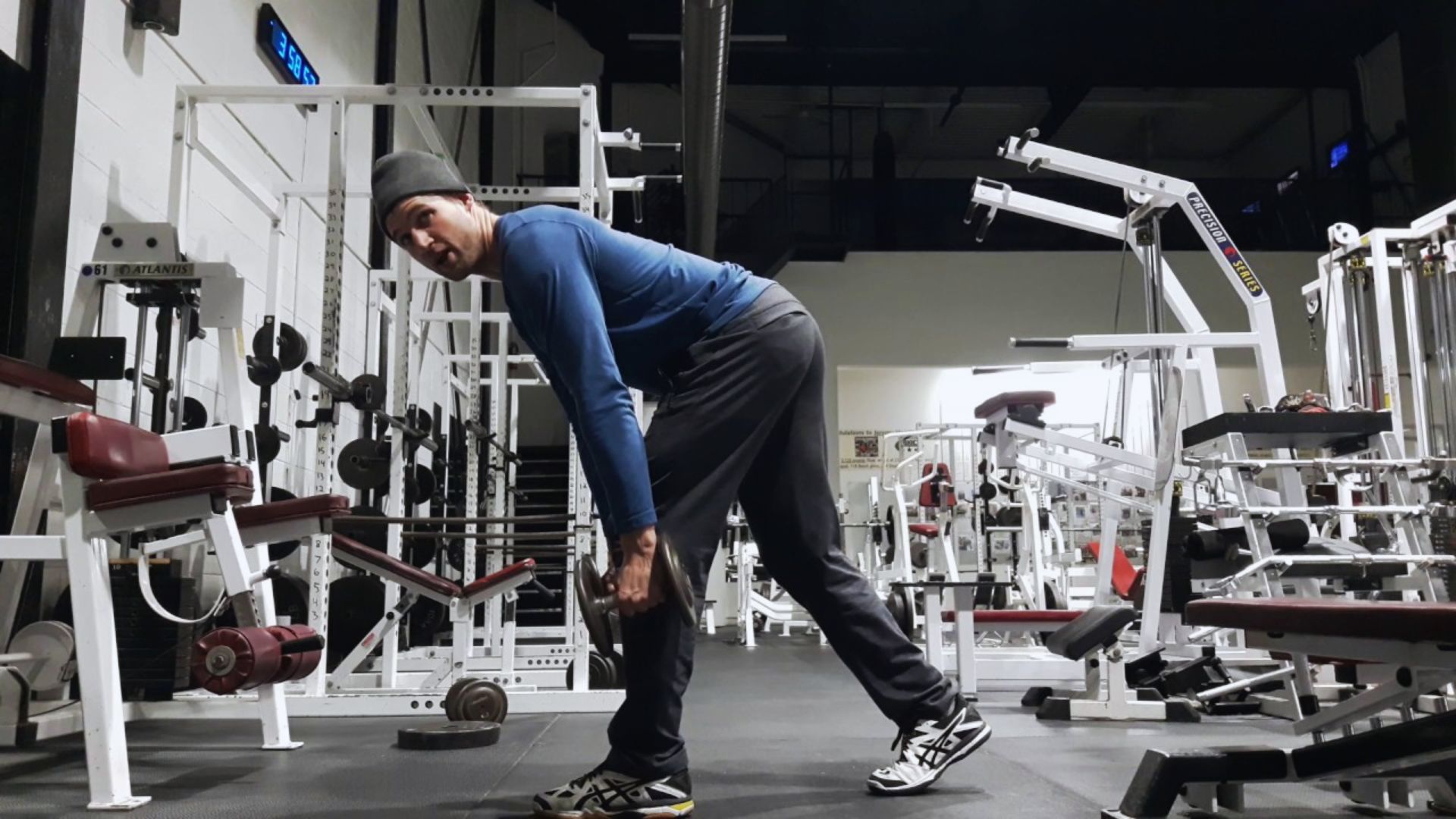
Once you have the form down, try these options.
Dumbbell Split Stance RDL
This is the most beginner-friendly version. Dumbbells allow natural wrist rotation and are easy to control. Start here if you are new to the movement.
Hold one dumbbell in each hand and keep them close to your front leg throughout the lift. Great for learning the pattern and building initial strength.
Barbell Split Stance RDL
This version allows heavier loading and is better suited for intermediate to advanced lifters who already have strong hip hinge mechanics.
The barbell stays in front of your body along your front leg. Core stability becomes even more important here because the bar naturally wants to drift forward away from your body.
Trap Bar Split Stance RDL
The trap bar keeps the load centered around your body. This reduces the forward pull that a straight barbell creates and makes the movement more comfortable for people with shoulder mobility limits.
This is an excellent variation for heavier work without sacrificing form or putting extra stress on your lower back.
Conclusion
The split stance RDL is one of those exercises I wish I had added to my training much earlier. It is not flashy. But it builds real strength in the glutes and hamstrings while keeping your lower back safer than many other options.
Start light. Focus on the hip hinge. Own the movement before you add weight.
If this guide helped you, drop a comment below and let me know. Share it with a training partner who needs better posterior chain work. And check out our related guides on RDL variations for more.
Frequently asked questions
How Is the Split Stance RDL Different From a Regular RDL?
In a regular RDL both feet share the load equally. In the split stance version the front leg does most of the work, making it more targeted for each side.
How Much Weight Should I Start With?
Start lighter than you think. Focus on the hip hinge pattern first and add weight only once your form is solid.
Can the Split Stance RDL Help With Lower Back Pain?
It can work well since spinal loading is reduced. But if you have existing back issues, consult a professional before trying it.
How Many Sets and Reps Should I Do?
For strength, do 3 to 4 sets of 6 to 8 reps per side. For muscle building, 3 sets of 10 to 12 reps per side works well.
Should I Feel This in My Lower Back or My Hamstrings?
You should feel it in your hamstrings and glutes. If your lower back is taking over, check your spine position and reduce the range of motion.