

Sauna for muscle recovery is the use of dry heat, infrared heat, or steam after exercise to support circulation, relaxation, soreness comfort, and mobility. Heat exposure raises skin temperature, increases sweating, and changes cardiovascular activity in ways that resemble light exercise. Cleveland Clinic states that sauna use may reduce stress, relieve pain, and soothe sore muscles when used safely and briefly.
How Sauna Therapy Supports Muscle Recovery
Sauna therapy supports muscle recovery through 4 main pathways: blood circulation, muscle relaxation, stiffness reduction, and nervous system relaxation. These effects matter after strength training, endurance exercise, and high-volume sports sessions because trained muscles need oxygen delivery, nutrient transport, temperature regulation, and reduced physical tension.
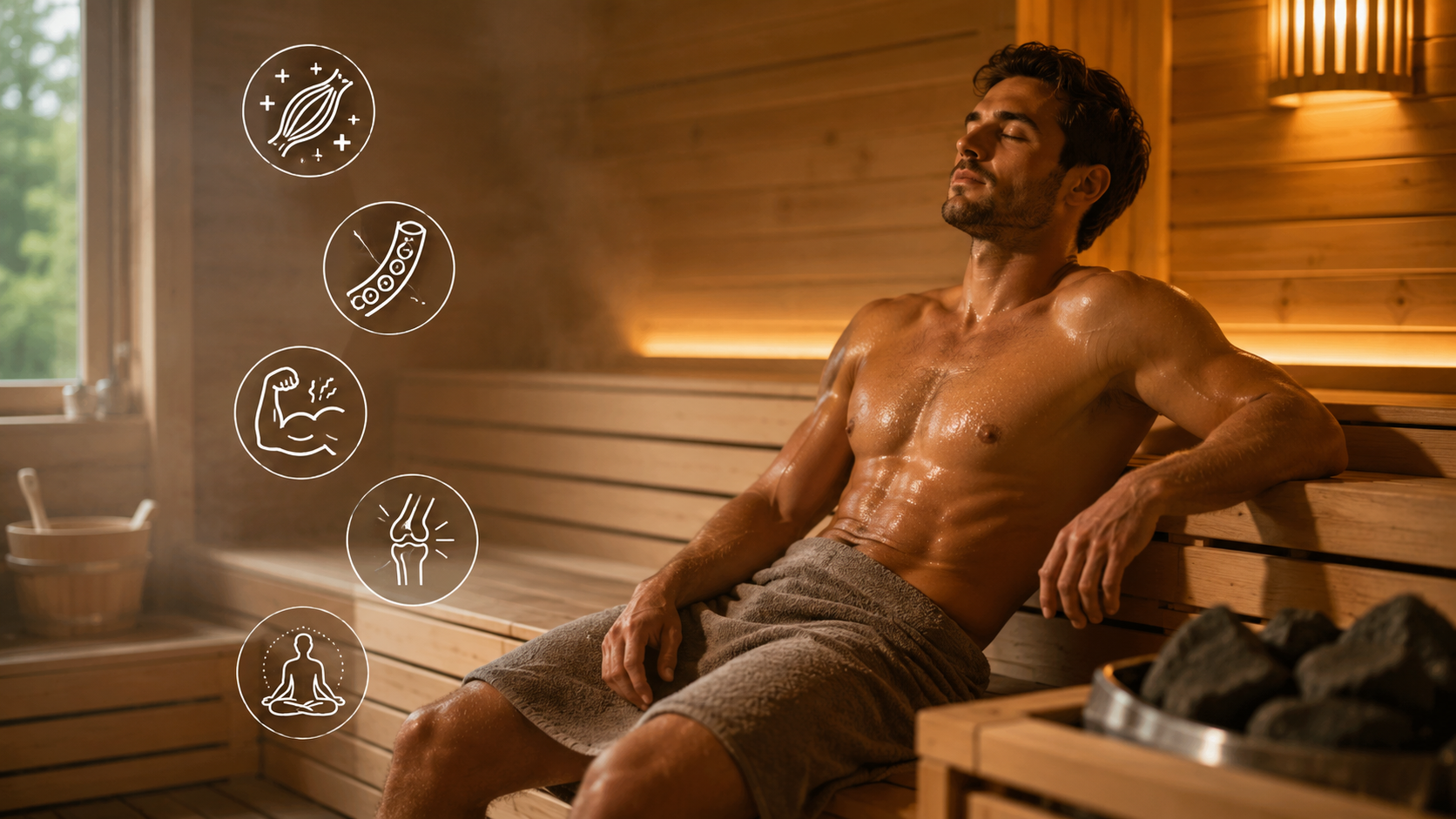
ALT: how-sauna-therapy-supports-muscle-recovery
Increased Blood Circulation to Muscles
Increased blood circulation to muscles is one of the main recovery effects of sauna bathing. Heat widens blood vessels through vasodilation. Vasodilation allows more blood to move toward skin and working tissues. This process helps oxygen reach fatigued muscles and supports nutrient transport after exercise.
Traditional saunas usually operate around 150°F to 195°F, while infrared saunas usually operate around 110°F to 135°F, according to Cleveland Clinic. Both formats expose the body to heat, but traditional sauna heat surrounds the body while infrared heat warms tissue through infrared energy.
Better post-exercise circulation does not replace protein intake, sleep, hydration, or progressive training. Sauna use works best as a recovery addition after the main recovery basics are covered. For example, a lifter who finishes a leg session still needs fluids, electrolytes, carbohydrates, and protein before expecting heat exposure to improve comfort.
Muscle Relaxation After Exercise
Muscle relaxation after exercise occurs when heat reduces physical tension and supports a calmer recovery state. Tight muscles after weightlifting, running, cycling, swimming, and sports training usually reflect fatigue, repeated contractions, and temporary neuromuscular stress. Heat exposure helps muscles feel less rigid because warmth changes tissue comfort and reduces perceived tension.
Cleveland Clinic notes that sore muscles often respond to heat, and dry or infrared sauna use is thought to increase blood flow to muscles and decrease muscle spasms in some contexts.
A practical recovery session starts with a short sauna duration. Beginners should use 5 to 10 minutes. Experienced users should keep most sessions around 15 to 20 minutes. Longer sessions increase dehydration risk without guaranteeing better recovery.
Reduced Post-Workout Stiffness
Reduced post-workout stiffness means easier movement after training. This is a key reason why many wonder, is sauna after gym good for muscle growth? While heat exposure supports mobility because warm tissue feels more pliable, its primary role is enhancing the recovery environment rather than directly building muscle. This improved pliability helps athletes perform light stretching or mobility work more effectively after a session.
Post-workout stiffness is common after eccentric exercise, such as downhill running, Romanian deadlifts, lunges, and high-volume squats. Sauna therapy does not erase muscle damage. It improves comfort during the recovery period. A good sequence is training, cool-down, fluids, sauna, shower, and light mobility.
Nervous System Recovery and Relaxation
Nervous system recovery and relaxation matter after intense workouts because hard training increases sympathetic nervous system activity. The sympathetic system supports effort, alertness, and stress response. Recovery requires a shift toward parasympathetic activity, which supports rest, digestion, and relaxation.
Sauna sessions create a quiet, low-stimulation environment. This environment supports post-workout relaxation and may improve perceived recovery. Cleveland Clinic also reports that sauna use has evidence for stress reduction and sleep support, although more research is needed for some claims.
The key takeaway is simple: use sauna therapy as a recovery tool, not a performance shortcut. Heat supports comfort, circulation, and relaxation when hydration and session length are controlled.
Is Sauna Good for Muscle Soreness?
Sauna is good for muscle soreness when the goal is temporary comfort, reduced tightness, and improved relaxation after exercise. Sauna use does not instantly repair muscle fibers. It supports the recovery environment around sore muscles.

ALT: is-sauna-good-for-muscle-soreness
How Heat Affects Delayed Onset Muscle Soreness (DOMS)
Delayed onset muscle soreness, or DOMS, is muscle soreness that appears after unfamiliar or intense exercise. DOMS usually includes stiffness, tenderness, reduced range of motion, and temporary strength loss. Heat affects DOMS by increasing tissue warmth, improving comfort, and reducing the feeling of tightness.
A 2023 Biology of Sport paper cited in recovery literature reported that a post-exercise infrared sauna session improved recovery of neuromuscular performance and muscle soreness after resistance exercise training.
The evidence supports sauna as a comfort and recovery aid. It does not support using sauna as a substitute for rest days, sleep, load management, or medical care after injury.
Heat Therapy and Muscle Comfort
Heat therapy improves muscle comfort through warmth, pain perception, and relaxation response. Warmth changes how the nervous system interprets soreness. A relaxed body also tends to perceive less physical stress.
Use heat therapy when soreness feels like general post-workout tightness. Avoid sauna use when pain is sharp, swelling is visible, dizziness is present, or an injury is suspected. Acute injuries require professional assessment, especially when pain limits walking, lifting, or joint movement.
Steam Sauna vs Dry Sauna for Sore Muscles
Steam sauna and dry sauna both use heat, but they feel different. A steam room uses humidity. A dry sauna uses hot air with low humidity. Cleveland Clinic states that there is no clear indication that dry heat or wet heat is better overall.
Steam sauna may feel more comfortable for people who prefer moist air. Dry sauna may feel easier for people who dislike humidity. The best choice depends on breathing comfort, heat tolerance, room temperature, and personal recovery preference.
When To Use a Sauna for Muscle Recovery
Use a sauna for muscle recovery after the body has cooled slightly, breathing has normalized, and fluids are available. Avoid entering a very hot sauna immediately after maximal exercise, heat illness, dehydration, or dizziness.
After Strength Training
Using a sauna after strength training supports relaxation and helps manage muscle fatigue. While many fitness enthusiasts ask, is sauna after gym good for muscle growth, its primary benefit lies in easing the tension created by mechanical stress and metabolic waste. A short session after lifting helps athletes reduce physical tightness and unwind mentally.
For safety, follow a sequential approach: finish your lifting session, complete a proper cool-down, rehydrate with water, and wait for your heart rate to settle before entering the sauna. Cleveland Clinic recommends starting with 5 minutes for beginners and keeping sessions between 15 to 20 minutes for experienced users.
After Endurance Exercise
After endurance exercise, sauna use supports relaxation after running, cycling, swimming, and sports training. Endurance sessions increase sweat loss and cardiovascular demand. This makes hydration more important before entering a sauna.
Competitive runner research cited in sports recovery literature found that 30-minute sauna sessions after training, twice weekly for 3 weeks, increased time to exhaustion by about 32%. This finding relates more to heat adaptation and endurance performance than ordinary soreness relief.
Endurance athletes should replace fluids before sauna use. A dehydrated runner or cyclist should prioritize cooling, water, electrolytes, and food before heat exposure.
Rest Day Recovery Sessions
Rest day sauna sessions support active recovery, mobility, and relaxation. A rest day sauna routine works well with walking, stretching, foam rolling, and light mobility drills. This combination supports circulation without adding mechanical training load.
A recovery-focused wellness routine should remain moderate. More heat is not automatically better. Excessive heat exposure increases dehydration risk and may worsen fatigue.
Morning vs Evening Sauna Sessions
Morning sauna sessions support gentle circulation and a calm start after light activity. Evening sauna sessions support relaxation after training and may fit better before sleep routines. Cleveland Clinic reports that sauna use may help reduce stress and improve sleep, but users should still avoid overheating and dehydration.
Evening sauna use works best when the session ends early enough for the body to cool down before bed. A hot body temperature close to bedtime can feel uncomfortable for some people.
Bottom Line
Sauna therapy supports muscle recovery by increasing circulation, relaxing muscles, reducing stiffness, and supporting nervous system relaxation. Setting up a convenient home sauna is also a good choice, offering both economic value and ease of use. Sauna use works best after hydration, cool-down, and basic recovery nutrition. Keep sessions short, avoid sauna use during dehydration or illness, and seek medical guidance when health conditions increase heat risk.
Frequently Asked Questions About Sauna and Muscle Recovery
1. Is sauna good after lifting weights?
Yes. Sauna is good after lifting weights when hydration, cool-down, and session length are controlled. It supports muscle relaxation, circulation, and soreness comfort after strength training.
2. Does sauna help sore muscles recover faster?
Sauna helps sore muscles feel more comfortable, but it does not instantly repair muscle tissue. Sleep, protein intake, hydration, and training load management remain the main recovery factors.
3. How long should you stay in a sauna after a workout?
Stay in a sauna for 5 minutes as a beginner and about 15 to 20 minutes with tolerance. Leave earlier when dizziness, weakness, breathing discomfort, or overheating appears.