

Getting the right fit starts with one simple measurement: shoulder width.
If you've ever bought a shirt that pulls at the seams or a jacket that droops off your shoulders, you know how frustrating poor fit can be. This guide is here to fix that.
I've helped people take this measurement correctly, and the difference it makes is real. Here, you'll learn why shoulder width matters, what tools you need, and how to measure it correctly, with or without help.
We'll also cover common mistakes, standard size charts, and tips for online shopping. Simple steps, accurate results.
Why Shoulder Width Measurement Matters
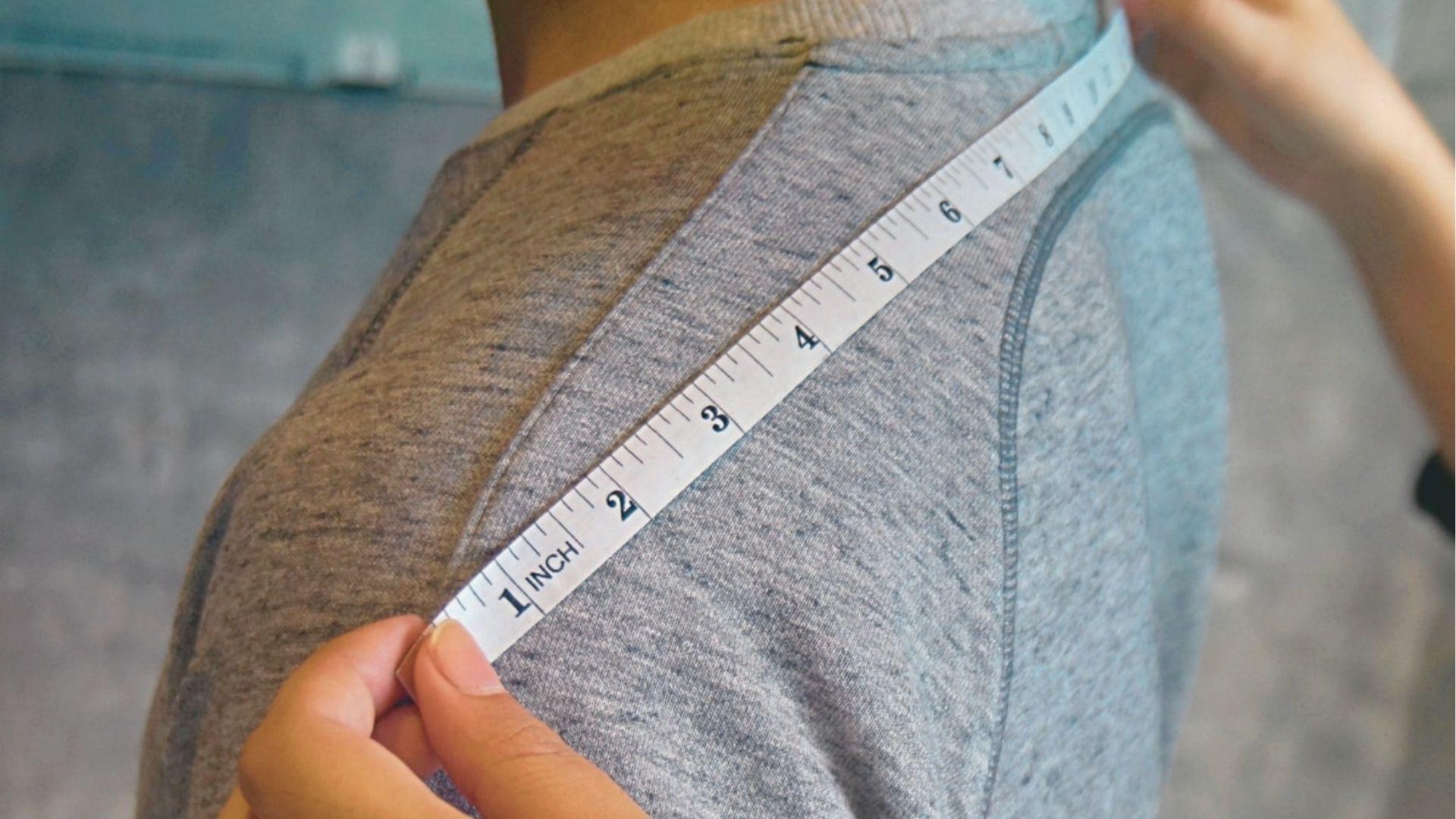
Getting this measurement right saves you from buying clothes that never fit properly.
When shoulder width is off, everything else follows. Seams fall off the shoulder, sleeves hang wrong, and the back panel shifts. Shoulder fit is one of the hardest alterations a tailor can make, so getting it right from the start saves time and money.
Wrong measurements cause real problems: tight or baggy upper backs, uneven collars, and sleeves that feel too short or too long. These issues often come down to one number taken too fast.
You need this measurement more than you think. Whether buying shirts online, ordering custom clothing, sewing your own pieces, or checking if a secondhand garment will fit, shoulder width should always come first.
Tools You Need Before Measuring
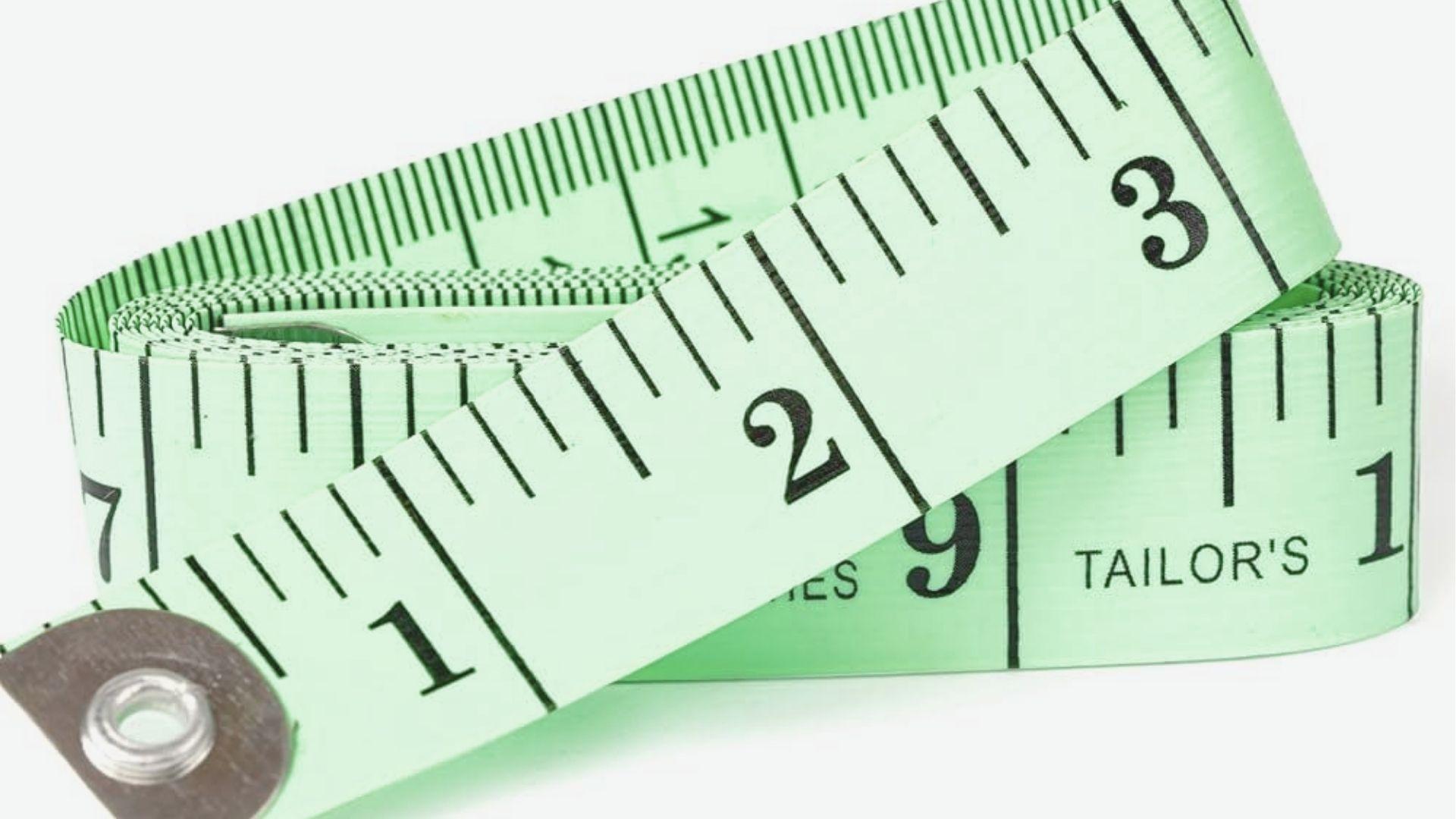
Having the right tools makes this process quick and accurate.
A soft, flexible measuring tape is all you really need. The kind used in sewing works best. Skip the metal tape measure as it can't curve along your body and gives wrong readings. A piece of string and a ruler can work as a backup.
A mirror or a helper makes a big difference. A mirror lets you check tape placement when measuring alone.
A helper is better since they can hold the tape correctly and read the number without you twisting around. If neither is available, the wall marking method works well solo.
Always record your measurement right away. Use your phone's notes app or a small notebook. Write down the number, the date, and what you were wearing. This makes it easy to reference later.
How to Measure Shoulder Width Step by Step
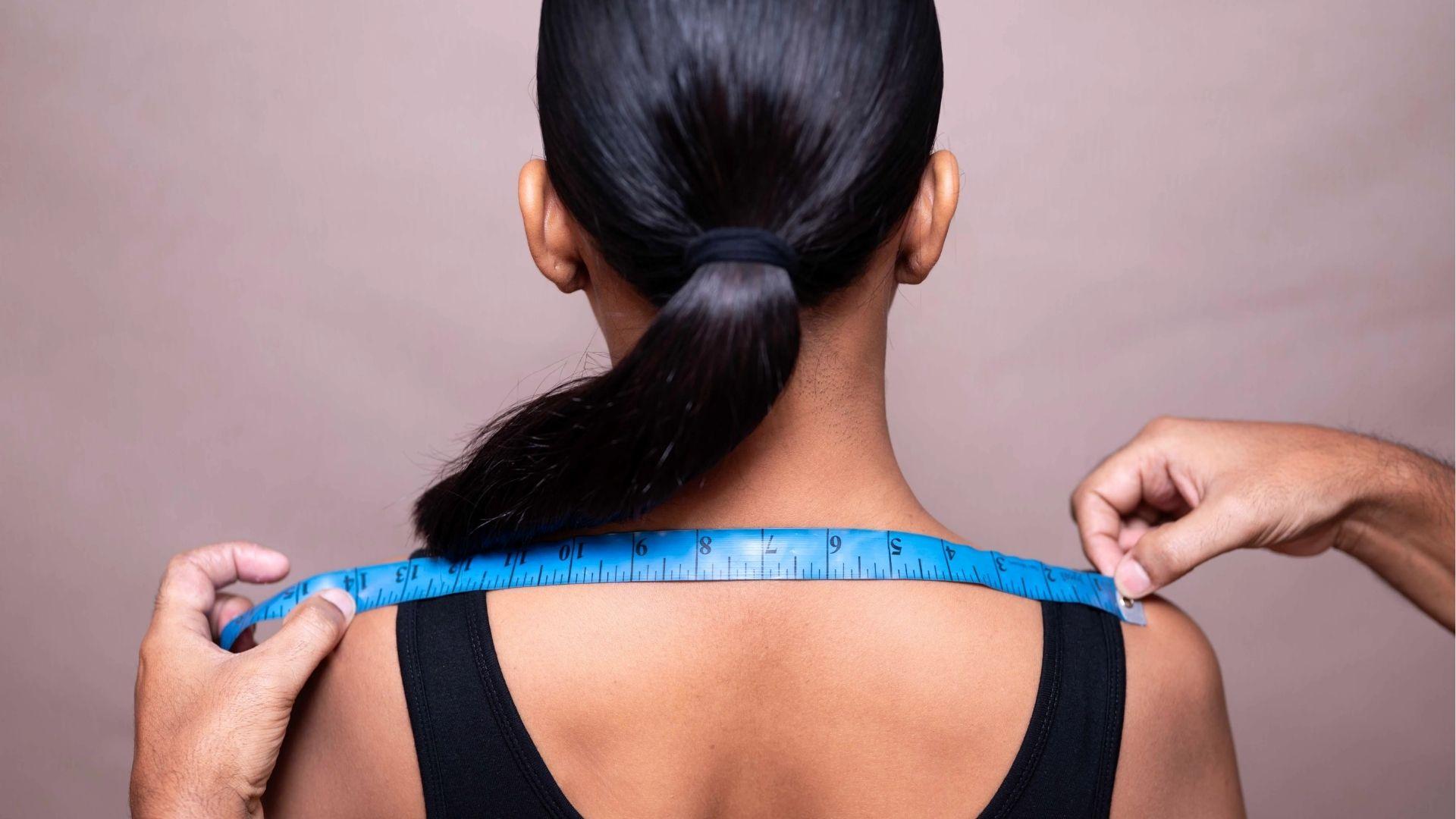
Follow these steps carefully for the most accurate result.
Step 1: Stand in a Natural Position
Stand straight with your arms relaxed at your sides. Do not pull your shoulders back or hunch forward.
Natural posture gives you an accurate measurement. Forced posture changes where your shoulder points sit. Wear a fitted, thin shirt or no shirt at all for best results.
Step 2: Locate Your Shoulder Points
This is the most important step. Feel for the bony point at the top of each shoulder. This is where the shoulder meets the arm.
You can find it by running your finger along the top of your shoulder until you feel the edge. That slight bump or end point is what you're looking for.
Mark this spot lightly with a finger or a small piece of tape.
Step 3: Place the Measuring Tape Correctly
Start the tape at one shoulder point. Hold it flat against the back.
Do not let it droop or pull. Keep it snug but not tight. The tape should follow the natural line across your upper back from one shoulder point to the other.
Step 4: Measure Across the Back
Run the tape straight across the back, from the right shoulder point to the left shoulder point.
Keep the tape horizontal. It should not angle up or down. If the tape curves or sags, the measurement will not be accurate.
This is where a helper makes a big difference.
Step 5: Record the Measurement
Look at the number on the tape where it meets the second shoulder point. Read it clearly and record it right away.
Write it in both inches and centimeters if possible. Some size charts use one, some use the other. Having both saves time.
Step 6: Double-Check for Accuracy
Measure again. Take the measurement two or three times total. If the numbers are close, use the average.
If they vary a lot, check your shoulder points again. You may have been measuring from slightly different spots each time.
Consistency is key to getting a useful number.
How to Measure Shoulder Width by Yourself
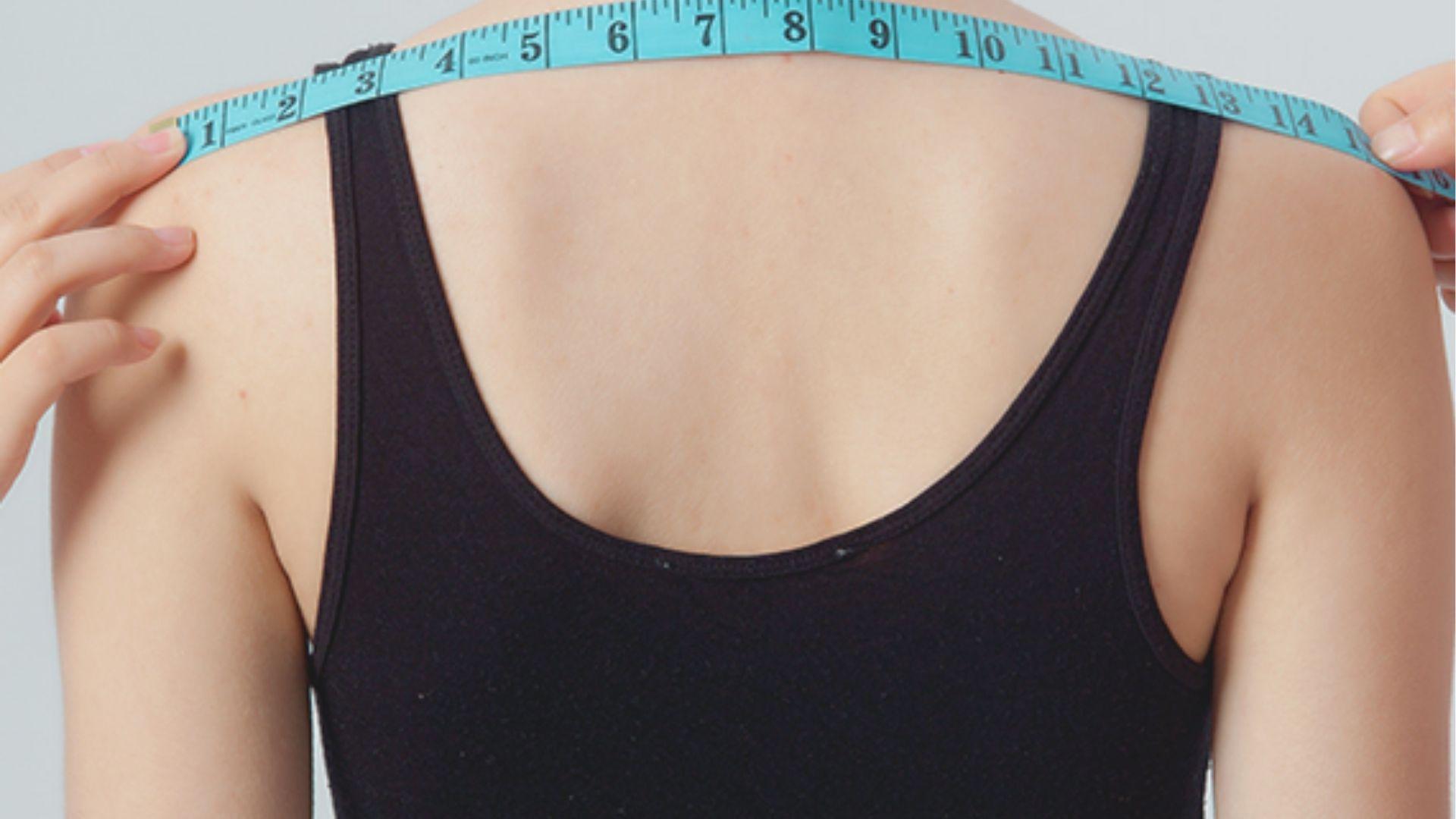
Measuring alone is possible with a little patience and the right method.
Using a Mirror for Better Accuracy
Stand in front of a large mirror. This lets you see the tape placement as you work.
Start the tape at one shoulder point. Hold that end in place with your thumb. Stretch the tape across your back as far as you can reach.
Use the mirror to check that the tape is straight. Adjust if needed, then read the measurement.
It takes a few tries, but it works.
Wall Marking Method
This is a great solo method.
Here's how it works:
- Stand with your back against a wall.
- Mark the wall at your right shoulder point with a pencil or tape.
- Mark the wall at your left shoulder point.
- Step away and measure the distance between the two marks.
This gives you a clean, straight measurement without needing to hold a tape across your back.
Tips for Measuring Without Help
- Wear a thin, fitted shirt so shoulder points are easy to feel
- Use a mirror to confirm tape placement
- Take your time, there is no rush
- Do the wall method if you find the tape hard to manage alone
- Measure more than once and compare the numbers
How to Measure Shoulder Width With a Helper
Having someone assist you makes the process faster and more accurate.
Best Position for Accurate Results
Stand naturally with your arms at your sides. Do not tense up or hold your breath.
Ask your helper to stand slightly behind you. They should be able to see both shoulder points clearly from behind. Good positioning for both of you reduces the chance of error.
Keeping the Tape Straight and Level
Your helper should place the tape at one shoulder point and pull it across to the other. The tape must stay flat and horizontal.
Ask them to look from behind and confirm the tape is not angled. Even a slight tilt changes the number. A straight, level tape gives you the real measurement.
Avoiding Common Measuring Mistakes
Even with help, mistakes happen. Watch out for:
- Pressing the tape too tight into the skin
- Starting or ending at the wrong spot
- Letting the tape sag across the back
- Measuring while you're wearing a thick jacket or hoodie
Go slow. Check the placement before reading the number.
Standard Shoulder Width Measurements
Knowing average measurements helps you compare and size yourself correctly.
Average Shoulder Width for Men
For adult men, shoulder width typically falls in these ranges:
| Size | Shoulder Width |
| Small | 16 to 17 inches (40.5 to 43 cm) |
| Medium | 17 to 18 inches (43 to 45.5 cm) |
| Large | 18 to 19 inches (45.5 to 48 cm) |
| XL | 19 to 20 inches (48 to 51 cm) |
These are general ranges. Brands vary, so always check the specific size chart.
Average Shoulder Width for Women
For adult women, shoulder width is generally slightly narrower:
| Size | Shoulder Width |
| XS | 13.5 to 14 inches (34 to 35.5 cm) |
| Small | 14 to 15 inches (35.5 to 38 cm) |
| Medium | 15 to 16 inches (38 to 40.5 cm) |
| Large | 16 to 17 inches (40.5 to 43 cm) |
Again, these are averages. Measure yourself and compare to the brand's own chart.
Shoulder Width Size Chart Overview
Most clothing brands publish size charts with shoulder measurements listed. When shopping online, use your shoulder measurement as the first filter.
Do not rely only on S, M, L labels. These vary widely between brands and countries. Your actual number in inches or centimeters is far more reliable.
Common Mistakes to Avoid When Measuring Shoulder Width
Small errors lead to wrong numbers and poor fitting clothes. Here are the most common ones to watch out for.
- Pulling the tape too tight: Pressing the tape hard into your skin compresses the tissue. Keep it snug but flat, it should rest on the surface without digging in.
- Measuring from the wrong points: The correct spot is the bony tip of the shoulder, not the neck and not the arm. Starting too far in or out changes the number significantly.
- Standing with poor posture: Slouching, leaning, or rolling your shoulders changes the distance between your shoulder points. Always stand naturally with feet flat, spine straight, and arms relaxed.
- Measuring over thick clothing: A thick sweater, jacket, or hoodie adds bulk and gives a larger reading than your real width. Always measure in a thin, fitted shirt or no shirt at all.
- Measuring only once: Taking just one reading leaves room for error if the tape shifted or your posture changed. Measure two or three times and use the number that comes up most consistently.
How Shoulder Width Helps With Clothing Fit

Knowing your shoulder width makes buying and making clothes much easier.
For dress shirts, the shoulder seam should sit right at your shoulder point. For t-shirts, a little give is fine, but the seam should still be close. Jackets and blazers are less forgiving. The shoulder structure is built in and hard to alter, so your measurement needs to match closely.
If you sew your own clothes, shoulder width is one of the first numbers you need before picking a pattern size. It reduces adjustments later.
For online shopping, always compare your measurement to the brand's size chart. Look for the shoulder column specifically, not just the size label. This one step prevents most returns.
Shoulder Width vs Chest Width
Both measurements are different. Knowing both helps you find clothes that fit well from top to bottom.
| Shoulder Width | Chest Width | |
| Where to Measure | Across the upper back, shoulder point to shoulder point | Around the fullest part of the chest, under the arms |
| What It Shows | How wide your shoulders are | How much room you need around your torso |
| Why It Matters | Determines how a shirt or jacket sits at the top | Determines how much space you have around the body |
| Can They Be the Same? | No, these are two different measurements | No, always measure both separately |
Tips for Getting the Most Accurate Shoulder Measurement
Small habits make a big difference in getting a number you can actually use. Here are five simple tips to help you measure right every time.
- Measure more than once as one reading can be off. Take two or three measurements and if they are within half an inch of each other, your number is reliable and ready to use.
- Use a mirror to see the tape placement as you work. You can check that it is straight and that you are measuring the right points.
- Ask a friend or family member to place the tape correctly and keep it level. Two sets of hands almost always give a more accurate result than measuring alone.
- Always measure in a thin fitted shirt or no shirt at all. Thick layers add bulk and push your number higher than your actual shoulder width.
- Pick one method and stick to it every time you measure. Consistency in technique gives you consistent results especially when comparing numbers over time.
Conclusion
Measuring your shoulder width is one of the simplest things you can do to improve how your clothes fit.
I used to skip this step and just guess my size. I ended up with jackets that looked like they belonged to someone else. Once I started measuring properly, shopping got so much easier.
Now it's your turn. Grab a tape measure, follow the steps, and write down that number. Share this post if it helped, or drop a comment below with your questions. Your perfect fit is closer than you think.
Frequently Asked Questions
What is the correct way to measure shoulder width?
Measure from one shoulder point to the other across the upper back. Use a soft measuring tape and keep it flat and straight for the most accurate result.
Can I measure my shoulder width without help?
Yes, you can use a mirror to guide the tape or try the wall marking method. Both work well and give accurate results when done carefully.
How do I know if my shoulder measurement is correct?
Measure two or three times and compare the numbers. If they are within half an inch of each other, your measurement is reliable and ready to use.
Does shoulder width change over time?
It can change slightly with muscle gain or loss, posture changes, or weight shifts. It is a good habit to re-measure every six months or before buying structured clothing.
Why does shoulder width matter more than chest size for jackets?
The shoulder structure of a jacket is built in and very hard to alter. Chest size can sometimes be adjusted, but shoulder fit almost always requires the garment to be the right size from the start.


