
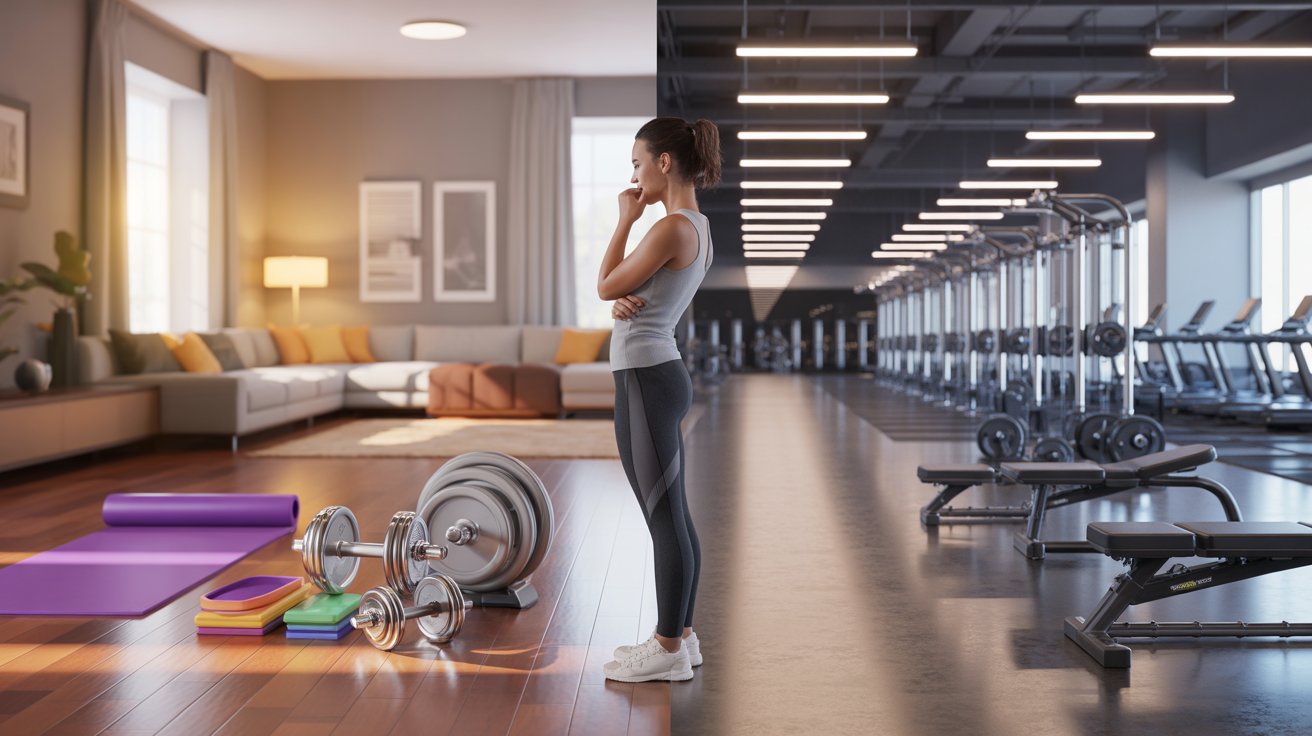
Choosing between home and commercial gym equipment isn’t about picking the “better” option. It’s about matching the right tools to where you are in your fitness journey right now.
The equipment that works for a beginner learning basic movements looks very different from what an advanced lifter needs for serious strength training. Your training stage affects how much wear you’ll put on equipment, what features actually matter, and how much you should spend. A new lifter doesn’t need the same heavy-duty construction as someone squatting three times per week with serious weight.
Understanding the key differences between home and commercial equipment helps you spend money on what supports your goals. You’ll learn what factors matter most for your situation and how to adjust your choices as your training evolves.
Factors to Consider When Choosing Equipment
Your choice between home and commercial equipment depends on your skill level, available space, how much you can spend, and what type of training you plan to do. Each of these factors plays a direct role in determining which equipment will work best for your situation.
Assessing Your Training Experience Level
Beginners often do well with basic home equipment because it covers fundamental movements without overwhelming options. A set of dumbbells, a bench, and resistance bands can support most early-stage training programs.
Intermediate lifters need more specific equipment based on their goals. If you’re focusing on strength, you’ll want a quality barbell and rack. Those pursuing muscle building might prioritize adjustable dumbbells and cable systems.
Advanced athletes typically require equipment that handles heavy loads repeatedly. Commercial-grade power racks support weights beyond 500 pounds and feature multiple attachment points for specialized exercises. Home equipment in this category exists but costs significantly more than entry-level options.
Your technique matters too. If you’re still learning proper form, machines with guided movement patterns reduce injury risk. Free weights demand better control and stability, which develops over time.
Space and Budget Considerations
Measure your available space before selecting equipment. A power rack needs roughly 8 feet of height and a 6×8 foot footprint. Compact options like adjustable dumbbells require only a small corner.
Budget planning should account for initial costs and long-term value. Home equipment typically ranges from $500 to $5,000 for a complete setup. Commercial equipment costs more upfront but lasts longer under heavy use.
Space Requirements by Equipment Type:
| Equipment | Floor Space | Height Clearance |
|---|---|---|
| Power rack | 48 sq ft | 8 feet |
| Treadmill | 35 sq ft | 7 feet |
| Adjustable bench | 15 sq ft | N/A |
| Cable machine | 25 sq ft | 7.5 feet |
Commercial memberships cost $30-$100 monthly, totaling $1,080-$3,600 over three years. A home gym paying $2,000 breaks even in roughly 31 months if you would otherwise pay for a membership.
Safety and Durability Features
Safety mechanisms vary between equipment grades. Commercial machines include reinforced frames, tested to support users up to 400 pounds. Home versions typically max out at 250-300 pounds.
Look for equipment with dual safety catches on racks and automatic stop features on cardio machines. These prevent serious injuries during failed lifts or equipment malfunctions.
Durability relates directly to construction materials. Commercial equipment uses 11-gauge steel (thicker and stronger). Home equipment often uses 14-gauge steel, which works fine for single users but wears faster.
Warranty length indicates expected lifespan. Commercial equipment warranties cover 5-10 years on frames and 1-3 years on parts. Home equipment warranties run shorter, typically 1-3 years on frames.
Variety and Versatility of Machines
Multi-function machines save space but limit exercise selection. A single cable crossover station enables dozens of movements, while three separate machines would achieve similar results with better biomechanics.
Adjustable equipment increases versatility within tight spaces. Dumbbells that adjust from 5 to 50 pounds replace ten pairs of fixed weights. Benches with multiple incline settings support more exercise variations than flat-only models.
Commercial gyms offer specialized machines for specific muscle groups. Hack squat machines, leg curls, and preacher curl benches each serve narrow purposes. Home setups benefit more from barbells and adjustable benches that target the same muscles through different exercises.
Consider attachment compatibility when choosing racks and cable systems. Standard mounting holes let you add dip bars, landmine attachments, and resistance band pegs as your training advances.
Adapting Your Choice to Progression and Goals
Your equipment needs change as you develop from a beginner to an advanced athlete. Matching your gear to your current training stage helps you spend money wisely and get the results you want.
Starting Out: Best Options for Beginners
Home equipment works best when you’re just starting your fitness journey. You don’t need much to build a solid foundation.
A set of adjustable dumbbells, a yoga mat, and resistance bands give you everything for basic strength training and mobility work. These items cost between $100-300 total and fit in a closet. You can do full-body workouts with just these tools.
Essential beginner home items:
- Adjustable dumbbells (5-25 lbs)
- Exercise mat
- Resistance bands (light to medium)
- Jump rope
- Stability ball
Skip the commercial gym membership until you know which exercises you enjoy. Many beginners waste money on memberships they don’t use. Home equipment lets you learn proper form without pressure from other gym users.
Start with bodyweight exercises like pushups, squats, and planks. Add light weights after you master these movements. Most beginners see good progress for 3-6 months with basic home equipment before needing anything more advanced.
Advancing Your Routine: Intermediate Needs
Your equipment needs expand as you get stronger and more skilled. This is when you need to decide between upgrading your home gym or joining a commercial facility.
A commercial gym membership makes sense if you want variety. You’ll get access to cable machines, leg press equipment, and different cardio options. Monthly costs run $30-100 depending on the facility.
For home gym expansion, focus on a quality barbell set, weight plates, and asquat rack. This setup costs $800-1500 but lasts for years. You can do compound movements like squats, deadlifts, and bench press that build serious strength.
Intermediate training requires:
- Progressive overload (adding weight regularly)
- More exercise variety
- Specialized equipment for weak points
Your choice depends on your budget and space. A two-car garage fits a complete home setup. A small apartment makes a commercial gym more practical.
Optimizing for Serious Training or Competition
Advanced athletes need commercial-grade equipment that handles heavy daily use. Your training intensity and volume require more durable gear.
Competition powerlifters and bodybuilders benefit most from commercial gym access. You need specialty bars, competition-standard plates, and machines that target specific muscles. Commercial facilities also provide training partners who push you harder.
Building an advanced home gym requires $3000-10000 minimum. You’ll need a power rack, competition barbell, 400+ pounds of plates, adjustable bench, and platform. Add commercial-grade cardio equipment if you do conditioning work.
Commercial-grade equipment differences:
- Heavier gauge steel frames
- Higher weight capacities (500+ lbs)
- Better bearings and moving parts
- Longer warranties (5-10 years vs 1-2 years)
Athletes training for specific sports often need both options. Keep basic equipment at home for daily work and use a commercial gym for specialized training sessions. This hybrid approach costs more but gives you maximum flexibility for competition prep.


