
Want a chest and arm workout that actually tells you what to do, how many sets, and in what order? Most people waste time in the gym piecing together random exercises with no clear structure.
A well-planned chest and arm workout removes the guesswork completely. Your chest and triceps work together on every press. Your biceps can train fresh right after.
That makes this one of the most efficient upper-body splits you can follow. In this post, I give you a complete plan with exercises, sets, reps, and tips to build real size and strength in the chest and arms.
Why Train Chest and Arms Together?
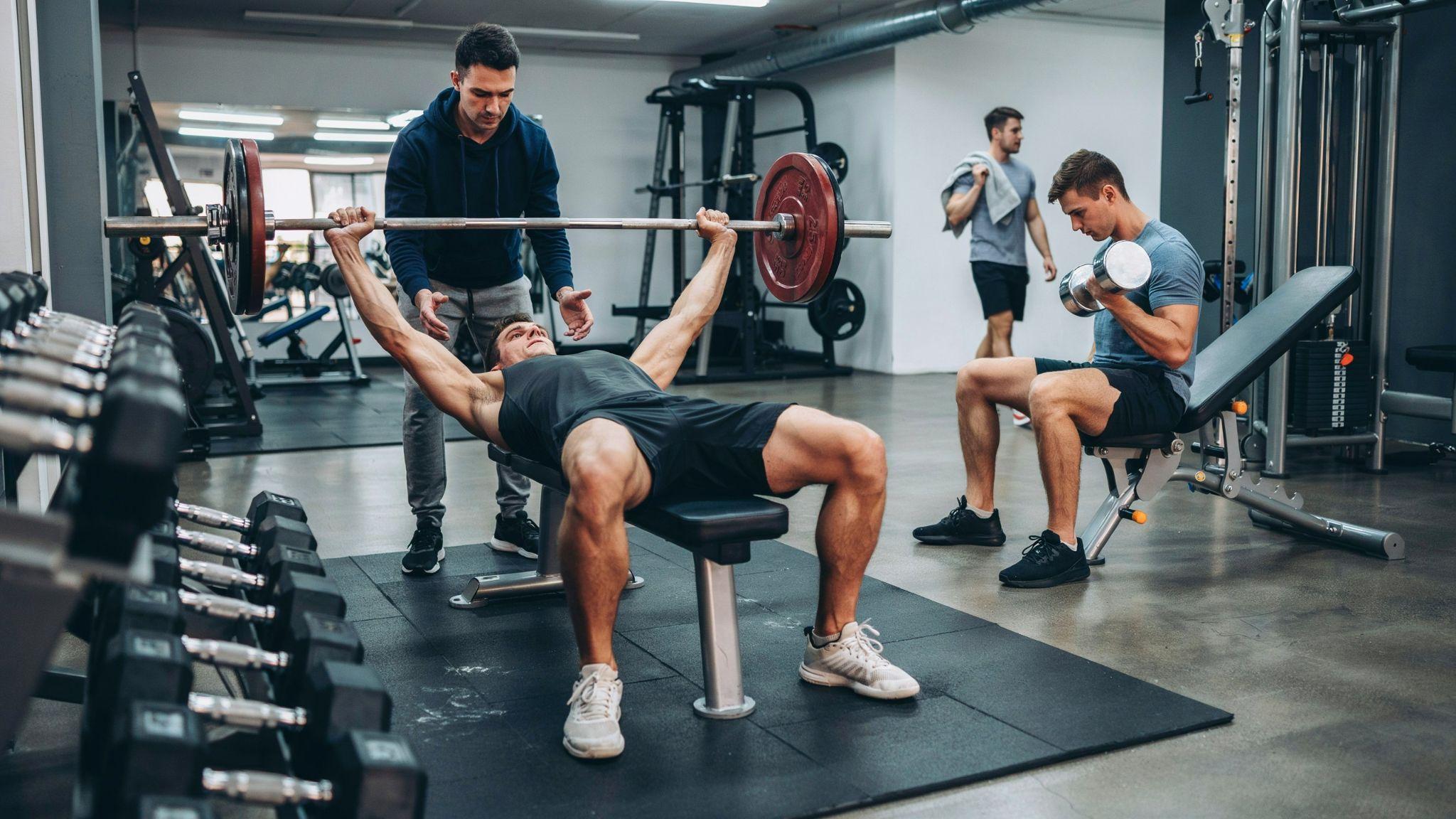
Training chest and arms in the same session makes a lot of sense from both a muscle activation and a recovery standpoint.
When you press, your chest, triceps, and front shoulders all fire together. When you curl, your biceps work independently without overlapping with what the chest just did.
That means you can push your chest hard first and then shift to biceps without the second muscle group being already tired from the first exercise. The two groups share a session without stealing from each other.
This pairing also works well for anyone who trains three or four days per week and wants to cover the upper body without dedicating separate days to every individual muscle.
Research shows that doing compound exercises like the bench press at the start of a session produces better strength gains than saving them for later.
So the structure here is simple: start with heavy chest work, move to triceps, and finish with biceps. That order keeps the most demanding exercises at the front when you are freshest.
This workout suits beginners who want structure, intermediate lifters who want a focused upper-body day, and anyone who has been running a push-pull-legs split and wants a more targeted chest and arms session.
Weekly Training Schedule
How often you train chest and arms together depends on your current level and how much total volume your body can recover from.
Beginner Routine (3 days per week)
- Day 1: Chest and Arms
- Day 2: Rest or light cardio
- Day 3: Legs and Core
- Day 4: Rest
- Day 5: Full Body or Upper Body repeat
- Days 6 and 7: Rest
Beginners should focus on learning the movements correctly rather than pushing maximum weight. Use lighter loads, prioritize form, and aim for two to three working sets per exercise.
Intermediate Routine (4 days per week)
- Day 1: Chest and Triceps
- Day 2: Back and Biceps
- Day 3: Rest
- Day 4: Legs
- Day 5:Chest and Arms (combined session)
- Days 6 and 7: Rest or active recovery
At the intermediate level, you can handle more volume and can split chest and arm training across two separate sessions in the week to allow for more focused work on each muscle group.
Recovery Between Sessions
Give your chest and arms at least 48 hours of rest before training them again. These muscles get indirect work in almost every upper-body session, so they need full recovery to grow.
Skipping recovery leads to stalled progress and increased injury risk. Every four to six weeks, consider a deload week where you reduce your sets and weight by 30 to 40 percent.
This gives your joints and nervous system time to recover fully and often leads to better performance in the weeks that follow.
Take five to ten minutes to prepare the body before lifting. And after the session, give your muscles the recovery time they need. Sleep, hydration, and adequate protein matter as much as the workout itself.
Best Chest Exercises
The chest exercises in this plan cover the full pec from different angles. I always start with a compound movement before moving to isolation work.
Compound Movements
These are your heaviest, most effective chest exercises. They work multiple muscle groups at once and build the most mass.
Barbell Bench Press
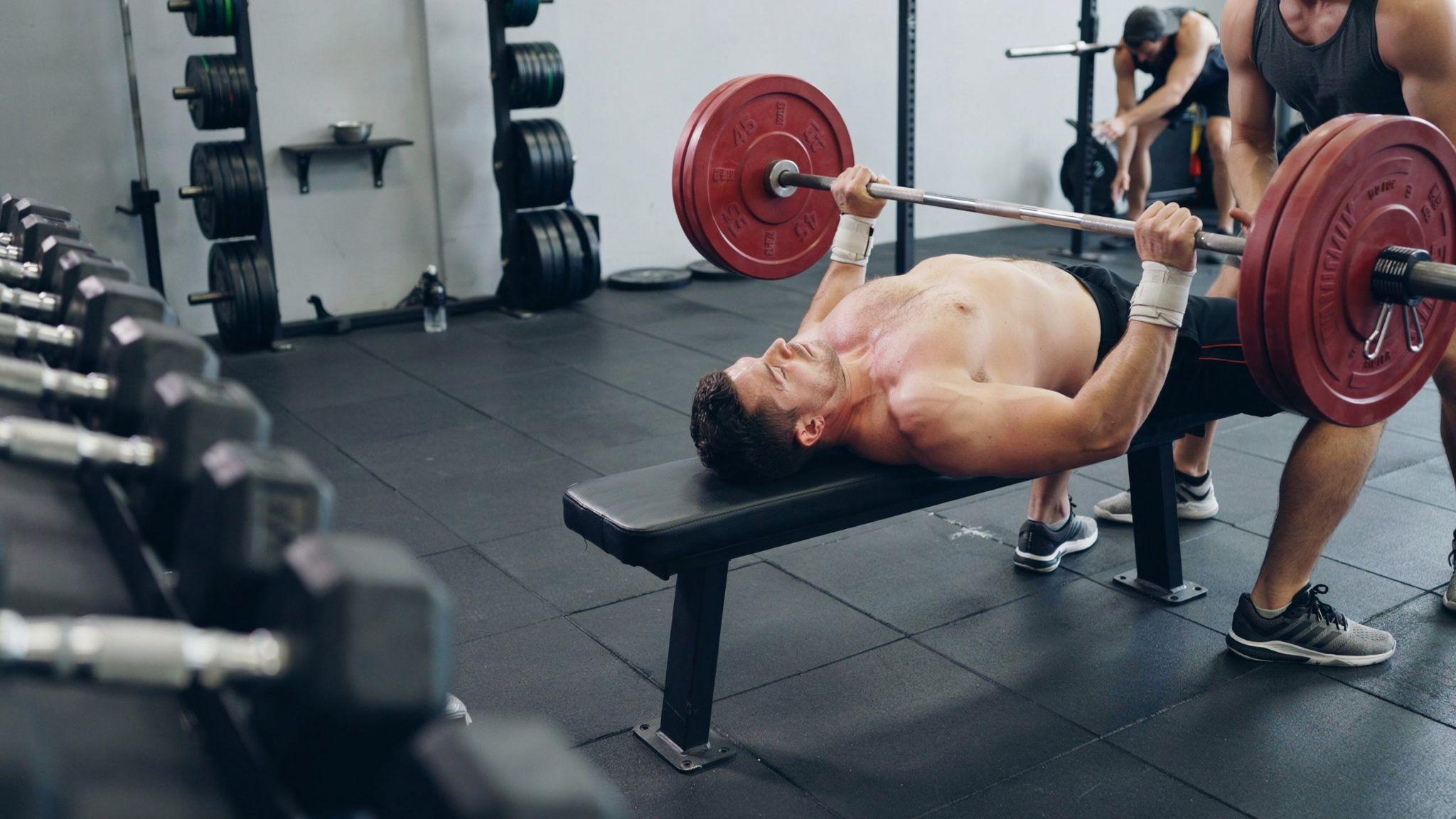
The bench press is where you build real chest strength and size. Use it to set the tone for the rest of your session.
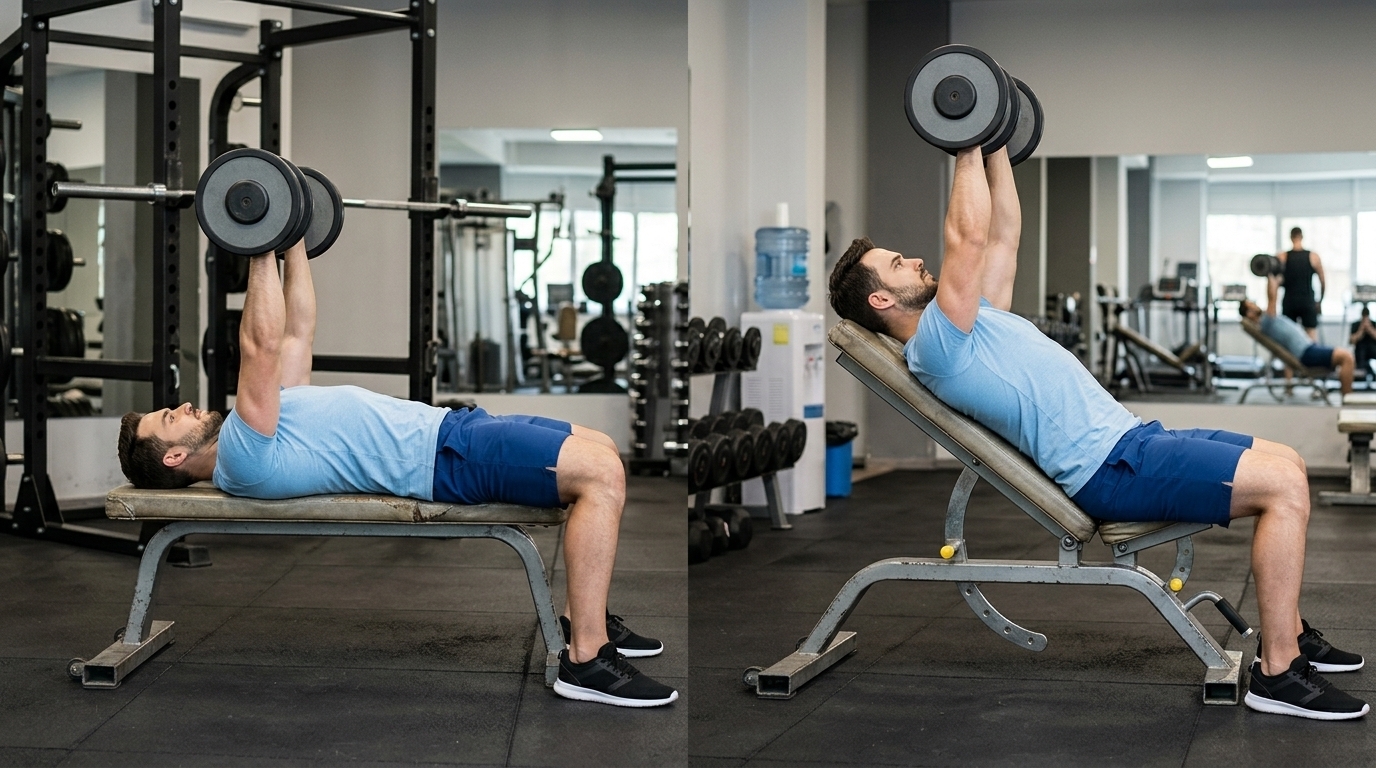
This is the foundation of any serious chest session. Lie flat on the bench with your feet planted firmly on the floor. Grip the bar just wider than shoulder width.
Lower the bar to your mid-chest in a controlled manner, pause briefly, then press back up to full extension. Keep your shoulder blades pinched together and your lower back in a neutral position. Do not let your elbows flare out past 75 degrees.
Go heavy here because this is where most of your chest strength and mass come from. If you use heavy loads regularly, wrist wraps can reduce joint strain and help you maintain proper wrist alignment under the bar.
Tip: Take three to four seconds to lower the bar. That slow eccentric phase increases time under tension and drives more muscle growth.
Incline Dumbbell Press
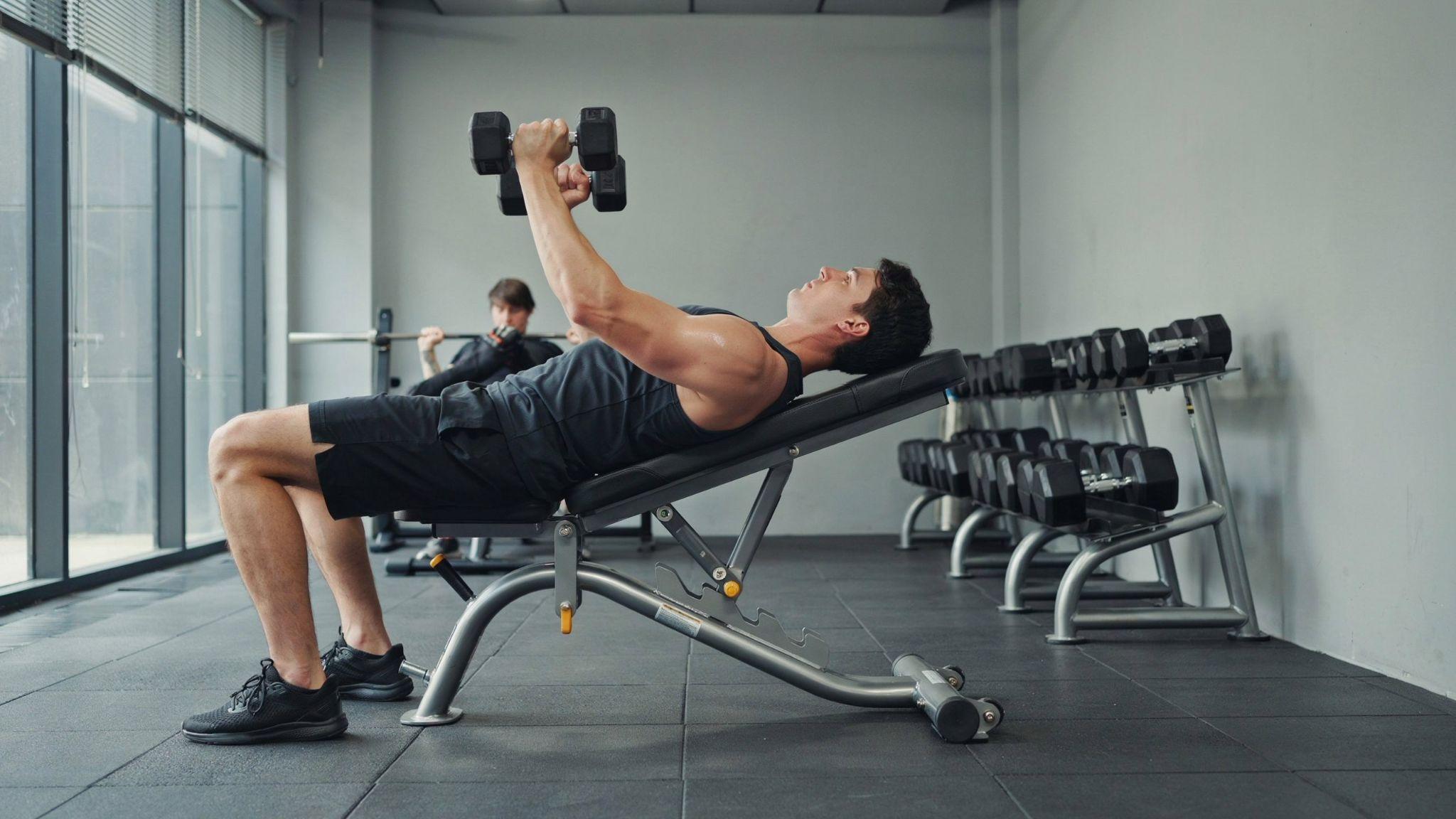
This targets the upper chest, which flat pressing alone often misses. It is a must-have in any complete chest plan.
Research shows that incline pressing builds the upper chest more effectively than flat pressing alone.
Set the bench to 30 to 45 degrees. Hold a dumbbell in each hand with your palms facing forward and press straight up until your arms are fully extended. Lower with control back to shoulder level.
Using dumbbells rather than a barbell allows each arm to move through its natural range of motion, which often leads to better muscle feel and fewer shoulder issues.
If you are new to the gym and struggle with balance or form, the Smith machine incline bench press is a solid alternative that locks you into a fixed bar path and lets you focus on chest activation without stabilization fatigue.
Tip: Do not set the incline too steep. Anything above 45 degrees starts to shift more load onto the front shoulders and away from the upper chest.
Chest Dips
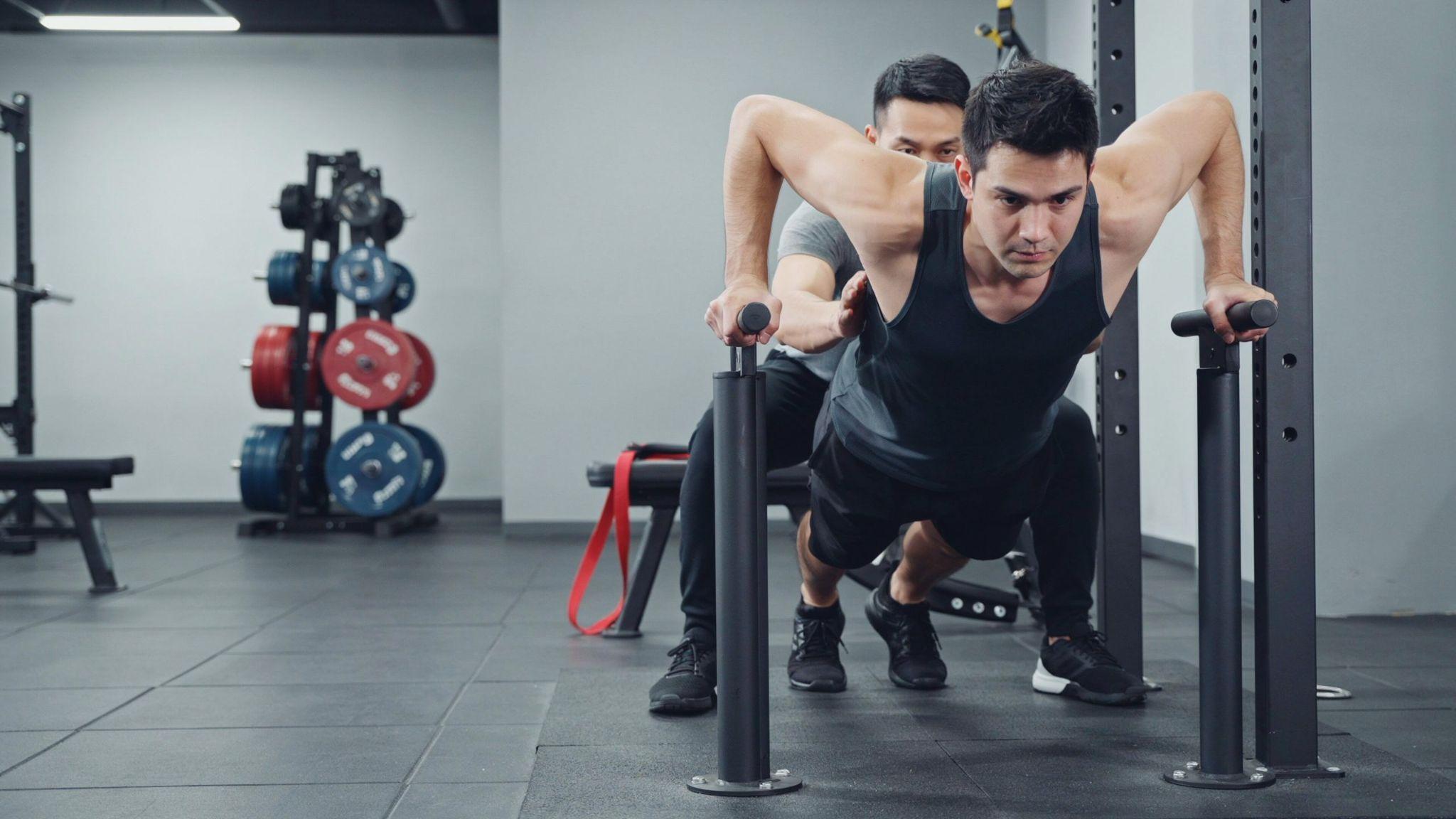
Dips hit the lower chest hard and double as a triceps exercise. They bridge the gap between chest and arm training perfectly.
Chest dips are one of the most effective lower chest exercises available.
Lean your torso forward at roughly 45 degrees, let your elbows flare slightly outward, and lower yourself until your upper arms are parallel to the floor.
Press back up through your chest. This movement also hits the triceps and front deltoids, making it a strong finisher for the compound section.
If you cannot do bodyweight dips yet, use an assisted dip machine or a resistance band.
Isolation Movements
These exercises target the chest more precisely after compound work. They add shape and fullness that pressing movements cannot fully reach on their own.
Cable Fly
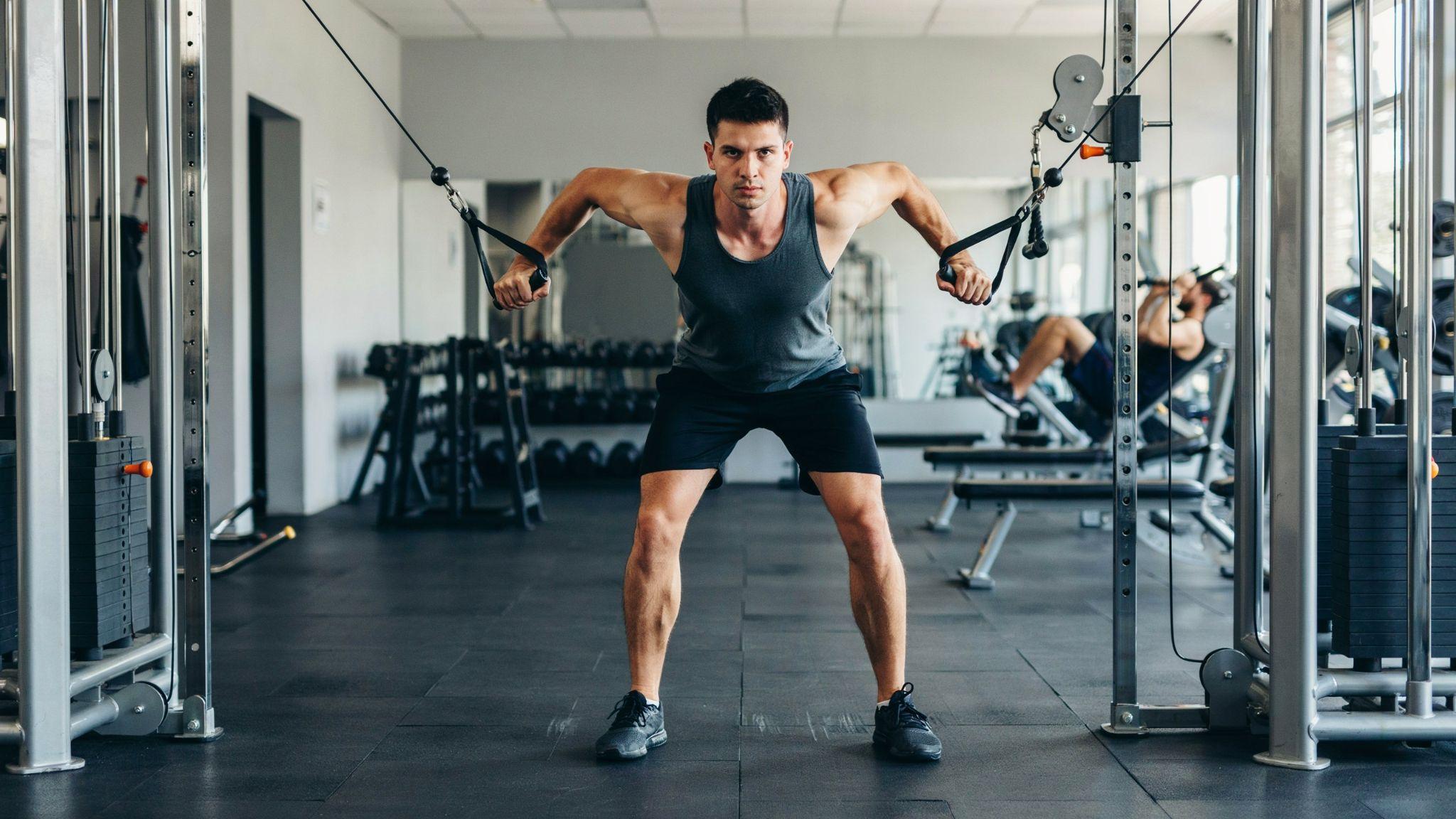
Cable flies keep tension on the chest throughout the full movement. Use them to build the inner chest and improve muscle definition.
Set the pulleys to chest height. Stand in the center of the cable station, hold one handle in each hand, and bring your hands together in front of your chest in a wide arc.
Keep a slight bend in your elbows throughout. The cable fly keeps constant tension on the chest muscles across the full range of motion, something dumbbells cannot do as effectively.
This makes it one of the best exercises for building the inner chest and creating a fuller look across the pec. Slow down the return phase deliberately.
The stretch at the bottom increases mechanical tension, one of the primary drivers of muscle growth.
Tip: Focus on squeezing your chest at the point where your hands meet. Hold that contraction for one second before releasing.
Pec Deck Fly
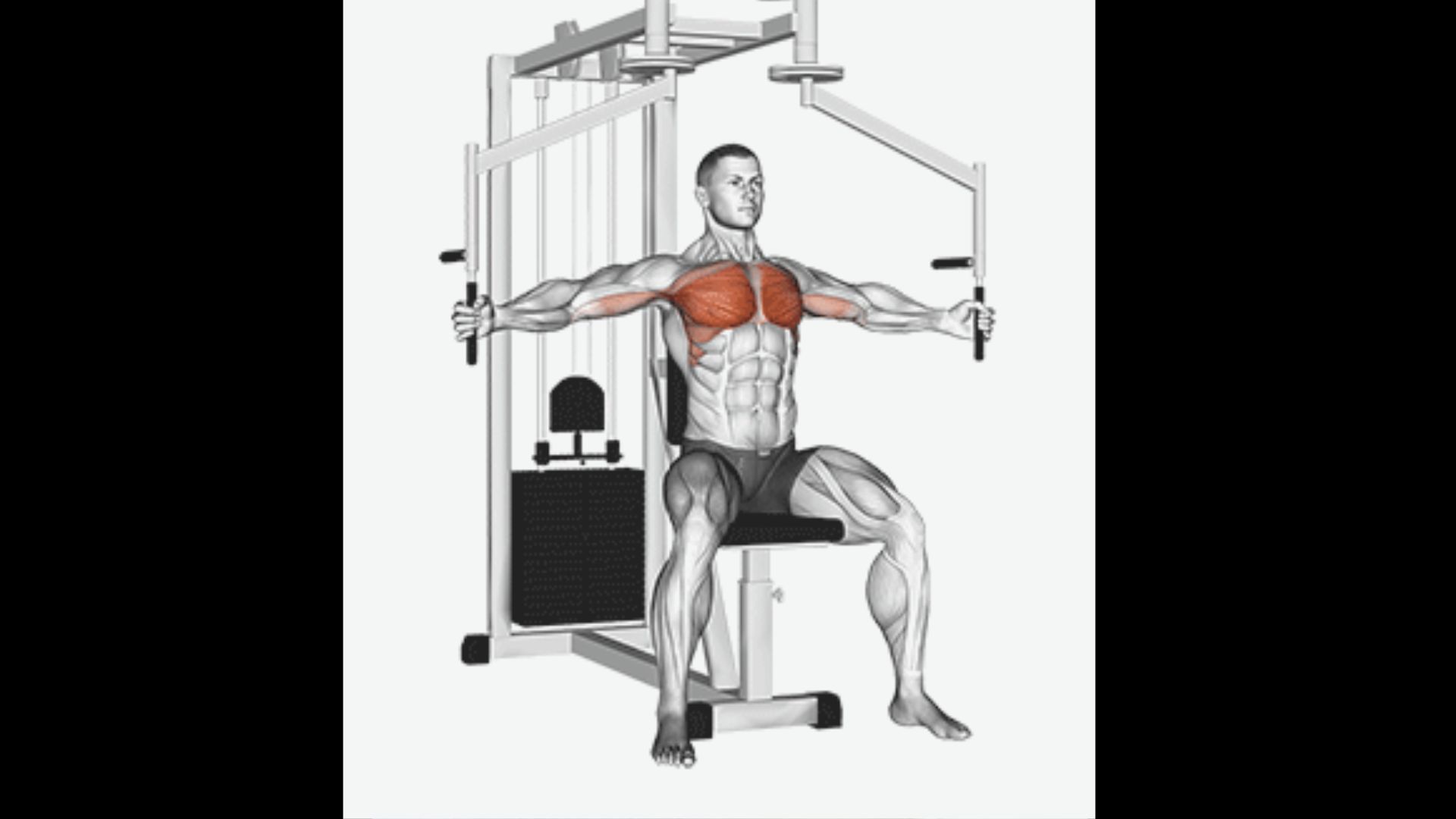
This machine version is easier to control and safer on the joints. It works best as a finisher when your chest is already fatigued.
The pec deck machine guides your movement through a fixed arc, which makes it safer and more consistent than free-weight flies.
Sit upright with your back flat against the pad. Place your forearms on the pads and push them together until they meet in front of you. Control the return.
This exercise works best at the end of your chest session when you want to pump blood into the muscle without loading the joints further.
Best Arm Exercises
After the chest work is done, I move to triceps first and finish with biceps. Triceps are already partially warmed up from pressing, so the transition is smooth.
Triceps
Your triceps are already warm from chest pressing, so this is the right time to hit them hard with targeted work.
Close-Grip Bench Press
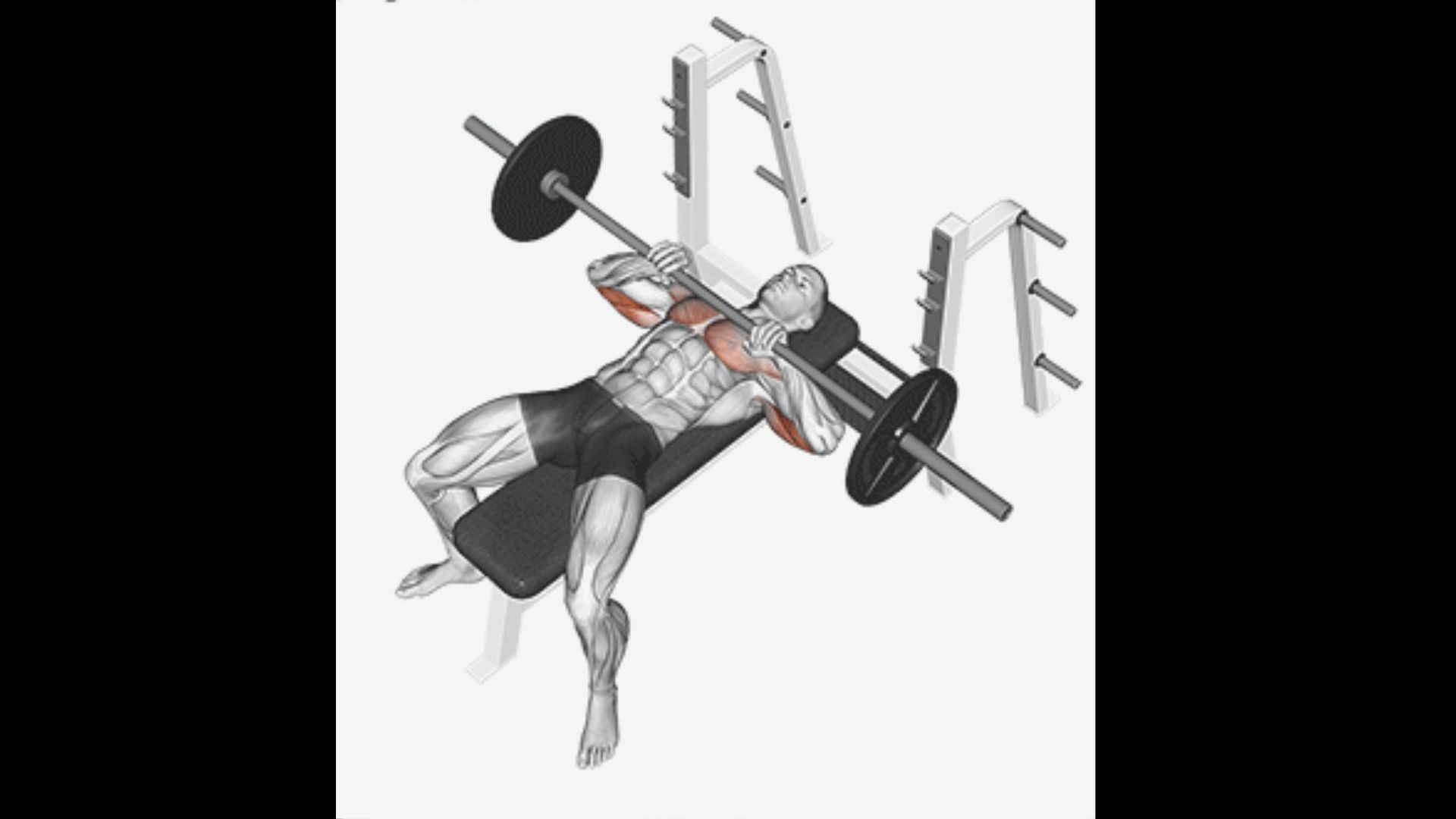
The bench press is where you build real chest strength and size. Use it to set the tone for the rest of your session.
This is a compound triceps movement that lets you move serious weight. Lie on the bench and grip the bar with your hands about shoulder-width apart or slightly narrower.
Lower the bar to your lower chest while keeping your elbows tucked close to your body. Press back up.
The close-grip bench press is one of the best exercises for building triceps thickness and lockout strength, and it also gives your chest a secondary hit at the end of the pressing section.
Tip: Do not grip too narrow. A grip that is too close forces the wrists into an awkward angle and can cause pain over time. Shoulder-width is narrow enough.
Rope Pushdown
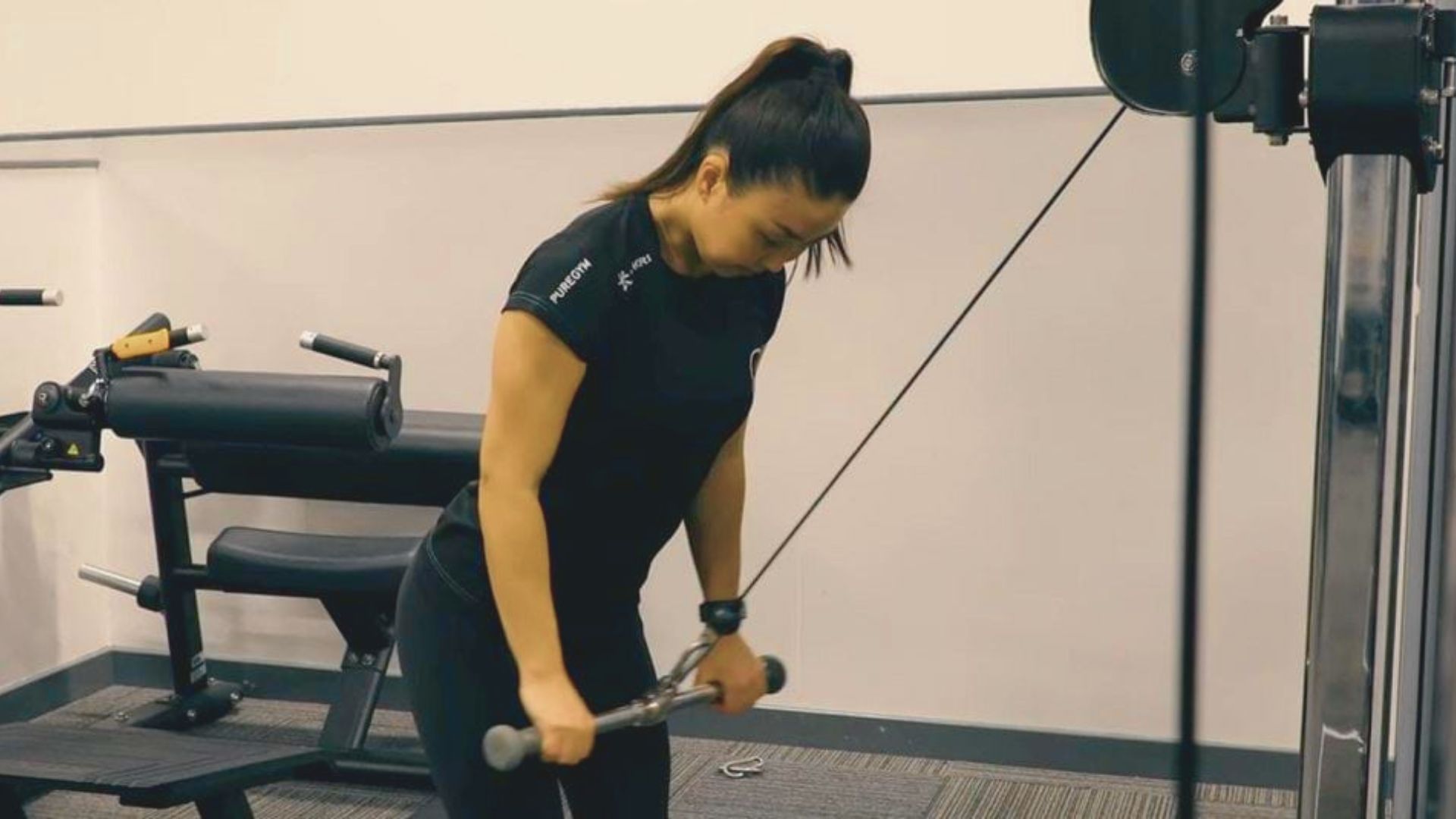
.The rope lets each hand move independently for a stronger contraction at the bottom. It is one of the most effective triceps isolation exercises available.
Attach a rope to the high pulley of a cable machine. Stand facing the machine, grip the rope with both hands, and push it downward until your arms are fully extended.
At the bottom, split the rope outward slightly to get a full triceps contraction. Return with control. The rope attachment allows each hand to move independently, which many lifters find creates a stronger contraction than a straight bar.
Overhead Triceps Extension
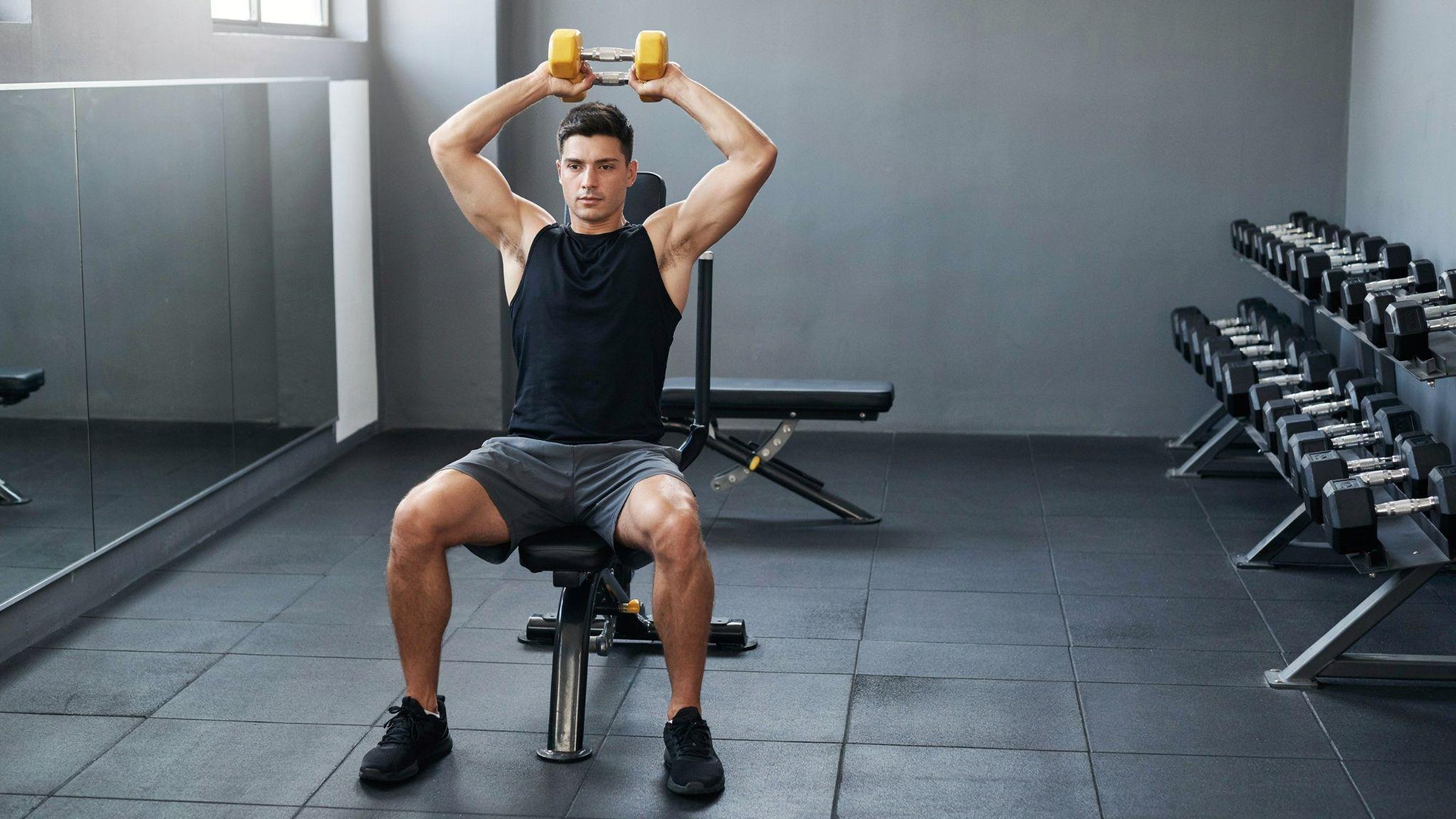
This is the only exercise in the plan that puts the long head of the triceps under a full stretch. That stretch is what drives serious arm size.
This movement specifically targets the long head of the triceps, which is the largest of the three heads and the one most responsible for overall arm size.
Hold a dumbbell or cable attachment overhead with both hands. Lower it behind your head by bending at the elbows, then press back up to full extension.
Keep your elbows pointing forward throughout and do not let them flare outward.
Tip: The long head of the triceps only reaches full stretch when your arm is raised above your head. That is why overhead extensions build more triceps mass than pushdowns alone.
Biceps
Biceps come last because they do not overlap with chest work at all. You can train them fresh even after a full pressing session.
Barbell Curl
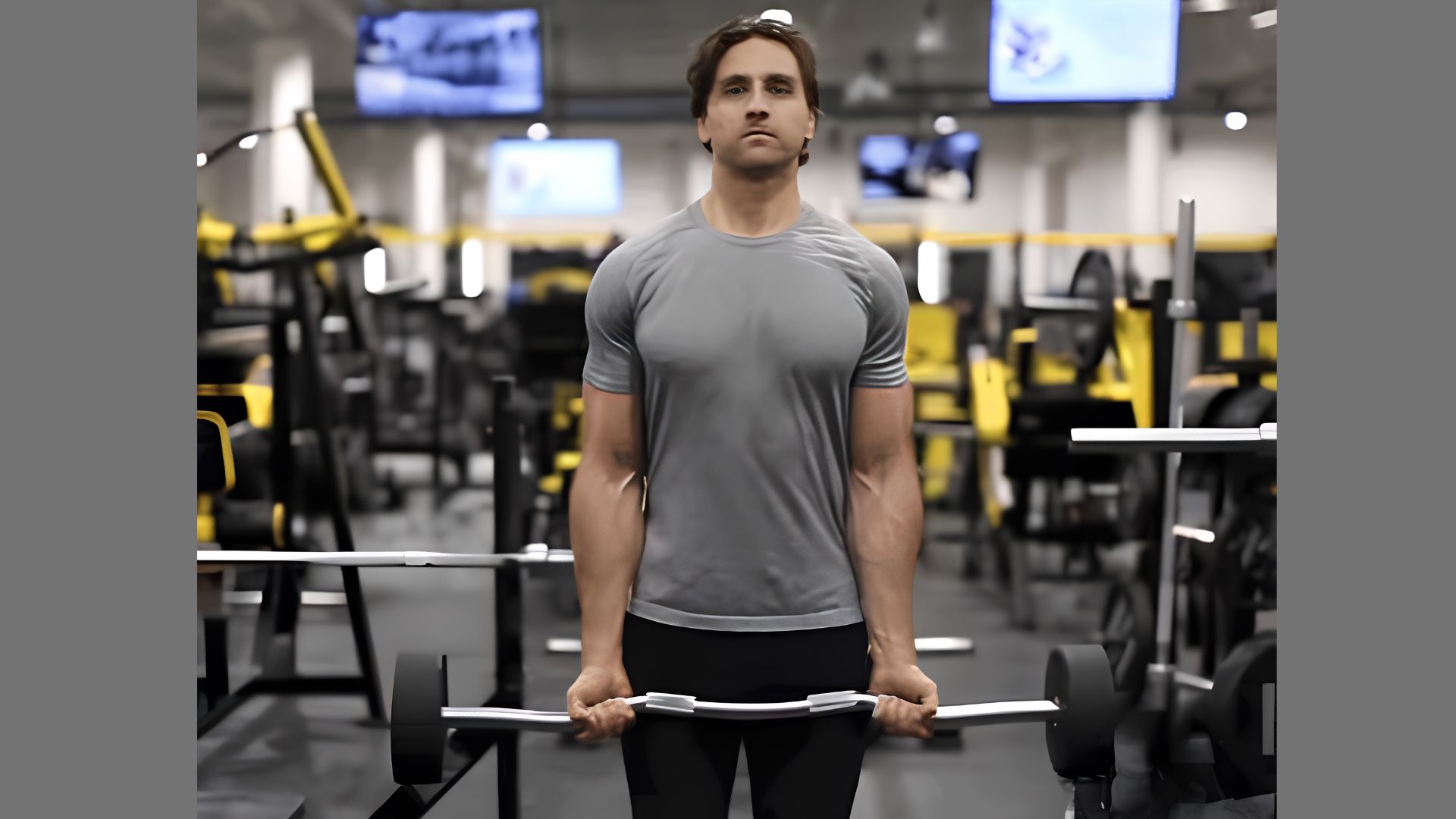
The barbell curl lets you load more weight than dumbbells and hits both biceps heads evenly. Start here for maximum mass-building stimulus.
Start your biceps work with the barbell curl. Stand with your feet shoulder-width apart, hold the bar with an underhand grip just outside your hips, and curl it up to shoulder level.
Keep your upper arms pinned to your sides and do not swing. Lower slowly, taking three to four seconds on the way down.
The cable curl is a strong alternative here if a barbell is not available. It keeps constant tension on the biceps throughout the full range of motion, unlike a barbell where tension drops at the top.
Tip: Squeeze your biceps hard at the top for one second before lowering. That brief isometric hold increases the total time under tension per set.
Incline Dumbbell Curl
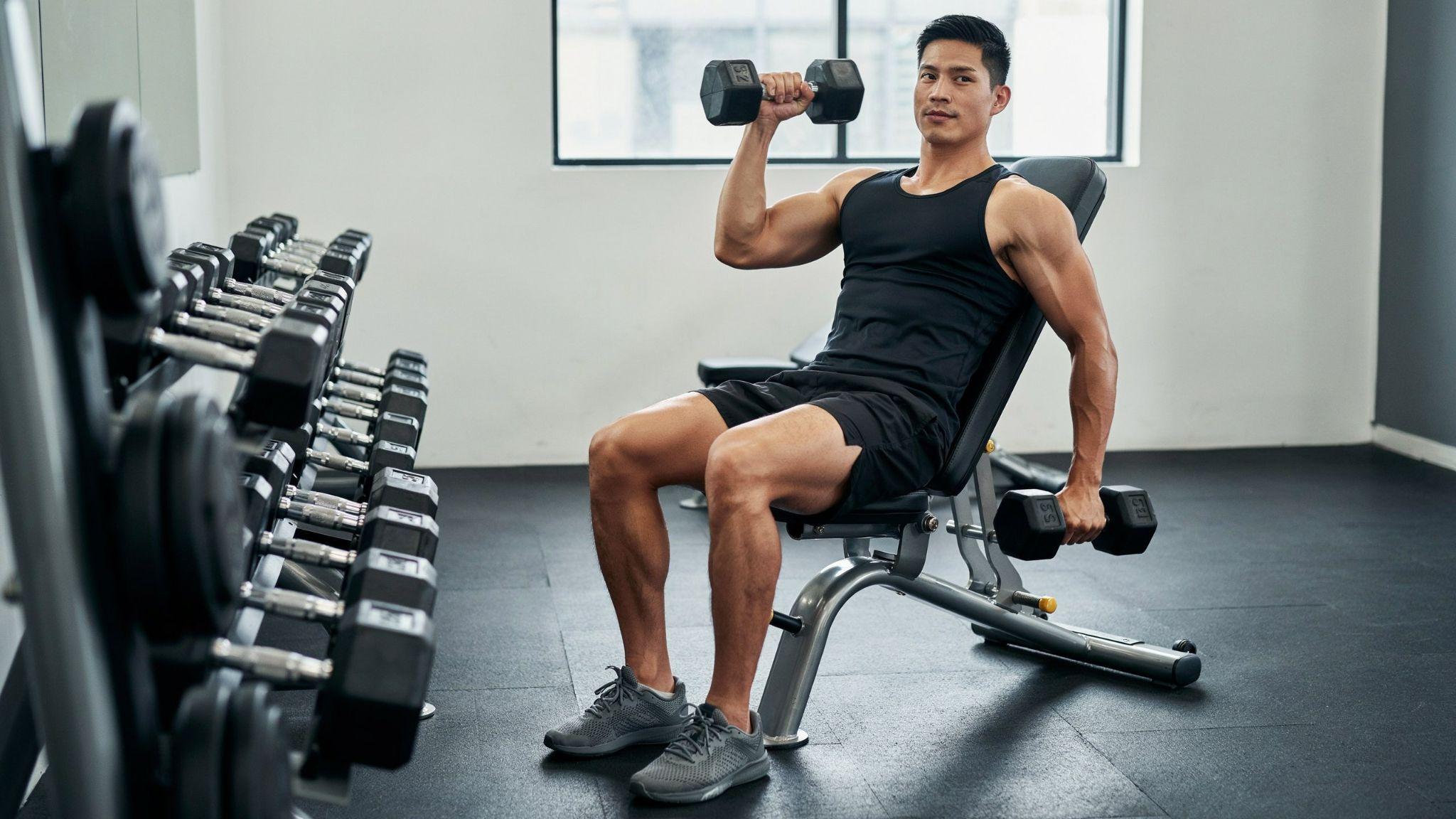
The inclined position creates a longer range of motion and a deeper stretch at the bottom. Most people skip this exercise, and most people are missing out.
Set a bench to a 45 to 60-degree incline. Sit back against it and let your arms hang straight down behind your body.
From this starting position, curl the dumbbells up without letting your elbows swing forward. The inclined position puts the biceps in a stretched position at the start of the movement, which increases the range of motion and the growth stimulus.
This is one of the most underrated biceps exercises in the gym. Keep your shoulders pressed into the pad throughout. Letting them roll forward shortens the range of motion and takes tension off the target muscle.
Hammer Curl
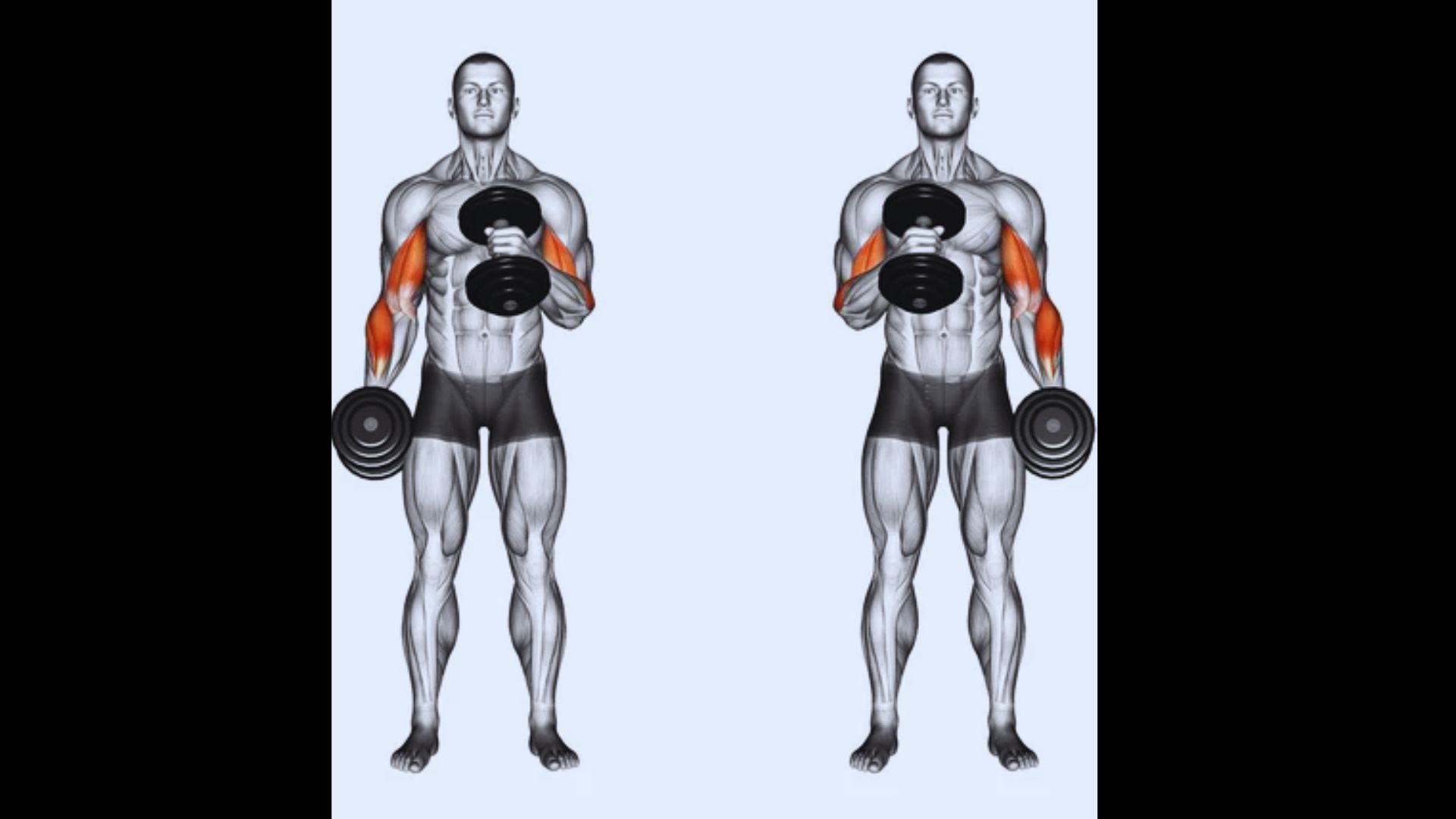
Hammer curls build arm thickness by targeting the brachialis and forearm alongside the biceps. They add size that standard curls alone cannot produce.
Hold a dumbbell in each hand with a neutral grip, meaning your palms face each other. Curl both dumbbells up together or alternating, keeping that neutral grip throughout.
The hammer curl works the brachialis, a muscle that sits underneath the biceps and pushes it upward when developed, making the arm look thicker and fuller from every angle.
It also targets the brachioradialis in the forearm, which contributes to overall arm strength and size.
Tips for Better Results
- Progressive overload: Increase the weight slightly or add 1–2 reps each week to keep challenging your muscles.
- Train close to failure: Finish each set with only 1–2 reps in reserve (RIR) for optimal muscle growth.
- Track your workouts: Record your weights, reps, and sets to monitor progress and improve consistently.
- Prioritize compound exercises: Perform compound lifts (bench press, close-grip bench press) before isolation movements (flyes, curls, pushdowns).
- Control your tempo: Lower the weight slowly (2–3 seconds) and avoid rushing each rep.
- Use a full range of motion: Complete every repetition fully to maximize muscle activation.
- Eat enough protein: Aim for 0.7–1 gram of protein per pound of body weight daily.
- Fuel recovery: Eat a protein- and carbohydrate-rich meal within two hours after training.
- Stay consistent: Follow your workout plan regularly instead of changing exercises every session.
- Prioritize recovery: Get enough sleep, stay hydrated, and allow muscles time to recover between workouts.
Chest and Arm Workout Plan
A complete session with warm-up, main exercises, and a clear structure you can follow immediately.
Warm-Up (5 to 10 Minutes)
A proper warm-up is not optional. It raises your core temperature, increases blood flow to the working muscles, and reduces the risk of shoulder and elbow injuries.
- Arm circles: 30 seconds forward, 30 seconds backward
- Band pull-aparts or shoulder rotations: 2 sets of 15
- Push-ups: 2 sets of 10 at a slow, controlled pace
- Light dumbbell chest press: 1 set of 15 reps with 40 to 50 percent of your working weight
Main Workout
| Exercise | Sets | Reps | Rest |
| Barbell Bench Press | 4 | 6 to 8 | 90 seconds |
| Incline Dumbbell Press | 3 | 8 to 10 | 75 seconds |
| Chest Dips | 3 | 8 to 12 | 60 seconds |
| Cable Fly | 3 | 12 to 15 | 60 seconds |
| Pec Deck Fly | 2 | 12 to 15 | 45 seconds |
| Close-Grip Bench Press | 3 | 8 to 10 | 75 seconds |
| Rope Pushdown | 3 | 12 to 15 | 60 seconds |
| Overhead Triceps Extension | 3 | 10 to 12 | 60 seconds |
| Barbell Curl | 3 | 8 to 10 | 75 seconds |
| Incline Dumbbell Curl | 3 | 10 to 12 | 60 seconds |
| Hammer Curl | 2 | 12 to 15 | 45 seconds |
Each set should finish with no more than two reps left in the tank.
This reps in reserve approach ensures you are training hard enough to drive muscle growth without burning out before the session is done.
Common Mistakes to Avoid
- Training arms before chest, which reduces pressing strength and workout performance.
- Doing too much volume instead of focusing on quality, productive sets.
- Using poor exercise form, such as swinging curls or bouncing the bar during presses.
- Choosing weights that are too heavy, causing technique to break down.
- Skipping warm-ups, increasing the risk of shoulder and elbow injuries.
- Using partial reps instead of moving through a full range of motion.
- Neglecting progressive overload, leading to stalled muscle growth.
- Not eating enough protein or calories to support muscle recovery and growth.
- Ignoring rest and recovery, which can slow progress and increase fatigue.
- Changing routines too often instead of following a structured program consistently.
Conclusion
A solid chest and arm workout does not need to be complicated. Press heavy for the chest, hit the triceps while they are warm, and finish with focused biceps work.
Follow the plan in this post, track your numbers, and add weight over time. That combination is what produces real results.
If this post helped you put your training together, share it with someone who is still figuring out their upper-body routine. And drop a comment below telling me which exercise in this plan you are most looking forward to trying.
Frequently Asked Questions
How long should a chest and arm workout take?
A well-structured session including warm-up and main exercises should take 60 to 75 minutes. Keeping rest periods consistent and avoiding long breaks between sets helps you stay within that window.
Can I train chest and arms twice a week?
Yes. Training each muscle group twice per week is one of the most effective strategies for building muscle. Just make sure you allow at least 48 hours between sessions targeting the same muscles.
Do I need a gym for a chest and arm workout?
No. You can do push-ups for chest, diamond push-ups for triceps, and resistance band curls for biceps at home. A pair of dumbbells and a bench significantly expand your options, but a gym is not required for beginners.
Should I do cardio on the same day as my chest and arm workout?
Light cardio before or after is fine. Avoid long, intense cardio sessions immediately before lifting, as this drains energy that your muscles need for pressing and curling at full effort.