

Ever finish a back workout and wonder if you actually hit the muscles you were aiming for? You're not alone.
Cable rows are a go-to exercise for building a strong back, but small changes in grip, angle, and body position can completely shift which muscles do the work.
If you've been doing the same row the same way every time, you might be missing out on gains in your lats, traps, or rhomboids.
This guide breaks down exactly how each cable row variation and grip changes muscle activation, so you can train smarter and build a stronger, more balanced back.
Cable Row Muscles Worked at a Glance
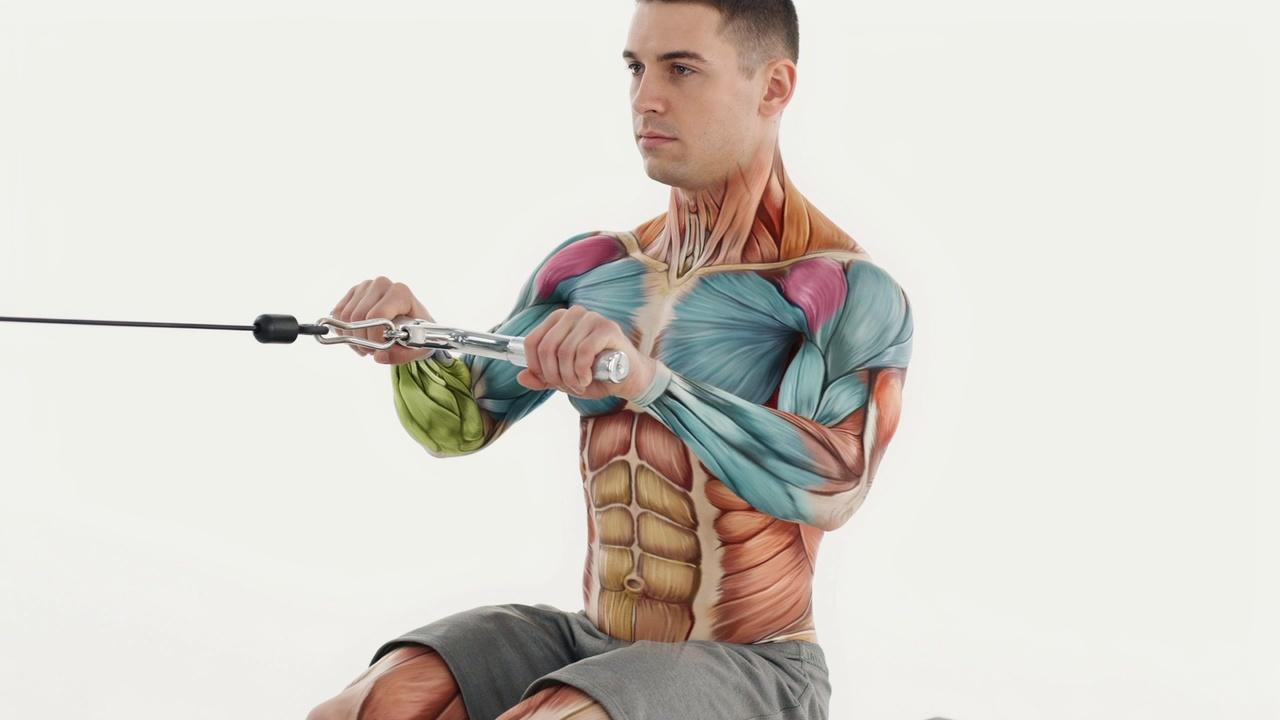
The cable row does more than train your back. Each pull switches on several muscles at once.
The latissimus dorsi does most of the work, giving your back its width and pulling your arms toward your torso.
The rhomboids and trapezius pull your shoulder blades together and support your upper back, helping your posture.
Your biceps help bend the elbow as you pull the handle in. The rear deltoids move your arms backward and support shoulder stability.
Your core and erector spinae, the muscles that run along your spine, stay active too, keeping your torso steady through each rep. One movement, many muscles working together.
How Cable Row Variations Change Muscle Activation
Changing your body position or the cable's height shifts the work between your lats, traps, and rear delts.
Seated Cable Row Muscles Worked
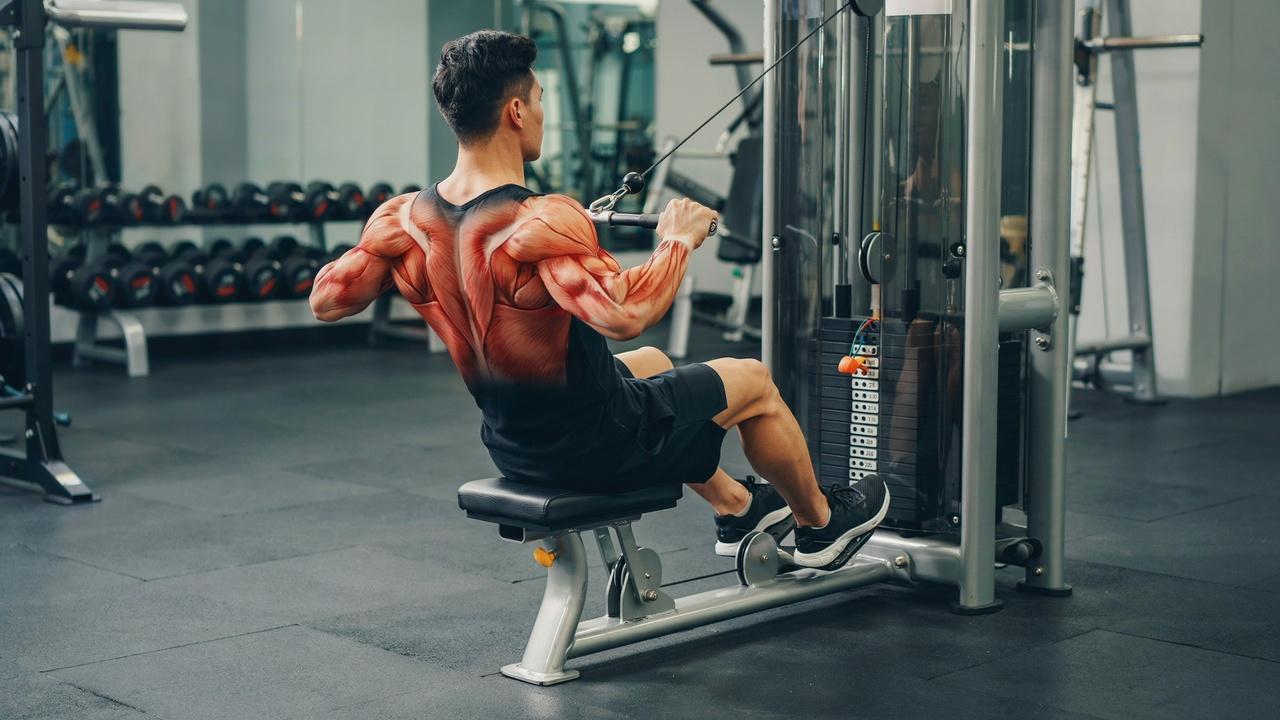
The seated cable row is a classic pull that mainly targets the lats and mid-back muscles. Your rhomboids and traps also work hard to pull your shoulder blades together.
The biceps and rear delts assist throughout the movement. Because you're seated, your lower back has less involvement, letting you focus purely on pulling with your back muscles.
Standing Cable Row Muscles Worked
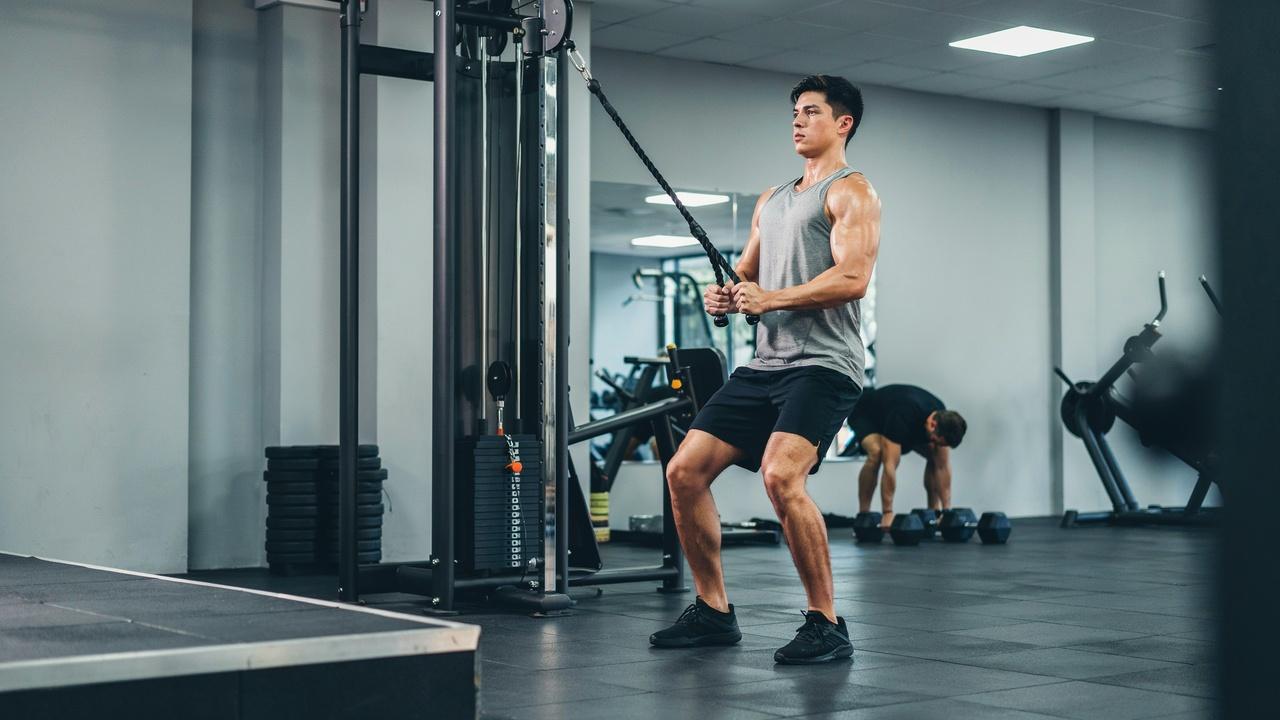
Standing cable rows bring your core and lower back into play. You still work the lats, rhomboids, and traps, but now your glutes and erector spinae have to stabilize your body.
This variation works well if you want a row that also challenges balance and total-body control.
Low Cable Row Muscles Worked
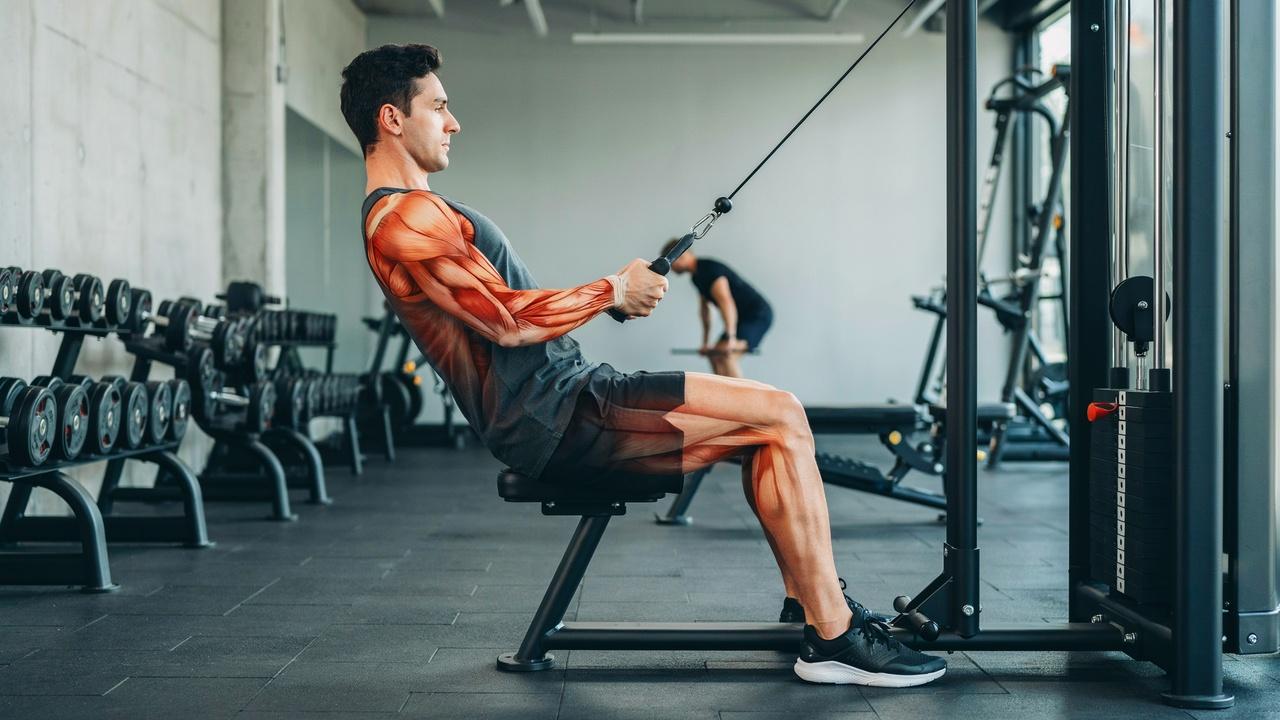
Rowing from a low cable position emphasizes the lower lats and mid-back. The pulling angle keeps tension on your back muscles through a long range of motion.
Your rear delts and biceps still contribute, but the main work happens across your lats and rhomboids.
High Cable Row Muscles Worked
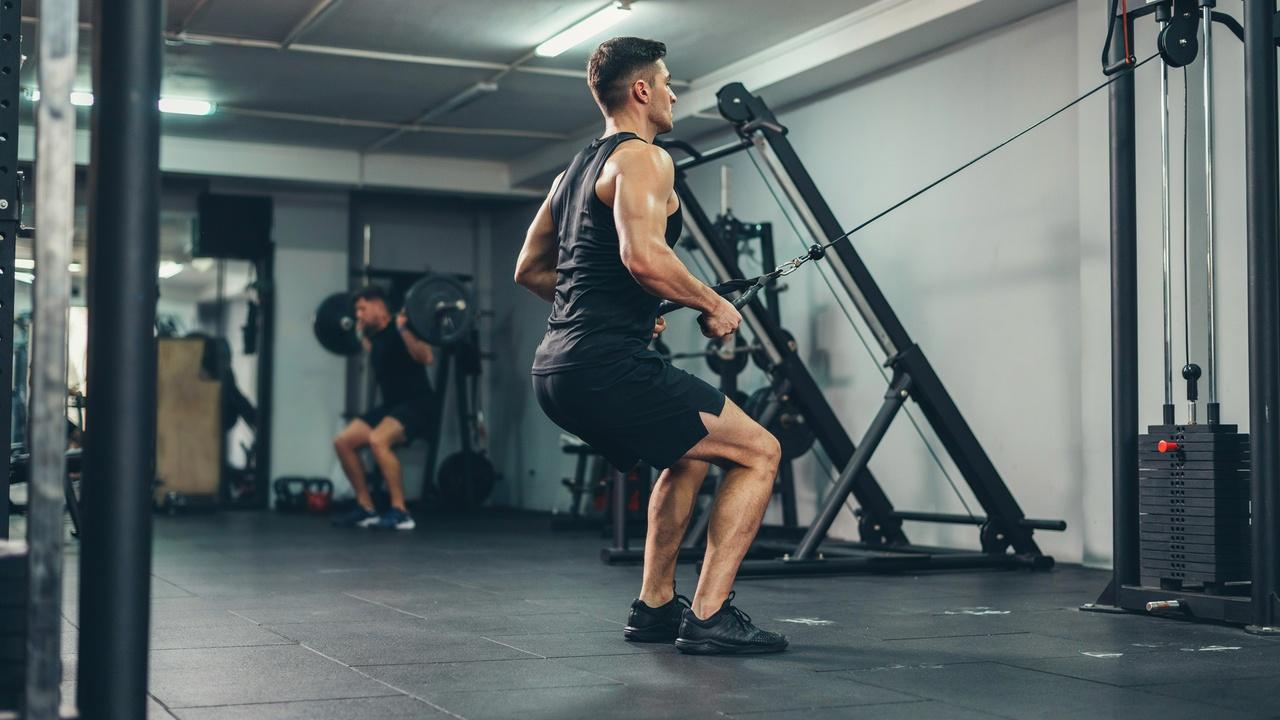
A high cable position shifts more of the load onto your upper back and rear delts. Your traps and rhomboids handle much of the pulling motion.
This angle can feel different from a standard row and gives your upper back a slightly different stimulus.
High to Low Cable Row Muscles Worked

Pulling from a high point down to a low point combines two angles in one rep.
This hits your upper traps early in the movement and shifts toward your lats as you finish the pull. It's a good option if you want variety within a single exercise.
How Different Grips Affect Cable Row Muscles Worked
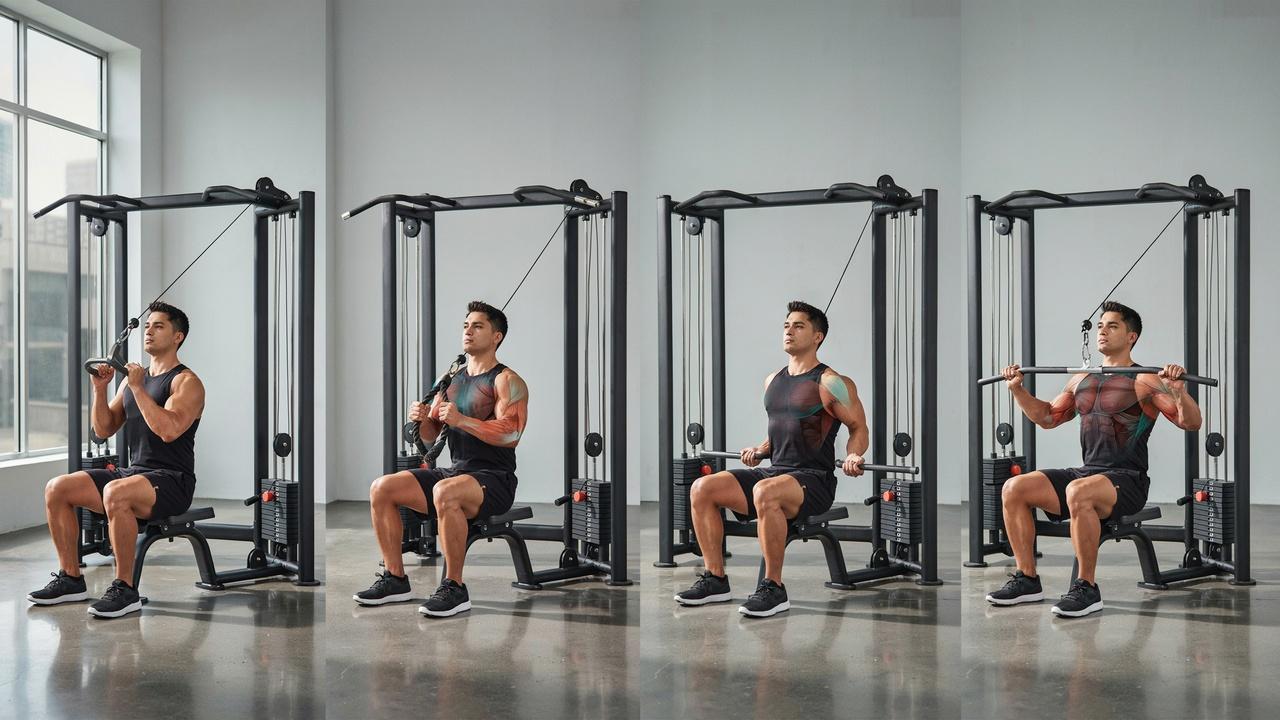
Grip width and attachment choice, whether it's a straight bar, V-bar, or rope, change how much your lats, traps, biceps, or rear delts contribute to each pull.
Close Grip Cable Row Muscles Worked
A close grip keeps your elbows tucked near your sides. This angle puts more focus on the lower lats and mid-back. Your biceps also get more involved since your arms stay closer to your torso during the pull.
Close Grip Seated Cable Row Muscles Worked
Combining a seated position with a close grip creates a stable, focused pulling motion. This setup isolates the lats and rhomboids well since your lower body stays fixed. It's a good choice for building thickness in the mid-back.
Wide Grip Cable Row Muscles Worked
A wide grip shifts the emphasis toward your upper back and rear delts. Your traps and rhomboids work harder to pull your elbows out and back. This grip reduces bicep involvement compared to a close grip.
Wide Grip Seated Cable Row Muscles Worked
Seated wide grip rows keep your body stable while targeting the upper back. Your rear delts and traps get more work here than in a close grip version. This variation is helpful if your upper back tends to lag behind your lats.
Neutral Grip Cable Row Muscles Worked
A neutral grip, with palms facing each other, works the lats and mid-back evenly. It's often easier on the wrists and shoulders. Many lifters find this grip comfortable for higher rep sets since it reduces joint strain.
Underhand Cable Row Muscles Worked
An underhand grip brings the biceps into the movement more directly. Your lats still do plenty of work, but this grip adds extra bicep and forearm activation. It can be a good option if you want a row that also builds arm strength.
Straight Bar Cable Row Muscles Worked
Using a straight bar keeps your grip fixed and your pulling path consistent. This variation works the lats, rhomboids, and traps straightforwardly. It's simple to set up and works well for beginners learning proper rowing form.
Single-Arm Cable Row Muscles Worked
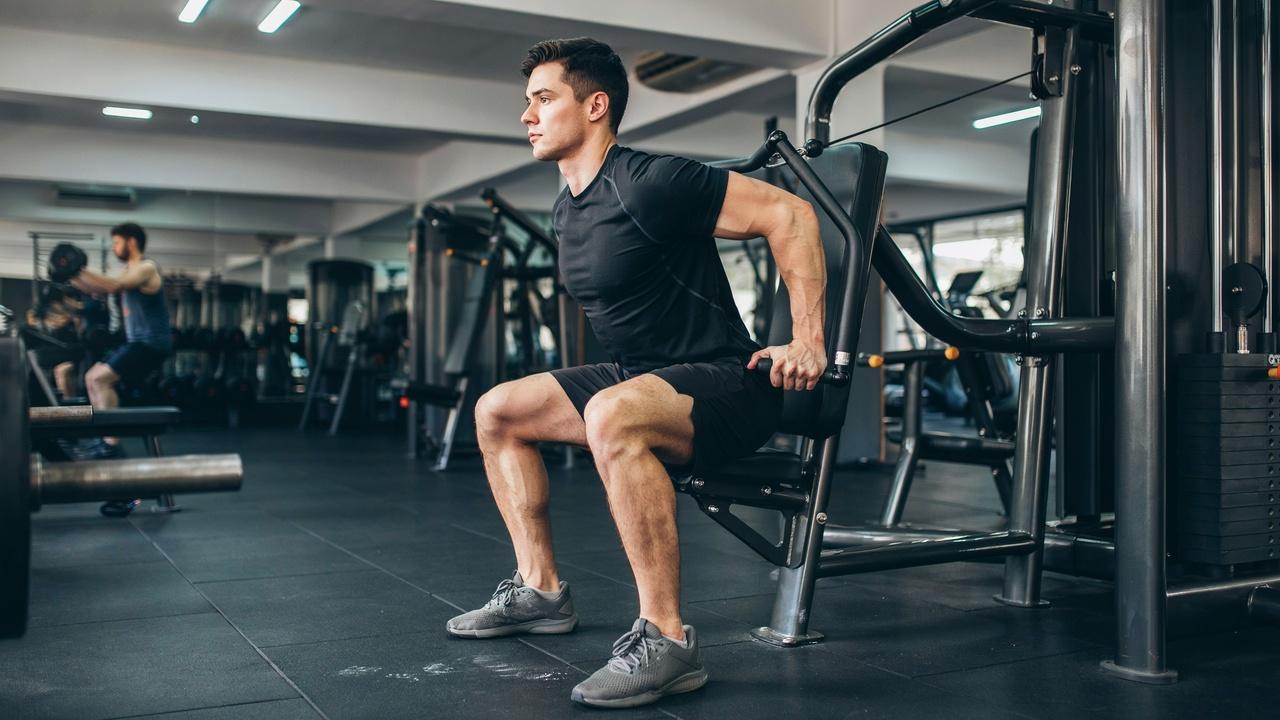
One-arm rows isolate each side of your back separately, helping fix imbalances and improve core stability. Most lifters use a D-handle or a single V-bar attachment for these.
One-Arm Cable Row Muscles Worked
Rowing one arm at a time places full focus on that side's lats, rhomboids, and rear delt. Your core has to work harder to resist rotation. This variation is useful for correcting strength differences between your left and right side.
Kneeling Single Arm Cable Row Muscles Worked
Kneeling removes some of the stability demand from your legs, letting you focus more on the pulling muscles. Your lats and mid-back get isolated work while your core still helps keep your torso steady during each rep.
Benefits of Unilateral Cable Rows
Training one arm at a time helps you notice and fix strength imbalances. It also demands more core control since your body wants to rotate during the pull. Many lifters add these rows after bilateral training to finish off the back.
Other Cable Row Variations and Their Muscle Focus
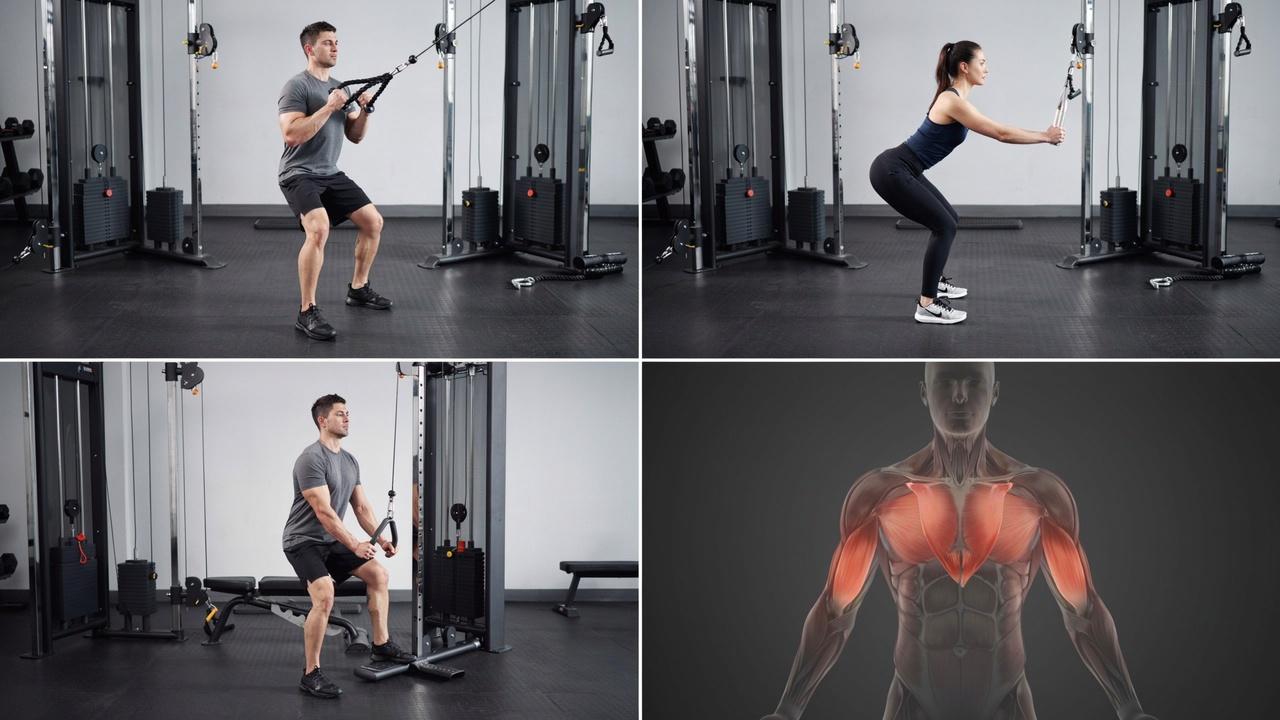
Bent-over and upright cable rows train different muscle groups, from the mid-back to the shoulders and traps.
Bent Over Cable Row Muscles Worked
The bent-over position increases the involvement of your lower back and glutes for stability. Your lats, rhomboids, and traps still handle most of the pulling. This variation closely resembles a barbell row but with constant cable tension.
Upright Cable Row Muscles Worked
Upright rows shift focus toward the shoulders and upper traps rather than the lats. Your side delts and traps do most of the lifting as you pull the handle up toward your chin or chest.
Which Variation Is Best for Lats, Traps, and Rhomboids?
For lats, a low cable row with a close or neutral grip works well. For traps, wide grip or high cable positions are better. For rhomboids, seated rows with a controlled shoulder blade squeeze at the end of each rep tend to work best.
Muscle Activation by Back Muscle
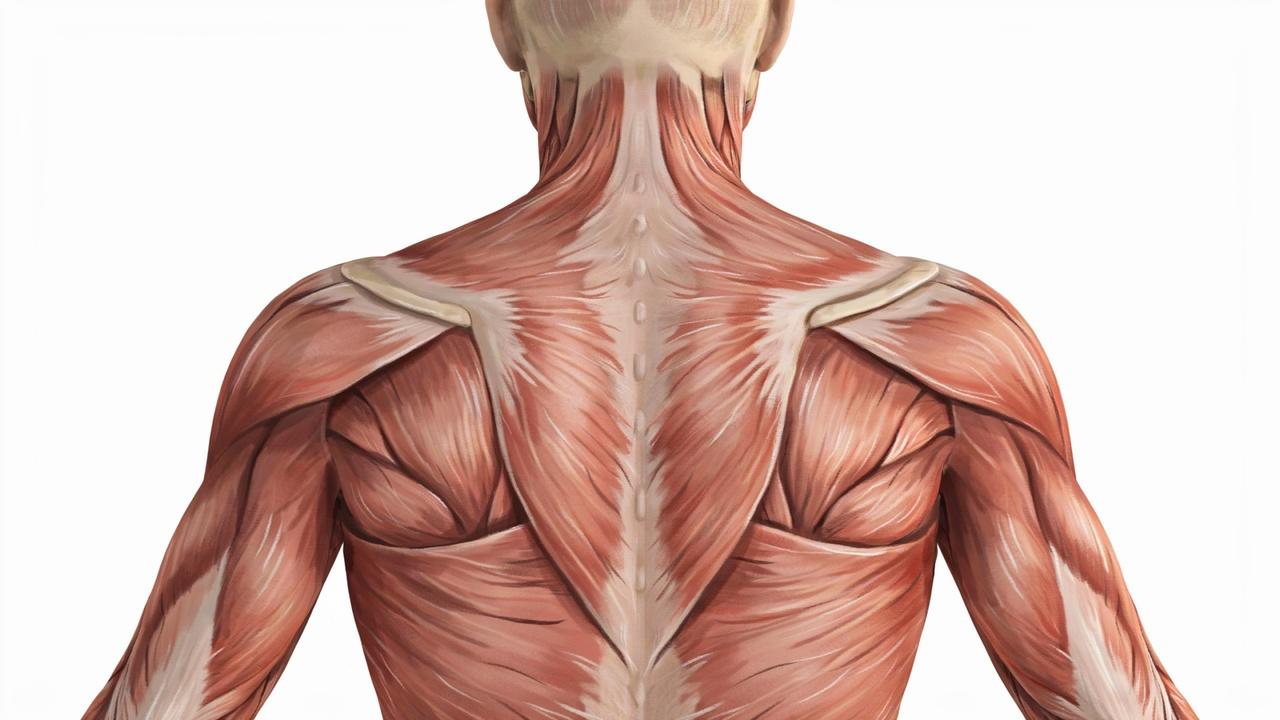
Each back muscle responds differently to cable rows depending on grip, angle, and range of motion used.
Latissimus Dorsi (Lats)
The lats are the largest muscle in your back and respond well to rows that pull toward your torso. Low cable positions and close or neutral grips tend to activate them the most through a full range of motion.
Rhomboids
Your rhomboids sit between your shoulder blades and work hardest when you squeeze your shoulder blades together at the end of a row. Seated rows with a pause at the finish position help target this muscle group directly.
Trapezius
The traps assist in almost every row variation, but wide grip and high cable positions bring them into focus more. They help pull your shoulder blades back and stabilize your upper back during heavier loads.
Rear Deltoids
Rear delts contribute to the final part of the pulling motion, especially with wider grips. They help rotate your shoulders and pull your elbows back, working alongside your traps and rhomboids.
Biceps, Forearms & Core
Your biceps assist with elbow flexion during every row, more so with underhand grips. Your forearms handle grip strength throughout, and your core and erector spinae stabilize your spine, especially during standing or single-arm variations.
How to Maximize Cable Row Muscle Activation
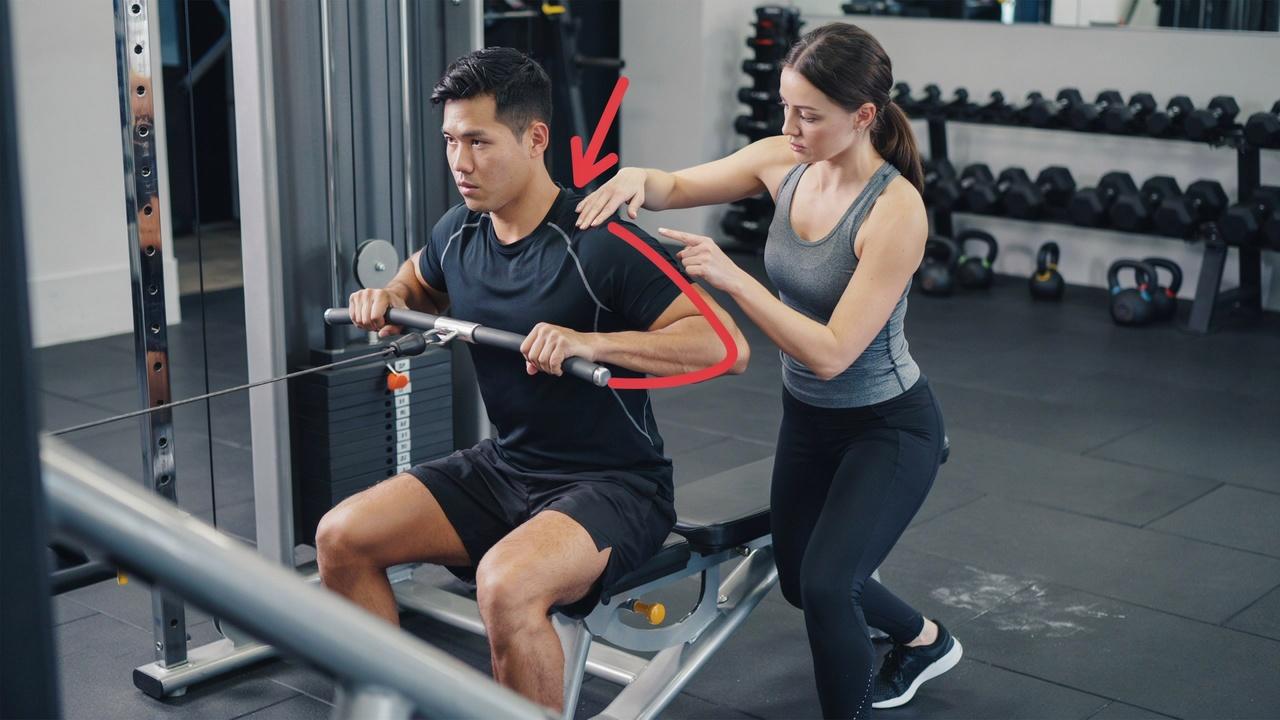
Keeping your elbows close targets the lats, while flaring them out shifts more work to your rear delts and traps.
Use a full range of motion, from a complete stretch to a full squeeze of the shoulder blades, to get more out of each rep.
Avoid common mistakes like using too much weight, shrugging your shoulders up toward your ears, or rounding your back, since these reduce tension on your lats and rhomboids and shift the work to momentum instead of muscle.
Tips to Get the Most Out of Cable Rows
Simple habits like slow reps, proper grip choice, and gradual progress help you build a stronger, better back.
- Use slow, controlled reps and avoid yanking the weight back with momentum. A brief pause at the squeeze point helps you feel the muscles working more directly.
- Pick a close or neutral grip for more lat activation, or a wider grip if you want more upper back and rear delt work.
- Add weight in small amounts once your form feels solid, since jumping to heavier loads too quickly often leads to compensating with momentum.
- Prioritize proper form over heavy loads. A lighter weight with full control and a strong squeeze does more for your back than a heavy weight moved sloppily.
- Keep your torso stable, your shoulders down, and avoid rounding your back, so your lats, traps, and rhomboids do the actual work instead of momentum.
Conclusion
Understanding cable row muscles worked can help you get more out of every pulling session. Small changes like grip width, cable height, and body position all shift the focus between your lats, traps, rhomboids, and rear delts.
The key is to match the variation to your goal and always keep your form in check before adding more weight. Try a few of these variations in your next workout and notice how your back responds.
Got a favorite cable row variation or grip you swear by? Drop a comment below and share this guide with a training partner who could use it.
Frequently Asked Questions
How often should I do cable rows each week?
Two to three sessions per week works well for most lifters, as long as you allow at least one rest day between back workouts for recovery.
Are cable rows better than barbell rows for building back muscle?
Neither is strictly better. Cable rows offer constant tension throughout the movement, while barbell rows allow heavier loading for raw strength gains.
Can cable rows help fix bad posture?
Yes, cable rows strengthen the mid-back and rear delts, which can help pull your shoulders back and counter rounded, forward-leaning posture over time.
What's a good rep range for cable rows to build muscle?
Aim for 8 to 12 reps per set with controlled form. This range balances muscle growth with enough tension to challenge your back properly.