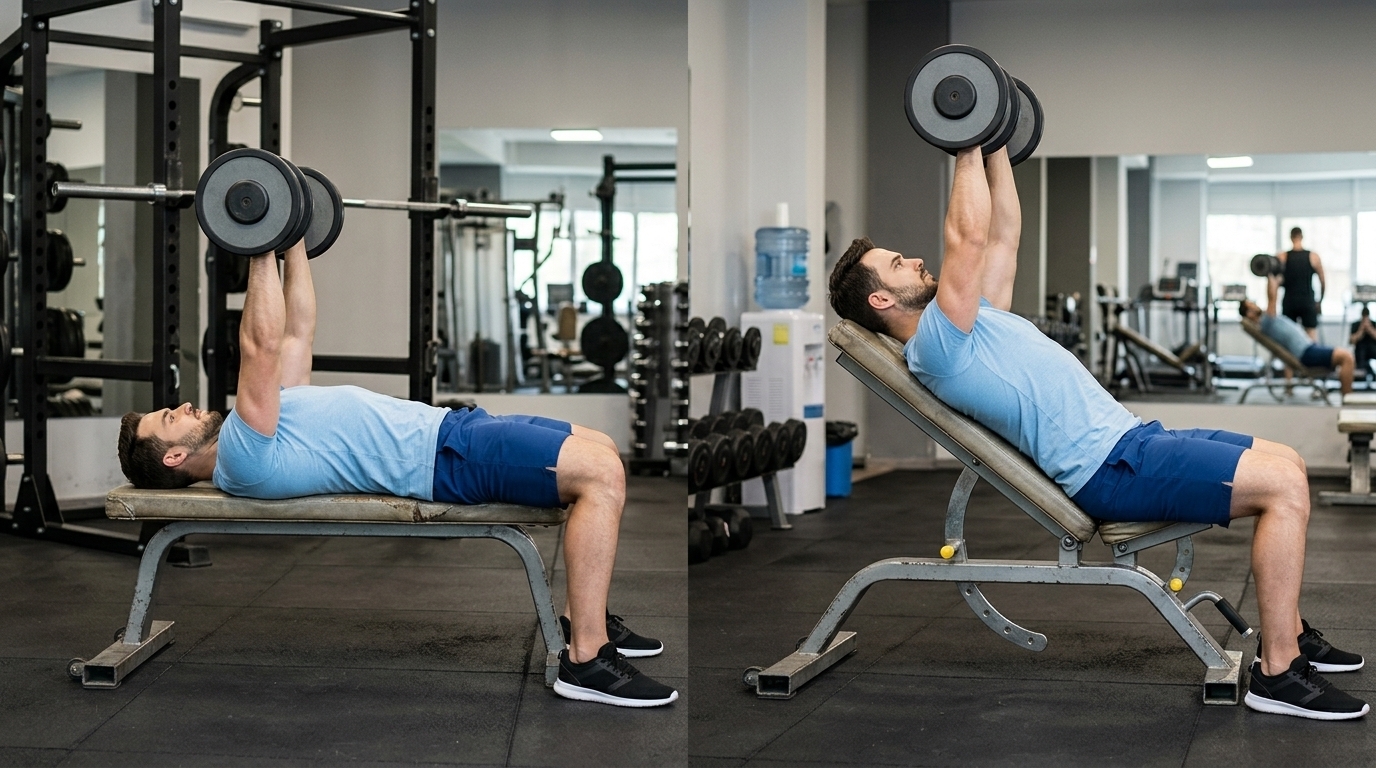
Should you flat bench or incline bench for a bigger chest? This question comes up in almost every gym, and most answers are just opinions.
This blog gives you real research instead. You will learn which angle builds more muscle, why incline always feels harder, and how much weight difference to expect between the two lifts.
The blog also covers which one wins for chest shape, how dumbbells change the results, and how to fit both into your weekly plan.
By the end, you will know exactly which bench press suits your goals, whether that is raw strength, a fuller upper chest, or a balanced, complete look. Keep reading, your answer is right here.
Flat Bench vs Incline Bench: What Actually Changes When You Tilt the Bench?
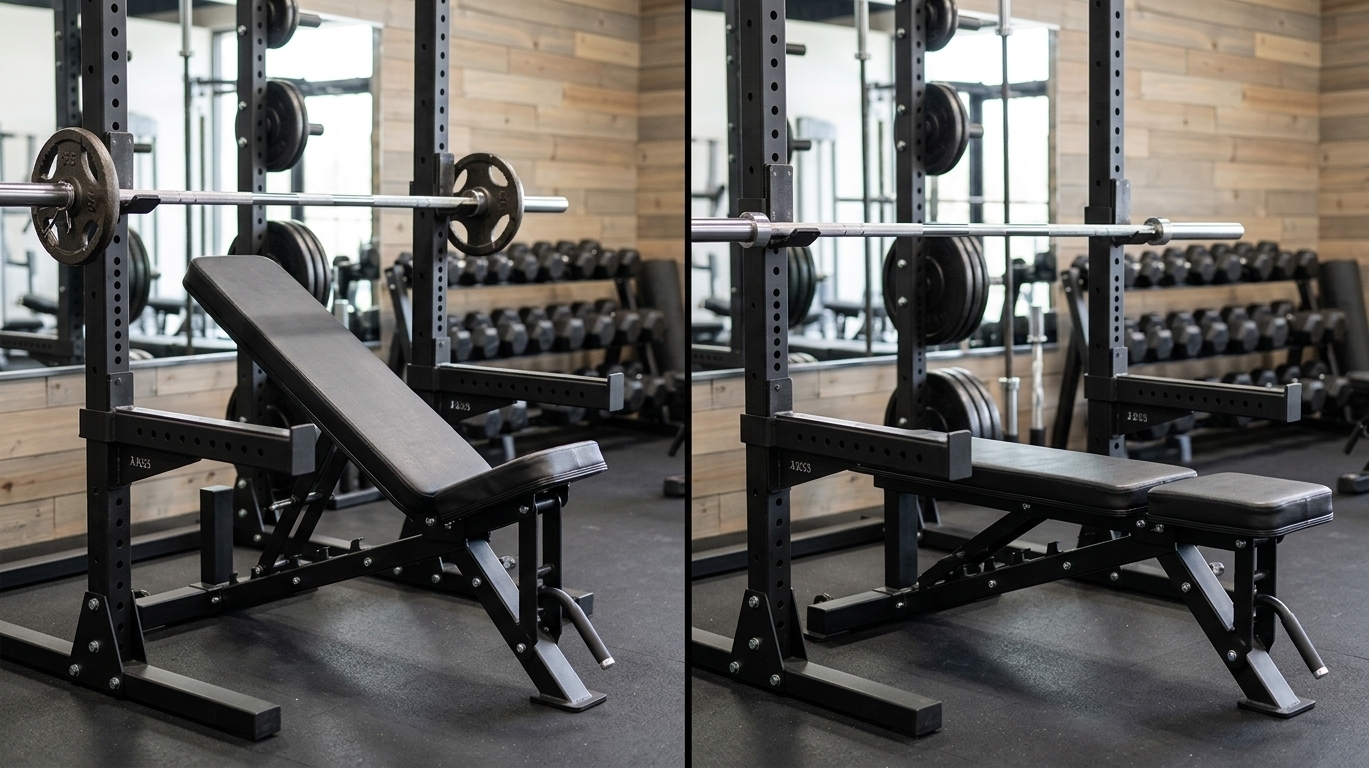
The flat bench and incline bench look similar, but your body handles them in different ways.
A flat bench keeps your torso level, letting your chest, shoulders, and triceps push together in one simple path. This lets you move more total weight, since your mid and lower chest fibers get involved directly. That is why flat bench stays the go to strength test in most gyms.
Tilt the bench to 30 or 45 degrees, and the load shifts upward. Your upper chest fibers stretch more, pulling work away from the lower chest. Your shoulder joint also sits differently now, bringing the anterior deltoid and rotator cuff muscles into play to keep things stable.
This is why incline and flat never feel the same, even with equal weight and form.
Muscles Worked: Flat Bench vs Incline Bench Press Breakdown
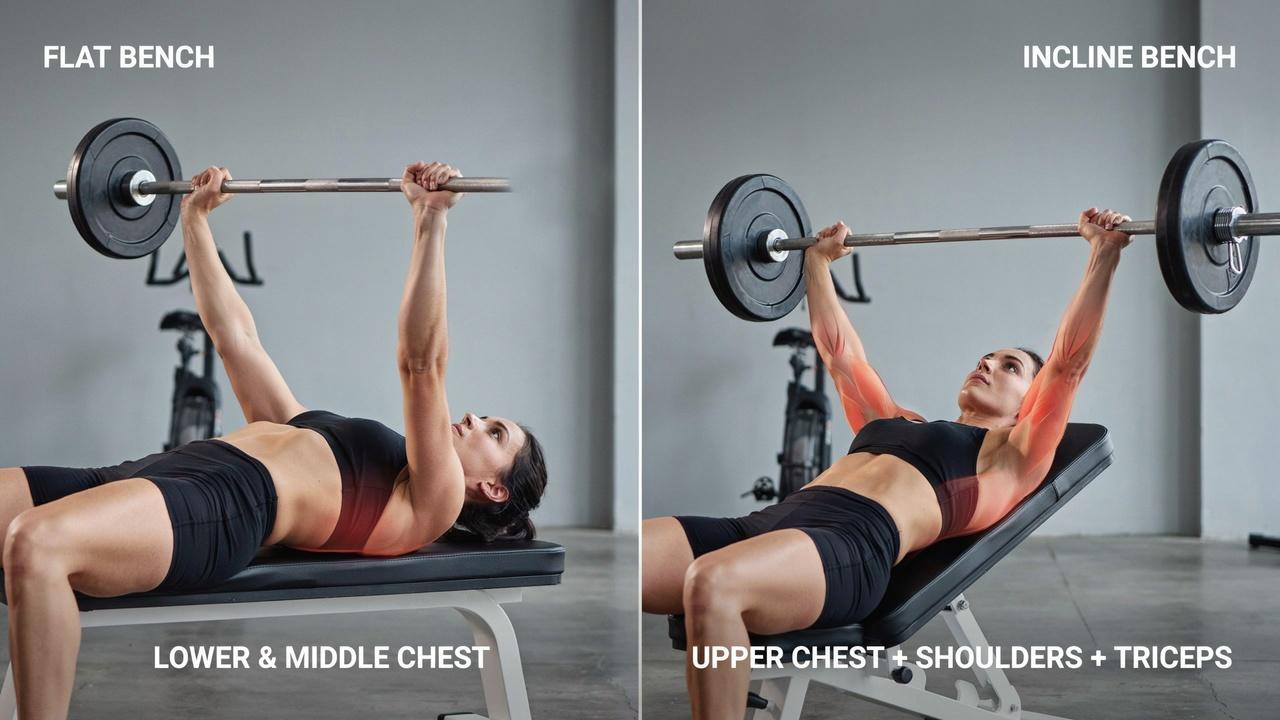
Both lifts train your chest, but not in equal amounts. The angle decides which part of your pecs gets the biggest share of work.
Below is a clear look at how each muscle group responds to flat and incline pressing.
Lower and Middle Chest: The Flat Bench Advantage
Flat bench press consistently shows higher EMG activation in the middle and lower pectoralis major.
Studies using EMG sensors confirm this pattern across both new and experienced lifters, and one study even tracked actual muscle thickness growth using ultrasound scans over eight weeks.
If your goal is a thicker, fuller chest base, a flat bench should stay as a core lift in your program rather than an optional extra.
Upper Chest: Does Incline Really Win?
Incline bench is often called the upper chest builder, and research backs this up, but only within a certain range.
Activation peaks around 30 degrees, not at steeper angles. Past that point, your shoulders start taking over the work, which reduces the direct benefit to your upper chest fibers during the press.
Shoulders and Triceps: The Hidden Winners on Incline
As bench angle increases, your front deltoids and triceps brachii activate more.
At 60 degrees, both muscle groups show clear gains in EMG readings. This makes the steep incline pressing a strong shoulder builder, even though many lifters use it only with chest growth in mind.
What the Research Says About Muscle Activation?

Incline vs Flat Bench Press: Key Differences
| Factor | Flat Bench Press | Incline Bench Press |
| Main muscle worked | Middle and lower chest | Upper chest (clavicular head) |
| Weight you can lift | Higher, since more chest fibers share the load | Lower, usually 70 to 80 percent of flat bench weight |
| Shoulder involvement | Less demand on front shoulders | More demand on anterior deltoid and rotator cuff |
| Best bench angle | 0 degrees (flat) | Around 30 degrees for best upper chest results |
| Best use case | Raw strength and overall chest mass | Upper chest shape and shoulder strength |
Science gives us a clearer picture than gym opinions ever could. EMG studies track exactly which muscles fire and how hard during each rep.
This section breaks down what the data actually shows across different bench angles and lifter experience levels.
EMG Studies Reveal a Surprising Twist on Chest Angles
Many lifters assume steeper is always better for the upper chest.
Recent EMG research challenges this belief. The flat bench showed strong middle and lower chest activation, while upper chest activity was highest at a moderate incline, not the steepest one tested.
This means going too high on the bench may work against your upper chest goals.
Why 30 Degrees Might Beat 45 or 60 Degrees for Upper Chest?
A 2025 study, using bench angles of 0, 30, and 60 degrees, found upper pec activation peaked at 30 degrees, then dropped as the angle rose to 60.
This happens because steeper angles shift load toward the shoulders instead of the chest.
If upper chest growth is your target, a moderate incline may serve you better than an aggressive one.
Beginners vs Experienced Lifters: Does Training Age Change the Results
Some studies focus only on trained lifters, while others test complete beginners. Interestingly, muscle activation patterns stay fairly consistent across both groups.
Beginners may feel the shoulder demand more on incline, since their stabilizer muscles are still catching up, but the chest activation trend remains the same.
Which One Is Harder: Incline or Flat Bench Press?
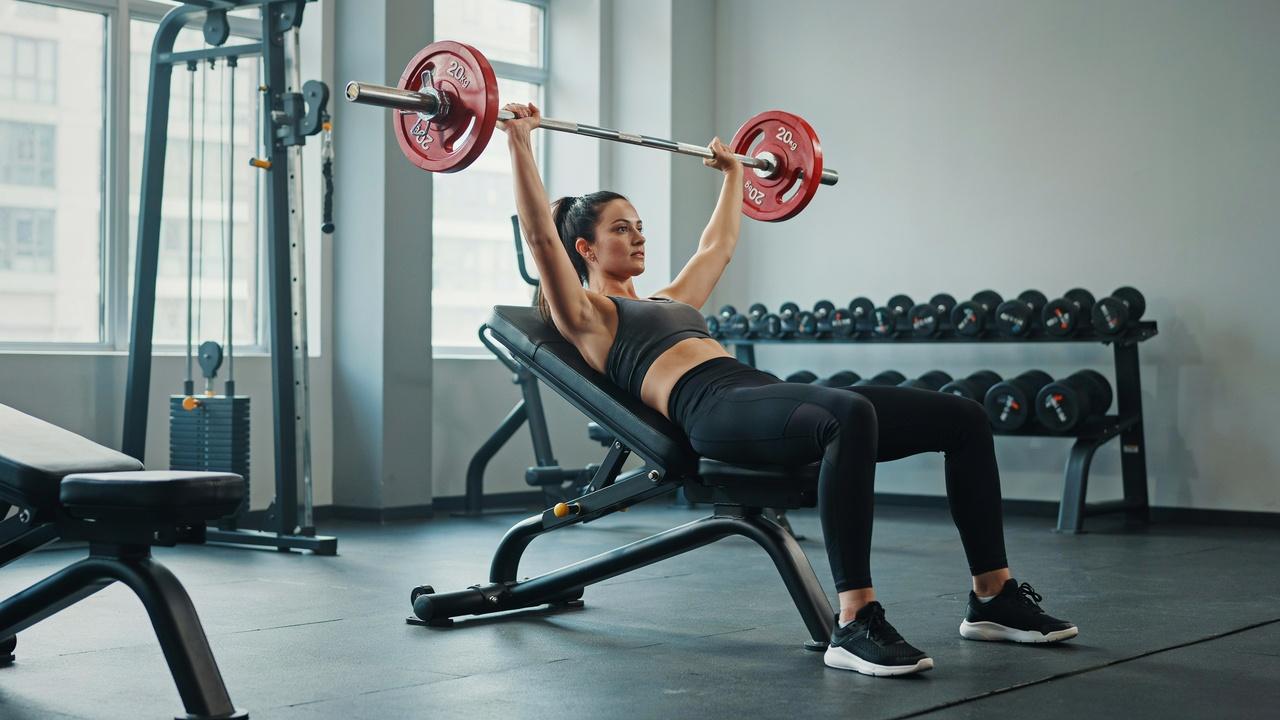
Lifters often debate this without a clear answer. The truth depends on which muscles you look at and how you define hard. Here is what makes each version tough in its own way.
Why Incline Feels Tougher on Your Shoulders?
Incline demands more from your front deltoids and rotator cuff muscles.
These smaller muscle groups fatigue faster than your chest, making the lift feel harder even with lighter weight on the bar. This added shoulder demand is one big reason incline never quite matches your flat bench numbers.
Why Do You Lift Less Weight on an Incline Bench?
The flat bench uses a more efficient pushing angle, letting bigger chest fibers share the load.
Incline changes that angle, so gravity works against you differently. This mechanical shift, not weak effort, explains why most lifters move less weight on incline compared to flat bench.
Is It Actually Harder or Just a Different Kind of Hard?
Incline is not always harder in a pure strength sense. It challenges different muscles than a flat bench, which makes comparison tricky.
Your incline press may feel harder simply because your shoulders and upper chest are less trained than your lower chest, not because the lift itself demands more total effort.
Incline vs Flat Bench Weight Difference: What to Expect?
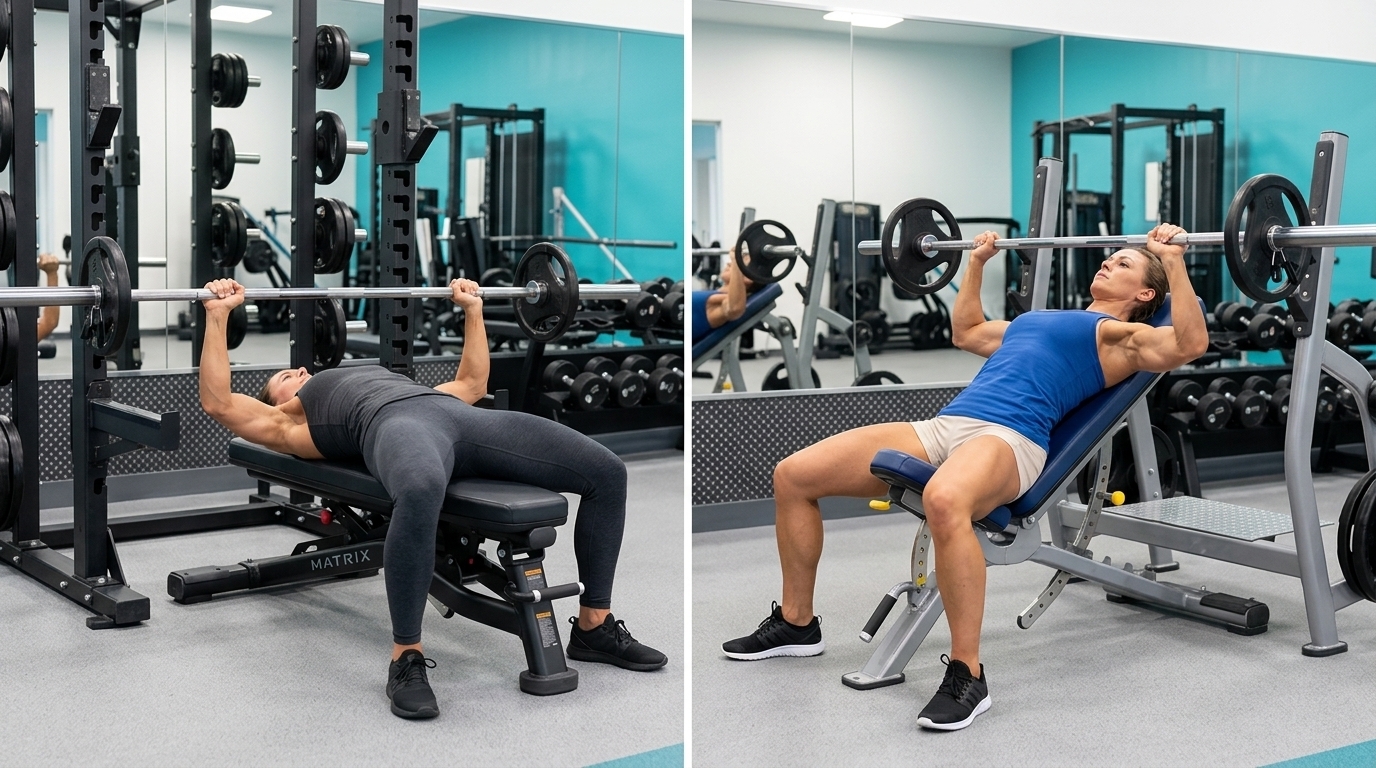
Your incline numbers will almost always trail your flat bench numbers. This gap is normal and expected across most lifters.
Here is what typical strength differences look like and why your own ratio might not match the average.
The Typical Percentage Drop From Flat to Incline
Most lifters press about 70 to 80 percent of their flat bench 1RM on incline. So if you flat bench 100 kg, expect somewhere around 70 to 80 kg on incline.
This drop comes from reduced chest fiber involvement and a less efficient pushing angle, not from poor effort or weak training.
Strength Ratio Standards: What a Good Incline to Flat Ratio Looks Like
A ratio close to 75 percent is considered solid and balanced. If your incline number falls far below this, your upper chest and shoulders may need extra direct work.
A ratio close to your flat bench, on the other hand, often points to strong shoulder involvement or an underdeveloped lower chest.
Why Your Numbers Might Not Match the Average?
Body proportions, arm length, and shoulder strength all affect your personal ratio.
Lifters with longer arms often struggle more on incline, while those with strong front delts sometimes close the gap. Training history also plays a role, since years of flat bench focus can widen the difference between your two lifts.
Dumbbell Press vs Barbell Press: Does the Angle Rule Still Apply?
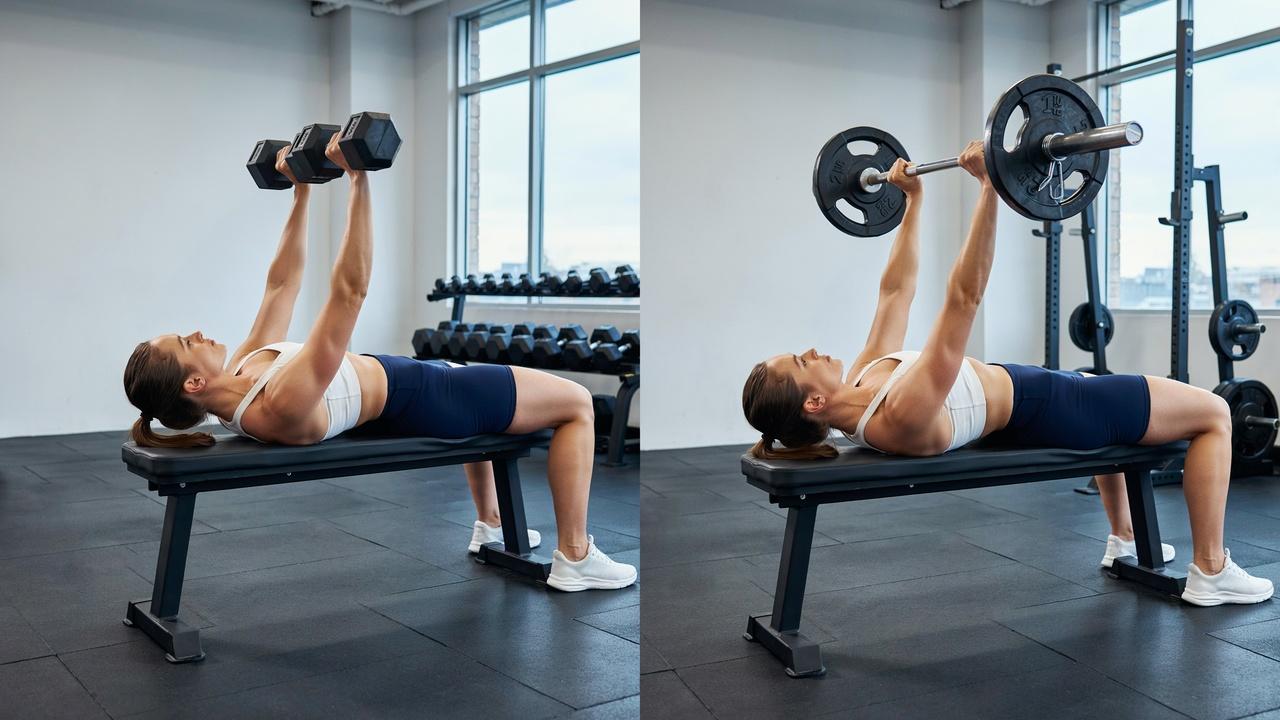
Switching from barbell to dumbbells changes more than just the equipment in your hands. The core rules about incline and flat angles still apply, but the muscle demand shifts a bit.
Let us look at how dumbbells change the game on both bench angles.
How Dumbbells Change Muscle Activation on Incline and Flat?
Dumbbells allow a deeper stretch and a more natural arm path compared to a fixed barbell. This often increases chest activation slightly, especially on incline presses.
Since each arm works alone, dumbbells also demand more control from your stabilizer muscles, adding extra shoulder engagement on both flat and incline setups.
Stability, Range of Motion, and Why Some Lifters Prefer Dumbbells
Dumbbells remove the fixed bar path, letting your shoulders move in a way that feels natural to your own body.
This can reduce joint strain for lifters with shoulder issues. Many gym goers prefer dumbbells for incline work specifically, since they allow a fuller stretch without locking the wrists into one rigid position.
Incline vs Flat Bench for Bodybuilding Goals

Chest shape matters just as much as chest size for many lifters. Here is how to use both bench angles to build a chest that looks as good as it performs.
Building a Fuller, Rounder Chest With the Right Angle Mix
A chest that looks full from every angle needs both upper and lower pec development. Relying only on a flat bench can leave your upper chest looking flat and underdeveloped.
Adding incline work fills in that upper shelf, creating the rounded, complete chest shape most bodybuilders and physique athletes aim for.
What Bodybuilders and Coaches Actually Recommend?
Most experienced coaches recommend training both angles weekly rather than picking one.
A common approach is starting with a flat bench for overall mass, then following with a moderate incline press to target the upper chest. This combination covers more muscle fibers than repeating the same angle across every session.
Common Mistakes That Ruin Chest Symmetry
Many lifters overtrain flat bench and skip incline work entirely, leading to a chest that looks bottom heavy. Others go too steep on incline, shifting work to the shoulders instead of the chest.
Balancing both angles, with correct form, prevents these common shape and symmetry issues over time.
How to Program Both Exercises Into Your Chest Day?
Getting the order and volume right matters as much as picking the right exercises. A smart program uses both angles without overworking any single muscle group.
Here is a simple way to structure your chest day around flat and incline pressing.
Should You Do Flat First or Incline First?
Training order depends on your main goal.
If overall chest mass is the priority, start with a flat bench while your energy is highest. If the upper chest lags behind, move incline to the front of your workout instead, so you can push harder before fatigue sets in.
Sets, Reps, and Frequency for Balanced Chest Growth
Aim for 3 to 4 sets of each exercise, using 8 to 12 reps for muscle growth. Training chest twice a week allows enough volume without overreaching.
Apply progressive overload by adding small amounts of weight or reps over time, and balance your sets between flat and incline so neither region of your chest gets left behind.
Sample Weekly Split for Combining Both Angles
A simple split could look like this: Day one, flat bench as the main lift, followed by incline dumbbell press. Day two, incline barbell press first, followed by flat dumbbell press.
This rotation keeps both angles in your program while changing rep order and equipment for balanced growth.
Picking the Right Bench Press for Your Goals
Your choice between flat and incline should match your training goal, not gym trends. Here are the top points to help you decide:
- Raw strength goals: Pick a flat bench if lifting heavy weight is your main focus.
- Lower chest size: Flat bench builds the base and thickness of your chest.
- Upper chest focus: Choose incline if your upper chest needs extra work.
- Balanced growth: Use both angles, since each one fills a gap the other cannot cover.
- Personal fit: Your ideal split depends on your body, your goals, and where your chest needs the most work right now.
Conclusion
Flat bench and incline bench are not rivals. They are two tools that build a complete chest when used together.
Skip one, and your chest growth will stay half finished. Add both to your program, track your numbers, and watch your strength and shape improve side by side.
Found this helpful? Share it with your gym buddies or drop a comment below with your own incline and flat bench numbers.
Frequently Asked Questions
Is flat bench the standard lift used in powerlifting meets?
Yes, flat bench press is the official lift tested in powerlifting competitions. Incline and decline versions are used for training, not competition.
Can incline bench press cause shoulder pain over time?
Incline bench can strain the front shoulder if done with poor form or too much weight. Warming up and controlling the weight helps protect the joint.
Should true beginners learn flat bench before trying incline?
Yes, most coaches suggest mastering flat bench form first. It builds a strength base and teaches proper bar control before adding incline work.
Does decline bench press work chest differently than incline and flat?
Decline bench shifts more focus to the lower chest fibers. It uses a downward angle, opposite to incline, targeting a different part of the pec.
Can incline bench press replace flat bench for chest size?
No, incline alone will not build full chest size. Flat bench activates more total chest fibers, so both lifts work best together.