Tight hip flexors affect more people than you think. Hours of sitting, low activity, and weak glutes all contribute to stiffness and discomfort.
I spent months dealing with lower back pain before I realized tight hips were the real problem. Once I started stretching consistently, everything changed.
This blog covers what hip flexors are, why they get tight, and how to stretch hip flexors using simple, effective moves.
You will find stretches for every situation, at home, at work, and even in bed.
These are clear, practical, and tested. Small and steady effort makes a real difference, and I am here to show you exactly how.
Understanding Hip Flexors and Tightness
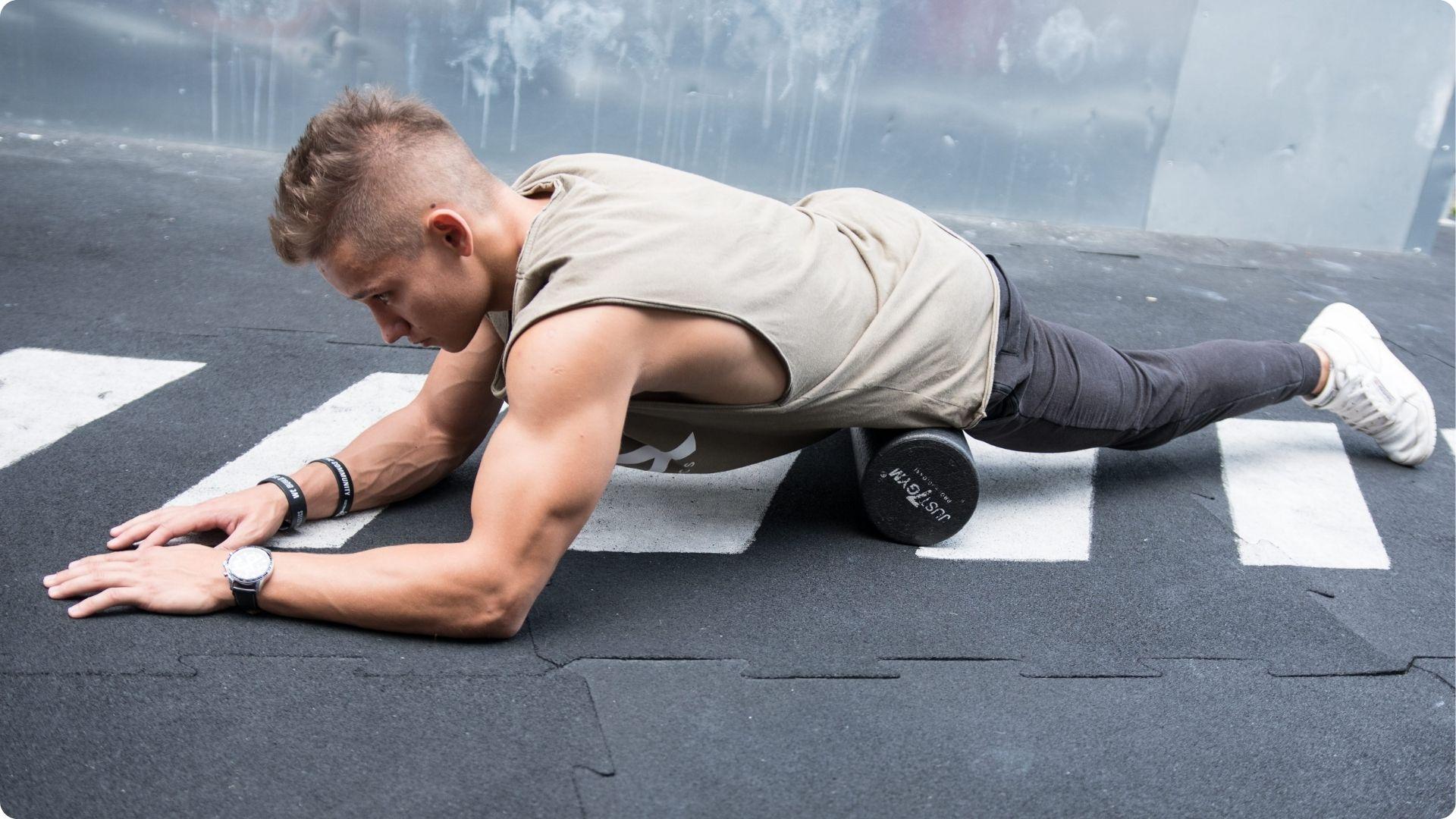
Before fixing tight hips, it helps to understand what you are working with. Hip flexors are a group of muscles at the front of your hip. They connect your spine and pelvis to your thigh.
They control walking, running, bending, and posture. When these muscles stay shortened from long periods of sitting or inactivity, they lose flexibility over time.
Weak glutes make this worse because the hip flexors overcompensate and take on extra load.
The result is stiffness, lower back pain, and limited movement. Knowing the cause helps you stretch smarter and see faster results.
17 Stretches Showing How to Stretch Hip Flexors
These stretches cover every position and situation so you can work on hip flexibility no matter where you are.
1. Lunge Stretch for Basic Hip Flexor Release
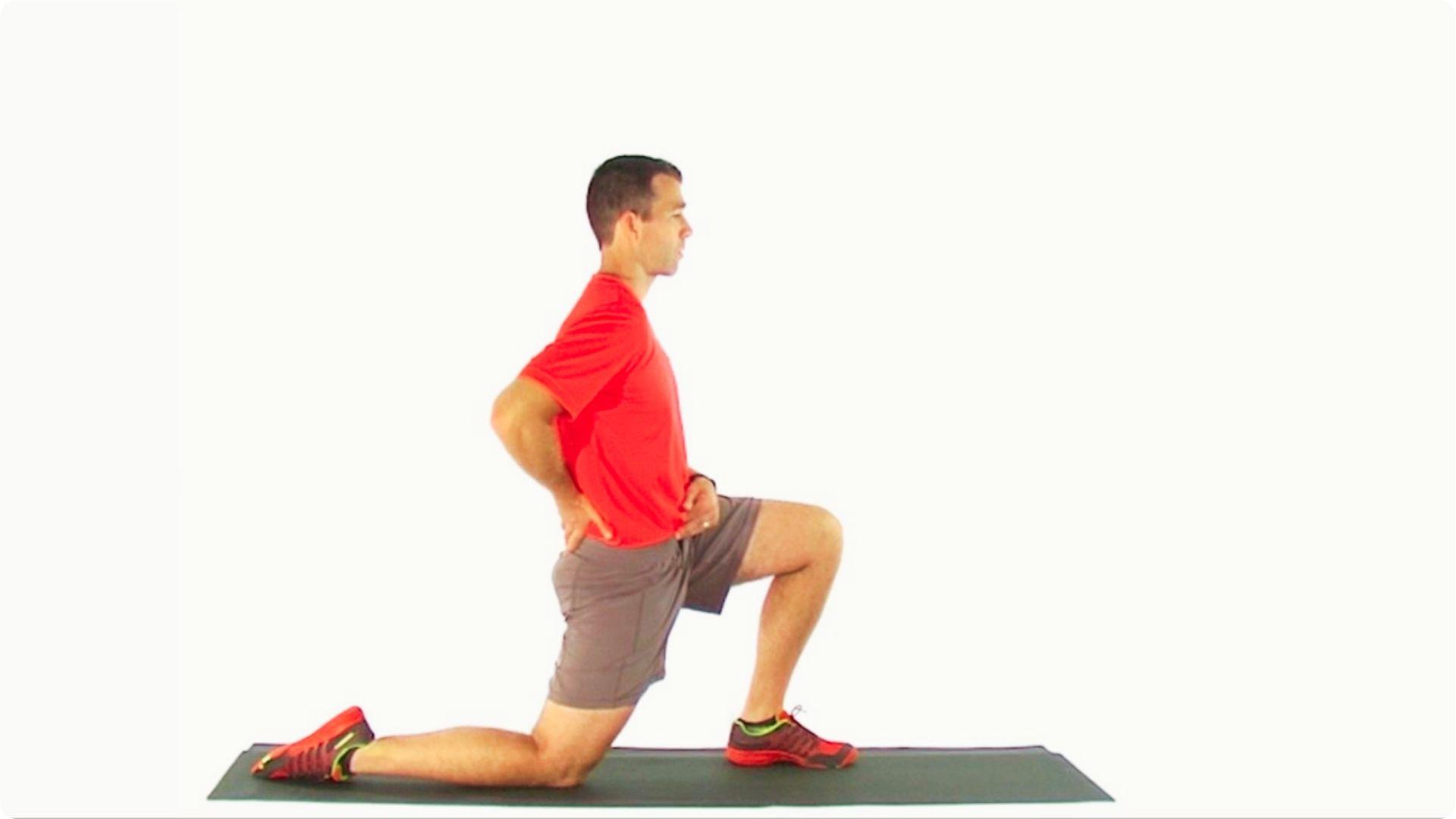
Step one foot forward into a lunge and lower your back knee to the ground. Push your hips slightly forward and hold to feel the stretch along the front of your back hip.
2. High Crescent Lunge for Deep Hip and Quad Stretch
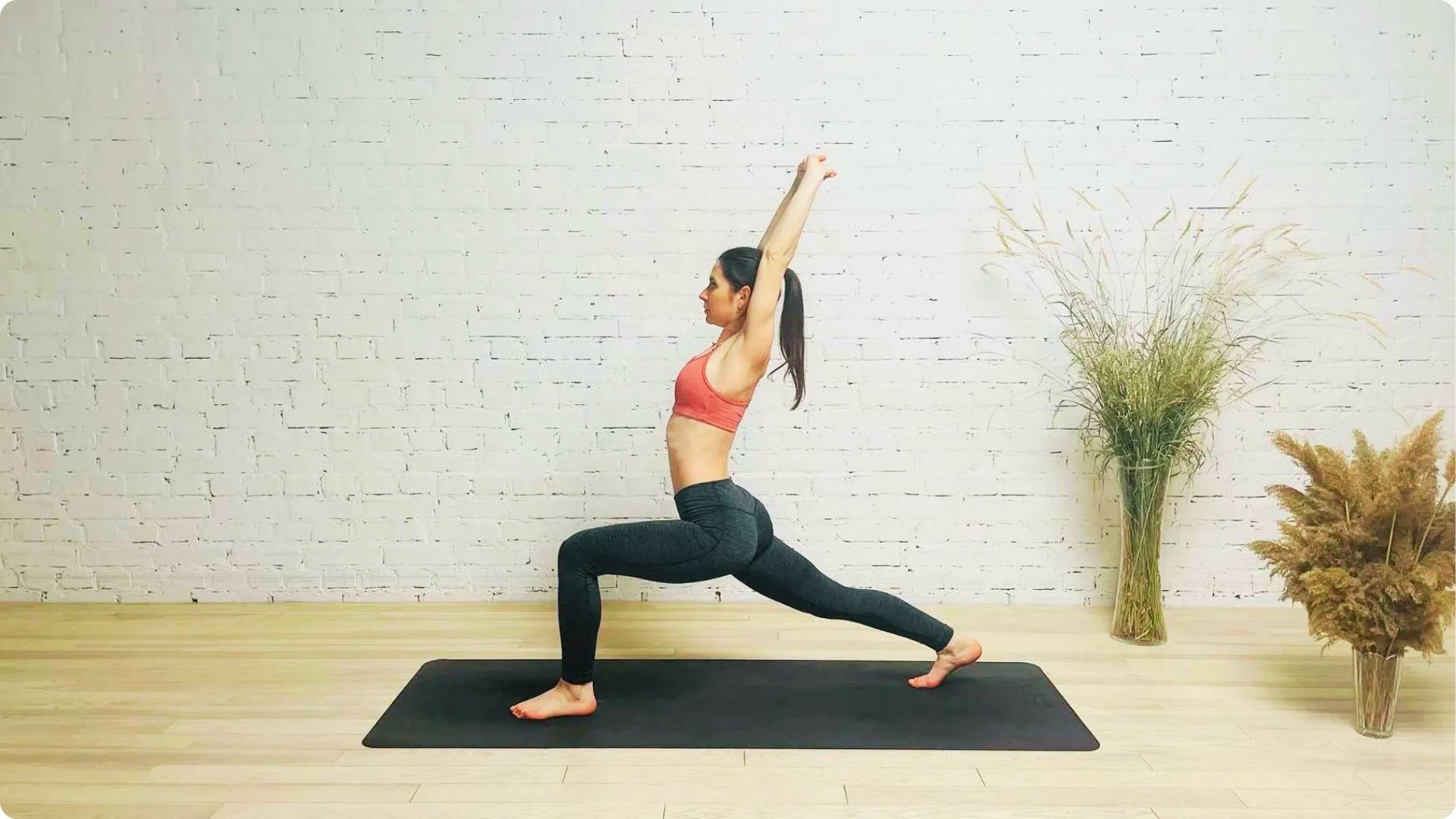
Start in a lunge with your back knee lifted, then raise both arms overhead and lean back slightly. Keep your core tight to avoid collapsing in the lower back.
3. Kneeling Hip Flexor Stretch with Glute Engagement
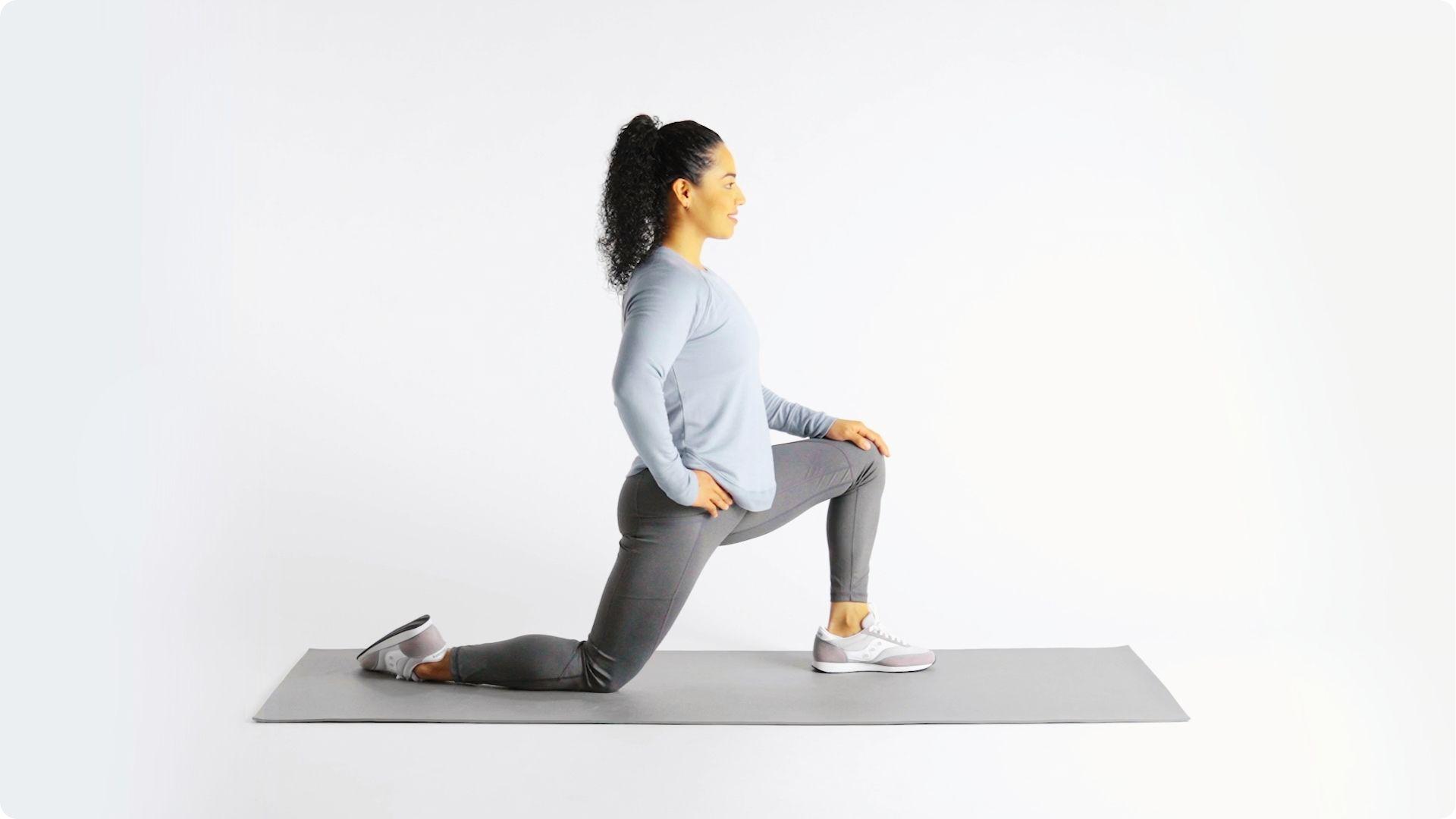
Kneel on one knee, squeeze the glute on that side, and shift your hips forward while keeping your torso upright. The glute squeeze is what makes this stretch more effective than a basic kneel.
4. Standing Hip Flexor Stretch for Everyday Mobility
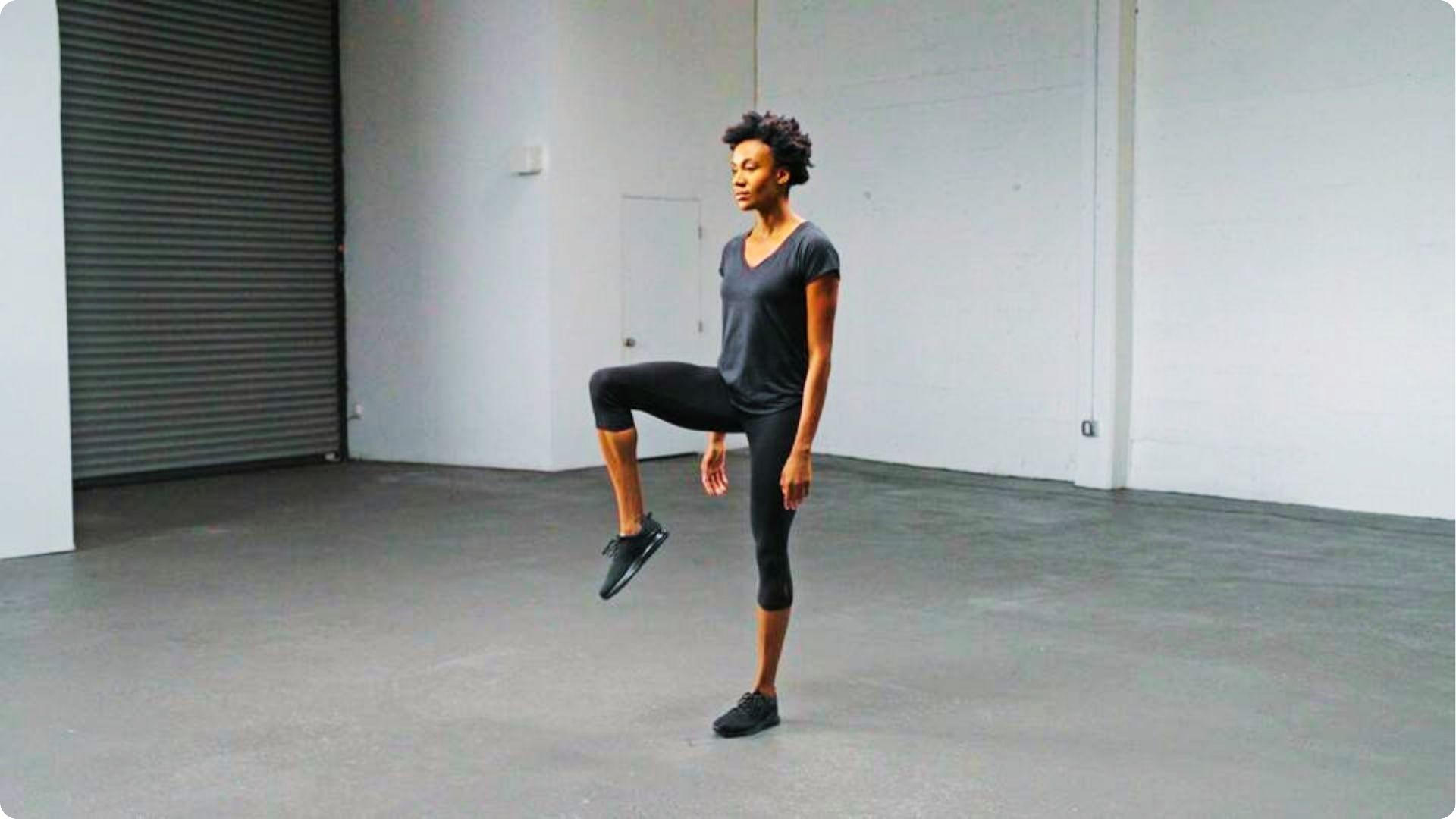
Stand with one foot stepped back, bend your front knee slightly, and tuck your pelvis under to feel the stretch in your back hip. No floor space needed, making it easy to do anywhere.
5. Standing Quad Stretch to Release Front Thigh Tightness
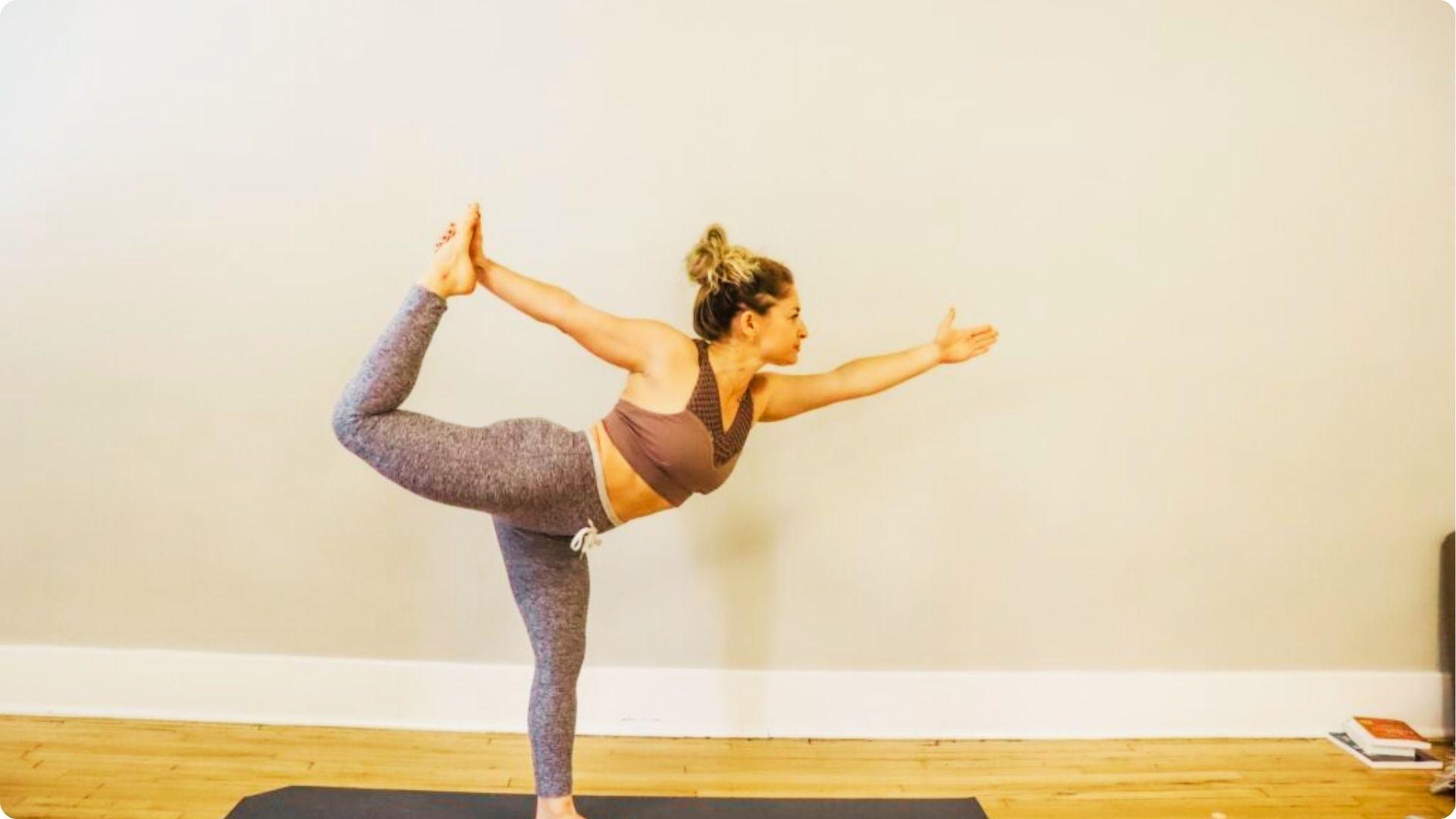
Stand on one foot, bring your other heel toward your glutes, and hold your ankle with your hand. Keep your knees together and your torso upright throughout the stretch.
6. Seated Hip Flexor Stretch
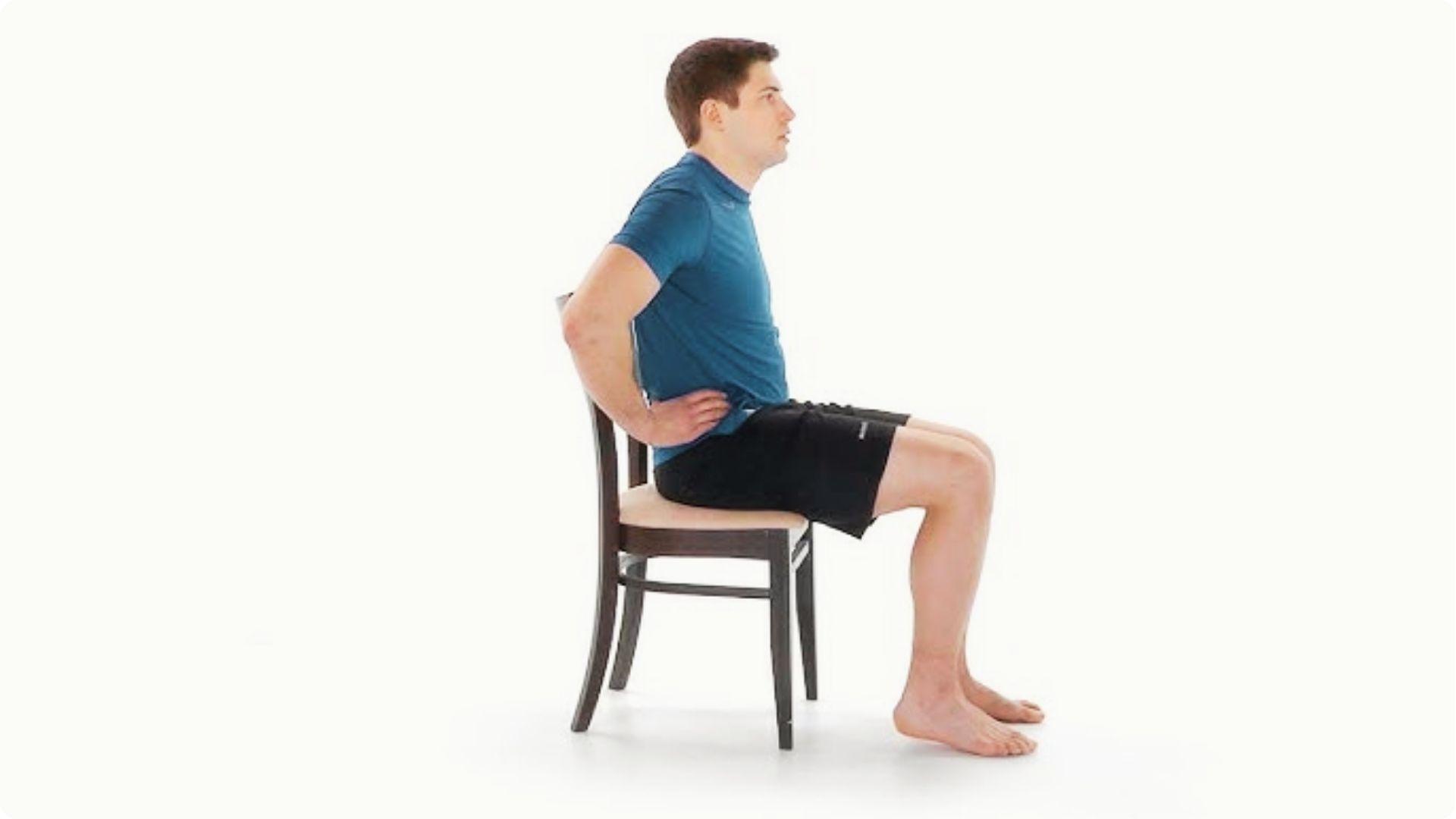
Sit at the edge of your chair, slide one leg back with your foot flat on the floor, and tilt your pelvis forward gently. This is a simple and discreet stretch you can do right at your desk.
7. 90/90 Hip Stretch for Rotation and Flexibility
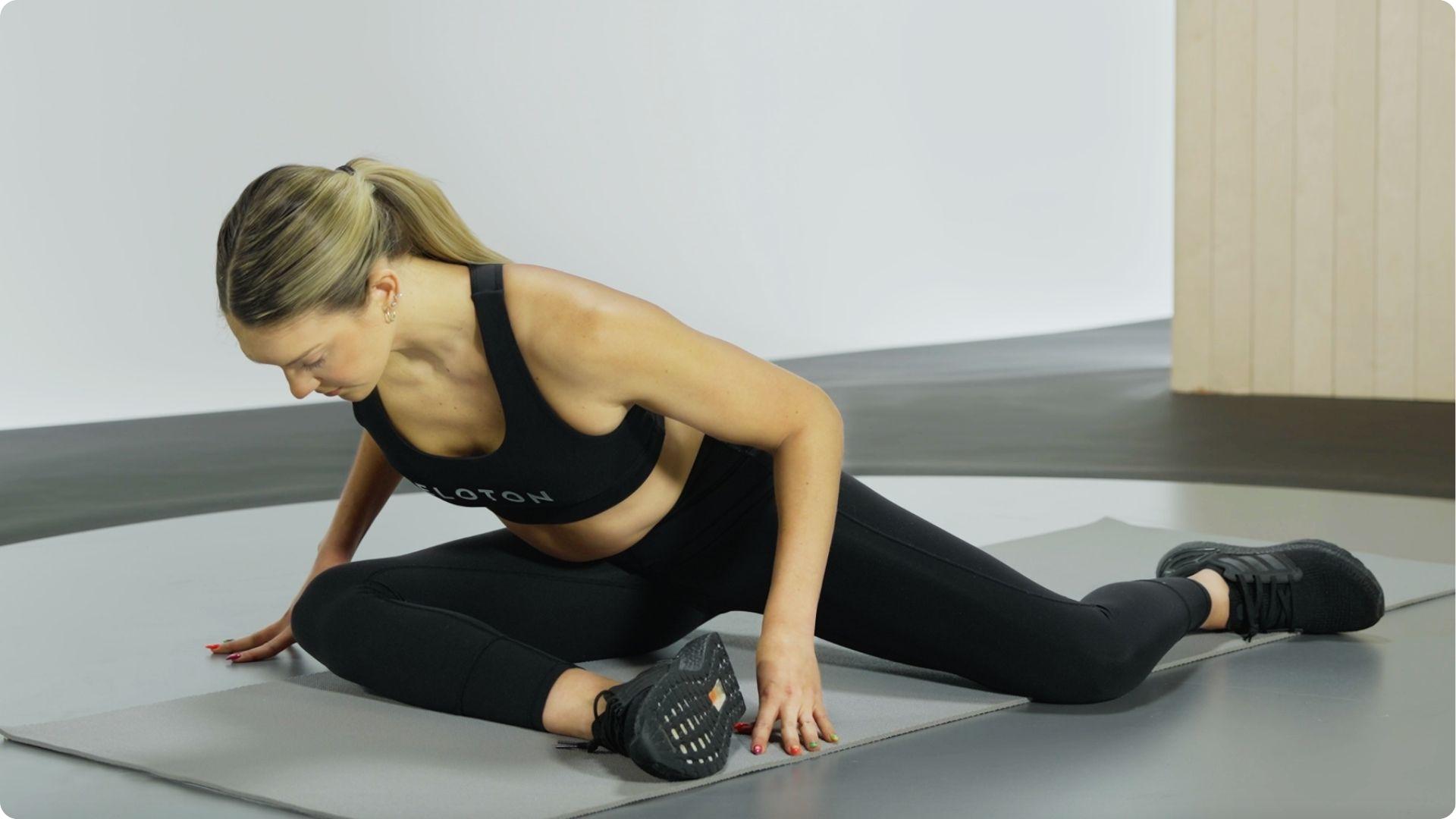
Sit on the floor with both knees bent at 90 degrees, one leg in front and one out to the side, and lean gently forward over your front shin. Both glutes should stay on the ground throughout.
8. Supine Hip Flexor Stretch
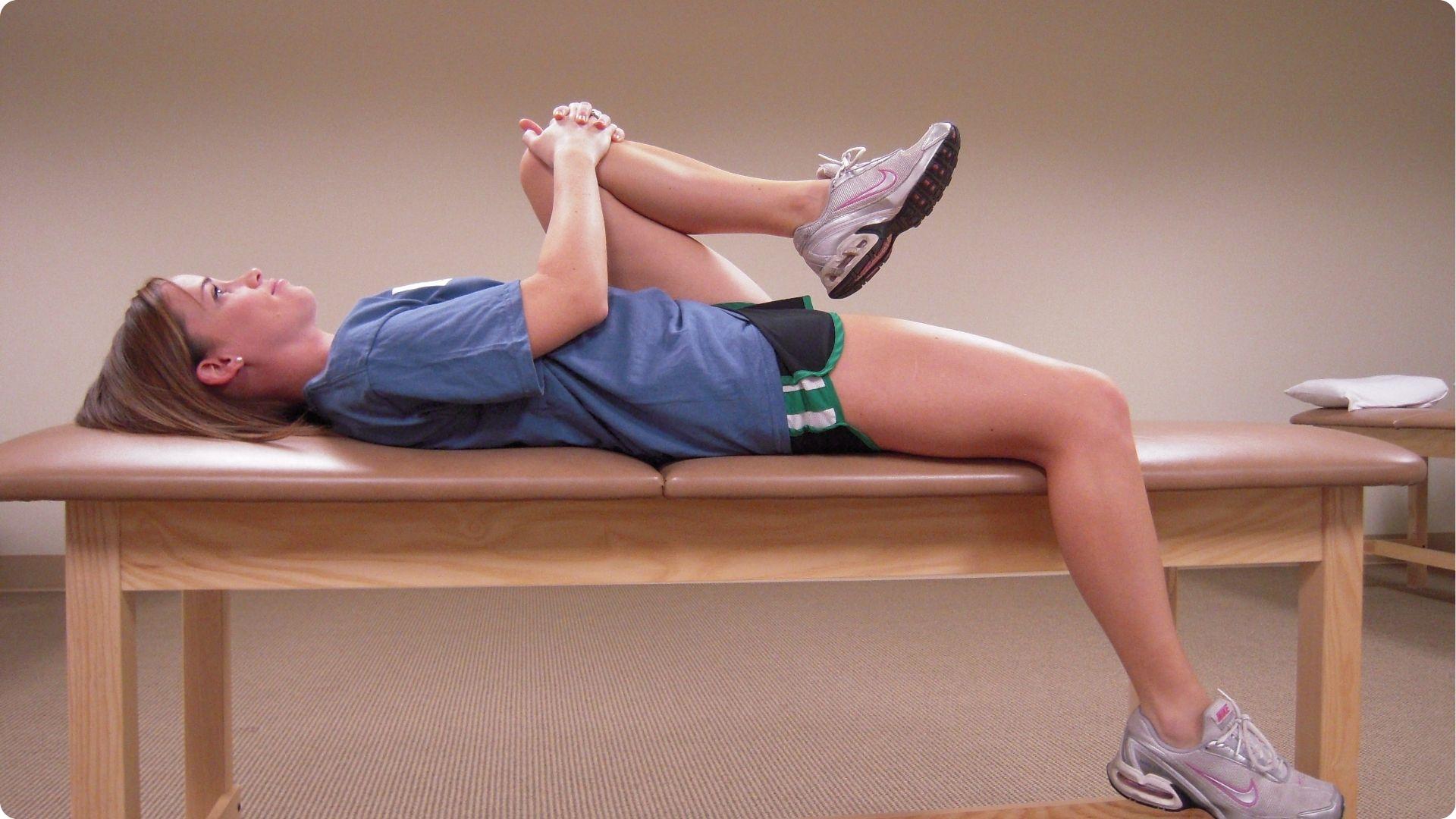
Lie near the edge of your bed and let one leg hang toward the floor while pulling the other knee to your chest. This relaxed stretch requires no balance and works well first thing in the morning.
9. Knee-to-Chest Stretch for Lower Back and Hip Relief
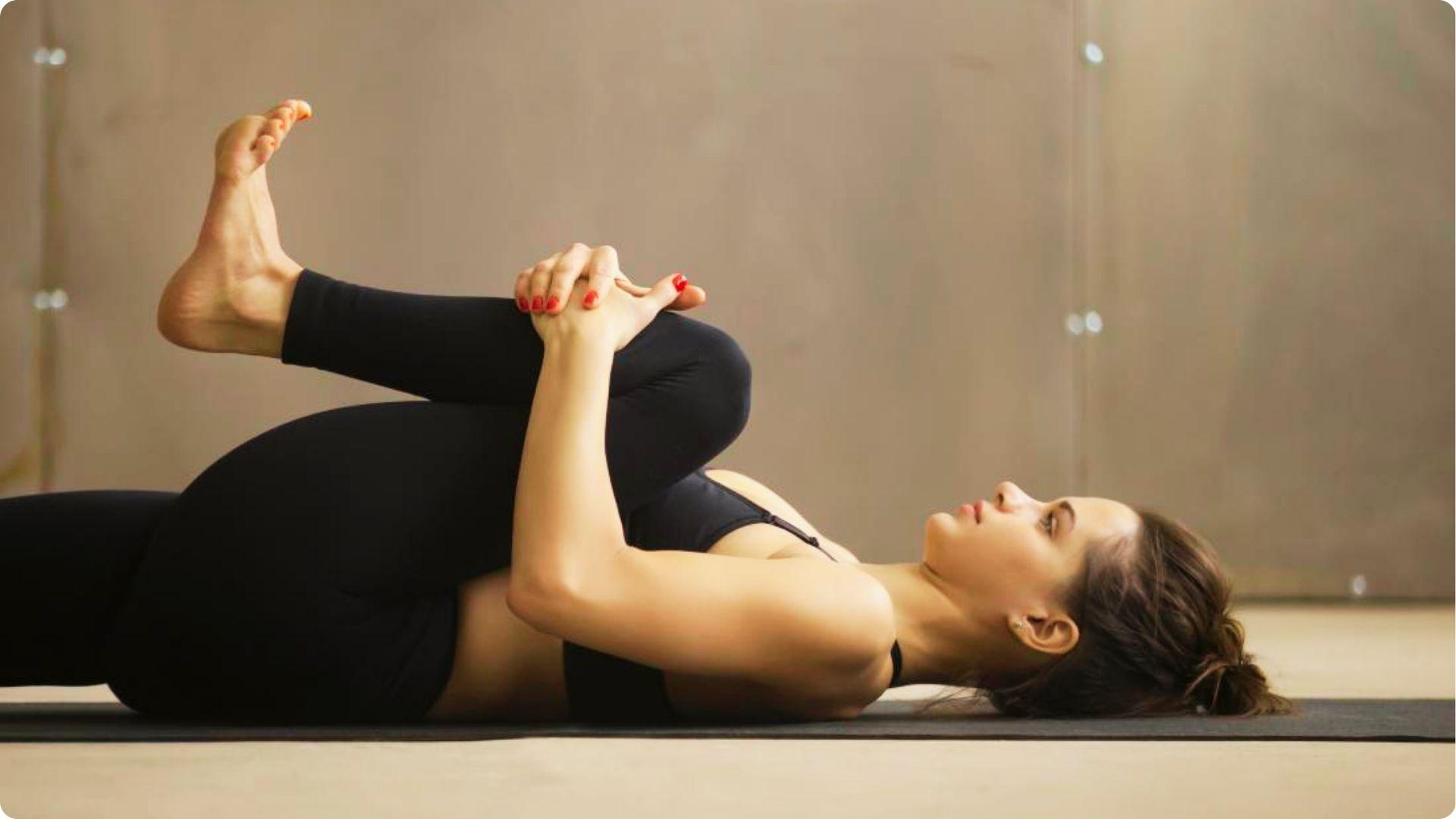
Lie on your back, bring one knee toward your chest, and hold it there with both hands while keeping the other leg flat. Breathe deeply and let your lower back relax into the floor.
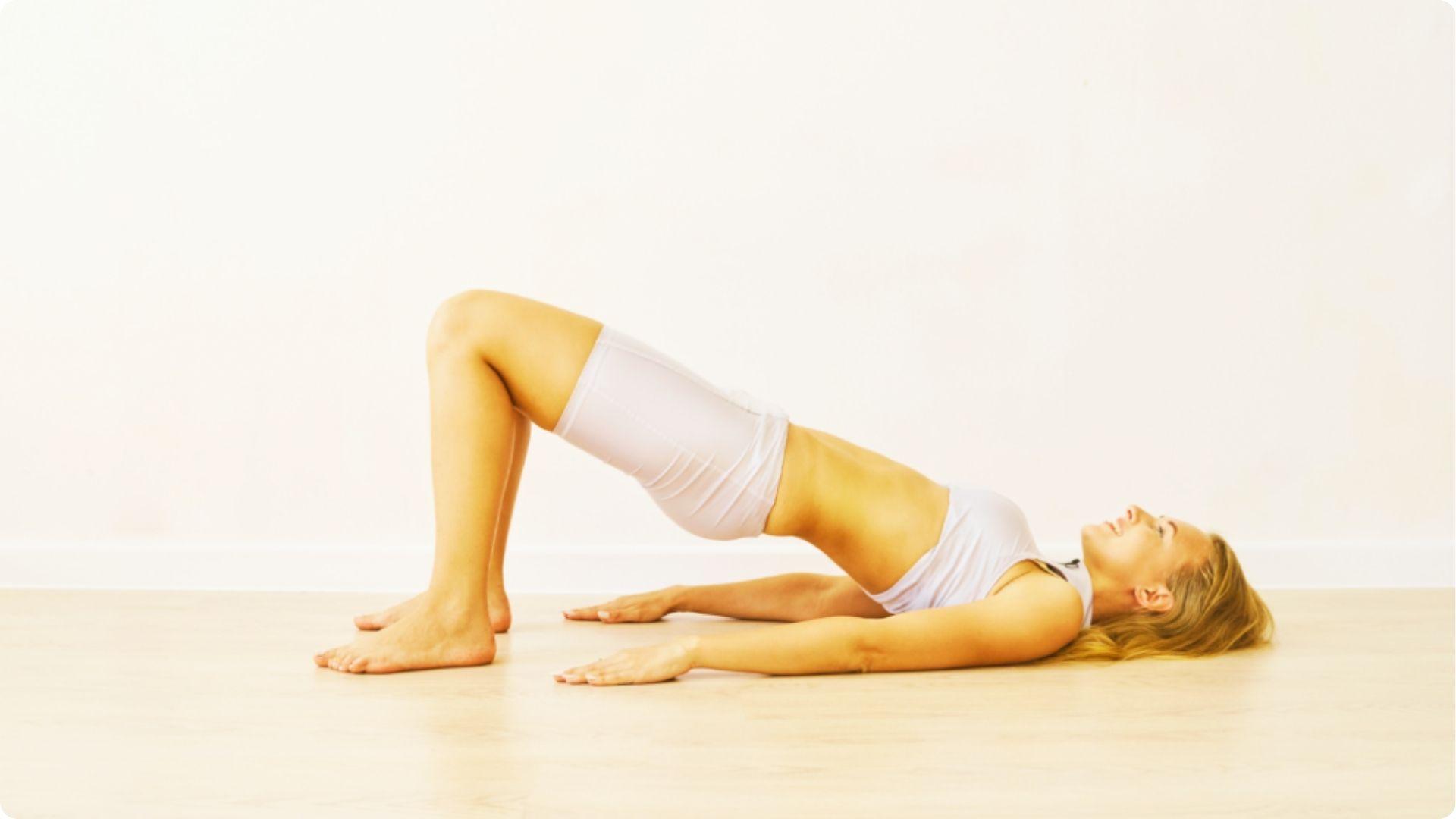
10. Glute Bridge for Hip Strength and Flexor Balance
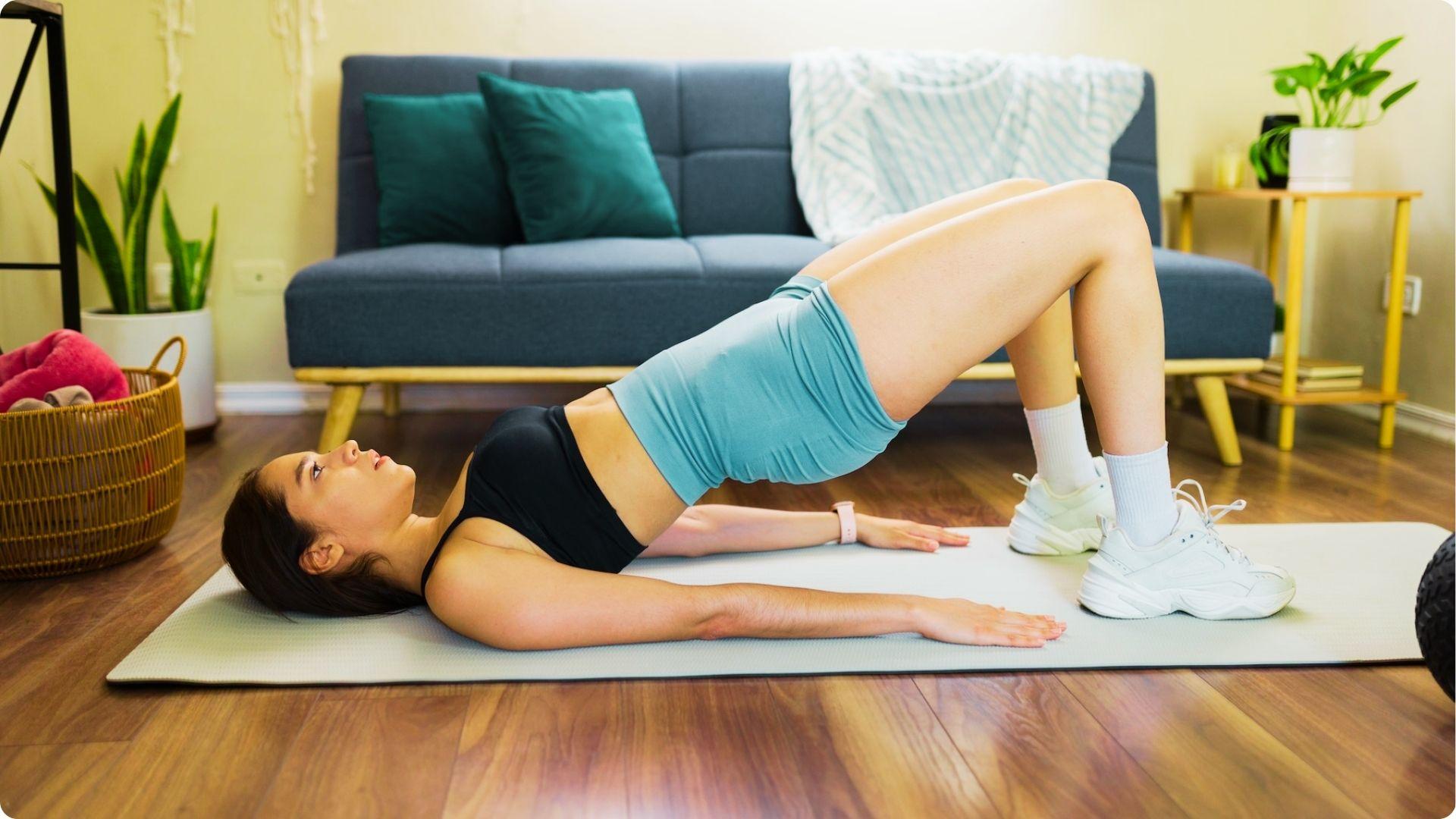
Lie on your back with knees bent, press through your heels, and lift your hips toward the ceiling while squeezing your glutes at the top. This move builds the muscle balance that prevents hip flexors from over-tightening.
11. Figure Four Stretch for Deep Hip and Glute Release
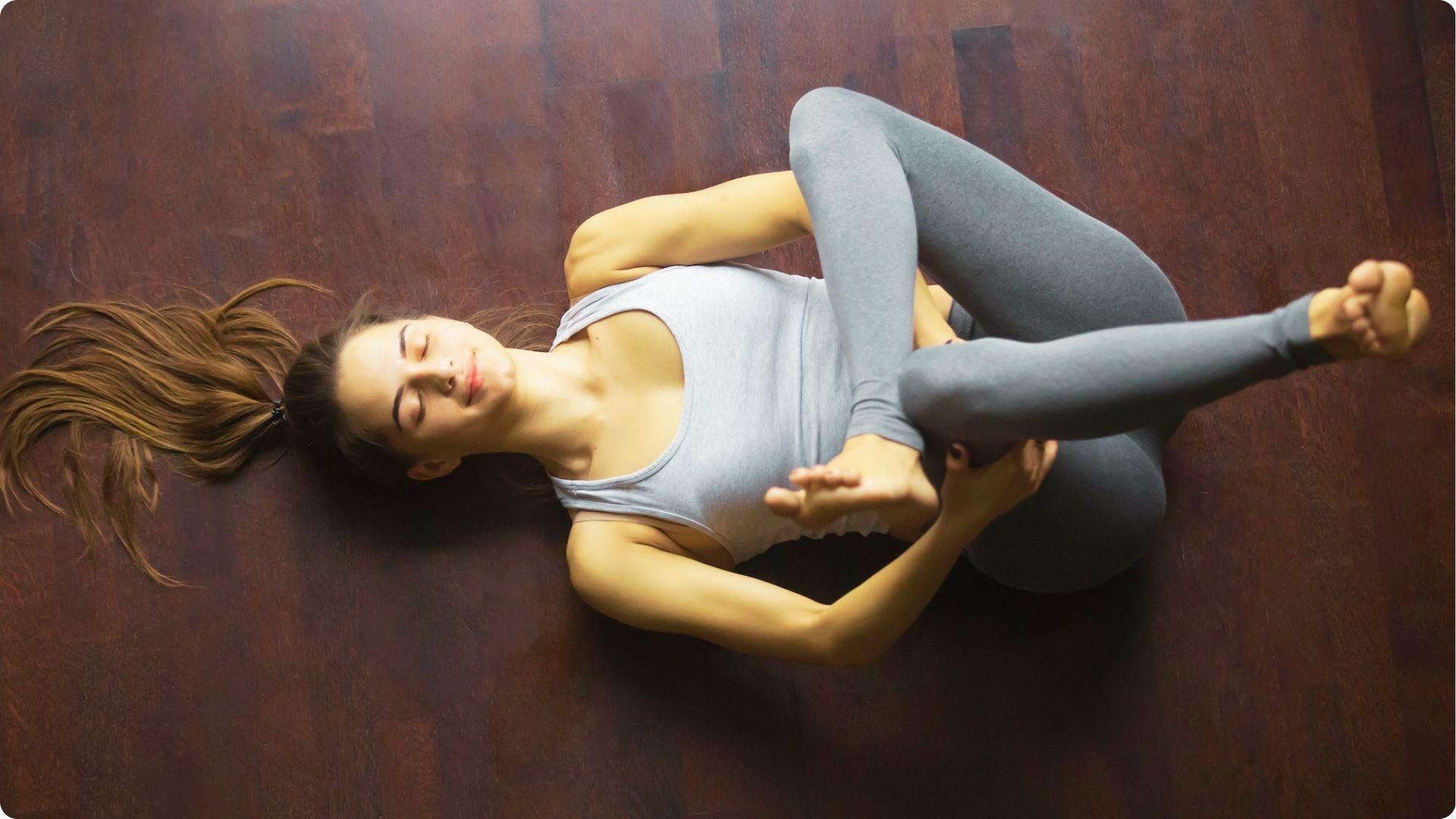
Lie on your back, cross one ankle over the opposite knee, and gently pull the uncrossed leg toward your chest. Flex the foot of the crossed leg to keep the knee joint protected.
12. Reclining Bound Angle Pose for Inner Hip Opening
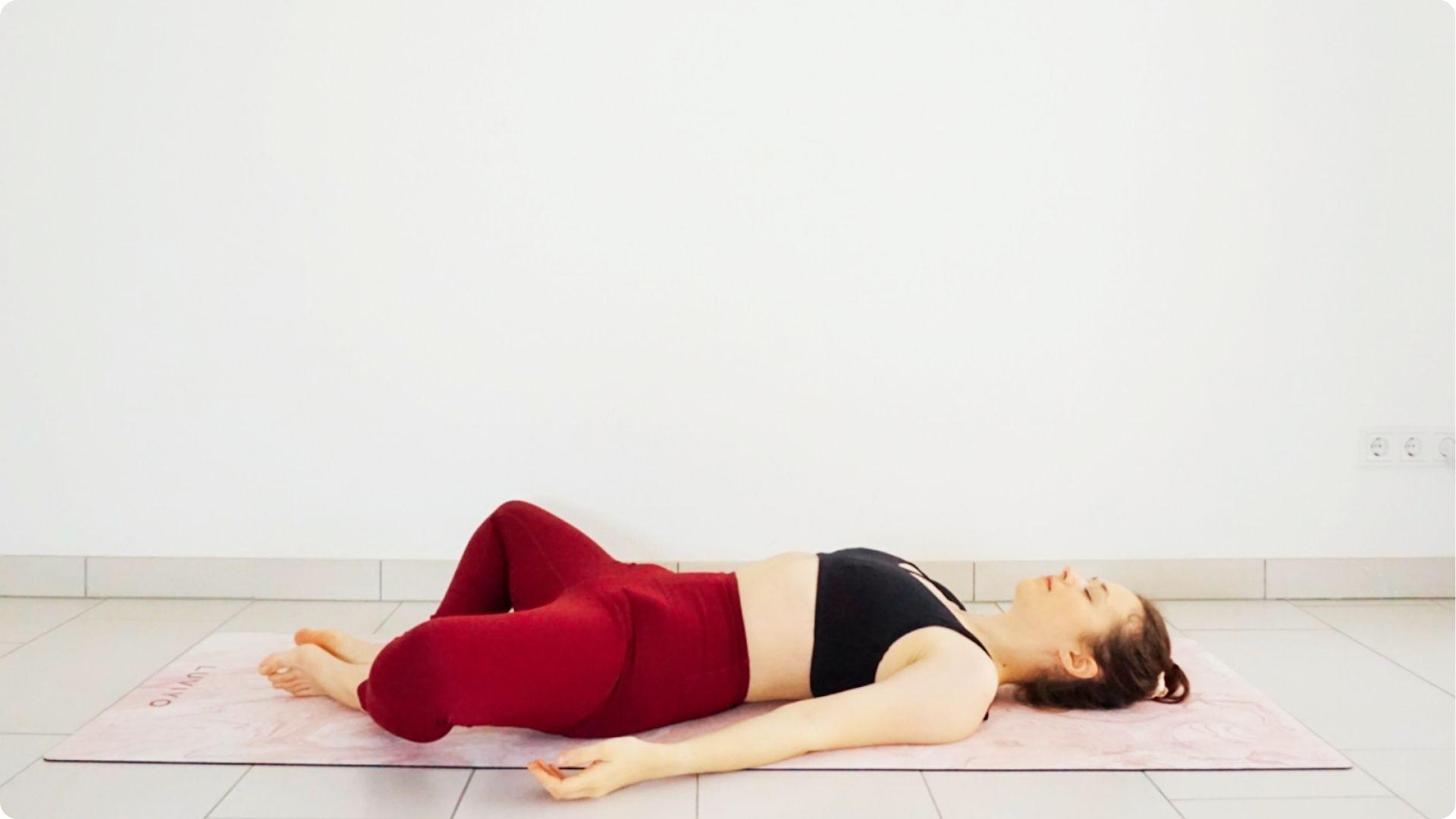
Lie on your back, bring the soles of your feet together, and let your knees fall out to the sides naturally. Allow gravity to open the hips without any forcing or pushing.
13. Piriformis Stretch for Deep Glute Tightness Relief
Sit in a chair, cross one ankle over the opposite knee, and lean gently forward from your hips with a flat back. You will feel a noticeable stretch deep in the glute of the crossed leg.
14. Happy Baby Pose for Gentle Hip Mobility
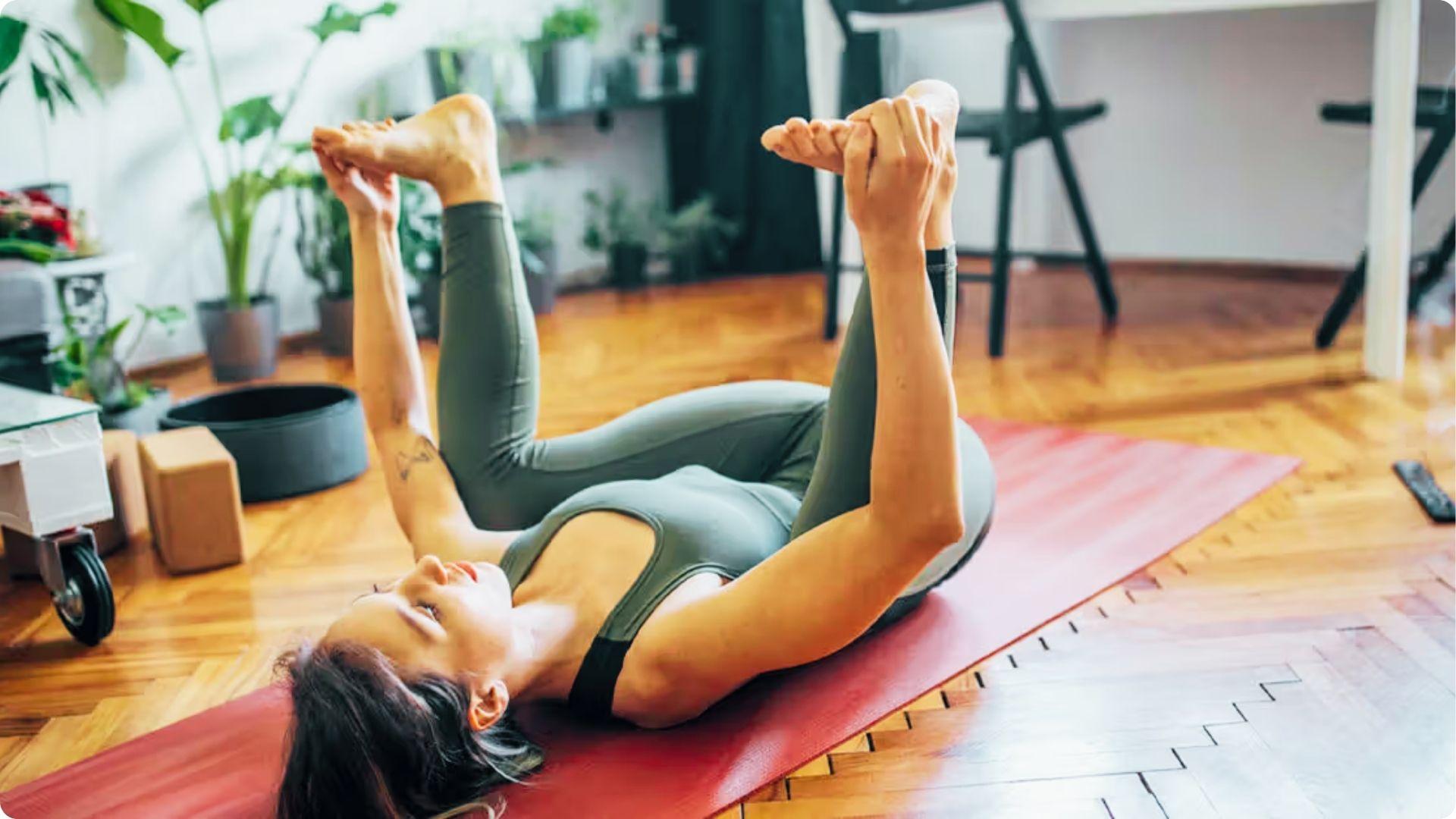
Lie on your back, bend both knees toward your chest, grab the outer edges of your feet, and gently pull your knees toward the floor. Keep your lower back pressed lightly into the ground throughout.
15. Twisted Reclined Pigeon for Hip and Spinal Release
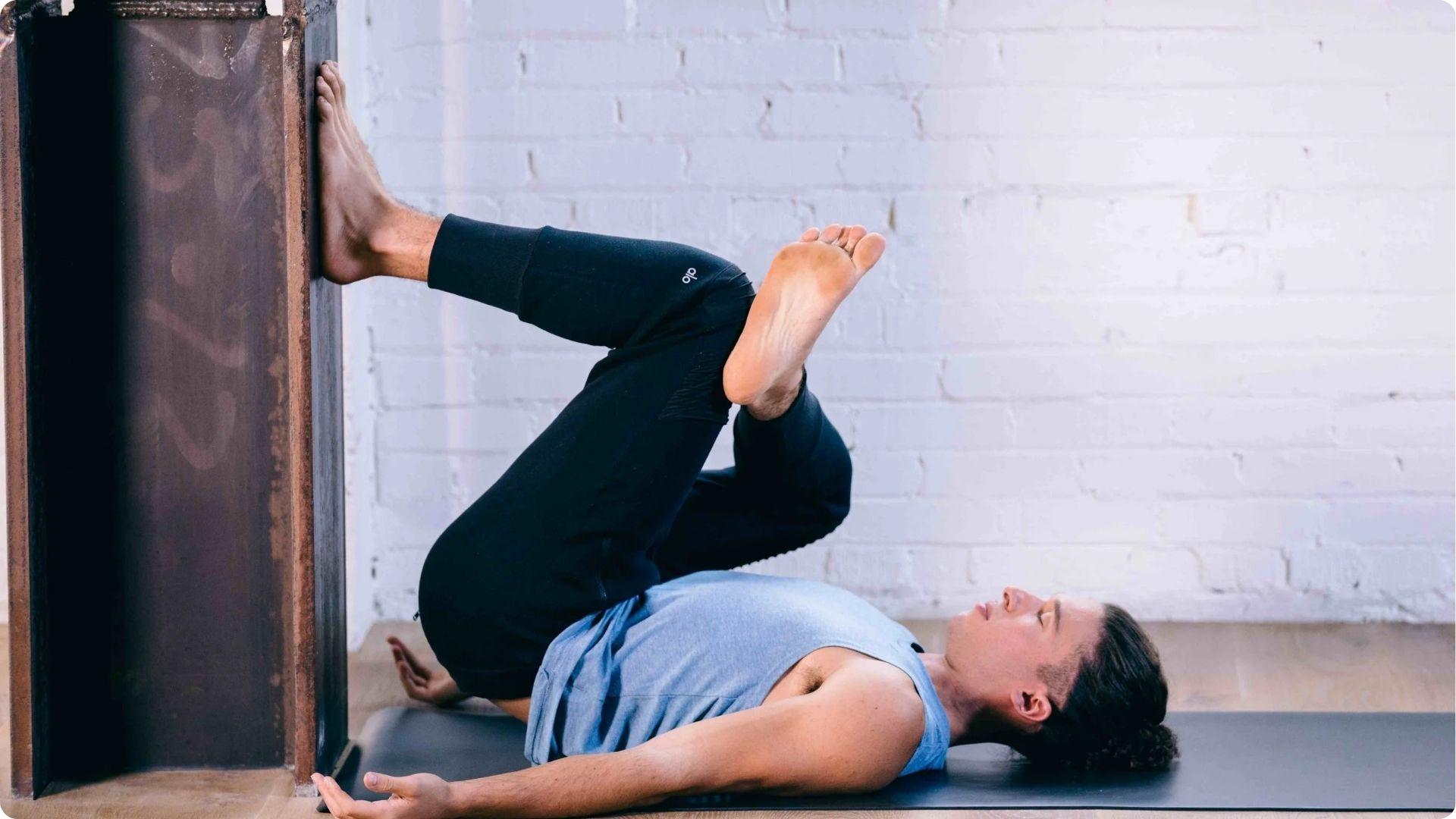
Cross one ankle over the opposite knee in a figure four, then let both legs fall to the opposite side while extending your arms out. This stretch works the hip and lower back at the same time.
16. Kneeling Side Bend Stretch for Hip and Oblique Flexibility
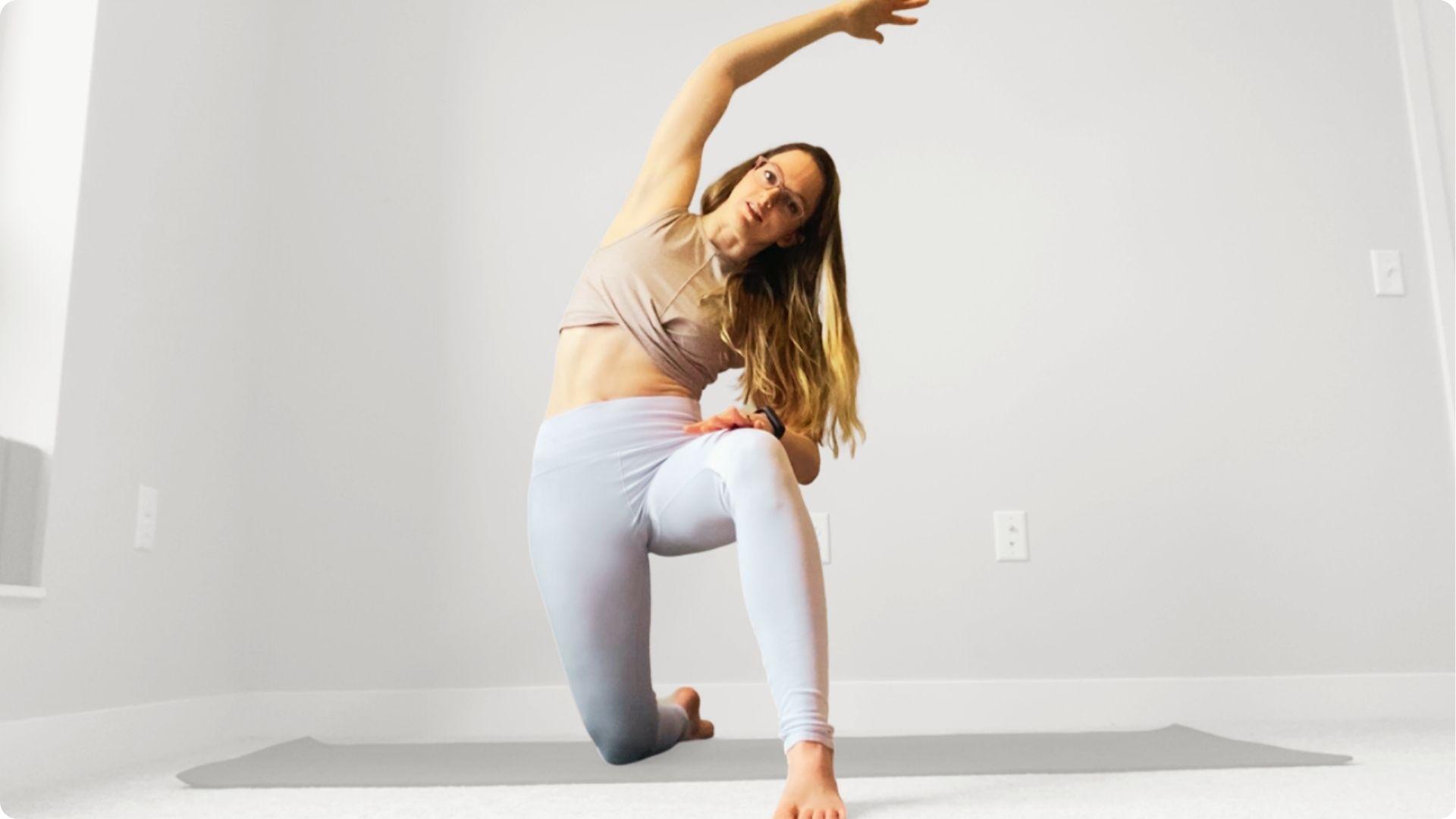
Kneel on one knee, raise the arm on that same side overhead, and lean gently to the opposite side. Keep your hips pushed slightly forward to maintain the hip flexor stretch throughout.
17. Lunging Hip Flexor Stretch with Rotation for Full Hip Opening
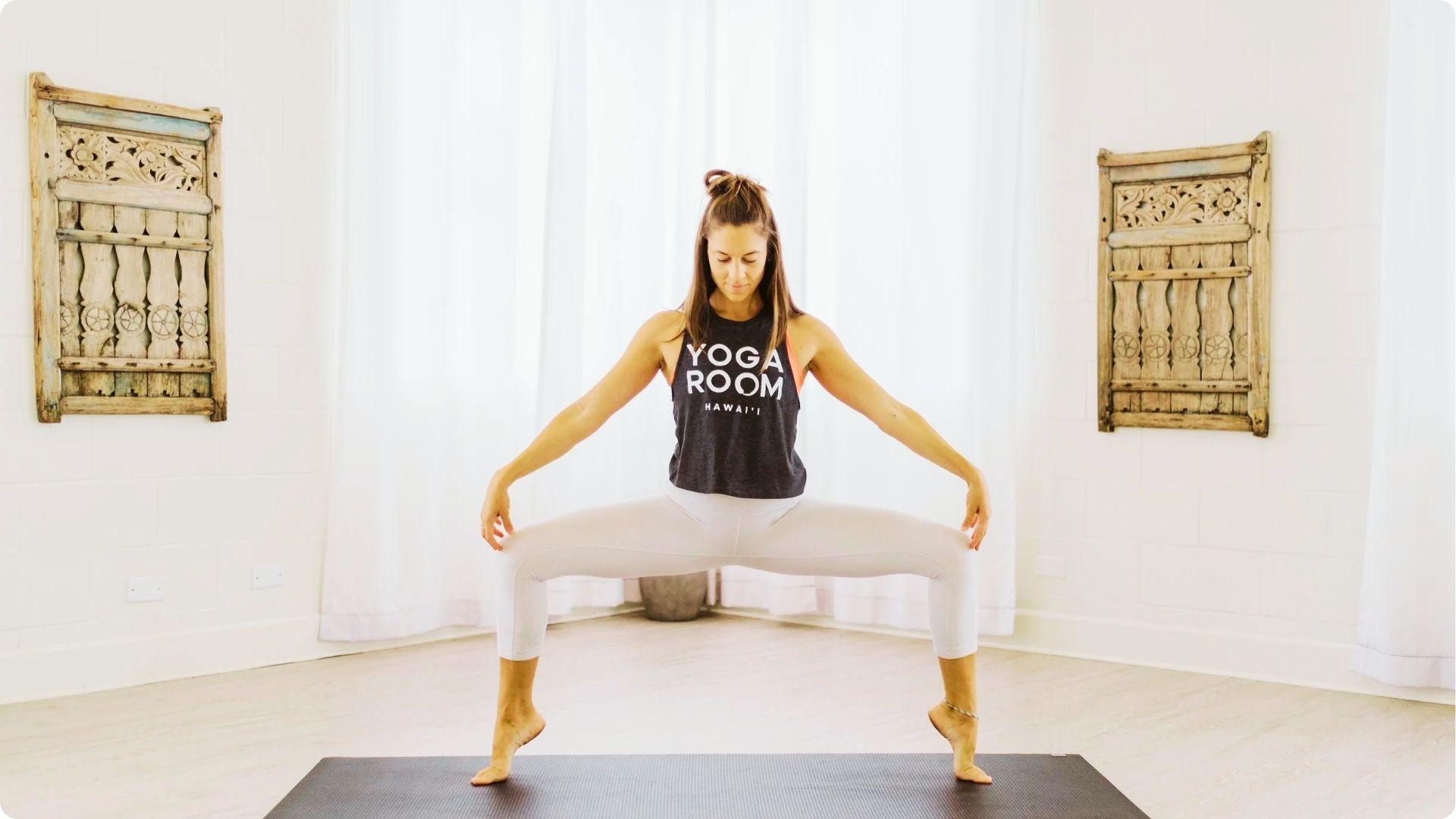
Start in a lunge with your back knee down, then rotate your torso toward your front leg and reach the opposite arm toward the ceiling. This opens the hip flexor, outer hip, and thoracic spine all at once.
Tips to Improve Results When Learning How to Stretch Hip Flexors
Small adjustments to how you stretch can lead to much better results over time.
- Hold each stretch for 20 to 60 seconds and repeat 2 to 3 times per session for better release.
- Stretch hip flexors at least 4 to 5 times a week to see real flexibility gains.
- Inhale before entering a stretch and exhale slowly as you ease into it.
- Keep your core lightly engaged during every stretch to protect your lower back.
- Avoid bouncing during stretches as it increases the risk of strain and injury.
Conclusion
Tight hip flexors held me back for a long time before I made stretching a daily habit. Once I did, my lower back pain eased and my movement felt freer.
These stretches are simple, effective, and work for any schedule. Start with two or three that feel comfortable and build from there.
Small steps lead to real change. If this helped you, drop a comment below, share it with someone who needs it, and check out more content on mobility and posture right here.
Frequently Asked Questions
How often should I stretch hip flexors for best results?
Stretching 4 to 5 times a week gives the best results. Daily stretching is even better if your hips feel tight regularly.
What is the fastest way to loosen tight hip flexors?
The kneeling lunge stretch with glute engagement is one of the most effective options. Pairing it with consistent daily movement speeds up results.
Can I stretch hip flexors every day safely?
Yes, daily hip flexor stretching is safe for most people. Keep the intensity moderate and focus on proper form to avoid strain.
Why do my hip flexors get tight from sitting?
Sitting keeps the hip flexors in a shortened position for long periods. Over time, the muscles adapt to that shortened state and lose flexibility.
Can tight hip flexors cause lower back pain?
Yes, tight hip flexors pull the pelvis forward, which increases the curve in the lower back and creates pressure and discomfort in that area.