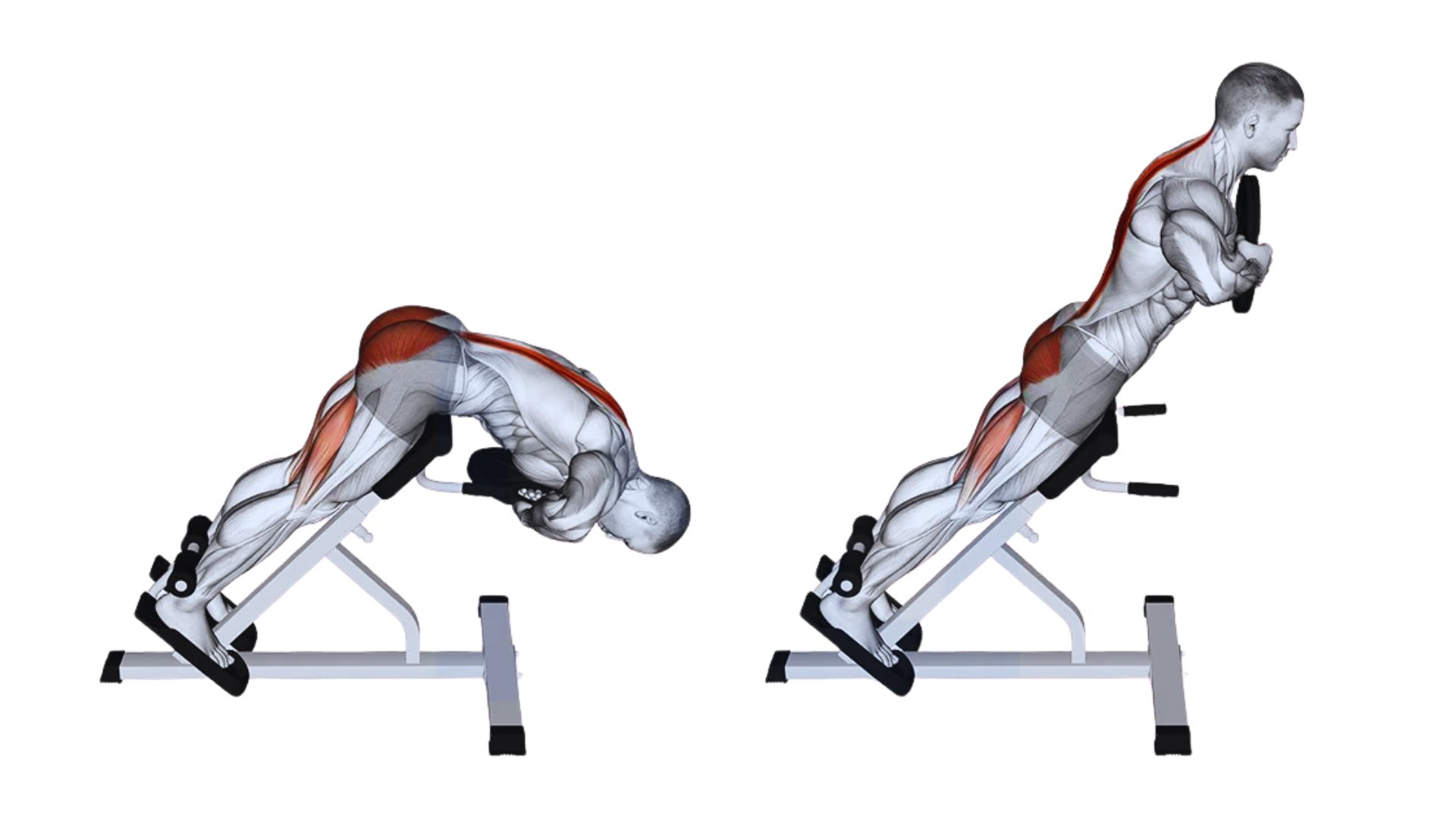
I’ve spent years refining my back and glute training, and the weighted hyperextension changed everything for me. This guide covers proper form, machine setup, muscle targeting, and common mistakes to avoid.
You’ll learn how to perform this exercise safely and effectively. I’ll show you exactly how to adjust your technique for back focus or glute focus.
We’ll cover variations, programming tips, and step-by-step video cues. This movement builds serious strength when done right.
I’ve made every mistake in the book so you don’t have to. Trust me, your posterior chain will thank you.
Let’s build a stronger back and glutes together.
What Is the Weighted Hyperextension Exercise?
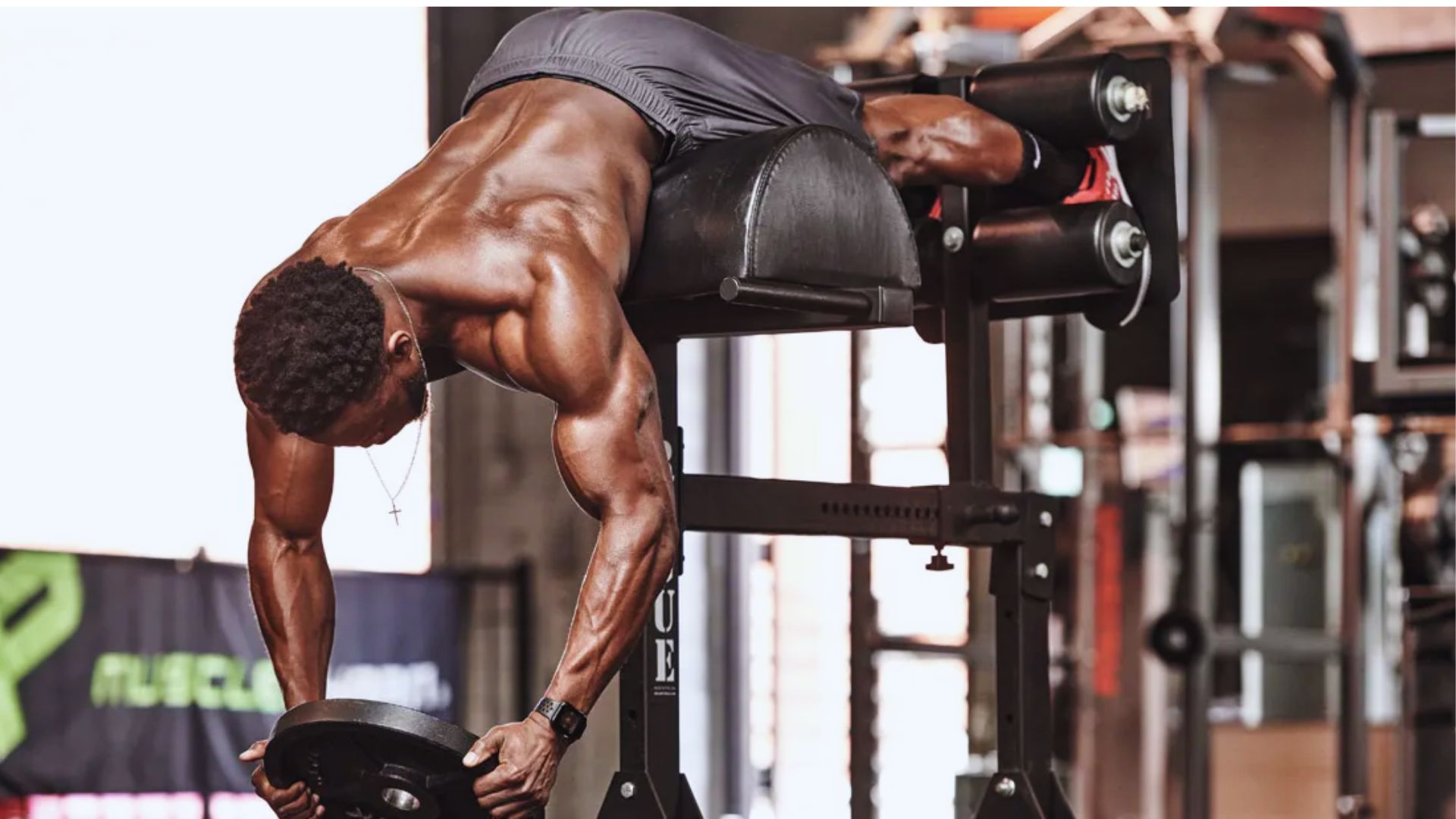
This movement trains your lower back and glutes by extending your hips against resistance while stabilized on a machine.
You perform this on a hyperextension bench or 45-degree back extension machine. Hold a weight plate, dumbbell, or barbell while hinging at the hips. Lower your body in a controlled manner, then drive back up by contracting your posterior chain.
Weighted back extension and weighted hyperextension mean the same thing. Keep your back neutral throughout. Don’t actually hyperextend your spine.
This exercise isolates your posterior chain better than deadlifts. Your grip strength doesn’t limit you. Beginners start with body weight. Intermediate lifters add plates. Advanced athletes use heavy loads. Consult a doctor first if you have lower back pain.
Weighted Hyperextension Muscles Worked
Your lower back, glutes, and hamstrings all contribute to this hip extension movement with varying degrees of involvement.
Your erector spinae keeps your back straight during the movement. When you focus on lower back emphasis, the erectors work harder to extend your torso.
Your gluteus maximus is the prime mover for hip extension. When you emphasize glutes, use a fuller range of motion at the hips while keeping your lower back neutral.
Your hamstrings assist with hip extension. They work harder when your knees are straighter. Your core stabilizes your body and prevents rotation throughout the movement.
Weighted Hyperextension Machine Setup
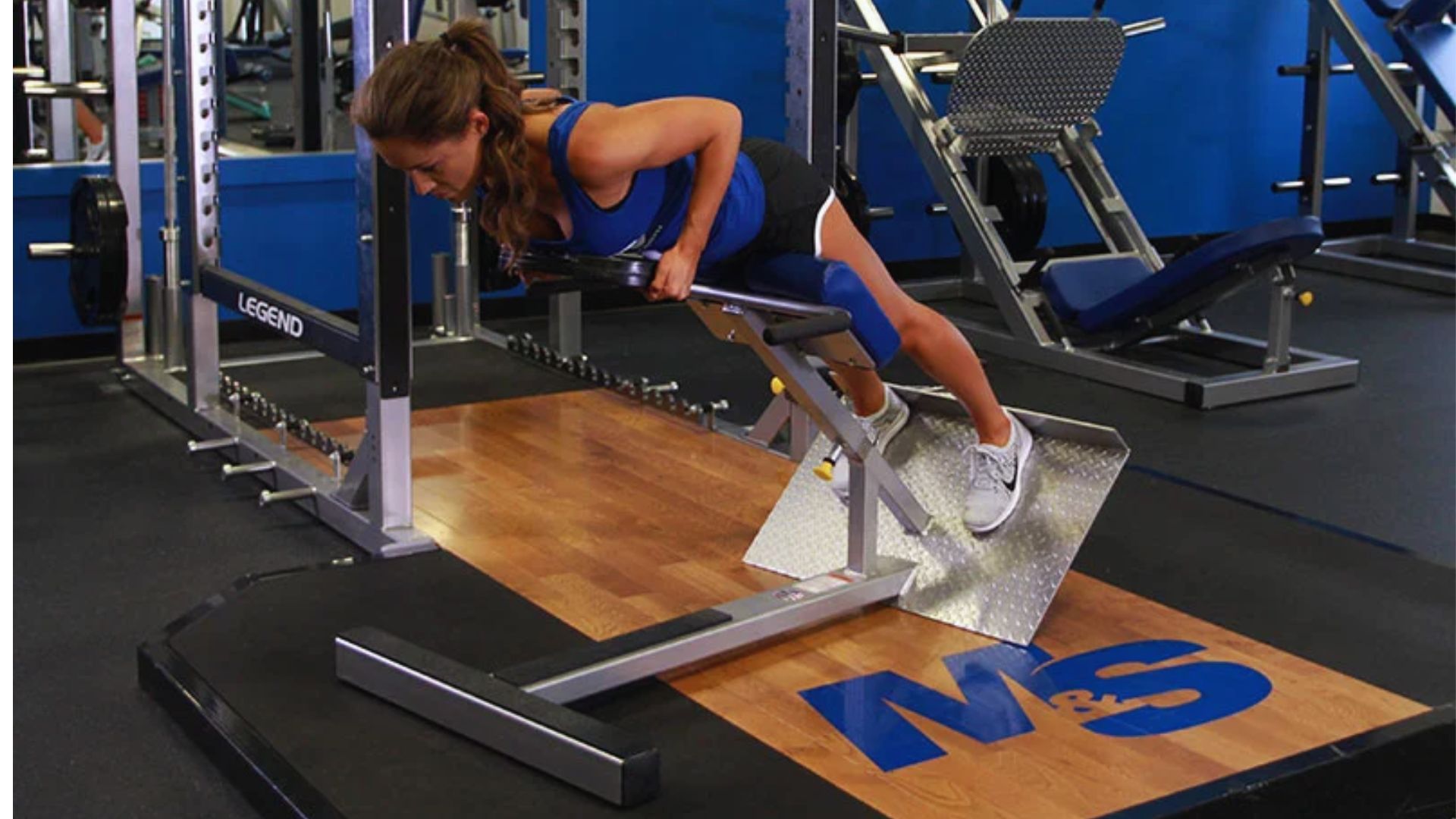
Proper machine adjustment prevents injury and allows you to target the right muscles during each repetition.
The top pad should sit just below your hip crease, right at the fold where your legs meet your torso. Stand next to the machine and check that the pad aligns with your hip bone. Lock the adjustment pin securely.
Position your feet flat on the footplate, shoulder-width apart. Point your toes slightly outward. Lock your legs into the ankle supports. Your hips rest against the main pad. The front of your hips makes contact, not your stomach.
Start with lighter weights to learn proper holding positions.
Chest hold: Hug the plate against your chest. Most stable for heavier weights.
Overhead hold: Hold the plate behind your head. Use for lighter loads only.
Goblet hold: Hold a dumbbell vertically against your chest. Never hold weight with straight arms out in front.
Weighted Hyperextension Complete Form: Step-by-Step Guide
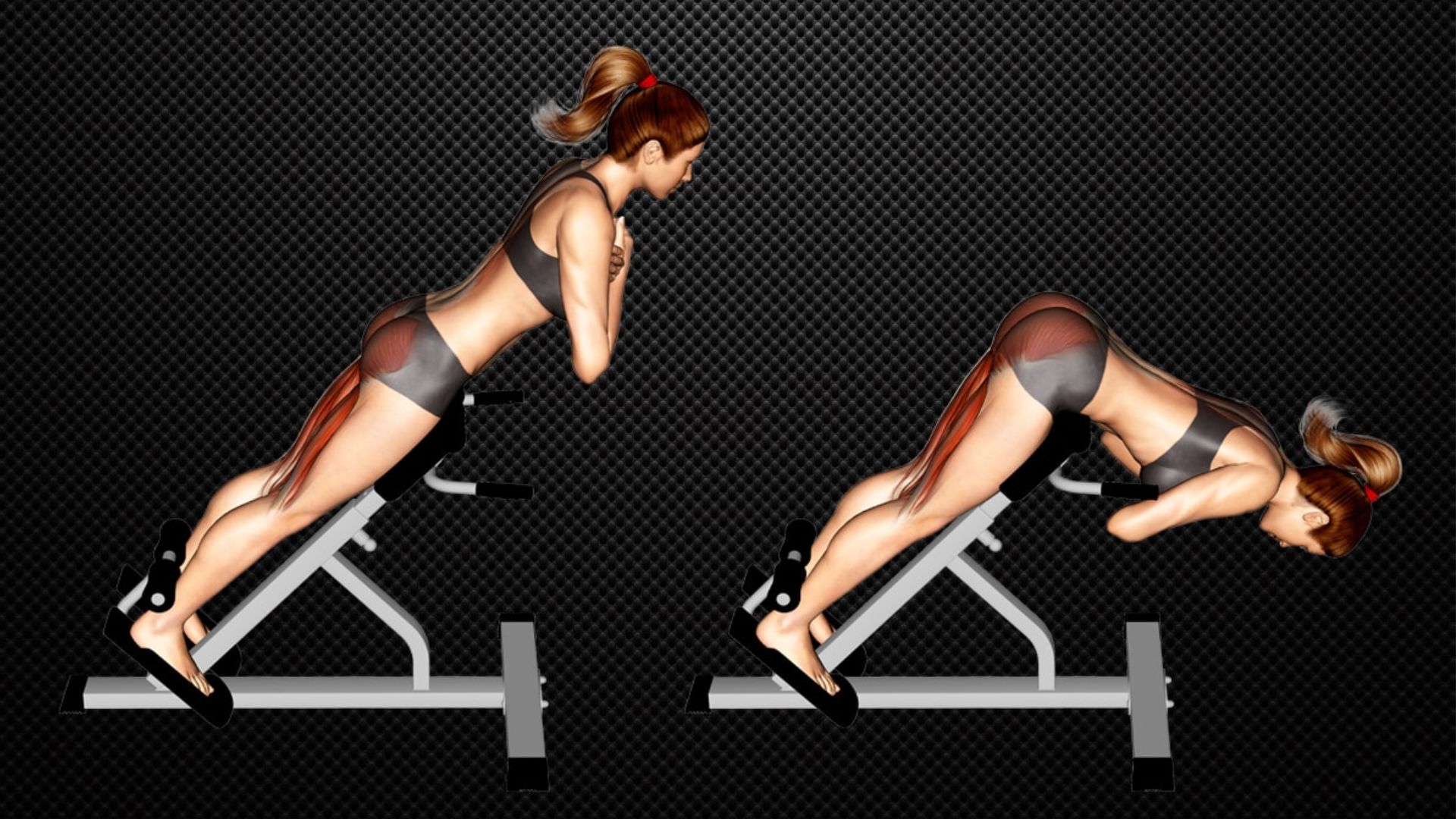
Following proper form cues ensures you build muscle safely while avoiding common technique errors that cause injury.
Practice with bodyweight first. Add load once your form is solid.
Step 1: Starting Position and Body Alignment
Position yourself on the machine with your hips on the pad. Your body should form a straight line from head to heels.
Pull your shoulder blades back and down. Keep your chest up. Look at the ground a few feet in front of you.
Engage your core. Take a deep breath and brace your abs. Hold your weight in your chosen position.
Step 2: Lowering Phase and Hip Hinge Mechanics
Begin by hinging at your hips. Think about pushing your hips back. Your torso lowers as a result.
Keep your back neutral. Don’t round or arch excessively. Lower slowly over 2-3 seconds.
Stop when you feel a stretch in your hamstrings and glutes. For most people, this is 60-90 degrees of hip flexion. Keep tension in your muscles at the bottom.
Step 3: Lifting Phase and Glute-Driven Extension
Drive your hips forward to lift back up. Squeeze your glutes hard. Push your hips into the pad.
Your torso rises as your hips extend. The movement comes from your hips, not your back.
Exhale as you lift. Maintain core tension. Don’t use momentum.
Step 4: Top Position and Spinal Control
Return to the starting position. Your body forms a straight line again. Stop here. Don’t extend further.
Avoid hyperextending at the top. This puts unnecessary stress on your spine.
Squeeze your glutes hard. Hold for a one-second pause. Keep your ribs down.
Common Video Cues to Follow for Weighted Hyperextension
“Push your hips back” helps you initiate the hinge correctly.
“Squeeze your glutes to stand up” emphasizes the right muscles.
“Keep your back flat” maintains a neutral spine.
“Control the descent” prevents momentum and injury.
“Stop at parallel” keeps you from hyperextending.
Weighted Hyperextension for Back vs for Glutes
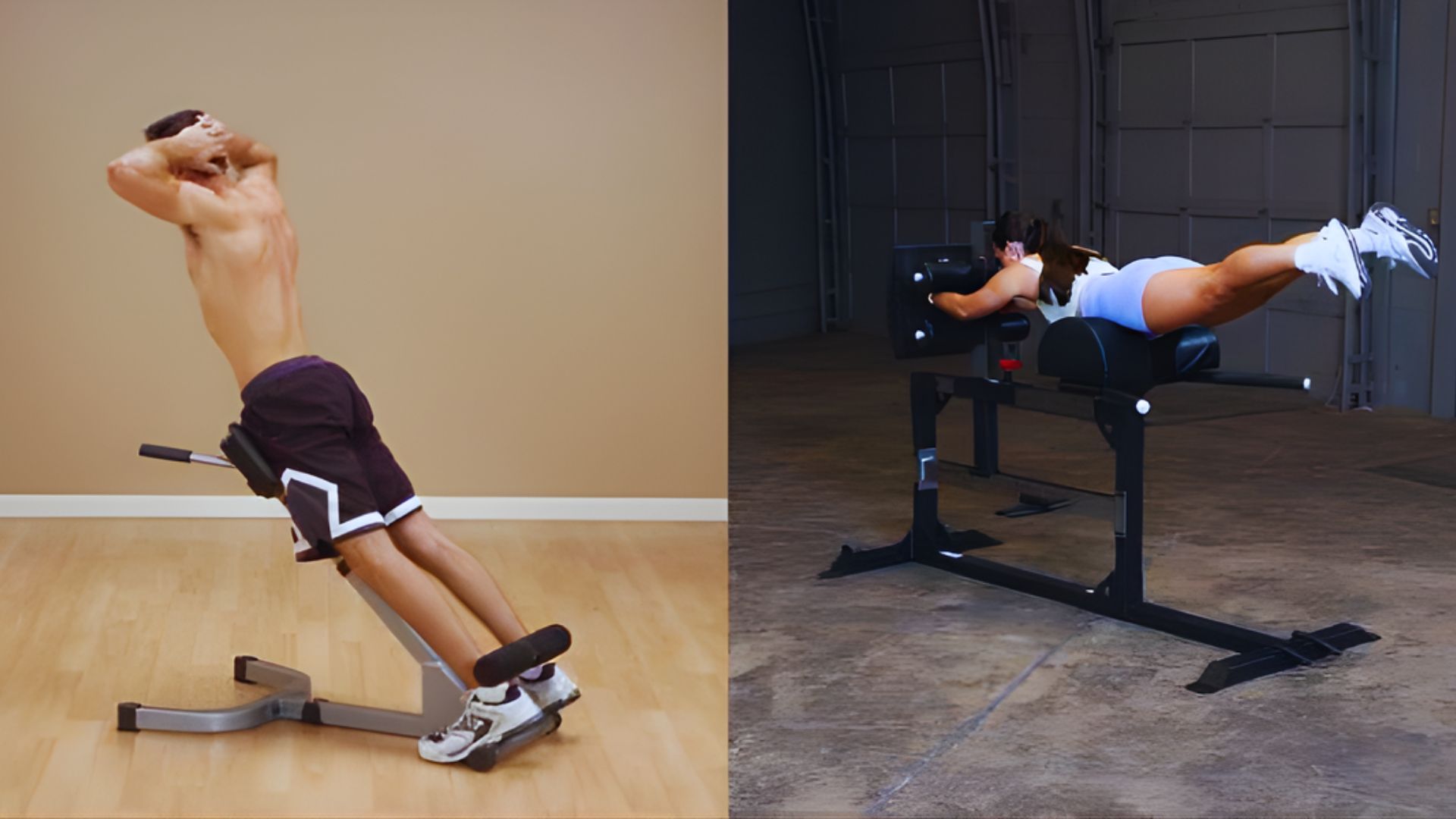
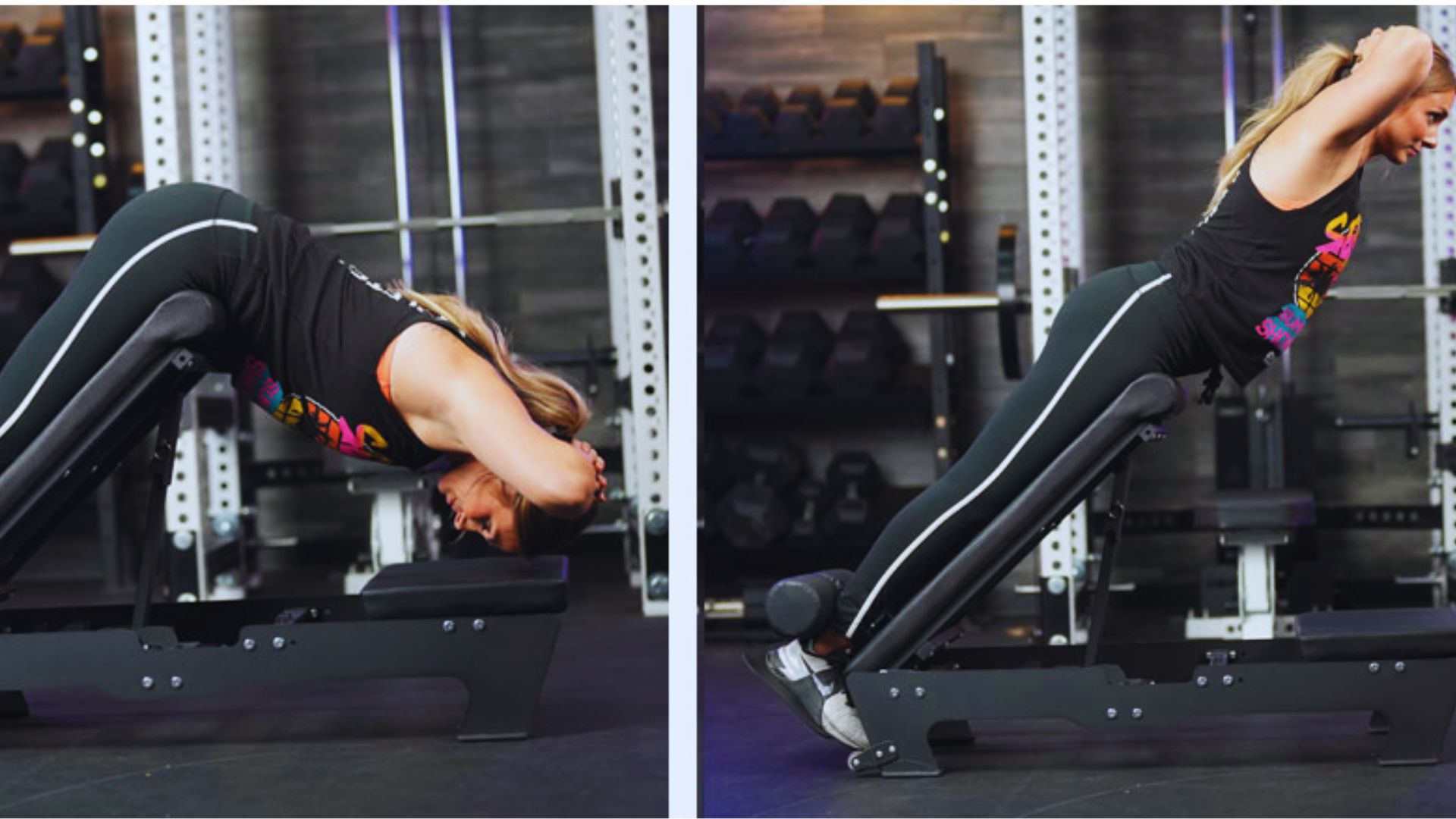
Two images: one man and one woman doing hyperextension exercise in different ways to strengthen backs and glutes muscles
Small technique adjustments change which muscles do most of the work during this exercise.
For back focus, keep your hips more stable and use a shorter range of motion. Lower only 30-45 degrees. Pause at the top for 2-3 seconds and squeeze your lower back hard. Use lighter weights for sets of 12-15 reps.
For glute focus, use a full range of motion at your hips. Hinge deeply until you feel a strong stretch. Keep your spine neutral and push your hips forward into the pad. Squeeze your glutes hard at the top. Use heavier weights for sets of 6-10 reps.
A more horizontal torso position increases glute involvement. A more upright position shifts work to your lower back. Lower pad placement creates a more horizontal angle. Experiment with different positions to find what works best.
Common Weighted Hyperextension Form Mistakes
Avoiding these errors keeps you safe and ensures you’re actually building strength in the right muscles.
Watch for these issues in your own training:
- Stop when your body reaches a straight line at the top. Arching excessively compresses your spinal discs without working muscles more effectively.
- Keep your lower back from rounding under load. A rounded spine can cause disc herniation. Reduce the weight if you can’t maintain a neutral spine.
- Control the movement instead of using momentum. Bouncing defeats the purpose and increases injury risk. Lower for three seconds, pause one second, lift in two.
- Start with lighter weights than you think you need. Heavy loads force poor form. Add only 5 pounds every two weeks.
- Film yourself to catch form mistakes early. You can’t fix what you don’t see. Check your spine position and movement speed regularly.
Weighted Hyperextension Variations
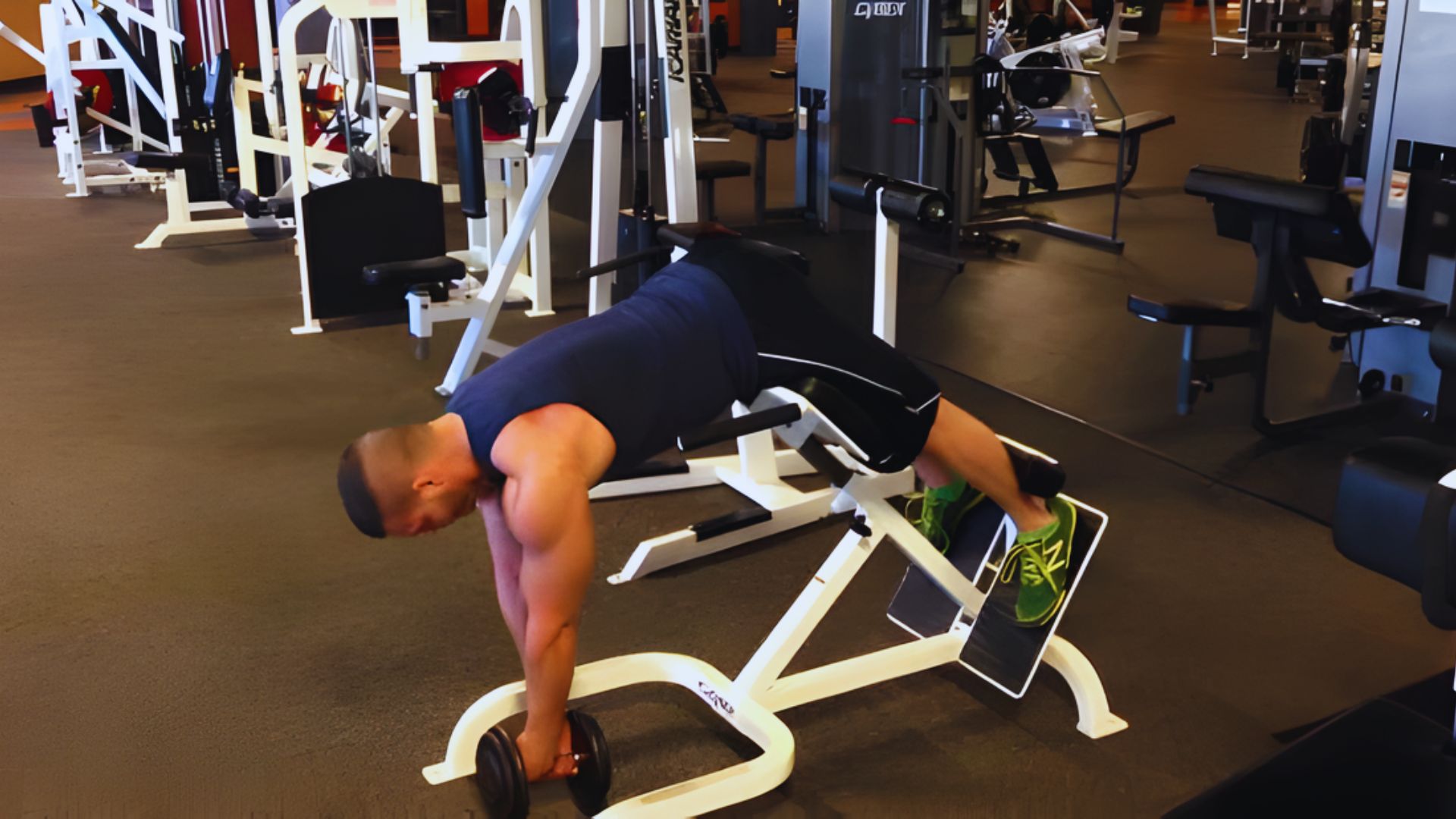
These modifications keep your training fresh while targeting your posterior chain from different angles and positions.
Try each variation to find what works for your body and goals.
Exercise ball weighted hyperextension
Position an exercise ball under your hips and thighs. Brace your feet against a wall. Hold a weight plate against your chest.
The ball is less stable than a machine. Your core works harder to prevent rolling.
Back extension weighted hyperextension variation
A 45-degree back extension machine changes the angle. The angled position can be easier on your lower back.
Setup and execution stay the same. Try both machine types to see which feels better.
Single-arm or offset-load weighted hyperextension
Hold a dumbbell in one hand only. This creates an asymmetrical load. Your core must work harder to prevent rotation.
Use lighter weights than normal. Perform all reps on one side, then switch.
How to Program the Weighted Hyperextension Exercise

Strategic programming maximizes your results while preventing overtraining and allowing proper recovery between sessions.
For muscle growth, perform 3-4 sets of 8-12 reps with 60-90 seconds rest. For strength, use 4-5 sets of 4-6 reps with 2-3 minutes rest. For endurance, do 2-3 sets of 15-20 reps.
Perform this exercise after your main compound lifts, not before squats or deadlifts. Place it at the end of leg day or with posterior chain accessory work.
Add 5 pounds every two weeks. Once you complete 4 sets of 12 reps, add weight and drop to 8 reps. Vary your technique emphasis every 6-8 weeks and track your workouts.
Conclusion
The weighted hyperextension has become one of my favorite exercises. I’ve seen real changes in my lower back strength and glute development since adding it to my routine. My deadlifts improved and my posture feels better than ever.
Start with bodyweight versions if you’re new. Add load gradually as your form improves. Keep your spine neutral and focus on hip movement.
Remember, consistency beats intensity every time. I’d love to hear how this exercise works for you.
Drop a comment below sharing your experience or any questions about your form. Let’s build stronger backs together.
Frequently Asked Questions
How much weight should I use for weighted hyperextension?
Start with 10-25 pounds. Add 5 pounds every two weeks. Intermediate lifters use 25-50 pounds. Advanced athletes use 70-100+ pounds.
Is weighted hyperextension bad for your back?
No, when performed correctly with a neutral spine. The exercise strengthens your lower back. Poor form causes problems, not the exercise itself.
Can I do weighted hyperextension every day?
Not recommended. Your muscles need 48-72 hours to recover. Perform weighted hyperextensions 2-3 times per week maximum.
What’s better for glutes: weighted hyperextension or hip thrust?
Both are excellent. Hip thrusts allow heavier loads. Weighted hyperextensions work your entire posterior chain. Include both for best results.
How is weighted hyperextension different from a good morning?
Weighted hyperextensions provide machine support for better isolation. Good mornings require more balance and allow heavier loads.