
You’ve been on the StairMaster for weeks. Your legs are tired. But your glutes? Still flat. Sound familiar?
I’ve been there too. And the answer isn’t just yes or no. It depends on how you use it.
In this blog, I’ll break down exactly how the StairMaster works your glutes, why most people don’t see results, and what actually helps.
I’ve spent time testing this myself and researching real-world results so you don’t have to.
Here’s what you’ll find in this guide: What the StairMaster actually does to your glutes Why technique matters more than time How to combine it with strength training for real results
Does StairMaster Build Glutes?
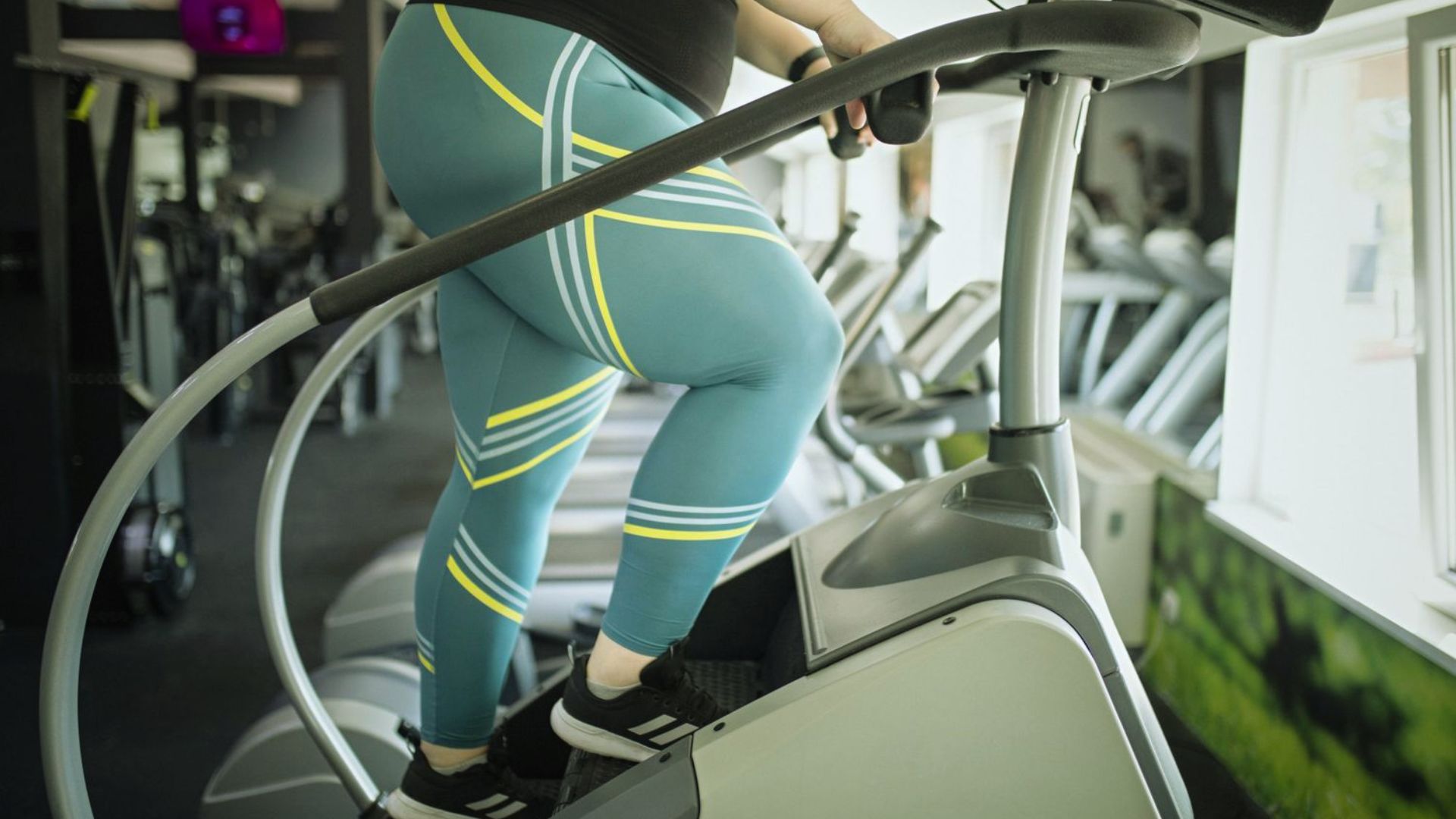
The short answer is yes, but it comes with conditions.
The StairMaster activates your glutes with every step, but it mostly supports toning and endurance, not size.
If you’re hoping to build bigger glutes, cardio alone won’t get you there. You need progressive overload and resistance training to see real growth.
That said, how you use the StairMaster matters more than how long you use it. Low resistance and fast, shallow steps won’t do much for your glutes.
But high resistance, full deliberate steps, and proper form can make a real difference in how much your glutes actually work during each session.
How the StairMaster Targets Your Glutes
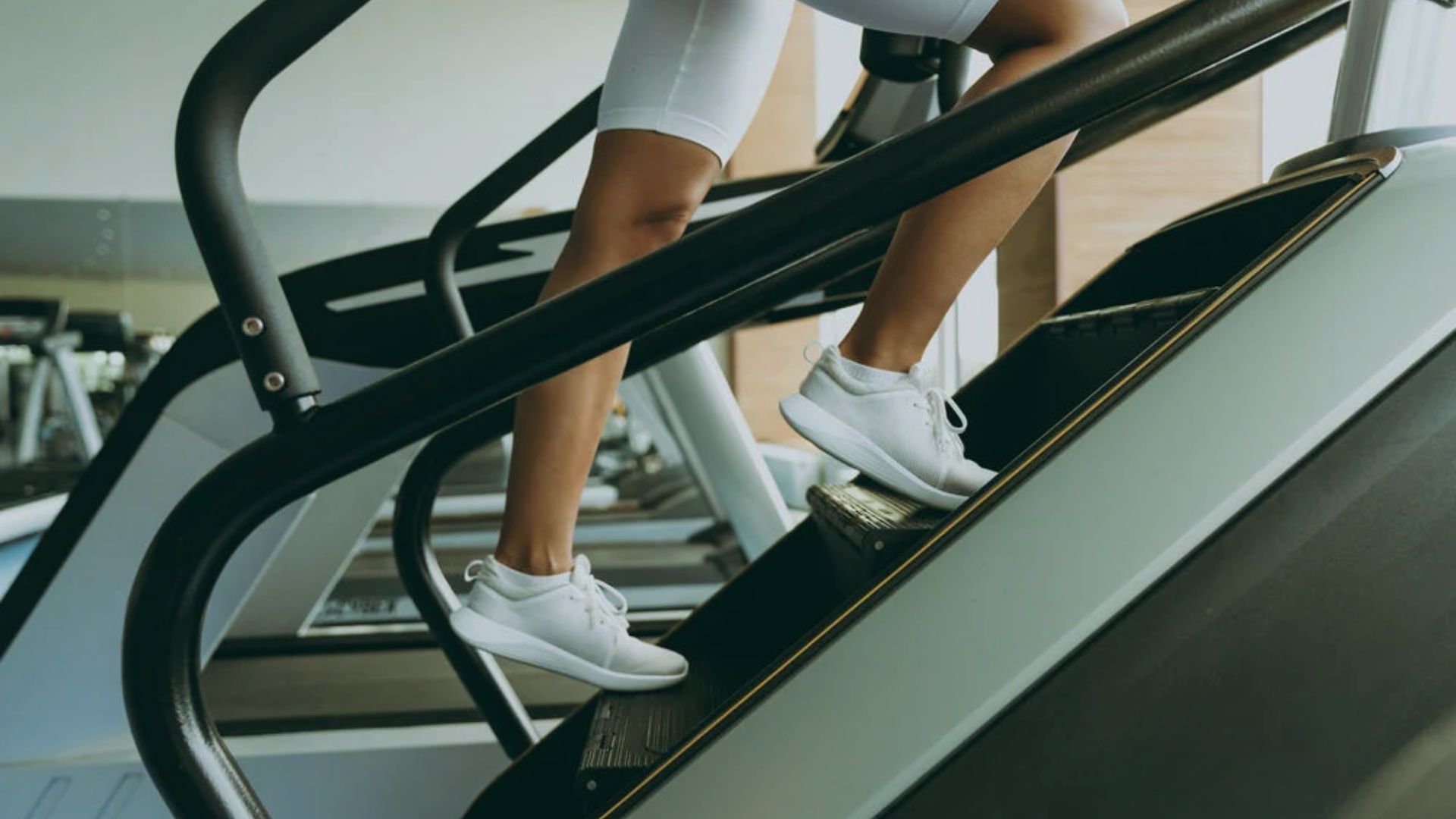
Your glutes don’t just turn on automatically. Your form and technique decide how much they work.
Glute Muscles Involved (maximus, medius, minimus)
Your glutes are made up of three muscles. The gluteus maximus is the largest and most visible. The gluteus medius and minimus sit on the side and help with hip stability.
The StairMaster primarily works the gluteus maximus during the push-down phase of each step. The medius also gets activated when you balance on one leg between steps.
How Stair Climbing Activates the Glutes
Every time you press your foot down onto a step, your glute fires to push your body upward. This repeated motion creates consistent activation across your entire workout.
The key word is press. If you’re shuffling your feet or barely lifting your legs, the glutes don’t have to work hard. You need deliberate, full steps to keep them engaged.
Role of Posture and Stepping Technique
Posture makes a big difference. Leaning forward slightly from the hips, not hunching your back, keeps the glutes in the movement. Standing too upright or leaning on the rails shifts the work to your quads and calves.
Plant your whole foot on each step, not just your toes. Press through the heel as you step down. This small change alone can improve glute activation immediately.
Does StairMaster Build Glutes or Quads?
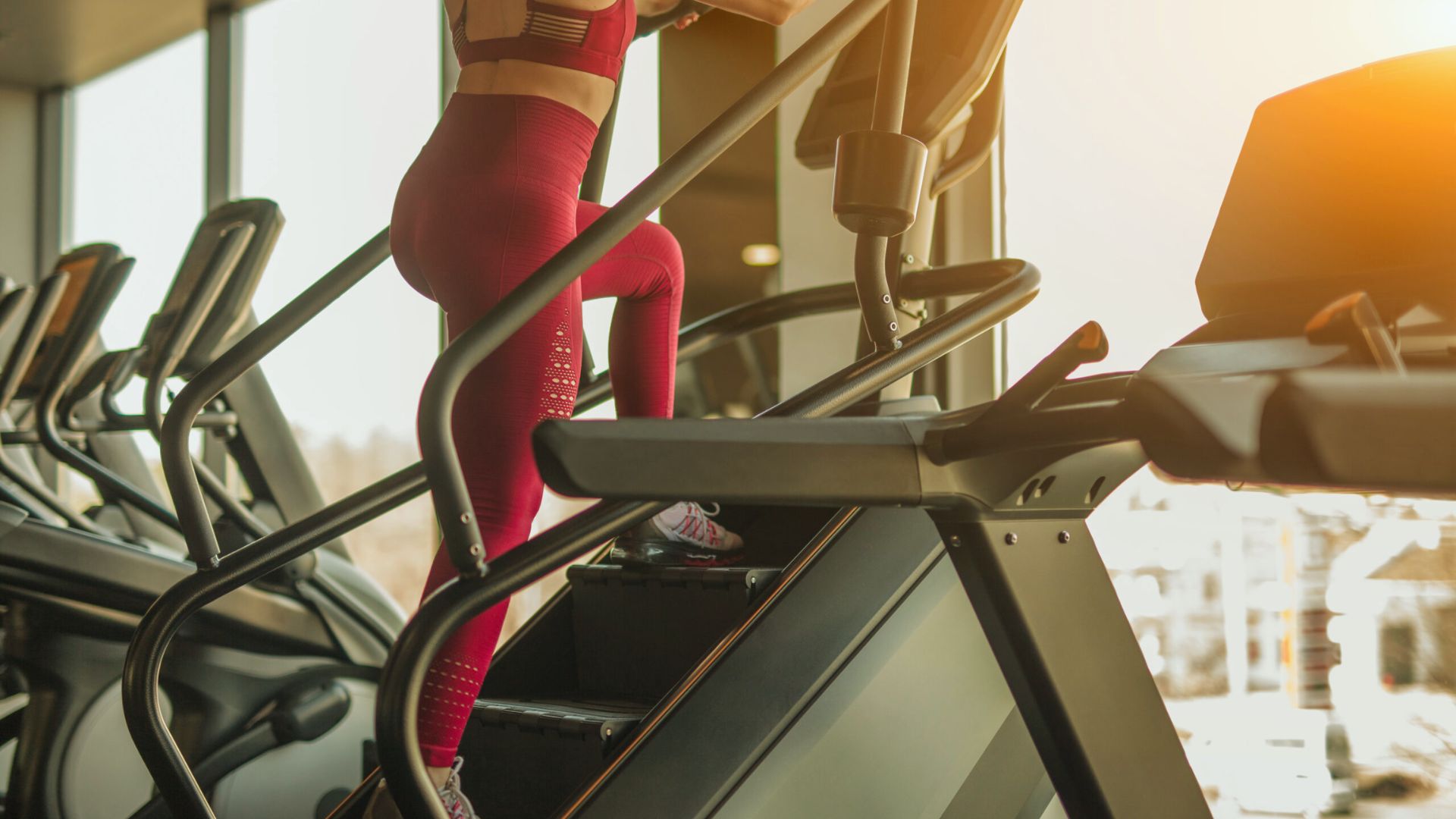
The answer depends on how you move. Both muscles are involved, but one usually wins.
Primary Muscles Worked on the StairMaster
The StairMaster works the quads, glutes, hamstrings, and calves. Quads and glutes are the primary movers. Which one gets worked more depends on your technique.
When it Targets Glutes More than Quads
Glutes take over when you take longer, deeper steps. When you push through your heel and keep a slight forward lean, the hip extension involved in each step puts more load on the glutes.
Short, fast steps tend to keep the movement more in the quads since they don’t require as much hip extension.
Can the StairMaster Make Your Glutes Bigger?
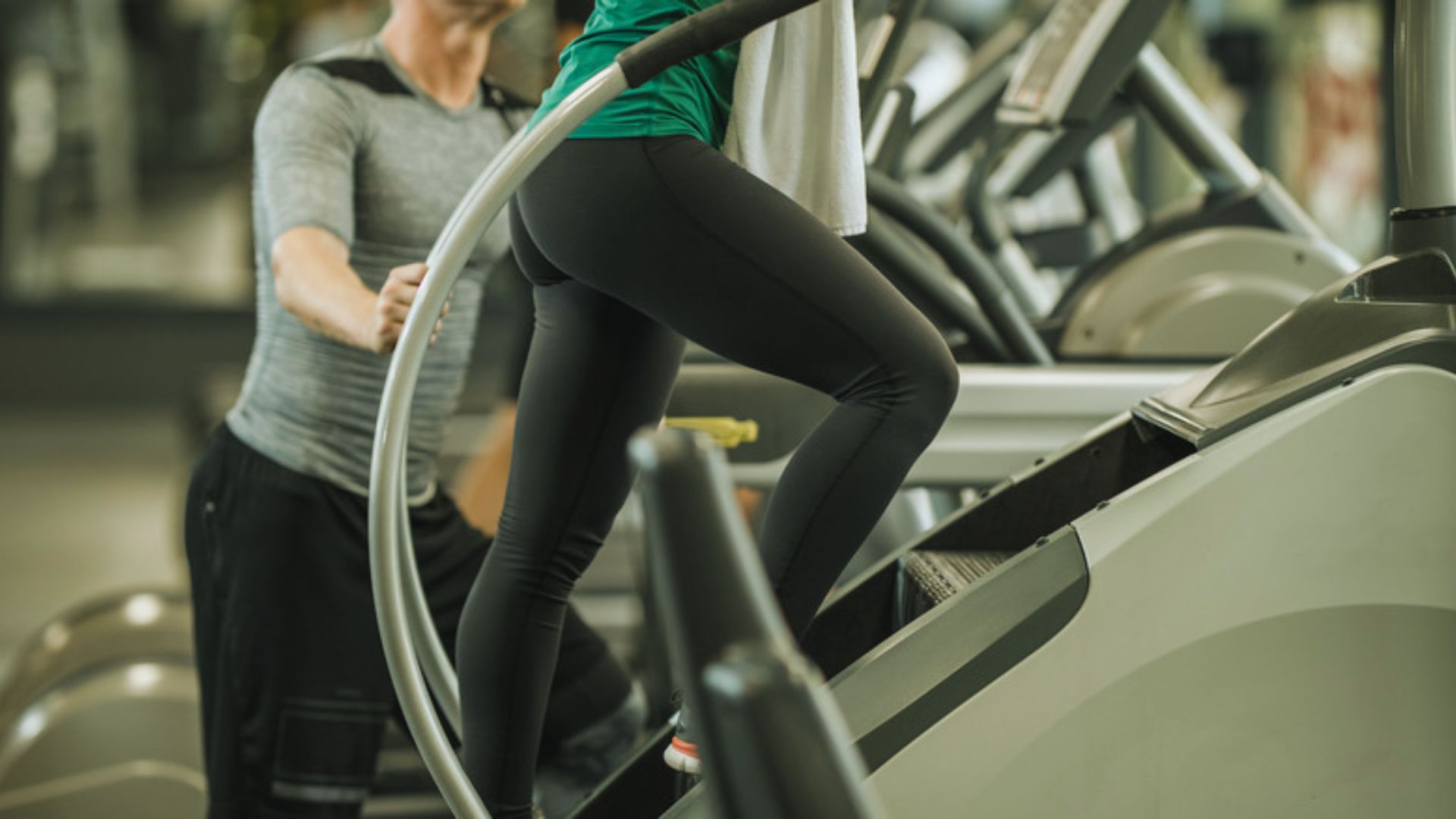
This is the real question, and the honest answer is not on its own.
Muscle Hypertrophy vs Endurance Training
Hypertrophy happens when muscle fibers break down and rebuild bigger under enough resistance.
The StairMaster mostly builds stamina and burns fat. It doesn’t create the kind of stress needed for muscle growth. For bigger glutes, you need both endurance and resistance training.
Why Cardio Alone isn’t Enough for Growth
Cardio burns calories and helps reveal muscle tone, but it doesn’t give your glutes a reason to grow.
Real growth needs progressive overload, adding weight, resistance, or reps over time. The StairMaster can’t provide that the way strength training does.
Combining StairMaster with Strength Training
Use the StairMaster for cardio on some days and do weighted glute exercises on others. Hip thrusts, Romanian deadlifts, and Bulgarian split squats are great options.
Adding the StairMaster 2 to 3 times per week alongside strength work will get you much better results than either method alone.
Mistakes That Prevent Glute Growth on StairMaster
These are the habits that quietly cancel out your hard work.
- Leaning on the rails reduces glute engagement, keep your hands off as much as possible
- Going too fast with low resistance stops the glutes from activating properly
- Stepping only on your toes shifts the effort to your calves and quads instead of your glutes
- Taking short, shallow steps reduces hip extension and limits glute activation
- Doing the same workout every week without increasing resistance stops your progress
Best StairMaster Workout for Glutes

A few simple changes to your routine can make the StairMaster much more effective for glute work.
Beginner-Friendly Glute Workout Routine
Start at a moderate pace with a resistance level that feels challenging but manageable. Aim for 20 minutes with full, deliberate steps.
Focus on pressing through your heels and maintaining a slight forward lean. Do this 3 times per week to start.
Interval Training for Better Activation
Intervals are more effective than steady-state cardio for muscle activation. Try 1 minute of high resistance followed by 1 minute of moderate pace. Repeat for 20 to 30 minutes.
The intensity spikes force your glutes to work harder.
Advanced Variations (skip steps, side steps)
Skipping a step with each stride increases the range of motion and puts more load on the glutes.
Side steps target the gluteus medius more directly. Add these into your routine once you’re comfortable with the basics.
Tips to Maximize Glute Activation on StairMaster
Small changes in technique can make a noticeable difference in which muscles are working.
- Push through your heels with each step instead of your toes to keep the glutes in the movement
- Keep a slight forward lean from the hips, not a hunch, to maintain hip extension
- Avoid holding the rails and let your legs carry your full body weight
- Increase resistance every week or two to keep challenging the muscles
- Try skipping a step to increase the range of motion and glute activation
- Slow down your pace and focus on full, deliberate steps over fast, shallow ones
Conclusion
The StairMaster can absolutely work your glutes, but only if you use it the right way.
I used to hop on it, go fast, and hold the rails the whole time. No results. Once I slowed down, added resistance, and focused on my form, I actually started feeling it in my glutes.
It’s a great tool. Just don’t expect it to do everything alone. Pair it with strength training, clean up your technique, and stay consistent.
Try it for four weeks and see how your lower body responds. If this helped, drop a comment below or share it with someone who has been grinding on the StairMaster without results.
Frequently Asked Questions
Does StairMaster build glutes fast?
It depends on your starting point and how you train. Most people notice improved tone and definition within 4 to 6 weeks of consistent, proper use.
How long should I use StairMaster for glutes?
A 20 to 30 minute session with moderate to high resistance, done 3 to 4 times per week, is enough to support glute toning and endurance.
Is StairMaster enough for glute growth?
No, not on its own. The StairMaster supports toning and fat loss, but adding weighted exercises like hip thrusts and squats is necessary for actual muscle growth.
Should I do StairMaster every day?
Daily use is not recommended. Your muscles need rest to recover. Three to four times per week gives your body time to adapt and improve between sessions.
Does holding the rails on StairMaster affect glute results?
Yes, it does. Holding the rails reduces the load on your lower body, which means your glutes work less. Try to keep your hands off the rails as much as possible for better activation.