
Want a well-defined lower chest? You're in the right place.
This guide covers everything about the high to low cable fly, from how it works to step-by-step form, common mistakes, and the best variations.
I've trained with cables for years, and this move has consistently been one of the best for building that lower chest shape.
We'll go through what the exercise is and which muscles it targets, how to set up and perform it correctly, mistakes to avoid and pro form tips, and variations, comparisons, and training recommendations.
By the end, you'll know exactly how to do this move right.
What Is the High to Low Cable Fly?
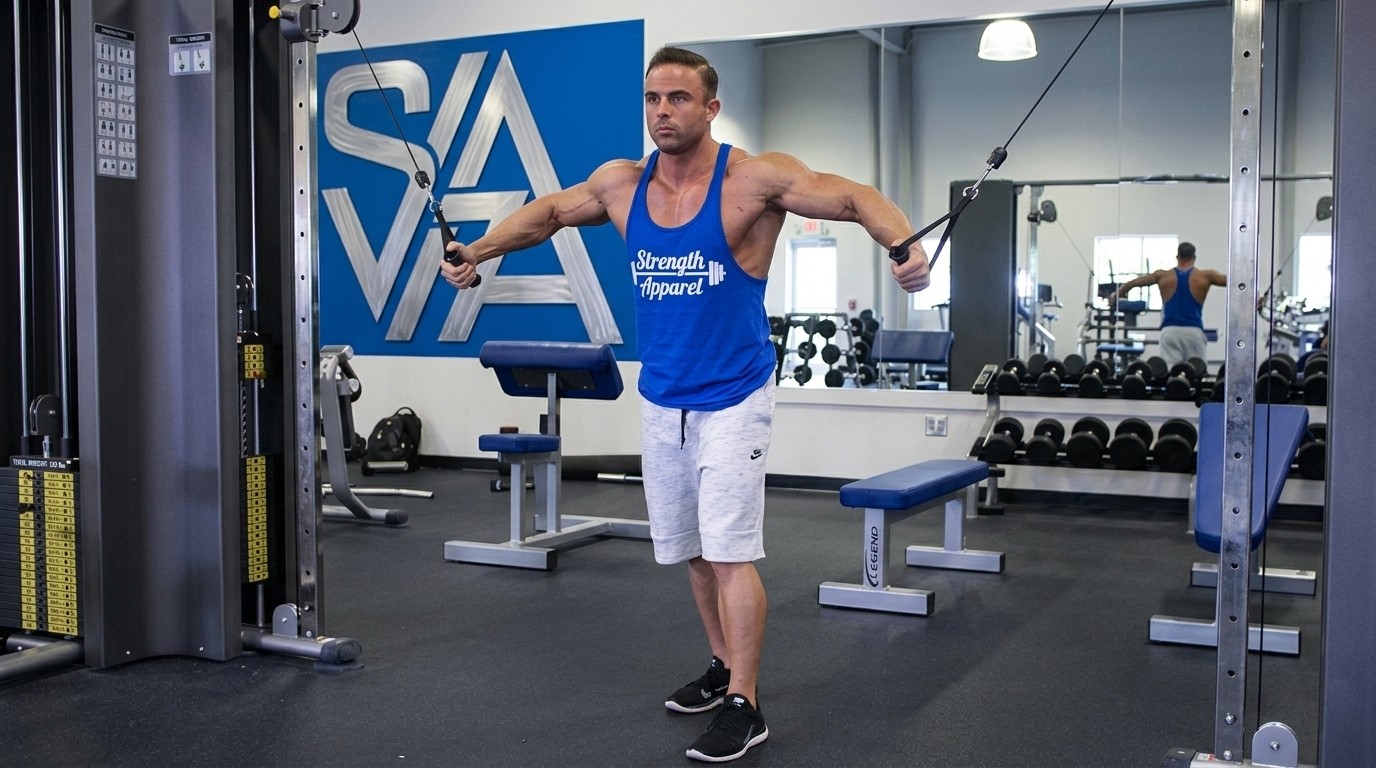
The high to low cable fly is a chest isolation exercise that uses a cable machine with pulleys set at a high position. You pull the handles downward and across your body in a wide arc, targeting the lower chest with consistent tension throughout the movement.
You stand in the center of the machine, grip one handle in each hand, and sweep both arms down and inward. The cables stay under tension the whole time, so your chest does the work, not your arms.
The downward pulling angle is what makes this move special. It directly engages the lower chest fibers, following their natural line of pull. This sets it apart from a standard cable fly, which hits the middle chest instead.
Primary muscle: Pectoralis major (lower portion)
Secondary muscles: Anterior deltoid, biceps brachii, serratus anterior, and core muscles for stability.
Benefits of the High to Low Cable Fly
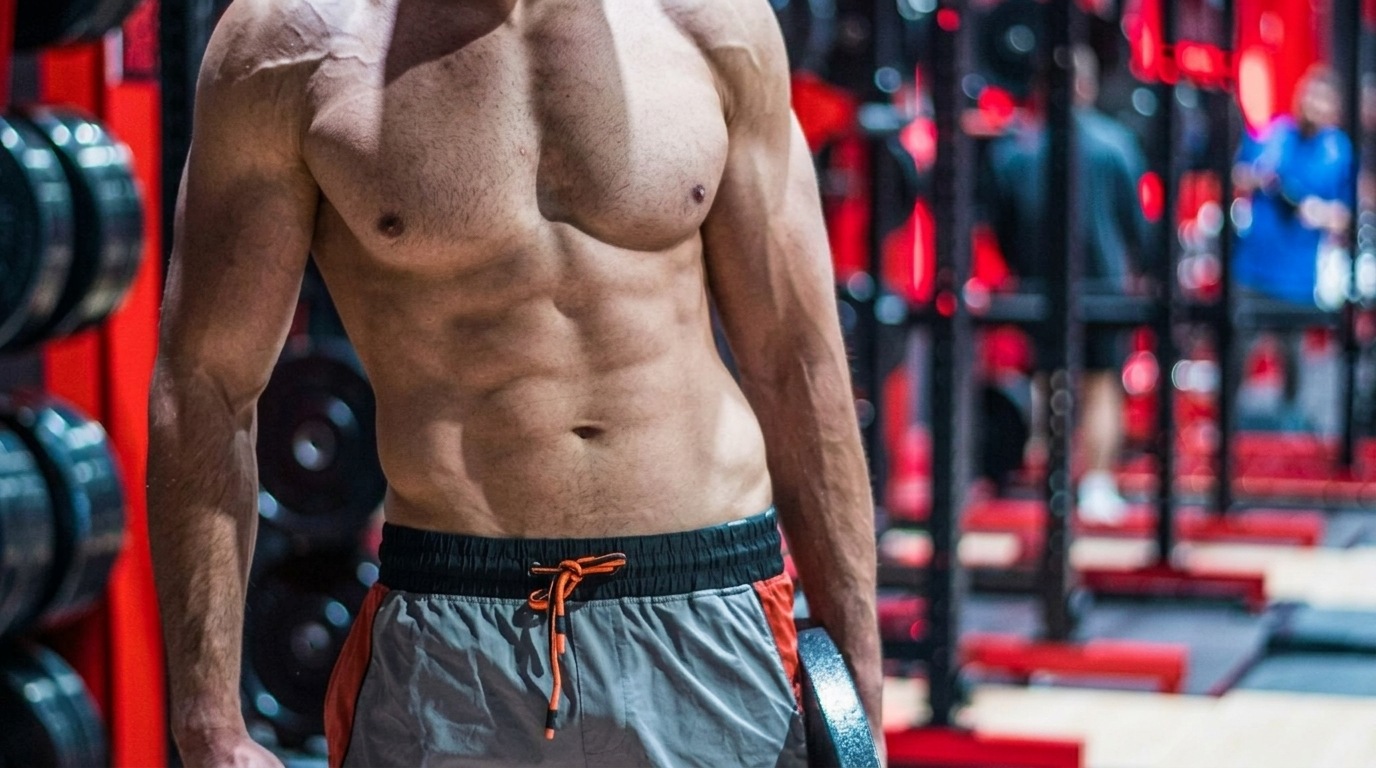
This exercise offers more than just a chest pump. Here's why it's worth adding to your routine.
Improves Lower Chest Development
Many people have an underdeveloped lower chest. Flat presses don't always hit that area well. The high to low cable fly specifically targets those lower fibers.
Over time, regular training with this move creates more visible chest definition, especially along the bottom edge of the pecs.
Provides Constant Resistance Through the Movement
Free weights lose tension at certain points in the arc. Cables don't. From the start to the finish of every rep, your chest stays under load.
This is a big advantage for muscle growth. More time under tension often leads to better results.
Improves Chest Muscle Isolation
Compound exercises like the bench press involve multiple muscle groups. This fly variation keeps the focus on the chest. Your triceps don't take over.
Your shoulders play a minor supporting role. The pecs do the majority of the work, which helps you build a stronger mind-muscle connection.
Helps Build Balanced Chest Definition
Training only flat presses can leave the lower chest underdeveloped while the upper chest grows. The high to low cable fly helps even things out.
It rounds out the look of the chest and creates a more complete, balanced appearance over time.
Equipment and Setup
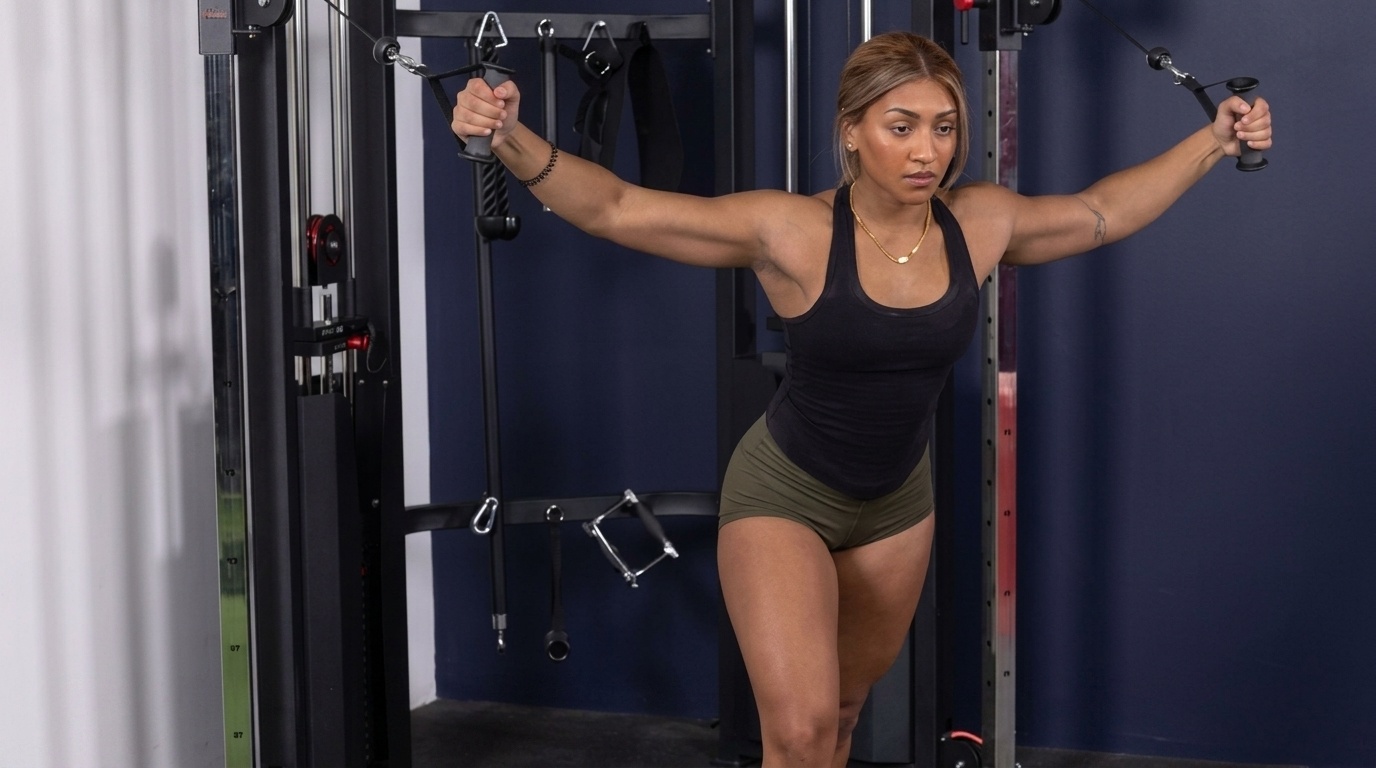
Getting the setup right makes a big difference. Poor setup leads to poor results.
Setting the Cable Pulleys Correctly
Set both pulleys to the highest position on the cable machine. This is usually at the top of the tower. If your machine has adjustable pulleys, make sure both sides are even.
Uneven heights change the pulling angle and reduce the effectiveness of the movement.
Selecting the Appropriate Weight
Start lighter than you think you need to. This exercise is about control, not how much weight you can move.
A weight that lets you complete 12 to 15 clean reps with full range of motion is a good starting point. If your form breaks down, the weight is too heavy.
Establishing a Stable Body Position
Stand in the center of the machine. Take a small step forward so you're slightly in front of the cable columns. Your feet should be about shoulder-width apart.
You can stagger your stance for extra balance. Brace your core before you start. Keep a soft bend in your knees. This base position keeps you stable throughout the set.
How to Do the High to Low Cable Fly
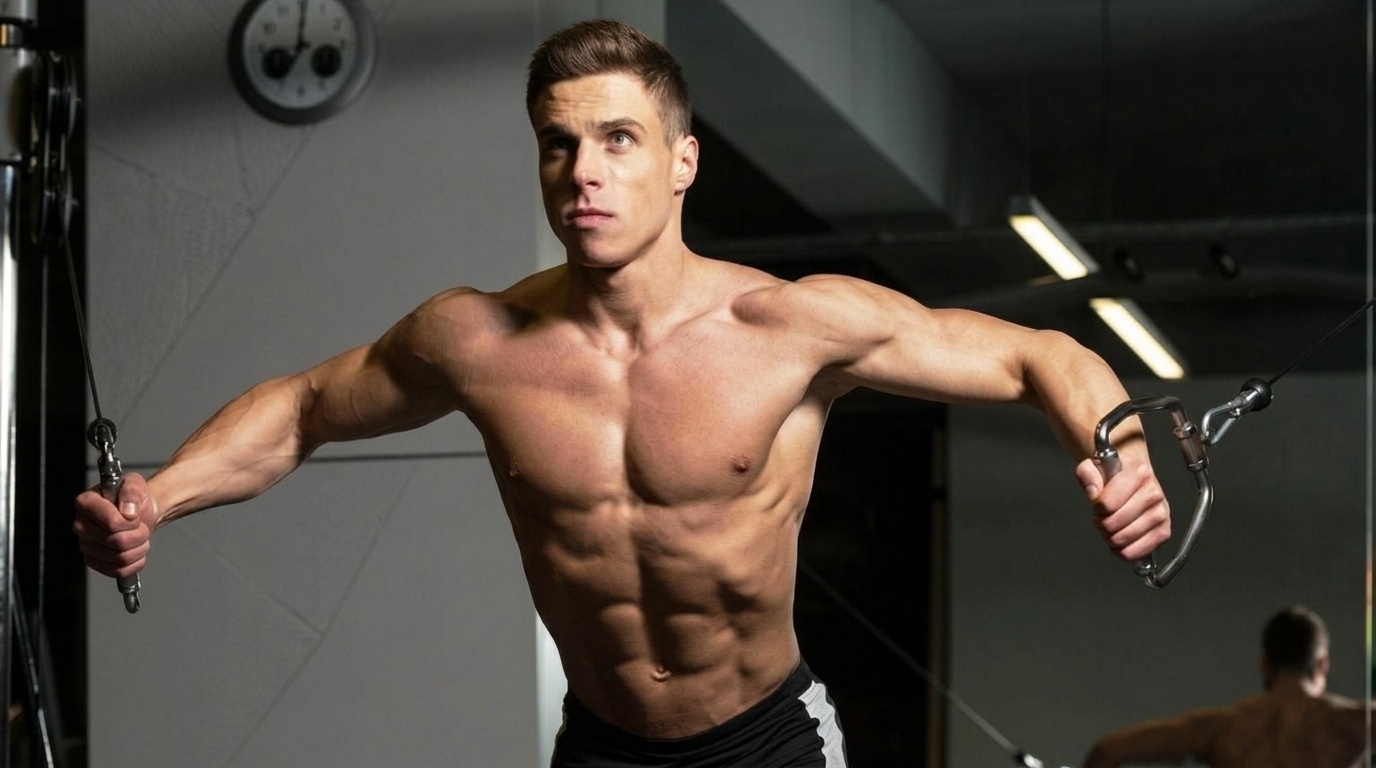
Follow these steps for a clean, effective rep.
Step 1: Grip the Handles and Step Forward
Grip a handle in each hand with an overhand or neutral grip. Step forward until you feel tension in the cables.
Your arms should be extended behind and above you, roughly in line with your ears. This is your starting position.
Step 2: Position Your Arms and Engage Your Core
Bring your arms up and out so they're at roughly shoulder height. Keep a soft bend in your elbows throughout the movement. Pull your shoulders back and down.
Take a breath in, brace your core, and keep your chest lifted. You should feel a light stretch across your chest at this point.
Step 3: Bring the Handles Down and Across the Body
Exhale as you sweep both arms downward and inward. The movement should look like you're hugging a large tree. Keep the path smooth and controlled.
Aim to bring the handles together in front of your lower stomach or hip area. Think about squeezing your pecs together as the arms come inward.
Step 4: Squeeze the Chest at Peak Contraction
When your hands meet in front of you, pause for a moment. Hold the squeeze for one to two seconds.
This brief pause increases the time your chest is under tension and helps build the mind-muscle connection. Don't rush through this part.
Step 5: Return to the Starting Position With Control
Slowly let your arms travel back up and outward. Resist the weight as you return. Don't let the cables yank your arms back.
A slow, controlled return on every rep is just as important as the downward motion. Reset and repeat.
Proper Form Tips for Maximum Chest Activation
Small form adjustments can make a real difference in how well your chest engages during this movement.
- Never lock your elbows straight during the movement. Keep a soft bend throughout the entire rep to protect your joints and keep tension on the chest.
- Avoid letting your shoulders roll forward as this is one of the most common errors. Pull your shoulder blades back and keep your chest tall throughout the set.
- Going too wide puts stress on the shoulder while going too narrow limits the stretch. Find a comfortable middle range where you feel both a good stretch and a strong squeeze.
- Think of your arms as hooks rather than levers when pulling the cables down. This mental shift helps your chest do the work instead of your arms taking over.
- Before each set, place your hand on your lower chest and feel it contract. During the movement, keep your focus on your pecs doing the pulling for better muscle activation and faster results.
Common High to Low Cable Fly Mistakes
These mistakes are easy to make and easy to fix once you know what to look for.
Choosing More Weight Than You Can Control
Heavy weight looks impressive, but it leads to sloppy form. When the weight is too heavy, other muscles compensate.
You lose chest activation and risk injury. Drop the weight and prioritize the quality of each rep. Your chest will respond much better.
Turning the Exercise Into a Press
Some people bend their elbows more than needed and start pushing the handles forward like a press. This recruits the triceps and reduces chest involvement.
The arms should stay in a wide, arc-like path. Keep that consistent elbow bend and avoid any pressing motion.
Relying on Momentum
Swinging the body or using a jerky motion to move the weight defeats the purpose of the exercise. Every rep should be slow and deliberate.
If you need momentum to complete a rep, the weight is too heavy or you've done too many reps. Stop before form breaks down.
Allowing Excessive Lower Back Arch
Arching the lower back is usually a sign that the weight is too heavy or that the core isn't engaged.
Excessive arching puts strain on the spine and shifts tension away from the chest. Keep the core tight throughout every single rep to protect your back.
Losing Tension at the Top of the Movement
Some people let the cables go slack at the top of the movement when returning to the start. This removes tension from the chest and reduces the training effect.
Always maintain light resistance in the cables, even at the very top of the rep. Control the return every time.
High to Low Cable Fly Variations
Once you've got the standard version down, these options keep your training fresh.
Single-Arm High to Low Cable Fly
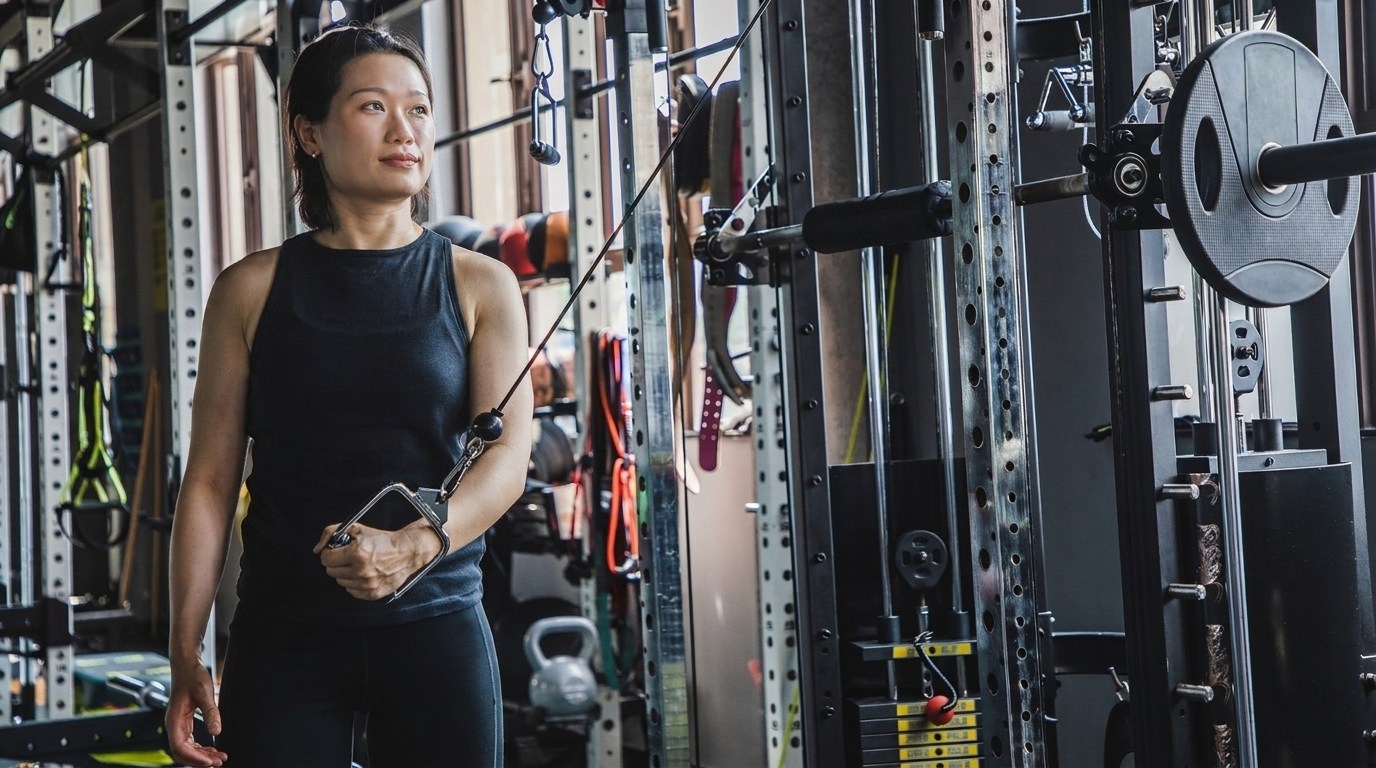
Use one arm at a time. This helps correct muscle imbalances between your left and right pec. It also forces your core to work harder to resist rotation.
Start with your weaker side first and match the reps on both sides.
Kneeling High to Low Cable Fly
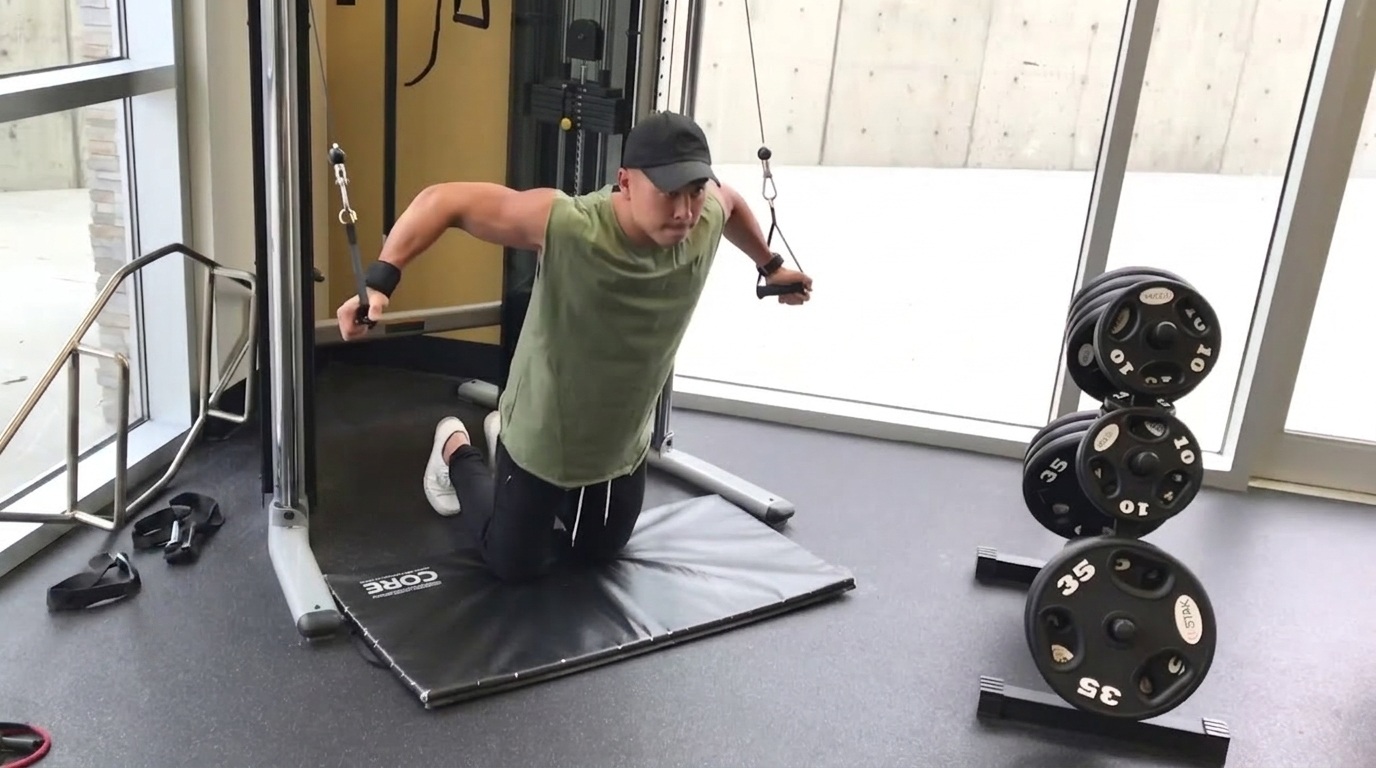
Perform the exercise from a kneeling position. This removes the lower body completely and places all the stability demand on your core and upper body.
It's a great way to increase focus on the chest while reducing any tendency to lean or sway.
Resistance Band High to Low Fly
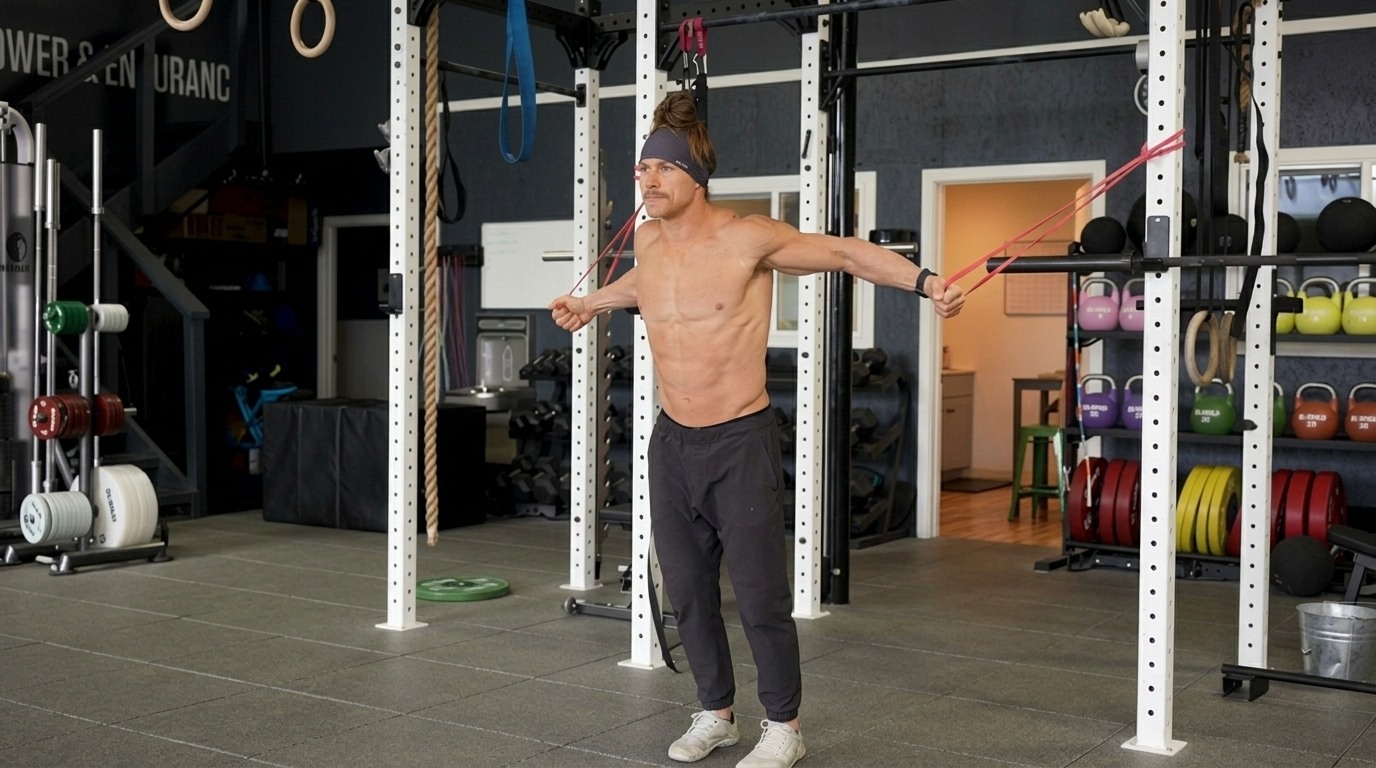
No cable machine? Anchor a resistance band at the top of a door or secure post. The mechanics are the same.
Bands provide a different feel than cables, with increasing tension as you pull down. This is a solid option for home training.
Seated Cable Fly Variation
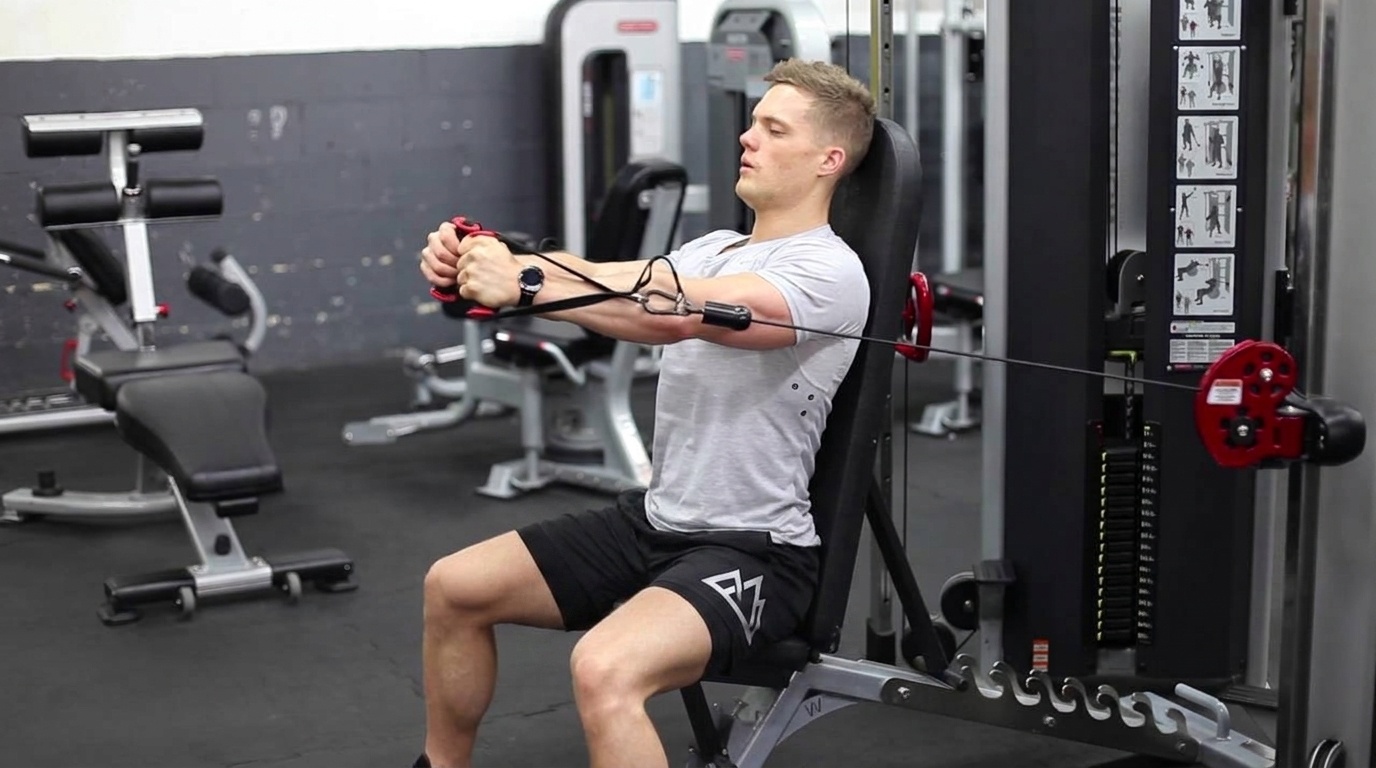
Sit on a bench placed between two cable towers. Set the pulleys high and perform the fly from a seated position. This locks your body in place and removes any chance of swaying.
It's a good option if you want to isolate the chest with minimal body involvement.
High to Low Cable Fly vs Other Chest Fly Variations
Each variation targets a different part of the chest. Here's a quick side-by-side look to help you choose the right one.
| Variation | Pulley Position | Primary Target | Key Advantage | Best For |
| High to Low Cable Fly | Set at the top | Lower chest | Pulls downward to hit lower pec fibers directly | Building lower chest definition |
| Standard Cable Fly | Set at mid-height | Middle chest | Straight across movement for overall chest work | General chest development |
| Low to High Cable Fly | Set at the bottom | Upper chest | Upward arc activates upper pec fibers | Improving upper chest fullness |
| Dumbbell Fly | No pulley needed | Middle chest | Free range of motion, no machine required | Home or dumbbell-only workouts |
Quick tip: Cable flies hold tension across the full range of motion. Dumbbell flies lose that tension when the weights meet at the top. For pure chest isolation, cables have the edge.
Best Sets, Reps, and Training Frequency
Programming matters just as much as exercise selection.
Training for Muscle Growth
For size, aim for 3 to 4 sets of 10 to 12 reps. Use a weight that makes the last 2 reps challenging but still controllable. Rest for 60 to 90 seconds between sets.
This rep range and rest period is well-supported for hypertrophy.
Training for Muscular Endurance
For endurance, use a lighter weight and perform 3 sets of 15 to 20 reps. Rest periods can be shorter, around 45 to 60 seconds.
This builds stamina in the chest muscles and improves their ability to sustain effort over time.
Where to Place It in Your Chest Workout
The high to low cable fly is an isolation exercise. It works best near the end of your chest workout, after your compound lifts like the bench press or dips.
This way, your chest is already warmed up and partially fatigued, and the fly can finish the job with focused muscle activation.
Conclusion
I've been doing the high to low cable fly for a while now, and it's genuinely one of those moves that changed how my chest looks. If your lower chest feels flat or underdeveloped, this exercise is worth your time.
Start with a lighter weight, focus on your form, and feel the difference in your chest with every rep. Give it a few weeks and you'll notice the results.
Try it in your next chest session and let me know how it goes in the comments. Share this post if it helps!
Frequently Asked Questions
Is the high to low cable fly good for beginners?
Yes, it is beginner-friendly as long as you start with a light weight. Focus on learning the movement pattern before adding more load.
How many times a week should I do this exercise?
Once or twice a week is enough. Your chest needs time to recover, so avoid doing this exercise on back-to-back days.
Can I do this exercise without a cable machine?
Yes. A resistance band anchored at a high point works well as a substitute. The movement and muscle activation are very similar.
Should my hands touch at the bottom of the movement?
They can, but it's not required. What matters most is feeling a strong contraction in your lower chest at the bottom of the arc.
Why do I feel this more in my shoulders than my chest?
This usually means your shoulders are rolling forward or you're using too much weight. Focus on keeping your chest up, pulling your shoulder blades back, and reducing the weight until your form is solid.