
I have coached many clients on shoulder training. The one exercise that consistently improved their shoulder width was the seated lateral raise.
Most of them were doing the standing version wrong, using momentum instead of muscle. Switching to seated changed everything.
In this blog, I cover exactly how the seated lateral raise works, which muscles it hits, step-by-step form, the best variations, and a full sample shoulder workout.
I also explain why lighter weight builds more muscle here than going heavy ever will.
If your shoulders feel stuck or you just want to train smarter, this guide gives you everything you need to start seeing results.
What Is the Seated Lateral Raise?
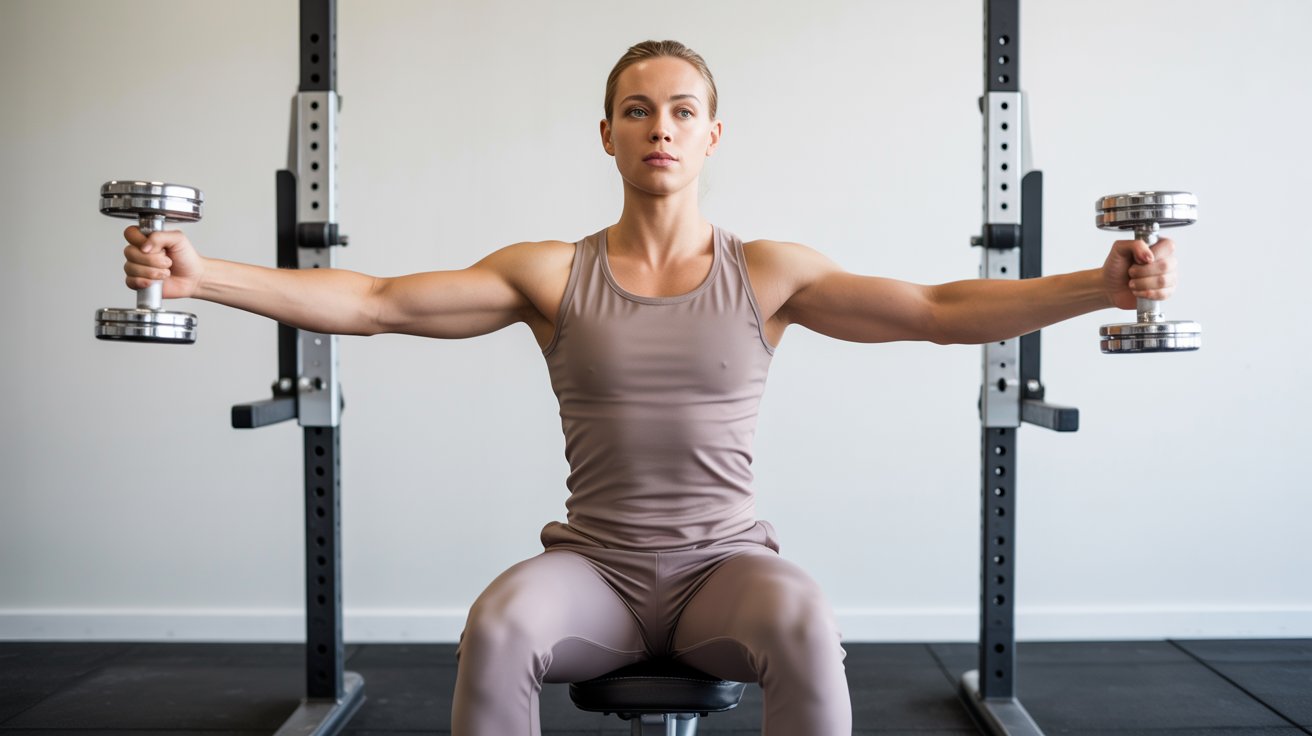
The seated lateral raise is a dumbbell shoulder exercise performed while sitting upright on a bench.
You raise both arms out to the sides until they reach shoulder height, then lower them with control.
Sitting removes all body movement. No leg drive, no lower back swing. The shoulder does the work from the first rep to the last.
That is exactly what makes this version more effective for muscle isolation than the standing variation.
Seated Lateral Raise Muscles Worked

The primary target is the lateral deltoid. This is the outer portion of the shoulder that creates a wide, rounded shape when developed.
Supporting muscles include:
- Anterior deltoid: assists during the upward phase
- Trapezius: stabilizes the shoulder blade
- Rotator cuff: protects the shoulder joint throughout the movement
- Core and lower back: maintain upright posture during every set
The seated lateral raise keeps tension on these muscles longer because there is no swinging to cut the effort short.
How to Do the Seated Lateral Raise Correctly
Starting position: Sit on a flat bench with feet flat on the floor. Hold a dumbbell in each hand. Let your arms hang by your sides with a slight elbow bend. Sit tall with your chest lifted and shoulders relaxed.
The lift: Raise both arms out to the sides. Lead with your elbows. Stop when your arms are parallel to the floor. Do not go above shoulder height.
Range of motion: Shoulder height is your ceiling. Going higher shifts load off the deltoid and onto the traps.
Breathing: Exhale as you lift. Inhale as you lower. Keep the breath steady.
Mistakes to avoid:
- Using too much weight and letting the torso rock
- Shrugging at the top of each rep
- Bending the wrists instead of keeping them neutral
- Rushing through reps without any control on the way down
Seated Lateral Raise Video Guide (EMBED VIDEO)
https://youtube.com/shorts/NZsldrqqca8?si=IqRAtwJGAf7YjNyB
For a clear visual breakdown of the seated lateral raise, I recommend watching Jeff Nippard or Jeremy Ethier on YouTube.
Both coaches explain the biomechanics in detail and show exactly what proper form looks like from multiple angles.
What to observe while watching:
- The angle of the elbows throughout the movement
- Where the arms stop at the top
- How slowly the dumbbells come back down
- Whether the torso stays completely still
Pay close attention to the lowering phase. Most people rush it. The controlled descent is where a significant amount of muscle work happens.
Watch it in 0.25x speed if possible and compare it to your own form on video.
Why Lighter Weight Works Better for the Seated Lateral Raise
This is something I had to learn the hard way. I used to grab the heaviest dumbbells I could manage. My traps grew. My lateral delts did not.
Here is why lighter weight wins for the seated lateral raise:
The lateral deltoid is a relatively small muscle. It does not need heavy load. It needs tension, time, and control. When you go too heavy, your traps and upper back take over. The deltoid barely fires.
Time under tension matters here more than weight. A set of 15 reps with a 2-second lift and 3-second lower gives the lateral deltoid more work than a heavy set of 6 rushed reps ever could.
After coaching clients through this shift, I saw shoulder width improve faster with 8 to 10 pound dumbbells and strict form than with anything heavier. Go lighter. Feel the muscle working.
Seated Lateral Raise Benefits for Shoulder Growth
- Strict isolation of the lateral deltoid with no momentum
- Reduced lower back strain compared to the standing version
- More time under tension per set due to the fixed position
- Better mind-muscle connection because distractions are removed
- Suitable for people with lower back issues or balance limitations
The seated position forces honesty. You cannot cheat the rep. That is exactly why it produces better results for shoulder growth over time.
Seated vs Standing Lateral Raise
Both movements target the lateral deltoid. The difference is in how strictly the deltoid has to work.
Standing allows a small amount of momentum. Some lifters use this to handle more weight. But more weight with less control usually means less deltoid activation.
Seated keeps everything locked. The shoulder has nowhere to hide.
For pure muscle building, the seated lateral raise wins. For building strength or training with more load, the standing version has value.
For beginners especially, seated is the smarter starting point.
Common Seated Lateral Raise Mistakes and How to Fix Them
- Going too heavy: Drop the weight. Pick a dumbbell you can control for 15 clean reps.
- Shrugging at the top: Think about keeping your traps low and letting your elbows lead the movement.
- Wrist collapse: Keep the wrist flat or angled slightly down, like you are pouring a glass of water.
- Rushing the lowering phase: Take 3 seconds to bring the arms down. That part of the rep builds muscle too.
- Not reaching shoulder height: Your arms should be parallel to the floor at the top. Not below, not above.
Best Variations of the Seated Lateral Raise
Seated dumbbell lateral raise: The standard version. Best place to start.
Seated cable lateral raise: The cable provides constant tension throughout the movement. Great for muscle growth.
Single-arm seated lateral raise: Train one side at a time. Useful for correcting strength imbalances.
Leaning seated lateral raise: Sit on the edge of a bench and lean slightly to one side. This increases stretch on the deltoid at the bottom.
Machine lateral raise (seated): Lower injury risk, consistent resistance, and good for beginners learning the movement pattern.
Pro Tips to Maximize Results from Seated Lateral Raises
- Keep reps between 12 and 20. Deltoids respond well to moderate weight and higher volume.
- Add a one-second pause at the top of each rep to increase tension.
- Train shoulders twice per week. Deltoids recover faster than larger muscle groups.
- Focus on the mind-muscle connection. Think about the outer shoulder lifting the arm, not just moving weight.
- Progress by adding reps before adding weight. Form comes first.
Who Should Do the Seated Lateral Raise?
This movement works for a wide range of people.
Beginners benefit from the stability of being seated while learning shoulder isolation. Intermediate lifters use it as their main lateral delt builder.
People with lower back problems can train shoulders without spinal load. Athletes building shoulder width and joint stability will get direct benefit from the movement.
If you have an existing shoulder injury, speak with a physiotherapist before starting.
Sample Shoulder Workout Featuring the Seated Lateral Raise
The seated lateral raise sits in the middle of this workout intentionally.
- Barbell or dumbbell overhead press: 4 sets x 8 to 10 reps
- Seated lateral raise: 3 sets x 15 reps
- Cable front raise: 3 sets x 12 reps
- Seated cable lateral raise: 3 sets x 15 reps
- Rear delt fly: 3 sets x 15 reps
- Face pull: 3 sets x 15 reps
Your shoulders are warm, your form is sharp, and you still have enough energy to do it right.
Conclusion
The seated lateral raise is not just another shoulder exercise. It is one of the most effective tools for building real shoulder width when done with the right form and the right intent.
I have seen it work for complete beginners and experienced lifters.
The pattern is always the same: lighter weight, slower reps, full control, and consistent effort over weeks.
Stop chasing heavy numbers on lateral raises. Start chasing the feeling of the muscle working.
Add the seated lateral raise to your next shoulder session. Focus on form over everything else. Give it four weeks and watch what happens.
Now I want to know. Which variation of the seated lateral raise are you trying first in your next workout? Try it and come back to tell me which one burned the most.
Frequently Asked Questions
How often should I do the seated lateral raise each week?
Two times per week works well for most people. Deltoids recover quickly, and training them twice gives you more volume without overloading the joint.
What weight should beginners use for the seated lateral raise?
Start with 5 to 8 pounds. The goal is to feel the outer shoulder working through the full range of motion, not to lift as heavy as possible.
Is the seated lateral raise safe for people with shoulder injuries?
It carries less risk than overhead pressing, but any shoulder discomfort should be assessed by a physiotherapist before you continue training that movement.
How many reps should I do per set for the seated lateral raise?
Aim for 12 to 20 reps per set. Deltoids respond better to moderate weight and higher rep ranges than to heavy, low-rep training.
Can I replace the standing lateral raise with the seated version?
Yes. The seated lateral raise works the same muscles with stricter form and less chance of using momentum, making it a solid replacement for most training goals.