Your shoulders ache. Your upper back feels tight. Stretching helps for a while, but the pain keeps coming back.
This article covers 9 scapular retraction exercises that can fix that. I will show you exactly how to do each one with clear steps and simple tips. No fluff. Just real, useful guidance.
I have used these myself after long hours at a computer. My upper back used to feel stiff and heavy by midday. With a little consistency, these exercises can do the same for you.
What Is a Scapular Retraction Exercise?

A scapular retraction exercise pulls your shoulder blades toward the center of your back. You squeeze the muscles between the blades together.
Most people never train in this area. Yet it controls how your shoulders sit, how you stand, and how well your arms move.
Weak muscles here cause your shoulders to roll forward and your upper back to round.
Retraction pulls the blades toward your spine.
Protraction spreads them forward. Most people are stuck in protraction all day from sitting and screens. Training retraction brings balance back.
The main muscles involved are the rhomboids, middle trapezius, lower trapezius, and serratus anterior.
When they are weak, your head drops forward, your chest tightens, and your lower back takes extra strain.
Training these muscles fixes poor posture at the source. For desk workers, this is not optional. It is a basic need.
9 Scapular Retraction Exercises With Visual Guidance
Nine proven exercises to train your shoulder blades safely, with clear steps and tips for every level.
1. Standing Wall Angels

A full range shoulder blade exercise that keeps your spine honest throughout every rep.
What it does: Trains the full range of shoulder blade movement while keeping your spine in check.
Step 1: Stand with your back flat against a wall, feet about six inches away.
Step 2: Press your lower back, upper back, and head into the wall.
Step 3: Raise your arms into a W shape, elbows bent against the wall.
Step 4: Slowly slide your arms up into a Y shape overhead.
Step 5: Lower back to the W. That is one rep.
Reps: 10 to 15 reps, 2 to 3 sets.
2. Seated Scapular Retraction Exercise

The simplest starting point for beginners and anyone sitting at a desk all day.
What it does: Isolates the shoulder blades with no equipment needed.
Step 1: Sit upright on a chair with feet flat on the floor.
Step 2: Relax your arms at your sides.
Step 3: Pull your shoulder blades together as if holding a pencil between them.
Step 4: Hold for two seconds.
Step 5: Slowly release. That is one rep.
Reps: 15 reps, 3 sets.
3. Band Scapular Retraction Exercise

A light resistance option that builds muscle without overloading the joint.
What it does: Adds gentle load to the retraction movement using a resistance band.
Step 1: Attach a band at chest height to a door or post.
Step 2: Hold one end in each hand and step back until there is light tension.
Step 3: Start with arms extended, palms facing each other.
Step 4: Pull your arms back, squeezing your shoulder blades together.
Step 5: Hold for two seconds, then return slowly.
Reps: 12 to 15 reps, 3 sets.
4. Face Pull Scapular Retraction

A go-to exercise for rear deltoids, upper traps, and shoulder blade strength combined.
What it does: Works the rear deltoids and upper traps alongside the scapular retractors.
Step 1: Attach a rope handle to a cable or band at face height.
Step 2: Hold the ends with thumbs pointing back.
Step 3: Pull the rope toward your face, spreading your hands apart as you pull.
Step 4: Finish with hands beside your ears and blades pulled in.
Step 5: Return slowly to the start.
Reps: 12 to 15 reps, 3 sets.
5. Prone Y Raise Retraction Exercise

A small but demanding movement that targets the often neglected lower trapezius.
What it does: Targets the lower trapezius, one of the weakest parts of the scapular system.
Step 1: Lie face down on a bench or the floor.
Step 2: Hold your arms straight above your head in a Y position.
Step 3: Lift your arms slightly while squeezing your shoulder blades down and in.
Step 4: Hold for two seconds at the top.
Step 5: Lower slowly. That is one rep.
Reps: 10 to 12 reps, 2 to 3 sets.
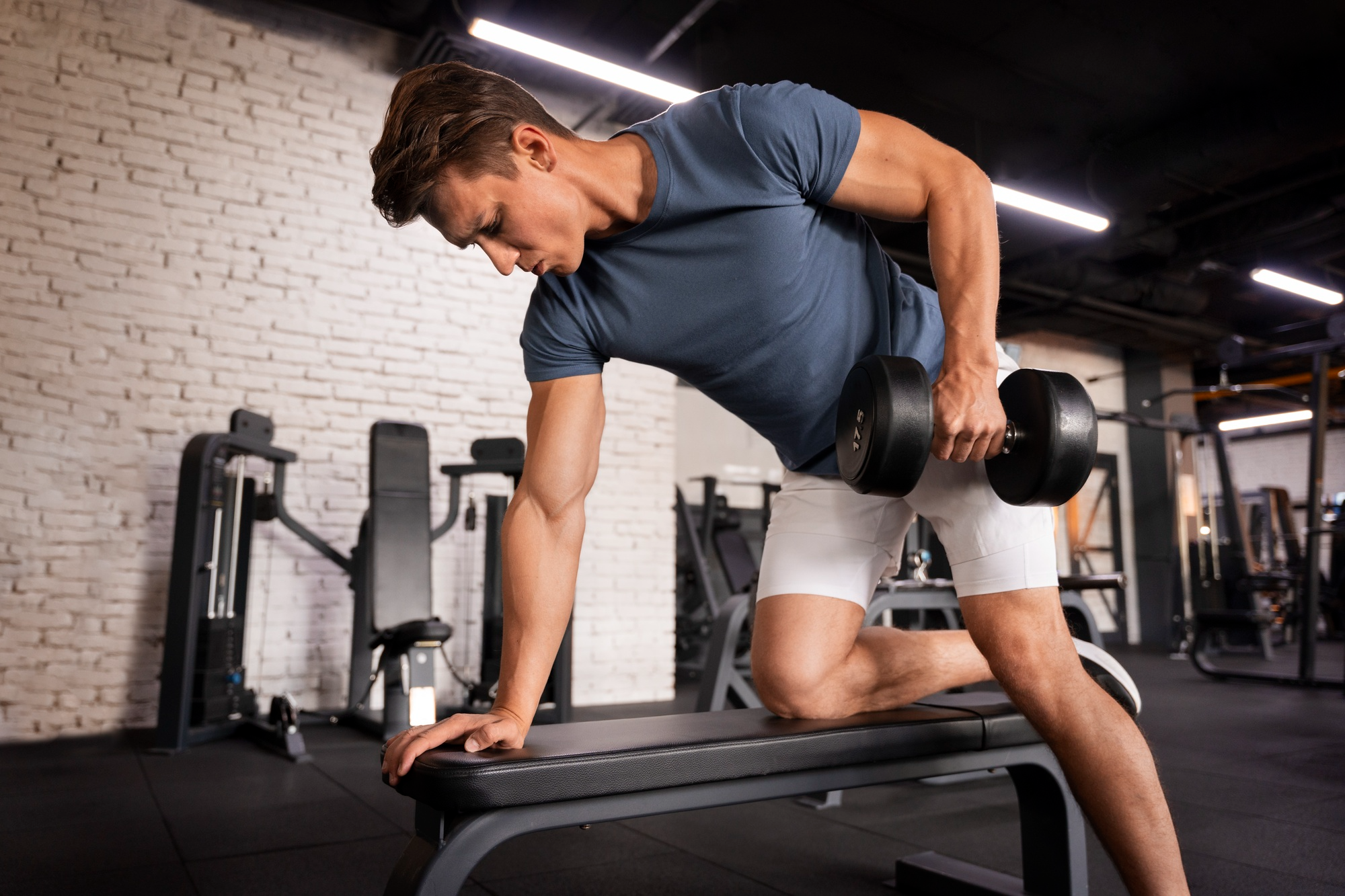
6. Bent-Over Row Retraction Exercise

A compound movement that builds the whole back when done with a retraction focus.
What it does: Builds the entire back while training the shoulder blades to squeeze and hold.
Step 1: Hold a dumbbell in each hand and hinge forward at the hips, back flat.
Step 2: Let your arms hang straight down.
Step 3: Pull the weights toward your hips, squeezing the blades at the top.
Step 4: Hold the squeeze for one second.
Step 5: Lower slowly and repeat.
Reps: 10 to 12 reps, 3 sets.
7. Inverted Row Scapular Retraction

A bodyweight exercise that works for beginners and experienced lifters alike.
What it does: Uses your own body weight to build scapular strength and control.
Step 1: Set a bar at waist height in a rack or use a sturdy table.
Step 2: Lie under it and grab it with both hands, shoulder-width apart.
Step 3: Keep your body straight from head to heels.
Step 4: Pull your chest to the bar, squeezing the blades at the top.
Step 5: Lower slowly back down.
Reps: 8 to 12 reps, 3 sets.
8. Prone Scapular Squeeze
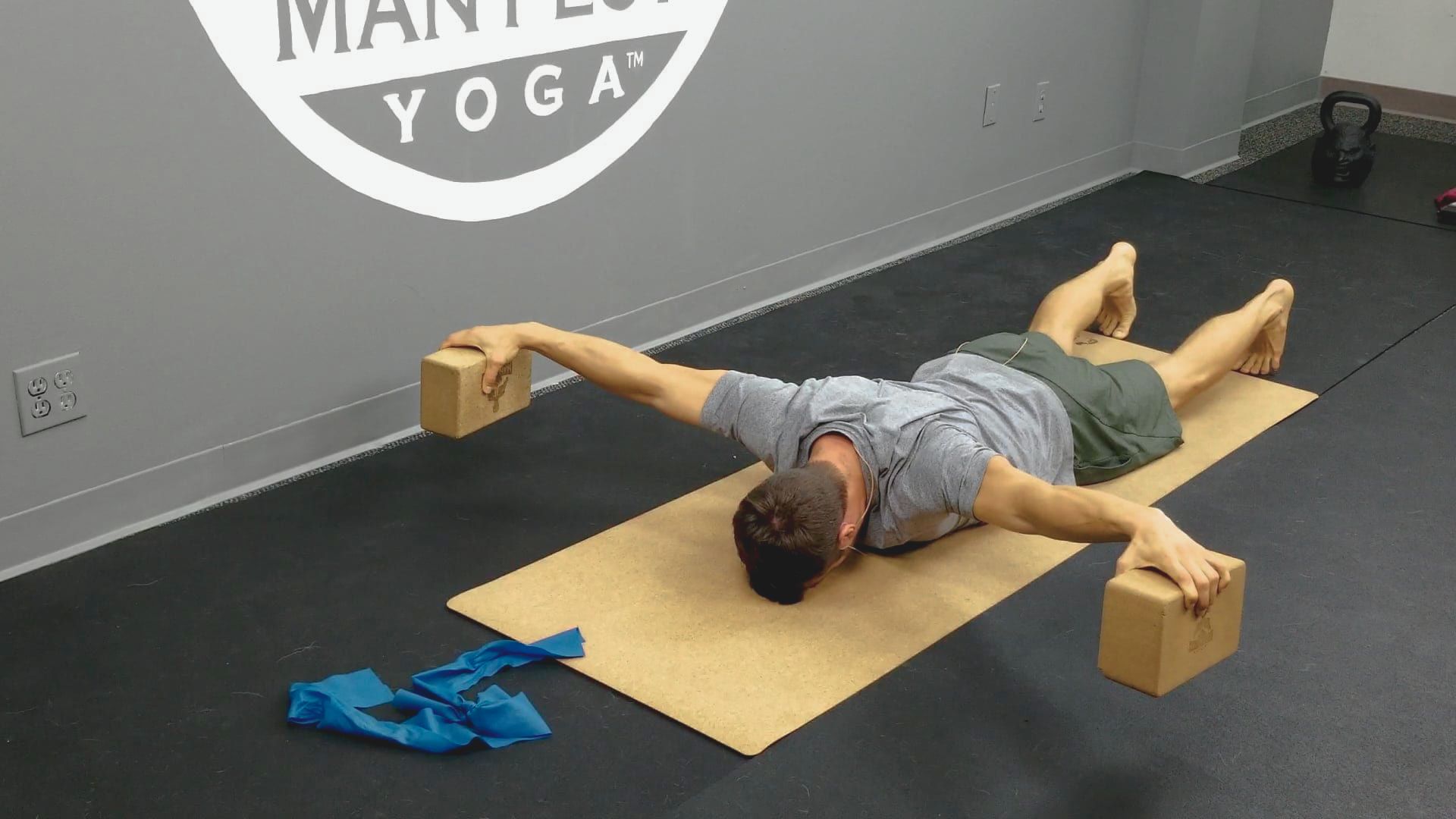
A pure isolation move that trains the blades directly with no arm movement at all.
What it does: Activates the muscles between the shoulder blades without using the arms.
Step 1: Lie face down on the floor or a bench.
Step 2: Rest your arms at your sides or slightly out.
Step 3: Without moving your arms, squeeze your shoulder blades together.
Step 4: Hold for three seconds.
Step 5: Release fully and repeat.
Reps: 15 reps, 3 sets.
9. Resistance Band External Rotation

A shoulder health essential that pairs rotator cuff training with scapular retraction.
What it does: Targets the rotator cuff alongside the scapular retractors for full shoulder health.
Step 1: Stand holding a band in both hands, elbows bent at 90 degrees.
Step 2: Keep your elbows pinned to your sides throughout.
Step 3: Rotate your hands outward, away from your body.
Step 4: As you rotate, pull your shoulder blades back.
Step 5: Return slowly and repeat.
Reps: 15 reps, 3 sets.
Benefits of Scapular Retraction Exercise

Adding these exercises to your routine builds real strength, keeps your shoulders stable, and fixes posture from the inside out.
Improves Upper Back Strength
Most exercises skip the muscles between your shoulder blades entirely.
The muscles between your shoulder blades are often the weakest part of your back. Scapular retraction targets these ignored muscles directly.
Over time, this builds a stronger upper back and lowers the risk of injury during rows, pull-ups, and overhead pressing.
Enhances Shoulder Stability and Mobility
Strong scapular muscles keep your shoulder joint safe and moving freely.
Your shoulder joint is highly mobile but can become unstable easily. Strong scapular muscles act as an anchor.
They keep the joint safe during movement. Many people find their shoulder feels freer and less painful once they start training in this area.
Supports Better Posture and Alignment
Pulling the blades back brings the chest up and the head into the right position.
Pulling the blades back brings the chest up and the head back into position. Good posture affects how you breathe, how much energy you have, and how much back pain you feel.
Regular training here creates lasting postural change.
Tips to Get Better Results From Scapular Retraction Exercises
Simple, effective tips to help you get more from your training without overcomplicating your routine.
- Feel the muscle first. Before each set, place your hand between your shoulder blades. As you move, try to feel the muscles contract under your hand. This shifts focus from your arms to your back.
- Start light. Do not jump straight to heavy weights or stiff bands. Master the movement with no resistance first. Add load only once you can clearly feel and hold the blade squeeze.
- Control every rep. Slow, controlled reps beat fast, sloppy ones every time. Squeeze at the top and lower with control. Rushing through reps wastes the effort.
- Stop if it hurts. Mild muscle burn is normal. Sharp pain in the joint, shoulder, or neck is not. Reduce your range of motion or try a gentler variation if something feels wrong.
- Progress gradually. Increase reps, sets, or resistance one step at a time. If your form breaks down at any point, drop the load and rebuild the movement from scratch.
Conclusion
Sitting all day and feeling your shoulders curl forward is frustrating. I have been there. My upper back used to feel tight and stiff by midday.
These nine scapular retraction exercises gave me a real fix. Not overnight, but steadily. Start with two or three, stay consistent, and give your body time to respond.
Have you tried any of these before? Drop a comment below and share what worked for you. If this helps, share it with someone dealing with shoulder or posture pain.
Frequently Asked Questions
Are scapular retraction exercises suitable for beginners?
Yes. Start with simple bodyweight movements like the seated squeeze or wall angels before adding any resistance.
Can I do scapular retraction exercises at home?
Absolutely. Most of these exercises need no equipment. A resistance band is optional, not required.
Do these exercises help with posture pain?
Yes. Strengthening the muscles between the shoulder blades pulls the shoulders back and reduces neck and upper back tension over time.
How long before I see results?
Most people notice better posture awareness within two to three weeks. Strength and pain relief typically follow within four to eight weeks.
Can I do these exercises every day?
Light movements like the seated squeeze are fine daily. More demanding exercises like rows need a rest day in between for proper recovery.