I used to skip lat work completely because I had no gym access. Bands felt like a backup plan. Not a real workout.
Then I tried the banded lat pulldown. That opinion changed fast.
My back got stronger. My posture improved. And I did it all from home with one resistance band. If you want a stronger back but don't have a cable machine, this works.
In this blog, I'll cover what the banded lat pulldown is, which muscles it works, how to do it with proper form, and the best variations to try. You'll also get tips to actually feel your lats working.
Simple. Effective. No gym needed.
What Is a Banded Lat Pulldown?
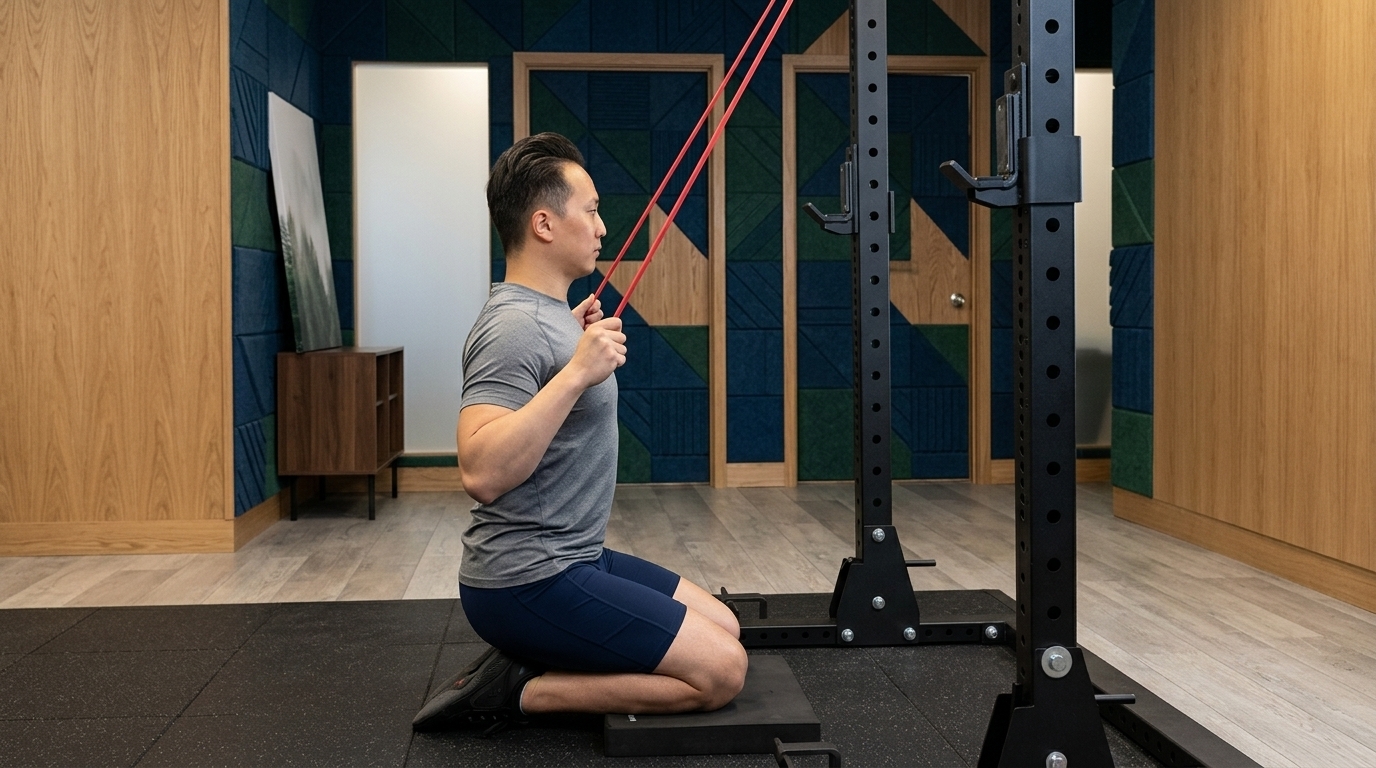
The banded lat pulldown is a resistance band version of the classic cable lat pulldown exercise.
You anchor a resistance band above your head, then pull it down toward your chest while keeping your elbows moving toward your sides.
It targets the latissimus dorsi, the large muscles that run along both sides of your back. This exercise builds width and thickness in the upper back.
It works well for beginners, people training at home, and anyone recovering from shoulder issues. The band provides smooth, joint-friendly resistance throughout the full range of motion.
Equipment Needed: Banded Lat Pulldown
Here is what you need.
- A resistance band
- An anchor point above your head, such as a pull-up bar, door anchor, or sturdy beam
- Enough space to sit or kneel comfortably underneath it
How to Do a Banded Lat Pulldown: Step-by-Step
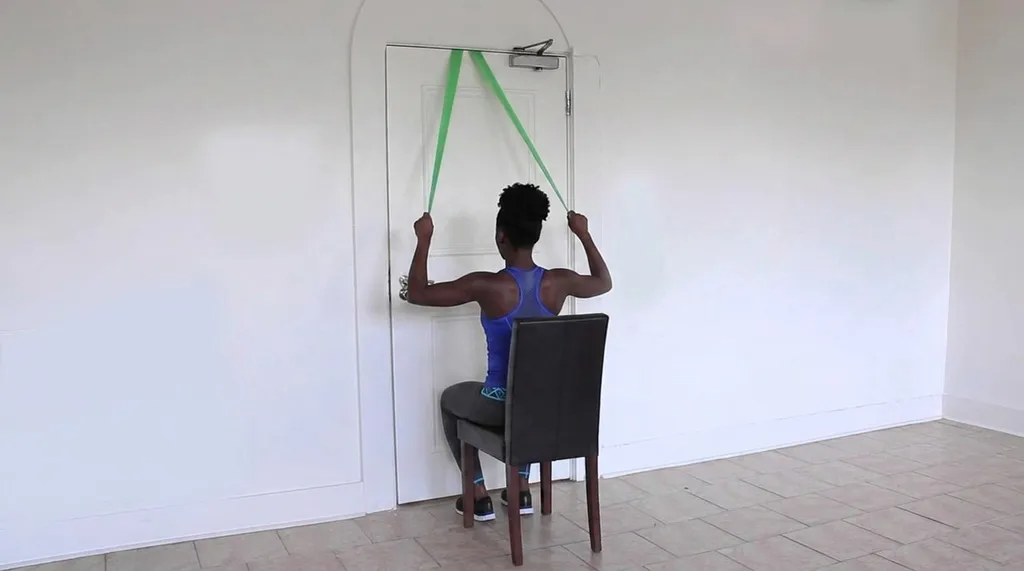
Follow these steps in order and you will feel the right muscles working from your very first rep.
1. Secure the Band Overhead
Loop your resistance band around a pull-up bar, door anchor, or any fixed overhead point. Give it a firm tug before you start.
The anchor needs to hold steady throughout the entire set. If it moves or slips, your form will break down and the exercise won't be effective.
2. Assume the Correct Starting Position
Sit or kneel directly under the anchor point. Reach up and hold the band with both hands, slightly wider than shoulder-width apart.
Your arms should be fully extended above you. Keep your back straight from the start. This is your base position for every single rep.
3. Brace Your Core and Keep Your Chest Up
Before you pull, take a breath and tighten your core. Lift your chest slightly. This protects your lower back and puts your upper body in the right position to pull effectively.
A soft chest or a rounded back means your lats won't fire the way they should.
4. Pull Your Elbows Down Toward Your Sides
Drive your elbows down and back, not your hands. Think about pulling your elbows into your back pockets. This is the cue that most people miss.
When you focus on the elbows, the lats do the work. When you focus on the hands, the biceps take over.
5. Squeeze Your Lats at the Bottom
When your elbows reach your sides, pause for one full second. Squeeze your lats hard at this point. Hold it.
This contraction is where the real muscle-building happens. Most people skip this part and lose half the benefit of the exercise.
6. Return Slowly to the Starting Position
Let the band pull your arms back up slowly and with control. This part of the movement is called the eccentric phase.
It builds just as much muscle as the pull-down. Take two to three seconds to return to the top. Then repeat.
Benefits of the Banded Lat Pulldown
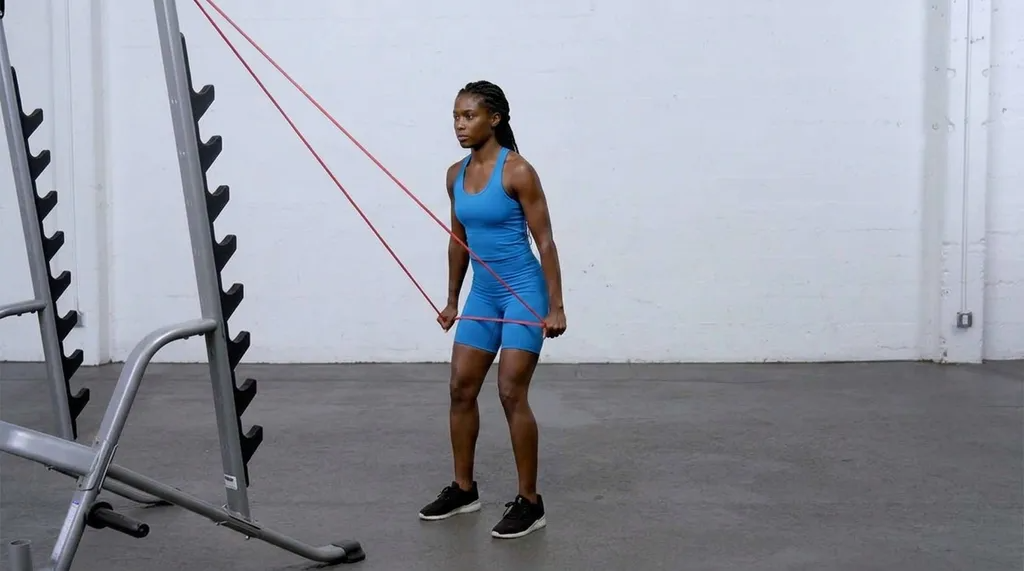
ALT EXT: A person is performing Loop Band Straight-Arm Pull Down
Adding this move to your routine comes with real, practical benefits that go beyond just building muscle.
Builds Stronger and Wider Lats
The lats are the largest muscles in your back. Training them directly makes your upper body look broader and feel stronger.
The banded lat pulldown hits them through a full range of motion. Over time, consistent reps build real width and thickness.
Improves Posture and Upper-Back Strength
Weak lats and upper back muscles lead to rounded shoulders and poor posture. The banded lat pulldown strengthens the muscles that pull your shoulders back and keep your spine upright.
I noticed my posture improved after just a few weeks. If you sit at a desk all day, this exercise is one of the best things you can add to your routine.
Provides Progressive Resistance
Resistance bands get harder the more you stretch them. This means the banded lat pulldown gives you more resistance at the point where your muscles are working hardest.
You can also progress easily by switching to a thicker band. It is a simple way to keep challenging your muscles without needing heavier weights or expensive equipment.
Convenient for Home and Travel Workouts
You only need a resistance band and something sturdy to anchor it to. A door, a pull-up bar, or even a tree branch works fine.
This makes the banded lat pulldown one of the most convenient back exercises around. I use it when I travel and don't have gym access. It takes up almost no space and gets the job done.
Beginner-Friendly and Joint-Friendly
Bands are much gentler on the joints than free weights or cables. The resistance increases gradually, so there is no sudden jerk or load on the shoulder joint.
This makes the banded lat pulldown a great starting point for beginners or anyone coming back from an injury. You can focus fully on feeling the right muscles work without worrying about handling heavy weight.
Best Banded Lat Pulldown Variations
Once you have the basic move down, these variations keep your back training fresh and effective.
Single-Arm Banded Lat Pulldown
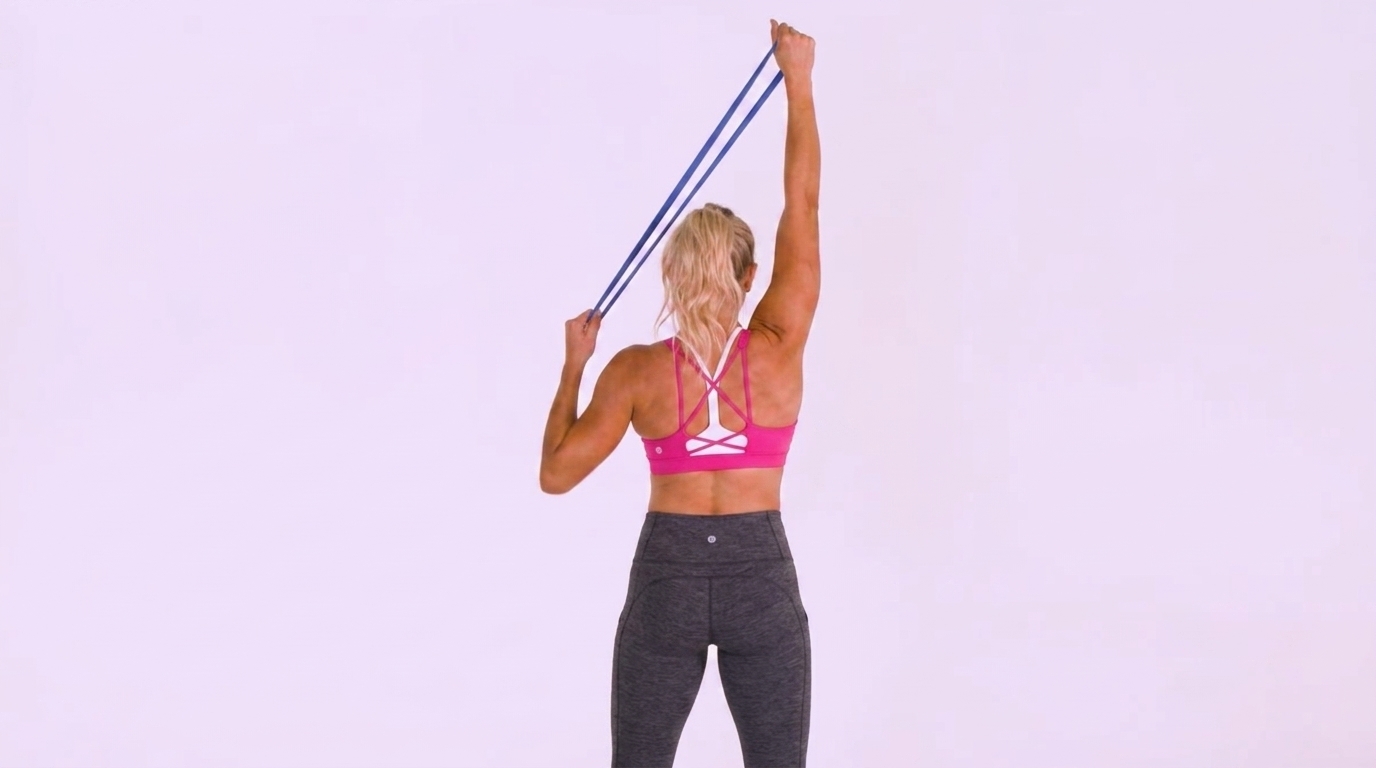
Hold the band with one hand and pull down on one side at a time. This forces each side of your back to work independently. It is great for fixing muscle imbalances.
If one side is weaker, this variation will show you quickly. Use the same elbow-driving cue and squeeze hard at the bottom of each rep.
Straight-Arm Banded Lat Pulldown

Keep your arms straight throughout the movement. Pull the band down from above your head to your hips without bending your elbows.
This isolates the lats more directly than any other variation. It also takes the biceps almost completely out of the movement. Start with a lighter band since this version is harder than it looks.
Kneeling Banded Lat Pulldown

Kneel on both knees directly under the anchor point. This position removes leg drive completely and forces your upper body to do all the work.
It also helps you keep a more upright torso. I find this variation really helps me feel the lats better than sitting. Try it if you struggle to feel the right muscles working.
Seated Banded Lat Pulldown

Sit on a chair or bench under the anchor point. This closely mimics the feel of a cable machine lat pulldown. It is a comfortable position that allows a good range of motion.
Keep your feet flat on the floor and your back straight. Lean back very slightly, just enough to create a natural chest-up position.
Lying Banded Lat Pulldown
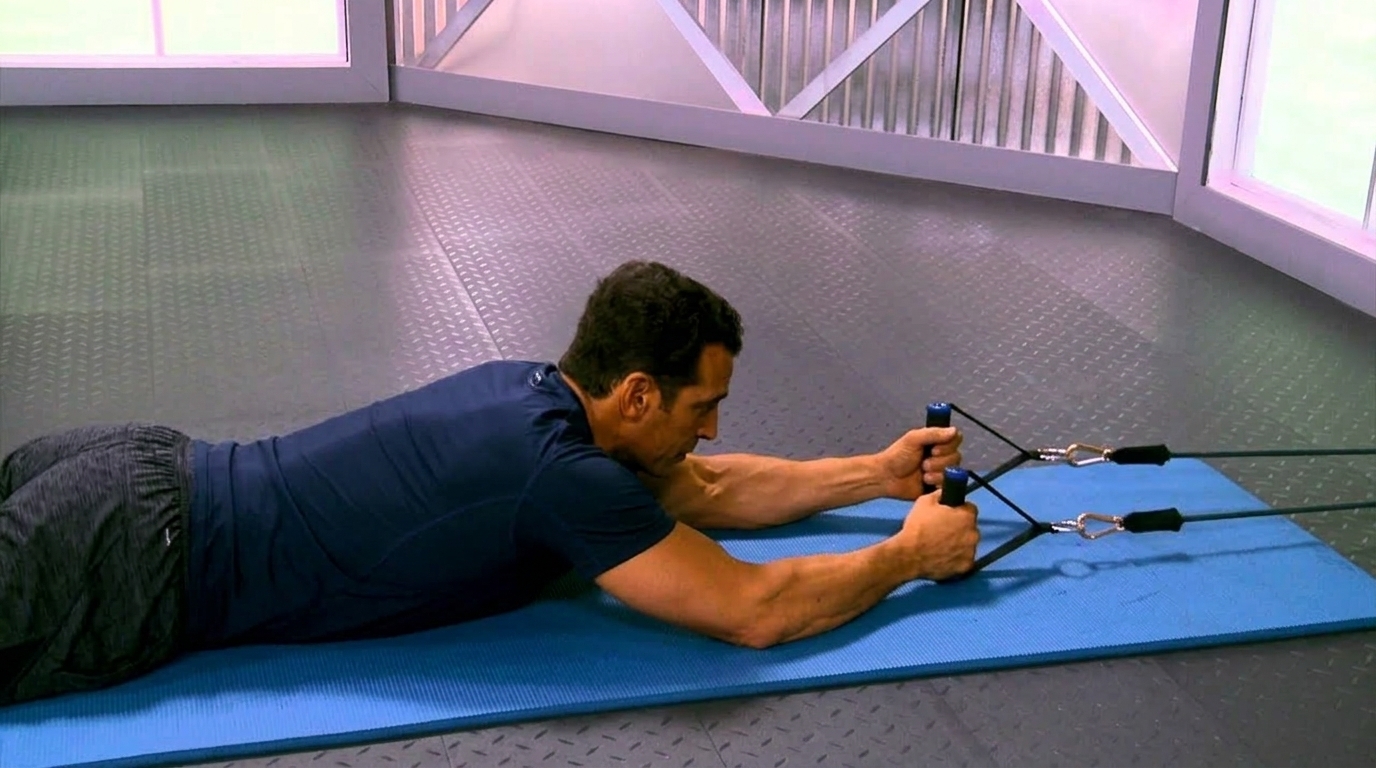
Lie on your back with the band anchored above your head. Pull the band down toward your hips while keeping your arms straight.
This variation stretches the lats fully at the top and gives a strong contraction at the bottom. It is one of the most underrated band exercises for back width.
Recommended Sets and Reps
Your sets and reps should match your current fitness level and goal.
For beginners: 3 sets of 10 to 12 reps. Focus on form over speed. Use a lighter band until the movement feels natural.
For building muscle: 3 to 4 sets of 12 to 15 reps. Use a band that makes the last two or three reps feel challenging. Rest 60 to 90 seconds between sets.
For endurance and tone: 3 sets of 15 to 20 reps with a lighter band. Keep rest periods short, around 45 seconds.
Form Tips for Better Lat Activation
Good form is the difference between feeling this in your lats or feeling it nowhere useful.
- Pull through your elbows, not your hands, to shift the work from your arms to your back.
- Keep your shoulders down and away from your ears throughout every single rep.
- Use a full range of motion, start with arms fully extended and finish with elbows at your sides.
- Control the return phase by taking two to three seconds to let the band back up slowly.
- Maintain a neutral spine throughout, no excessive arching or rounding forward at any point.
Conclusion
I started doing the banded lat pulldown when I had no gym and barely any equipment. Honestly, I did not expect much.
But my back got stronger, my posture improved, and I actually started feeling my lats for the first time.
If you have been skipping back work because you don't have a cable machine, this is your sign to start.
Pick one variation, nail your form, and stay consistent. Your back will respond.Try it this week and drop a comment below, I'd love to hear how it goes for you.
Frequently Asked Questions
Is the banded lat pulldown effective for building back muscle?
Yes, it directly targets the lats and builds real back width and strength with consistent training.
What band resistance should I start with?
Start with a light to medium band and focus on feeling the lats work before moving to heavier resistance.
Can I do banded lat pulldowns every day?
Two to three times per week is enough. Your muscles need rest to grow between sessions.
What can I use to anchor the band at home?
A pull-up bar, a sturdy door anchor attachment, or any fixed overhead point that holds firm works well.
Is the banded lat pulldown good for beginners?
Yes, it is one of the most beginner-friendly back exercises because the band provides smooth, controlled resistance.