
I spent months curling heavy and still had a flat-looking bicep. No peak. No pop from the side. Then I figured out the real problem. I wasn’t targeting the long head at all.
Long head workouts are the key to building a higher bicep peak and better arm shape. Most routines skip this entirely.
In this blog, I’ll cover what the long head is, the 13 best exercises to target it, a beginner vs advanced breakdown, how to structure your routine, and pro tips that move the needle.
You’ll also get a no-gym option.
After years of training and testing long head-focused routines, I know what works. This guide gives you everything you need.
What Are Long Head Workouts & Why Do They Matter?

The bicep has two heads. The long head sits on the outer side of your arm. It’s the part that creates that sharp peak when you flex.
Long head workouts are exercises that put extra stretch and tension on this outer bicep head. Standard curls work both heads.
But certain grips, angles, and positions shift most of the load to the long head.
If you want a higher, fuller peak, you have to train it directly.
Do Long Head Workouts Really Build a Bigger Bicep Peak?
Yes. And I’ve seen it firsthand.
The long head contributes most to that mountain-top look when the bicep is flexed. If it’s underdeveloped, your peak will look short and flat no matter how big your arms get.
Research on muscle activation confirms the long head gets more work when the arm is stretched behind the body or when you use a close or neutral grip.
Consistent bicep peak training makes a visible difference over time.
Long Head Workouts: Anatomy You Must Understand
The biceps brachii has two sections. The long head runs along the outer part of the upper arm. The short head sits on the inner side.
The long head crosses the shoulder joint. When your arm is behind your torso, the long head gets a bigger stretch and a stronger growth signal.
This is why incline curls and behind-the-back variations are among the most effective outer bicep workouts you can do.
13 Best Long Head Workouts for Maximum Bicep Peak
These are the most effective long head bicep exercises I’ve tested. Each one targets the outer head with better stretch, angle, or tension than a standard curl.
Pick your exercises based on your goal. Here’s a quick reference before you get started.
| Goal | Exercise |
|---|---|
|
Maximum stretch |
Incline dumbbell curl |
|
Constant tension |
Bayesian cable curl |
|
Peak contraction |
Concentration curl twist |
|
Compound mass |
Close-grip chin-up |
Use this table to prioritize which exercises belong at the start of your session.
1. Incline Dumbbell Curl (Best for Maximum Stretch)

Lie back on an incline bench and let your arms hang freely. This puts the long head in a full stretch before you even start curling. Keep every rep slow and controlled.
2. Close-Grip Barbell Curl (Best for Outer Bicep Focus)

Use a grip slightly narrower than shoulder-width. This shifts the load toward the outer bicep. Keep your elbows tucked at your sides throughout.
3. Drag Curl (Best for Elbow-Back Position)

Instead of curling forward, drag the bar up your torso. Your elbows move back as you lift. This keeps your arm behind your body and loads the long head directly.
4. Bayesian Cable Curl (Best for Constant Tension)
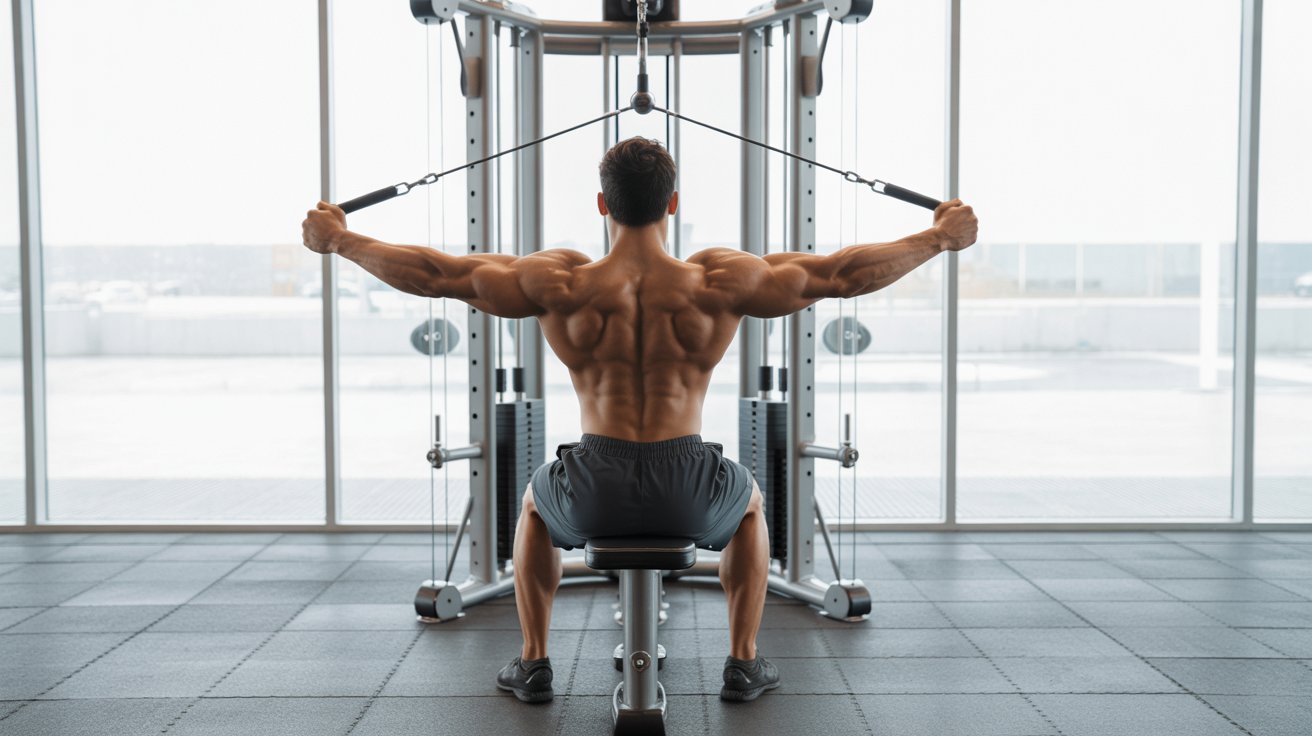
Stand facing away from the cable machine. Grab the handle behind you and curl from a fully stretched position. The angle creates constant tension through the full range of motion.
5. Behind-the-Back Cable Curl (Best for Isolated Activation)

Set the cable to the lowest position. Stand next to the machine and hold the handle behind your back. Curl with your elbow behind your torso for strong long head activation.
6. Hammer Curl Long Head Variation (Best for Neutral Grip)

Hold the dumbbell in a neutral grip with elbows slightly behind your hips as you curl. This small adjustment puts more tension on the long head than a standard hammer curl.
7. Concentration Curl Twist Variation (Best for Peak Contraction)

Sit down and brace your elbow on your inner thigh. As you curl up, rotate your wrist outward at the top. This twist recruits the long head more at the peak.
8. Preacher Curl Narrow Grip (Best for Long Head Isolation)

Use a narrow grip on the preacher curl bar or machine. The closer grip shifts more work to the long head. Keep the movement steady and avoid momentum.
9. Spider Curl (Best for Gravity-Assisted Stretch)

Lie face down on an incline bench. Let your arms hang straight down. Curl from this position. Gravity pulls the bicep into a full stretch at the bottom of every rep.
10. Resistance Band High Curl (Best for At-Home Training)
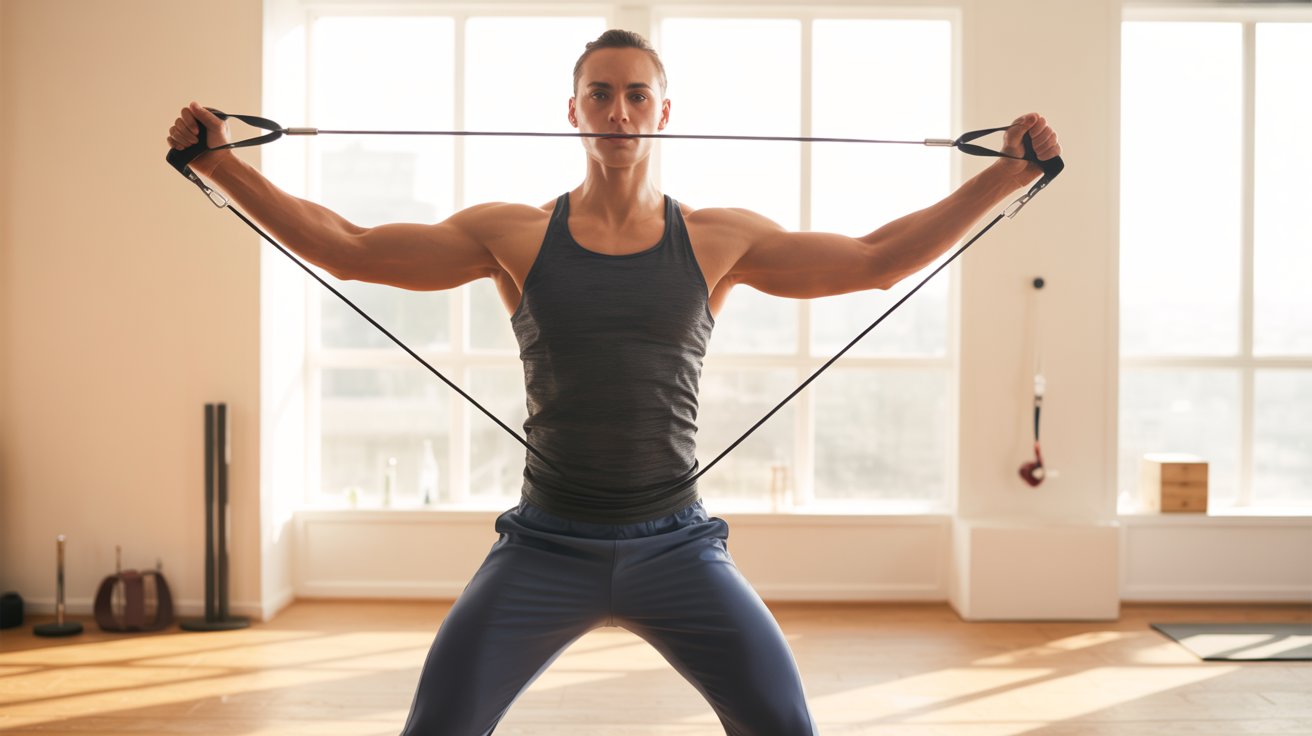
Anchor a band at shoulder height or above. Step back and curl from a high angle. This targets the long head with the arm raised and stretched throughout.
11. Incline Inner-Bicep Curl (Best for Low-Incline Stretch)

Set the bench at a low incline. Curl with your palms facing up and elbows slightly flared. The long head gets a strong stretch at the starting point of each rep.
12. Cable Rope Curl Split Grip (Best for Peak Squeeze)

Attach a rope to a low cable. Hold each end and curl up. Split the rope apart at the top. This adds a strong squeeze to the long head at peak contraction.
13. Close-Grip Chin-Up (Best Compound Exercise)

Use a shoulder-width or slightly closer grip. The supinated position places heavy demand on the biceps, especially the long head. It’s a compound move that builds real mass fast.
Beginner vs Advanced Long Head Workouts
Not every exercise fits every level. Here’s how to choose based on where you are right now.
Beginners should start with: incline dumbbell curls, hammer curls, concentration curls, and resistance band high curls. These are easier to control, teach proper form, and still deliver strong long head activation.
Advanced lifters can add: Bayesian cable curls, drag curls, behind-the-back cable curls, and spider curls. These demand more body awareness and control, but they produce stronger results for outer bicep development.
Start simple. Build the feel for the long head. Then layer in the harder variations.
How to Structure Long Head Workouts for Faster Growth
I train biceps twice a week and split the focus between compound and isolation work.
Start with a stretch-based move like incline curls. Move to a cable variation for constant tension. Finish with an isolation move for peak contraction.
Aim for 3 to 4 sets of 8 to 12 reps. Rest 60 to 90 seconds between sets. Add weight slowly as reps start feeling too easy.
Common Mistakes That Kill Long Head Workouts
Using too much weight is the biggest issue. When the load is too heavy, your front delt takes over and the bicep barely works.
Keeping the elbow too far forward also cuts the long head out of the movement entirely. Your arm needs to stay behind or at your torso for proper activation.
Skipping the bottom position is another common mistake. That’s where the long head gets its most productive stimulus.
Long Head vs Short Head Workouts: Key Differences
The long head builds the peak. The short head adds width to the front of your arm. Both matter, but most people need more long head focus.
Long head focus: incline curls, drag curls, behind-the-back cables, close-grip variations
Short head focus: wide-grip curls, standard preacher curls, wide-grip Scott curls
If your peak looks flat, prioritize long head workouts. If your bicep looks narrow from the front, add more short head work. For most people, the long head needs more attention.
At-Home Long Head Workout Routine (No Gym Needed)
You don’t need a gym for this. Here’s a routine I’ve tested at home with solid results:
- Incline dumbbell curl on a propped-up chair: 3 sets of 10
- Resistance band high curl: 3 sets of 12
- Hammer curl neutral grip: 3 sets of 10
- Concentration curl with wrist twist: 3 sets of 12
Rest 60 seconds between sets. Run this twice a week and track your reps over time.
Pro Tips to Grow Your Bicep Peak Faster
- Slow down the lowering phase. That’s where real growth happens.
- Train the long head first in your session so it gets full activation while you’re fresh.
- Film yourself from the side. You’ll catch form errors you can’t feel in the moment.
- Aim for 0.7 to 1 gram of protein per pound of bodyweight daily. Growth needs consistent fuel.
- Be patient. Bicep peak training responds over months, not just a few weeks.
Conclusion
Building a bigger bicep peak takes more than just curling heavy. I learned that the hard way.
Once I started focusing on long head workouts specifically, my arms changed in a way they hadn’t in years.
The exercises in this list are the ones that actually deliver results. Pick three or four. Add them to your routine consistently. Use the beginner or advanced tier that matches where you are right now.
Don’t just train for pump. Train for stretch, tension, and full control through every rep. That’s what the long head responds to best.
Save this workout, apply it for 8 weeks, and track your peak growth. Stay consistent, eat enough protein, and rest well between sessions.
Which of these long head workouts are you going to try first?
Frequently Asked Questions
How often should I do long head workouts?
Train the long head two times a week with at least 48 hours between sessions. This gives the muscle enough time to recover and grow properly.
Can I build a bicep peak at home without gym equipment?
Yes, you can. Resistance bands, dumbbells, and an incline surface are enough to target the long head with the right exercise selection.
How long does it take to see results from long head bicep exercises?
Most people notice visible changes within 8 to 12 weeks of consistent training. Results vary based on genetics, diet, and how well you target the long head each session.
Is the incline dumbbell curl the best long head workout?
It’s one of the most effective options available. The stretched starting position makes it ideal for long head activation and many trainers rank it at the top for bicep peak training.
Should beginners start with long head workouts or general bicep training?
Beginners can start with long head exercises right away. Stick to incline curls and hammer curls first, then add advanced variations once your form is solid.