

I used to wonder if push-ups were actually doing anything for me. No weights, no machines. Just me and the floor. Turns out, push-ups lift more of your body weight than most people think.
In this article, I will cover what percentage of body weight is a push up, what the research says, and how much weight you are really moving. I will also show you how to make push-ups harder without hurting yourself.
With years of fitness research and training experience, I have broken this down so it actually makes sense.
Why Push-Ups Are an Effective Strength Exercise

Push-ups are one of the most practical strength exercises you can do. No gym needed. No equipment required. Just your body and a flat surface.
A push-up works more muscles than most people realize.
Here is what fires up during each rep:
- Triceps brachii (back of the arms)
- Pectoralis major (chest)
- Serratus anterior (side of the ribcage)
- Anterior deltoid (front of the shoulder)
- Core and trunk stabilizers (abs and lower back)
That is a lot of muscle for one simple movement. Push-ups build real upper-body strength. They work your chest, shoulders, and arms all at once. Over time, consistent push-up training leads to noticeable muscle development in the upper body.
They are also used in fitness assessments around the world. Military, sports teams, and personal trainers use push-up tests to measure strength and endurance. That alone tells you how effective they are.
What Percentage of Body Weight Is a Push Up?
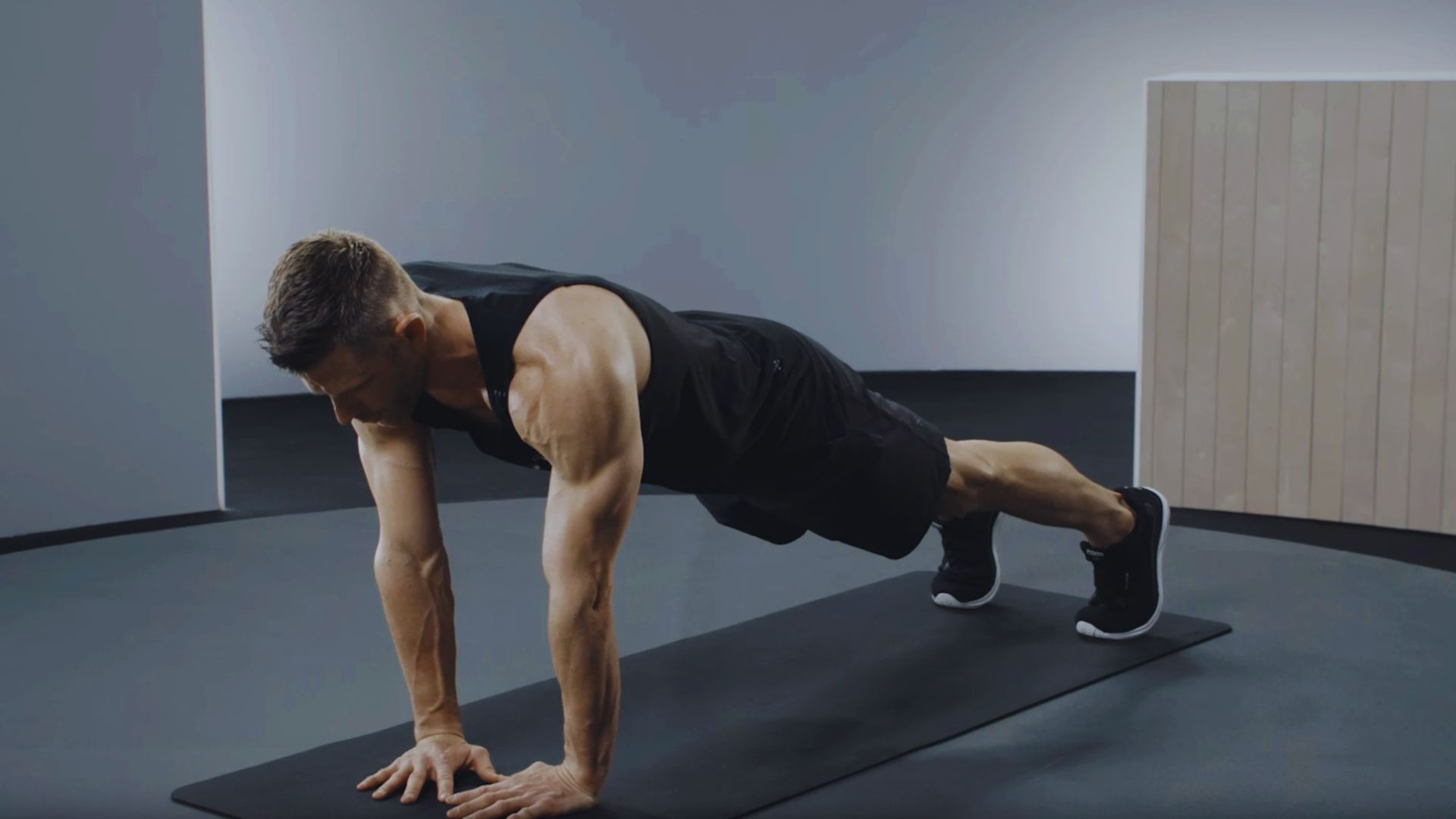
This is the question most people never think to ask. And the answer might surprise you.
Research-Based Findings
A study by The Cooper Institute looked at exactly this question. Researchers measured how much body weight a person supports during a push-up.
They tested two variations: the modified push-up (knees on the floor) and the full push-up (toes on the floor).
They measured bodyweight support in two positions: the up position (arms extended) and the down position (chest near the floor).
Modified Push-Up (Knees on Floor)
The modified push-up is often seen as the easier version. But you are still lifting a good chunk of your body weight.
Up position: About 53.56% of your body weight is supported (meaning you lift the rest).
Down position: About 61.80% of your body weight is supported.
So at the bottom of a modified push-up, you are working against more resistance than at the top.
Full Push-Up (Toes on Floor)
The standard push-up increases the load significantly.
Up position: About 69.16% of your body weight is supported.
Down position: About 75.04% of your body weight is supported.
That means at the bottom of a full push-up, your muscles are managing roughly 75% of your entire body weight. That is not a small number.
How Much Weight Are You Actually Lifting?

Let us put real numbers to this so it clicks better.
Example: 140-Pound Person (Modified Push-Up)
Up position: About 75 pounds lifted.
Down position: About 86 pounds lifted.
So a 140-pound person doing modified push-ups is lifting close to 90 pounds at the bottom of every rep. That is solid work.
Example: 190-Pound Person (Full Push-Up)
Up position: About 131 pounds lifted.
Down position: About 142 pounds lifted.
A 190-pound person doing full push-ups is moving over 140 pounds at the lowest point. That is more than many people bench press at the gym.
Why the Down Position Is More Challenging
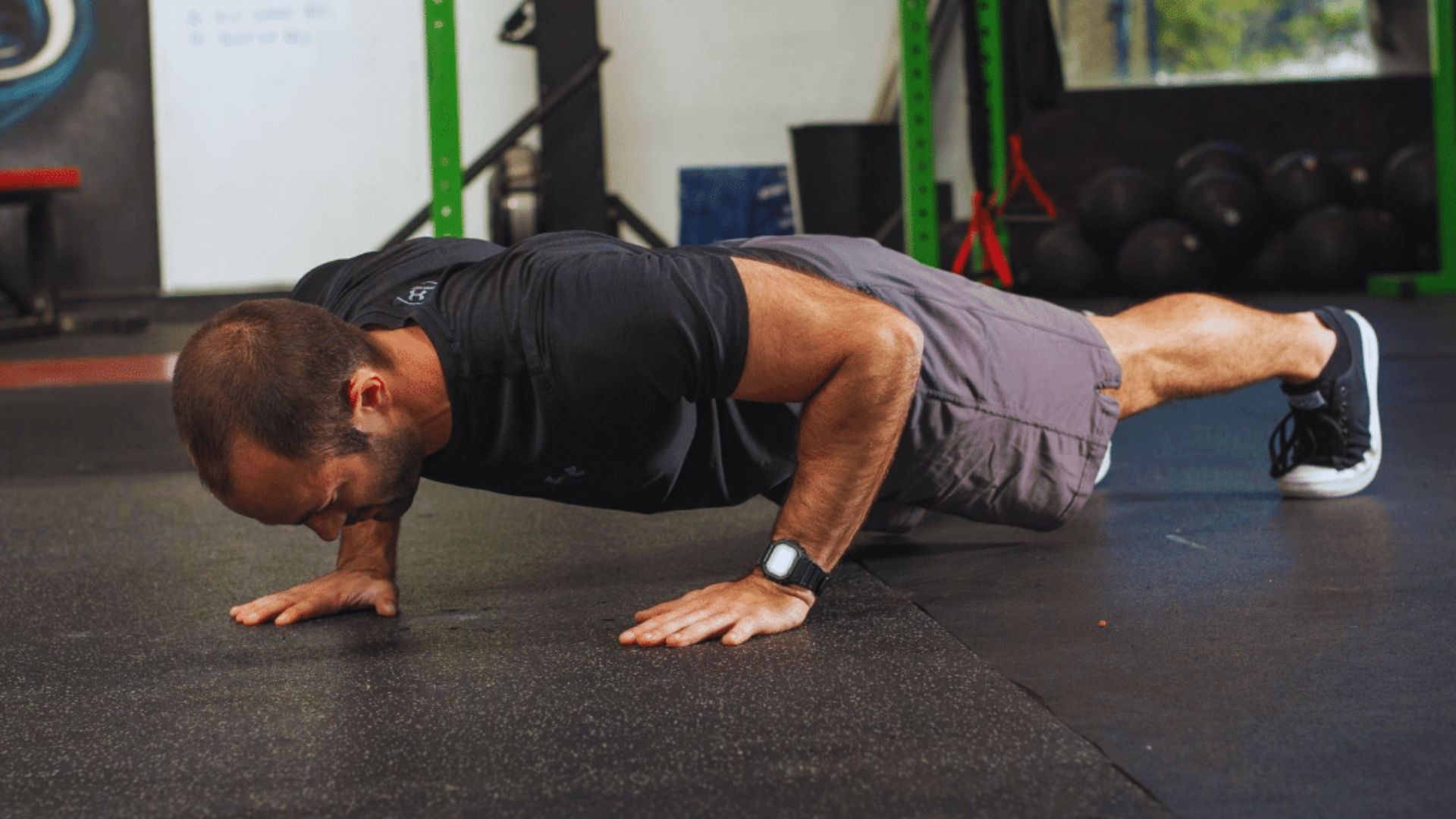
You may have noticed that push-ups feel hardest at the bottom. There is a real reason for that.
Increased Bodyweight Support
At the bottom of a push-up, more of your body weight shifts forward. Your muscles have to work harder to hold that position and push back up. The percentage of body weight being supported goes up as you lower yourself.
This means more muscular tension. More control is required. More effort from your chest, shoulders, and arms.
Isometric Holds for Added Difficulty
One simple way to make push-ups harder is to pause at the bottom. Hold for two to three seconds before pushing back up.
This forces your muscles to stay under tension longer. It builds strength at the hardest part of the movement.
It also improves muscular endurance faster than rushing through reps. Many strength coaches use paused push-ups for exactly this reason.
Factors That Influence Push-Up Weight Percentage

The percentage of body weight you lift can shift based on how you do the push-up.
Hand Placement Variations
Where you place your hands changes which muscles do the most work.
Narrow grip (hands close together): More tricep focus, harder on the elbows.
Shoulder-width grip (standard): Balanced load across chest, shoulders, and triceps.
Wide grip (hands further apart): More chest activation, less tricep involvement.
Each variation still uses a high percentage of body weight. But the muscle distribution changes.
Body Position and Form
Good form keeps the load distributed correctly across your joints and muscles. Poor form shifts stress to the wrong places.
Core engagement is key. A tight core keeps your hips in line and prevents sagging. Hip alignment matters too.
Hips that drop or rise too high change the mechanics of the movement. This can reduce the effectiveness of the exercise and increase injury risk.
Keeping a straight line from your head to your heels is the most important thing to focus on.
How to Increase the Challenge Safely

Once regular push-ups start feeling easy, there are smart ways to progress.
Tempo Adjustments
Slowing down the lowering phase is one of the best methods. Take three to four seconds to lower yourself. This puts your muscles under tension longer. It builds control and strength without any extra equipment.
Paused repetitions work the same way. Pause at the bottom for two seconds before pushing up. Simple but very effective.
Position Modifications
Uplifted feet push-ups shift more weight to your upper chest and shoulders. Placing your feet on a bench or step increases the load on your upper body.
Decline variations do the same thing. The higher your feet, the harder the push-up becomes. This is a natural way to progress without adding weights.
Safety Considerations
Some people try adding weight plates to their back for extra resistance. This can be risky if done without a spotter. The weight can shift and cause strain on your lower back or wrists.
A safer approach is to use the tempo and position methods above. They increase the challenge without putting your joints in a bad position. Always keep proper alignment. Protect your wrists, elbows, and shoulders by not letting your form break down.
Conclusion
Now you know the real answer to what percentage of body weight is a push up, and it is more than most people expect.
I remember being shocked the first time I did the math on my own body weight. Push-ups went from feeling like a basic move to feeling genuinely impressive.
Start with your form, then add tempo, then try decline variations. Small steps lead to big results. If this helped you, drop a comment below or share this post with someone who thinks push-ups are too easy.
Frequently Asked Questions
What percentage of body weight do you lift during a full push-up?
During a full push-up, you lift around 69% of your body weight at the top and about 75% at the bottom. The down position is always the hardest point.
Is a modified push-up still effective for building strength?
Yes, a modified push-up still requires you to lift over 50% of your body weight. It is a great starting point and still builds real upper-body strength over time.
Why does the bottom of a push-up feel harder than the top?
At the bottom, a greater percentage of your body weight shifts forward. Your muscles have to support and push back more load, which makes the bottom position the most demanding part.
Can push-ups replace bench press for upper-body strength?
Push-ups and bench press both work similar muscles. Push-ups may not match heavy bench press loads, but they build solid strength, especially when done with slow tempo or decline variations.
How can I make push-ups harder without adding weights?
You can slow down the lowering phase, pause at the bottom, or place your feet on an uplifted surface. These changes increase the time your muscles are under tension and raise the difficulty significantly.