Look into the gym of those who are really serious about their training, and you will see a person on the preacher bench doing curls with great concentration. If you ask why this particular exercise is the one most often chosen for arm training programs, there is a very simple answer.
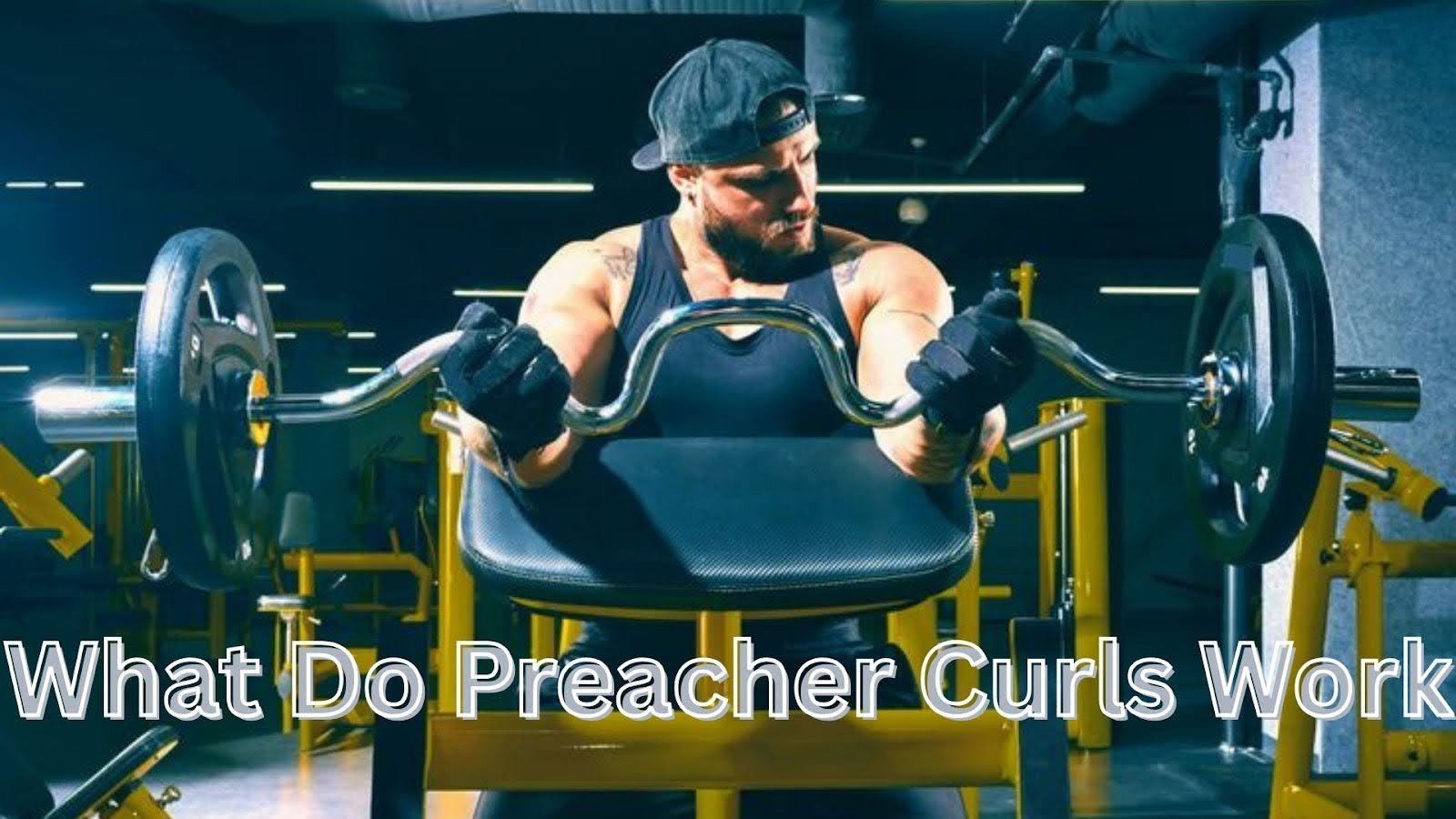
Preacher curls are a solo biceps exercise of the arms performed while sitting on an inclined bench, which is specially designed to prevent the use of momentum and to keep the upper arms fixed.
So the guide will help you. What do preacher curls work? They mainly involve biceps brachii (both short and long heads), to which are added brachialis and brachioradialis. By the removal of the cheating, you get pure bicep engagement, which in turn results in strength, size, and definition at a much faster rate.
What Do Preacher Curls Work?

If you’ve ever sat down on the preacher bench and felt that deep burn in your arms, you already know this move means business. Preacher curls mainly work your biceps brachii, both the short and long head, while also engaging your brachialis and brachioradialis for complete arm activation.
Because your arms stay fixed against the pad, there’s no swinging or cheating your way through the set. That locked position forces your biceps to control the weight from start to finish, giving you better tension and a stronger contraction with every rep.
Over time, this strict movement builds balanced, fuller-looking arms while improving your form and focus. If you’ve been chasing that tight bicep peak and defined shape, preacher curls will help you get there with precision and control.
Focus on the Biceps Brachii

When you perform preacher curls, your biceps brachii, the main muscle of your upper arm, does most of the work. The short head gives your arms width, while the long head adds that defined peak.
Keeping your arms fixed against the pad stops your shoulders from stepping in, so your biceps do all the lifting. Over time, you’ll notice more balanced growth and fuller muscle shape.
You’ll also feel a deeper contraction with each curl, helping you connect better with your biceps and squeeze more power out of every rep.
Activation of the Brachialis

Beneath your biceps lies the brachialis, a smaller muscle that adds serious thickness to your upper arm. Preacher curls target it strongly thanks to the locked elbow position.
As this muscle grows, it pushes your biceps outward, giving your arms a stronger, more solid look. That’s why people often see visible size improvements after adding preacher curls.
If your arms have looked flat despite regular curls, this exercise can be the missing piece that rounds them out.
Support from the Brachioradialis

Your forearm muscle, the brachioradialis, supports each curl by stabilizing the wrist and controlling the lowering phase. This helps improve grip strength, too.
During heavy sets, it keeps the movement smooth and prevents your wrists from bending awkwardly. Strong forearms also help you perform better in other lifts like rows and pull-ups.
By training this muscle along with your biceps, you’re improving both strength and stability in every upper-body workout.
Improved Control and Form

Preacher curls make it almost impossible to cheat. With your upper arms locked in place, momentum doesn’t come into play only muscle effort does.
This setup teaches you to move the weight with control, keeping tension exactly where it belongs. You’ll feel a steady burn through every inch of motion.
Over time, this strict form builds discipline and helps you use better technique in all your arm exercises.
Stronger Eccentric Strength

One key advantage of preacher curls is the focus on the eccentric, or lowering, phase. Because you can’t swing the bar down, you’re forced to lower it slowly.
This controlled descent creates more micro-tears in the muscle fibers, which helps your arms grow thicker and stronger.
By staying patient and resisting the weight, you turn each rep into a muscle-building opportunity that pays off with visible results.
Muscles Worked by Preacher Curls
When you ask, Whao, preacher curls work, you’re really asking which muscles are pulling their weight when your arms are pinned to that pad. The answer goes deeper than just “biceps.” Let’s break down exactly what’s firing with each controlled rep.
Biceps Brachii (Short Head)
The short head sits on the inner portion of your bicep and creates that rounded, full look when you flex. When you grip the bar close and curl against the preacher pad, this head takes the lead.
Because of the pad’s angle, your arm stays in a fixed position, which keeps constant tension on the short head throughout the entire movement. This makes it one of the most efficient ways to build inner bicep thickness.
If you want arms that look complete from every angle, training the short head with preacher curls is non-negotiable. It adds depth and symmetry that standing curls often miss.
Biceps Brachii (Long Head)
The long head runs along the outer edge of your bicep and is responsible for that coveted peak when you flex. It may not be the star of the show on preacher curls, but it still gets plenty of work.
Because the movement maintains tension through the full range of motion, the long head never gets a break. Even at the bottom of the curl, it stays engaged, which is rare in many bicep exercises.
Training both heads together gives you balanced arm development. The long head adds height, while the short head adds width. Preacher curls hit both effectively.
Brachialis
The brachialis sits underneath your biceps, between the biceps and triceps. Most people forget about it, but it plays a huge role in how thick your arms look overall.
When the brachialis grows, it literally pushes your biceps outward, making them appear larger. Preacher curls activate this muscle heavily because of the elbow flexion pattern and the resistance curve.
If your arms look flat despite training biceps hard, chances are your brachialis needs more attention. Preacher curls fix that gap by placing consistent stress on this hidden muscle.
Brachioradialis (Forearm)
The brachioradialis is the thick muscle running along the top of your forearm. It assists with elbow flexion and plays a supporting role during curls.
During preacher curls, the brachioradialis helps stabilize your wrist and control the weight as you lower it. This makes the exercise smoother and safer, especially when using heavier loads.
Strong forearms improve your grip strength and support heavier lifts across all pulling movements. Preacher curls give your brachioradialis steady work without needing extra isolation exercises.
Enhanced Eccentric Loading
One underrated benefit of preacher curls is how they force you to control the eccentric (lowering) phase. Because your arms are locked on the pad, you can’t cheat the weight down.
This slow, controlled descent creates more micro-tears in the muscle fibers, which leads to greater hypertrophy over time. The eccentric phase is where most muscle damage and growth happen.
By emphasizing the negative portion of each rep, you’re maximizing time under tension. This makes every set more effective than curls, where you drop the weight quickly.
Reduced Momentum and Cheating
Most curl variations allow you to rock your torso or shift your shoulders to move heavier weights. Preacher curls eliminate that option.
Your upper arms stay glued to the pad, so your biceps have no choice but to handle the load alone. This strict form ensures you’re actually building the muscles you’re targeting.
If you’ve been curling for months without seeing growth, poor form might be the culprit. Preacher curls force perfect execution, which means better results in less time.
Mind-Muscle Connection Development
When you can’t rely on momentum, you’re forced to focus on the contraction itself. This builds a stronger mental link between your brain and biceps.
Over time, this improved connection carries over to other exercises. You’ll start feeling your biceps work harder during rows, chin-ups, and even compound lifts.
Preacher curls teach you what true bicep isolation feels like. Once you learn that feeling, you can replicate it across your entire arm training program.
Benefits of Preacher Curls
If you’ve ever wanted arms that look powerful and defined from every angle, preacher curls can help you get there faster by isolating your biceps with precision.
- Maximum Bicep Isolation: Your upper arms stay locked on the pad, so your biceps do 100% of the work with zero help from your shoulders, back, or momentum.
- Improved Form and Control: The fixed arm position removes the ability to cheat, which forces you to use proper technique and lighter, more effective weight.
- Greater Muscle Growth: Extended time under tension combined with a strong eccentric phase creates the perfect conditions for hypertrophy and size gains.
- Joint-Friendly Training: The EZ bar’s angled grip reduces strain on your wrists and elbows, making this movement safer for long-term training.
- Shoulder Stability: By stabilizing your upper arms, preacher curls strengthen the connection between your biceps and rotator cuff, which supports pressing and pulling movements.
Preacher Curls vs Other Curl Types
Understanding what preacher curls work becomes clearer when you compare them to other popular bicep exercises. Here’s how they stack up.
| Exercise Type | Primary Muscle Focus | Momentum Control | Range of Motion | Best For |
| Preacher Curls | Biceps brachii (short head), brachialis | Eliminated completely | Full stretch to peak contraction | Isolation, thickness, strict form |
| Standing Barbell Curls | Full biceps, some forearm | Easy to cheat with hips and shoulders | Good, but varies with form | Overall mass and strength |
| Hammer Curls | Brachialis, brachioradialis, long head | Moderate, depends on posture | Neutral grip limits bicep stretch | Forearm and outer bicep thickness |
| Concentration Curls | Biceps brachii (peak contraction) | Minimal when done correctly | Deep stretch, strong squeeze | Mind-muscle connection, peak shape |
| Cable Curls | Biceps with constant tension | Moderate, easier to control | Consistent resistance throughout | Pump, endurance, finisher work |
| Incline Dumbbell Curls | Long head emphasis | Low gravity assists at the bottom | Maximum stretch at the bottom | Long head development, flexibility |
Preacher curls stand out because they remove nearly all momentum, which forces your biceps to handle the load through every inch of the movement. This makes them one of the most effective exercises for building size and control when programmed correctly.
Conclusion
Preacher curls are the one-arm exercise that is most like what the majority of arm exercises suggest but fail to provide: pure bicep isolation with no room for cheating. When you lock your upper arms on the pad, you cannot help but let your biceps, brachialis, and forearms be the ones to take every ounce of resistance.
The immovable position is more effective in building strength, size, and control than standing curls because your muscles are kept under constant tension. If you also consider the joint-friendly angle and the capability of loading heavy weights safely.
Use preacher curls together with compound pulling movements and other curl variations to develop balanced, powerful arms. Elbows locked, reps controlled, and biceps working – that’s the way to do it.
Frequently Asked Questions
Do preacher curls work the entire bicep?
Yes, preacher curls work both the short and long heads of the biceps brachii, along with the brachialis and brachioradialis. The movement emphasizes the short head due to arm positioning, but the long head remains active throughout the full range of motion.
Can preacher curls replace all other bicep exercises?
No, preacher curls are excellent for isolation, but should be combined with other movements like chin-ups, rows, and standing curls. A complete arm program includes both compound and isolation exercises to target the biceps from multiple angles and build balanced strength.
How many sets and reps should I do for preacher curls?
For muscle growth, aim for 3 to 4 sets of 8 to 12 reps with moderate weight. Focus on controlled tempo and full range of motion. If strength training, reduce reps to 5 to 7 and increase weight while maintaining strict form.
Are preacher curls safe for beginners?
Yes, preacher curls are beginner-friendly because the pad supports your arms and prevents cheating. Start with light weight to learn proper form, keep a slight elbow bend at the bottom, and avoid hyperextending your joints. Progress gradually as your strength and control improve.
What grip should I use for preacher curls?
An EZ bar with an underhand grip is the most common and joint-friendly option. You can also use a straight bar, dumbbells, or cables. Close grips target the short head more, while wider grips emphasize the long head and overall bicep width.