
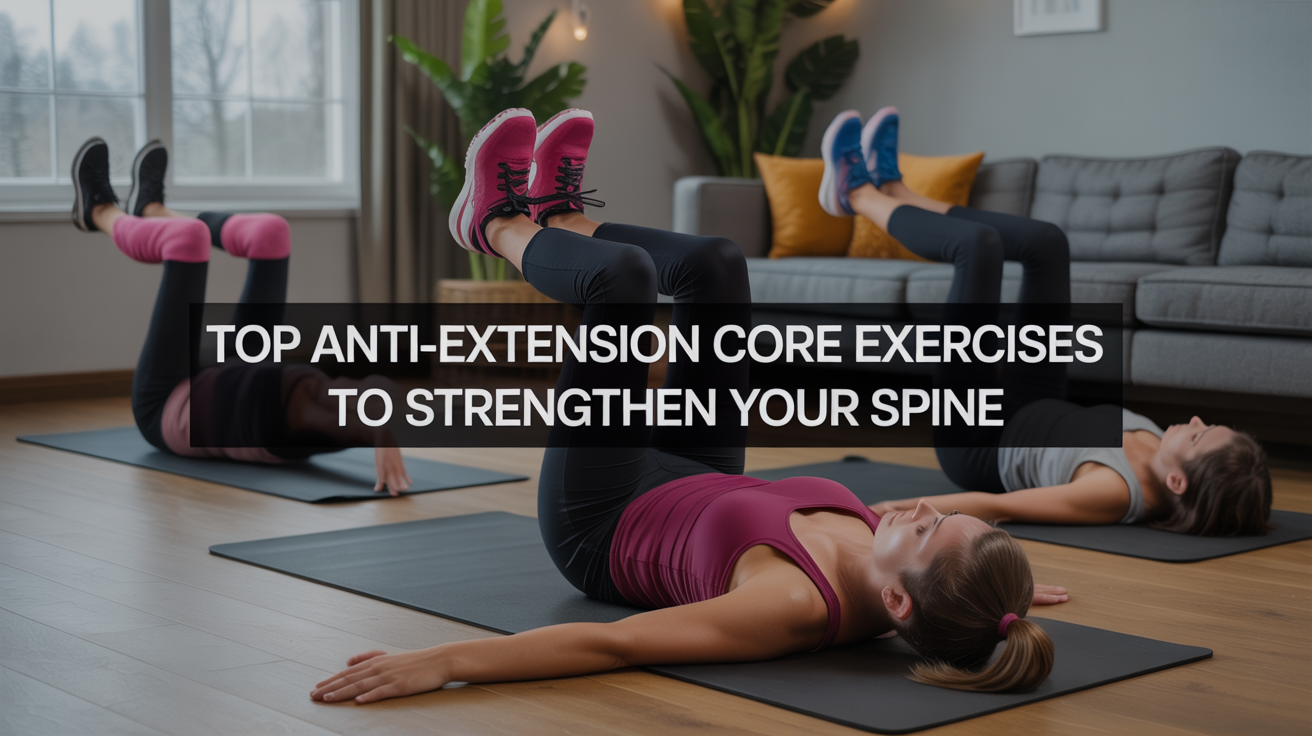
Your lower back hurts after sitting all day. Maybe it aches when you stand up or feels weak during workouts. Anti-extension core exercises can fix this problem by teaching your spine to stay stable under pressure. This article shows you the exact exercises that work, explained in plain English.
I’ve worked with dozens of people dealing with back pain, and these movements consistently deliver results. You’ll learn five proven exercises that target the muscles protecting your spine from overstretching. Each one comes with clear instructions you can follow at home or the gym.
No fancy equipment needed. No confusing fitness jargon. Just simple, effective exercises backed by real-world experience. By the end of this guide, you’ll understand how anti-extension training works and have a complete routine to strengthen your core the right way. Your spine will thank you.
Understanding Anti-Extension Core Training

Anti-extension means stopping your lower back from arching too much. Think of it as your core’s ability to say “no” when forces try to bend your spine backward. The goal is to keep your spine neutral under pressure. Excessive arching strains your lower back joints and discs, causing pain over time. Good anti-extension strength protects your spine during everything you do.
Your front core muscles do the heavy lifting. The rectus abdominis and transverse abdominis work together to prevent overarching. They act like a natural weight belt. This creates lumbo-pelvic stability, keeping your lower back and pelvis working as one solid unit. I’ve seen this strength carry over to daily movements, athletic performance, and injury prevention.
You need this strength more than you think. Lifting heavy objects requires it. Without control, your back arches and takes all the stress. Overhead exercises, running, jumping, and rotational sports all demand core stability. Even daily tasks test you. Reaching into your car. Carrying a toddler. Standing at the counter. Your core protects your spine through all of it.
Key Muscles Involved in Anti-Extension Movements

Your core isn’t just one muscle; it’s a team working together. Some muscles sit deep inside, creating stability from within. Others are closer to the surface, controlling how your trunk moves and resists forces that try to arch your back.
- Transverse Abdominis: This deep layer wraps around your midsection like a corset. It creates internal pressure that stabilizes your spine before you even move.
- Rectus Abdominis: Your six-pack muscle runs down the front of your abdomen. It pulls your ribcage and pelvis together to resist extension when loads try to push your back into an arch.
- Obliques and Hip Flexors: Internal and external obliques wrap around your sides to control rotation and bending. Your hip flexors assist by stabilizing your pelvis, preventing it from tilting forward and causing your lower back to overarch.
Benefits of Anti-Extension Core Exercises

These exercises do more than prevent back pain. They change how your body moves and functions. You’ll notice improvements in strength, posture, and everyday activities within weeks of consistent practice.
- Enhances Spinal Stability: Anti-extension training supports proper alignment between your lower back and pelvis. This reduces your risk of overextension injuries during workouts and daily tasks that stress your spine.
- Improves Athletic Performance: You’ll build stronger bracing patterns for squats and deadlifts. Overhead pressing becomes more controlled. Running and jumping feel more powerful because your core transfers force efficiently instead of leaking energy through a weak, arching back.
- Corrects Postural Problems: These exercises help counter anterior pelvic tilt, that common forward tilt that makes your lower back arch excessively. You’ll develop better ribcage-to-pelvis alignment, which means standing taller and moving with less strain on your spine.
Top Anti-Extension Core Exercises (Detailed Breakdown)
These exercises range from beginner-friendly to advanced challenges. I’ve organized them by difficulty so you can start where you are and progress safely. Each movement trains your core to resist spinal extension in different positions and scenarios.
1. Front Plank

The front plank is the foundation of anti-extension training. It teaches your body what a neutral spine feels like under tension. This is where everyone should start.
How to do it:
- Get into a forearm plank position with elbows under shoulders
- Squeeze your glutes, quads, and abs simultaneously to create full-body tension
- Maintain a straight line from head to heels and hold for 30-60 seconds
Quality beats duration every time. If your form breaks at 20 seconds, that’s your stopping point. Build from there. Focus on creating maximum tension rather than just surviving the hold.
2. Dead Bug

This exercise targets deep core activation and teaches coordination. It’s deceptively simple but incredibly effective for lumbar control. Most people underestimate it until they try it properly.
How to do it:
- Lie on your back with arms extended toward the ceiling and press your lower back firmly into the floor
- Lower one arm overhead while extending the opposite leg, hovering just above the ground
- Return to the start and repeat on the other side, moving slowly and with control
The key is maintaining that lower back contact with the floor. The moment your back arches up, you’ve lost the anti-extension challenge. Start with small ranges of motion and increase as you get stronger. Try banded dead bugs or wall-press variations for added difficulty.
3. Bird Dog

Bird dog improves spinal stability while adding glute activation into the mix. It challenges your balance and coordination. This movement translates directly to functional activities like walking and running.
How to do it:
- Start on hands and knees with neutral spine and engaged core
- Extend opposite arm and leg simultaneously without rotating your hips
- Hold for 2-3 seconds at the top, maintaining alignment, then return and switch sides
Your hips shouldn’t rotate or drop to either side. Think about keeping your belt buckle pointed straight down at the floor. If you’re wobbling all over the place, slow down and reduce your range of motion until you find stability.
4. Hollow Body Hold

This is high-tension anti-extension at its finest. Gymnasts use this position constantly because it builds incredible core strength. Your entire anterior chain will be working hard.
How to do it:
- Lie on your back and press your lower back into the floor
- Lift your shoulders off the ground and extend your legs, keeping them together
- Reach your arms overhead or by your sides and hold for 20-30 seconds
Start with knees bent if the full position is too difficult. The goal is to maintain that flat back against the floor while creating tension through your entire body. This position should feel challenging from the first second.
5. Stability Ball Rollout

Adding instability increases core engagement significantly. The ball wants to roll away from you, forcing your core to work overtime to maintain control. This exercise builds serious anti-extension strength.
How to do it:
- Kneel behind a stability ball with your forearms resting on top and squeeze your glutes
- Roll the ball forward slowly without sagging your hips or arching your back
- Roll out as far as you can while maintaining perfect alignment, then pull back
Stop before your form breaks. It’s better to do shorter rollouts with good technique than long ones with a sagging spine. Progress to ab wheel rollouts or Swiss ball stir-the-pot for advanced variations that add rotational challenges.
6. Body Saw

This dynamic movement takes the plank to another level. You’re adding motion while maintaining that anti-extension position. It’s brutally effective for building real-world core strength.
How to do it:
- Start in a forearm plank with slider pads under your feet and maintain neutral spine alignment
- Glide your body backward by pushing through your forearms, moving 4-6 inches
- Pull yourself back to the starting position using your core and lats
The movement should be controlled and small. Don’t glide so far back that your hips sag or your back arches. Think about pushing the floor away from you as you move backward, keeping everything tight and aligned.
7. Tall Kneeling Landmine Press

This combines overhead pressing with anti-extension stability. Your core fights the urge to arch as you press the weight overhead. It’s excellent for athletes and anyone doing overhead work.
How to do it:
- Kneel on both knees facing a landmine with the barbell at chest height
- Maintain rib-to-hip connection by keeping your abs braced throughout
- Press the weight overhead without letting your lower back arch or ribs flare
Your torso should stay completely vertical. If you lean back at all, the weight is too heavy. Add band resistance around the barbell for increased core demand and to make the top position even more challenging.
8. Single Leg Glute Bridge With Leg Lowering

This exercise combines glute strength with lumbo-pelvic stability. It’s often overlooked but incredibly valuable for preventing back compensation during hip-dominant movements. Your glutes do the work, not your spine.
How to do it:
- Lie on your back with one foot flat and drive through it to lift your hips, squeezing your glutes hard
- Keep your pelvis level as you slowly lower and lift your extended leg
- Control the descent and avoid arching your back or rotating your pelvis
The key is hinging through your glutes, not hyperextending your lower back. If you feel your back taking over, lower your hips slightly until you feel your glutes working again. Quality reps matter more than height.
9. Advanced Progressions for Experienced Lifters

Once you’ve mastered the basics, these advanced variations will challenge you further. Don’t rush to these movements. Build a solid foundation first with the earlier exercises.
Advanced options:
- Ab wheel rollout from kneeling position, progressing to standing rollouts as you get stronger
- KB bottom-up press while holding a hollow body position on the floor for dual challenge
- Swiss ball stir-the-pot with circular motions and landmine press with unilateral loading
These movements require excellent body control and significant core strength. If your form breaks down, you’re not ready yet. There’s no shame in sticking with intermediate exercises until you build the necessary stability and strength.
Tips for Better Anti-Extension Training
Getting stronger is only part of the equation. How you train matters just as much as what exercises you do. These tips will help you get better results while keeping your spine safe.
- Improve Key Mobility: Work on ankle, hip, and thoracic spine flexibility regularly. When these areas are stiff, your lower back compensates by moving too much during exercises and daily activities.
- Master Your Breathing: Practice proper diaphragmatic breathing to amplify core stability. Learn 360-degree bracing, expanding your belly, sides, and back with each breath, to improve performance and spinal protection.
- Prioritize Form Always: Maintain correct alignment throughout every rep, even if it means doing fewer reps. Stop immediately when your hips sag, ribs flare, or you lose neutral spine position; pushing through bad form builds bad habits.
Conclusion
You now have a solid foundation of anti-extension core exercises to protect your spine. These movements train your core to resist overarching, which means less back pain and better stability during everyday activities. Start with the basics and progress gradually.
Your back pain doesn’t have to be permanent. Consistency matters more than intensity here. Practice these exercises three times a week, focus on form over speed, and you’ll notice real improvements within a few weeks.
Try adding one or two of these exercises to your routine this week. Pay attention to how your back feels during daily tasks. If you found this helpful, share it with someone who struggles with lower back discomfort. Drop a comment below if you have questions about any of the movements. Your stronger, healthier spine starts today.
Frequently asked questions
What are anti-extension core exercises?
Anti-extension core exercises train your abdominal muscles to prevent your lower back from arching. These movements teach your core to resist forces that try to hyperextend your spine. Common examples include planks, dead bugs, and rollouts. They build stability and protect your back during daily activities.
Why are anti-extension exercises important for spine health?
Your spine naturally wants to arch under load or fatigue. Anti-extension exercises strengthen the muscles that keep your spine neutral and safe. This reduces back pain, improves posture, and prevents injury during lifting or sports. A strong anti-extension core acts like a natural back brace.
How often should I do anti-extension core exercises?
Three times per week is ideal for most people. This gives your muscles time to recover between sessions while building consistent strength. Each session can be 10-15 minutes. You can add these exercises to your regular workouts or do them separately on rest days.
Can anti-extension exercises help with lower back pain?
Yes, they often reduce lower back pain significantly. Weak core muscles force your spine to compensate, causing discomfort. Anti-extension exercises strengthen the stabilizers that support proper spinal alignment. Many people notice less pain within 2-3 weeks of consistent practice. Always consult a doctor for severe pain.
What’s the best anti-extension exercise for beginners?
The dead bug is perfect for beginners. You lie on your back and move opposite arms and legs while keeping your lower back flat on the floor. It’s low-impact, easy to learn, and highly effective. Start with 8-10 reps per side and focus on controlled movements.


