Shoulder hurts when benching. I get it. That nagging pain can ruin your entire workout. This article shows you exactly why it happens and how to fix it.
I’ll break down the real causes, from setup mistakes to muscle weaknesses. You’ll learn when pain is serious and when it’s just your body adapting.
I’ve worked with hundreds of lifters dealing with this, and most cases are completely fixable with the right approach.
Here’s what you’ll learn. How to tell muscle soreness from actual injury, the form errors that wreck your shoulders, mobility and strength gaps causing your pain, and red flags that mean you need to stop.
Let’s get you back to benching without that shoulder pain.
Is It Normal If Your Shoulder Hurts When Benching?

Understanding the difference between normal training discomfort and actual shoulder injury can save you months of frustration.
Normal muscle soreness feels like a dull ache. It shows up a day or two after training. That’s DOMS. Real shoulder pain is different. Sharp sensations, pinching feelings, or deep joint ache are red flags.
If the pain happens during the lift, stop. If it feels like something’s catching or grinding, your body is telling you something needs to change.
Pain at the bottom of the lift means your shoulder is moving into a risky position. Pain that gets worse with each set is a warning sign. The biggest concern? When bench press pain follows you home or aches at night, you’ve crossed into injury territory.
Common Reasons Shoulder Hurts When Benching
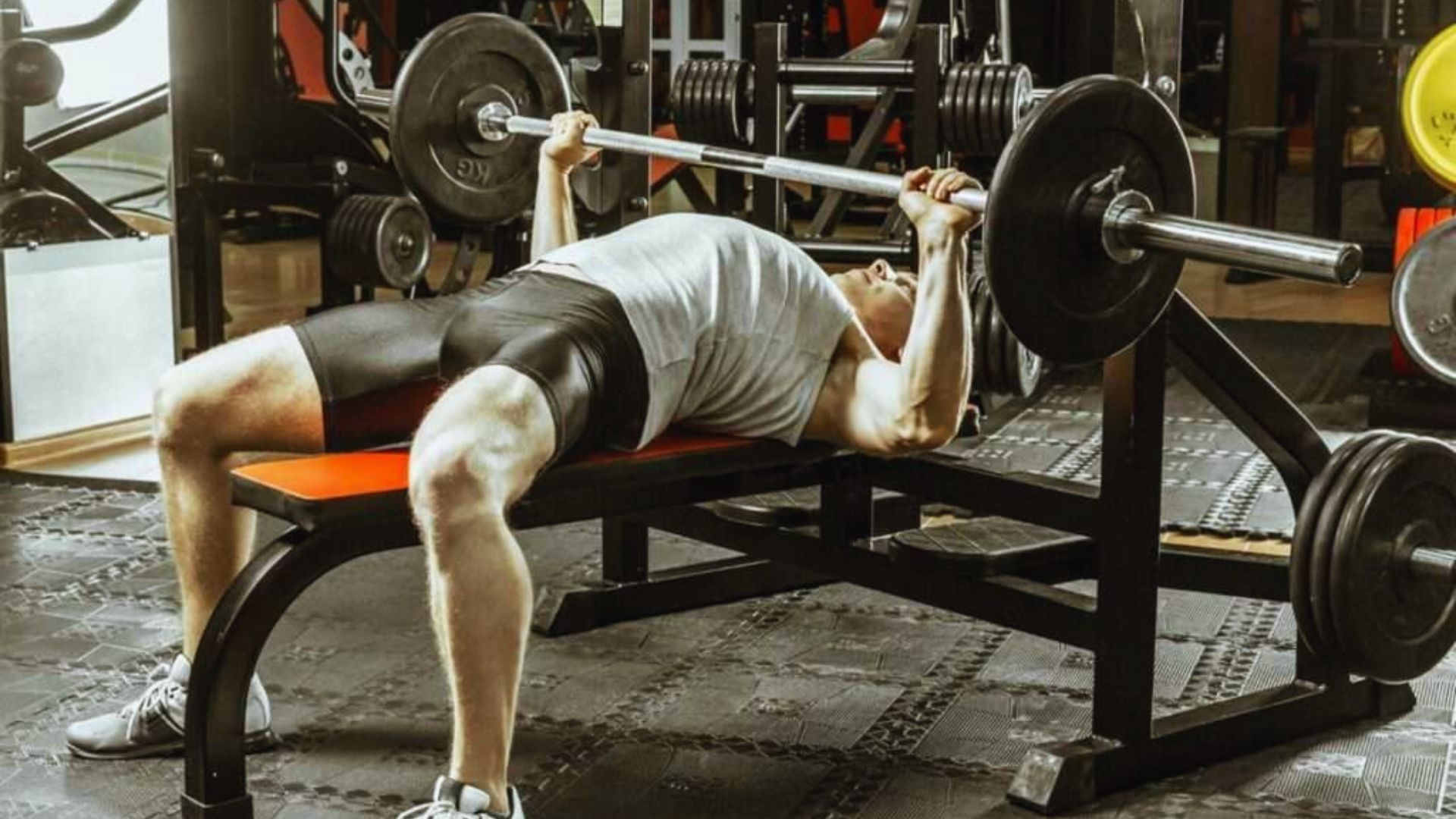
Most shoulder pain during bench press comes from one of these main issues.
Poor Bench Press Form
Elbows flared too wide put massive stress on the front of your shoulder. Keep your elbows around 45 degrees instead of 90-degree angles.
Excessive shoulder internal rotation squeezes the tendons. The wrong bar path forces your shoulder to compensate. An incorrect grip width overloads your shoulders or triceps.
Limited Shoulder Mobility
Restricted internal rotation forces your shoulder into positions it can’t handle safely. Tight pecs pull your shoulders forward.
Tight lats restrict overhead motion. Limited range means pinching and impingement. Your body compensates with poor movement patterns.
Weak Rotator Cuff and Scapular Muscles
A weak rotator cuff lets the ball and socket joint slide around too much. Poor upper back activation destabilizes every press.
When the serratus anterior doesn’t fire, the shoulder blade wings out. Rhomboids and mid traps need to stay engaged. Without activation, your shoulders roll forward under load.
Overuse and Training Errors
Too much pressing, not enough pulling, creates imbalances. Skipping warm-ups leaves muscles and joints unprepared.
Adding weight too fast doesn’t give tendons time to adapt. The front of the shoulder gets overworked while the back gets weak. Joint space narrows, and pain follows.
Different Types of Shoulder Pain When Benching

Location matters when diagnosing bench press shoulder pain, and each area tells a different story.
Front of Shoulder Hurts When Benching
Front shoulder pain typically points to rotator cuff irritation. The supraspinatus tendon runs right under the front of your shoulder.
When it gets pinched, you feel it immediately. Your biceps tendon also lives at the front of the shoulder. Heavy pressing can inflame this area.
Internal rotation overload happens when the shoulder rotates inward excessively under load. This compresses everything at the front of the joint.
Common mistakes include the wide grip bench press, poor shoulder blade retraction, and taking the bar too deep. These force your shoulder into extreme ranges that it can’t handle safely.
Top of Shoulder Hurts When Benching
Top of shoulder pain usually involves the AC joint, where your collarbone meets your shoulder blade. This small joint gets compressed during pressing.
The pain typically shows up at the bottom of the bench press. Muscle pain feels like burning across a broad area. Joint pain feels sharp and pinpoint specific. AC joint issues often cause clicking or grinding.
Back of Shoulder Hurts When Benching
Posterior rotator cuff tightness creates a different pain pattern. The back of your shoulder gets overworked from poor mechanics. Poor scapular control shows up here, too.
Failing to engage your lats is a setup mistake. Your lats should pull your shoulders down and back. When shoulder blades aren’t locked down, everything shifts during the press. The posterior shoulder muscles clench up and create tightness.
The fix starts before you even touch the bar. Squeeze your shoulder blades together and pull them down toward your back pockets.
Inside of Shoulder Hurts When Benching
Deep joint irritation feels different from surface pain. It’s hard to pinpoint. This often indicates labrum or rotator cuff overload.
When clicking or pinching occurs, something’s getting caught. Could be a tendon sliding over bone. Could be cartilage roughness. This type of pain deserves attention. Internal shoulder structures take longer to heal than muscles.
One Shoulder Hurts When Benching
Dominant side compensation happens to almost everyone. Your stronger side does more work. This creates uneven stress patterns.
Uneven grip or bar path makes asymmetry worse. If you unconsciously push harder with one arm, the bar tilts slightly. Poor unilateral strength means one arm might press 20 pounds more than the other.
Right Shoulder Hurts When Benching
Hand dominance issues affect mostright-handedd lifters. Sometimes the dominant side overworks and compensates for the weaker left. This creates extra stress and eventual irritation.
Unequal shoulder mobility shows up often. The barbell drifting to one side is subtle but significant. Even a slight tilt changes the load distribution.
Left Shoulder Hurts When Benching
Previous injuries create lasting effects. An old dislocation or AC joint separation changes how the shoulder moves. Even after healing, movement patterns stay altered.
Shoulder stability differences between sides are normal to some degree. Poor scapular control often shows up more on one side. This asymmetry forces compensation during bilateral lifts like the bench press.
When Shoulder Pain While Benching Is a Red Flag

Knowing when to stop training is just as important as knowing how to train.
Sharp or worsening pain means stop immediately. Don’t push through. Don’t test if it gets better with more reps. Sharp pain indicates tissue damage.
Pain that increases with each set is your body screaming at you. Normal training might create some discomfort, but it shouldn’t get progressively worse during the workout.
Pain during daily activities signals a real problem. If your shoulder hurts when you put on a shirt or reach into the back seat, you’ve crossed into injury. This isn’t muscle soreness.
Night pain is particularly concerning. If your shoulder wakes you up or aches when you’re lying down, soft tissues are significantly irritated. Loss of strength needs professional evaluation.
Conclusion
I know how frustrating shoulder pain can be. I’ve modified my own bench press setup more times than I can count to keep my shoulders healthy. The good news? Most shoulder issues respond well once you identify the cause.
Start by checking your form. Make sure your shoulder blades stay retracted. Keep your elbows at a reasonable angle. If pain continues, look at mobility and balance between pressing and pulling.
Don’t ignore persistent pain. Your shoulders matter more than your bench press numbers. Take action now, and you’ll be pain-free for years.
What’s your experience been like? Drop a comment and let me know what worked for you.
Frequently Asked Questions
Can I bench press if my shoulder hurts?
Not if the pain is sharp or gets worse during the lift. Rest until you can press without discomfort. Try lighter variations or different angles while you recover.
How do I know if I pulled my shoulder while benching?
A pulled muscle feels like sudden, sharp pain followed by weakness. You’ll notice a reduced range of motion. Swelling and bruising might appear within a day or two.
Should I use dumbbells if the barbell bench hurts my shoulder?
Yes, dumbbells often work better when the shoulders are irritated. They allow natural arm paths and reduce compression. Start light and focus on pain-free movement.
How long does bench press shoulder pain last?
Mild irritation might resolve in a week with rest. Moderate issues can take three to six weeks. Serious injuries need months and professional help.
What exercises help prevent shoulder pain when benching?
Face pulls strengthen rear delts. Band pull-aparts improve scapular control. External rotations build rotator cuff stability. Rows balance all your pressing work.