Tight hips can make everyday movement harder than it should be. I know this firsthand. Stiff hips used to leave me with nagging lower back pain after long workdays, and simple things like climbing stairs or squatting felt uncomfortable.
In this article, I’ll walk you through internal hip rotation exercises that can improve how your hips move. You’ll also learn why this type of mobility matters and how to spot if you need it.
I’ve worked with mobility drills for years. These are the ones that actually make a difference.
Why Internal Hip Rotation Matters for Mobility?
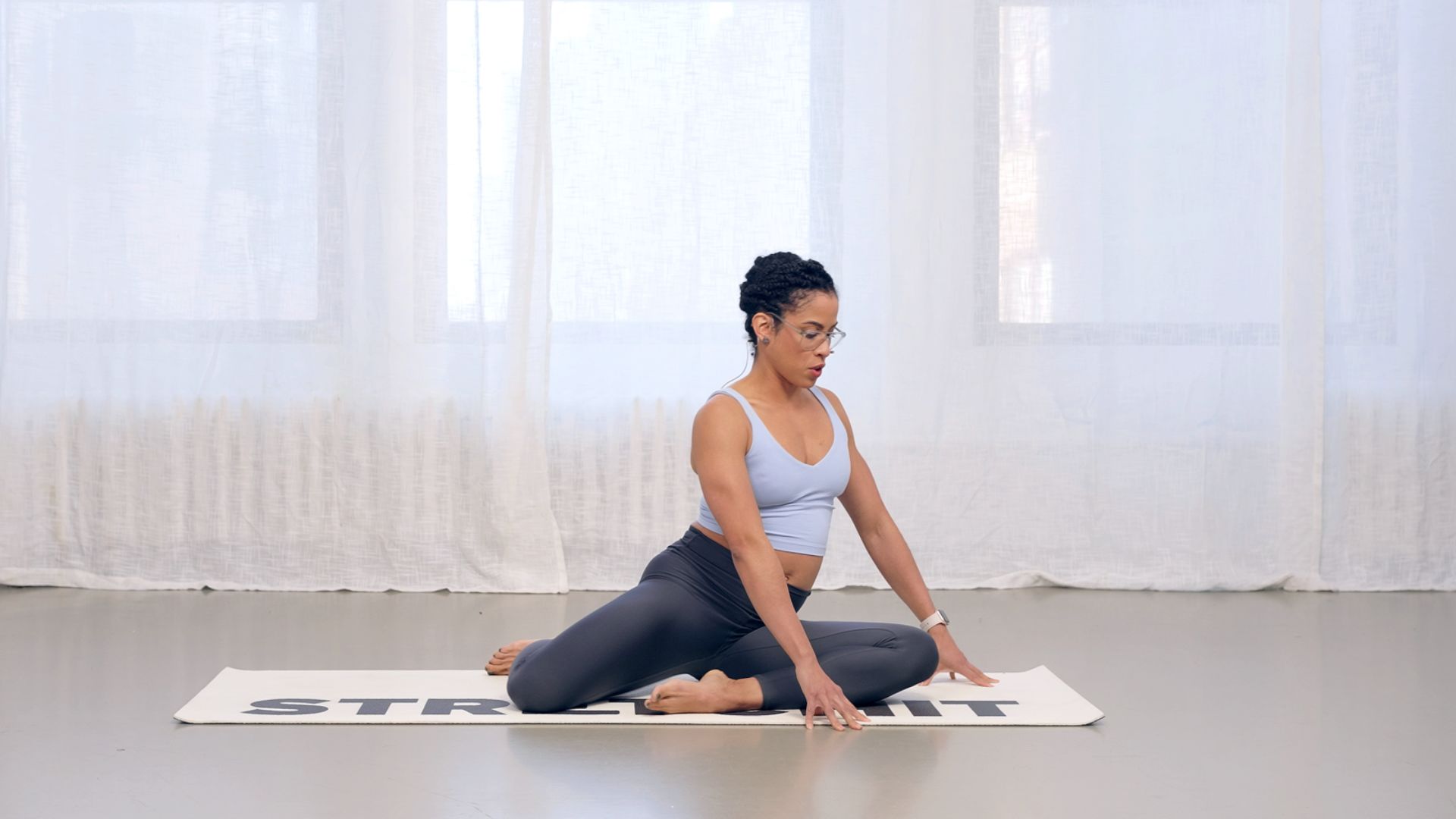
Hip mobility affects more than just how you feel after a workout. It plays a role in walking, climbing stairs, squatting, and changing direction.
Internal hip rotation happens when your thigh bone turns inward inside the hip socket. When this gets restricted, your knees and lower back pick up the extra load. Over time, that leads to pain and injury.
The muscles behind this movement include the TFL, gluteus medius, gluteus minimus, adductors, and deep hip stabilizers. These muscles need both flexibility and strength. Stretching alone won’t cut it. You have to build strength through the full range too.
7 Internal Hip Rotation Exercises
These exercises target internal rotation from different positions. Work through them slowly. Control matters more than speed.
1. Seated Internal Rotation Drill

This is a great starting point. It’s simple, low-impact, and gives you direct feedback on your range of motion. Sit on the edge of a sturdy chair with your feet flat on the floor, hip-width apart. Keep your knee still and pointing forward, then slowly swing your foot outward.
Hold for 1 to 2 seconds at the end of your range, then return with control. Do 2 to 3 sets of 10 to 12 reps per side. Once the movement feels easy, add a light ankle weight of 1 to 2 lbs to progress.
The most common mistake here is letting the knee drift outward, so keep it pointing straight ahead the whole time.
2. 90-90 Hip Internal Rotation Lift
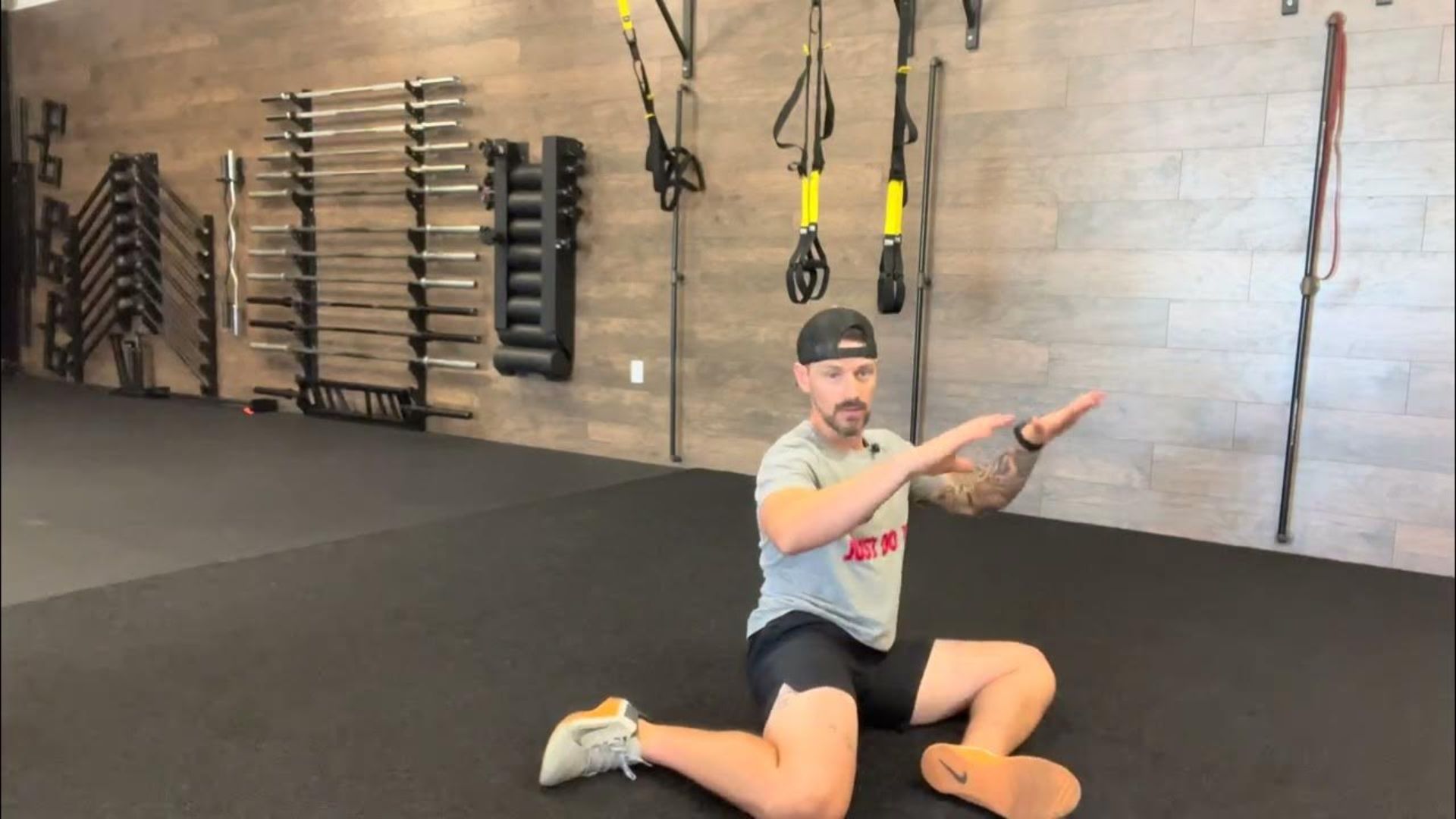
This one challenges both mobility and strength in the internal rotation position. Many people find it surprisingly difficult at first, and that’s okay. Sit on the floor with your front leg bent at 90 degrees in front of you and your back leg bent at 90 degrees out to the side.
Start with the back leg flat on the floor, then slowly try to lift the back knee while keeping the shin low. Hold for 2 to 3 seconds at the top, then lower with control. Do 2 to 3 sets of 8 to 10 reps per side.
Avoid leaning your torso heavily away from the lifting leg or forcing the knee too high too fast. If lifting the knee is too hard, just work on sitting upright in the 90-90 position first. That alone builds awareness and early range.
3. Prone Internal Rotation Windshield Wipers

Lying face down takes pressure off your joints while still giving your hips a solid internal rotation challenge. Lie on your stomach with your arms folded under your forehead.
Bend both knees to 90 degrees so your feet point toward the ceiling, then slowly lower both feet outward toward the floor and bring them back together. Keep your hips pressed gently against the floor the entire time.
Do 2 to 3 sets of 10 to 15 slow, controlled reps. If your hips lift off the floor, reduce your range until your mobility improves. This exercise works best as part of a warm-up or active recovery session.
4. Tabletop Hip Circles
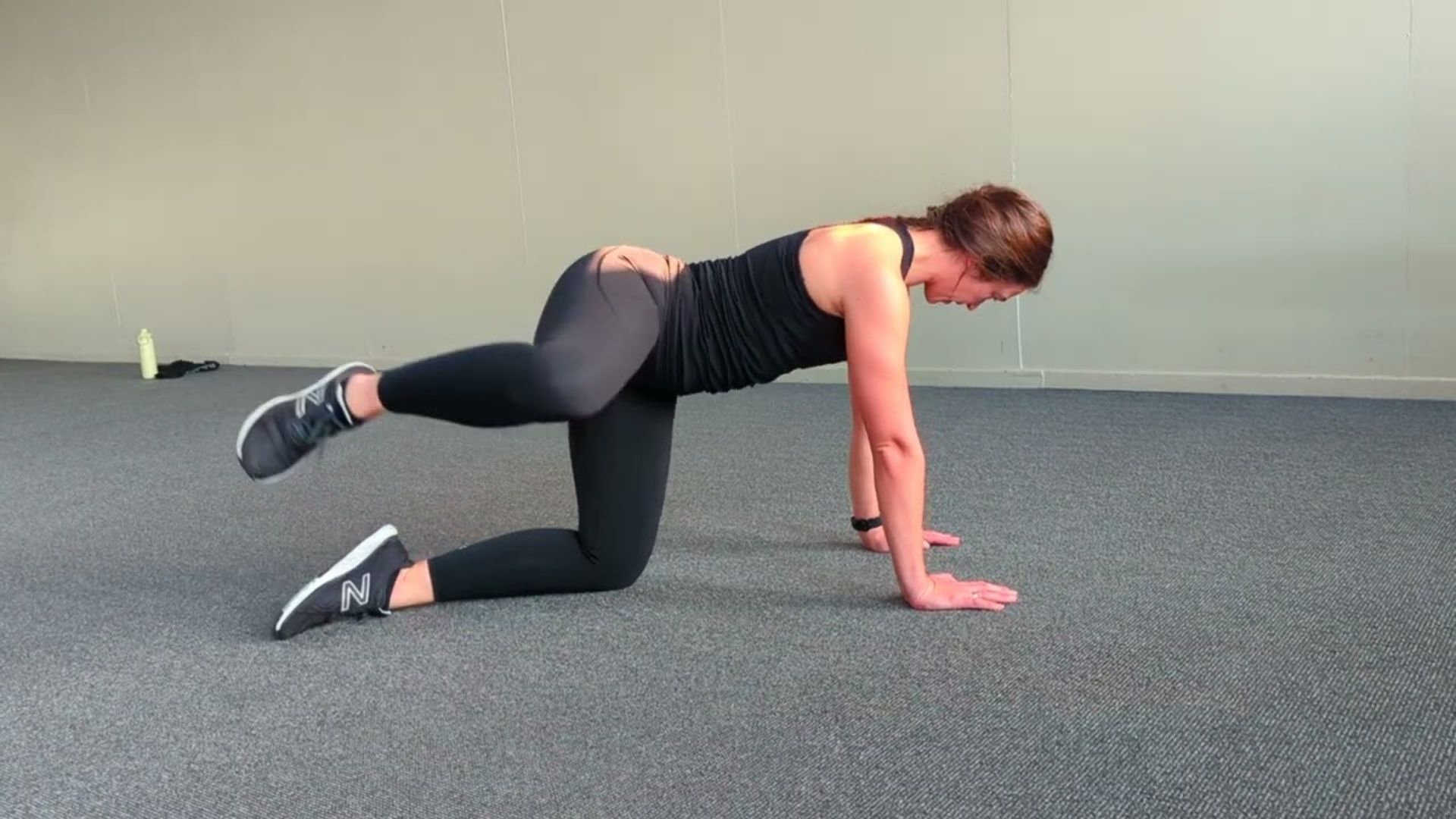
Hip circles from a tabletop position build full rotational control. Start on all fours with hands under your shoulders and knees under your hips.
Lift one knee off the floor, keeping it bent at 90 degrees, then draw large circles with your knee, moving outward, then up, then across your body through the internal rotation phase, then down.
Keep your core lightly engaged and avoid rotating your whole torso. Complete circles in both directions for 2 to 3 sets of 8 circles per direction per side.
Slow down when your thigh crosses toward your center. That’s the internal rotation phase, and it deserves your full attention.
5. Revolved Pyramid Pose
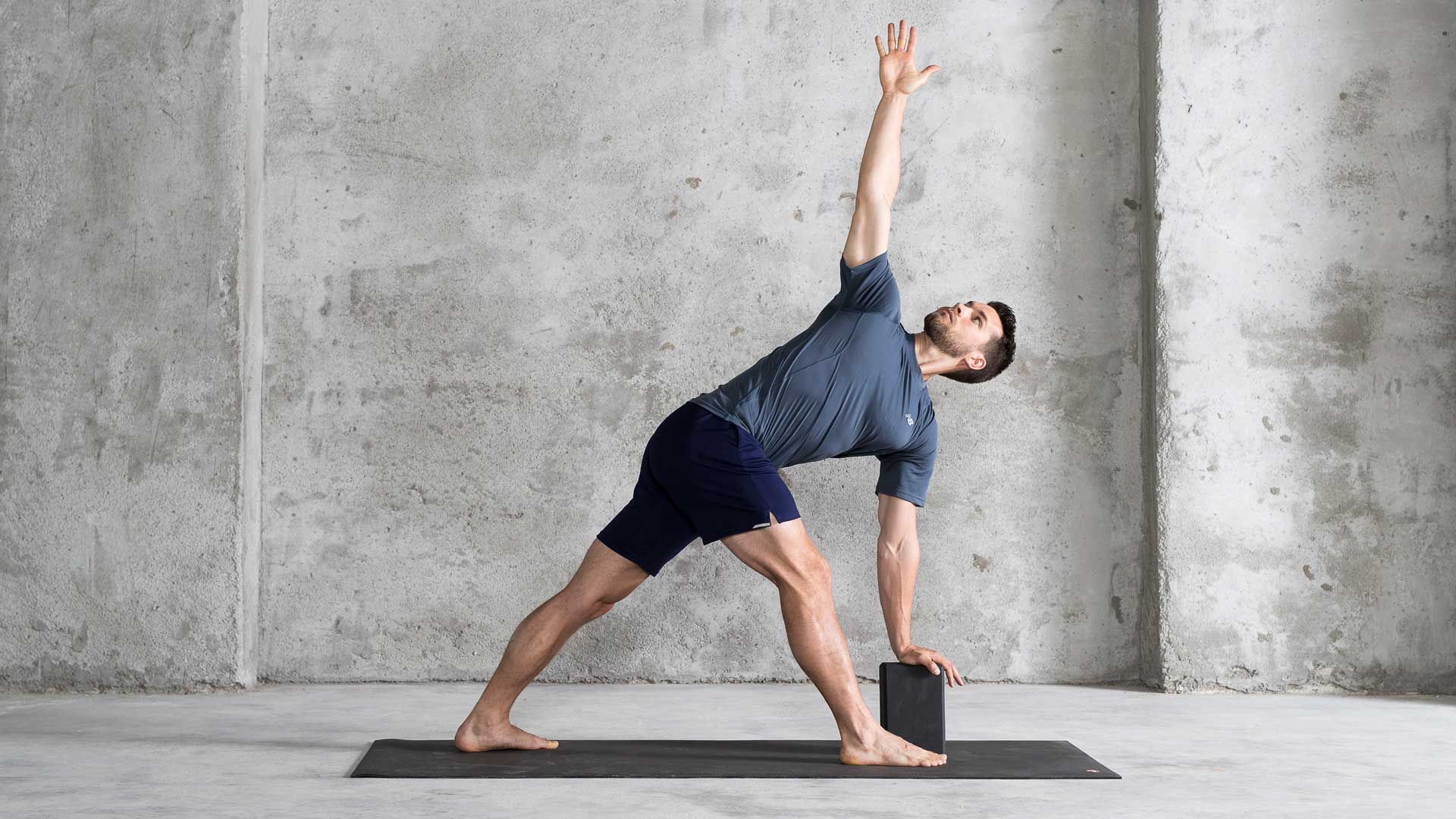
This yoga-based move works internal rotation through the back leg while also targeting hamstring flexibility. Stand and step one foot back about 2 to 3 feet, keeping both feet pointing mostly forward.
Square your hips forward, then hinge at the hips with a long back. Press your back foot firmly into the floor and gently rotate your back thigh inward toward the midline.
Hold for 20 to 30 seconds per side for 2 to 3 holds. Don’t let your back heel lift, keep a soft bend in both knees if needed, and use a yoga block or chair if balance is an issue.
6. Warrior 3 to Half Moon Transition
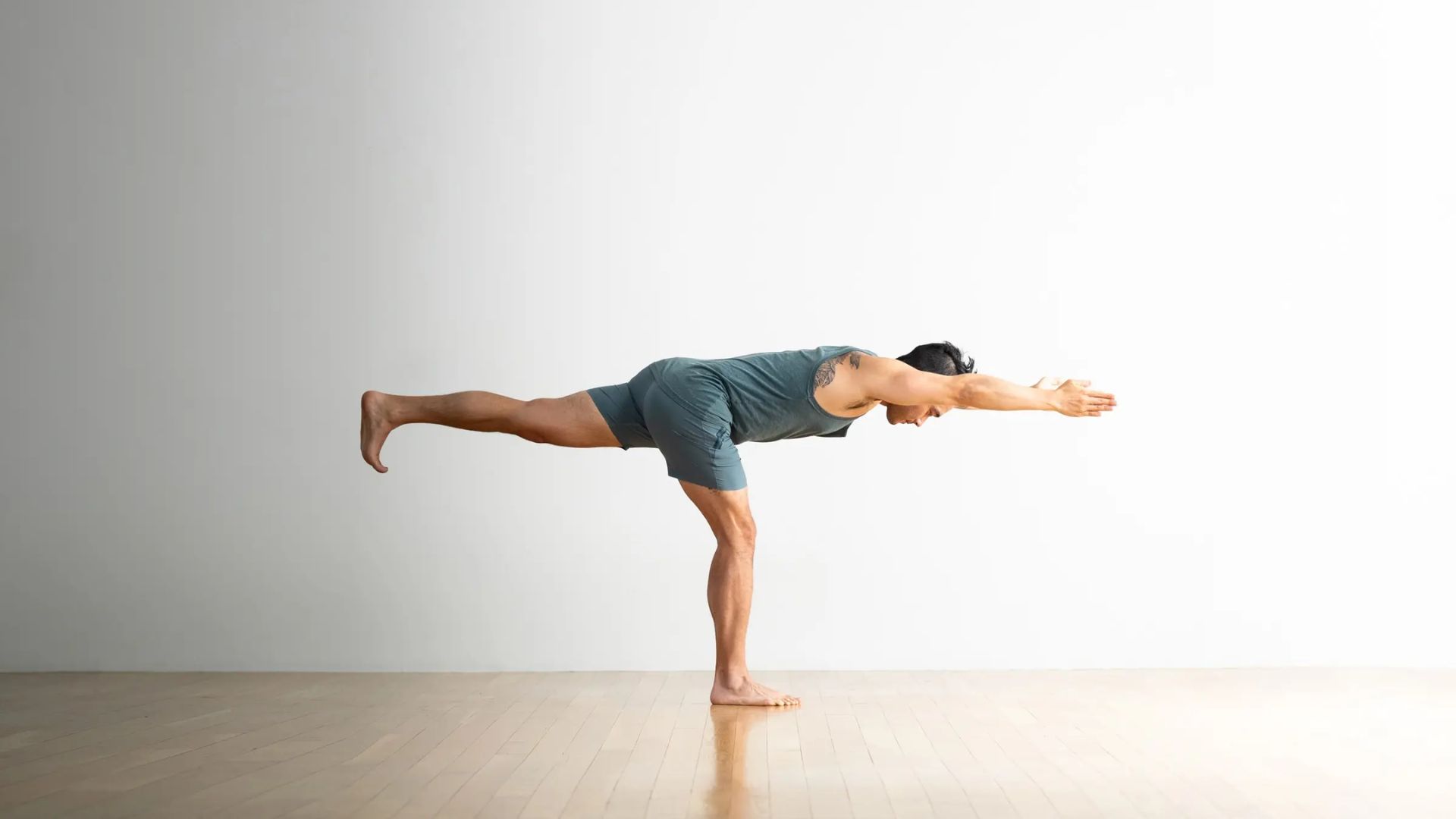
This combination builds internal rotation control while also challenging your balance. Start in Warrior 3, standing on one leg with your body tilted forward and your back leg extended behind you. Slowly open your hips to the side, lifting your back leg out as you rotate into Half Moon.
Pause for a breath, then return to Warrior 3. Move slowly and with control for 3 to 5 transitions per side. If balance is a challenge, place your fingertips on a wall or chair while you practice.
The rotation from Warrior 3 to Half Moon asks your standing hip to control internal rotation under load, and that builds real functional strength.
7. Standing Banded Internal Hip Rotation

Adding a resistance band turns internal rotation into a strength exercise and is one of the best ways to build lasting control. Anchor a light band to something sturdy at ankle height and loop it around one ankle.
Stand sideways so the band pulls your working leg outward, then balance on your other leg. Rotate the banded leg inward, crossing it slightly past your standing leg, then slowly return to the start.
Do 2 to 3 sets of 10 to 15 reps per side. Start with a light band that creates gentle resistance without pulling you off balance. Once 15 reps feel easy and controlled, move to a heavier band.
Tips for Improving Hip Internal Rotation Safely
A few simple habits can make your progress faster and keep you out of pain.
- Always warm up before starting. Spend 5 minutes on light walking, standing hip circles, and 10 to 15 glute bridges. Cold muscles don’t respond well to mobility work.
- Don’t rely on stretching alone. Passive flexibility gets you into a position, but strength is what keeps you there. Mix in active exercises like the banded rotation and 90-90 lift to build control through the full range.
- Be consistent but don’t overdo it. Mobility improves with regular practice, not by pushing harder every session. Rest days give your body time to adapt.
- Move slowly and stay in control. Speed is not the goal here. Slow, intentional reps build better body awareness and reduce the risk of strain.
- Stop and get checked if something feels wrong. Sharp pain, worsening discomfort, or a side difference that won’t improve after 4 to 6 weeks are all signs to see a physical therapist or doctor before continuing.
Conclusion
Working on your internal hip rotation exercises might feel small at first, but I’ve seen firsthand how big a difference it makes. When I started taking hip mobility seriously, my lower back stopped aching and my squats felt smoother almost immediately.
You don’t need a full gym or hours of free time. Even 10 minutes a few times a week adds up fast.
Try one or two exercises from this list today. See how your hips feel. If this helped you, share it with someone who could use it or drop a comment below. I’d love to hear how it goes.
Frequently Asked Questions
How often should I do internal hip rotation exercises?
Two to three times per week works well for most people. Make sure to rest a day between sessions so your body can adapt.
How long does it take to see improvement in hip rotation?
Most people notice small changes within two to four weeks. Bigger improvements in range and control can take six to twelve weeks.
Can tight hip rotation cause lower back pain?
Yes. When hip rotation is limited, your lower back compensates by taking on extra load. Over time, that leads to discomfort and injury.
Is it normal for one hip to rotate less than the other?
A small difference between sides is common. A large gap is worth addressing. Give the stiffer side a little extra attention each session.
Can I do these exercises if I have hip pain?
Mild pain is usually fine to work through gently. If your pain is sharp, constant, or getting worse, check with a physical therapist first.