
Learning how to do muscle ups was one of the hardest things I worked on at the gym. Months of failed attempts before a clean rep finally happened.
If you’re in that same spot, I get it.
This guide covers everything you need. You’ll learn what a muscle up is, which muscles it works, and how to build toward your first clean rep.
I also cover common mistakes, progressions, and a full weekly training plan. I’ve trained with coaches and tested all of this myself, so what you read here is practical.
By the end, you’ll know exactly where to start and what to do next.
What Is a Muscle Up?

A muscle up is a compound upper body movement.
You start in a dead hang, pull your chest above the bar, and press yourself into a locked-out dip position.
It combines a pull-up and a dip into one smooth motion. Most people can do one or the other.
Putting both together takes strength, timing, and practice.
Benefits of Muscle Ups
This move does a lot more than look impressive.
Here’s why it’s worth training for:
- Builds explosive pulling and pressing strength in one rep
- Trains your lats, chest, and triceps all at once
- Improves grip strength over time
- Develops shoulder stability and control
- Serves as a strong marker of calisthenics progress
- Carries over to ring work and advanced bodyweight skills
Muscles Worked in a Muscle Up
The pulling phase works your lats, biceps, and rear deltoids. Your core stays active throughout to keep your body stable.
The transition calls on your forearms and wrists. Once you’re pressing up, your chest, triceps, and front deltoids take over.
It’s a full upper body exercise. That’s why it takes time to build up to.
Prerequisites Before You Learn How to Do Muscle Ups
Don’t rush this movement. Build your base first.
You need at least 10 strict pull-ups and 15 clean dips with full range. Core work like hanging knee raises helps too.
I tried muscle ups before I had the strength for them. I wasted weeks. Build the base first.
How to Do Muscle Ups (Step-by-Step)
Here is the full breakdown of how to do muscle ups from the first grip to the final press.
Step 1: Use a False Grip or Strong Overhand Grip
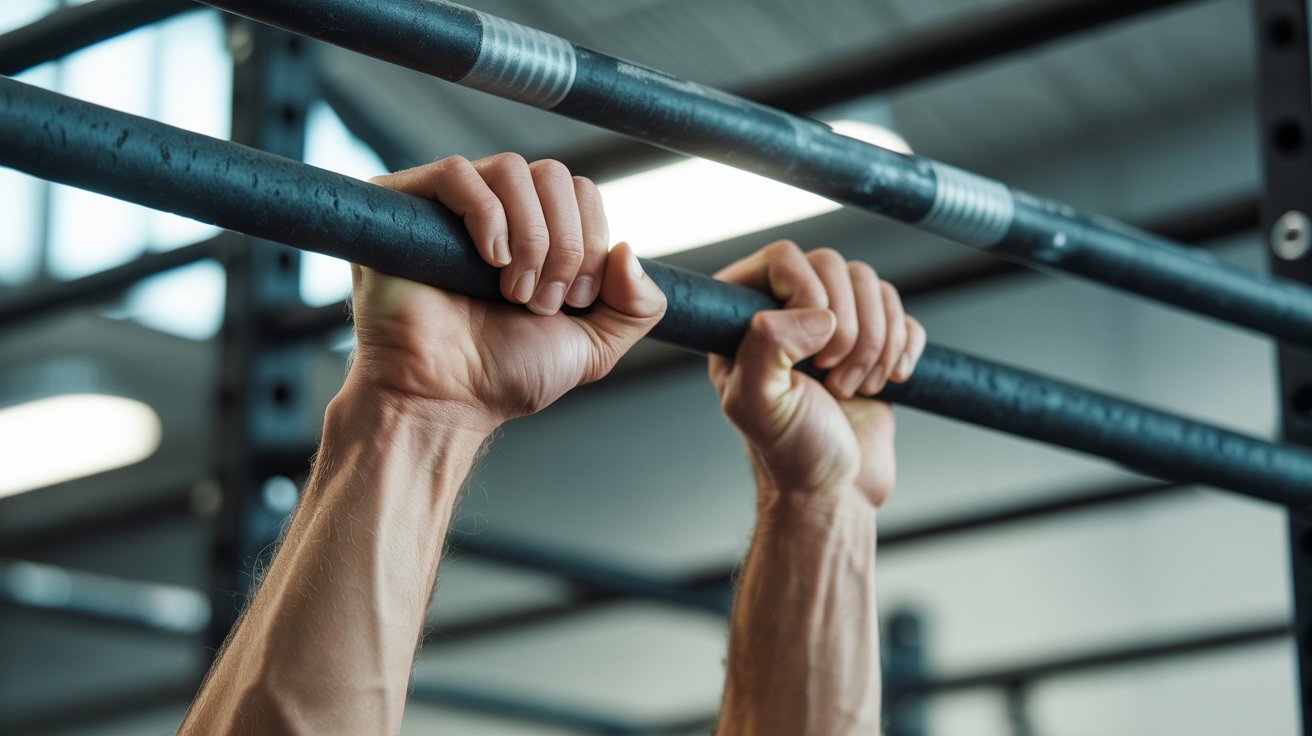
The false grip places your wrist over the bar instead of under it. This makes the transition smoother. It feels odd at first. Practice on a low bar before going full height.
Step 2: Generate Explosive Pulling Power

Pull the bar toward your hips, not just your chest. Drive your elbows down and back hard. The higher you pull, the easier the transition becomes. This is called a high pull.
Step 3: Transition Over the Bar

At the top of your pull, shift your body forward and roll your wrists over the bar. Keep your chest close. Do not let your hips drop here. This is the hardest part.
Step 4: Press Into the Dip Position

Once your elbows move forward, press up like a dip. Keep your core tight. Push until your arms lock out fully. That is a complete muscle up.
Step 5: Control the Descent

Lower yourself slowly back over the bar and into a dead hang. Dropping fast stresses your joints. Control it every time.
Best Muscle Up Progressions for Beginners
Before you attempt a full rep, build strength through these progressions in order.
Pull-Up Progressions
Start with strict pull-ups. Move to chest-to-bar pull-ups once you hit 10. Then add explosive pull-ups where you aim to get your hips near bar height.
Transition Drills
Use a low bar to practice the wrist-roll without jumping. Box-assisted muscle ups also work well. Use a small amount of leg drive while focusing mostly on the upper body movement.
Dip Strength Development
Work weighted dips and ring dips with full range. If your triceps fail during the press, you lose the rep. Strong dips fix that directly.
Common Mistakes When Learning How to Do Muscle Ups
Most people repeat the same errors early on. Fixing these speeds up your progress fast.
- Pulling only to chest height instead of hip height
- Letting the bar drift away from your body during the pull
- Skipping the false grip and making transitions sloppy
- Using too much momentum before building real pulling strength
- Rushing the transition instead of staying tight and controlled
- Ignoring dip strength and wondering why the press fails
Muscle Up Variations
There are several versions of the muscle up depending on the equipment used and the level of strength required.
- Bar muscle up
- Ring muscle up
- Strict muscle up
- Kipping muscle up
Start with the bar version because it is the most stable. Once you master that, you can move to stricter or ring variations.
Bar Muscle Up vs Ring Muscle Up
Both versions are worth doing. But they’re different in feel and difficulty.
| Feature | Bar Muscle Up | Ring Muscle Up |
|---|---|---|
|
Surface |
Fixed, stable |
Moves in all directions |
|
Difficulty |
Lower |
Higher |
|
Grip |
Overhand or false grip |
False grip recommended |
|
Shoulder demand |
Moderate |
High |
|
Best for |
Beginners |
Intermediate to advanced |
|
Transition |
Easier to learn |
Requires more wrist control |
Start with the bar. It removes one variable so you can focus on the movement. Ring muscle ups build more shoulder stability and raw control over time.
Muscle Up vs Pull Up
People often search this comparison when starting out.
Here’s a clear breakdown:
|
Feature |
Pull Up |
Muscle Up |
|
Difficulty |
Moderate |
Advanced |
|
Primary muscles |
Lats, biceps |
Lats, chest, triceps, shoulders |
|
Movement type |
Pulling only |
Pull plus press |
|
Skill required |
Grip and pull strength |
Timing and transition skill |
If you can do 10 strict pull-ups, you’re ready to start training for muscle ups.
How Long It Takes to Learn Muscle Ups
This depends on your starting point. With 10 strict pull-ups and solid dips, your first rep could come in 4 to 8 weeks of focused training.
Building from scratch? Expect 3 to 6 months.
I trained for about 3 months before my first clean rep. It felt long at the time. But it was worth every session.
Tips to Master Muscle Ups Faster
These small habits made a real difference in my own training.
- Train pull-ups and dips at least three times a week
- Film yourself to catch errors you cannot feel
- Practice the false grip every session until it feels natural
- Do not train to failure daily, recovery matters as much as reps
- Sleep well and eat enough protein to support progress
- Find a training partner who can watch your form
Beginner Muscle Up Training Plan
Follow this plan to work toward your first muscle up in a focused and structured way.
Day 1: Explosive pull-ups, 4 sets of 5. Chest-to-bar pull-ups, 3 sets of 3. Dips, 3 sets of 10.
Day 2: Rest or light cardio.
Day 3: False grip holds, 4 sets of 20 seconds. Low bar transition drills, 5 sets of 3. Weighted dips, 3 sets of 6.
Day 4: Rest.
Day 5: Full practice attempts. Box-assisted muscle ups, 5 sets. Hanging core work.
Day 6 and 7: Full rest and recovery.
Safety Tips and Injury Prevention
Warm up your shoulders and wrists before every session. Cold joints get hurt easily.
Never train muscle ups when your grip is already fatigued. That is when accidents happen.
If your wrist or elbow hurts, stop. Take a few days off. Use chalk for grip.
Progress takes time and there are no shortcuts worth an injury.
Conclusion
Muscle ups take time, but they are very possible with smart training. I know how discouraging those early failed attempts feel.
The key is building real strength first, working on your transition, and staying consistent week after week.
Follow the steps in this guide. Build your pull-up base. Practice the false grip. Work your dips. Then put it together one rep at a time.
You don’t need to rush. Each session gets you closer. The first clean rep will feel like a real win, and it should.
So where are you right now in your muscle up training? Drop it in the comments below.
Frequently Asked Questions
How to do muscle ups if I can only do 5 pull-ups?
Keep building pull-up strength first. You need at least 10 strict reps before muscle up training makes sense. Train pull-ups three times a week and get there first.
How long should I train before attempting muscle ups?
Most people need 4 to 12 weeks of prep work depending on current strength levels. Rushing it early usually leads to bad form and wasted effort.
Is the false grip required when learning muscle ups?
It’s not required but strongly recommended. It makes the wrist transition much smoother. Most beginners who skip it struggle more with the transition phase.
Can I practice muscle ups without a gym?
Yes. A sturdy outdoor bar or home pull-up bar works fine. Low bars are great for transition drills, and you don’t need any equipment beyond a solid bar.
Why do I keep failing the transition when practicing muscle ups?
Usually because the pull is not high enough. You need to pull your hips toward the bar, not just your chest. Work explosive pull-ups and chest-to-bar reps to fix this.