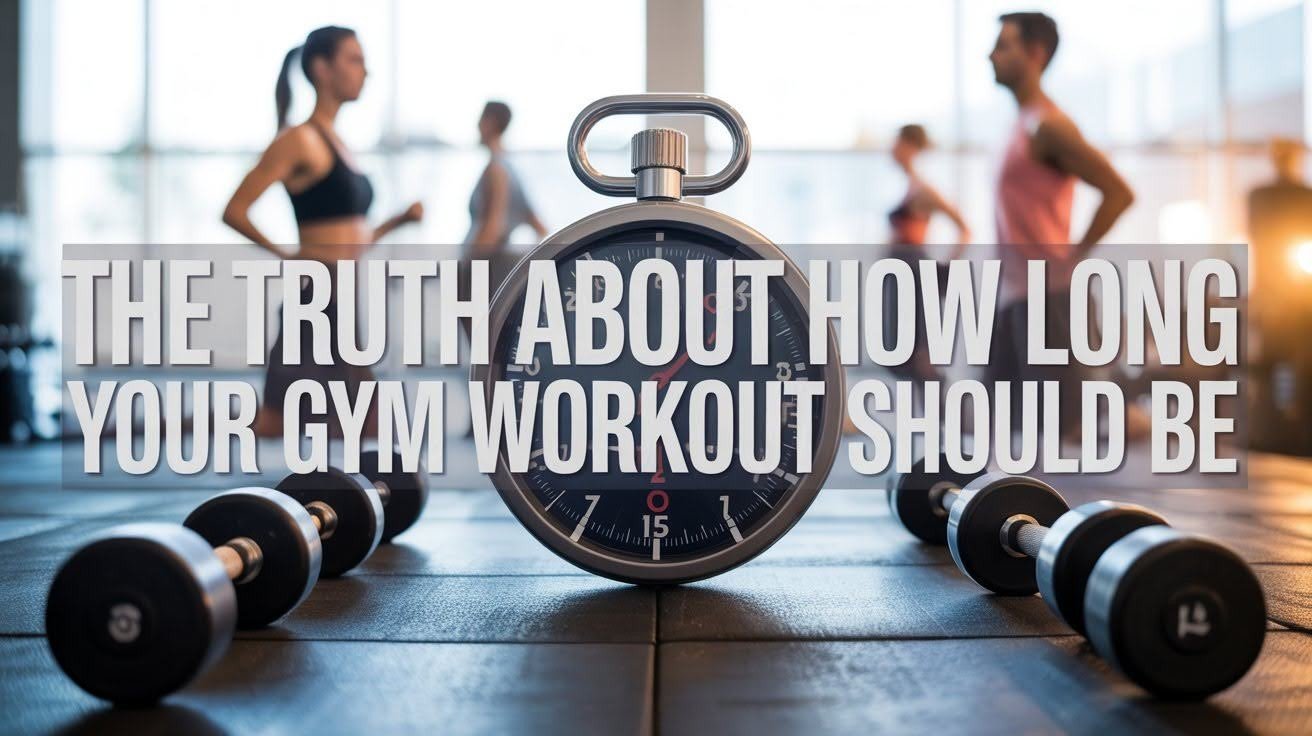
Walking into the gym, you might wonder: how much time should I really spend here? Some people finish in 30 minutes, while others stay for two hours. So, what’s the right answer?
Here’s the truth: most people see great results with 45 to 90 minutes at the gym. But the best workout length for you depends on your goals, fitness level, and the type of exercise you’re doing.
In this guide, we’ll cover everything you need to know about workout duration. You’ll learn how to plan your time, what works for different fitness goals, and how to make every minute count.
The Ideal Gym Workout Duration

So, how long should a gym workout be? For most people, 45 to 90 minutes is the sweet spot. This gives you enough time to warm up properly, complete your main exercises, and cool down without rushing.
Let’s break down what a typical session looks like. You should spend 5 to 10 minutes warming up your muscles and getting your heart rate up. Then comes your main workout, which takes 30 to 60 minutes depending on what you’re doing. Finally, use 5 to 10 minutes to cool down and stretch. If you’re just starting, one hour is plenty of time to get a solid workout done.
Remember, it’s not about spending hours at the gym. What really matters is what you do during that time. A focused 45-minute session beats a distracted 2-hour session every time. When figuring out how long a gym workout should be for you, think about your schedule and energy levels. The best workout length is one you can stick with consistently.
Workout Duration Based on Your Fitness Goals

Your fitness goals play a big role in deciding how much time you need at the gym. Different targets require different approaches, and that includes how long you should train.
Building Muscle
Plan for 45 to 75 minutes per session when your goal is building muscle. You need enough time to work each muscle group thoroughly and rest between sets. This duration allows you to complete 3 to 4 exercises per muscle group with proper form.
Muscle building requires focus on heavy weights with proper rest periods of 1 to 3 minutes between sets. Rushing through a strength workout won’t give you the results you want. Your muscles need time under tension and adequate recovery between sets to grow stronger.
Losing Weight
Aim for 30 to 60 minutes of mixed training when weight loss is your priority. Combine cardio exercises with strength training for the best fat-burning results. This gives your body enough time to burn calories while building lean muscle.
A balanced approach works better than focusing only on cardio. Include 20 to 30 minutes of cardio and 20 to 30 minutes of resistance training in each session. This combination keeps your metabolism high even after you leave the gym.
Improving Endurance
Spend at least 30 minutes doing steady cardio at a moderate pace for endurance goals. Activities like running, cycling, or rowing work well. Your heart and lungs need sustained effort to build stamina.
As you get fitter, you can slowly increase this time to 45 or 60 minutes. The key is maintaining a pace you can sustain throughout the entire session. Start with what feels challenging but manageable, then add 5 minutes every few weeks.
General Fitness
A 45 to 60-minute session with varied activities is perfect for overall health. Mix strength exercises, cardio, and flexibility work to stay healthy and strong. This balanced approach keeps your body functioning well in daily life.
Include different types of movement in each workout. Spend 20 minutes on cardio, 20 minutes on strength, and 10 minutes on stretching. This variety prevents boredom and works your body in multiple ways, giving you well-rounded fitness.
Each goal needs a different time commitment because your body responds differently to various types of training. When you’re clear about your goals, the question of how long a gym workout should be becomes much easier to answer.
Quality vs. Quantity: What Matters More?

Many people think longer workouts are always better. But that’s not true. A shorter, focused workout beats a long, unfocused one every single time.
For beginners, choosing the right 4 to 5 exercises matters more than how much time you spend. Pick movements that work multiple muscle groups at once. Focus on doing each exercise correctly rather than rushing through a long list. Good form prevents injuries and gives you better results than sloppy technique ever will.
High-intensity interval training (HIIT) proves that time isn’t everything. These workouts last just 20 to 30 minutes but can burn as many calories as an hour of steady cardio. The key is working hard during those minutes. Don’t waste energy worrying about the clock. Pay attention to how your body feels. If you’re tired and losing form, it’s time to stop, regardless of how long you’ve been working out.
Structuring Your Gym Session Effectively

Knowing how long a gym workout should be is important, but knowing how to use that time is even more valuable. A well-planned session makes every minute count.
Warm Up Your Body (5-10 Minutes)
Start with a proper warm-up that lasts 5 to 10 minutes. This isn’t just jogging on a treadmill. Do movements that prepare your body for what’s coming.
On leg day, include hip and ankle mobility work. Before upper body training, do arm circles and shoulder rotations. These small efforts reduce injury risk and improve your performance. Think of your warm-up as teaching your muscles what they’re about to do.
Execute Your Main Workout (30-60 Minutes)
Your main workout should focus on exercise quality, not on watching the clock. Move through your routine at a steady pace, but don’t rush. This is where you complete the exercises that match your fitness goals.
Choose 4 to 6 exercises that target the muscles you want to work. Complete each movement with proper form before moving to the next. Your main workout takes up most of your gym time, so use it wisely by staying focused and present.
Rest Between Sets (30 Seconds to 3 Minutes)
Taking the rest you need between sets is critical for results. If you’re lifting heavy, that might mean 2 to 3 minutes. For lighter weights or circuits, 30 to 60 seconds might be enough.
The goal is to complete each set with good form, not finishing as fast as possible. Your rest periods aren’t wasted time. They let your muscles recover so you can maintain intensity throughout your session. Listen to your breathing and heart rate to know when you’re ready for the next set.
Cool Down After Training (5-10 Minutes)
End every session with at least 5 minutes of cool-down time. Stretch the muscles you just worked. Hold each stretch for 20 to 30 seconds without bouncing.
This helps bring your heart rate down gradually and starts the recovery process. Your cool-down prevents soreness and keeps you flexible. These final minutes might seem less important, but they help your body recover faster for your next workout.
Optional Recovery Time (10-15 Minutes)
Some gyms have saunas, foam rolling areas, or stretching zones you can use after your cool-down. Spending 10 to 15 minutes in these recovery spaces can enhance your results. Foam rolling helps release tight muscles and improves blood flow.
A quick sauna session can relax your body and mind after intense training. While this extra time is optional, it’s worth including when your schedule allows. When you build this structure into your routine, you’ll get consistent results week after week.
Tips for Maximizing Your Gym Time

Getting the most from your workouts isn’t about spending more time. It’s about using your time smarter. Here are practical ways to make every gym session count.
- Start Small: If you’re new to working out, begin with 20 to 30-minute sessions. Your body needs time to adapt. Jumping into long workouts too soon can lead to burnout or injury.
- Increase Gradually: Add 5 to 10 minutes every few weeks as you get stronger. This slow increase helps prevent overtraining and keeps you motivated.
- Think About Frequency: Sometimes three 45-minute workouts work better than two 90-minute sessions. Decide based on your schedule and recovery needs.
- Add Variety: Don’t stick to the same machines every day. Try swimming, cycling, or group classes. Using different equipment keeps workouts interesting and works your body in new ways.
- Use All Facilities: Many gyms offer more than just weights and treadmills. Take advantage of recovery areas, foam rollers, and stretching zones.
- Build Consistency: The best workout schedule is the one you’ll actually follow. Pick a duration that fits your life, not one that sounds impressive but you can’t maintain.
When thinking about how long a gym workout should be, remember that your schedule matters just as much as fitness science. A 45-minute workout you do four times a week beats a 2-hour workout you can only manage once.
Conclusion
No magic number works for everyone. The question “how long should a gym workout be?” has different answers for different people.
For most of us, 45 to 90 minutes gives enough time to get results without taking over our day. But your perfect duration depends on your goals, fitness level, and what your body tells you.
Pay attention to how you feel during and after workouts. If you’re dragging through the last 30 minutes, your session might be too long. If you finish feeling like you barely worked out, maybe add some time or intensity.
Ready to build a workout routine that works for you? Pick a realistic time frame, show up consistently, and watch your fitness improve week by week.
Frequently Asked Questions
Is 30 Minutes at the Gym Enough?
Yes, 30 minutes can be effective if you work hard. High-intensity workouts pack a lot into a short time, making them perfect for busy schedules.
Can You Spend Too Long at the Gym?
Absolutely. Workouts longer than 90 minutes can lead to overtraining. After a certain point, you get tired, and results start to drop off.
Should Rest Days Count Toward My Weekly Gym Time?
Rest days don’t count as workout time, but they’re crucial for results. Your muscles grow and recover on rest days, not during workouts.
How Does Workout Duration Change as You Get Fitter?
As you progress, you might spend more time or increase intensity instead. Some people keep the same duration but work harder within it.
Does the Time of Day Affect How Long You Should Work Out?
Your energy levels vary throughout the day. Morning workouts might feel harder and shorter, while evening sessions could last longer when you’re more awake.